
Chapter 15 – Transfer Pricing
15-1
Chapter 15
Transfer Pricing
Learning Objectives
1. Explain the basic issues associated with transfer pricing.
2. Explain the general transfer pricing rules and understand the underlying basis for them.
3. Identify the behavioral issues and incentive effects of negotiated transfer prices, cost-
based transfer prices, and market-based transfer prices.
4. Explain the economic consequences of multinational transfer prices.
5. Describe the role of transfer prices in segment reporting.
Chapter Outline
I. WHAT IS TRANSFER PRICING AND WHY IS IT IMPORTANT?
II. DETERMINING THE OPTIMAL TRANSFER PRICE
A. The setting
B. Determining whether a transfer price is optimal
1. Case 1: A perfect intermediate market for Wood
2. Case 2: No intermediate market
III. OPTIMAL TRANSFER PRICE: A GENERAL PRINCIPLE
♦ Other market conditions
IV. APPLYING THE GENERAL PRINCIPLE
V. HOW TO HELP MANAGERS ACHIEVE THEIR GOALS WHILE ACHIEVING
THE ORGANIZATION’S GOALS
VI. TOP MANAGEMENT INTERVENTION IN TRANSFER PRICING
VII. CENTRALLY ESTABLISHED TRANSFER PRICING POLICIES
A. Establishing a market price policy
B. Establishing a cost-basis policy
C. Alternative cost measures
1. Full absorption cost-based transfers
2. Cost-plus transfers
3. Standard costs or actual costs
D. Remedying motivational problems of transfer pricing policies
• Dual transfer prices
VIII. NEGOTIATING THE TRANSFER PRICE
IX. IMPERFECT MARKETS

Chapter 15 – Transfer Pricing
15-2
X. GLOBAL PRACTICES
XI. MULTINATIONAL TRANSFER PRICING
XII. SEGMENT REPORTING
XIII. SUMMARY
XIV. APPENDIX: CASE 1A PERFECT INTERMEDIATE MARKETS – QUALITY
DIFFERENCES
Key Concepts
LO 15-1 Explain the basic issues associated with transfer pricing.
♦ Decentralization in the firm is often beneficial because it lowers information costs associated
with attempting to make decisions centrally and because the organization benefits from using
managers’ local knowledge.
• Recall that decentralization is the delegation of decision-making authority to
subordinates.
• Along with the benefits of decentralization come the costs of dysfunctional decision
making that occur when local managers, making decisions based on local interests, make
choices that are suboptimal for the organization as a whole.
• A common dysfunctional behavior arises when business units (divisions) within the
organization buy goods and services from one another and when each is treated as a
profit center (i.e., when each unit manager is evaluated on reported unit profit).
• The accounting systems in the two divisions record the transaction as if it were an
ordinary sale (purchase) to (from) an external customer (supplier).
• Transfer price is the value assigned to the goods or services sold or rented (transferred)
from one unit of an organization to another. Transfer price is the price at which the
transaction between the divisions is recorded.
• Because the exchange takes place within the organization, the firm has considerable
discretion in setting the transfer price.
• Transfer prices are widely used for decision making, product costing, and performance
evaluation. It is important to consider alternative transfer pricing methods and their
advantages and disadvantages.
Chapter 15 – Transfer Pricing
15-3
• The profit on the sale that accrues to the selling division is the transfer price less the
cost of goods sold.
• The profit that will accrue to the buying division when the item is sold to an external
customer is the revenue from the external sale less the transfer price and any additional
cost incurred by the buying division to complete the product.
• From the corporation’s viewpoint, the total profit associated with the item being
transferred is simply the price paid by the external customer less the costs incurred by the
selling division and the additional cost incurred by the buying division before the item is
sold.
• The transfer price is not a factor in the calculation of total profit for the firm and,
therefore, does not affect corporate profit if the transaction occurs.
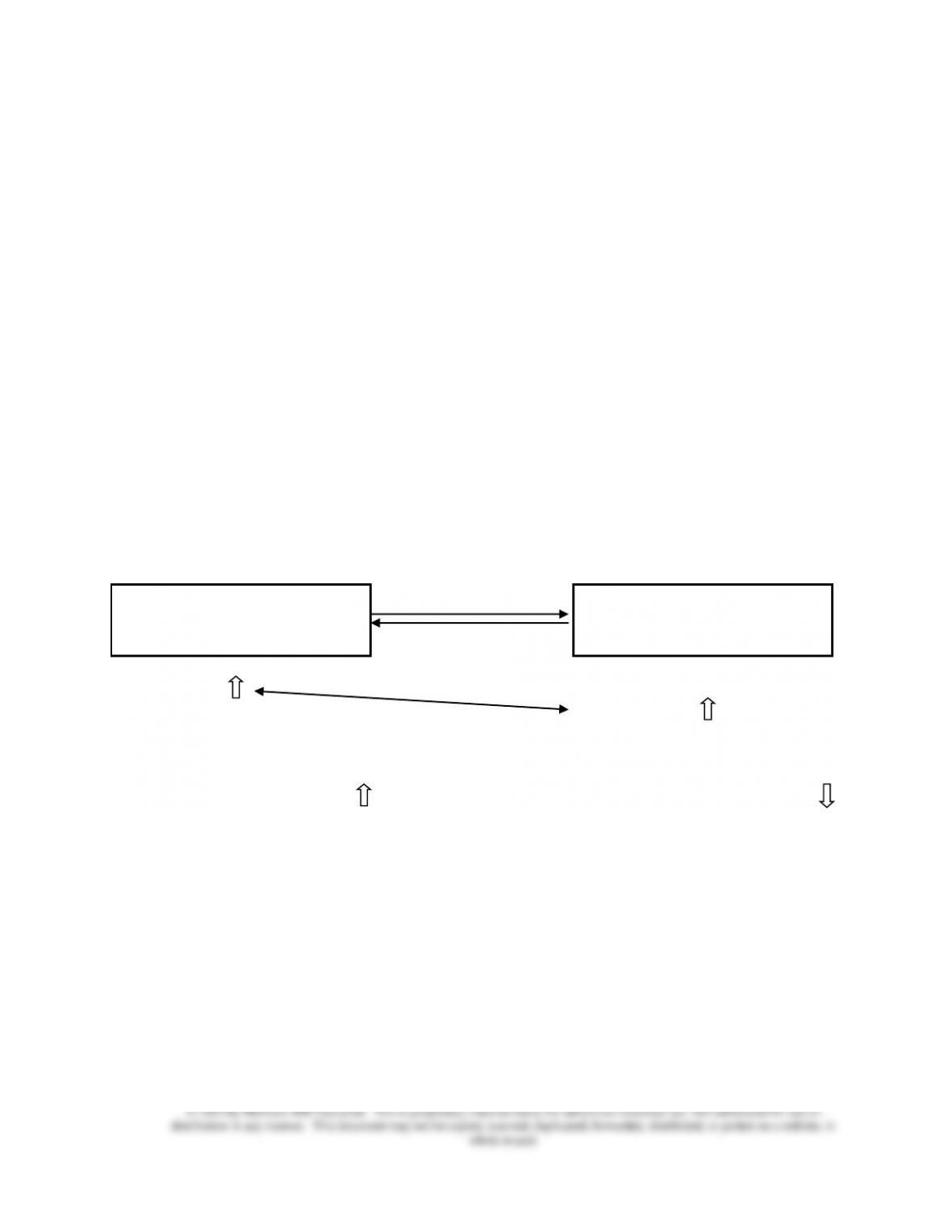
• The following diagram illustrates the relation between a selling division and a buying
division within the same organization when goods or services are exchanged internally.
The total profit calculation does not involve the transfer price used; the selling division’s
revenue from the transfer is cancelled out by the buying division’s cost for the transaction.
Selling Division
Goods or services
Buying Division
Transfer price
Transfer price
Price paid by external customer
– Cost of goods sold
– Transfer price
– Additional costs
= Selling Division’s profit
= Buying Division’s profit
Selling Division’s ROI or EVA
Buying Division’s ROI or EVA
Total profit = Selling Division’s profit + Buying Division’s profit
= Price paid by the external customer – Cost of goods sold (Selling Division)
– Additional costs (Buying Division).
• What makes the transfer price important is that it affects the division managers’
decision about whether to engage in the transaction.
• Because the managers of both the selling division and buying division are evaluated on
division profit, they consider the effect of all sales, not just sales to customers outside the
company, on their division, not company profit.

Chapter 15 – Transfer Pricing
15-4
• The definition of the transfer price can affect corporate profitability.
•The optimal transfer price is the price that leads both division managers, each acting in
his or her own self-interest, to make decisions that are in the firm’s interest.
• If a transaction would increase firm profits, it must be profitable for both divisions,
given the transfer price, to make the transaction, or the selected transfer price cannot be
the optimal price.
• If a transaction is not profitable for the corporation, the transfer price, to be optimal,
must make the sale unprofitable for at least one of the two transacting divisions.
• If business unit profitability is used to measure performance, by return on investment
(ROI) or economic value added (EVA), the transfer price will affect the evaluation of
the unit and the unit manager.
• The higher the transfer price is, the lower will be the profit (and ROI or EVA) in the
buying division and the higher the profit will be in the selling division, all other things
being equal. Refer to the previous diagram for information.
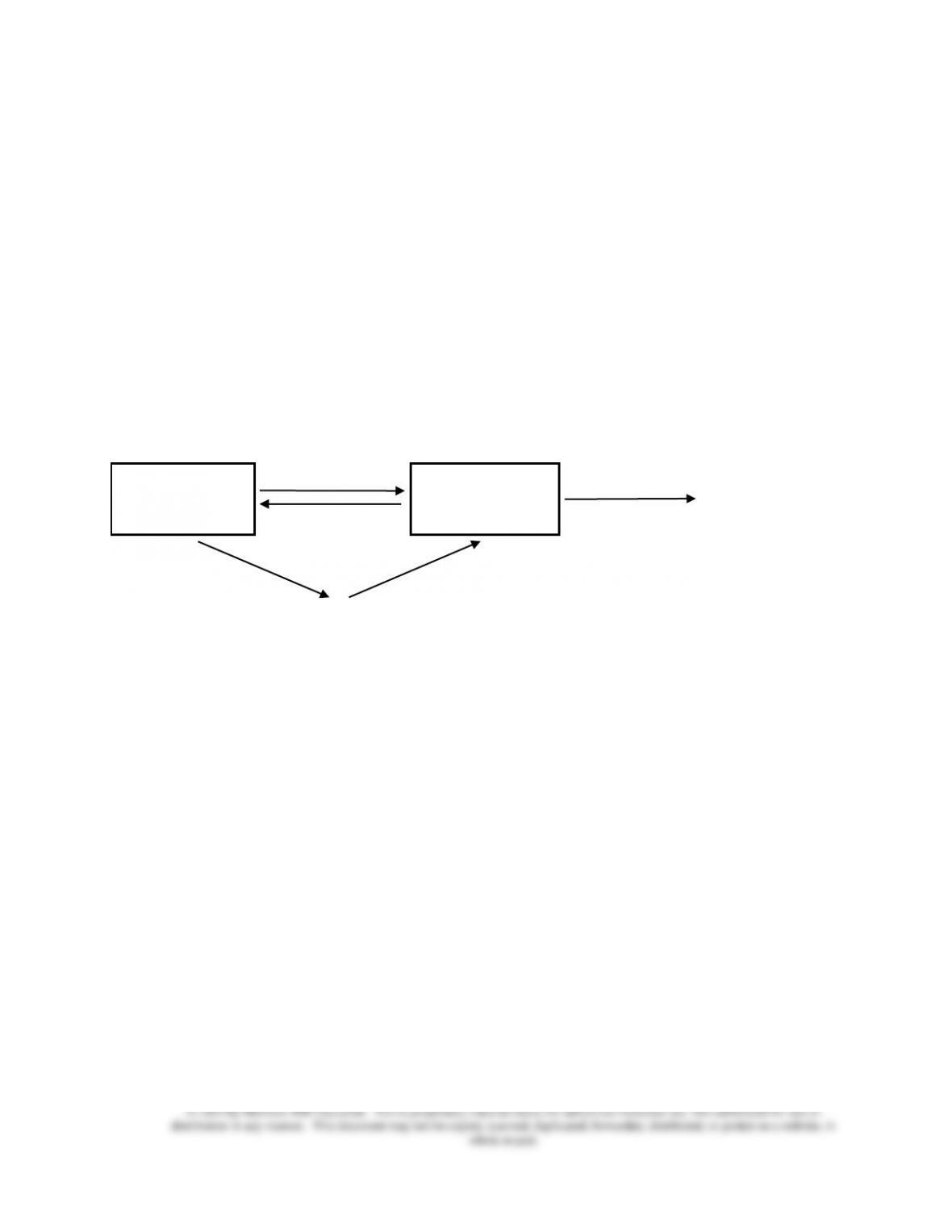
Example 1: It costs the selling division $20 to produce one unit of a component which,
if transferred to the buying division, requires additional work costing $45 and can be
sold to outside customers for $100 per unit of the finished product. Assume that the
transfer price in question is TP. Then
Selling division’s profit (S) = TP – $20.
Buying division’s profit (B) = $100 – TP – $45.
Total profit for the firm = (TP – $20) + ($100 – TP – $45) = $35.
If TP = $20, then S = $0 and B = $35. The selling division gets nothing while the
buying division reaps all the profit.
If TP = $55, then S = $35 and B = $0. The situation is reversed.
If TP is set somewhere between $20 and $55, both divisions (and the company) will
benefit from the transfer while sharing the profit of $35. For example, if TP = $40, then
S = $20 and B = $15. The issue now is how to determine the transfer price acceptable
by both divisions.
Chapter 15 – Transfer Pricing
15-5
LO 15-2 Explain the general transfer pricing rules and understand the
underlying basis for them.
♦ The transfer price is a device to motivate managers to act in the best interests of the company.
• Keeping separate accounting records and using transfer prices to record exchanges
among divisions allow firms to delegate decisions to local managers while holding them
responsible for divisional performance.
• There may be an intermediate market for the kind of outputs delivered by the selling
division. The buying division may also purchase these items from the intermediate
market, but it sells its products in the final market, as shown in Exhibit 15.2.
Selling Division
Goods or services
Buying Division
Final Market
Transfer price
Intermediate
Market
• There is a simple test, an application of the differential profitability analysis discussed
in Chapter 4, to determine whether the calculated transfer price is optimal.
(1) Given the market prices and the costs in the firm, does the transfer increase firm
profit?
(2) Given the transfer price, the intermediate market prices, and the divisional costs, does
the transfer increase the selling division profit?
(3) Given the transfer price, the final market prices, and the divisional costs, does the
transfer increase the buying division profit?
• If the answer to the first question is “yes,” the answers to questions 2 and 3 must also be
“yes” or the transfer price is not optimal. If the answer to the first question is “no,” the
answer to either question 2 or 3 (or both) must be “no” or the transfer price is not optimal.

Chapter 15 – Transfer Pricing
15-6
Example 2 (Revised from Example 1): It costs the selling division $60 to produce one
unit of a component which, if transferred to the buying division, requires additional
work costing $45 and can be sold to outside customers for $100 per unit of the finished
product. Assume that the transfer price in question is TP. Then
Selling division’s profit (S) = TP – $60.
Buying division’s profit (B) = $100 – TP – $45.
Total profit for the firm = (TP – $60) + ($100 – TP – $45) = -$5.
Whatever the transfer price is, the firm will suffer a loss of $5 per unit. The internal
transfer is better called off since the answer to the first question above is “no.”
• In determining the optimal transfer price, the important issue is the nature of the
intermediate market where the goods are being transferred. Two cases are considered:
(1) A perfect intermediate market, and
(2) No intermediate market.
♦ A market is perfect if buyers can buy and sellers can sell any quantity without affecting the
price.
• The product being sold in a perfect market is not differentiated by quality, service, or
other characteristics.
• The parties in a perfect market are “price takers.”
• The optimal transfer price in a perfect intermediate market is the (intermediate) market
price.
• At any price lower than the intermediate market price, the selling division will supply
no output to the buying division. At any higher price, the buying division will not
purchase any output from the selling division.
• Given the optimal transfer price, the two division managers acting independently will
make the transfer that the corporate staff would set if it had all the information that the
division managers have.
• With an efficient transfer pricing system like this, when external markets (both
intermediate and final) change, there is no need to change the transfer price policy.
♦ If there is no intermediate market for the goods being transferred, or the company has decided
that it will not allow the divisions to buy or sell the items externally, then the only outlet for the

Chapter 15 – Transfer Pricing
15-7
selling division is the buying division, and the only source of supply for the buying division is
the selling division.
• At any transfer price below the variable cost in the selling division, no transfers will
take place because the selling division will lose money on each unit sold.
• At any transfer price above the final market price less the (other) variable cost of the
buying division, no transfers will take place.
• To be the optimal transfer price in general, it cannot depend on the current external
price.
• In this case, the only price that will work, for all possible external market prices, is the
variable cost of the selling division, assuming it is not operating at capacity.
• The fixed costs of the selling division will be incurred (i.e., unavoidable) regardless of
whether the transfer is made, and is irrelevant for the decision.
Example 3 (Revised from Example 1): It costs the selling division $20 (variable cost
only) to produce one unit of a component which, if transferred to the buying division,
requires additional work costing $45 and can be sold to outside customers for $100 per
unit of the finished product. There is no intermediate market for the component in
question.
The selling division’s fixed cost is not a factor because it is unavoidable (therefore not
differential). The selling division will not accept a transfer price below $20, the
variable cost per unit.
Given the final market price of $100 and the additional cost of $45 to make the
component salable, the buying division will not pay more than $55 for the part.
If the final market price drops to $65 (= selling division’s variable cost of $20 + buying
division’s additional cost of $45) or lower, no internal transfer should take place as the
firm will suffer a loss.
With a final market price of $65 or more, the internal transfer benefits the firm. The
optimal transfer price should be set at the variable cost of the selling division to ensure
steady exchanges between the two divisions.
♦ The transfer price that is optimal represents the value of the goods being transferred to the
buying division at the transfer point.

Chapter 15 – Transfer Pricing
15-8
• A general principle on setting the transfer price that leads managers to make decisions
in the firm’s best interests is:
Transfer
price
=
Outlay
costa
+
Opportunity cost of the resource
at the point of transfer.b
a The incremental cost to produce the good being transferred and bring it to the point of
transfer.
b The opportunity cost of choosing to transfer internally and not sell it on the outside
(intermediate) market.
• In the case of a perfect intermediate market, the value to the buying division is equal to
what it can be sold for in the intermediate market (i.e., intermediate market price).
• If there is no intermediate market, there is no opportunity cost and the only cost is the
variable, or outlay cost. The transfer price should be set accordingly.
• If the selling division is operating at capacity and there is a market for the goods being
transferred, the market price of the goods should be used.
• If the selling division is operating at capacity and there is no intermediate market, then
the opportunity cost depends on the cost of adding capacity.
• If the intermediate market is imperfect, the optimal transfer price is still the outlay cost
plus the opportunity cost. However, in this case the opportunity cost is less than the
current intermediate market price less the outlay cost.
♦ The general principle can be easily applied with the following two general rules when
establishing a transfer price.
(1) If an intermediate market exists, the optimal transfer price is the market price.
(2) If no intermediate market exists, the optimal transfer price should be the outlay cost
for producing the goods (generally, the variable costs).
• This transfer price ensures that if the managers make the correct decision for their
divisions, the result (transfer or no transfer) will also be the correct decision for the firm.
======================

Chapter 15 – Transfer Pricing
15-9
Demonstration Problem 1
A manufacturing company has two divisions: Motor and Pump. The Motor Division produces an
intermediate good, motors, that can be used as an input for the Pump Division. The Motor
Division also sells the motors in the open market. The Pump Division secures the motors from
either the Motor Division or an outside supplier and assembles the parts together to make water
pumps which are sold to the consumers. The Pump Division needs an average of 10,000 motors
every year. The following information is available.
Motor
Division
Pump
Division
Selling price
$20
Selling price
$80
Variable cost
12
Variable cost (other than the motor)
30
Contribution margin
$8
Variable cost of the motor
(purchased from an outside supplier)
19
Contribution margin
$31
Required:
Discuss the possible transfer prices under each of the following independent situations.
1. The Motor Division sells all it can produce (80,000 motors) to the outside customers.
2. The Motor Division can produce 80,000 motors but sells only 65,000 motors to the
outsider customers.
3. The Pump Division requires a customized version of the motors that only the Motor
Division can supply. The variable cost for the Motor Division would be $22 per motor.
The Motor Division is running at capacity.
4. The Pump Division requires a customized version of the motors that only the Motor
Division can supply. The variable cost for the Motor Division would be $22 per motor.
The Motor Division has the excess capacity to handle the Pump Division’s demand.
Solution:
1. Since the Motor Division is operating at capacity, the only transfer price that is
acceptable is the intermediate market price of $20, which is the sum of the outlay cost
($12) and the opportunity cost at the point of transfer ($8, the contribution margin lost
due to internal transfer). The Pump Division, on the other hand, gets its motors from an
outsider supplier for $19 per unit and is not likely to give up the source. There will be no
transfers between the Motor Division and the Pump Division.
2. Since the Motor Division has excess capacity, it will accept a price that at least covers the
variable cost of $12 per motor. There is no opportunity cost in this situation. The Pump
Division currently pays $19 per motor from an outsider supplier. So a transfer price
between $12 and $19 will benefit both divisions.

Chapter 15 – Transfer Pricing
15–10
3. Since the Motor Division is operating at capacity, it will not accept any price less than
$30, which is the sum of the outlay cost ($22) and the opportunity cost at the point of
transfer ($8, the contribution margin lost due to internal transfer). The Pump Division
will have to pay at least $30 each as this is the only source for the customized motors.
4. Since the Motor Division has excess capacity, it will accept a price that at least covers the
variable cost of $22 per motor. There is no opportunity cost in this situation. The Pump
Division may even pay a normal markup just to secure these pumps.
======================
LO 15-3 Identify the behavioral issues and incentive effects of negotiated
transfer prices, cost-based transfer prices, and market-based
transfer prices.
♦ A conflict can occur between a company’s interests and the divisional manager’s interests
when transfer price-based performance measures are used.
• The general transfer pricing rules are easy to state but difficult to apply in practice.
• There are three general approaches to this type of problem in a decentralized
organization:
(1) Direct intervention by top management,
(2) Centrally established transfer price policies, and
(3) Negotiated transfer prices.
♦ If the transfer is an extraordinarily large order, or if internal transfers are rare, direct
intervention could be the best solution to the problem.
• The disadvantages of direct intervention are that
(1) top management may become swamped with pricing disputes, and
(2) individual division managers will lose the flexibility and other advantages of
autonomous decision making, the benefits from decentralization.
• As long as transfer pricing problems are infrequent, the benefits of direct intervention
could outweigh the costs.
♦ A transfer pricing policy should allow divisional autonomy yet encourage managers to pursue
corporate goals consistent with their division goals. The policy should also consider the