
Chapter 01 – Cost Accounting: Information for Decision Making
1-1
Chapter 1
Cost Accounting: Information for Decision Making
Learning Objectives
1. Describe the way managers use accounting information to create value in organizations.
2. Distinguish between the uses and users of cost accounting and financial accounting
information.
3. Explain how cost accounting information is used for decision making and performance
evaluation in organizations.
4. Identify current trends in cost accounting.
5. Understand ethical issues faced by accountants and ways to deal with ethical problems
that you face in your career.
Chapter Outline
I. VALUE CREATION IN ORGANIZATIONS
A. Why start with value creation?
B. Value chain
C. Supply chain and distribution chain
D. Using cost information to increase value
E. Accounting and the value chain
II. ACCOUNTING SYSTEMS
A. Financial accounting
B. Cost accounting
C. Cost accounting, GAAP, and IFRS
D. Customers of cost accounting
III. OUR FRAMEWORK FOR ASSESSING COST ACCOUNTING SYSTEMS
A. The manager’s job is to make decisions
B. Decision making requires information
C. Finding and eliminating activities that don’t add value
D. Identifying strategic opportunities using cost analysis
E. Owners use cost information to evaluate managers
IV. COST DATA FOR MANAGERIAL DECISIONS
A. Costs for decision making
B. Costs for control and evaluation
♦ Budgeting
C. Different data for different decisions

Chapter 01 – Cost Accounting: Information for Decision Making
1-2
V. TRENDS IN COST ACCOUNTING THROUGHOUT THE VALUE CHAIN
A. Cost accounting in research and development (R&D)
B. Cost accounting in design
C. Cost accounting in purchasing
D. Cost accounting in production
E. Cost accounting in marketing
F. Cost accounting in distribution
G. Cost accounting in customer service
H. Enterprise resource planning
I. Creating value in the organization
VI. KEY FINANCIAL PLAYERS IN THE ORGANIZATION
VII. CHOICES: ETHICAL ISSUES FOR ACCOUNTANTS
A. What makes ethics so important?
B. Ethics
C. Sarbanes-Oxley Act of 2002 and ethics
VIII. COST ACCOUNTING AND OTHER BUSINESS DISCIPLINES
IX. SUMMARY
X. APPENDIX: Institute of Management Accountants Code of Ethics
A. Statements of ethical professional practice
B. Principles
C. Standards
D. Resolution of ethical conflict
Chapter 01 – Cost Accounting: Information for Decision Making
1-3
Key Concepts
LO1 Describe the way managers use accounting information to create value
in organizations.
♦ Cost accounting helps manages achieve the maximum value for their organizations by
providing information for decision making and by measuring the effects of decisions on the
value creation of the organizations.
♦ Value chain is the set of activities that transforms raw resources into the goods and services
end users purchase and consume, and includes the treatment or disposal of any waste generated
by the end users.
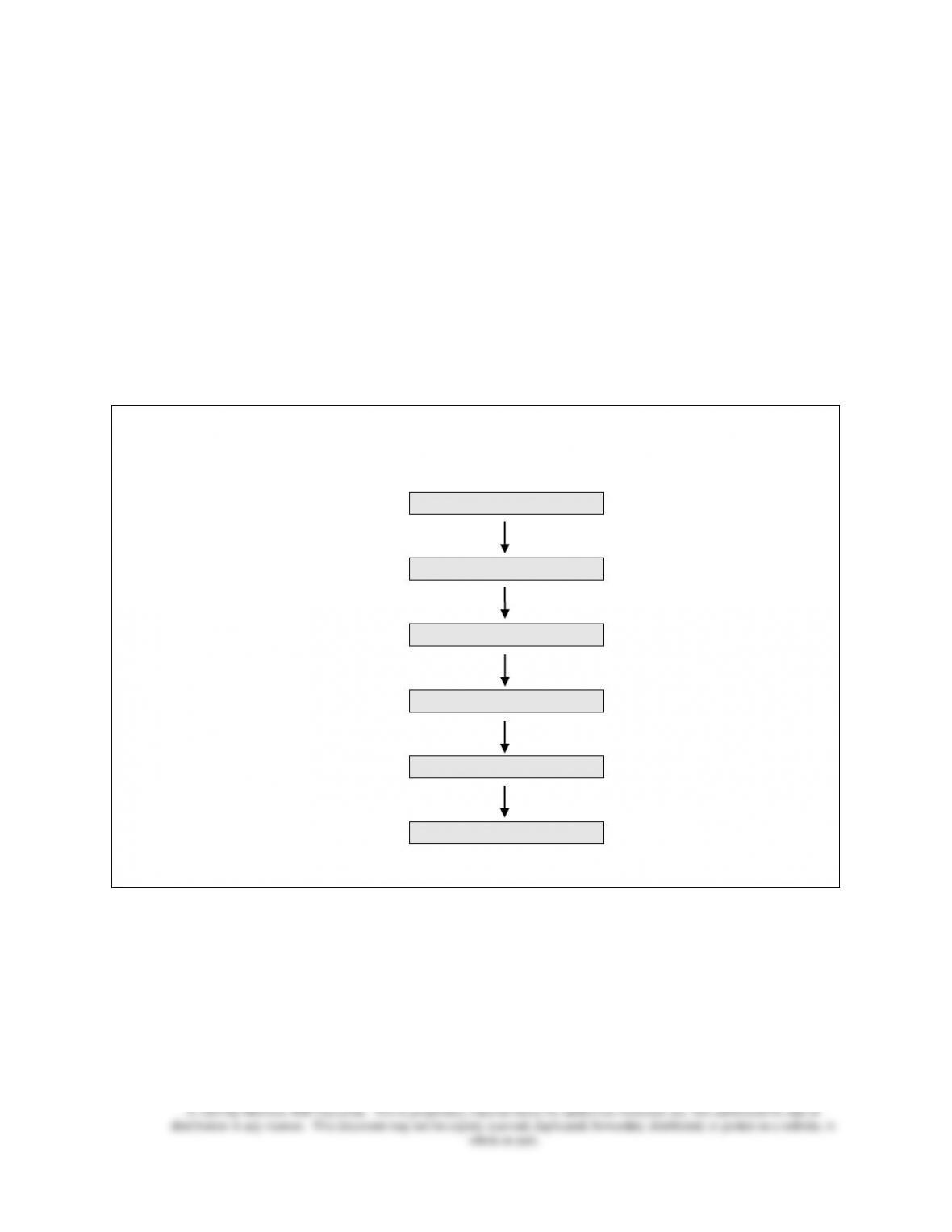
Example 1: The value chain for the gasoline industry may include the following.
Oil search and drilling
Oil refining
Gasoline distribution
Retail outlets
End users
Emission treatment
• The entire value chain consists of vendors and suppliers in the upstream and distributors
and customers in the downstream of an organization whose efficient coordination
depends on the information provided by the cost accounting system.
♦ Value-added activities are those that customers perceive as adding utility to the goods or
services they purchase, including (see Exhibit 1.1)

Chapter 01 – Cost Accounting: Information for Decision Making
1-4
• Research and development (R&D): The creation and development of ideas related to
new products, services, or processes.
• Design: The detailed development and engineering of products, services, or processes.
• Purchasing: The acquisition of goods and services needed to produce a good or service.
• Production: The collection and assembly of resources to produce a product or deliver a
service.
• Marketing and Sales: The process of informing potential customers about the attributes
of products or services that leads to their sale.
• Distribution: The process for delivering products or services to customers.
• Customer service: The support activities provided to customers concerning a product or
service.
♦ Value is created when an idea is established and continues to increase along the way. Each of
the value chain components adds value to the product or service.
• Administrative functions, such as human resource management and accounting, are
included in every business function of the value chain.
♦ Supply chain is the set of firms and individuals that sell goods and services to the firm.
Distribution chain is the set of firms and individuals that buy and distribute goods and services
from the firm.
• These suppliers and customers are on the firm’s boundaries.
• The supply chain and distribution chain are the parts of the value chain outside the firm.
♦ Value chain creates value for which the customer is willing to pay.
• Customers are concerned with the total cost of producing a product or service but not
with which firm in the supply chain incurred the cost.
• Firms must decide where in the value chain a value-added component is performed
most cost effectively.
♦ Cost accounting focuses on how the individual stages contribute to the value and how to work
with other managers to improve performance.

Chapter 01 – Cost Accounting: Information for Decision Making
1-5
[Assign Exercises 1-15, 1-16]
LO2 Distinguish between the uses and users of cost accounting and financial
accounting information.
♦ Accounting systems provide information for decision makers. Depending on the perspectives
of the primary user of the information (outside versus inside the organization), the accounting
systems can be classified into financial and cost (or managerial) systems.
• Investors, creditors, government agencies, tax authorities, etc. are outside the
organization. Managers are inside the organization.
• Financial accounting is the field of accounting that reports financial position and
income according to accounting rules, which make financial accounting data comparable
across firms.
• Managers are interested in financial accounting information as well. But such
information is not sufficient for making operational decisions.
• Cost accounting is the field of accounting that measures, records, and reports
information about costs.
• Cost accounting information must be relevant for the particular decisions to be made by
managers in a particular business environment. This perspective shapes how a cost
accounting system is designed to provide good information and to add value to the
organization.
• Managers add value to the organization by the decisions they make, while accountants
add value by providing good information to managers making the decision.
• The major differences between financial and cost accounting are summarized in Exhibit
1.2.
♦ External parties such as investors and creditors evaluate company and management
performance by using financial accounting information as governed by generally accepted
accounting principles (GAAP) and international financial reporting standards (IFRS).
• GAAP and IFRS represent the rules, standards, and conventions that guide the
preparation of financial accounting statements for firms registered in the U.S. and in
many other countries, respectively.

Chapter 01 – Cost Accounting: Information for Decision Making
1-6
• Financial accounting information thus prepared, is consistent and comparable across
different companies, but may not be appropriate for managerial decision making.
• Cost data for managerial use within the organization are not constrained by GAAP or
IFRS. Instead, decision relevancy, which affects the future, determines the type of cost
information suitable for the problems at hand.
♦ Cost accounting information is in demand throughout the organization. Users of such
information must be identified and provided with best possible information for managerial
purposes.
• At the production level, cost accounting information is provided frequently and is used
to control and improve operations.
• At the middle management level, deviations from the expectations (budgets) necessitate
investigation and corrective actions.
• At the executive level, cost accounting information is integrated into financial
information to assess the company’s overall success strategically and is provided on a
monthly, quarterly, or annual basis.
♦ The most serious problems with accounting systems appear to occur when managers attempt to
use accounting information that was developed for external reporting for decision making.
• Different uses of accounting information require different types of accounting
information.
LO3 Explain how cost accounting information is used for decision making
and performance evaluation in organizations.
♦ The goals of an organization are achieved through the decisions made by managers.
• Recurring themes:
(1) The manager’s job is to make decisions that determine the performance of the
organization.
(2) The accounting system is a primary source of information for managers to make
decisions.
(3) Accounting systems also provide information to the owners of the organization, who
are not managers, to evaluate the performance of the organization and the managers.

Chapter 01 – Cost Accounting: Information for Decision Making
1-7
♦ Nonvalue-added activities are activities that do not add value to the goods or services from
the customer’s perspective. Examples include moving inventory around and reworking defective
units.
• Activities cause costs.
• These nonvalue-added activities should be identified and eliminated, therefore the costs
associated with them can also be eliminated. Cost reduction can be translated into lower
price and/or better service to customers.
• A well-designed cost accounting system can also identify nonvalue–added activities that
cross boundaries in the value chain.
♦ Cost-benefit analysis is the process of comparing benefits (often measured in savings or
increased profits) with costs associated with a proposed change within an organization.
• Managers should perform cost-benefit analyses to assess whether proposed changes in
an organization are worthwhile.
♦ Companies use the value chain and other information about the costs of activities to identify
strategic advantages in the market place.
• A company can proactively identify activities that customers value while providing
such activities at lower cost.
♦ When owners of a business are not also managers, both parties’ interests may not be properly
aligned. The accounting information system provides information to the owners about the
performance of the organization and the managers.
♦ Cost data can be used for decision making, for control and evaluation, and for preparing
budgets, among others.
• To evaluate the financial consequences of alternatives, estimates have to be made for
future costs, revenues, and/or assets based on past information.
• Identification of the proper cost driver – factor that causes, or “drives,” costs – also
helps predict future results.
• Differential costs and revenues are costs and revenues that change in response to a
particular course of action. Items that do not change will not affect outcome, and are
therefore irrelevant to the decision.

Chapter 01 – Cost Accounting: Information for Decision Making
1-8
======================
Demonstration Problem
Jim is a florist who runs Bountiful Flower Shop as a sole owner. His typical monthly operating
results include the following: Sales revenue $4,000, Flower costs $ 800, Supplies $300, Labor
costs $600, Utilities $250, Rent $720, and Other costs $350.
He recently attended a trade show and was attracted by a national chain that offered him referral
service, baskets, and new flower arrangements in exchange for a monthly licensing fee of $1,000.
He figures that the additional business from referrals will increase his revenues by 40 percent,
flower materials, supplies, and labor costs by 45 percent, utilities by 10 percent, and other costs
by 20 percent. Rent will not change as he still uses the same facility.
Required:
1. Should Jim expand his business to be associated with the national chain? Please explain.
2. If Jim can negotiate a different term with the national chain, what licensing fee makes
him indifferent between the two choices (i.e., the status quo of going solo vs. the
alternative of being associated with the national chain)?
Solution:
Bountiful Flower Shop
Projected Income Statement
For One Month
Status Quo
(1)
Alternative
(2)
Difference
(3) = (2) – (1)
Sales revenue
$4,000
$5,600a
$1,600
Costs:
Flower
800
1,160b
360
Supplies
300
435b
135
Labor
600
870b
270
Utilities
250
275c
25
Rent
720
720
0
Licensing fee
0
1,000
1,000
Other costs
350
420d
70
Total costs
3,020
4,880
1,860
Operating profits
$980
$720
$(260)
a Increase by 40%
b Increase by 45%
c Increase by 10%
Chapter 01 – Cost Accounting: Information for Decision Making
1-9
d Increase by 20%
1. Jim should not expand his business because the projected results show that he will be
worse off by $260 per month. Rent remains the same under either option and is irrelevant
to the decision.
2. Taking into account the loss of $260 with the alternative, a licensing fee of $740 (=
$1,000 – $260) per month will produce the same operating profits as before ($980). Any
amount less than $740 per month will make expansion a better alternative.
======================
• Businesses tend to group specific functions among employees into organizational units
such as departments, divisions, segments, or subsidiaries as shown on an organization
chart.
• A responsibility center is a specific unit of an organization assigned to a manager who
is held accountable for its operations and resources.
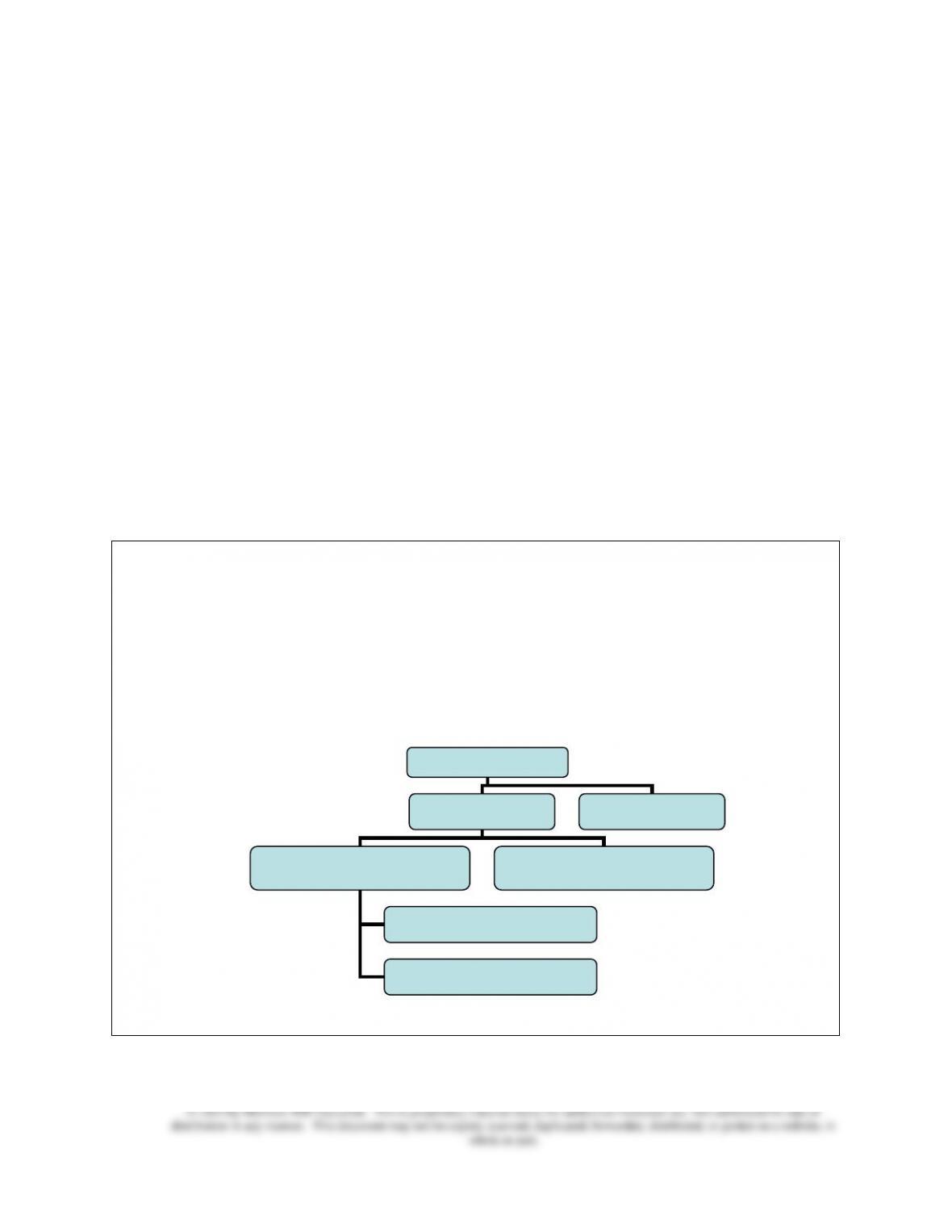
Example 2: The following organization chart shows how a home builder organizes its
business units. The sales manager and the construction manager of Fox Run Estate are
responsible for revenues and costs, respectively, and report to the project manager, who
is responsible for the financial success of the Fox Run Estate project and in turn
reports, along with other project managers, to a regional manager in charge of the Mid-
Atlantic region. All regional managers report to the general manager.
General Manager
Regional Manager
(Mid-Atlantic Region)
Other Regional Managers
Project Manager
(Fox Run Estate)
Other Project Managers
Sales Manager
(Fox Run Estate)
Construction Manager
(Fox Run Estate)