Chapter 04 – Product and Service Design
4-7
Education.
Solutions
1. Student answers will vary.
a. GPS versus maps: GPS offers voice commands—maps do not. GPS is more current than
maps are and offers more detailed directions to many more locations than a single map does.
A map may show both the origin and the destination simultaneously—GPS typically does
landlines. Value depends on use, e.g., for a homebound person who rarely travels, landlines
may offer high value.
c. Online shopping vs. “bricks and mortar” shopping: Online shopping requires that a customer
shopping; however, customers must be willing to wait for their products to be delivered.
Online shopping is more convenient given that a customer can be at any location to place an
order. Customers may find higher value in the online experience given the convenience, the
wider product selection, and lower (or equal) prices.
d. Standard gasoline automobile engines versus hybrids: Standard gasoline engines offer greater
e. Online course vs. classroom: Online courses require access to a computer—classroom does
not. Online courses enable a student to take a course from any location—classroom requires
that the student travel to the university. Online courses tend to be less interactive than
classroom courses. Online courses are more convenient and they may cost less because
public access, that cable offers. Satellite television is subject to outages during bad weather
(is less convenient)—cable is not. Cost and value of both options depend on the service
options selected by customers.
4-8
Education.
2. a. Student answers will vary depending on which vehicles they researched.
b. Crash test ratings will be an order qualifier for some buyers and an order winner for other
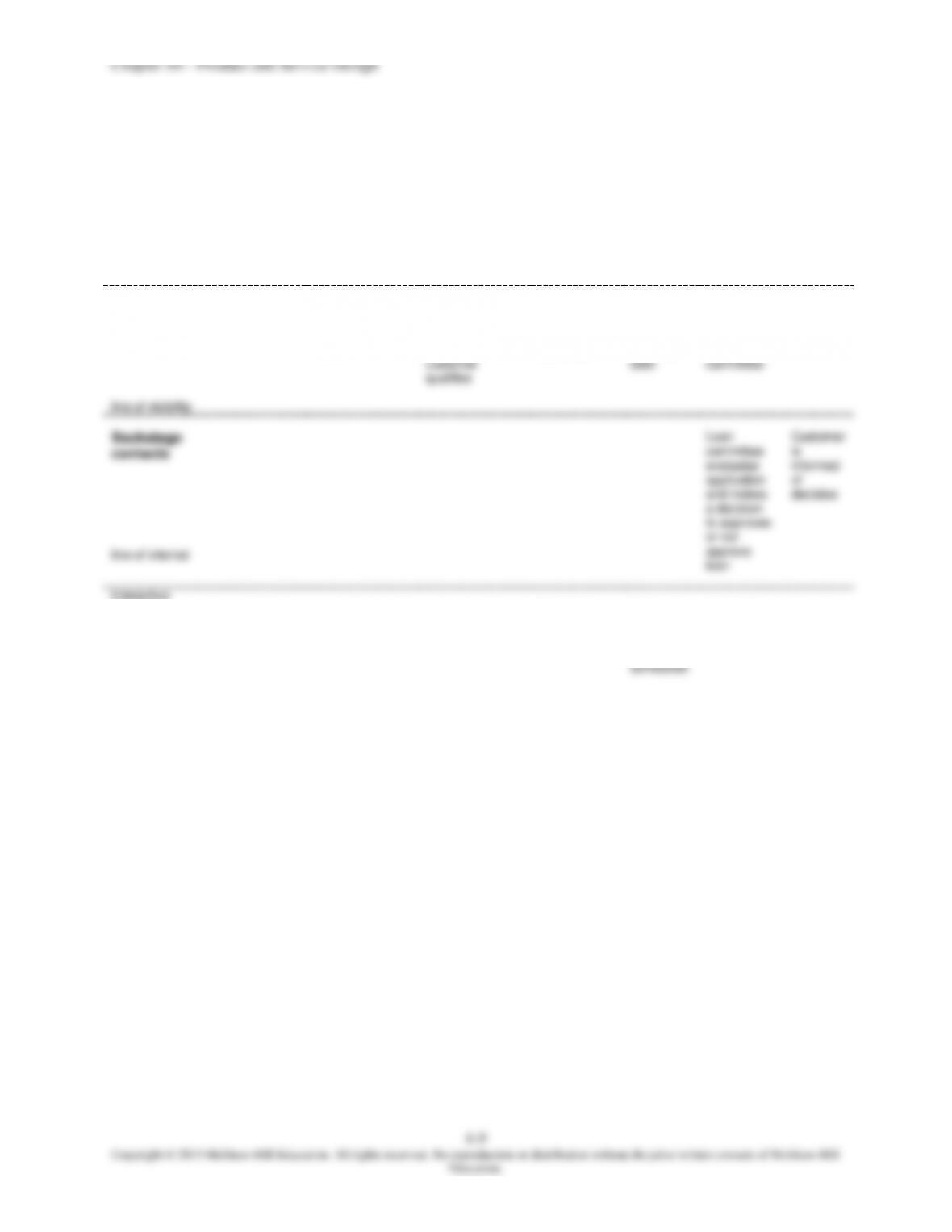
3. a. Customer makes a savings deposit using a teller.
Customer
actions
Arrive and
fill out deposit
ticket
Wait in line if
necessary
Hand teller cash
or check and
deposit ticket
Receive
receipt
Customer
leaves
line of
information
Contact
Person(s)
Teller greets
customer
Teller checks
cash or check
and enters
amount
Teller prints
out receipt
and hands to
customer
line of visibility
Backstage
contacts
line of internal
Account is
automatically
updated.
interaction
Support
Lunch and rest
breaks are
managed based
on waiting lines
Cash is
counted and
reconciled
with
transactions
Schedules
are set
weekly
Employees
are paid
Chapter 04 – Product and Service Design
4–10
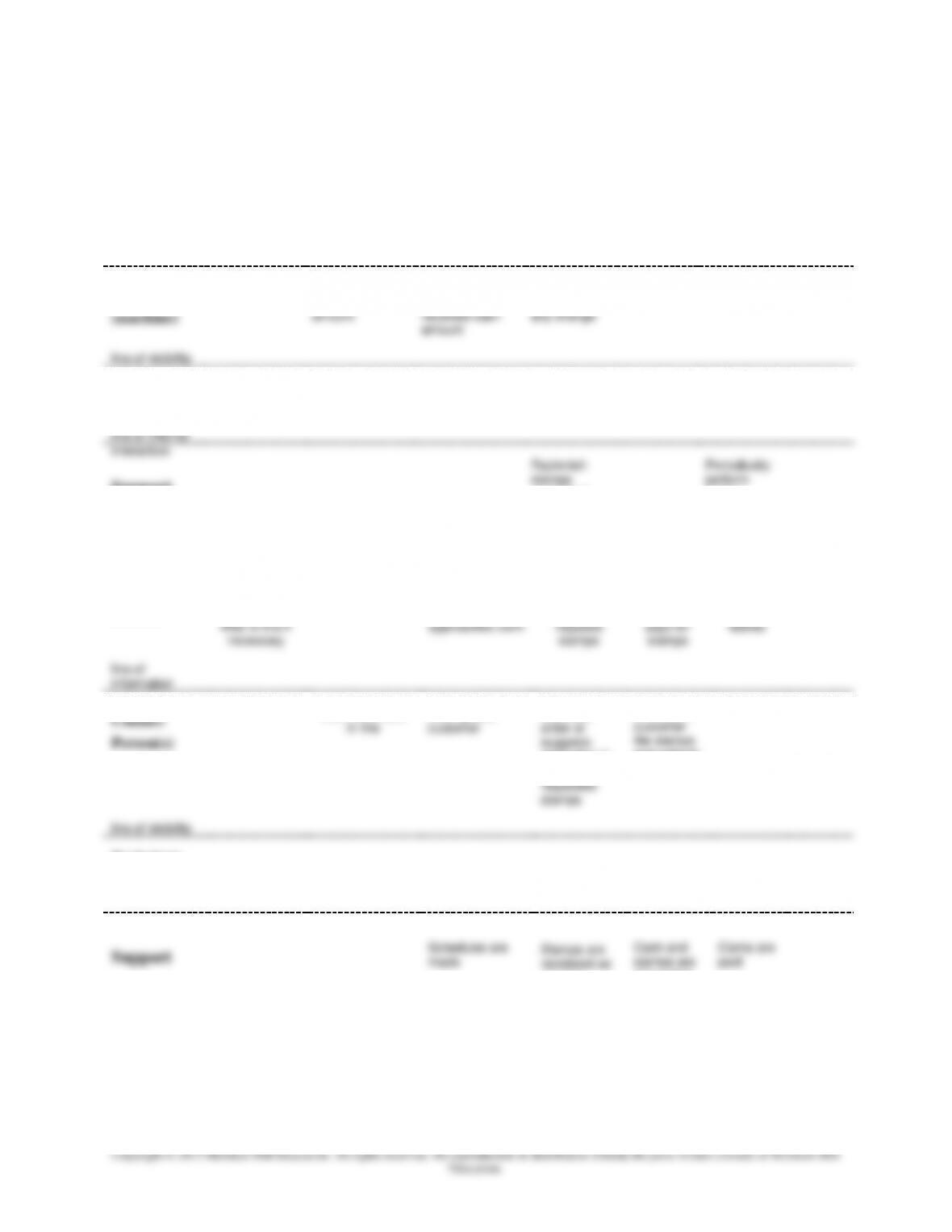
4. a. Buy stamps from a machine.
Customer
actions
Arrive and
wait in line if
necessary
Insert cash
Make a
selection
Receive
stamps and
any change
Count
change
Customer
leaves
line of
information
Contact
(machine)
Receive and
record cash
amount
Verify cost does
not exceed
recorded cash
amount
Dispense
stamps and
any change
line of visibility
Backstage
contacts
line of internal
interaction
Support
Replenish
stamps
periodically
Periodically
perform
routine
maintenance.
4. b. Buy stamps from a postal clerk.
Customer
actions
Arrive and
Wait in line if
necessary
Customer
approaches clerk
Customer
requests
stamps
Customer
pays for
stamps
Customer
leaves
line of
information
Contact
Person(s)
Clerk calls next
in line
Clerk greets
customer
Clerk fills
order or
suggests
alternative if
out of
requested
stamps
Clerk gives
customer
the stamps
and collects
money
line of visibility
Backstage
contacts
line of internal
interaction
Support
Schedules are
made
Stamps are
reordered as
needed
Cash and
stamps are
reconciled
Clerks are
paid
4–11
5. a. Steps for Self-Service
1. Customer Selects Station
2. Customer Selects Octane Level
3. Customer Pumps Desired Amount of Gas and Performs Other Services
4. Customer Pays Cashier for Gas and Other Products (Cash) Inside Station
5. Customer Returns to Auto and Drives Off
b. Steps for Full Service
1. Customer Selects Station
2. Customer Tells Attendant Type and Amount of Gas and Services Desired
3. Attendant Pumps Desired Amount of Gas and Performs Other Services
4. Customer Pays Attendant Cash for Gas and Other Services
5. Customer Drives Off
6. Steps for Making Cash Withdrawal from an ATM
1. Customer Inserts Card: Magnetic Strip Should Be Facing Down
2. Customer Watches Screen for Instructions
3. Customer Selects Transaction Options:
1) Deposit
2) Withdrawal
3) Transfer
4) Other
4. Customer Enters Information:
5. Deposit/Withdrawal:
6. Customer Removes Card and Receipt (which serves as the transaction record)
Potential Failure Points:
1. Customer error: Inserts card incorrectly, enters incorrect PIN, pushes incorrect buttons, fails
2. Machine error: Paper jam, money jam, or power failure.
3. Support service error: Insufficient money supply or paper receipts in machine.
4–12
Education.
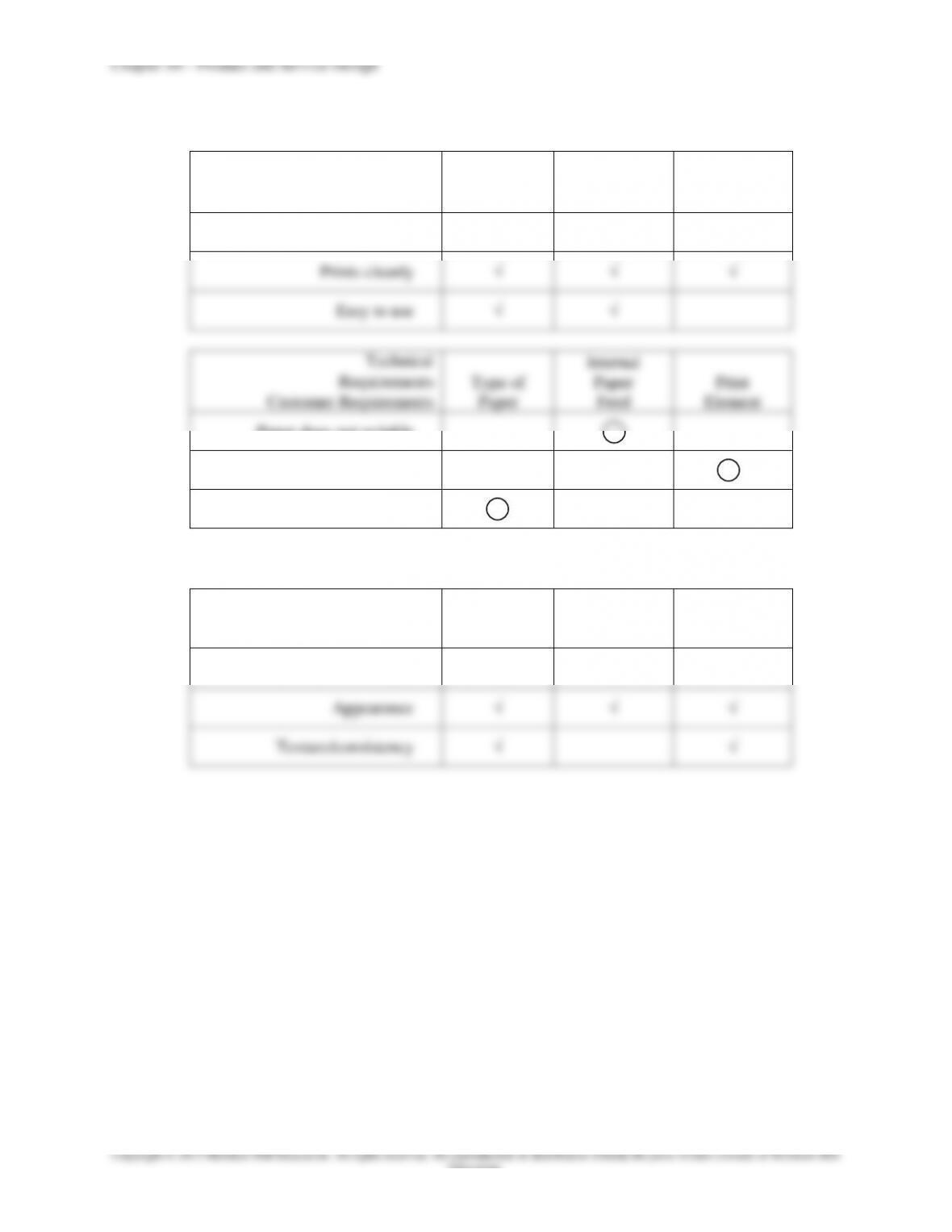
7. a. Roll Roundness and Tensile Strength
b.
Technical
Type of
Paper
Internal
Paper
Feed
Print
Element
Requirements
Customer Requirements
Paper does not wrinkle
√
√
Prints cleanly
√
√
√
Easy to use
√
√
Technical
Type of
Paper
Internal
Paper
Feed
Print
Element
Requirements
Customer Requirements
Paper does not wrinkle
Prints cleanly
Easy to use
8.
Technical
Requirements
Ingredients
Handling
Preparation
Customer Requirements
Taste
√
√
Appearance
√
√
√
Texture/consistency
√
√
.
.
.