
Chapter 04 – Demanding Ethical and Socially Responsible Behavior
4-31
ing its OWN ENVIRONMENT a better place.
4. The text uses the example of Ciba Specialty
Chemicals developing a low-salt textile dye that
could be sold at a premium price.
5. Not all environmental efforts are financially suc-
cessful, such as StarKist’s failed “tuna-safe” ini-
tiative.
6. The green movement has had a positive impact
on the U.S. labor force.
7. To publicize their commitment to society, many
corporations PUBLISH REPORTS that docu-
ment their net social contribution.
F. SOCIAL AUDITING
1. How can you measure how well organizations
are incorporating social responsiveness into top
management’s decision making?
2. A SOCIAL AUDIT is a systematic evaluation of
an organization’s progress toward implementing
socially responsible and responsive programs.
3. Many SOCIAL AUDITS consider such things as:
a. Workplace issues
b. The environment
c. Product safety
d. Communications
e. Military weapons contracting
f. International operations
g. Human rights
4. Some suggest that positive actions be added up

Chapter 04 – Demanding Ethical and Socially Responsible Behavior
4-32
SEEKING
sustainability
PPT 4-38
Sustainability is In
the Bag
SUSTAINABILITY’S in the BAG
4-38
• Rickshaw Bagworks makes
sustainable accessories built to
last.
• The “three Fs” are followed
company-wide.
1. Form
2. Function
3. Footprint
PPT 4-39
Social Auditing
SOCIAL AUDITING
4-39
LO 4-5
• Social Audit — A systematic evaluation of an
organization
’
s progress toward implementing socially
responsible and responsive programs.
• Five Types of Watchdogs
1) Socially conscious investors
2) Socially conscious research
organizations
3) Environmentalists
4) Union officials
5) Customers
critical thinking
exercise 4-5
SURVEYING PUBLIC INTEREST OR-
GANIZATIONS
This exercise asks students to research two organizations
involved in public interest activities. (See the complete
exercise on page 4.67 of this manual.)
Chapter 04 – Demanding Ethical and Socially Responsible Behavior
4-33
and negative effects subtracted to get a NET
SOCIAL CONTRIBUTION.
5. FIVE GROUPS serve as “WATCHDOGS” moni-
toring how well companies enforce their ethical
and social responsibility policies:
a. SOCIALLY CONSCIOUS INVESTORS, who
insist that companies extend the company’s
own high standards to all their suppliers.
b. SOCIALLY CONSCIOUS RESEARCH OR-
GANIZATIONS, that analyze and report on
CSR efforts.
c. ENVIRONMENTALISTS, who apply pres-
sure by naming names of companies that
don’t abide by the environmentalists’ stand-
ards.
c. UNION OFFICIALS, who hunt down viola-
tions and force companies to comply to
avoid negative publicity.
d. CUSTOMERS, who take their business
elsewhere if a company demonstrates so-
cially irresponsible practices.
6. It isn’t enough for a company to be right when it
comes to ethics and social responsibility—it also
has to convince customers that it’s right.
learning objective 6
Analyze the role of U.S. businesses in influencing ethical behavior and social re-
sponsibility in global markets.
IV. INTERNATIONAL ETHICS AND SOCIAL RE-
SPONSIBILITY
Chapter 04 – Demanding Ethical and Socially Responsible Behavior
4-34
test
prep
PPT 4-40
Test Prep
TEST PREP
4-40
• What is corporate social responsibility, and how
does it relate to each of a business’s major
stakeholders?
• What is a social audit, and what kinds of activities
does it monitor?
Chapter 04 – Demanding Ethical and Socially Responsible Behavior
4-35
A. ETHICAL PROBLEMS ARE NOT UNIQUE TO THE
UNITED STATES.
1. The text gives the examples of recent “influence
peddling” in Japan, South Korea, Zaire, China,
and others.
2. What is new is that leaders are being held to
new, higher standards.
B. Many American businesses, such as Sears and
Dow Chemical, are demanding socially responsible
behavior from international suppliers.
1. They make sure their suppliers DO NOT VIO-
LATE U.S. HUMAN RIGHTS AND ENVIRON-
MENTAL STANDARDS.
2. In contrast, companies like Nike have been criti-
cized for the low pay, long hours, and unsafe
working conditions for factory workers in Asia.
3. Nike has been monitoring efforts to improve
labor conditions since the 1990s and in 2005 re-
leased names and locations of factories to en-
courage transparency.
4. Should international suppliers be required to ad-
here to U.S. ethical standards? What about
countries where child labor is accepted? What
about multinational corporations?
a. None of these questions are easy to answer.
b. They show how complex social responsibility
issues are in international markets.
5. Many U.S. executives complain that the Foreign
Corrupt Practices Act put their businesses at a
Chapter 04 – Demanding Ethical and Socially Responsible Behavior
4-36
PPT 4-41
International Ethics
INTERNATIONAL ETHICS
4-41
LO 4-6
• Many businesses want socially responsible
behavior from their international suppliers.
• In the 1970s, the Foreign Corrupt Practices Act
criminalized the act of paying foreign businesses
or government leaders in order to get business.
• Partners in the Organization of American States
signed the Inter-American Convention Against
Corruption.
REACHING BEYOND
our borders
PPT 4-42
Going By a Differ-
ent Standard
GOING by a
DIFFERENT STANDARD
4-42
• A telecommunications employee returns to his
home country to work and the company
reimburses living expenses so he can live in a
safe area. The employee is trying to do the
honorable thing for his family and the company is
trying to keep the employee safe.
If the employee uses the money to help his family
instead, is it right for the company to stop payment?
Chapter 04 – Demanding Ethical and Socially Responsible Behavior
4-37
competitive disadvantage.
6. STANDARDS ON SOCIAL RESPONSIBILITY:
a. International organizations, such as the Or-
ganization of American States, have adopt-
ed the INTER-AMERICAN CONVENTION
AGAINST CORRUPTION.
b. The INTERNATIONAL ORGANIZATION
FOR STANDARDIZATION (ISO) has devel-
oped a set of standards for social responsi-
bility, but these are voluntary.
V. SUMMARY
Chapter 04 – Demanding Ethical and Socially Responsible Behavior
4-38
bonus case 4-1
CORPORATIONS FILL FOREIGN AID
VOID
No longer is it just foundations and nonprofits funding foreign
aid, multinationals are proving to be huge helps. (See the
complete lecture enhancer on page 4.70 of this manual.)
test
prep
PPT 4-43
Test Prep
TEST PREP
4-43
• How are U.S. businesses demanding socially
responsible behavior from their international
suppliers?
• Why is it unlikely that there will be a single set of
international rules governing multinational
companies soon?
Chapter 04 – Demanding Ethical and Socially Responsible Behavior
4-39
PowerPoint slide notes
PPT 4-1
Chapter Title
McGraw-Hill/Irwin Copyright © 2015 by the McGraw-Hill Companies, Inc. All rights reserved.
Demanding
Ethical and
Socially
Responsible
Behavior
CHAPTER 4
PPT 4-2
Learning Objectives
LEARNING OBJECTIVES
4-2
1. Explain why obeying the law is only the first step in
behaving ethically.
2. Ask the three questions you need to answer when
faced with a potentially unethical action.
3. Describe management’s role in setting ethical
standards.
PPT 4-3
Learning Objectives
LEARNING OBJECTIVES
4-3
4. Distinguish between compliance-based and integrity-
based ethics codes, and list the six steps in setting
up a corporate ethics code.
5. Define corporate social responsibility and compare
corporations’ responsibilities to various
stakeholders.
6. Analyze the role of U.S. businesses in influencing
ethical behavior and social responsibility in global
markets.
Chapter 04 – Demanding Ethical and Socially Responsible Behavior
4-40
PPT 4-4
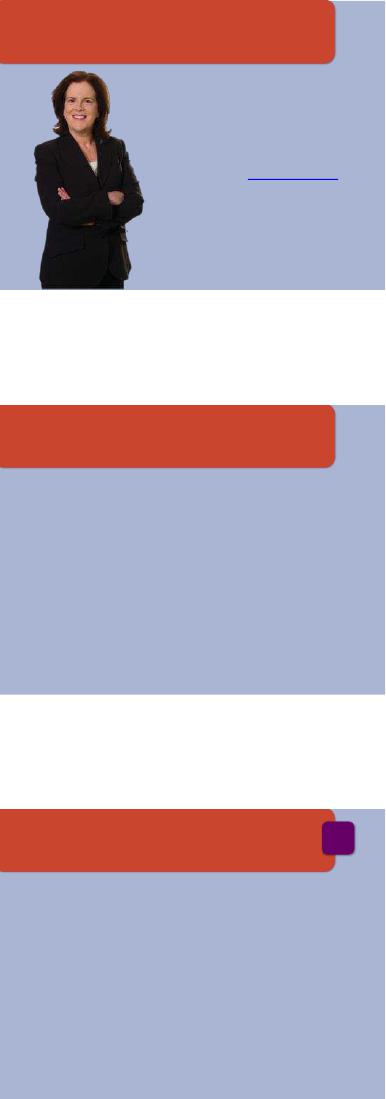
Patty Stonesifer
PATTY STONESIFER
Martha’s Table
4-4
• Held high-level positions
with the Gates
Foundation and the
White House.
• Founded Martha’s Table
in 2013 with the goal of
providing healthy food,
affordable clothing and
quality education to
D.C.’s locals.
PPT 4-5
Name That Company
NAME that COMPANY
4-5
The wage and benefit packages offered by this
company are among the best in hourly retail.
Even part-time workers are covered by its
health plan. Increased benefits reduce
employee turnover to less than a third of the
industry average.
Name that company!
Company: Costco
PPT 4-6
Life after Scandal
LIFE AFTER SCANDAL
4-6
LO 4-1
• Scandals have shaken the real estate, mortgage
and banking industries.
• How do we restore trust in the free market
system?
– Punish those who have broken the law.
– Make accounting records more transparent.
– Consider what is ethical, not just what is legal.
Chapter 04 – Demanding Ethical and Socially Responsible Behavior
4-41
PPT 4-7
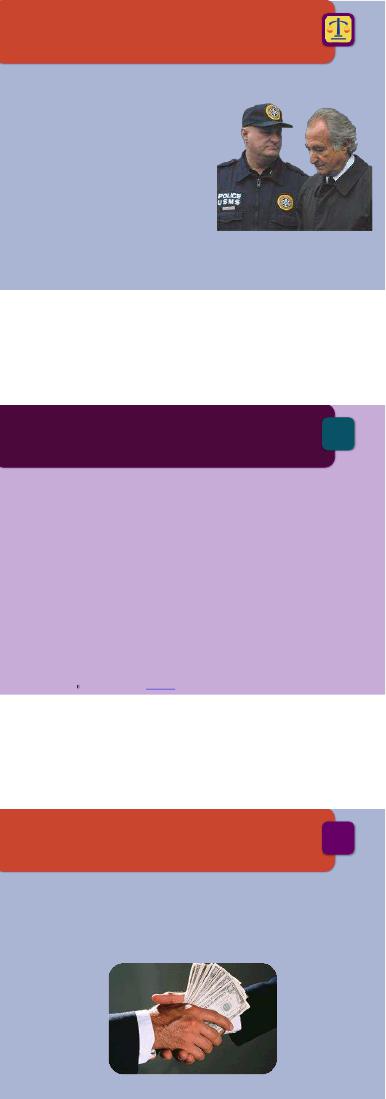
Bernie Madoff’s Ponzi Scheme
• Bernie Madoff is serving 150
years behind bars.
• His exclusive wealth
management firm was a
gigantic Ponzi scheme.
• Though exact amounts are
uncertain, it is believed he
stole about $65 billion from
his investors.
BERNIE MADOFF’S
PONZI SCHEME
4-7
PPT 4-8
What Is a Ponzi Scheme?
WHAT is a PONZI SCHEME?
Source:Securi esandExchangeCommission,www.sec.gov,accessedNovember2014. 4-8
LO 4-1
• A fraud by paying returns to existing investors from
funds contributed by new investors.
• New investors are promised opportunities claimed
to generate high returns with little or no risk.
• Fraudsters focus on attracting new money to make
promised payments.
PPT 4-9
What Are Ethics?
• Ethics — The standards of moral behavior.
Behaviors that are accepted by society as right
versus wrong.
WHAT are ETHICS?
4-9
LO 4-1
The reputations of American businesses have been under
assault due to numerous scandals over the past twenty
years. Following the law is only the first step in being ethi-
cal. Ethics are standards of moral behavior and are accepted
by society as right versus wrong.

Chapter 04 – Demanding Ethical and Socially Responsible Behavior
4-42
PPT 4-10
Basic Moral Values
Wrong:
• Cheating
• Cowardice
• Cruelty
BASIC MORAL VALUES
4-10
LO 4-1
Right:
• Integrity
• Respect for human life
• Self-control
• Honesty
• Courage
• Self-sacrifice
PPT 4-11
Ethics and You
ETHICS and YOU
4-11
LO 4-2
• Plagiarizing from online
materials is the most
common form of cheating
in schools today.
• Studies found a strong
relationship between
academic dishonesty and
dishonesty at work.
PPT 4-12
Facing Ethical Dilemmas
FACING ETHICAL DILEMMAS
4-12
LO 4-2
• Ask yourself these
questions:
– Is it legal?
– Is it balanced?
– How will it make me
feel about myself?
When facing an ethical dilemma it is important that you
ask these three basic questions: Is it legal? Is it balanced?
How will it make me feel about myself? Asking and an-
swering these three questions will prevent many people
from making unethical decision.
Chapter 04 – Demanding Ethical and Socially Responsible Behavior
4-43
PPT 4-13
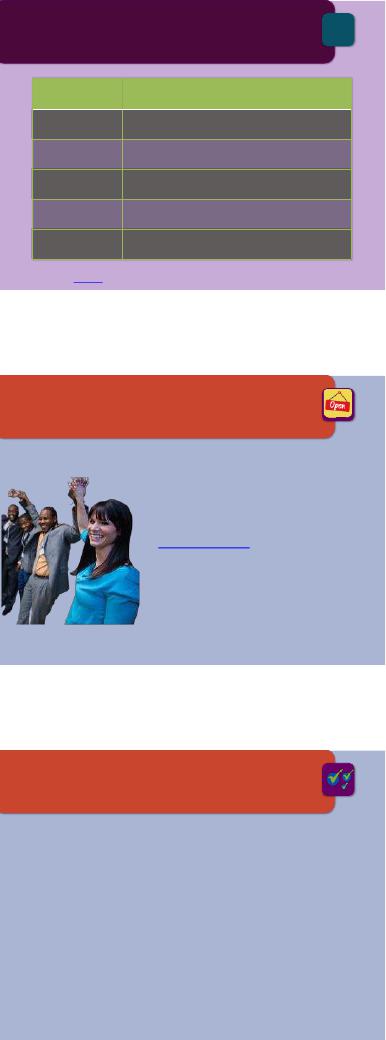
Bribery Bad Boys
BRIBERY BAD BOYS
Five FCPA Investigations
Company Case
Smith and Wesson Improper payments to foreign officials.
Stryker
Corporation
Bribing doctors and government officials in five
countries.
Hewlett-Packard Improper payments for contracts.
Bio-Rad
Laboratories
Subsidiaries made improper payments to officials in
Russia, Vietnam, and Thailand.
Diebold Bribed officials at government-owned banks.
Source:SEC,
www.sec.gov,accessedNovember2014. 4-13
LO 4-2
1. The Justice Department has over 104 open Foreign
Corrupt Practices Act (FCPA) cases.
2. This slide highlights five of the cases.
3. To promote discussion, you can discuss how these
companies are first extorted by the officials in for-
eign nations and then punished for their actions
back at home. It is illegal for U.S. companies to
participate in bribery, yet it is common practice in
some countries. How are Americans supposed to
deal with these issues? What is the ethical dilemma
here?
PPT 4-14
Turning Ex-Cons into Entrepreneurs
TURNING EX-CONS into
ENTREPRENEURS
• Life after prison can be very
difficult for those with criminal
records.
• Catherine Rohr started
Defy Ventures to help ex-cons
launch their own businesses.
• Defy and Rohr’s other
organizations have helped create
60 startups and many ex-cons
find employment.
PPT 4-15
Test Prep
TEST PREP
4-15
• What are ethics?
• How do ethics differ from legality?
• When faced with ethical dilemmas, what
questions can you ask yourself that might help
you make ethical decisions?
1. Ethics are society’s accepted standards of behavior,
in other words behaviors accepted by society as
right rather than wrong.
2. Ethics reflect people’s proper relationships with
one another. Legality is narrower in that it refers to
laws we have written to protect ourselves from
fraud, theft, and violence.
3. It helps to ask the following questions when faced
with an ethical dilemma: Is the proposed action le-
gal? Is it balanced? Would I want to be treated this
way? How will it make me feel about myself?

Chapter 04 – Demanding Ethical and Socially Responsible Behavior
4-44
PPT 4-16
Ethics Start at the Top
ETHICS START at the TOP
4-16
LO 4-3
• Organizational ethics begin at
the top.
• Managers can help instill
corporate values in
employees.
• Trust between workers and
managers must be based on
fairness, honesty, openness
and moral integrity.
Leadership helps to instill corporate values in employees.
So, like many aspects of business, ethical behavior prac-
ticed and modeled by managers and executives will often
trickle down to the employees at large.
PPT 4-17
Factors Influencing
Managerial Ethics
FACTORS INFLUENCING
MANAGERIAL ETHICS
Individual Organizational Environmental
• Values
• Work
Background
• Family Status
• Personality
• Top Level
Management
Philosophy
• Firm’s Reward
System
• Job Dimensions
• Competition
• Economic
Conditions
• Social/Cultural
Institutions
4-17
LO 4-3
1. Before you put this slide up, you may want to ask
the students: What factors influence managerial
ethics?
2. Ethics begins with the individual, but are influ-
enced by the organization and the environment in
which the business operates.
3. To bring the discussion to the present, you may
ask: How can the firm’s reward system impact eth-
ical behavior? How did these reward systems at
large banks and other financial institutions exacer-
bate the financial crisis in this country? (Students
should be able to discuss this point. Excessive risk
taking imperiled all of the stakeholders of various
financial institutions as well as the world econo-
my.)
PPT 4-18
Ethics Codes
ETHICS CODES
4-18
LO 4-4
• An increasing number of companies have
adopted written codes of ethics.
• Compliance-Based Ethics Code — Emphasize
preventing unlawful behavior by increasing control
and by penalizing wrongdoers.
• Integrity-Based Ethics Code — Define the
organization
’
s guiding values, create an environment
that supports ethically sound behavior and stress a
shared accountability.

Chapter 04 – Demanding Ethical and Socially Responsible Behavior
4-45
PPT 4-19
How to Improve America’s Business
Ethics
HOW to IMPROVE AMERICA’S
BUSINESS ETHICS
4-19
LO 4-4
1. Top management must adopt and unconditionally
support an explicit corporate code of conduct.
2. Employees must understand that senior
management expects all employees to act
ethically.
3. Managers and others must be trained to consider
the ethical implications of all business decisions.
PPT 4-20
How to Improve America’s Business
Ethics
4. An ethics office must be set up with which
employees can communicate anonymously.
Whistleblowers — Insiders who report illegal or
unethical behavior.
HOW to IMPROVE AMERICA’S
BUSINESS ETHICS
4-20
LO 4-4
5. Involve outsiders such as
suppliers, subcontractors,
distributors and
customers.
6. The ethics code must be
enforced.
PPT 4-21
How to Blow the Whistle
HOW to BLOW the WHISTLE
Source:Kiplinger’sPersonalFinance,June2013. 4-21
LO 4-4
1. Decide carefully and quickly.
2. Make sure you have all allegations filed with the
right agencies.
3. File your allegations with as many agencies that
are appropriate.
4. Gather your information legally.
5. Research the process.