Chapter 17 – Understanding Accounting and Financial Information
17-16
lecture enhancer 17-4
COMING SOON—THE WIDE WORLD
OF ACCOUNTING
Accounting standards may be going global in a big way.
(See the complete lecture enhancer on page 17.79 of this
manual.)
PPT 17-14
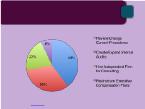
Ways to Improve Accounting
Practices
WAYS to IMPROVE
ACCOUNTING PRACTICES
17-14
Source: www.soxlaw.com, accessed November 2014.
LO 17-2

Chapter 17 – Understanding Accounting and Financial Information
17-17
publicly traded companies
b. The Public Company Accounting Oversight
Board (PCAOB), charged with overseeing
professional accountants
8. The recent financial crisis led to the DODD-
FRANK WALL STREET REFORM AND
CONSUMER PROTECTION ACT.
a. Dodd-Frank increased financial regulation.
b. CPAs must complete 150 hours of training
and an exam, take about 40 hours of contin-
uing education, qualify for recertification, and
pass an ethics exam.
D. AUDITING
1. AUDITING is the job of reviewing and evaluating
the records used to prepare the company’s fi-
nancial statements.
a. Private accountants within the organization
often perform INTERNAL AUDITS to ensure
proper accounting procedures and reporting
are carried on within the organization.
b. Public accountants also conduct INDEPEN-
DENT AUDITS of accounting records.
2. An INDEPENDENT AUDIT is an evaluation and
unbiased opinion about the accuracy of compa-
ny’s financial statements.
3. To restore accounting’s reputation, new rules for
auditing and consulting have been instated.
4. A CERTIFIED INTERNAL AUDITOR (CIA) is an
Chapter 17 – Understanding Accounting and Financial Information
17-18
TEXT FIGURE 17.3
Key Provisions of the Sarbanes-
Oxley Act
The passage of the Sarbanes-Oxley Act was a landmark
antifraud law, long overdue. However, one section of the
law has caused problems for companies.
lecture enhancer 17–5
NEW REGULATIONS HIT WALL
STREET
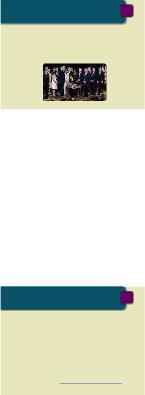
President Obama signed the Dodd-Frank Act into law.
This new legislation should have dramatic effects on the
future of American commerce. (See the complete lecture
enhancer on page 17.80 of this manual.)
PPT 17-15
The Dodd-Frank Act
DODD-FRANK ACT
17-15
PhotoCredit:NancyPelosi
LO 17-2
• Dodd-Frank Wall Street Reform and Consumer
Protection Act increased financial regulation by
increasing the power of the Public Company
Accounting Oversight Board.
• Act was brought on by the recent financial crisis.
lecture enhancer 17–6
CONSUMER PROTECTION AGENCY
GAINS STEAM
There was a lot of debate surrounding the Dodd-Frank
Act. However, this agency started at full steam. (See the
complete lecture enhancer on page 17.80 of this manual.)
PPT 17-16
Auditing Checks Accuracy
AUDITING CHECKS ACCURACY
17-16
LO 17-2
• Auditing — Reviewing and evaluating the information
used to prepare a company
’
s financial statements.
• Independent Audit — An evaluation and unbiased
opinion about the accuracy of a company
’
s financial
statements.
• Certified Internal Auditors (CIAs) — Accountants
who have a bachelor
’
s degree and two years of
experience in internal auditing and pass an exam
administered by the Institute of Internal Auditors.

Chapter 17 – Understanding Accounting and Financial Information
17-19
accountant who has a bachelor’s degree and
two years of experience in internal auditing, and
who has passed an exam administered by the
Institute of Internal Auditors.
E. TAX ACCOUNTING
1. All levels of government require SUBMISSION
OF TAX RETURNS, filed at specific times and in
a precise format.
2. A TAX ACCOUNTANT is an accountant trained
in tax law and responsible for preparing tax re-
turns and developing tax strategies.
3. As the burden of taxes grows, the role of the tax
accountant becomes more important.
F. GOVERNMENT AND NOT–FOR-PROFIT AC-
COUNTING
1. GOVERNMENT AND NOT-FOR-PROFIT AC-
COUNTING is the accounting system for organi-
zations whose purpose is not generating a profit
but serving ratepayers, taxpayers, and others
according to a duly approved budget.
2. Users of government accounting information,
such as citizens and special interest groups,
want to ensure that government is MAKING
THE PROPER USE OF TAXPAYERS’ MONEY.
3. Governmental standards are set by the Govern-
mental Accounting Standards Board (GASB).
4. NOT-FOR-PROFIT ORGANIZATIONS have a
growing need for trained accountants since con-

Chapter 17 – Understanding Accounting and Financial Information
17-20
ADAPTING TO
change
PPT 17-17
Elementary, Mr. Auditor, Elemen-
tary
ELEMENTARY,
MR. AUDITOR, ELEMENTARY
17-17
• Fraud damages businesses, no matter the size.
• The SEC has committed itself to fighting fraud but not
all auditors and CPAs are trained in finding fraud.
• Colleges are offering advanced degrees in forensic
accounting to meet the upcoming demand for these
accountants.
PPT 17-18
Specialized Accountants
• Tax Accountants — Accountants trained in tax law
and are responsible for preparing tax returns or
developing tax strategies.
SPECIALIZED ACCOUNTANTS
17-18
LO 17-2
• Government and Not-for-
Profit Accounting —
Support for organizations
whose purpose is not
generating a profit, but
serving others according to a
duly approved budget.

Chapter 17 – Understanding Accounting and Financial Information
17-21
tributors want to see exactly how and where the
funds are being spent.
learning objective 3
List the steps in the accounting cycle, distinguish between accounting and
bookkeeping, and explain how computers are used in accounting.
III. THE ACCOUNTING CYCLE
A. The ACCOUNTING CYCLE is a six–step procedure
that results in the preparation and analysis of the
major financial statements.
1. BOOKKEEPING is the recording of business
transactions.
a. Accounting goes far beyond the mere re-
cording of data to classify, summarize, inter-
pret, and report data to managers.
b. They suggest strategies for improving the fi-
nancial condition of the company.
2. WHAT BOOKKEEPERS DO
a. The first task of bookkeepers is to divide all
the paperwork into MEANINGFUL CATE-
GORIES.
b. Then they RECORD THE DATA from the
original transaction documents (sales slips,
etc.) into record books called JOURNALS.
c. A JOURNAL is the record book or computer
program where accounting data are first en-
tered.
3. DOUBLE-ENTRY BOOKKEEPING is the con-
cept of writing every business transaction in two
places.

Chapter 17 – Understanding Accounting and Financial Information
17-22
test
prep
PPT 17-19
Test Prep
TEST PREP
17-19
• What’s the key difference between managerial
and financial accounting?
• How’s the job of a private accountant different
from that of a public accountant?
• What’s the job of an auditor? What’s an
independent audit?
PPT 17-20
The Accounting Cycle
TEXT FIGURE 17.4
Steps in the Accounting Cycle
The ACCOUNTING CYCLE
17-20
LO 17-3
• Accounting Cycle –– A six-step procedure that
results in the preparation and analysis of the major
financial statements.
PPT 17-21
Bookkeeper’s Role
BOOKKEEPER’S ROLE
17-21
LO 17-3
• Bookkeeping — The recording of business
transactions. Bookkeepers divide a firm
’
s
transactions into meaningful categories and post
them into a record book or computer program called
a journal.
• Double-Entry Bookkeeping — Bookkeepers
record all transactions in two places so they can
check one list of transactions against the other for
accuracy.

Chapter 17 – Understanding Accounting and Financial Information
17-23
a. In DOUBLE-ENTRY BOOKKEEPING, two
entries in the journal are required for each
company transaction.
b. Bookkeepers can check one list against the
other to make sure they add up to the same
amount.
4. A LEDGER is a specialized accounting book or
computer program in which information from ac-
counting journals is accumulated into specific
categories and posted so that managers can
find all the information about one account in the
same place.
5. The six-step accounting cycle includes:
a. Step 1. ANALYZING and CATEGORIZING
documents
b. Step 2. Putting the information into JOUR-
NALS
c. Step 3. Posting that information into LEDG-
ERS
d. Step 4. Preparing a TRIAL BALANCE (a
summary of all the data in the account ledg-
ers to show whether the figures are correct
and balanced).
e. Step 5. PREPARING an income statement,
balance sheet, and statement of cash flows
f. Step 6. ANALYZING the financial state-
ments and determining the financial health
of the company
Chapter 17 – Understanding Accounting and Financial Information
17-24
PPT 17-22
Bookkeeper’s Tools
BOOKKEEPER’S TOOLS
17-22
LO 17-3
• Ledger — A specialized
accounting book or
program where all
information is in one place.
• Trial Balance — A
summary of all the
information in the account
ledgers.

Chapter 17 – Understanding Accounting and Financial Information
17-25
B. ACCOUNTING TECHNOLOGY
1. Computers have SIMPLIFIED THE TASKS in-
volved in accounting so users get reports when
and how they want them.
a. Computers rapidly handle large amounts of
financial information, so accountants are
free to do more important tasks such as FI-
NANCIAL ANALYSIS.
b. Many SMALL-BUSINESS ACCOUNTING
PACKAGES (such as QuickBooks and
Peachtree) address the specific accounting
needs of a small business.
c. Small-business owners should hire or con-
sult with an accountant before they get
started in business.
2. Computers do not make financial decisions by
themselves.
a. They are a TOOL for businesspeople to use.
b. Computers help make accounting work
LESS MONOTONOUS.
3. The work of an accountant requires training and
very specific competencies.
learning objective 4
Explain how the major financial statements differ.
IV. UNDERSTANDING KEY FINANCIAL STATE-
MENTS
A. A FINANCIAL STATEMENT is the summary of all

Chapter 17 – Understanding Accounting and Financial Information
17-26
PPT 17-23
Technology and Accounting
TECHNOLOGY and ACCOUNTING
17-23
LO 17-3
• Computerized
accounting programs
post information
instantly and from
remote locations.
• Intuit’s QuickBooks
address the specific
needs of small
businesses.
test
prep
PPT 17-24
Test Prep
TEST PREP
17-24
• How is the job of the bookkeeper different from
an accountant?
• What’s the purpose of accounting journals and a
ledger?
• Why does a bookkeeper prepare a trial balance?
• How has computer software helped businesses in
maintaining and compiling accounting
information?
Chapter 17 – Understanding Accounting and Financial Information
17-27
transactions that have occurred over a particular pe-
riod.
1. These indicate a firm’s financial health and sta-
bility.
2. THE KEY FINANCIAL STATEMENTS are:
a. The BALANCE SHEET, which reports the
firm’s financial condition on a specific date.
b. The INCOME STATEMENT, which summa-
rizes revenues, cost of goods, and expenses
for a specific period and highlights the total
profit or loss the firm experienced during that
period.
c. The STATEMENT OF CASH FLOWS, which
provides a summary of money coming into
and going out of the firm.
3. The DIFFERENCES among the financial state-
ments:
a. The BALANCE SHEET details what the
company owns and owes on a certain day.
b. The INCOME STATEMENT shows the rev-
enue a firm earned selling its products com-
pared to its selling costs over a specific peri-
od of time.
c. The STATEMENT OF CASH FLOWS shows
the difference between cash coming in and
cash going out of a business.
B. THE FUNDAMENTAL ACCOUNTING EQUATION
1. Your assets are equal to WHAT YOU OWE plus

Chapter 17 – Understanding Accounting and Financial Information
17-28
PPT 17-25
Financial Statements
• Financial Statement — A summary of all the
financial transactions that have occurred over a
particular period.
FINANCIAL STATEMENTS
17-25
LO 17-3
• Key financial statements of
business are:
– Balance sheet
– Income statement
– Statement of cash flo ws

Chapter 17 – Understanding Accounting and Financial Information
17-29
WHAT YOU OWN.
a. This equation must always be balanced.
b. Each business transaction is a recording of
two transactions.
2. The FUNDAMENTAL ACCOUNTING EQUA-
TION is Assets = Liabilities + Owners’ equity; this is
the basis for the balance sheet.
C. THE BALANCE SHEET
1. A BALANCE SHEET is the financial statement
that reports a firm’s financial condition at a specif-
ic time and is composed of three major accounts:
assets, liabilities, and owners’ equity.
2. The term balance sheet implies that the report
shows a BALANCE BETWEEN TWO FIG-
URES—a firm’s assets and its liabilities and
owners’ equity.
3. It is important to follow GENERALLY ACCEPT-
ED ACCOUNTING PRINCIPLES (GAAP).
D. CLASSIFYING ASSETS
1. ASSETS are economic resources (things of val-
ue) owned by the company.
a. Examples: equipment, buildings, land, pa-
tents, copyrights, and goodwill.
b. Assets include productive, TANGIBLE items
that help generate income, as well as IN-
TANGIBLES of value.
c. GOODWILL represents the value attached
to factors such as a firm’s reputation, loca-

Chapter 17 – Understanding Accounting and Financial Information
17-30
PPT 17-26
The Fundamental Accounting
Equation
The FUNDAMENTAL
ACCOUNTING EQUATION
17-26
LO 17-4
• Fundamental Accounting Equation — The basis
for the balance sheet.
• The equation must always be balanced and
includes the formula:
Ø Assets = Liabilities + Owners Equity
PPT 17-27
The Balance Sheet
The BALANCE SHEET
17-27
LO 17-4
• Balance Sheet —
The financial
statement that
reports a firm
’
s
financial condition
at a specific time.
TEXT FIGURE 17.5
Sample Very Vegetarian Balance
Sheet
This text figure presents a sample balance sheet for Very Veg-
etarian, showing the major accounts.
PPT 17-28
Assets
ASSETS
17-28
LO 17-4
• Assets — Economic resources owned by a firm.
Items can be tangible or intangible.
• Liquidity — Ease with which assets can be
converted into cash.