Ex. 2.1 a. 1.
2.
SOLUTIONS TO EXERCISE
S
Assets are economic resources owned by the business entity.
Among the assets of American Airlines we might expect to find
investments, accounts receivable (say, from travel agents), fuel (in
Among the assets of a professional sports team are investments (in stocks and
bonds), notes receivable (often from players), training equipment, supplies, and
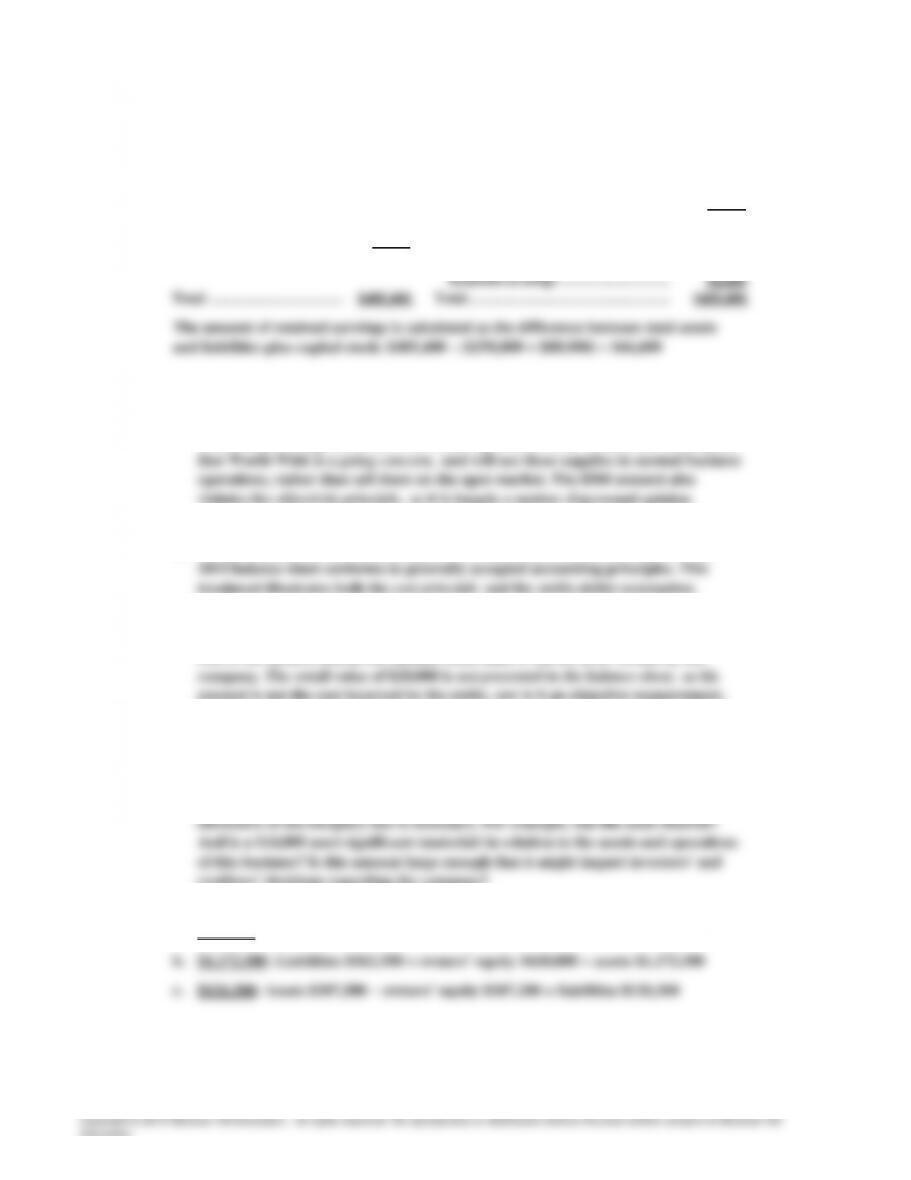
$36,300 Liabilities:
56,700 Notes payable ………………………
…
$207,000
12,400 Accounts payable ……………………
…
43,800
210,000 $250,800
90,000 Owners’ equity:
Capital stock …………………………
…
88,000
Balance Sheet
December 31, 2011
Total liabilities………………………
…
Liabilities & Owners’ Equity
Cash ………………………
…
Ex. 2.3 KINER COMPANY
Assets
Accounts receivable ………
…
Office Equipment …………
…
Building …………………….
.
Land…………….
Ex. 2.6 Assets = Liabilities + Owners’
II NE
NE* NE NE
DD NE
DD NE
INE I
II NE
INE I
NE* NE NE
NE* NE NE
Ex. 2.7
a.
b.
c.
d.
e.
$ 240,000
…
…
(2) Partners’ equity:
f
g
h
i
Note to instructor: These are examples, but many others exist.
Transaction
a
b
c
d
e
Johanna Spencer, capital …………………………………………
…
*Could be I/D offsetting
The purchase of office equipment (or any other asset) on credit will cause an increase
The cash payment of an account payable or note payable will cause a decrease in the
The collection of an account receivable will cause an increase in one asset (cash) and
The investment of cash in the business by the owners will cause an increase in an
The purchase of an automobile (or other asset) paying part of the cost in cash and
*$850,000 in assets $460,000 in liabilities = $390,000.
Ex. 2.9 a.
Ex. 2.10 a.
b.
The situations encountered in the practice of accounting and auditing are too
complex and too varied for all specific answers to be set forth in a body of official
Accountants must rely on their professional judgment in such matters as
determining (three required) (1) how to record an unusual transaction that is not
discussed in accounting literature, (2) whether or not a specific situation requires
disclosure, (3) what information will be most useful to specific decision makers, (4)
how an accounting system should be designed to operate most efficiently, (5) the
audit procedures necessary in a given situation, (6) what constitutes a fair
presentation of financial information, (7) whether specific actions are ethical and
are in keeping with the accountants’ responsibilities to serve the public interests.
amounts originally invested in the business by the owners, but says nothing about
the form in which the company now holds these resources—nor even whether the
resources are still on hand. Thus, the capital stock account has no direct effect upon
liquidity. On the other hand, the amount of the owners’ equity, related to the
amount of the liabilities is an important factor in evaluating liquidity.
of loans to the business. If the business is a partnership, all of the partners are
personally liable for the company’s debts.
On the other hand, if Spencer is organized as a corporation, a lender may look only
to the cor
p
orate entit
y
for
p
a
y
ment.
Note to instructor: You may wish to point out that some lenders would not make sizable loans to a
small corporation unless one or more of the stockholders personally guaranteed the loan. This is
accomplished by having the stockholder(s) cosign the note.
Cash is the most liquid of all assets. In fact, companies must use cash in paying most
bills. Therefore, cash contributes more to a company’s liquidity than any other
asset.
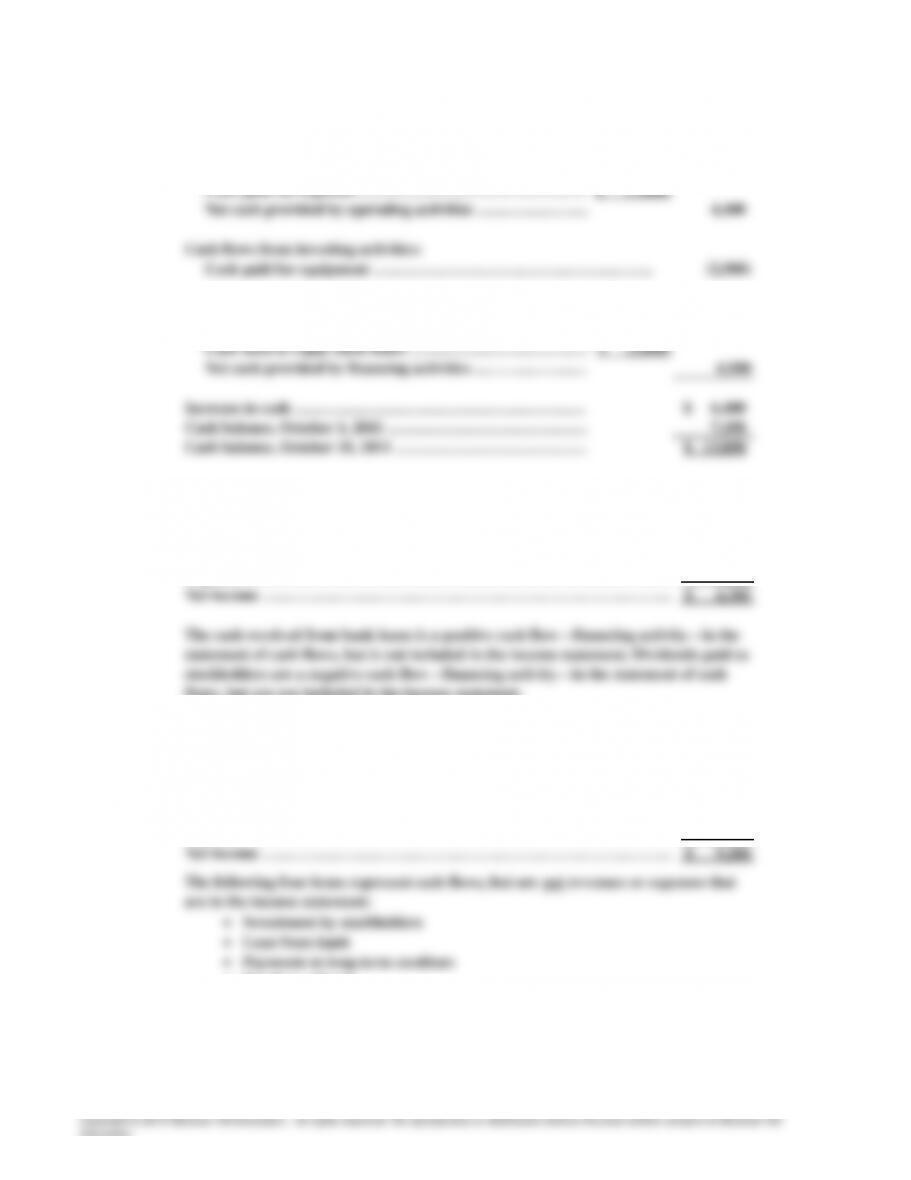
Cash received from revenues ………………………………
…
Cash paid for expenses ……………………………………
…
Cash flows from financing activities:
Cash received from sale of capital stock …………………
…
Ex. 2.11 WELLER COMPANY
Statement of Cash Flows
For the Month Ended October 31, 2015
Cash flows from operating activities: 12,000$ (7,600)
$
7,500$
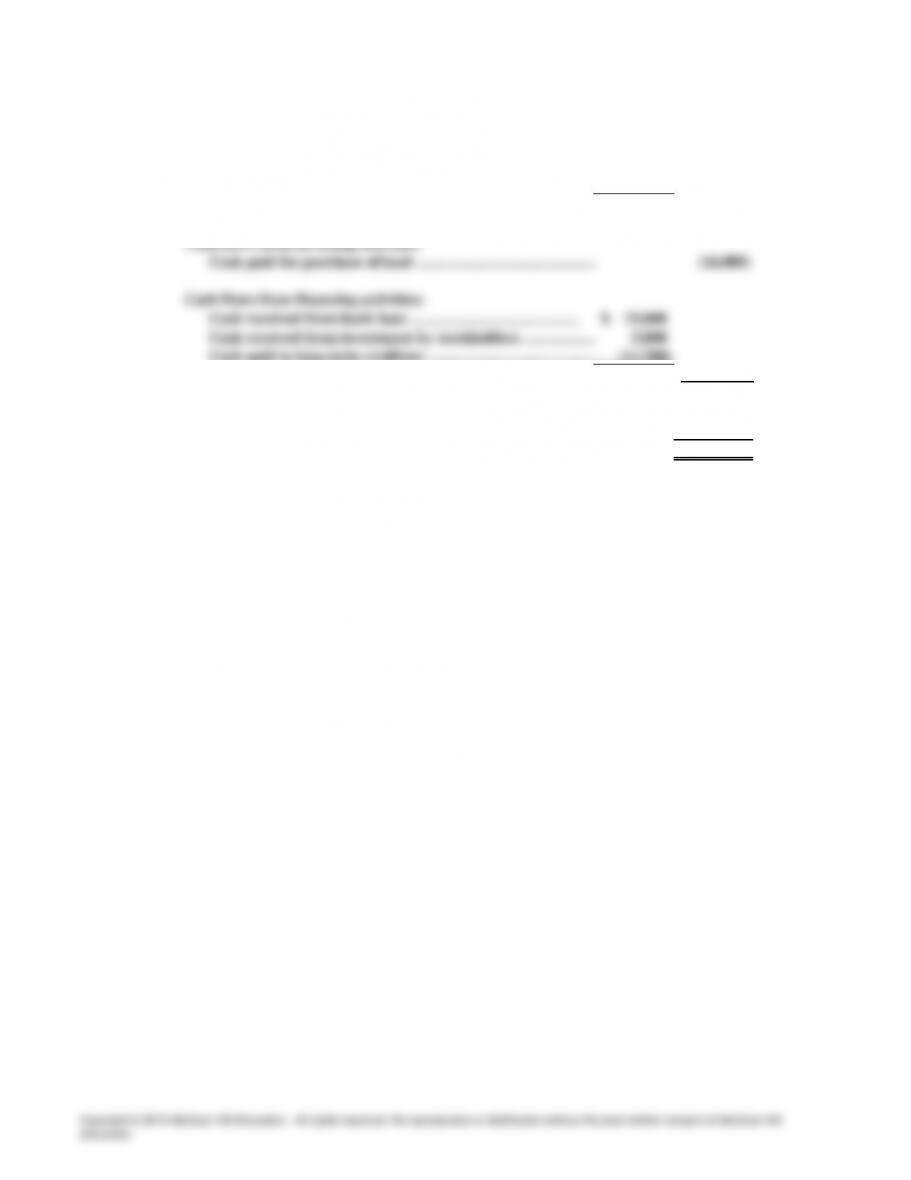
17,000$ (7,800) 9,200
Statement of Cash Flows
For the Month Ended August 31, 2015
Ex. 2.14
Cash received from revenues ………………………………
…
Cash paid for expenses ………………………………………
Net cash provided by operating activities …………………
…
Cash flows from operating activities:
Cash flows from investing activities:
PRESTWICK COMPANY
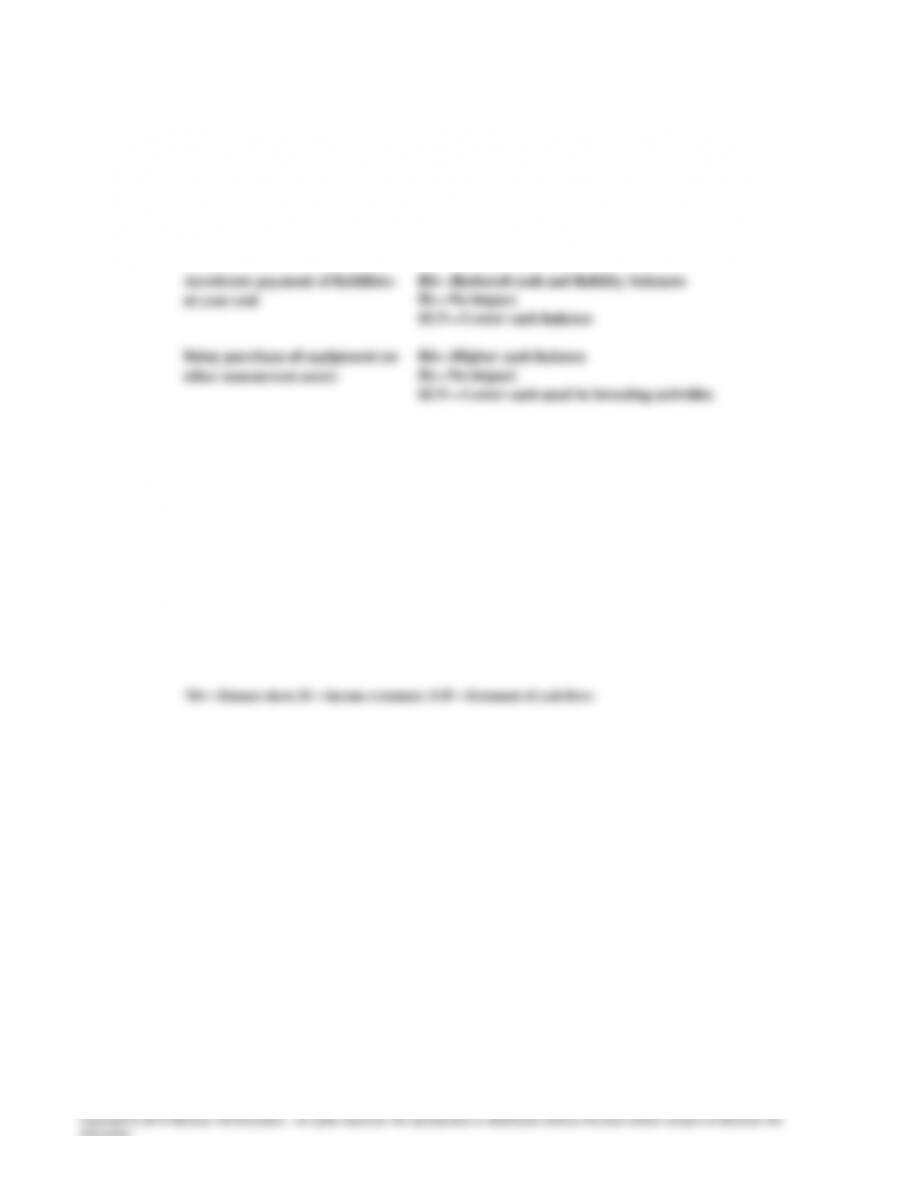
Ex. 2.15
Ste
p
s to Window Dress
Impact on Financial Statements*
BS—Higher cash balance
IS—No impact
SCF—Higher cash from operating activities
Delay cash payment of expenses
at year-end (assume expense
alread
y
incurred
)
Note to instructor: Many examples of steps to improve the financial statements could
be cited. The ones listed below are those that the authors believe are most likely to be
identified b
y
students.
Ex. 2.16 a.
b. End
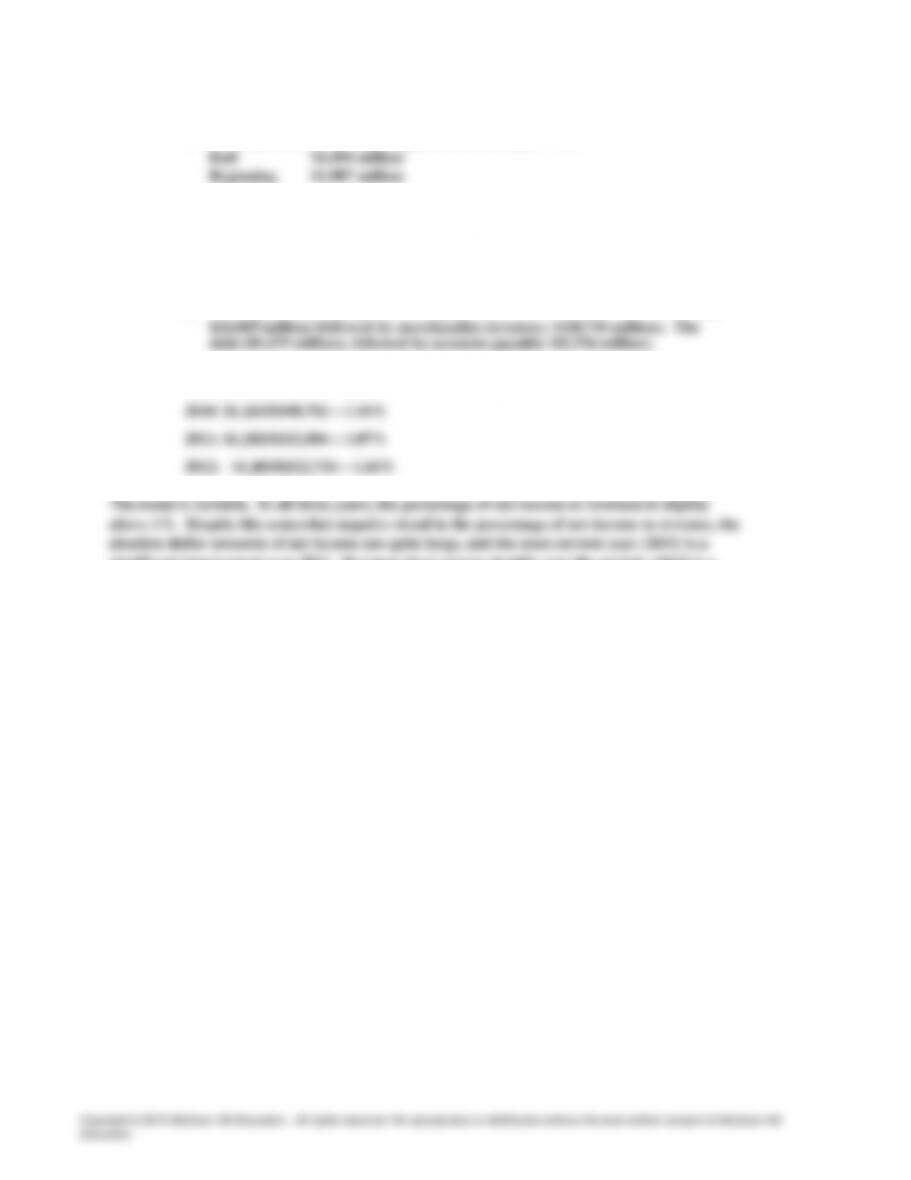
Home Depot reports a net income (earnings) of $4,535 million for the year ended
Februar
y
3, 2013.
Cash balances at the beginning and end of the year were:
a.
Liabilities & Owners’ Equity
Cash 31,400$ Liabilities:
Accounts receivable 10,600 Accounts payable 54,800$
Furnishings 58,700 Salaries payable 33,500
Equipment 39,200 Interest payable 12,000
Snowmobiles 15,400 Notes payable 620,000
Buildings 500,000 720,300$
Land 425,000 Owners’ equity:
(1) Computed as total assets, $1,080,300, less total liabilities, $720,300, less capital stock,
$ 135,000.
b.
SOLUTIONS TO PROBLEMS SET
A
PROBLEM 2.1
A
ROCKY MOUNTAIN LODG
E
15 Minutes, Easy
Assets
ROCKY MOUNTAIN LODGE
Balance Sheet
December 31, 2015
The balance sheet indicates that Rocky Mountain Lodge is in a weak financial position.
The highly liquid assets—cash and receivables—total only $42,000, but the company has
15 Minutes, Easy
a.
b.
PROBLEM 2.2
A
MEMPHIS MOVING COMPAN
Y
Received $900 cash from collection of accounts receivable.
Purchased equipment for cash at a cost of $3,200.
Description of transactions:
Education.
15 Minutes, Medium
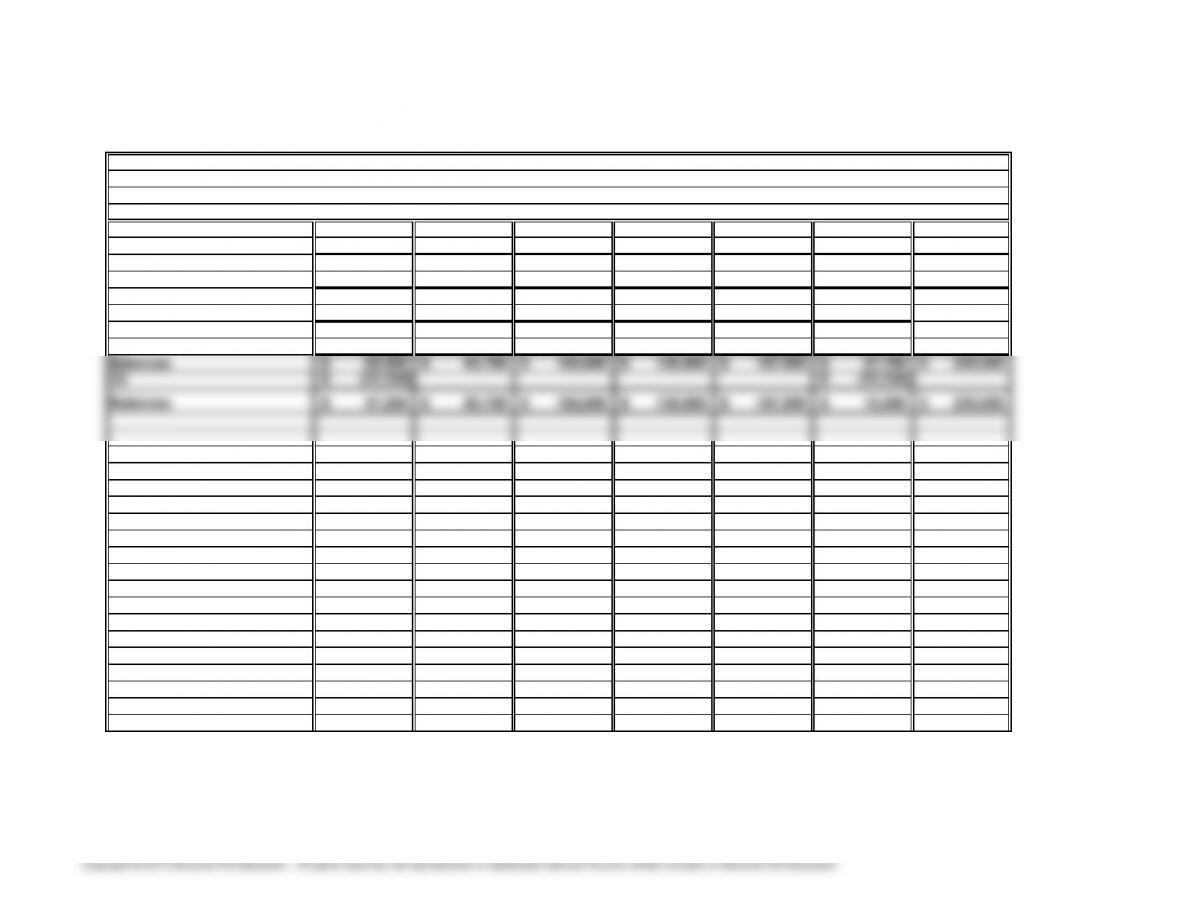
Owners’
Assets = Equity
Office Notes
A
ccounts Capital
Cash + Equipment
+
Building + Land = Payable + Payable + Stock
December 31 balances 37,000$ 51,250$ 125,000$ 95,000$ 80,000$ 28,250$ 200,000$
(1) 35,000 35,000
Balances 72,000$ 51,250$ 125,000$ 95,000$ 80,000$ 28,250$ 235,000$
(2) (22,500) 55,000 35,000 67,500
Balances 49,500$ 51,250$ 180,000$ 130,000$ 147,500$ 28,250$ 235,000$
(3) 9,500 9,500
Balances 49,500$ 60,750$ 180,000$ 130,000$ 147,500$ 37,750$ 235,000$
(4) 20,000 20,000
MAXWELL COMMUNICATION
S
Liabilities +
PROBLEM 2.3
A
$
$