Chapter 18 – Managerial Accounting Concepts and Principles
CHAPTER 18
MANAGERIAL ACCOUNTING CONCEPTS AND PRINCIPLES
Related Assignment Materials
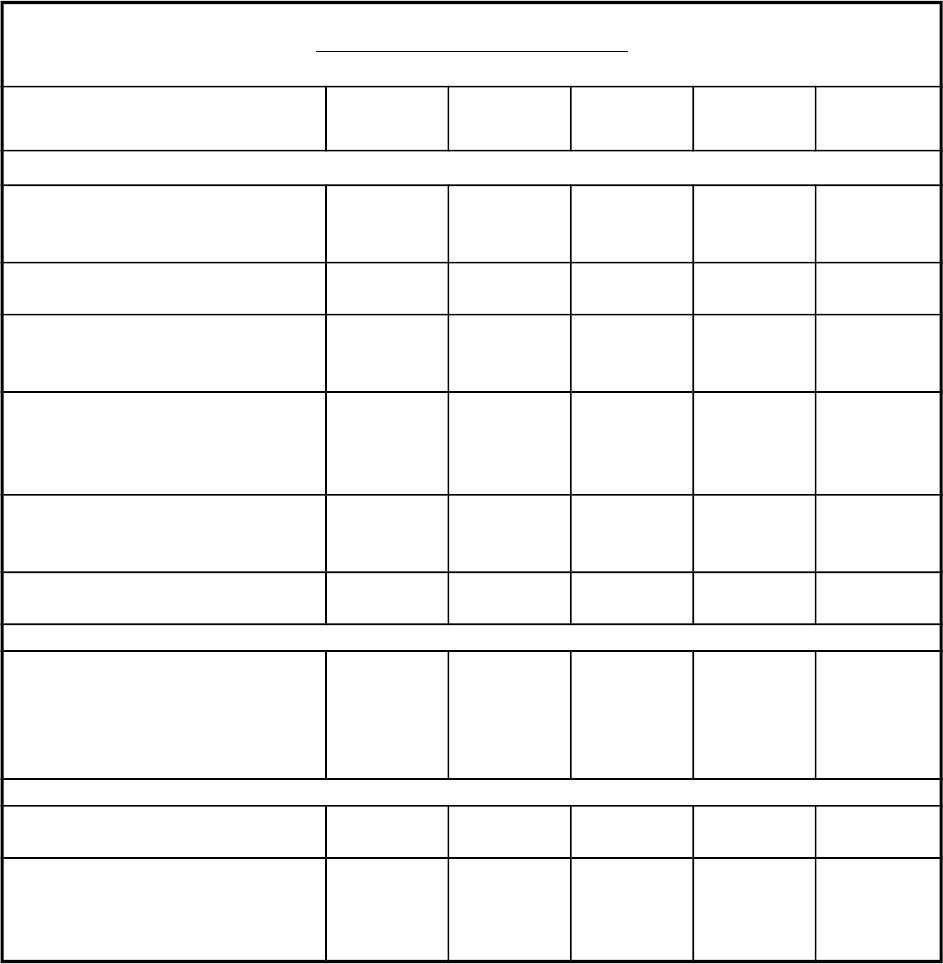
Student Learning Objectives Questions Quick
Studies*
Exercises* Problems* Beyond the
Numbers
Conceptual objectives:
C1. Explain the purpose and nature
of, and the role of ethics in,
managerial accounting.
1, 2, 3, 13 18-1 18-1, 18-14 18-1, 18-3,
18-5, 18-7,
18-8, 18-9
C2. Describe accounting concepts
useful in classifying costs.
4, 6, 7, 8, 9,
10, 17
18-2, 18-4,
18-5
18-2, 18-4,
18-10, 18-17
18-1, 18-4, 18-2, 18-7,
18-8
C3. Define product and period costs
and explain how they impact
financial statements.
5, 7, 11, 18-3 18-3, 18-6 18-1, 18-4 18-3
C4. Explain how balance sheets and
income statements for
manufacturing and
merchandising companies differ.
12, 14, 15, 16, 18-6 18-7, 18-9 18-2, 18-3
C5. Explain manufacturing activities
and the flow of manufacturing
costs.
17, 18, 19 18-9, 18-12,
18-13
18-12 18-6
C6. Describe trends in managerial
accounting.
18-11 18-5 18-4, 18-7
Analytical objectives:
A1 Assess raw materials inventory
management using raw
materials inventory turnover and
days’ sales in raw materials
inventory.
23, 24, 25
18-14 18-5
Procedural objectives:
P1. Compute cost of goods sold for
a manufacturer.
18-7, 18-8 18-8, 18-11,
18-16
18-3
P2. Prepare a manufacturing
statement and explain its
purpose and links to financial
statements.
17, 20, 21,
22
18-10 18-8, 18-9,
18-13, 18-14,
18-15, 18-16
18-5 18-6
*See additional information on next page that pertains to these quick studies, exercises and problems.
18-1
Copyright © 2015 McGraw-Hill Education. All rights reserved. No reproduction or distribution without the prior written consent of McGraw-Hill
Education.
Chapter 18 – Managerial Accounting Concepts and Principles
Additional Information on Related Assignment Material
Corresponding problems in set B (in text) also relate to learning objectives identified in grid on previous
page. The Serial Problem for Success Systems continues in this chapter. Problem 18-3A can be
completed using Excel.
Connect reproduces assignments online, in static or algorithmic mode, which allows instructors to
monitor, promote, and assess student learning. It can be used for practice, homework, or exams.
Synopsis of Chapter Revision
Roseicollis Technologies—New opener and entrepreneurial assignment.
Revised discussion of the purpose of managerial accounting.
Revised discussion and exhibit on the nature of managerial accounting.
Revised discussion of cost classifications and their uses.
Reduced number of cost classifications from five to three.
Revised exhibit and example of direct versus indirect costs.
Added several examples to exhibit on multiple cost classifications.
Revised discussion of manufacturer’s costs.
Added new exhibit comparing the balance sheet reporting (current assets section) of
manufacturing, merchandising, and service companies.
Added new exhibit comparing the income statement reporting of manufacturing,
merchandising, and service companies.
Reduced level of detail in exhibit on income statement reporting.
Revised terminology (throughout) to work in process instead of goods in process.
Revised discussion of the flow of manufacturing costs.
Changed the title of Manufacturing Statement to Schedule of Cost of Goods
Manufactured.
Used a four-step process to illustrate the schedule of cost of goods manufactured.
Added T-accounts to show the flow of costs for the schedule of cost of goods
manufactured.
Added a third column to the schedule of cost of goods manufactured for enhanced
presentation.
Simplified exhibit on manufacturing cost flows across the financial statements.
Added discussion of corporate social responsibility.
Added sustainability section–discussion of Nestle’s corporate social responsibility
activities.
Revised several end-of-chapter assignments, including 6 new Quick Study exercises
and 4 new Exercises.
18-2
Copyright © 2015 McGraw-Hill Education. All rights reserved. No reproduction or distribution without the prior written consent of McGraw-Hill
Education.

Chapter 18 – Managerial Accounting Concepts and Principles
Chapter Outline Notes
I. Introduction to Managerial Accounting—also called management
accounting
A. Purpose of Managerial Accounting—to provide financial and
nonfinancial information to managers and other internal decision
makers of an organization.
1. Cost of products and servicesthis information is very
important to managers when making planning and control
decisions. This includes predicting the future costs of
producing the same or similar items. Predicted costs are used
in:
a. product pricing.
b. profitability analysis.
c. deciding whether to make or buy a product or component.
2. Planning is the process of setting goals and making plans to
achieve them.
a. Strategic plans usually set the long-term direction of a
firm (considers potential opportunities such as new
products, new markets and capital investments).
b. Short-term plans often cover a one-year period which,
when translated in monetary terms, is known as the
budget.
3. Control is the process of monitoring planning decisions and
evaluating the organization’s activities and employees.
a. Control includes measurement and evaluation of actions,
processes and outcomes.
b. Control feedback allows managers to take timely
corrective actions to avoid undesirable outcomes.
B. Nature of Managerial Accounting—illustrated by comparing the
seven key differences between managerial to financial
accounting:
1. Users and decision makers
a. In financial—Investors, creditors and other users external
to the organization.
b. In managerial—Managers, employees and decision
makers internal to the organization.
2. Purpose of information
a. In financial—Assist external users in making investment,
credit and other decisions.
b. In managerial—Assist managers in making planning, and
control decisions.
18-3
Copyright © 2015 McGraw-Hill Education. All rights reserved. No reproduction or distribution without the prior written consent of McGraw-Hill
Education.

Chapter 18 – Managerial Accounting Concepts and Principles
Chapter Outline Notes
3. Flexibility of practice
a. In financial—Structured and often controlled by GAAP.
b. In managerial—Relatively flexible (no GAAP constraints).
An important question the manager must ask—is the
information being collected and reported useful for
planning, decision making and control purposes?
4. Timeliness of information
a. In financial—Often available only after the audit is
complete.
b. In managerial—Available quickly without the need to wait
for an audit.
5. Time dimension
a. In financial—Focus on historical information with some
predictions.
b. In managerial—Many projections and estimates; historical
information also presented.
6. Focus of information
a. In financial—Emphasis on whole organization.
b. In managerial—Emphasis on organization’s projects,
processes and subdivisions.
7. Nature of information
a. In financial—Monetary information.
b. In managerial—Mostly monetary; but also nonmonetary
information such as customer satisfaction data, product
defect rates, etc.
C. Managerial Decision Making—managerial accounting information
is primarily used for internal decisions about a company’s
activities but financial and managerial accounting are not entirely
separate since both can affect people’s decisions and actions.
D. Fraud and Ethics in Managerial Accounting—important factors in
running business operations. Fraud involves the deliberate misuse
of one’s job for personal gain, through the deliberate misuse of the
employer’s assets.
1. Three factors must exit for a person to commit fraud (called
the fraud triangle):
a. Opportunity
b. Financial pressure.
c. Rationalization
18-4
Copyright © 2015 McGraw-Hill Education. All rights reserved. No reproduction or distribution without the prior written consent of McGraw-Hill
Education.

Chapter 18 – Managerial Accounting Concepts and Principles
Chapter Outline Notes
2. Implications for managerial accounting—fraud increases
business costs and management must therefore rely on and
internal control systems that define policy and procedures to:
a. Urge adherence to company policies.
b. Promote efficient operations.
c. Ensure reliable accounting.
d. Protect assets.
3. Ethics are beliefs that distinguish right from wrong. The IMA
(Institute for Management Accountants) has issued a code of
ethics to help accountants involved in solving ethical
dilemmas and provide a “road map” for resolving ethical
conflicts.
II. Managerial Cost Concepts—Costs can be classified based on any
one or combination of the five classifications listed below. To classify
it is necessary to understand costs and operations.
A. Fixed vs. Variable: At a basic level a cost can be classified by how
it behaves with changed in the volume of activity.
1. Fixed Cost: a cost that does not change in total with changes
in the volume of an activity (within a certain range of activity
known as an activity’s relevant range)
2. Variable Cost: a cost that changes in total in proportion to
changes in volume of an activity.
B. Direct vs. Indirect: a cost is traced to a cost object (a product,
process, department, or customer to which costs are assigned).
Cost is classified as either a direct or indirect cost. To classify
must identify the cost object.
1. Direct costs—those traceable to a single cost object.
2. Indirect costs—those that cannot be traced to a single cost
object.
C. Product vs Period Costs: costs classified as capitalized inventory
(product cost) or expensed as incurred (period cost).
1. Product costs—expenditures necessary and integral to finished
products. Include direct materials, direct labor, and indirect
manufacturing costs called overhead. First assigned to
inventory (on balance sheet) and flow to income statement
when become part of cost of goods sold.
2. Period costs—expenditures identified more with a time period
than finished products. Includes selling and general
administrative expenses on the income statement.
D. Identification of Cost Classifications—understanding how to
classify costs in several different ways enables managers to use
cost information for a variety of decisions. Potential multiple
classifications are shown in Exhibit 18-9 in the text.
18-5
Copyright © 2015 McGraw-Hill Education. All rights reserved. No reproduction or distribution without the prior written consent of McGraw-Hill
Education.

Chapter 18 – Managerial Accounting Concepts and Principles
Chapter Outline Notes
III. Reporting Manufacturing Activities—financial statements for
manufacturing companies have some unique features resulting from
their activity of producing goods from materials and labor.
A. Manufacturing Costs
1. Direct Materials—tangible components of a finished
product; Direct Material Costs are the expenditures that
are separately and readily traced through the
manufacturing process to finished goods.
2. Direct Labor—refers to the efforts of employees who
physically convert materials into finished products. Direct
Labor costs are the wages and salaries for direct labor that
are separately and readily traced through the
manufacturing process to finished goods.
3. Factory Overhead (also called manufacturing overhead)—
consists of all manufacturing costs that are not direct
materials or direct labor; costs that cannot be separately or
readily traced to finished goods. Include indirect materials
and indirect labor and other costs associated with the
factory
a. Indirect Materials—used in manufacturing but not
clearly identified with specific product units.
Often direct materials can be classified as indirect
when their costs are very low.
b. Indirect Labor—wages and salaries for those
workers’ efforts not linked to specific units or
batches of product. Include the wages of those
who assist or supervise the manufacturing
process. The overtime wages of the direct labor
employees is considered indirect labor. Other
indirect labor includes the wages of the
maintenance and repair workers.
4. Prime and Conversion Costs
a. Prime costs—direct materials and direct labor
(expenditures directly associated with the
manufacturing of finished goods).
b. Conversion costs–direct labor and overhead costs
(expenditures incurred in the process of
converting raw materials to finished goods).
18-6
Copyright © 2015 McGraw-Hill Education. All rights reserved. No reproduction or distribution without the prior written consent of McGraw-Hill
Education.

Chapter 18 – Managerial Accounting Concepts and Principles
Chapter Outline Notes
B. Manufacturer’s Balance Sheet—carry several unique assets and
usually reports these three inventories:
1. Raw Materials Inventory—goods a company acquires to
use in making products Includes both direct and indirect
materials.
2. Work in Process Inventory— consists of products in the
process of being manufactured but not yet complete.
3. Finished Goods Inventory—consists of completed
products ready for resale.
C. Manufacturer’s Income Statement—the main difference between a
merchandiser’s and manufacturer’s income statement is in items
that make-up cost of goods sold (CGS).
1. A Merchandiser computes cost of goods sold as:
Beginning merchandise inventory
+ cost of goods purchased
Cost of goods available for Sale
– Ending merchandise inventory
Cost of Goods Sold
2. A Manufacturer computes cost of goods sold as:
Beginning finished goods inventory
+ cost of goods manufactured*
Cost of goods available for Sale
– Ending finished goods inventory
Cost of Goods Sold
3. *Cost of goods manufactured is the sum of direct materials,
direct labor, and overhead costs incurred in production.
D. Flow of Manufacturing Activities—the three manufacturing
activities are:
1. Materials Activities
Beginning raw materials
+ Raw materials Purchases
Raw materials available for use in production
– Ending Raw Materials Inventory
Raw Materials Used in Production
2. Production Activities—Four factors come together in
production:
a. Beginning Work in process inventory—consists of partly
produced goods from the previous period.
b. Direct materials used—traceable materials added during
the period.
c. Direct labor used—traceable labor added during the
period.
d. Overhead used—nontraceable manufacturing costs added
during the period.
18-7
Copyright © 2015 McGraw-Hill Education. All rights reserved. No reproduction or distribution without the prior written consent of McGraw-Hill
Education.

Chapter 18 – Managerial Accounting Concepts and Principles
Chapter Outline Notes
Note: The production activity results in goods either finished or
unfinished. Both groups represent product costs. The cost of finished
goods make up the cost of goods manufactured for the year.
Unfinished goods are identified as ending goods in process
inventory.
3. Sales Activities—Newly completed units are combined with
beginning finished goods inventory to make up total finished
goods available for sale. The cost of those goods that are sold
during the year is reported on the income statement.
E. Manufacturing Statement (also called the schedule of manufacturing
activities or the schedule of cost of goods manufactured)—reports
costs of both materials and production activities. Contains
information used by management for planning and control. It is not a
general purpose financial statement. It is divided into four parts:
1. Direct material used—determined by adding the beginning raw
materials inventory to this period’s materials purchases to obtain
total raw materials available for use during year and then
subtracting ending raw materials inventory which was
determined from a physical count.
2. Direct labor incurred—includes payroll taxes and fringe benefits
and is taken directly from the direct labor account balance.
3. Overhead costs—generally lists each important factory overhead
item along with its cost. If a summary number is used, a separate
detailed schedule is usually prepared.
4. Computation of cost of goods manufactured—as follows:
Direct Materials
Direct Labor
Factory Overhead
Total Manufacturing Costs
add: Beginning Work in Process
Total Work In Process Inventory
Less: Ending Work In Process Inventory
Cost of Goods Manufactured
18-8
Copyright © 2015 McGraw-Hill Education. All rights reserved. No reproduction or distribution without the prior written consent of McGraw-Hill
Education.

Chapter 18 – Managerial Accounting Concepts and Principles
Chapter Outline Notes
IV. Trends in Managerial Accounting
A. Customer Orientation—increase emphasis on understanding
changing needs and wants of customers as most important part
of business.
B. Global Economy—expands competitive boundaries and
provides customers more choices.
C. E-Commerce—customers expect and demand to be able to buy
items electronically.
D. Service Economy—service businesses account for 60% to 70%
of total economic activity. Lean business model—goal is to
eliminate waste while “satisfying the customer” and “providing
a positive return to the company”.
E. Lean Practices—the philosophy of continuous improvement has
led to adoption of :
1. Total Quality Management (TQM)—applies quality
improvement to all aspects of business.
2. Just-in-time Manufacturing (JIT)—system that acquires
inventory and produces only when and order is received, a
demand-pull system, that delivers to customers on time.
F. Value Chain—series of activities that add value to products or
services.
G. Corporate Social Responsibility (CSR)—concept that goes
beyond just following the law. In addition to maximizing
shareholder value, the corporation must often consider the
demands of the stakeholders including society.
V. Decision Analysis
A. Raw Material Inventory Turnover
1. Assess how effectively raw materials inventory is managed.
2. Calculated as raw materials inventory used divided by
average raw materials inventory.
3. Reveals how many times a company turns over its raw
materials inventory during a period. High ratio is generally
preferred as long as demand can be met.
B. Days’ Sales in Raw Materials Inventory
1. Measures how long it takes raw materials to be used in
production.
2. Calculated as ending raw materials inventory divided by raw
materials used, and multiplied by 365.
18-9
Copyright © 2015 McGraw-Hill Education. All rights reserved. No reproduction or distribution without the prior written consent of McGraw-Hill
Education.
Chapter 18 – Managerial Accounting Concepts and Principles
Alternate Demo Problem Eighteen
Using the following information for Superior Manufacturing Company,
prepare a manufacturing statement and an income statement for the year
ended December 31, 2015. (Assume a 25% income tax.) Further assume
that all raw materials used were direct materials and the factory overhead
costs were totaled for you on a separate schedule..
Raw Materials Inventory January 1, 2015………………………. $20,000
Raw Materials Inventory December, 31, 2015………………….. 40,000
Work in Process Inventory January 1, 2015……………………. 50,000
Work in Process Inventory December 31, 2015………………… 80,000
Finished Goods Inventory January 1, 2015…………………………. 120,000
Finished Goods Inventory December 31, 2015…………………….. 60,000
Administrative Expenses…………………………………………………… 30,000
Selling Expenses………………………………………………………………. 60,000
Sales……………………………………………………………………………….. 600,000
Raw Materials purchases during 2015…………………………… 150,000
Direct Labor …………………………………………………………… 120,000
Factory Overhead (per separate schedule)……………………… 180,000
18-10
Copyright © 2015 McGraw-Hill Education. All rights reserved. No reproduction or distribution without the prior written consent of McGraw-Hill
Education.

Chapter 18 – Managerial Accounting Concepts and Principles
Solution: Alternate Demo Problem Eighteen
SUPERIOR MANUFACTURING COMPANY
Manufacturing Statement
For Year Ended December 31, 2015
Raw Materials Inventory, 1/1/15…………………………. $ 20,000
Raw Materials Purchases…………………………………. 150,000
Raw Materials Available for Use………………………… 170,000
Less Raw Materials Inventory, 12/31/15……………… 40,000
Direct Materials…………………………………………… $130,000
Direct Labor………………………………………… 120,000
Factory Overhead……………………………………….. 180,000
Total Manufacturing Costs……………………………….. 430,000
Add: Work in Process Inventory 1/1/15…………….. 50,000
Total Work in Process Inventory……………………….. 480,000
Less: Work in Process Inventory 12/31/15…………. 80,000
Cost of Goods Manufactured……………………………. $ 400,000
SUPERIOR MANUFACTURING COMPANY
Income Statement
For Year Ended December 31, 2015
Sales $ 600,000
Cost of Goods Sold:
Finished Goods Inventory, 1/1/15……………………… $140,000
Cost of Goods Manufactured……………………………. 400,000
Cost of Goods Available for Sale………………………. 540,000
Finished Goods Inventory, 12/31/15…………………… 90,000
Cost of Goods Sold…………………………………………. 450,000
Gross Profit…………………………………………………….. 150,000
Operating Expenses:………………………………………..
Selling Expenses…………………………………………….. 30,000
Administrative Expenses…………………………………. 60,000
Total Operating Expense………………………………….. 90,000
Income before Taxes…………………………………. 60,000
Income Tax Expense………………………………………… 15,000
Net Income after Taxes…………………………………….. $ 45,000
18-11
Copyright © 2015 McGraw-Hill Education. All rights reserved. No reproduction or distribution without the prior written consent of McGraw-Hill
Education.