Chapter 03 – Working with Financial Statements
Chapter 3
WORKING WITH FINANCIAL STATEMENTS
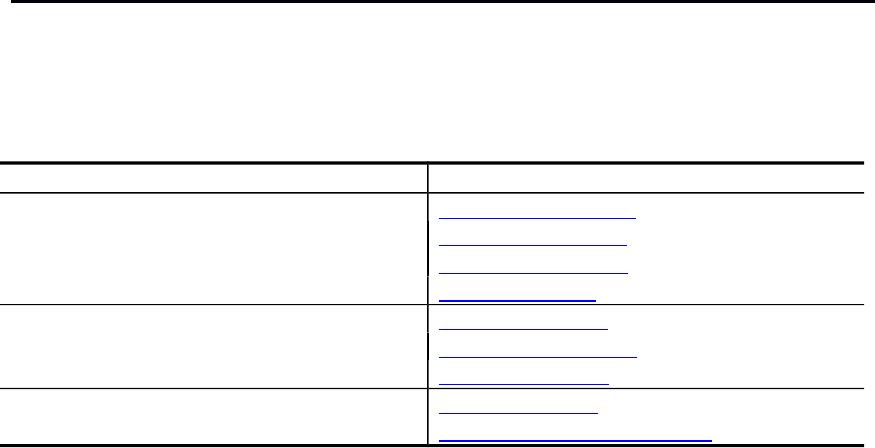
CHAPTER WEB SITES
Section Web Address
3.1 www.financials.com
finance.yahoo.com
finance.google.com
money.msn.com
3.3 www.reuters.com
www.onlinewbc.gov
www.chalfin.com
3.5 www.naics.com
investing.businessweek.com
CHAPTER ORGANIZATION
3.1 Cash Flow and Financial Statements: A Closer Look
Sources and Uses of Cash
The Statement of Cash Flows
3.2 Standardized Financial Statements
Common-Size Statements
Common-Base Year Financial Statements: Trend Analysis
Combined Common-Size and Base-Year Analysis
3.3 Ratio Analysis
Short-Term Solvency, or Liquidity, Measures
Long-Term Solvency Measures
Asset Management, or Turnover, Measures
Profitability Measures
Market Value Measures
Conclusion
3.4 The Du Pont Identity
A Closer Look at ROE
An Expanded Du Pont Analysis
3.5 Using Financial Statement Information
Why Evaluate Financial Statements?
Choosing a Benchmark
Problems with Financial Statement Analysis
3.6 Summary and Conclusions
3-1
Chapter 03 – Working with Financial Statements
ANNOTATED CHAPTER OUTLINE
Lecture Tip: Students sometimes get the impression that
accounting data is useless because care must be used when
some of the results are interpreted. They sometimes ask
why we bother with financial statement analysis at all.
Robert Higgins provides a good answer to this question:
fiObjectively determinable current values of many
assets do not exist. Faced with a trade-off between
relevant, but subjective current values, and
irrelevant, but objective historical costs,
accountants have opted for irrelevant, but objective
historical costs. This means that it is the user’s
responsibility to make adjustments.”
Financial statement information is often our ONLY source of
information. Consequently, we use the information we have and
make adjustments where appropriate.
1. Cash Flow and Financial Statements: A Closer Look
A. Sources and Uses of Cash
Activities that bring cash in are sources. Firms raise cash by selling
assets, borrowing money, or selling securities.
Activities that involve cash outflows are uses. Firms use cash to
buy assets, pay off debt, repurchase stock, or pay dividends.
Mechanical Rules for determining Sources and Uses:
Sources:
Decrease in asset account
Increase in liabilities or equity account
Uses:
Increase in asset account
Decrease in liabilities or equity account
Lecture Tip: Students often experience difficulty when
conceptualizing an increase in the cash balance, an asset, as a use
of cash (they typically think of an increase in cash as a source of
cash). It may be helpful to stress that a cash increase (a use of
funds) on the balance sheet must be realized through a reduction
3-2
Chapter 03 – Working with Financial Statements
in another asset account (a source of funds) or through an
increase in a liability or an equity account (a source). Building up
bank balances is definitely a use of cash because that same cash
could be used to pay dividends, among other things.
B. The Statement of Cash Flows
The idea is to group cash flows into one of three categories:
operating activities, investment activities, and financing activities.
A general Statement of Cash Flows
Operating Activities
+ Net Income
+ Depreciation
+ Decrease in current asset accounts (except cash)
+ Increase in current liability accounts (except notes
payable)
– Increase in current asset accounts (except cash)
– Decrease in current liability accounts (except notes
payable)
Investment Activities
+ Ending net fixed assets
– Beginning net fixed assets
+ Depreciation
Financing Activities
Change in notes payable
Change in long-term debt
Change in common stock
– Dividends
Putting it all together:
Net cash flow from operating activities
Fixed asset acquisition
Net cash flow from financing activities
= Net increase (decrease) in cash over the period
2. Standardized Financial Statements
Standardized statements allow users to compare companies of
different sizes or better compare a company as it grows through
time.
3-3
Chapter 03 – Working with Financial Statements
A. Common-Size Statements
Useful in comparison of firms of unequal size or to compare a
company through time as it grows.
Common-Size Balance Sheet – express each account as a percent
of total assets
Common-Size Income Statement – express each item as a percent
of sales
B. Common-Base Year Financial Statements: Trend Analysis
Select a base year and then express each item or account as a
percent of the base-year value of that item. This is useful for
picking up trends through time.
C. Combined Common-Size and Base-Year Analysis
Express each item in base year as a percent of either total assets or
sales. Then, compare each subsequent year’s common-size percent
to the base-year percent (abstracts from the growth in assets and
sales).
3. Ratio Analysis
Lecture Tip: Unfortunately, students often make it through an
entire business program without ever having to interpret the
consolidated financial statements in an annual report. Yet, they
need to grasp the differences between the simplified statements
that are presented in textbooks and the statements they will see in
the business world. There are several things you can do to
increase their awareness of the differences. One idea is to go to a
company’s web site and pull up the annual report. Go through the
balance sheet and income statement and point out some of the
differences. For example, EBIT is often referred to as fioperating
income” or fiincome from operations,” and not all companies list
ficost of goods sold” on the income statement. An excellent
homework assignment is to have them download the financial
statements for a company of your choice, and then have them
compute the ratios and discuss the results in class.
3-4

Chapter 03 – Working with Financial Statements
Things to consider concerning financial ratios:
-What aspects of the firm are we attempting to analyze?
-What information goes into computing a particular ratio and how
does that information relate to the aspect of the firm being
analyzed?
-What is the unit of measurement (times, days, percent)?
-What are the benchmarks used for comparison? What makes a
ratio figood” or fibad?”
Categories of Financial Ratios:
-Short-term solvency, or liquidity, ratios: The ability to pay bills in
the short-run
-Long-term solvency, or financial leverage, ratios: The ability to
meet long-term obligations
-Asset management, or turnover, ratios: Efficiency of asset use
-Profitability ratios: Efficiency of operations and how that
translates to the fibottom line”
-Market value ratios: The market values of the firm relative to the
book values
Lecture Tip: Students often fail to see the fiforest” for all the
fitrees” (equations) when they are first learning financial
statement analysis. It’s important to remind them that we aren’t
just computing ratios; we are computing ratios to help us make
better decisions. Teaching the ratios by category and showing how
each category can answer different questions related to the
financial strength of the firm may help students see the overall
picture painted by financial statement analysis.
A. Short-term Solvency, or Liquidity, Measures
Current Ratio = current assets / current liabilities
Quick Ratio = (current assets – inventory) / current liabilities
3-5

Chapter 03 – Working with Financial Statements
Cash Ratio = cash / current liabilities
NWC to TA = (current assets – current liabilities) / total assets
Interval Measure = current assets / average daily operating costs
Note that average daily operating costs generally exclude
depreciation expense (since it is not a cash expense) and interest
expense (since it is not an operating expense).
Lecture Tip: When asked to define liquidity, students invariably
state that it is the fiability to convert assets to cash quickly.”
Wrong! You should stress the inadequacy of this definition by
pointing out that you can convert anything to cash quickly if you
lower the price enough. A good example is to ask the students how
long it would take to sell a house if the seller only asked for $1.
Then ask them if this means that the house is a liquid asset. Most
of them recognize that it is not, and then it is easier for them to
remember the second part of the definition – fiwithout a significant
loss in value.”
Lecture Tip: Students often think that a high current ratio is, in
and of itself, a good thing. This may be true if you are a short-
term creditor and you are evaluating whether or not to grant trade
credit or make a short-term loan, but liquid assets are generally
less profitable for the company. Consequently, too large an
investment in current assets may reduce the earnings power of the
firm and actually reduce the stock price. Remind the students that
the goal of the firm is to maximize owner wealth.
Kirk Kerkorian’s takeover bid for Chrysler in April, 1995, is a
perfect example of investor dissatisfaction with excess liquidity. At
the time, Chrysler’s management had accumulated $7.3 billion in
cash and marketable securities as a cushion against an economic
downturn. Mr. Kerkorian instigated a takeover bid because
Chrysler’s management refused to pay this cash to stockholders. A
Wall Street Journal article noted that some analysts considered
several other firms with large cash holdings relative to firm value
vulnerable to takeover bids as well.
Lecture Tip: You may want students to consider the interaction of
ratios. Suggest a scenario in which the current ratio exhibits no
change over a two- or three-year period, while the quick ratio
experiences a steady decline. How could this occur? Is it a
desirable strategy? Have the students consider the following:
3-6
Chapter 03 – Working with Financial Statements
1. The company is operating with lower levels of the most
liquid assets, and this situation should be monitored. A problem
could arise should a large amount of current liabilities come due
for payment. However, this may not be a major concern if the
company has access to a line of credit at a bank.
2. This situation also indicates that larger levels of inventory,
relative to current liabilities, have accumulated in the firm. Point
out that an examination of other ratios is required to explore this
situation further. For example, it would be useful to know how
inventory relative to sales or cost of goods sold has changed
through time. This provides a nice lead-in to the asset management
section.
Lecture Tip: The mantra of many entrepreneurs is that fiCash is
King.” They care less about accrual accounting, and more about
whether or not there will be enough cash to pay the bills when they
come due. This is one reason that the interval measure is such an
important number for entrepreneurs to monitor. It is much more
difficult and expensive to raise capital if you have to have it
immediately. However, if you start the financing process when you
still have a fairly long time before you run out of cash, then you
can generally negotiate a better deal and you have more options
concerning the type of financing that you obtain.
B. Long-Term Solvency Measures
Total debt ratio = (total assets – total equity) / total assets
variations:
debt/equity ratio = (total assets – total equity) / total equity
equity multiplier = 1 + debt/equity ratio
Long-term debt ratio = long-term debt / (long-term debt + total
equity)
Times interest earned ratio = EBIT / interest
Cash coverage ratio = (EBIT + depreciation) / interest
Lecture Tip: This group of ratios really measures two different
aspects of leverage – the level of indebtedness and the ability to
service debt. The former is indicative of the firm’s debt capacity,
while the latter more closely relates to the likelihood of default.
3-7
Chapter 03 – Working with Financial Statements
Further, it is sometimes helpful to alert students to some of the
nuances of the ratios within these subgroups. For example, the
total debt ratio measures what proportion of the firm’s assets are
financed with borrowed money, while the debt/equity ratio
compares the amount of funds supplied by creditors and owners.
The long-term debt ratio looks at the percent of long-term
financing that is raised using debt.
Lecture Tip: The importance of coverage ratios is sometimes
overlooked, particularly when one considers their importance to
all types of creditors. There are several types of coverage ratios
that may include interest expense, sinking fund payments, and
lease payments in the denominator. The format of the ratios
depends largely on the reason that the analyst is looking at them,
so it is always important to pay attention to exactly how the ratio
is being computed, not just what it is called.
C. Asset Management, or Turnover, Measures
Inventory turnover = cost of goods sold / inventory
Days’ sales in inventory = 365 days / inventory turnover
Receivables turnover = sales / accounts receivable
Days’ sales in receivables = 365 days / receivables turnover
This ratio may also be called fiaverage collection period” or
fidays’ sales outstanding.”
Net working capital turnover = sales / (current assets – current
liabilities)
Net fixed asset turnover = sales / net fixed assets
Total asset turnover = sales / total assets
Lecture Tip: You may wish to mention that there may be
significant inconsistencies in the methods used to compute ratios
by financial advisory firms. When using ratios supplied by others,
it is important to be aware of the exact financial items used. A
manufacturer would typically consider inventory at cost, and thus,
relate inventory to cost of goods sold. However, a retailer might
maintain its inventory level based on retail price. In the latter
case, inventory should be related to sales to compute inventory
turnover. The markup would cancel in the numerator and
denominator and give an accurate indication of turnover based on
3-8

Chapter 03 – Working with Financial Statements
cost. Furthermore, some analysts use average inventory over some
period instead of ending inventory. The same is true for the other
assets used in the various turnover ratios.
Lecture Tip: A Wall Street Journal article suggested that
accounting methods and ratio analysis may require some
rethinking in the finew era” in which we seem to be living.
Specifically, an article entitled fiBulls Use Convoluted Measures to
Justify View” from the April 20, 1998 issue notes that fiBy almost
any standard measure of stock value, Friday’s record closes leave
large stocks trading at or beyond history’s most extreme limits of
valuation.” [Note to the cautious reader: when the WSJ article
was written, the DJIA was at 9167.50; it went as high as 11,500 in
early 2000, dropped to about 7900 after the terrorist attacks on
September 11, 2001, was back to almost 10,400 following the
election in early November, 2004, and set a new record in 2006.]
In any event, the article notes that the bull market of the 1990s was
attributable in large part to nearly divine macroeconomic
conditions – low inflation, low interest rates, and increasing
productivity. Put another way, the traditional valuation
benchmarks – historical price-earnings ratios, market-to-book
ratios, and dividend yields, as well as the underlying accounting
data – require careful consideration. As of 2012, little has changed
in the way that financial statements are reported or analyzed.
Lecture Tip: In discussing the nature of financial statement
analysis, you may wish to emphasize frequently that it is a means
to an end, rather than an end in itself. That is, financial ratios are
fired flags” that a good analyst will use to determine what needs to
be investigated further. For example, suppose a firm’s average
collection period (days’ sales in receivables) is significantly higher
than the industry norm. What questions might you ask?
-What are the firm’s credit terms? What are the industry’s terms on
average?
-Has the average collection period been trending upward, or is
this an aberration?
-Which consumers are contributing to the relatively high average
collection period?
-Is this an industry or economy wide phenomenon?
Clearly, these questions are not all easily answered. Nonetheless,
it should be emphasized that a thorough analyst will consider
numerous questions like these in making a final determination
about the firm’s ability to manage its assets.
3-9
Chapter 03 – Working with Financial Statements
Lecture Tip: Students should be warned that, just as one must take
care in making generalizations across industries, so intra-industry
generalizations should also be made with great caution. For
example, a fixed asset turnover ratio that is high relative to that of
the industry can be the result of efficient asset utilization, or it can
indicate that the firm is utilizing old (and perhaps inefficient)
equipment, while others in the industry have invested in modern
equipment. This example also provides you with the opportunity to
illustrate the underlying linkages inherent in financial statement
analysis. In this case, the firm using inefficient equipment would
display a favorable fixed asset turnover ratio, but would be likely
to display a higher level of expenses, and unless offset by other
factors, lower profitability.
D. Profitability Measures
These measures are based on book values, so they are not
comparable with returns that you see on publicly traded assets.
Profit margin = net income / sales
Return on assets = net income / total assets
Return on equity = net income / total equity
E. Market Value Measures
Earnings per share = net income / shares outstanding
Price-earnings ratio = price per share / earnings per share
Price-sales ratio = price per share / sales per share
Market-to-book ratio = market value per share / book value per
share
Tobin’s Q = market value of firm’s assets / replacement cost of
firm’s assets
Enterprise Value = total market value of the stock + book value of
all liabilities – cash
EBITDA ratio = Enterprise Value / EDITDA
3-10

Chapter 03 – Working with Financial Statements
Lecture Tip: What is fiEEBS”? Under the heading fiA Wire Story
We’d Like to See,” those rascals at Fortune magazine have
proposed a new earnings metric: EEBS, or fiEarnings Excluding
Bad Stuff.” The tongue-in-cheek article implies that, since Wall
Street doesn’t like things that negatively impact earnings, firms
should just report earnings they would have made fiif all this bad
stuff hadn’t happened” during the quarter. At first glance it sounds
silly; on the other hand, it may be the next logical step for those
firms that practice fiincome smoothing” and fiearnings
management.”
Recently, online coupon vendor Groupon has come under fire for
using a new measure called adjusted consolidated segment
operating income (CSOI). In a Wall Street Journal article titled
fiGroupon’s Accounting Lingo Gets Scrutiny” published on July
28th, 2011, the measure was questioned by investors and analysts
who said that it fidraws attention away from marketing costs,
which are causing the company to hemorrhage money.” To
address concerns over its use of CSOI, Groupon filed an
amendment to its initial SEC filing for its upcoming IPO. Groupon
stated that the measure fishould not be considered as a measure of
discretionary cash available to us to invest in the growth of our
business or as a valuation metric.”
Lecture Tip: Here’s a tip for teaching about the vagaries and
interpretations of the P-E ratio, either in your discussion of
financial ratios, or in your discussion of stock market history.
Consider the table of year-end P-E ratios for the S&P 500
(courtesy of Barron’s through 1997 and the S&P web site for 1998
through 2004):
Year P-E Year P-E
1977 8.7 1991 20.0
1978 7.7 1992 18.7
1979 7.2 1993 17.3
1980 9.3 1994 14.5
1981 8.1 1995 16.3
1982 11.1 1996 18.1
1983 11.3 1997 21.0
1984 9.9 1998 27.8
1985 13.7 1999 28.4
1986 15.1 2000 23.2
1987 13.7 2001 27.5
1988 11.1 2002 19.11
1989 14.4 2003 20.33
1990 13.8 2004 17.91
3-11

Chapter 03 – Working with Financial Statements
The average P-E ratio over the 28-year period is 16. But what is
the average over a subset through time?
Period Average P-E
1977 – 81 8.2
1982 – 86 12.2
1987 – 91 14.6
1992 – 96 17.0
1997 – 2004 23.2
Lecture Tip: There are the fiofficial” earnings estimates, compiled
by First Call, and then there are the fiunofficial” estimates or
fiwhisper numbers.” Money Daily, in November, 1998 called
whisper numbers fiunofficial, unsubstantiated and unattributed
forecast[s] derived from rumors, hints and often, innuendo.”
Academic studies suggest that whisper numbers (which are often
disseminated via the Internet) fiare a better proxy for market
expectations and are more accurate than consensus numbers.”
(Purdue University professor Susan Watts, quoted in the same
Money Daily article.) Another common term on Wall Street is
fivisibility.” This term refers to the ability of management and
analysts to forecast earnings for future quarters. The more
confident they are about their estimates, the more fivisibility” that
exists. Of course, visibility was much better when the economy was
good. When the economy began to slow down, visibility vanished.
It ties back to fiEEBS,” in a down economy, companies don’t want
to predict bad earnings very far into the future, but they are more
than willing to project good earnings for an extended number of
quarters during a good economy.
International Note: While some investors use P-E ratios as if they
are universally comparable, differences in generally accepted
accounting practices used to compute EPS make international
comparisons risky. For example, the conventional wisdom for
many years was that the high P-E ratios of Japanese stocks was
due in part to the more conservative nature of Japanese
accounting practices which depressed reported earnings and
increased P-Es.
An interesting discussion of this issue appeared in the November
14, 1988 Pensions and Investment Age. Gary Schieneman, Vice
President – International Equity Research with Prudential-Bache
applied US accounting standards to 25 Japanese
firms in 17 industries and found little evidence of a systematic
downward bias in reported earnings. But, Paul Aron, Vice-
Chairman emeritus of Daiwa Securities countered by suggesting
3-12
Chapter 03 – Working with Financial Statements
that, after adjusting for methodological problems, 75% of the firms
in Mr. Schieneman’s sample did underreport earnings. Regardless
of who is correct, the most telling aspect of the discussion is Mr.
Schieneman’s comment in summing up: fiI don’t think earnings
mean a whole lot in Japan.”
Lecture Tip: Ask the students to consider how the market-to-book
ratio could be interpreted if you are considering the purchase of a
company’s stock. Some feel a ratio of less than one would be
preferred since the stock is selling below its book value. You can
point out that the market is evaluating the company’s future
earnings power, while the book value reflects the price at which
stock had previously been issued and the earnings that had been
retained in the firm. Valuation techniques concerning a company’s
future earnings will be explored in later chapters (as will capital
market efficiency and security valuation).
4. The Du Pont Identity
A. A Closer Look at ROE
The Du Pont Identity provides analysts with a way to break down
(i.e., decompose) ROE and investigate what areas of the firm need
improvement.
ROE = (NI / total equity)
multiply by one (assets / assets) and rearrange
ROE = (NI / assets) (assets / total equity) = ROA*EM
multiply by one (sales / sales) and rearrange
ROE = (NI / sales) (sales / assets) (assets / total equity)
ROE = PM*TAT*EM
These three ratios indicate that a firm’s return on equity depends
on its operating efficiency (profit margin), asset use efficiency
(total asset turnover) and financial leverage (equity multiplier).
B. An Expanded Du Pont Analysis
We can take a closer look at operating efficiency by looking at
sales and the various costs that impact the firm. We can take a
closer look at asset use efficiency by looking at sales and each type
of asset. This can be illustrated graphically using an Expanded Du
Pont Chart.
3-13
Chapter 03 – Working with Financial Statements
5. Using Financial Statement Information
A. Why Evaluate Financial Statements
Internal Uses – evaluate performance, look for trouble spots,
generate projections
External Uses – making credit decisions, evaluating competitors,
assessing acquisitions
Lecture Tip: The development of financial statement analysis is
rooted in a manufacturing tradition, with the large industrial
corporation at its center. Many notions about financial statement
analysis grew out of a view of business in which specialized plant
and equipment are used to turn raw materials into finished goods
that are then sold on credit. This view was modified by the advent
of the large retail corporation, but the emphasis on balance sheet
assets (receivables, inventories, plant and equipment) and the
measures associated with them remain.
Because of this manufacturer/retailer tradition, much of the
conventional wisdom about statement analysis is inappropriate to
many of today’s business situations. This is even truer when we
consider the advent of the fidot .coms.” Good examples of firms
that do not fit the traditional mold are the professional
organizations formed by doctors, consultants, attorneys, etc., or
other service companies such as television and radio stations and
colleges and universities. The most important assets for these firms
are the people and they do not show up on the balance sheet. Their
liquidity does not come from current assets but from the services
provided. Financial statements will eventually evolve, but it is
important to understand where we are starting from.
B. Choosing a Benchmark
Time-Trend Analysis – look for significant changes from one
period to the next
Peer Group Analysis – compare to other companies in the same
industry, use SIC or NAICS codes to determine the industry
comparison figures
C. Problems with Financial Statement Analysis
-no underlying financial theory
-finding comparable firms
-what to do with conglomerates, multidivisional firms
3-14

Chapter 03 – Working with Financial Statements
-differences in accounting practices
-differences in capital structure
-seasonal variations, one-time events
Ethics Note: An interesting example of another problem faced by
professional analysts is demonstrated by the Trump-Roffman case.
In 1990, Marvin Roffman, an analyst at Janney Montgomery Scott,
Inc. stated in a Wall Street Journal article that, on the basis of his
examination of the financial data, he had fisevere reservations
about the future” of the Trump Taj Mahal in Atlantic City. In
response, Donald Trump threatened to sue Janney Montgomery
Scott. Roffman wrote, and then retracted, a public apology to
Trump and was dismissed. He successfully sued and received a
large settlement. Nonetheless, his case illustrates the dangers one
faces as a practicing analyst. (For further details, see the New
York Times, June 6, 1991.)
Lecture Tip: The explosion of the Internet has placed financial
information in the hands of millions of individuals and increases
the speed with which information is obtained by professionals.
Many companies now webcast their earnings conference calls.
This information used to only be directly available to analysts,
who then passed selected information on to their clients. There is
also more opportunity for false information to be spread quickly.
An excellent example is the case of Emulex and the phony press
release. On Friday, August 25, 2000, someone issued a press
release indicating that the CEO of Emulex was quitting and that
quarterly earnings would be restated from a profit to a loss. The
stock price immediately plunged 62 percent. Mark Jakob has been
arrested for releasing the phony press release. His motive was
apparently to cover substantial losses from a short position in
Emulex. The Internet and other financial news sources
disseminated the information from the press release much faster
than would have been possible in the past. This is an excellent
opportunity to introduce the subject of efficient markets. If
information is more readily available, it should be incorporated
into the price more quickly, thereby increasing market efficiency.
There is a trade-off, however. False information can also be
incorporated very quickly, so investors need to remember the old
adage fiyou can’t believe everything you read.”
6. Summary and Conclusions
3-15