
450
– 450 –
TEACHING NOTE
CASE 13
*This teaching note reflects the thinking and analysis of Professor David Turnipseed, University of South Alabama. We are most
grateful for his insight, analysis and contributions to how the case can be taught successfully.
: Will the Company’s
Strategy Reverse its Downward Trend?*
Vera Bradley in 2014
Overview
Vera Bradley was founded in 1982 by two friends—Barbara Bradley Baekgaard and Patricia Miller. While
waiting in Atlanta Hartsfield airport for a flight home to Fort Wayne, Indiana, the ladies noticed the
endless lines of women walking through the concourse with what they considered ugly, drab luggage.
They decided to help the appearance of traveling women and improve the appearance of their luggage. Back
in Fort Wayne the friends began making colorful luggage from their homes: the company was named Vera
Bradley, after the mother of Barbara Baekgaard. The company first products were a handbag, a duffel bag, and
a sports bag manufactured from bright colorful print material. Over the years, a constantly changing array of
bright prints became the hallmark of the company, and sales steadily increased. The company prospered and
eventually designed, manufactured, marketed, and retailed luggage, purses, wallets and a wide variety of bags,
and accessories for women, including sunglasses, cell phone and computer covers, jewelry, lunch sacks, scarves,
beach accessories, and baby clothing.
Vera Bradley grew rapidly with a strategy focused on offering its distinctive line of colorful, patterned women’s
luggage, handbags, and accessories sold in department stores, in company-owned full-price retail stores and
factory outlet stores, and over the Internet. In 2013, sales were over $540 million, however, as the mid-2010s
approached, the company’s standing seemed less certain as competition intensified in the market for ladies’
handbags and accessories. Its meteoric growth stalled in fiscal 2014, with revenues slipping by 1 percent, but net
income declining by nearly 15 percent. This decline in revenues and profits came on the heels of the company’s
rollout of its new strategic plan in early 2014 that would focus the company on a product line of a limited
assortment of the highest-quality ladies’ handbags and accessories, expanded distribution channels with an
emphasis on outlets and e-commerce, and an enhanced marketing approach.
The strategic plan appeared to match the company’s external market conditions and internal situation, but it
provided little uniqueness since Vera Bradley’s rivals were all competing with similar strategies. Vera Bradley’s
management believed that the quality of the plan, coupled with the company’s management expertise, would
yield a competitive advantage. Robert Wallstrom, Vera Bradley’s chief executive officer, commented shortly
after the new strategic plan was announced that the company’s strategies and talented and seasoned team of
retail executives would reverse the company’s recent decline in revenue and profits and return it to an impressive
growth trajectory.
The Vera Bradley case contains a wealth of information about the strategic direction of the company and its
main competitors: Coach, Michael Kors, and Kate Spade. The case contains sufficient information for students
to assess:
nVera Bradley’s strategy
nThe strategies of its major competitors

Case 13 Teaching Note Vera Bradley in 2014
451
nVera Bradley’s present competitive standing in the market for women’s luggage, handbags, and accessories
Suggestions for Using the Case
The Vera Bradley case is an excellent case for having students identify a company’s strategy and evaluate its
potential for building and sustaining competitive advantage. The relatively modest 12-page length of the case
will please students as they should easily grasp the nature of Vera Bradley’s business. You should also find
that students are familiar with the company and may have strong opinions about the appeal of the company’s
products. There is sufficient information in the case for students to conduct industry and company situation
analyses. There’s also ample information in the case to allow students to conduct a thorough financial analysis
for Vera Bradley. Conducting a SWOT analysis, evaluating Vera Bradley’s financial performance, and sizing up
the competition from other firms, constitutes the bulk of the analysis that students will need to conduct, once they
get a solid grip on Vera Bradley’s competitive strategy (broad differentiation).
Because the analysis of Vera Bradley is not as demanding as some other cases, it is very suitable for use in the
first half of the course, after your class has covered Chapters 1-6.
The assignment questions and teaching outline presented below reflect our thinking and suggestions about
how to conduct the class discussion and what aspects to emphasize.
Optimal Use of Assignment Questions. It is quite difficult to have an insightful and constructive class
discussion of an assigned case unless students have not only read the case but also conscientiously worked their
way through a set of well-conceived assignment or study questions before they come to class. In our classes, we
expect students to bring their notes to assigned study questions to use/refer to in responding to the questions that
we pose. Moreover, students often find having a set of assignment or study questions useful in helping prepare
oral team presentations and written case assignments—in addition to whatever directive questions you supply
for these assignments.
Utilizing the Guide to Case Analysis. If this is your first assigned case, you may find it beneficial to have
class members read the Guide to Case Analysis that immediately follows Case 31 in the text. The content of this
Guide should be particularly helpful to students if your course is their first experience with cases and they are
unsure about the mechanics of how to prepare a case for class discussion, oral presentation, or written analysis.
Suggested Assignment Questions for an Oral Team Presentation or Written Case Analysis. We
recommend the Vera Bradley case for written assignments and oral team presentations. Three good assignment
questions are:
1. The Board of Vera Bradley has employed you as a consultant and asked you to assess the company’s
strategy, competitive market position and overall situation, and recommend a set of actions to help the
company reverse its downturn and reestablish a positive revenue and net income trajectory. Please prepare a
report to the senior executives at Vera Bradley that includes:
• an identification of the key elements of the company’s strategy,
• a discussion of which of the five generic competitive strategies described in Chapter 5 seem to most
closely match the competitive strategy that Vera Bradley is using,

Case 13 Teaching Note Vera Bradley in 2014
452
• the strategic issues and problems that Vera Bradley’s management needs to address, and
2. (Short written case assignment) What are the pros and cons of Vera Bradley’ strategy? What evidence
3. (Short written case assignment) What does a SWOT analysis reveal about Vera Bradley’s overall situation?
Assignment Questions
1. Does Vera Bradley have a well-defined strategy? How can the strategy be best characterized?
2. Does Vera Bradley have any core competencies? Distinctive competencies? If so, what are they?
3. How attractive is Vera Bradley’s situation? What can a SWOT analysis reveal about the company’s situation
4. Using the information in case Exhibits 1 and 2 and the financial ratios in Table 4.1 of Chapter 4, prepare an
analysis of Vera Bradley’s financial situation.
5. How does Vera Bradley stack up against its three major competitors? From the data in the case (including
case Exhibits 1, 2, 4, 5, & 6), which of its four industry rivals is the strongest? Which firm appears best
poised for growth in the next 3 – 5 years?
6. How would you advise the management to improve the company’s market standing, competitiveness, and
financial performance over the next 3 – 5 years? What steps should management take?
Teaching Outline and Analysis
1. Does Vera Bradley have a well-defined strategy? How can the strategy be best
characterized?
Vera Bradley does not have a well-formed or well-articulated strategy. The strategy can loosely be described
as a differentiation strategy keyed to product line and pattern growth. Students may suggest that the company
The company’s new strategic plan included an emphasis on improving its product assortment by focusing on
its core designs, with “halo” products used to expand price points without creating an overly broad product
line. Also, the company planned to invest in emerging growth and brand-enhancing opportunities that would
strengthen the future product core, such as scarves and jewelry. Students may notice in case Exhibit 3 that
accessories are steadily decreasing in contribution to the Vera Bradley’s net revenues. Management also
Case 13 Teaching Note Vera Bradley in 2014
453
2. Does Vera Bradley have any core competencies? Distinctive competencies? If so, what
are they?
Vera Bradley uses sophisticated market analysis and product development to design and market its continually
changing line of patterns. Also, the company is able to use their distinctively patterned fabrics on a broad
line of products including purses, garment bags, rolling luggage, wallets, eyeglass cases, cosmetic cases,
3. How attractive is Vera Bradley’s situation? What can a SWOT analysis reveal about the
company’s situation?
Vera Bradley’s Resource Strengths and Competitive Capabilities
nLarge following among female shoppers
nProduct development expertise—ability to quickly develop desirable fabric patterns and colors for their
products
Vera Bradley’s Resource Weaknesses and Competitive Liabilities
nPoorly defined strategy
nDecrease in demand for traditional patterns and products
External Market Opportunities
nProduct line extension into new product categories
External Threats to Vera Bradley’s Future Well-Being
nShift in buyer tastes away from Vera Bradley’s traditional product line
nCounterfeit or knock-off products
Case 13 Teaching Note Vera Bradley in 2014
454
Vera Bradley has a number of competitive strengths, but it is in a precarious situation. The company has a
good customer base and products that have seen acceptance in the market. It is very liquid and has borrowing
Their existing strategy needs to be revisited and focused. Although the Vera Bradley brand and product line
has been well-received in the marketplace, the company is not as well-known as some if its competitors,
and there has been a recent decrease in sales. The company has also experienced a decrease in its net
There are several attractive opportunities that appear relevant for Vera Bradley and within their resource
capabilities. The company could reduce the development cycle for new products and have new product/
pattern introduction closer to the time when their research and development/design teams deem the new
4. Using the information in case Exhibits 1 and 2 and the financial ratios in Table 4.1 of
Chapter 4, prepare an analysis of Vera Bradley’s financial situation.
Students should have little trouble assessing Vera Bradley’s financial situation as fairly sound at the present.
There is sufficient liquidity, little debt and no long-term debt, and the company is profitable, although net
income is dropping as a result of decreasing sales and increasing costs. Costs of sales is greater than their
Vera Bradley opened 23 new stores (30% increase) in fiscal 2014 (76 to 99 stores), and total gross square
footage increased by 32% (156,310 sq. ft. to 207,096 sq. ft.), however, comparable store sales (net revenues
of stores that have been open over 12 months as a percentage of comparable store sales in the prior period)
dropped by 5.7%. Direct sales increased by $33,653,000 (11.5%) from fiscal 2013 to fiscal 2014, however,
Vera Bradley’s liquidity, high working capital, low debt and shareholders’ equity place the company in good
financial condition; however, if the downturn in net revenue and net income experienced in 2014 continues,
the financial condition will erode rapidly. The company’s current strategy does not appear to be optimal,
In summary, Vera Bradley is in good financial condition with the liquidity and borrowing power to vigorously
pursue a turnaround. The company has a good, recognized brand name and a large customer base. There is
Case 13 Teaching Note Vera Bradley in 2014
455
TABLE 1. Select Financial Ratios for Vera Bradley, 2010-2014
2014 2013 2012 2011 2010
Gross profit margin 55% 57% 56% 57% 52%
Operating profit margin 18% 20% 21% 15% 16%
Net profit margin 11% 13% 9% 13% 15%
Source: Calculated from case Exhibits 1 and 2.
5. How does Vera Bradley stack up against its three major competitors? From the data
in the case (including Exhibits 1, 2, 4, 5, & 6), which of the four firms is the strongest?
Which firm appears best poised for growth in the next 3–5 years?
Students may recognize that Vera Bradley’s differentiation strategy has been keyed to its colors and prints—
which are characteristic of a lifestyle brand appropriate for casual, beach, every day, and vacation use. Coach,
Michael Kors, and Kate Spade have a more professional, career, and formal focus. Also, Vera Bradley’s
product line is predominately fabric: the product lines of Coach, Michael Kors, and Kate Spade are largely
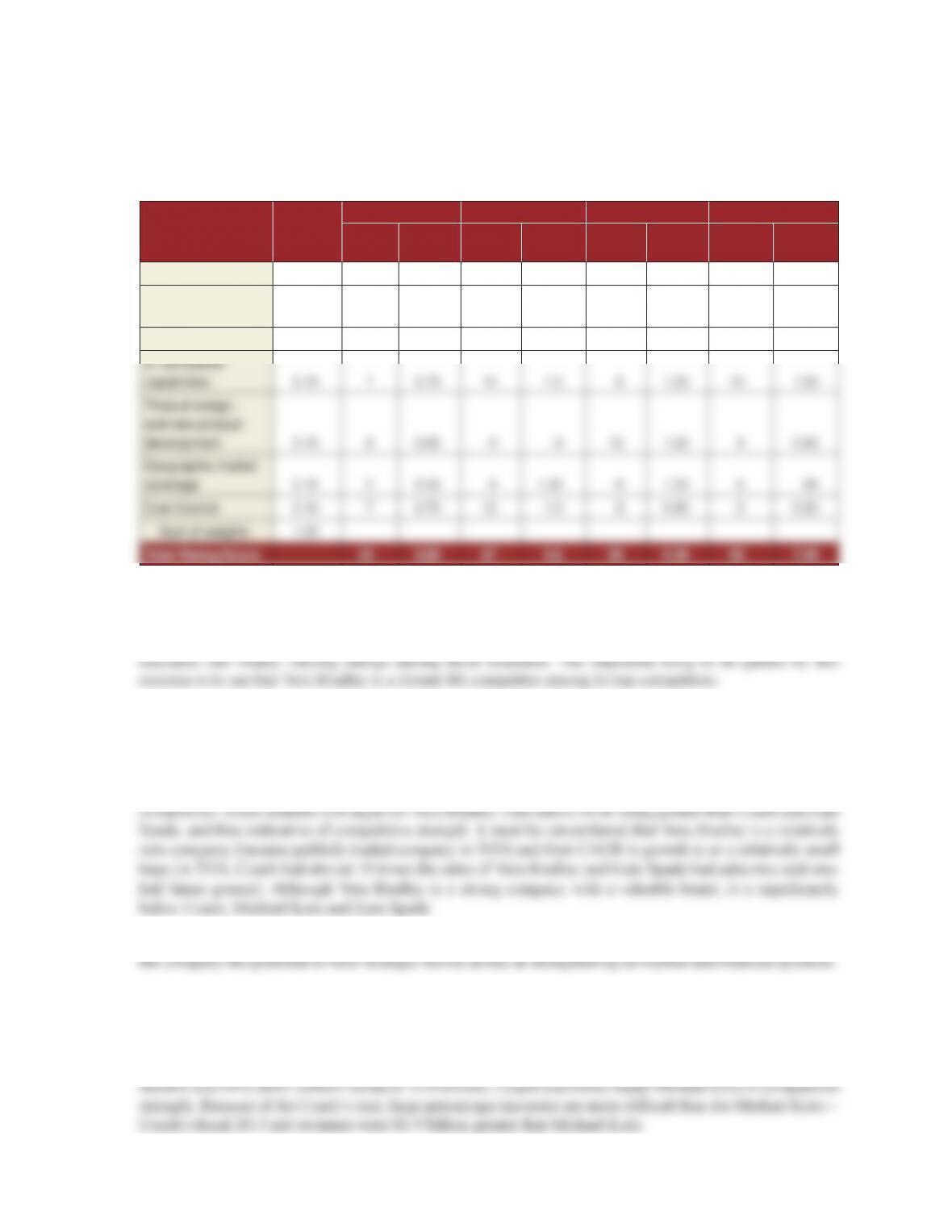
TABLE 2. Compound average Growth Rates for Vera Bradley, Coach,
Michael Kors, and Kate Spade: Net Sales, Gross Profit,
Net Income, 2010–2014
Vera Bradley
Net Sales 20.7%
Gross profit 18.2%
Net Income 8.0%
Coach
Net sales 11.9%
Case 13 Teaching Note Vera Bradley in 2014
456
TABLE 3. Competitive Strength Assessment Calculations
for Vera Bradley and Its Key Rivals
(Rating scale for each strength measure: 1 = very weak; 5 = average; 10 = very strong)
Competitive Strength
Measures
Importance
Weight
Vera Bradley Coach Michael Kors Kate Spade
Strength
Rating
Weighted
Score
Strength
Rating
Weighted
Score
Strength
Rating
Weighted
Score
Strength
Rating
Weighted
Score
Product line breadth 0.15 71.05 91.35 10 1.5 9 1.35
Brand awareness
and brand reputation 0.20 61.20 10 2.0 10 2.00 81.60
Product Quality 0.15 71.05 10 1.5 10 1.50 81.20
Table 3 presents a representative competitive strength assessment for Vera Bradley and its chief rivals in the
women’s luggage, handbags, and accessories market. Students will develop varying competitive strength
Vera Bradley is a very weak competitor compared to Coach and Michael Kors, and weak compared to Kate
Spade. Vera Bradley’s sales turned down in fiscal 2014, although the economy was improving, and during
that period, the company’s three main competitors’ sales increased. Vera Bradley gross profit margin was
lower than its three competitors in 2014. The net income margin was about half (55%) that of Coach and
Michael Kors. By every metric in the competitive strength assessment, Vera Bradley is weaker than its key
On the bright side for Vera Bradley, their liquidity position is good and the absence of long –term debt gives
Strongest Competitor
From the rankings on the competitive strength assessment, an argument can be made for Coach or Michael
Kors being the strongest company. Probably Coach should win that contest because of size at the present:
in 2013, Michael Kors’ net revenues were only 65% of Coach ($3.310 billion versus $5.075 billion) and net
Case 13 Teaching Note Vera Bradley in 2014
457
Coach had 351 full-price stores and 193 factory outlet stores in North America and over 1,000 wholesale
department store accounts in 2013. Coach also had 191 stores in Japan and 218 stores in other Asian nations
and 183 locations in other international markets, and e-commerce websites in the United States, Canada,
Best Poised for Growth
Mickael Kors appears to be best poised for growth over the next 3–5 years. Although Michael Kors’ sales are
lower than Coach and Kate Spade ($3.2 billion versus Coach’s $5.1 billion and Kate Spade’s $1.3 billion),
the company is experiencing rapid sales growth (60% CAGR 2010–2014) almost four times greater than
Vera Bradley and five times greater than Coach. Similarly, Michael Kors’ gross profit margin and net profit
6. How would you advise the management and Board to improve their market standing,
competitiveness, and financial performance over the next 3–5 years? What steps
should management take?
A plan for Vera Bradley should include the following components:
nVera Bradley should concentrate on production costs, thus increasing gross profit. Vera Bradley’s gross
nThere is a large difference in the contribution of the direct and indirect market channels. The company’s
direct sales (company stores, outlets, and e-commerce) increased from $96,111 in fiscal 2010 to $326,
217 in fiscal 2014 (35.6% CAGR). During that same period the company’s indirect sales increased
nVera Bradley’s product strategy appears to be expansion (into “emerging growth and brand-enhancing”
products), adding more solids to the pattern assortment (to “better showcase the signature patterns”),
nThere is clear evidence in the case that overseas markets are important for luxury handbags and luggage.
nThe company clearly needs to increase advertising of its core products. Students generally remark that

Case 13 Teaching Note Vera Bradley in 2014
458
nThe company should assess its “new products and patterns” strategy. Vera Bradley’s colors and patterns
may be like automobile colors: after the initial black line of cars, new and different colors were very
Epilogue
Vera Bradley’s struggles continued into fiscal 2015 with its third quarter performance lagging the same period
in 2014, with both revenue and net earnings declining from the year prior. For the nine months ended November
1, 2014, the company’s net revenues of $356.4 million fell from $374.5 million in the prior year nine months
ended November 2, 2013. Income from continuing operations of $23.5 million for the nine month period ending
November 1, 2014 was far below net income of $40.2 million in the comparable prior year period.
In commenting on the company’s third quarter fiscal 2015 performance, Vera Bradley CEO Robert Wallstrom,
stated “We remain confident that our five-year strategic plan and the steps we are taking to evolve our
merchandising, distribution and marketing are the right ones for the future of our business. We are in the early
stages of our transformation, and we have made substantial progress over the last three quarters in modernizing
and elevating our product assortments, expanding our reach through new store openings, evolving to a ‘made-
for-outlet’ model in our factory outlet stores, enhancing our online presence and growing our department store
relationships. We continue to face short-term challenges, such as weak store traffic, but believe we are heading
in the right direction and that these efforts will pay off in the years ahead.”1
1As quoted in “Vera Bradley Announces Fiscal Year 2015 Third Quarter Results,” Globe Newswire, December 10, 2014.