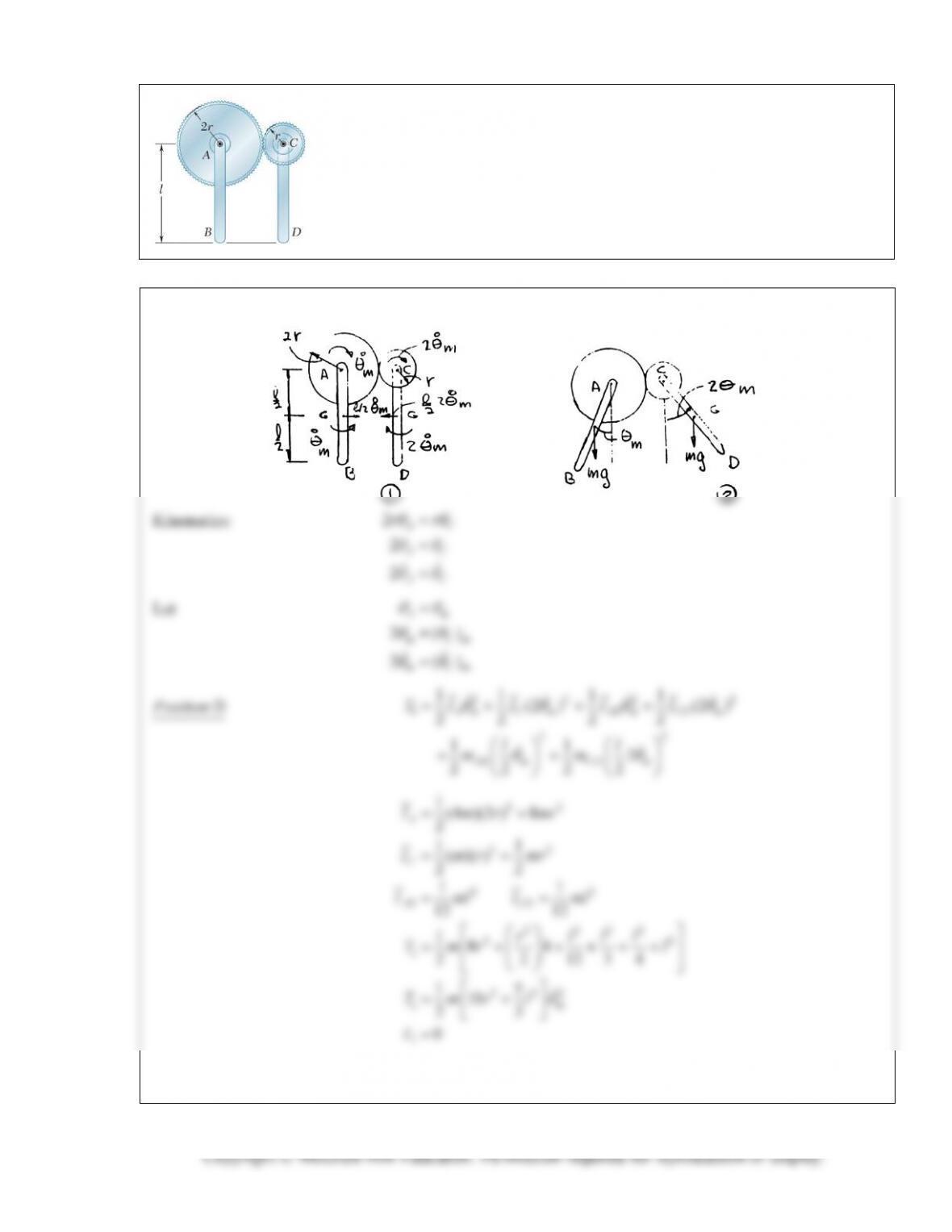
SO
LUTION
PR
O
Tw
o
sho
w
dete
r
O
BLEM 1
9
o
uniform rod
s
w
n. Knowing
r
mine the per
i
9
.87
s
AB and CD,
that the mas
s
i
od of small o
s
each of lengt
h
s
of gear C is
s
cillations of
t
h
l and mass
m
m and that t
h
t
he system.
m
, are attache
d
h
e mass of g
e
d
to gears as
e
ar A is 4m,
n
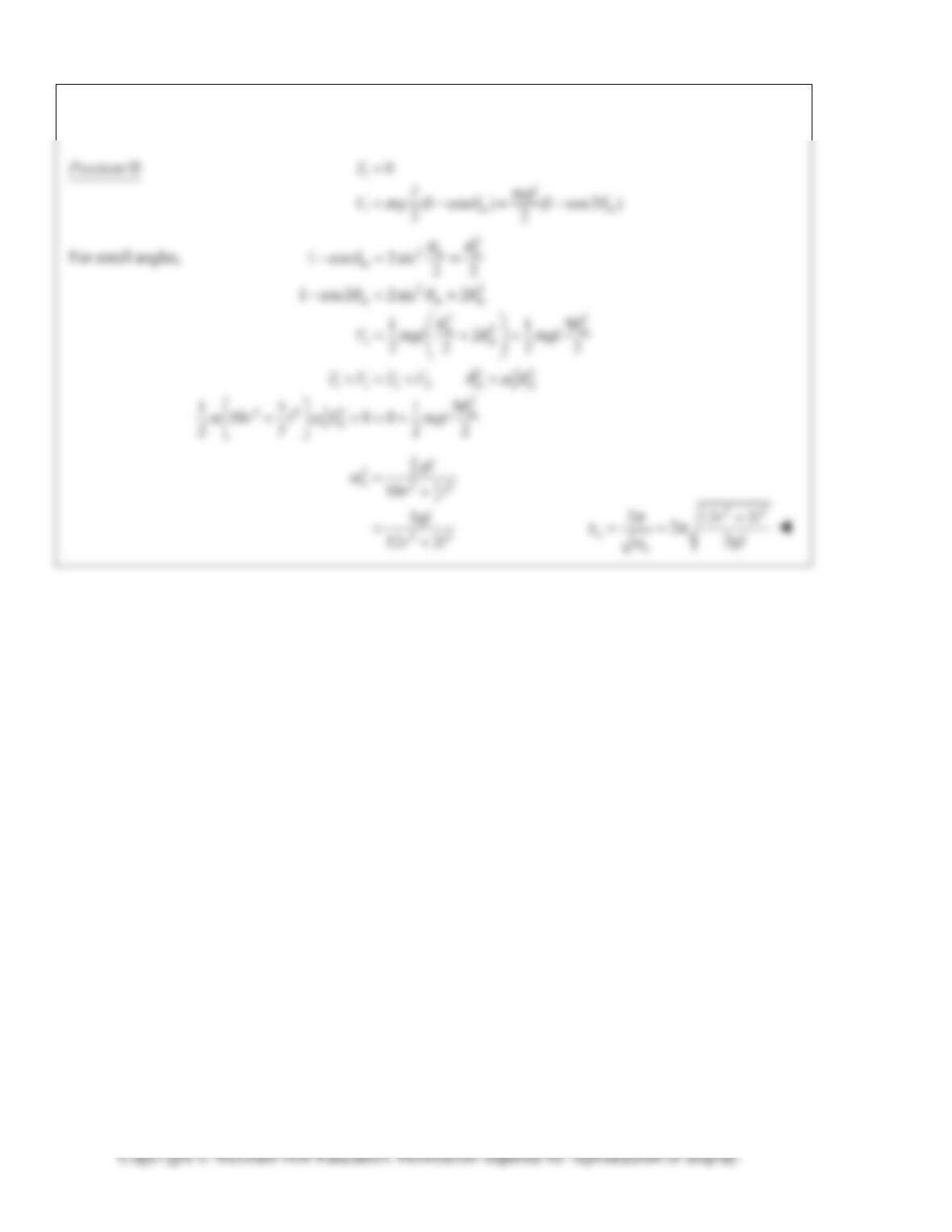
PROBLEM 19.87 (Continued)
SO
m
m
4
0
0
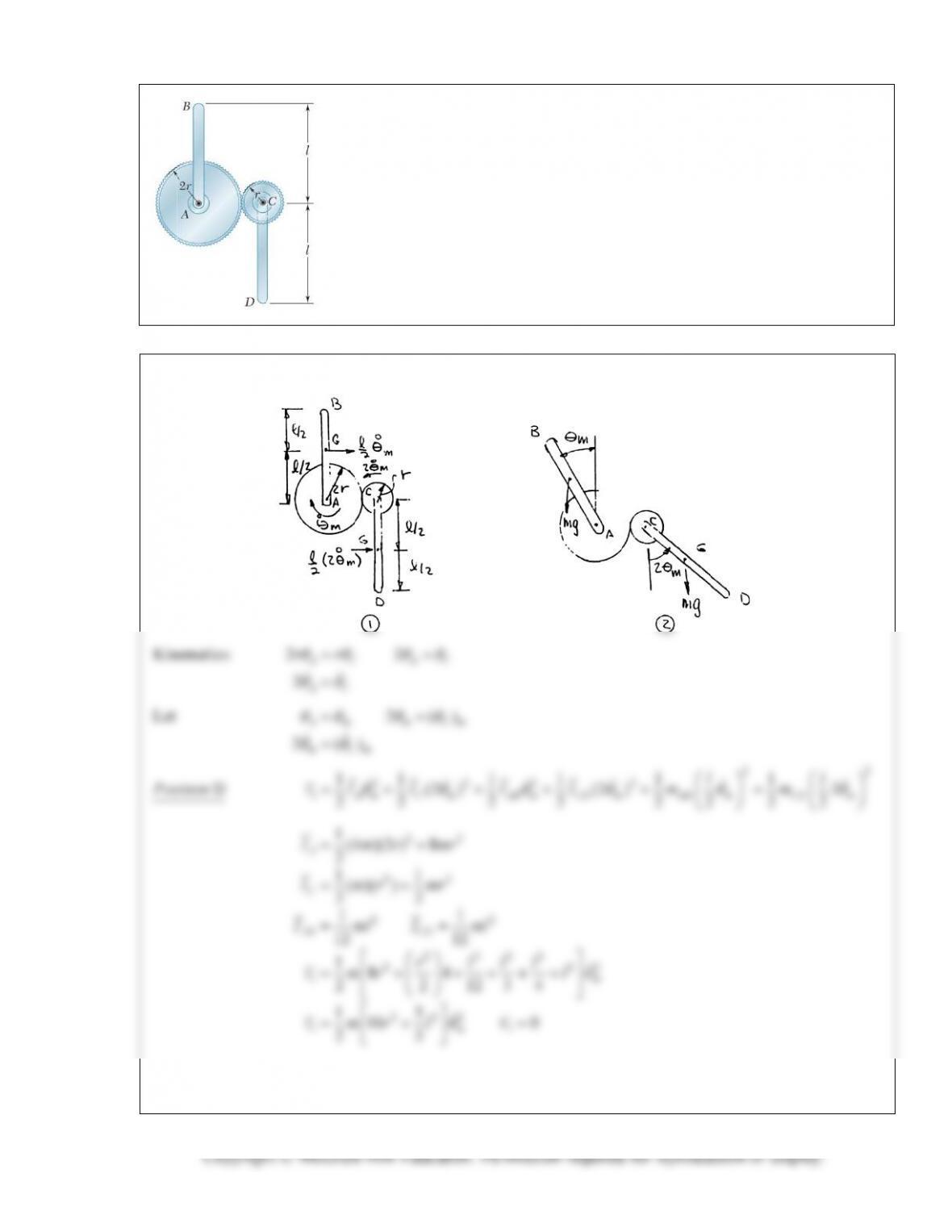
LUTION
P
R
T
w
as
s
de
t
R
OBLEM 1
w
o uniform ro
d
s
hown. Kno
w
t
ermine the p
e
9.88
d
s AB and C
D
w
ing that the
m
e
riod of small
D
, each of len
g
m
ass of gear C
oscillations o
f
g
th l and mas
s
is m and that
f
the system.
s
m, are attac
h
the mass of g
e
h
ed to gears
e
ar A is 4m,
4
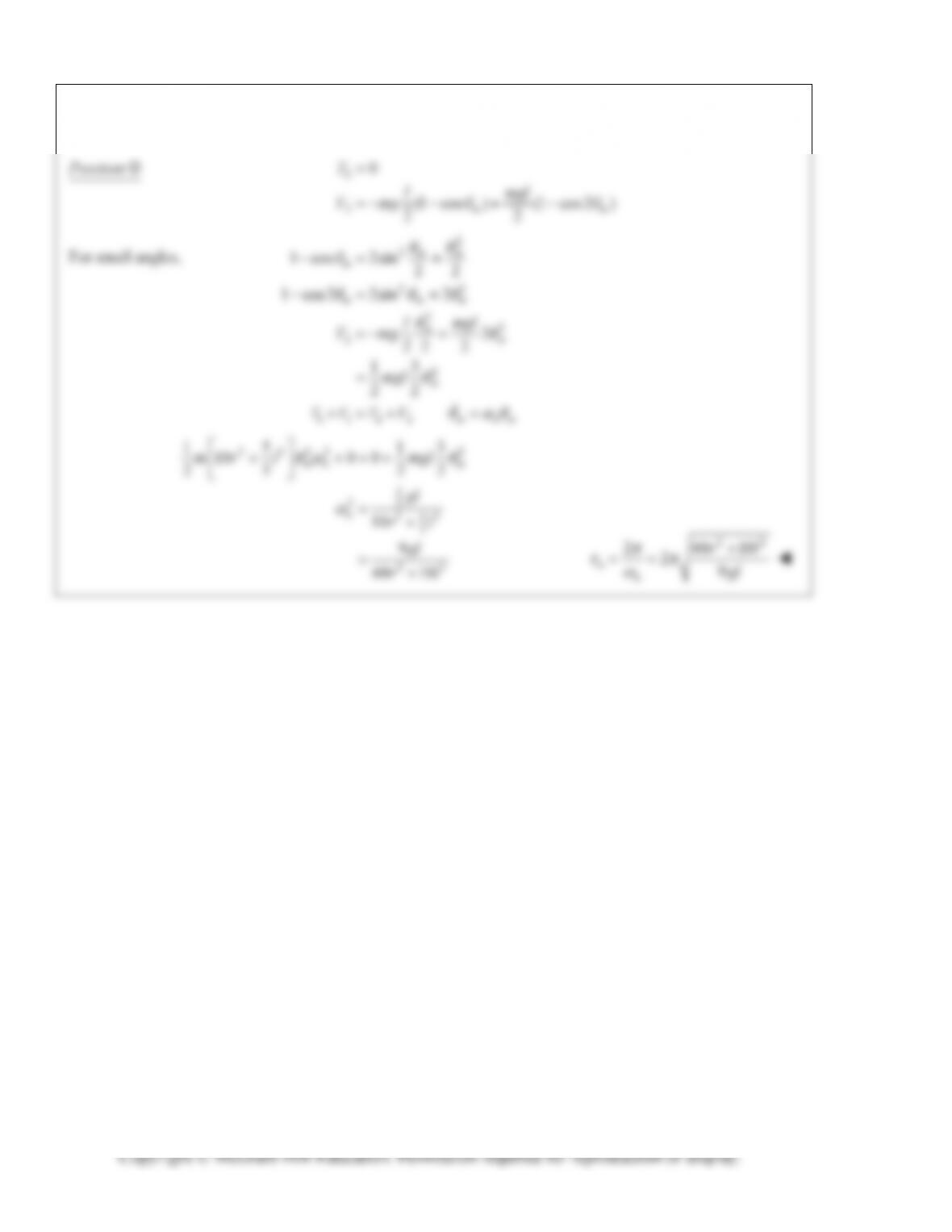
PROBLEM 19.88 (Continued)
P
osition 2 2
2
0
(1 cos ) (1 cos 2 )
22
mm
T
lmgl
Vmg
θ
θ
=
=− − + −
For small angles,
2
2
22
2
2
2
2
11 2 2
1cos 2sin 22
1cos2 2sin 2
2
22 2
13
22
mm
m
mmm
m
m
m
mnm
lmgl
Vmg
mgl
TV T V
θθ
θ
θθθ
θ
θ
θ
θ
ωθ
−= ≈
−= ≈
=− +
=
+=+ =
2222 2
3
22
22
5
3
22
15 13
10 0 0
23 22
10
9
60 10
mn m
n
mr l mgl
gl
rl
gl
rl
θ
ωθ
ω
⎡⎤
++=+
⎢⎥
⎣⎦
=+
=+
22
26010
29
n
n
rl
gl
π
τπ
ω
+
==
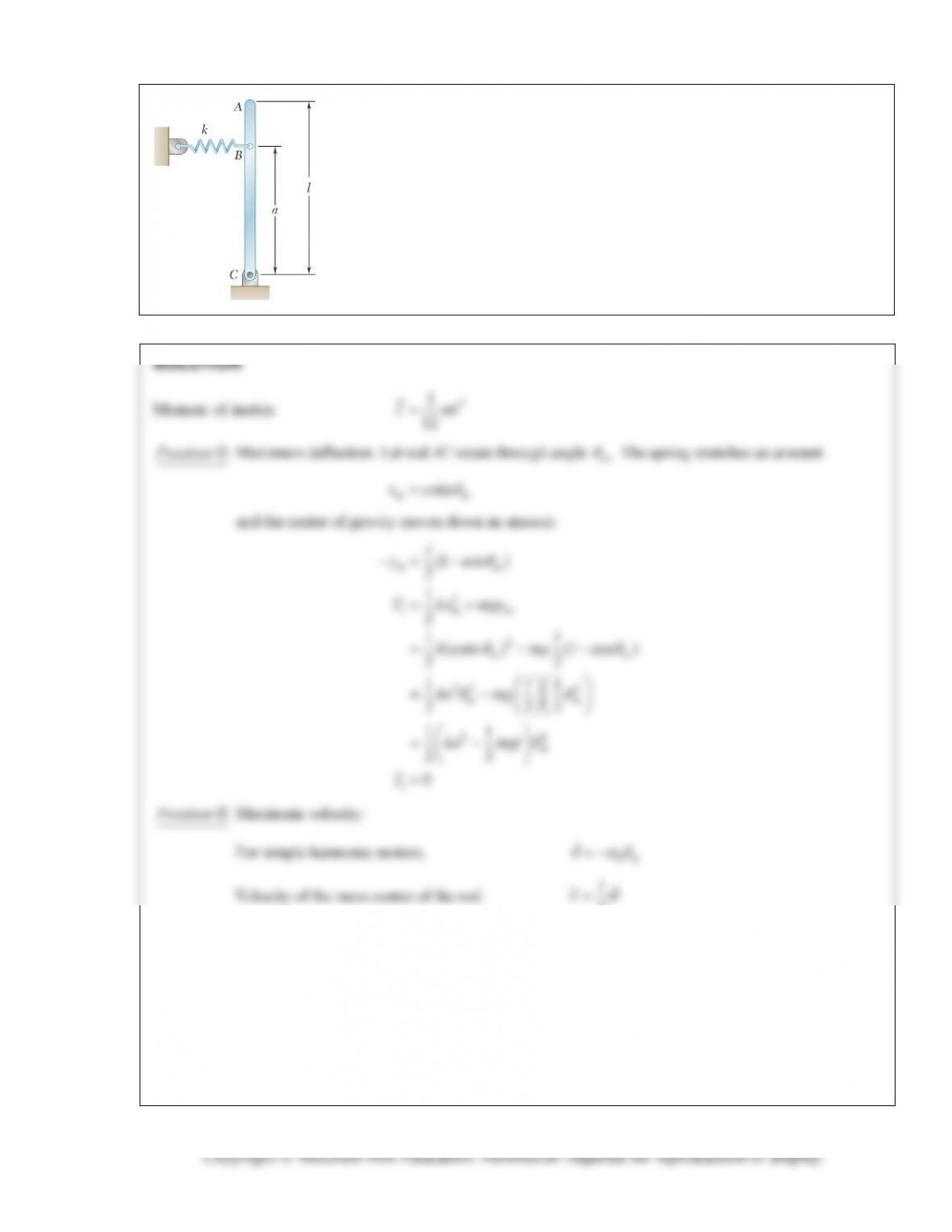
PROBLEM 19.89
An inverted pendulum consisting of a rigid bar ABC of length l and mass m is
supported by a pin and bracket at C. A spring of constant k is attached to the bar
at B and is undeformed when the bar is in the vertical position shown. Determine
(a) the frequency of small oscillations, (b) the smallest value of a for which these
oscillations will occur.
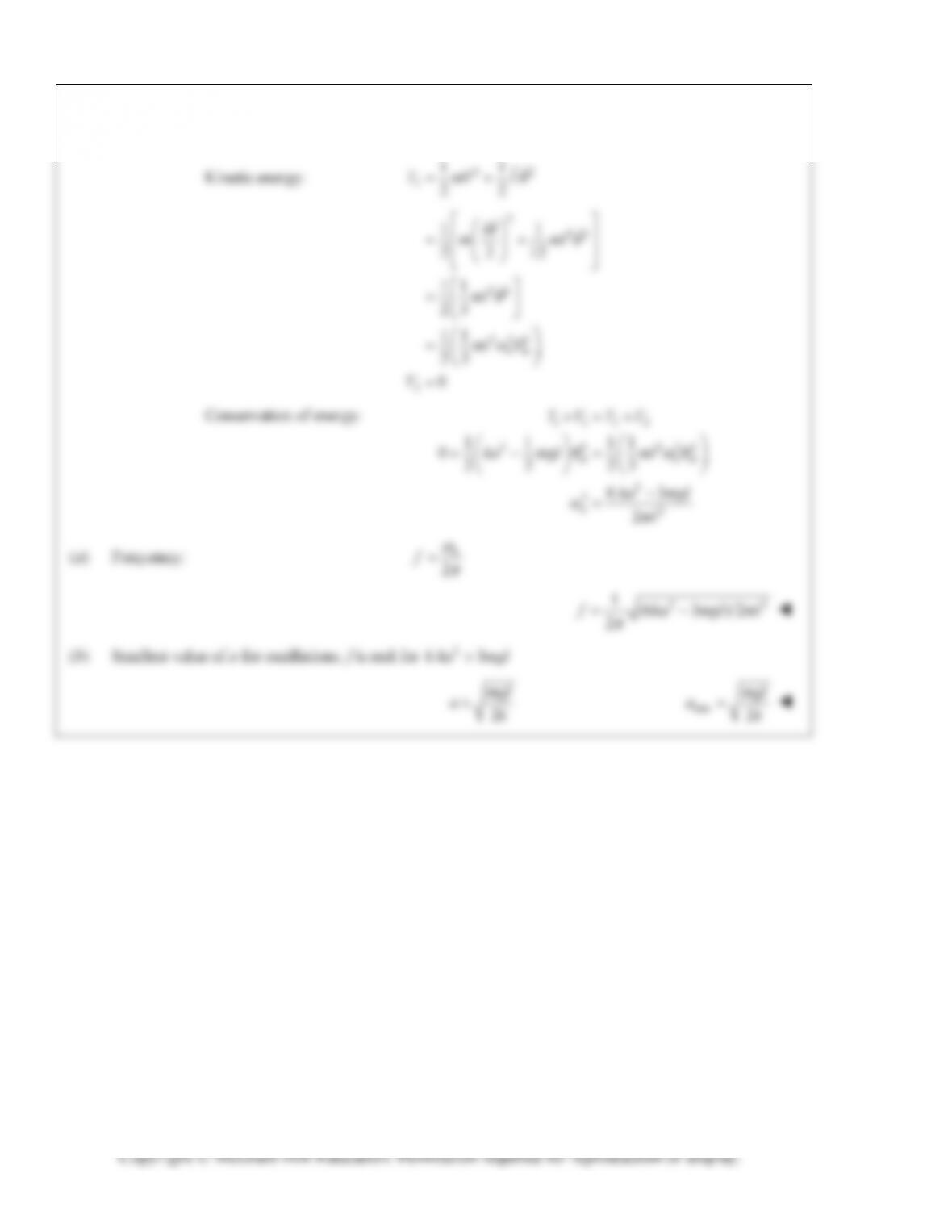
PROBLEM 19.89 (Continued)
11
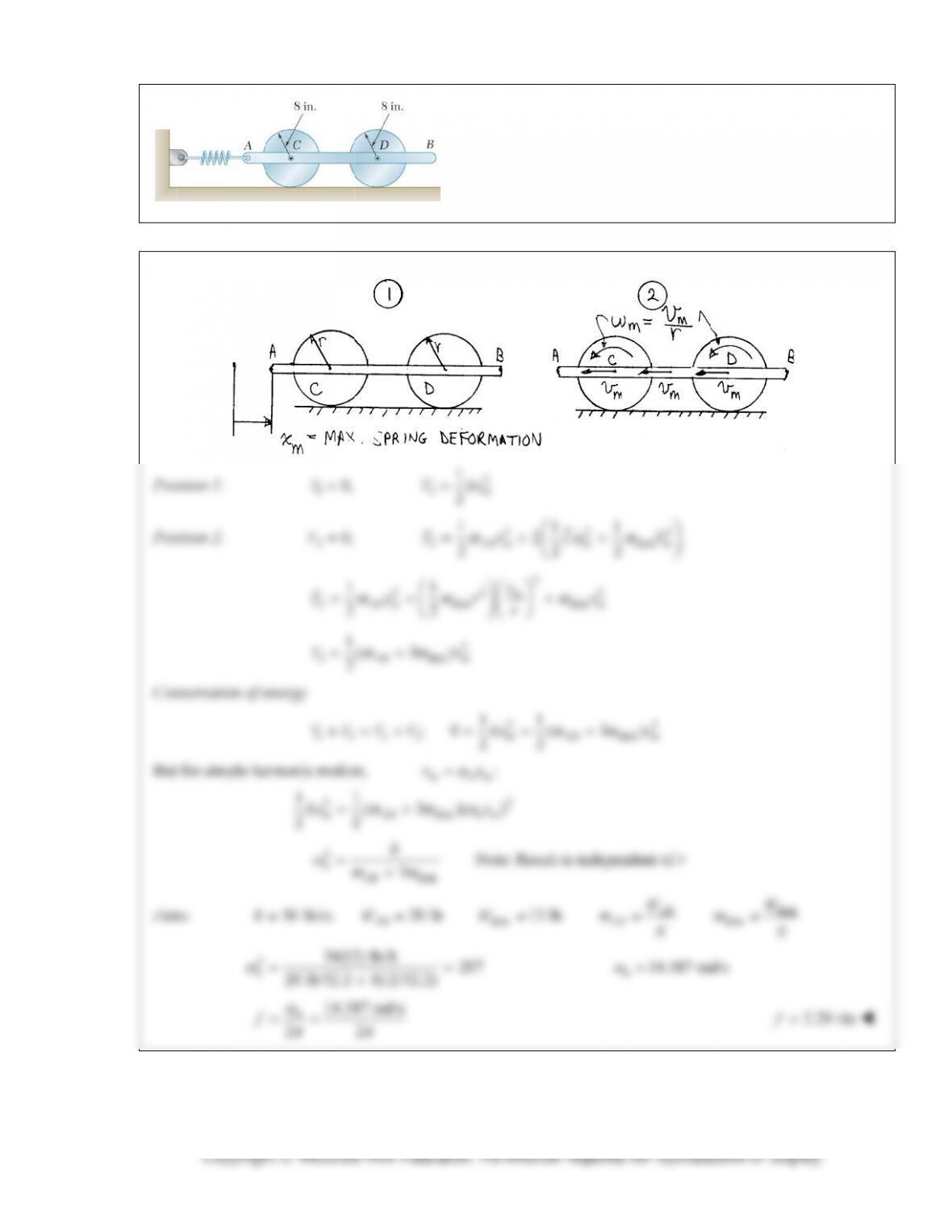
SO
a
a
e
n
n
LUTION
PROBL
E
Two 12-lb
shown. K
n
that the di
s
vibration o
E
M 19.90
uniform dis
k
n
owing that th
e
s
ks roll with
o
f the system.
k
s are attache
d
e
constant of
t
o
ut sliding, de
t
d
to the 20-l
b
t
he spring is
3
t
ermine the f
r
b
rod AB as
3
0 lb/in. and
r
equency of
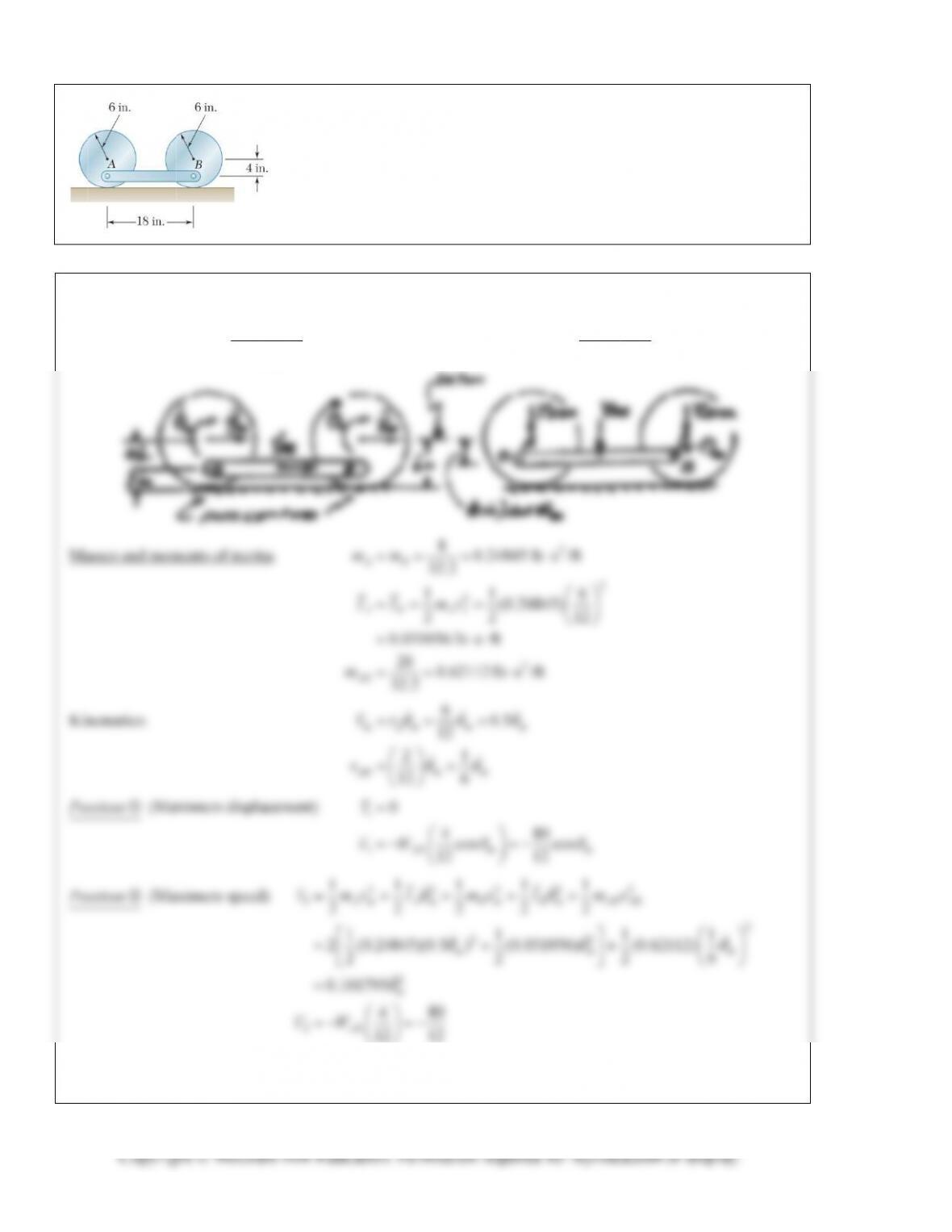
S
O
O
LUTION
P
osi
t
6
r=
PROB
L
The 20-l
b
disks roll
the syste
m
t
ion
2
6
in.
L
EM 19.91
b
rod
AB
is at
t
without slidi
m
.
8
t
ached to two
ng, determin
e
8-lb disks as
e
the frequen
c
P
ositi
o
shown. Kno
w
c
y of small o
s
o
n
1
w
ing that the
s
cillations of
P
x
x
6
l
PROBLEM 19.91 (Continued)
S
O
2
2
O
LUTION
PROBL
E
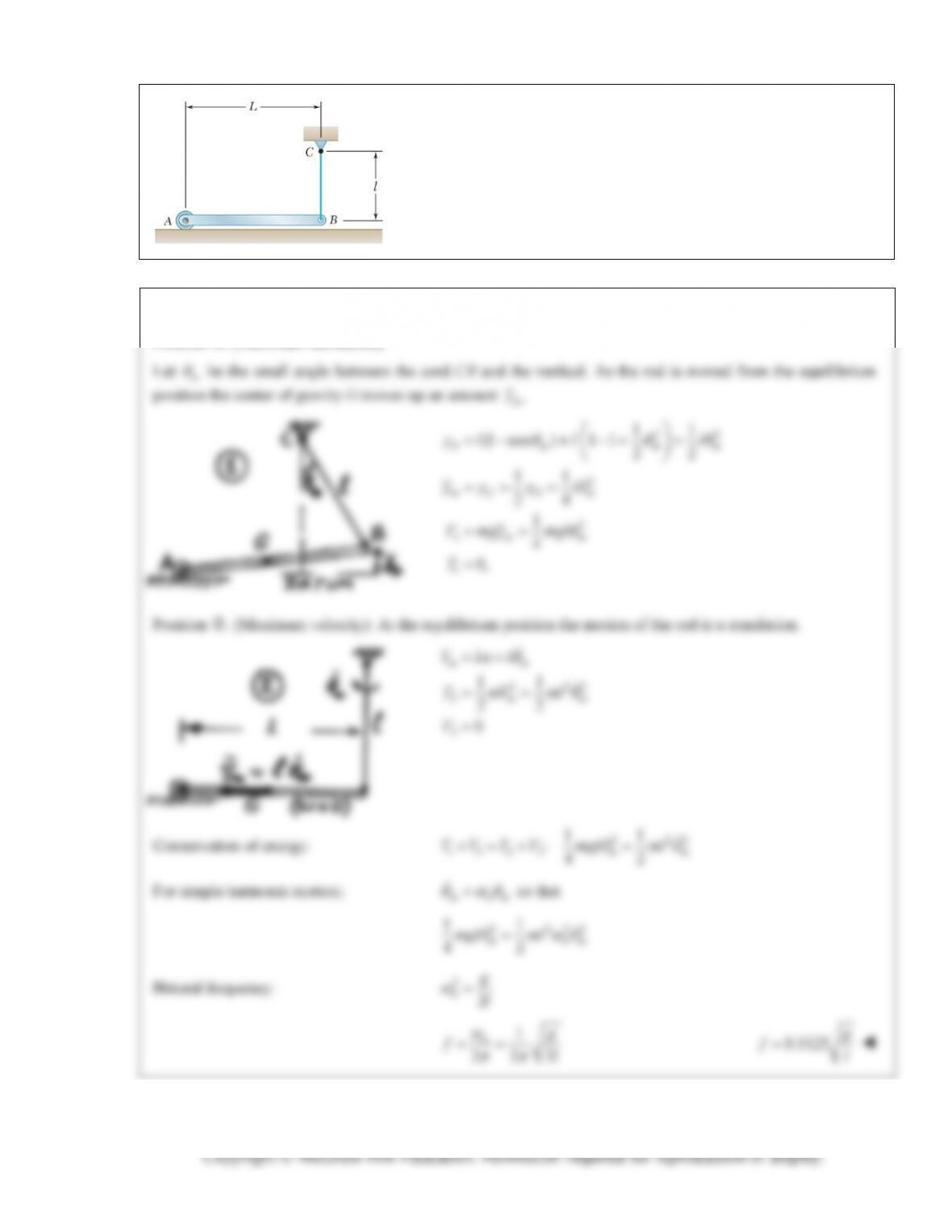
A half se
c
casters A
a
m/8. Kno
w
released a
n
oscillation
s
E
M 19.92
c
tion of a uni
f
a
nd B, each o
f
w
ing that the
n
d that no
s
s
.
f
orm cylinde
r
f
which is a
u
half cylinde
r
s
lipping occu
r
r
of radius r
a
u
niform cylin
d
r
is rotated t
h
r
s, determine
a
nd mass m
r
d
er of radius
r
h
rough a sma
l
the frequen
c
r
ests on two
r
/4 and mass
l
l angle and
c
y of small
h
d
PROBLEM 19.93
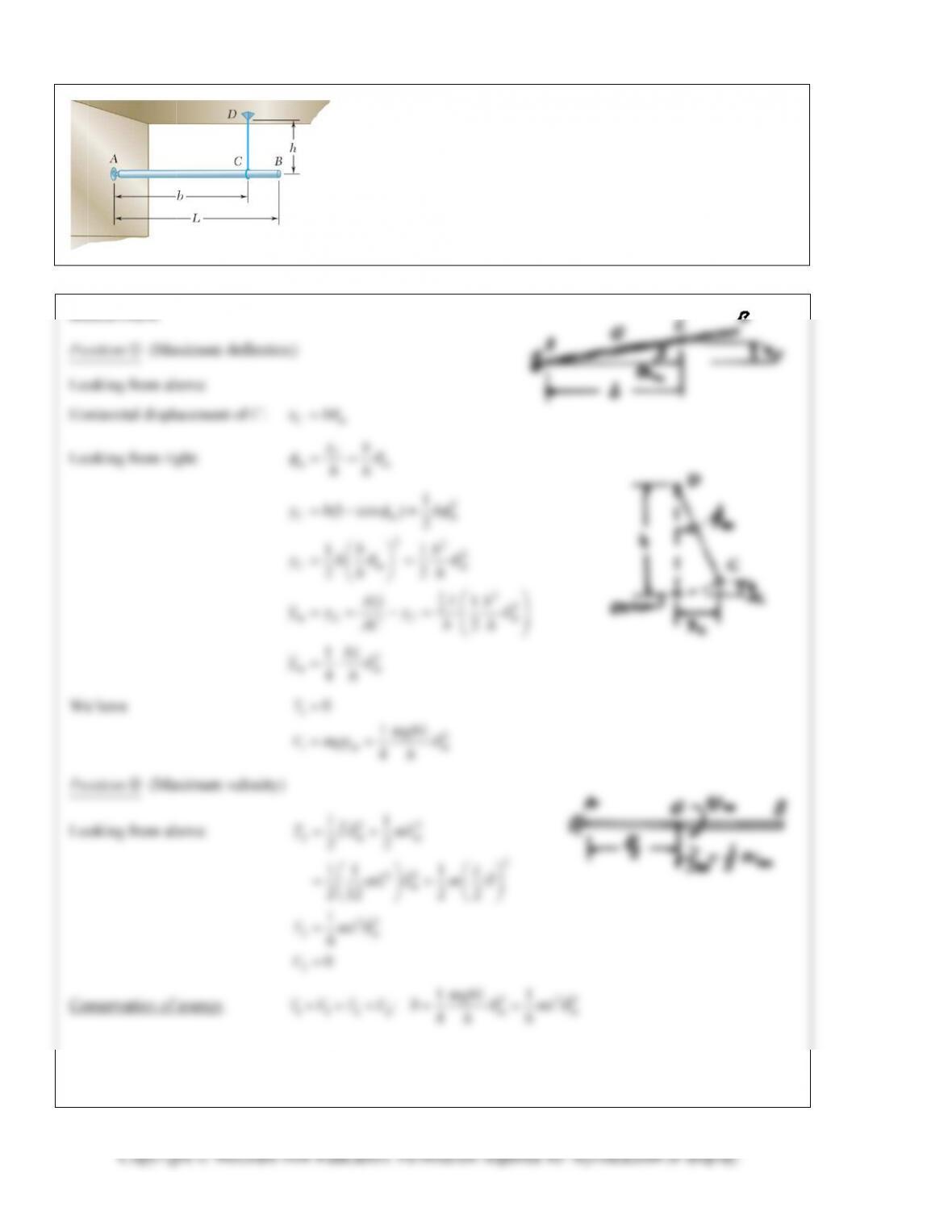
The motion of the uniform rod AB is guided by the cord BC and by the
small roller at A. Determine the frequency of oscillation when the end B
of the rod is given a small horizontal displacement and released.
SOLUTION
Position 1. (Maximum deflection):
222
ππ
S
O
x
x
2
O
LUTION
p
PROBLE
M
A uniform ro
d
at A and by
p
eriod of osc
i
displacement
M
19.94
d
of length L
a vertical w
i
i
llation of the
and then rele
a
is supported
b
i
re CD. Deri
v
rod if end B i
a
sed.
b
y a ball-and
–
v
e an expres
s
s given a sm
a
–
socket joint
s
ion for the
a
ll horizontal
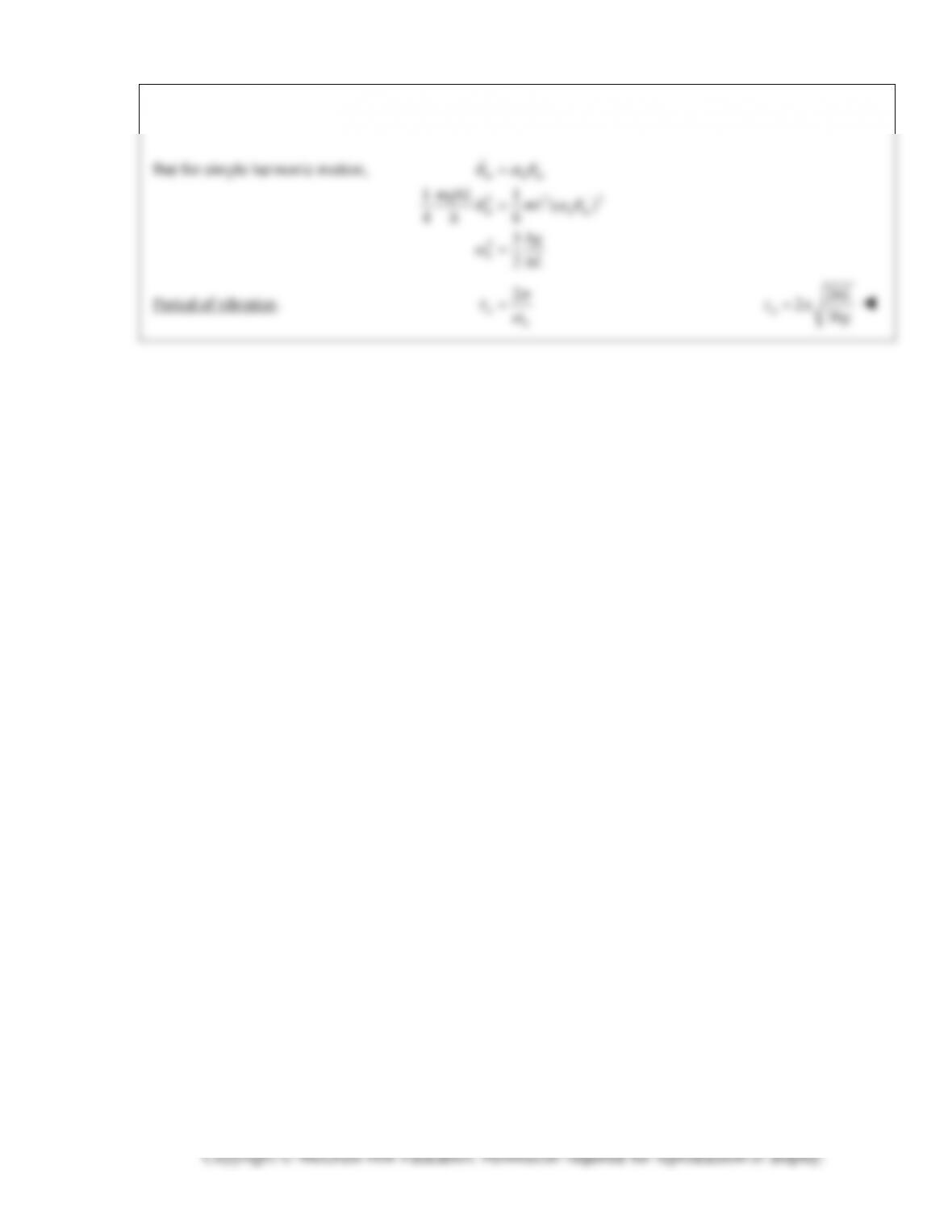
PROBLEM 19.94 (Continued)
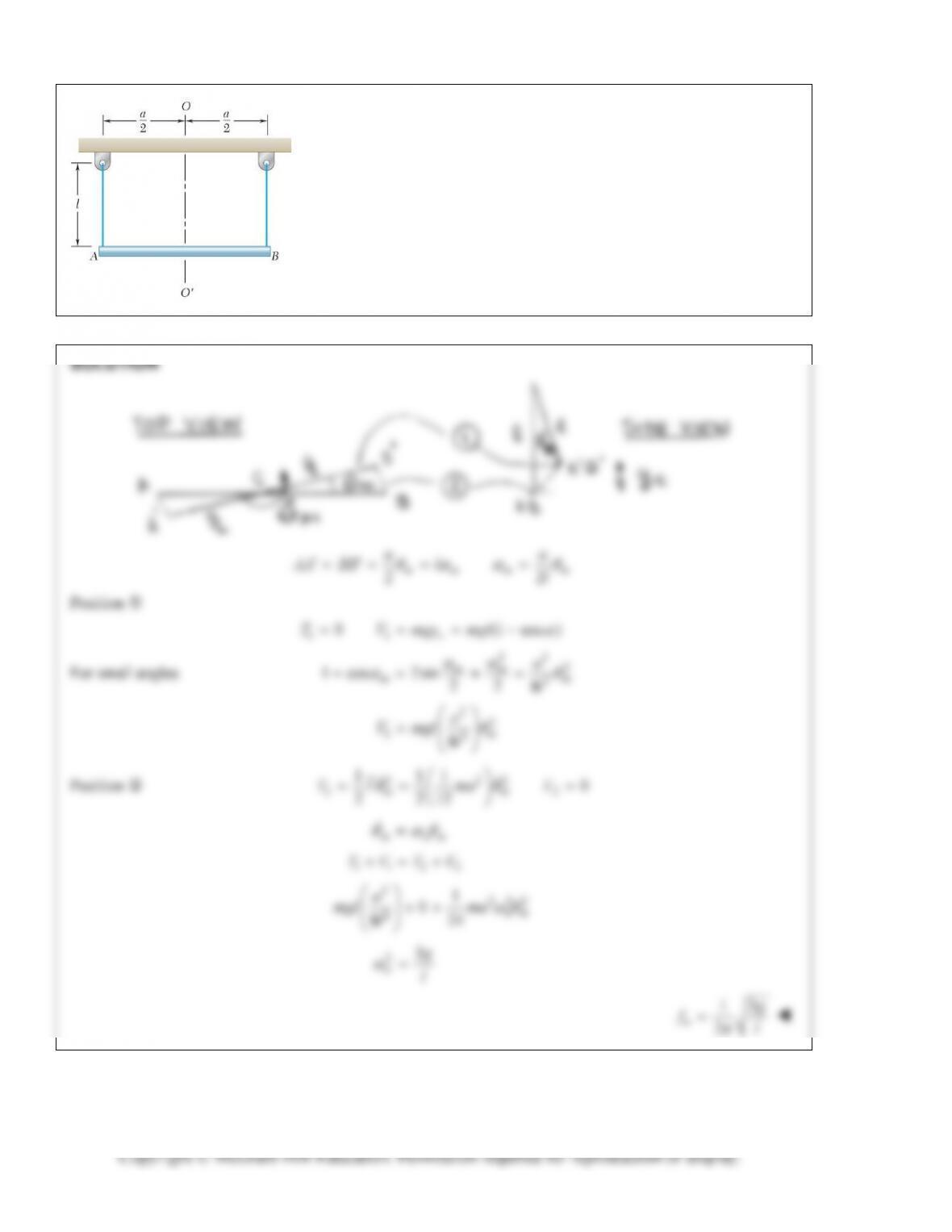
PROBLEM 19.95
A section of uniform pipe is suspended from two vertical cables attached
at A and B. Determine the frequency of oscillation when the pipe is given
a small rotation about the centroidal axis OO′ and released.
2
n
π
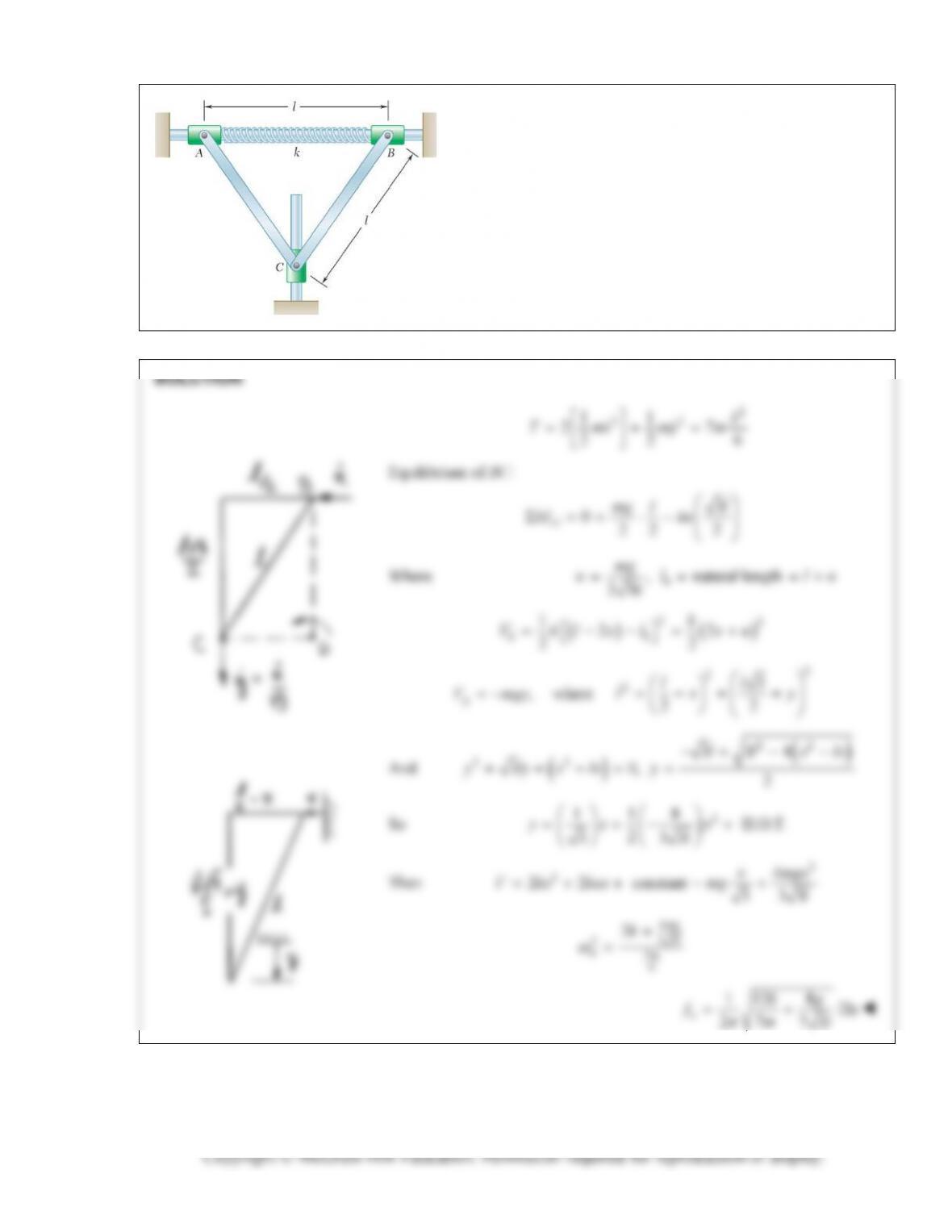
PROBLEM 19.96
Three collars, each of mass m, are connected by pins to bars
AC and BC, each of length l and negligible mass. Collars A and
B can slide without friction on a horizontal rod and are
connected by a spring of constant k. Collar C can slide without
friction on a vertical rod and the system is in equilibrium in the
position shown. Knowing that collar C is given a small
displacement and released, determine the frequency of the
resulting motion of the system.
27 73
n
π
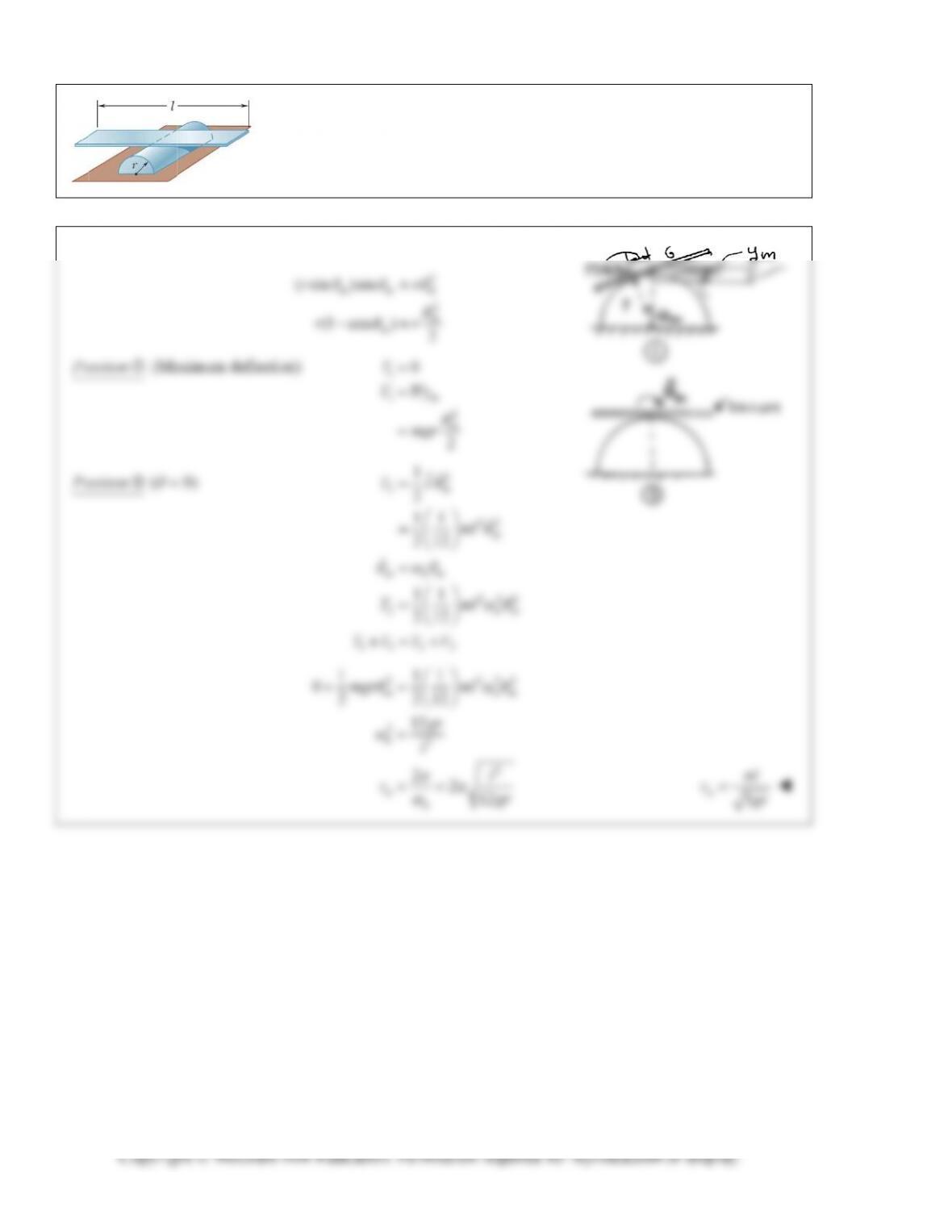
S
O
O
LUTION
PROBLE
M
A thin plat
e
expression f
o
M
19.97*
e
of length
l
o
r the period
o
l
rests on a
o
f small oscill
half cylinde
r
ations of the
p
r
of radius r
.
p
late.
.
Derive an
c
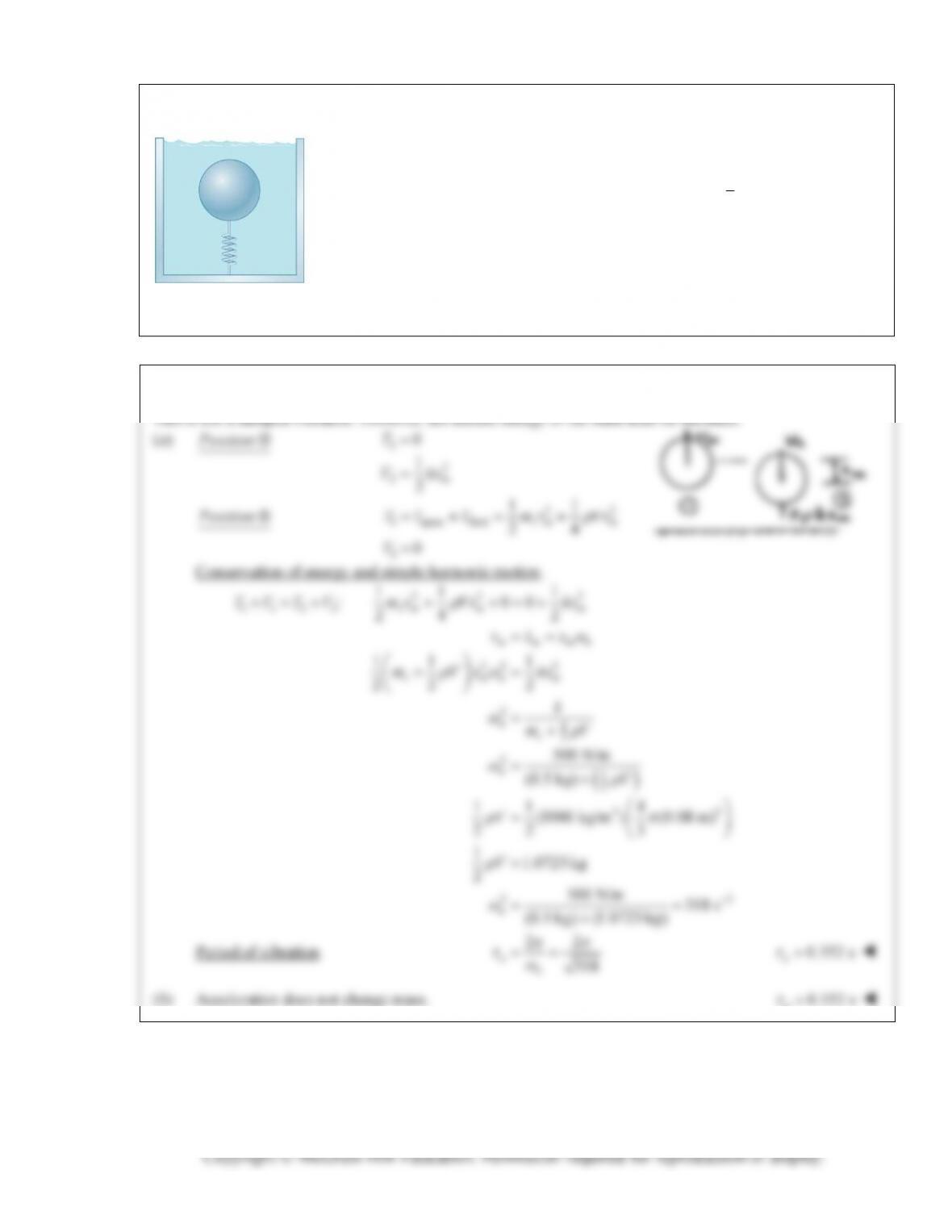
PROBLEM 19.98*
As a submerged body moves through a fluid, the particles of the fluid flow around
the body and thus acquire kinetic energy. In the case of a sphere moving in an
ideal fluid, the total kinetic energy acquired by the fluid is 2
1
4Vv
ρ
, where
ρ
is the
mass density of the fluid, V is the volume of the sphere, and v is the velocity of the
sphere. Consider a 500-g hollow spherical shell of radius 80 mm, which is held
submerged in a tank of water by a spring of constant 500 N/m. (a) Neglecting
fluid friction, determine the period of vibration of the shell when it is displaced
vertically and then released. (b) Solve Part a, assuming that the tank is accelerated
upward at the constant rate of 8 m/s2.
SOLUTION
n
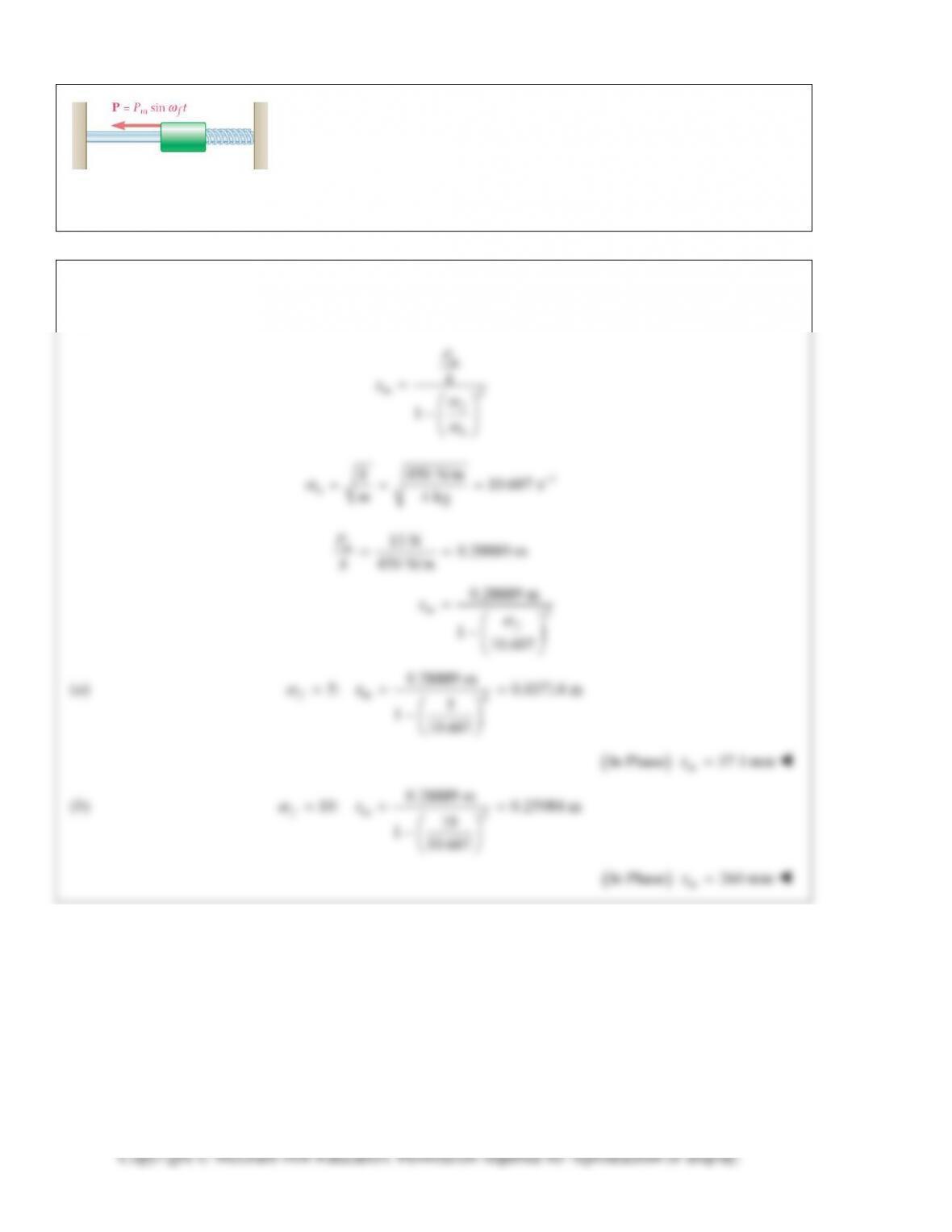
PROBLEM 19.99
A 4-kg collar can slide on a frictionless horizontal rod and is attached to a
spring of constant 450 N/m. It is acted upon by a periodic force of
magnitude sin ,
mf
P
Pt
ω
= where 13
m
P
=
N. Determine the amplitude of
the motion of the collar if (a) 5
f
ω
=
rad/s, (b) 10
f
ω
= rad/s.
SOLUTION
Eq. (19.33)
m
P
k
x
=⎛⎞
m
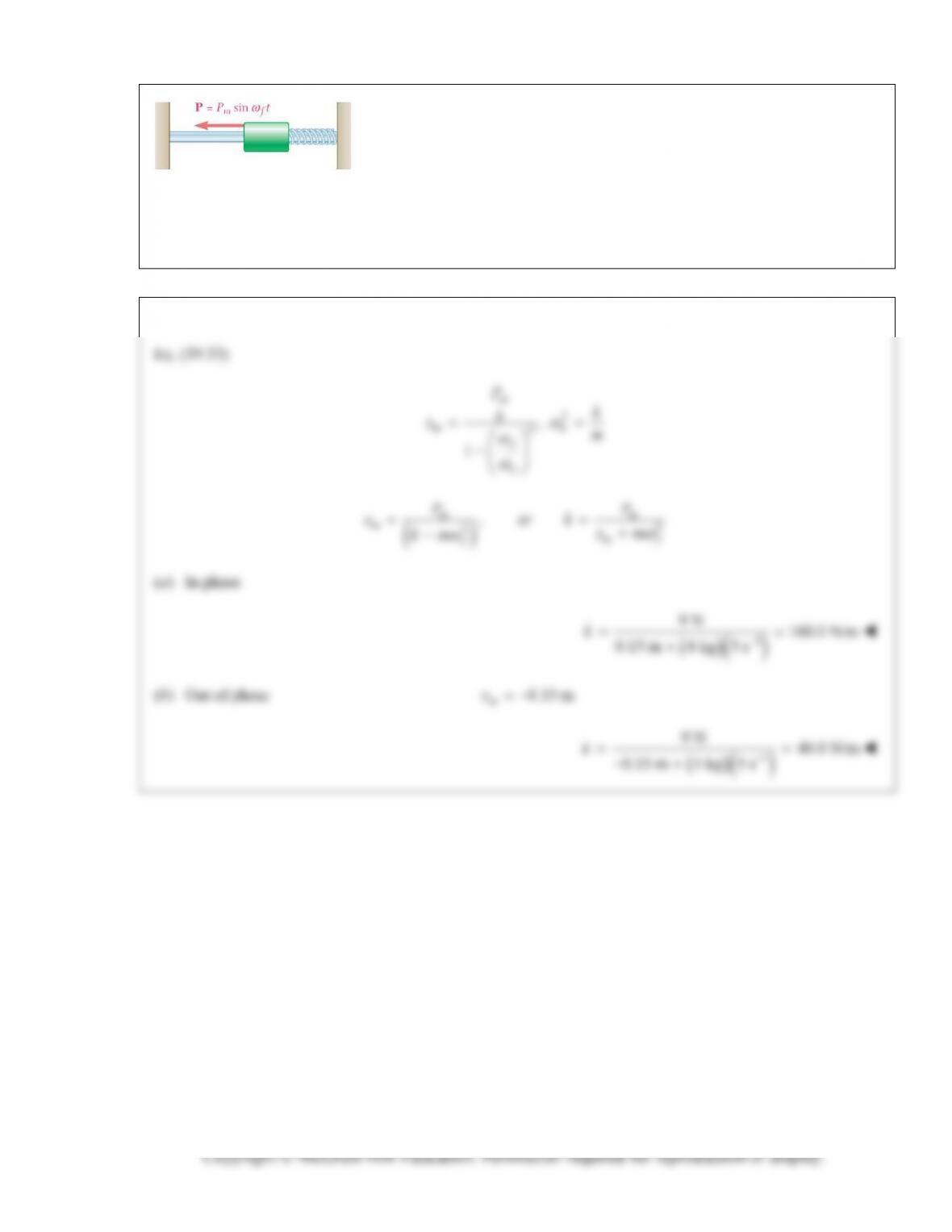
PROBLEM 19.100
A 4-kg collar can slide on a frictionless horizontal rod and is attached to a
spring of constant k. It is acted upon by a periodic force of magnitude
sin ,
mf
P
Pt
ω
= where 9
m
P
=
N and 5
f
ω
= rad/s. Determine the value
of the spring constant k knowing that the motion of the collar has an
amplitude of 150 mm and is (a) in phase with the applied force, (b) out of
phase with the applied force.
SOLUTION
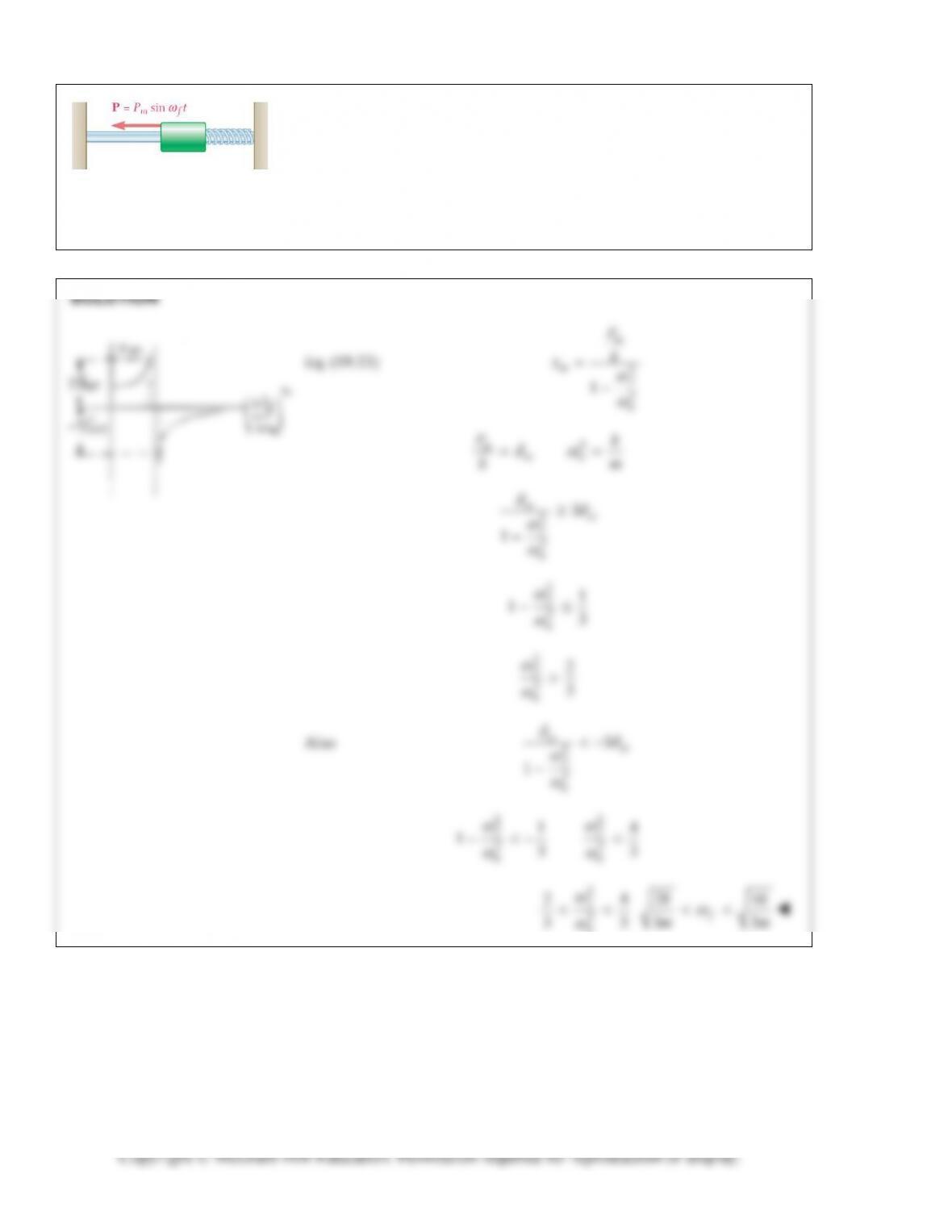
PROBLEM 19.101
A collar of mass m which slides on a frictionless horizontal rod is attached
to a spring of constant k and is acted upon by a periodic force of magnitude
sin .
mf
P
Pt
ω
= Determine the range of values of
f
ω
for which the
amplitude of the vibration exceeds three times the static deflection caused
by a constant force of magnitude .
m
P
333 3
n
mm
ω