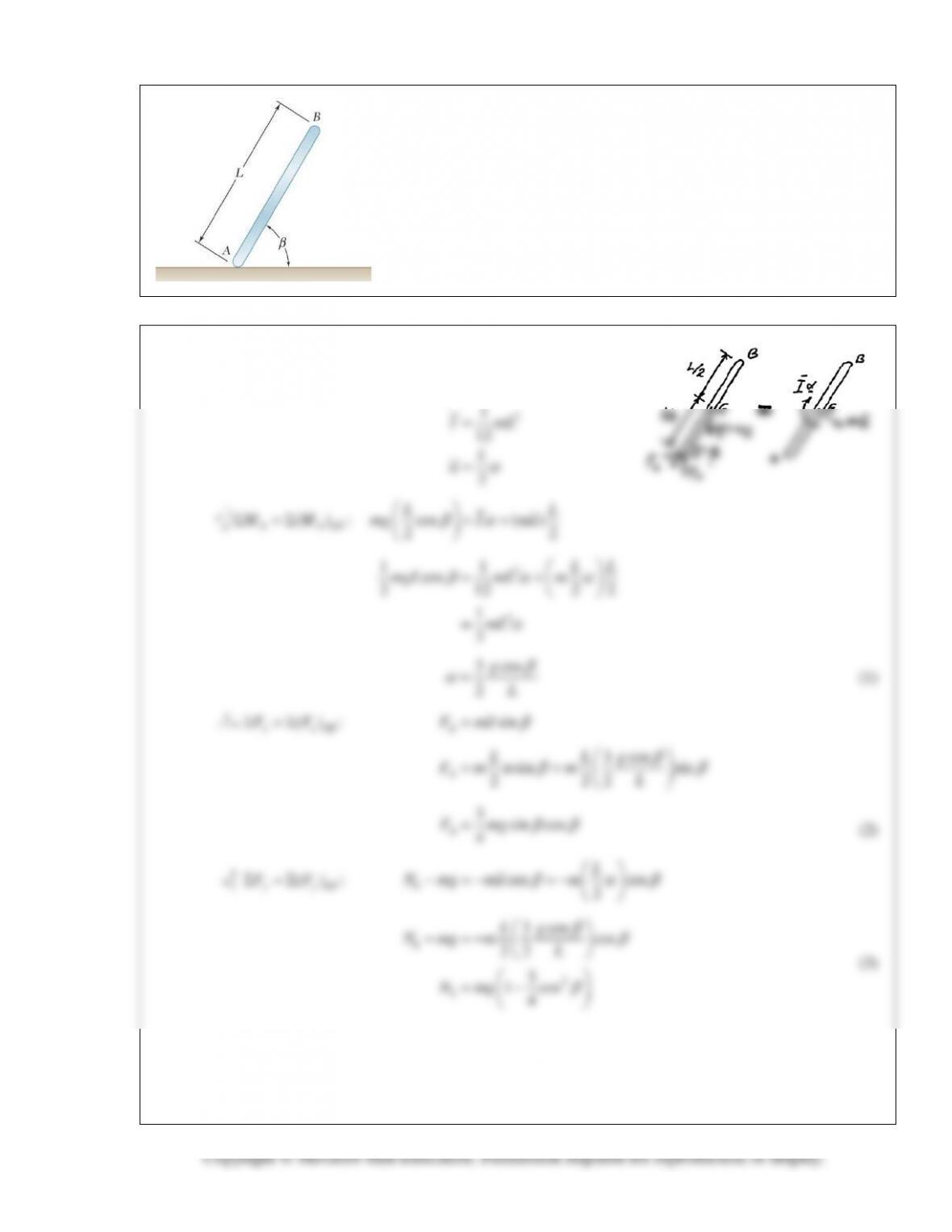
PROBLEM 16.157
The uniform rod AB of weight W is released from rest when
70 .
β
= °
Assuming that the friction force between end A and the surface is large
enough to prevent sliding, determine immediately after release (a) the
angular acceleration of the rod, (b) the normal reaction at A, (c) the
friction force at A.
SOLUTION
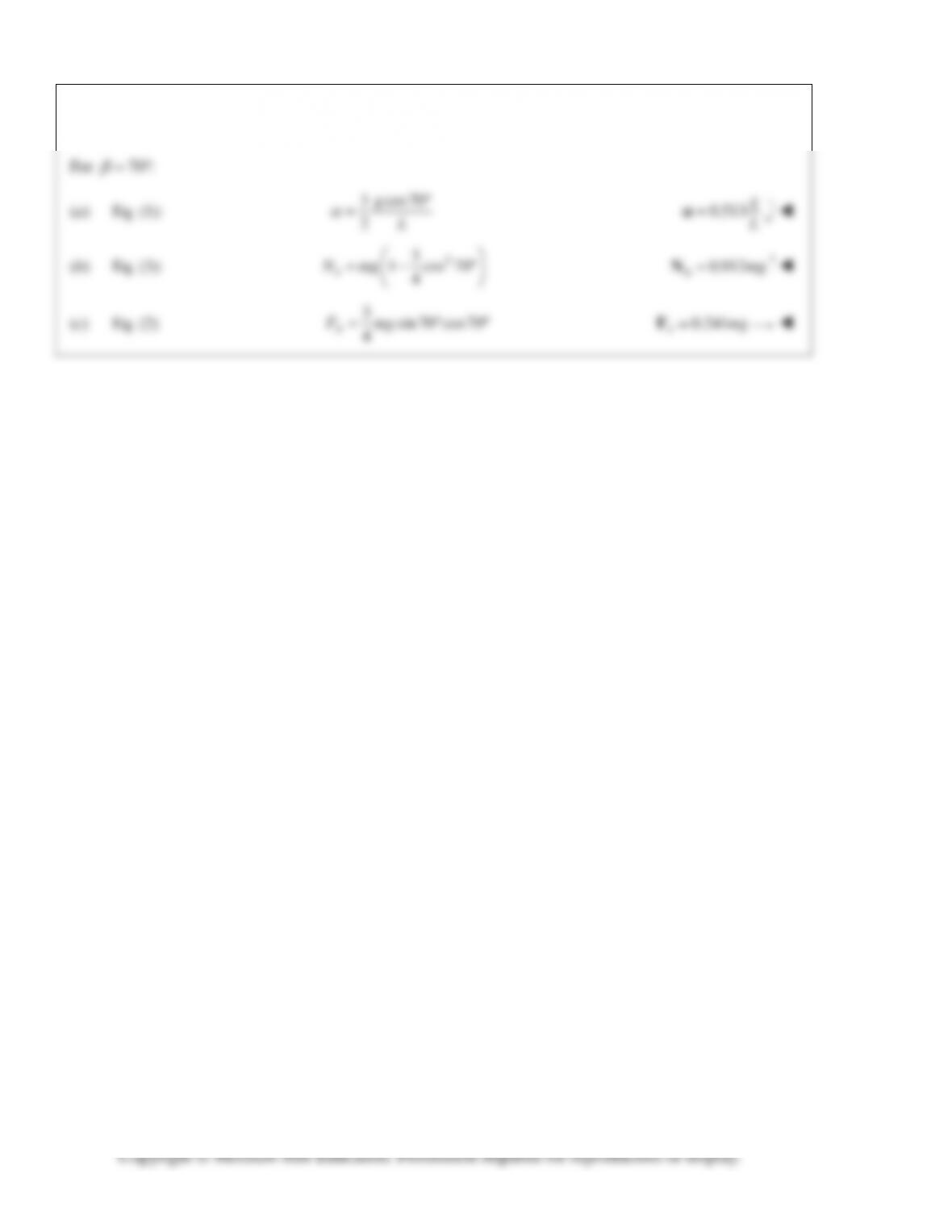
We note that rod rotates about A.
0
ω
=
2
1
12
I mL
=
2
3
1 cos
4
A
N mg
β
= −
PROBLEM 16.157 (Continued)
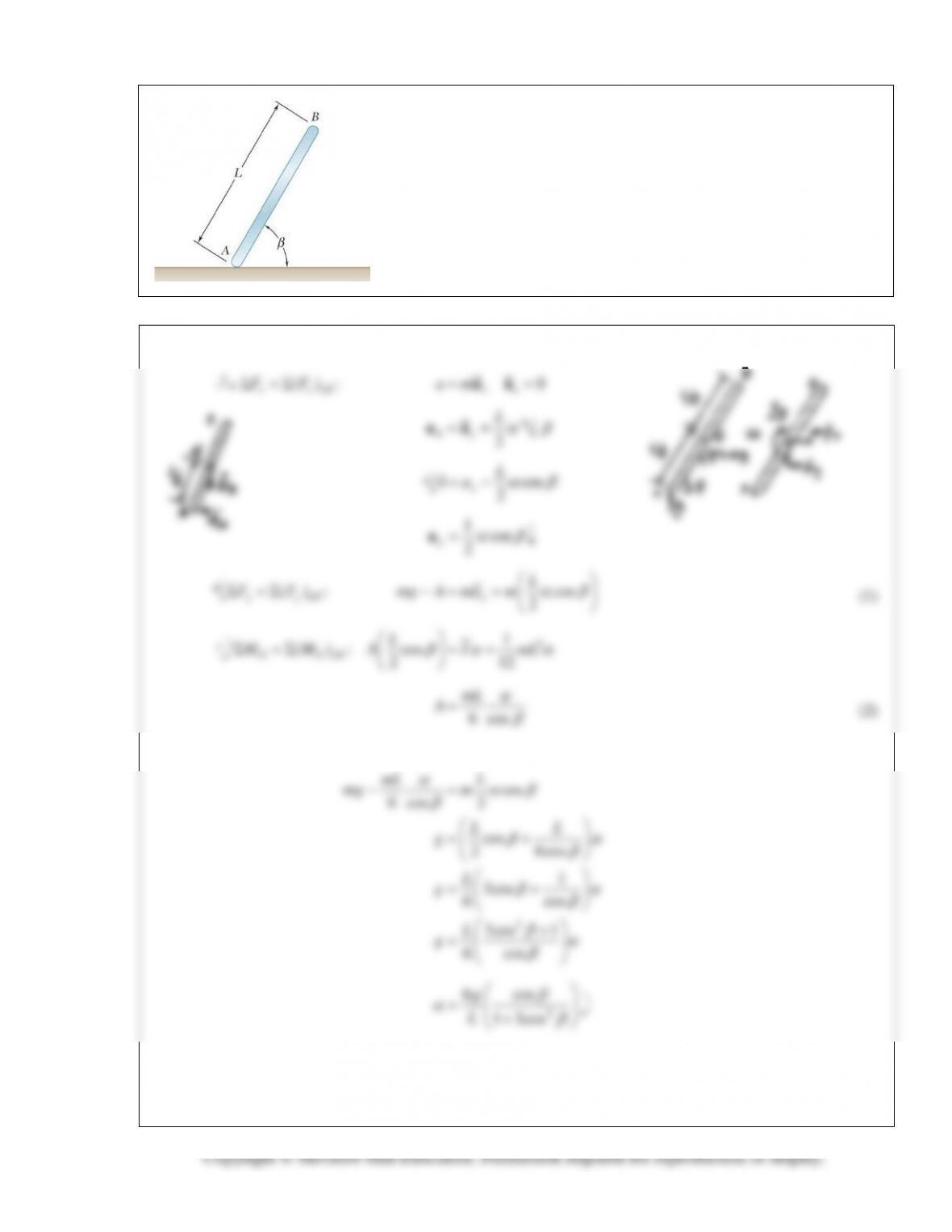
PROBLEM 16.158
The uniform rod AB of weight W is released from rest when
70 .
β
= °
Assuming that the friction force is zero between end A and the surface,
determine immediately after release (a) the angular acceleration of the
rod, (b) the acceleration of the mass center of the rod, (c) the reaction at A.
SOLUTION
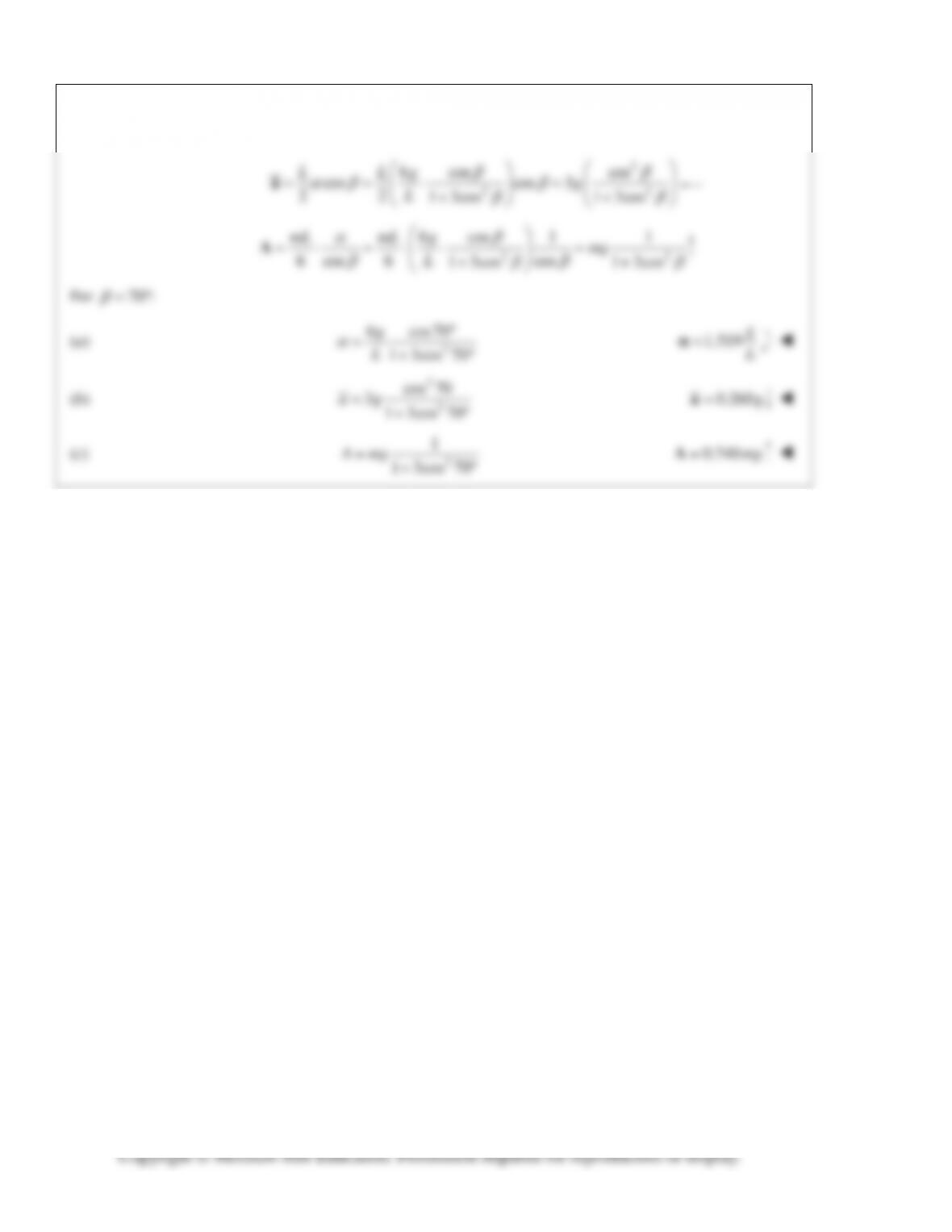
6 cos
β
Substitute (2) into (1):
cos
6 cos 2
cos
2 6cos
mL L
mg m
LL
g
aaβ
β
βa
β
−=
= +
1 3cos
L
+
PROBLEM 16.158 (Continued)
2
2
6 cos cos
L Lg g
ββ
2
1 3cos 70
PROBLEM 16.159
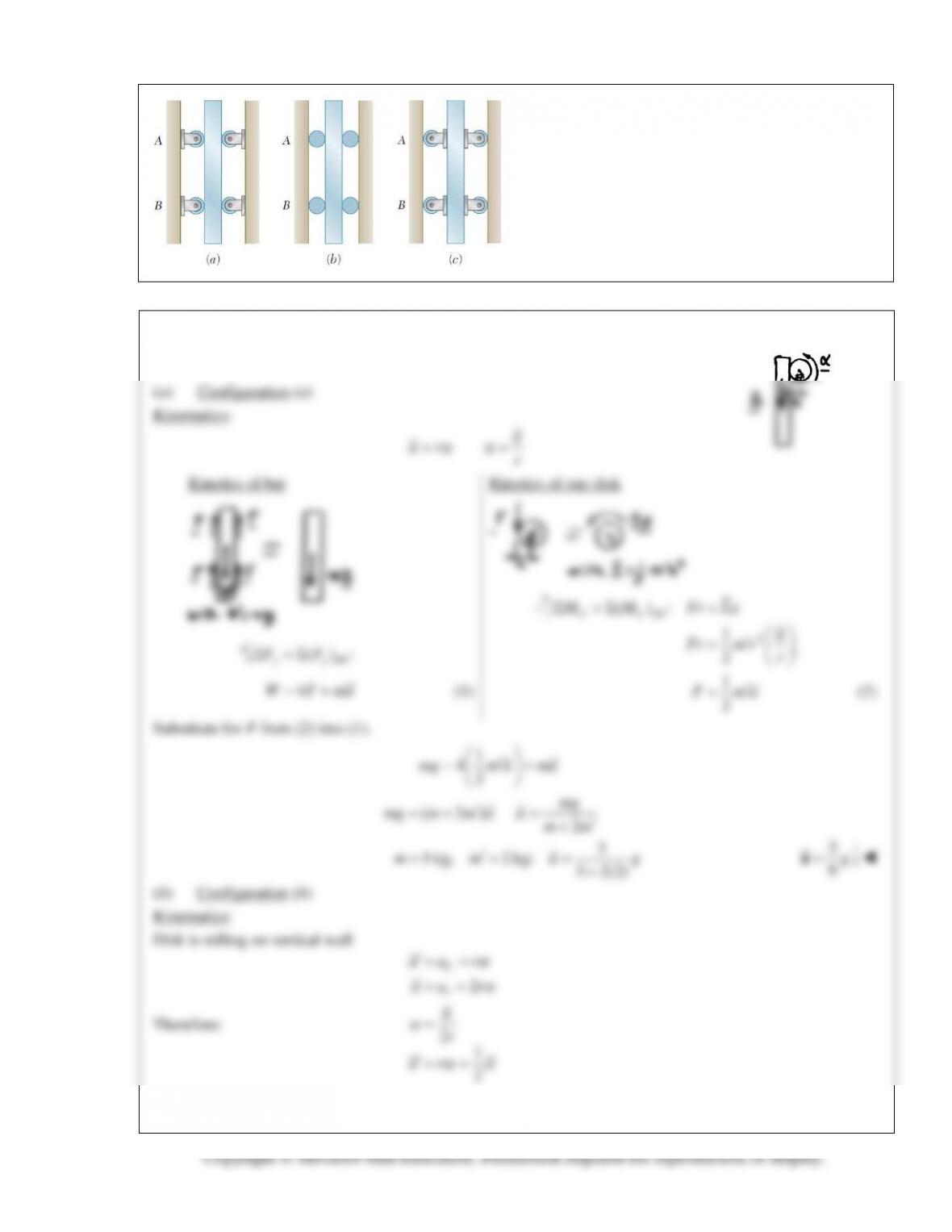
A bar of mass
5 kgm=
is held as shown between
four disks, each of mass
2 kgm′=
and radius
75 mm.r=
Knowing that the normal forces on the
disks are sufficient to prevent any slipping, for each
of the cases shown determine the acceleration of the
bar immediately after it has been released from rest.
SOLUTION
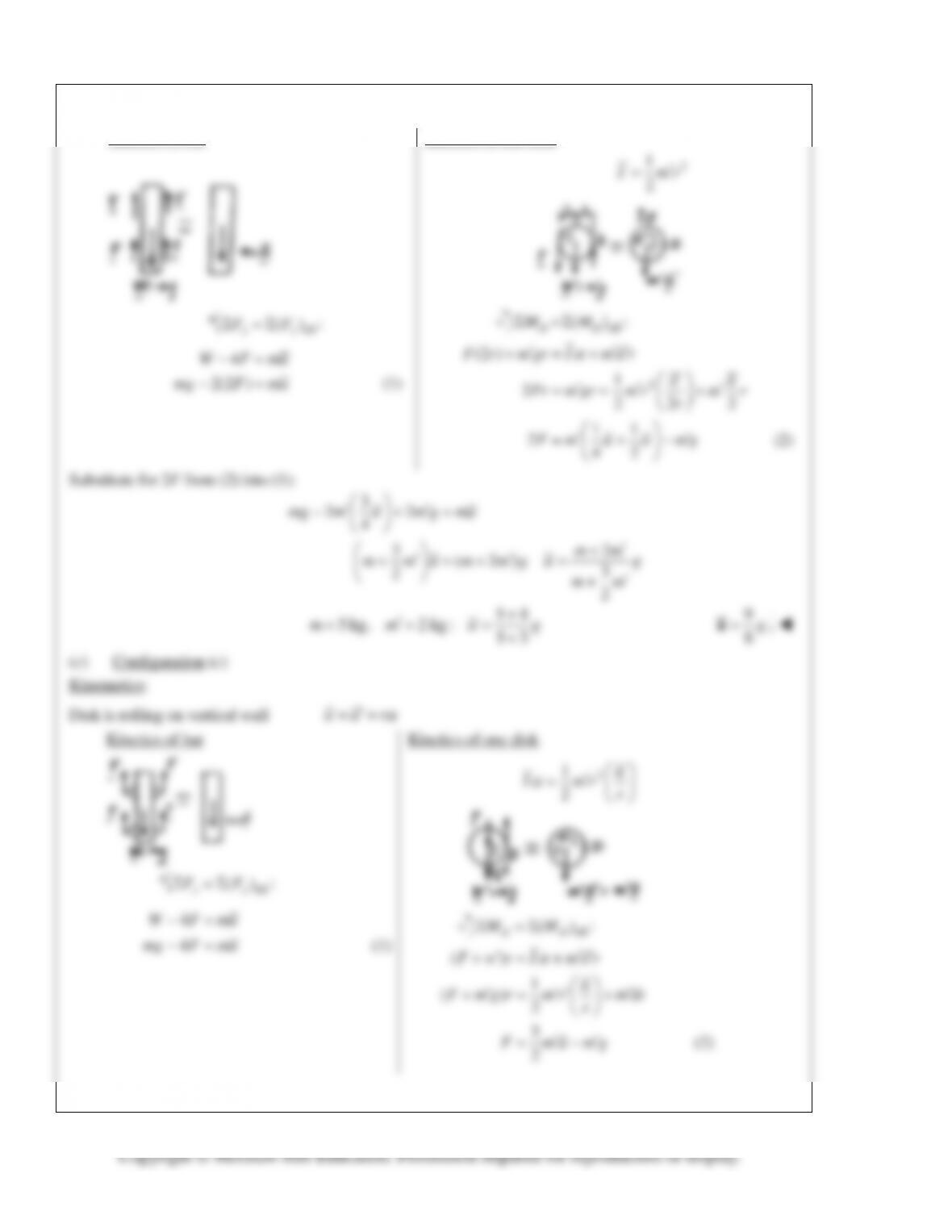
2
1
2
r
ar a
a
′= =
PROBLEM 16.159 (Continued)
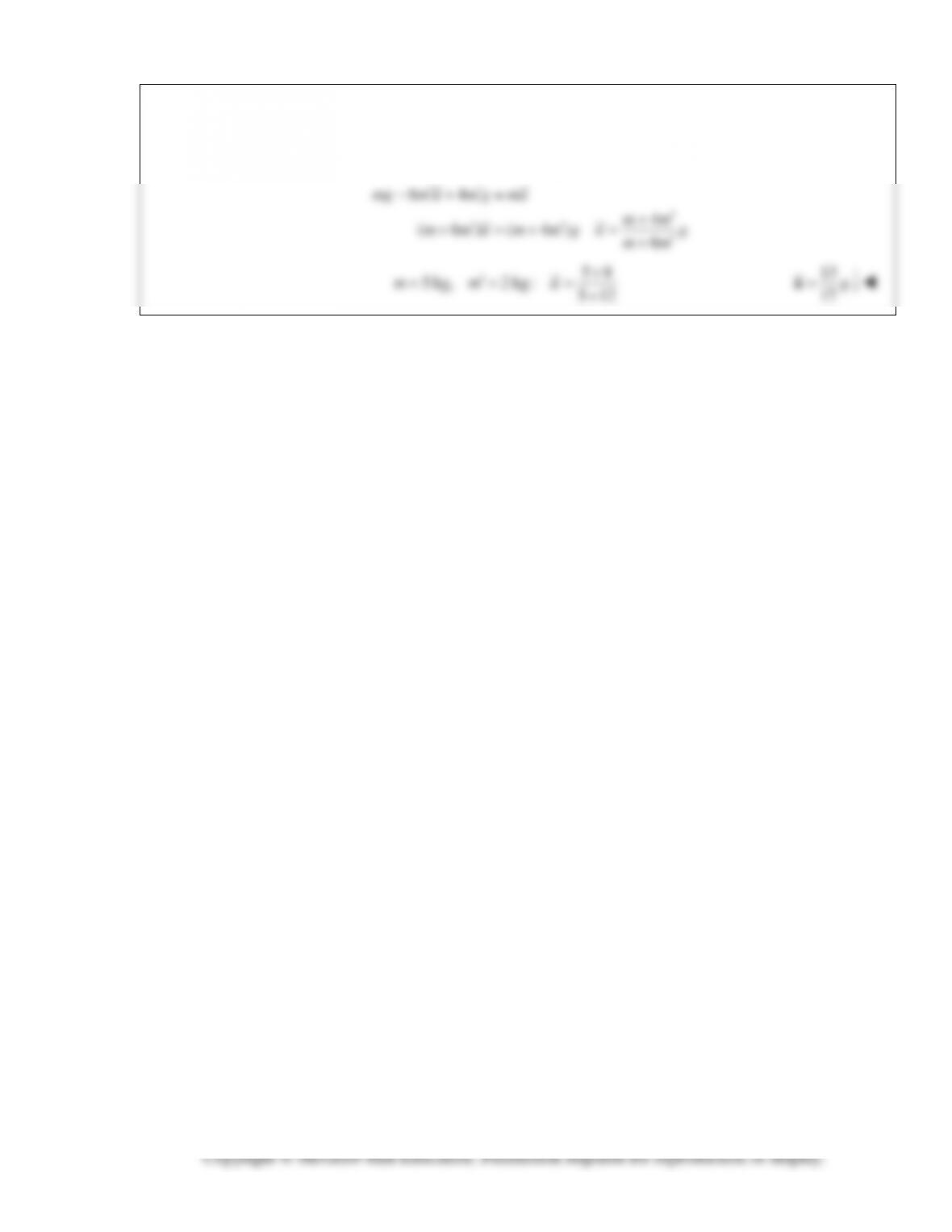
Kinetics of bar
Kinetics of one disk
1
2
PROBLEM 16.159 (Continued)
Substitute for F from (2) into (1):
64
mg m a m g ma
′′
−+=
17 g=a
PROBLEM 16.160
A uniform plate of mass m is suspended in each of the ways shown. For each case determine immediately
after the connection at B has been released (a) the angular acceleration of the plate, (b) the acceleration of its
mass center.
SOLUTION
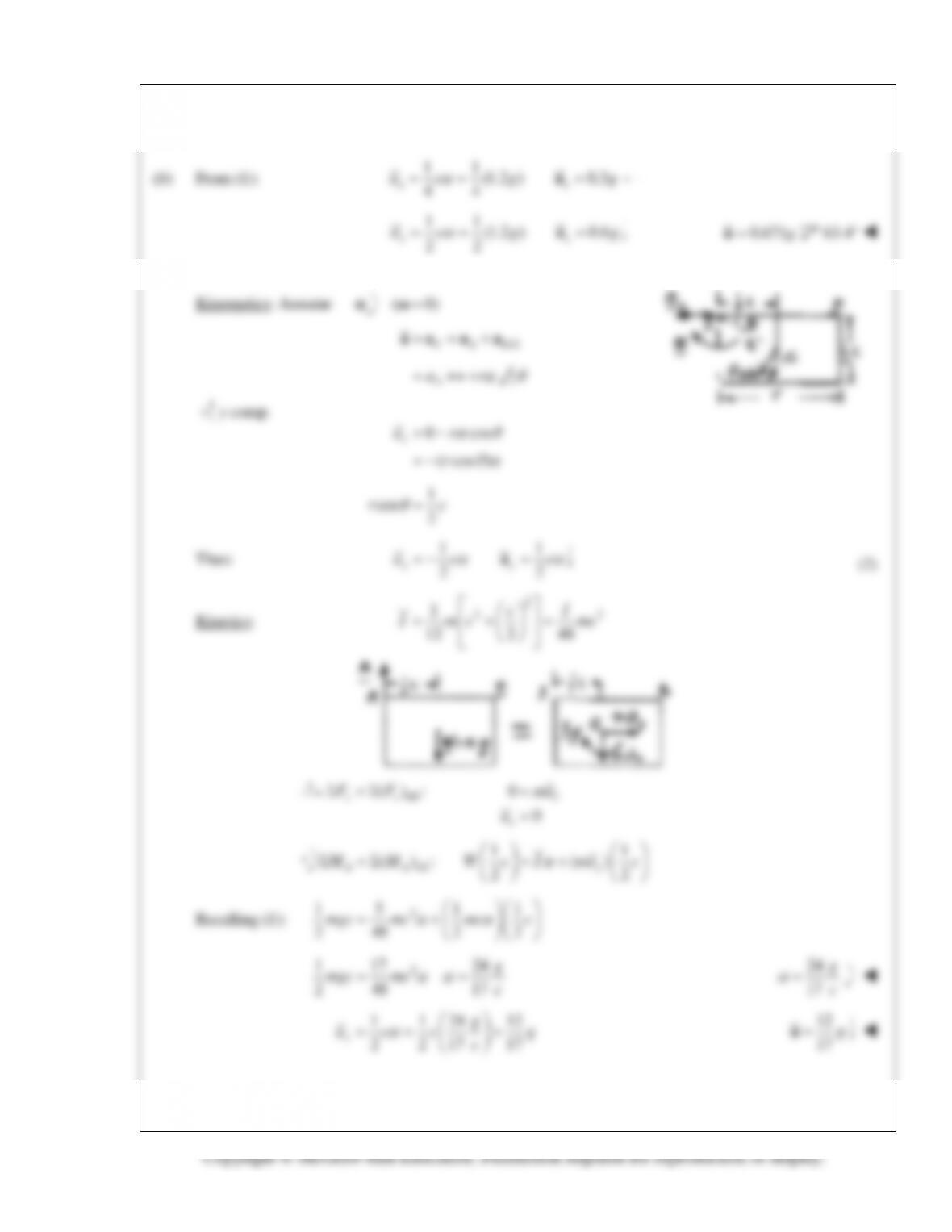
(1) Plate attached to pins
2 48
c
PROBLEM 16.160 (Continued)
11
22
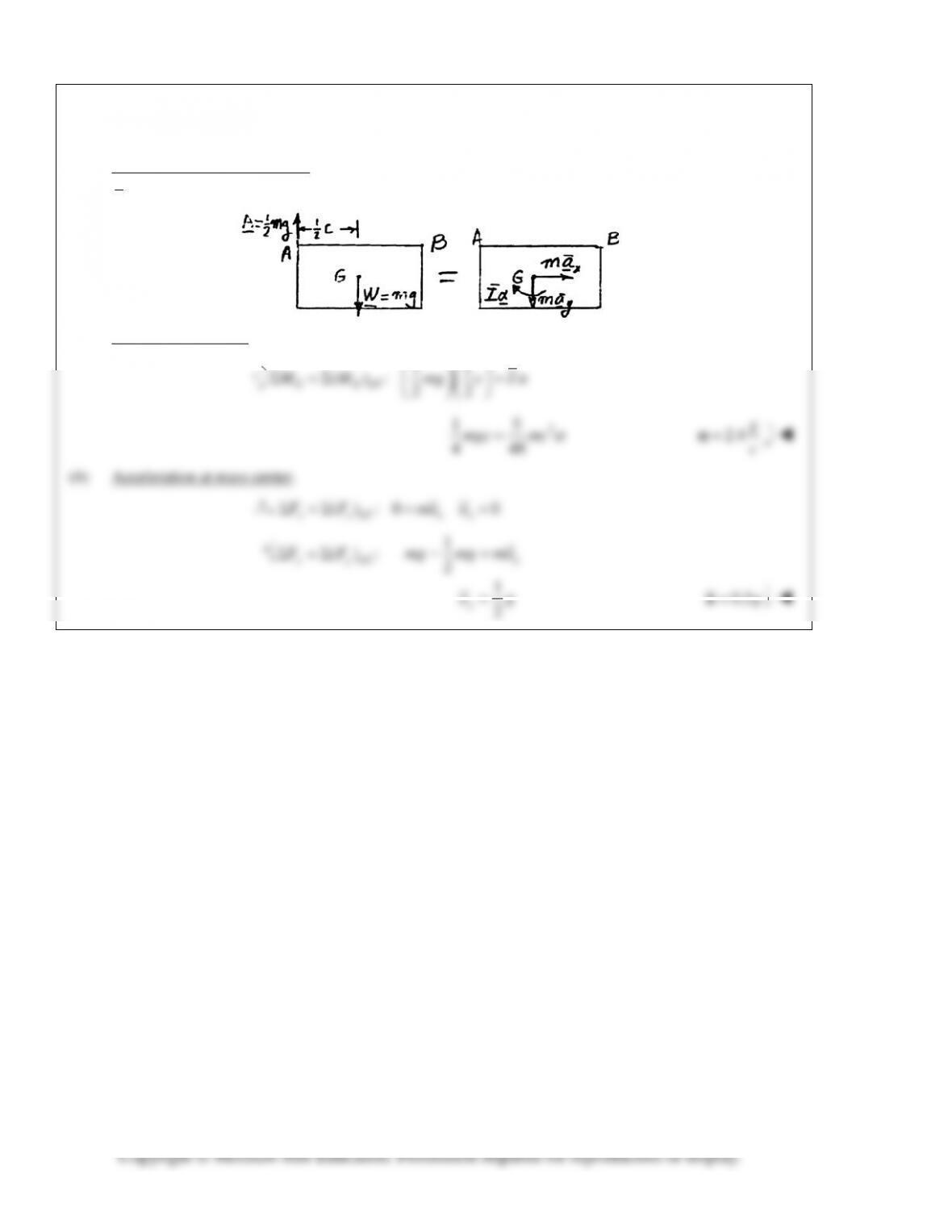
(2) Plate suspended from wires.
PROBLEM 16.160 (Continued)
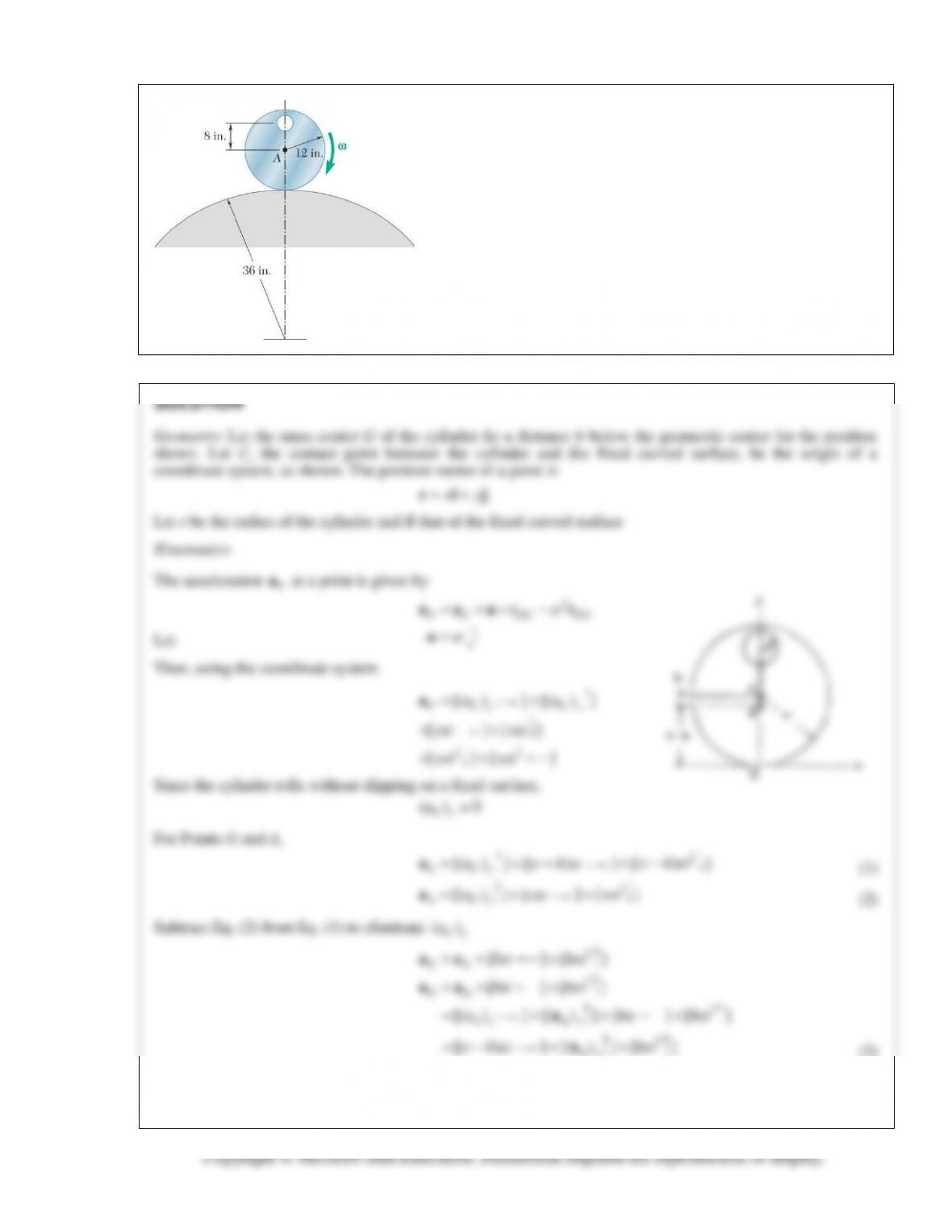
(3) Plate suspended from springs. Immediately after spring B is released, the tension in spring A is still
1
2mg
since its elongation is unchanged.
(a) Angular acceleration.
11
2
PROBLEM 16.161
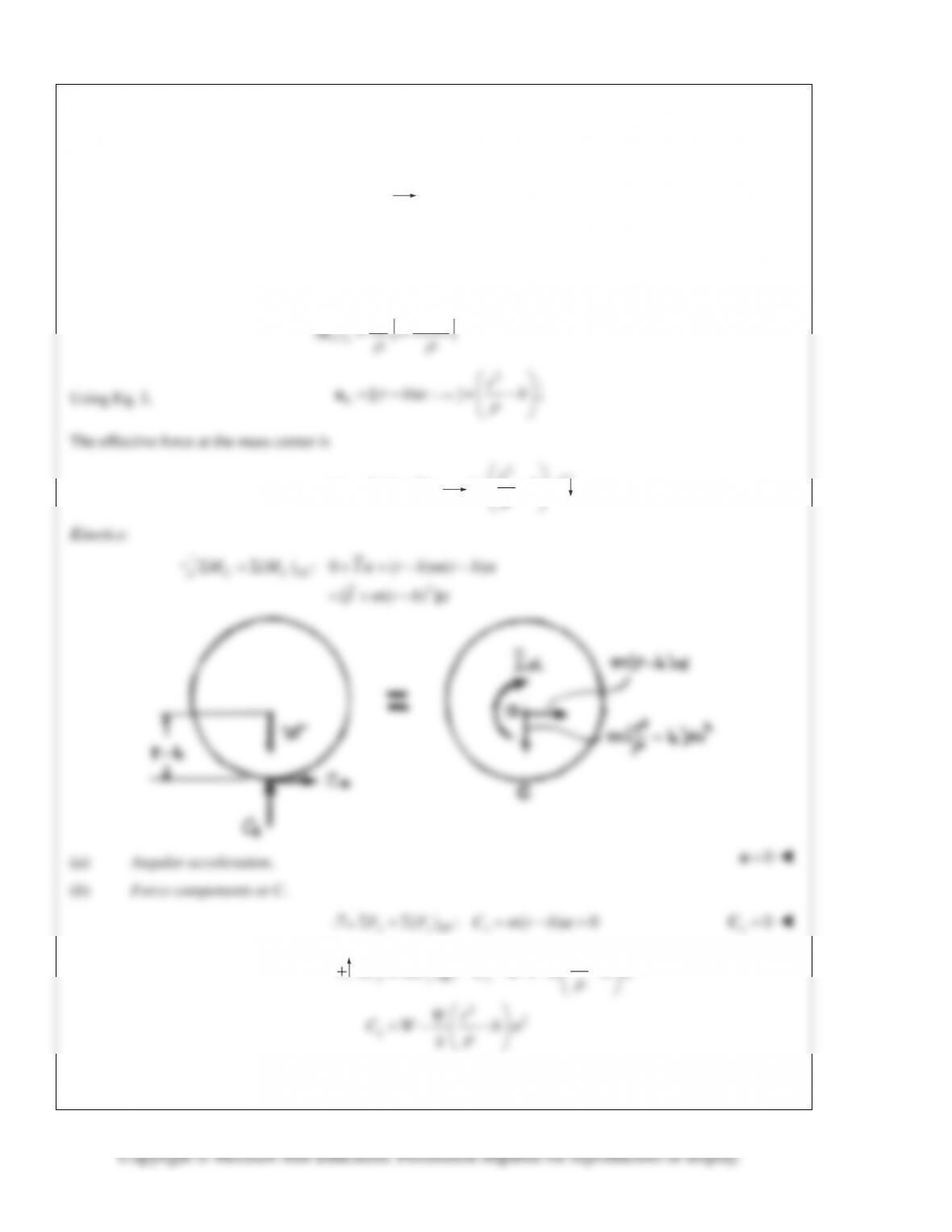
A cylinder with a circular hole is rolling without slipping on a
fixed curved surface as shown. The cylinder would have a weight
of 16 lb without the hole, but with the hole it has a weight of
15 lb. Knowing that at the instant shown the disk has an angular
velocity of 5 rad/s clockwise, determine (a) the angular
acceleration of the disk, (b) the components of the reaction force
between the cylinder and the ground at this instant.
PROBLEM 16.161 (Continued)
Point C is the instantaneous center, so that
A
r
ω
=v
Point A is constrained to move on a circle of radius
Rr
r
= +
so its vertical component of acceleration is
2
Ay
v
r
22
r
ω
r
Using Eq. 3,
[( )
G
rb
a
= −a
2
]rb
r
+−
The effective force at the mass center is
[( )
G
m mr b
a
= −a
2
2
]rb
ω
r
+−
2
2
eff
2
2
( ):
yy y
y
r
F F CW m b
Wr
CW b
g
ω
r
ω
r
Σ=Σ −=− −
=−−
PROBLEM 16.161 (Continued)
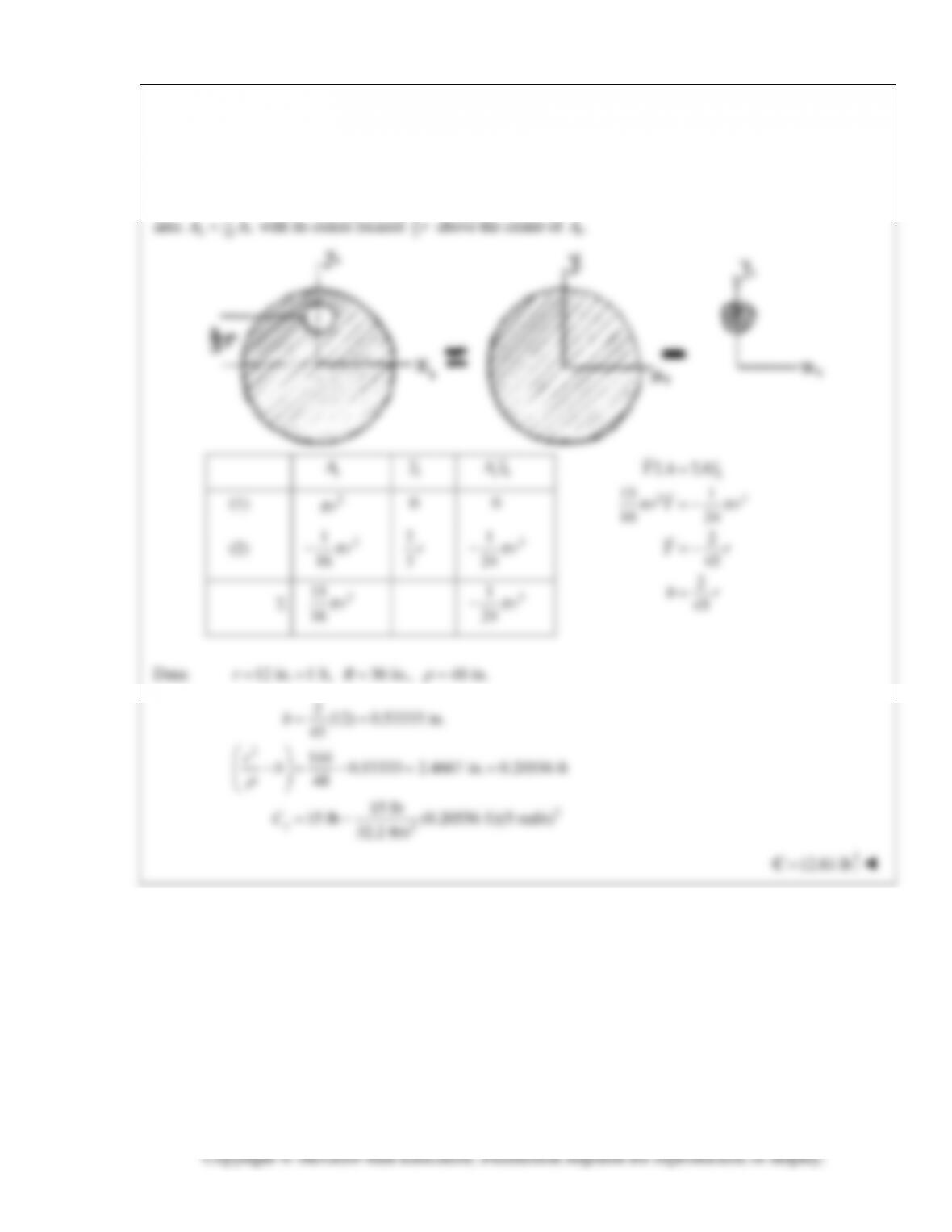
It remains to determine the distance b from the mass distribution of the cylinder.
The mass center G coincides with the centroid of a circular cylinder of area
2
1
Ar
π
=
with a circular cut out of
1
2
PROBLEM 16.162
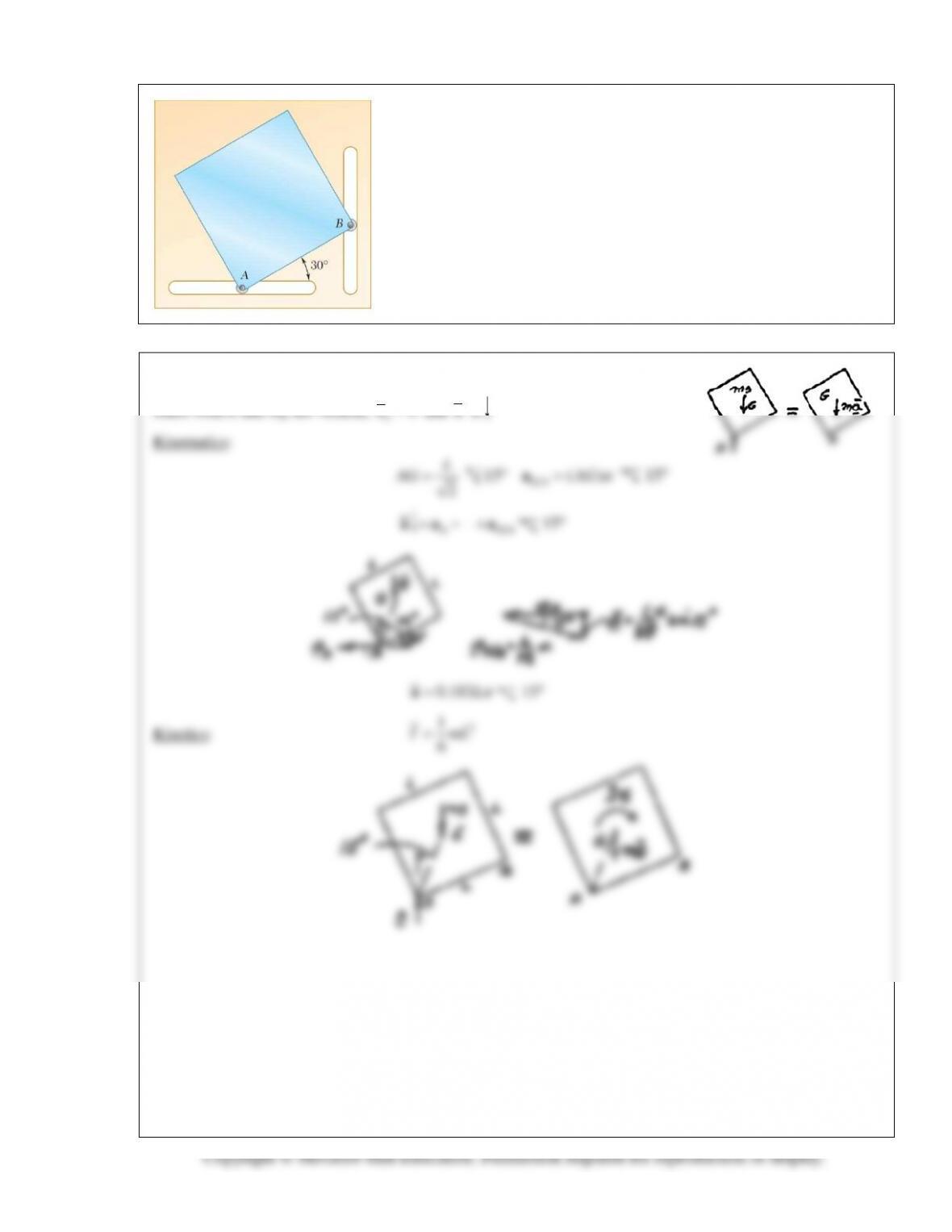
The motion of a square plate of side 150 mm and mass 2.5 kg is guided
by pins at corners A and B that slide in slots cut in a vertical wall.
Immediately after the plate is released from rest in the position shown,
determine (a) the angular acceleration of the plate, (b) the reaction at
corner A.
SOLUTION
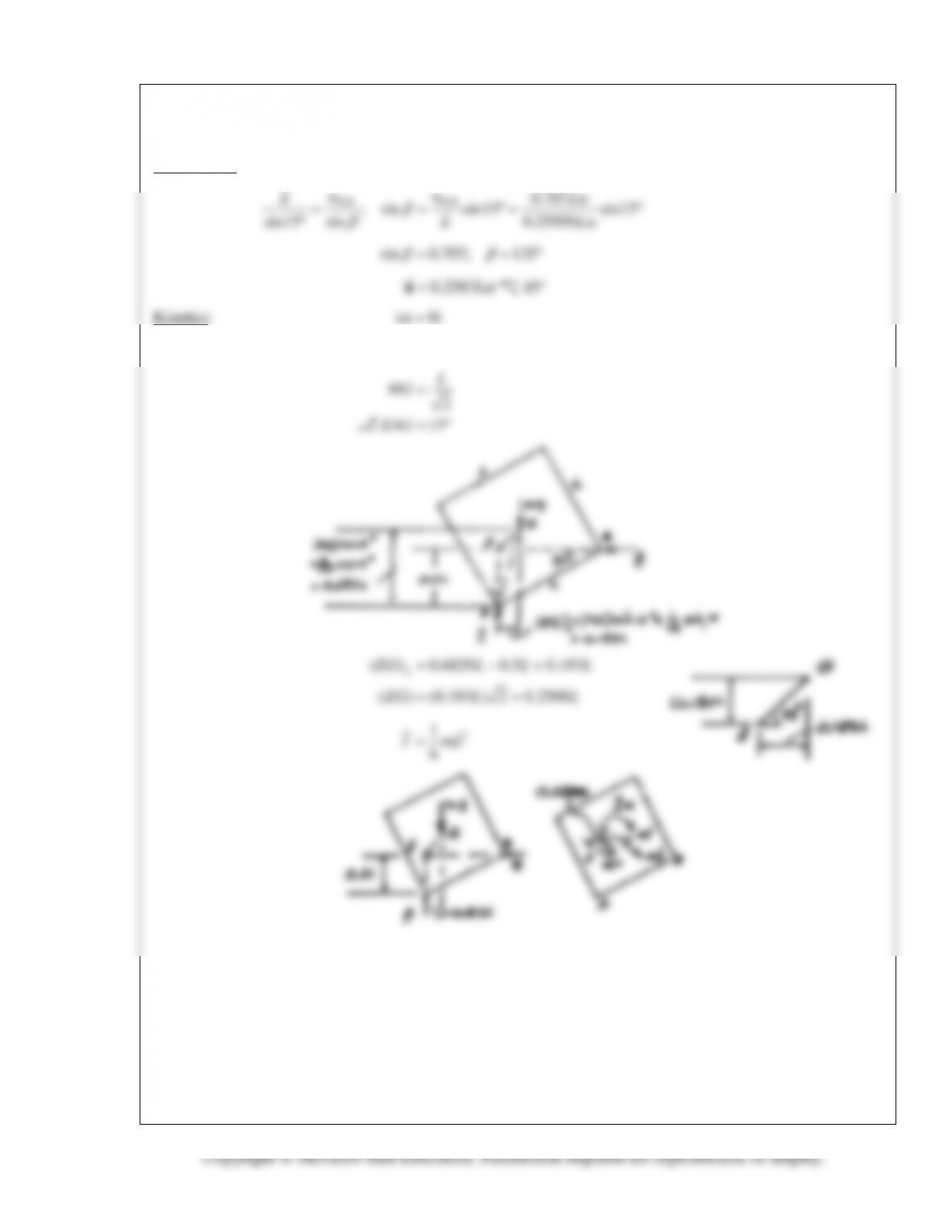
Kinematics:
/
2 ()
222
GA
LL L
AG a AB
a
a
= = = =
2 22
2 22
(0.25 0.5 0.68301)
(0.06699)
0.25882
aL
aL
aL
a
a
a
= +−
=
=
PROBLEM 16.162 (Continued)
Law of sines.
//
0.707
GA GA
aa
aL
a
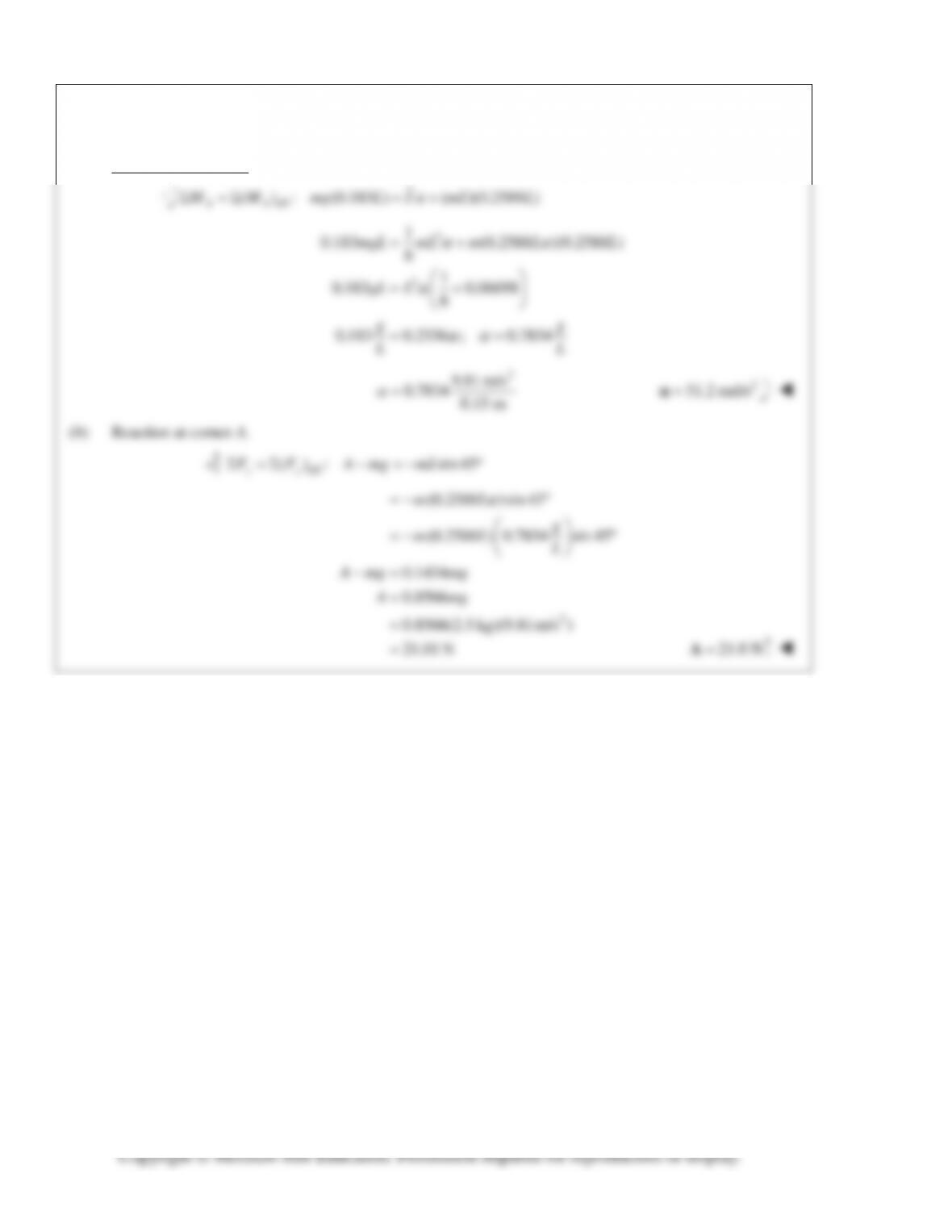
We find the location of Point E where lines of action of A and B intersect.
2
L
MG
=
PROBLEM 16.162 (Continued)
(a) Angular acceleration.
PROBLEM 16.163
Solve Problem 16.162, assuming that the plate is fitted with a single pin
at corner A.
Problem 16.162 The motion of a square plate of side 150 mm and mass
2.5 kg is guided by pins at corners A and B that slide in slots cut in a
vertical wall. Immediately after the plate is released from rest in the
position shown, determine (a) the angular acceleration of the plate,
(b) the reaction of corner A.
SOLUTION
Since both A and mg are vertical,
0
x
a=
and
a
is
15°
a
15°
0.183L
a
=a
15°
Kinetics:
2
1
6
I mL=
PROBLEM 16.163 (Continued)
(a) Angular acceleration.
(b) Reaction at corner A.