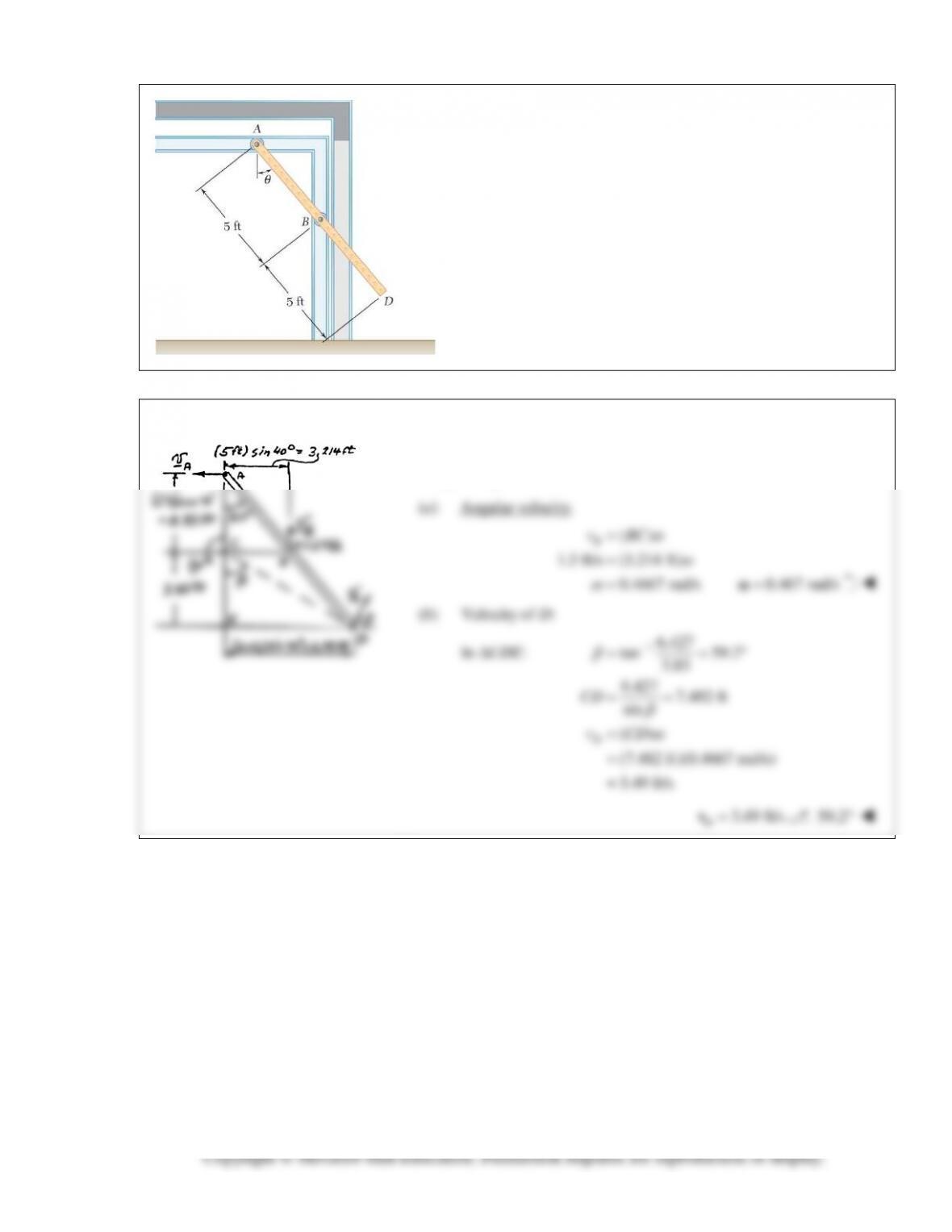
PROBLEM 15.82
An overhead door is guided by wheels at A and B that roll in
horizontal and vertical tracks. Knowing that when
40
θ
= °
the
velocity of wheel B is 1.5 ft/s upward, determine (a) the angular
velocity of the door, (b) the velocity of end D of the door.
SOLUTION
Locate instantaneous center at intersection of lines drawn perpendicular
to
A
v
and
.
B
v
D
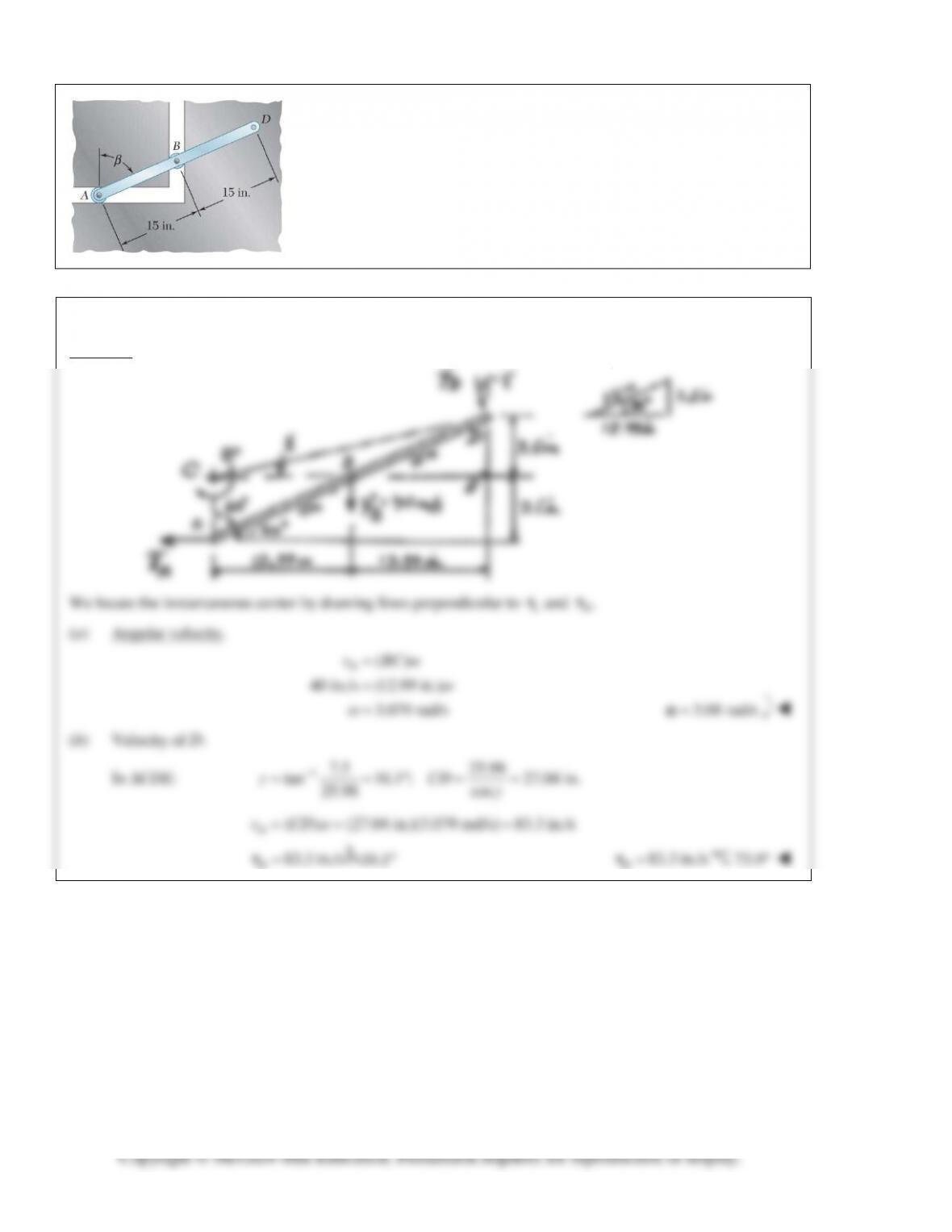
PROBLEM 15.83
Rod ABD is guided by wheels at A and B that roll in horizontal and
vertical tracks. Knowing that at the instant shown
60
β
= °
and the
velocity of wheel B is 40 in./s downward, determine (a) the angular
velocity of the rod, (b) the velocity of Point D.
SOLUTION
Rod ABD:
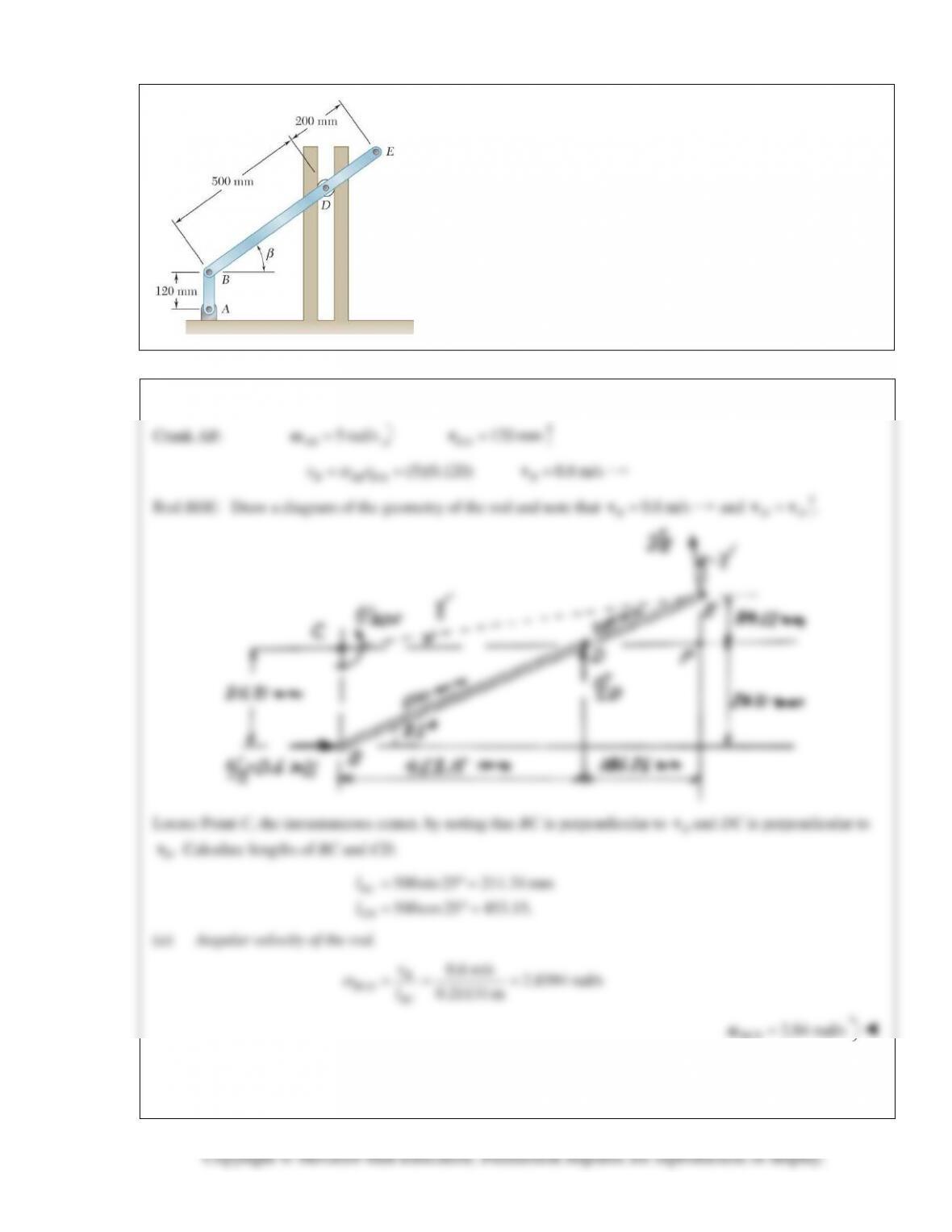
PROBLEM 15.84
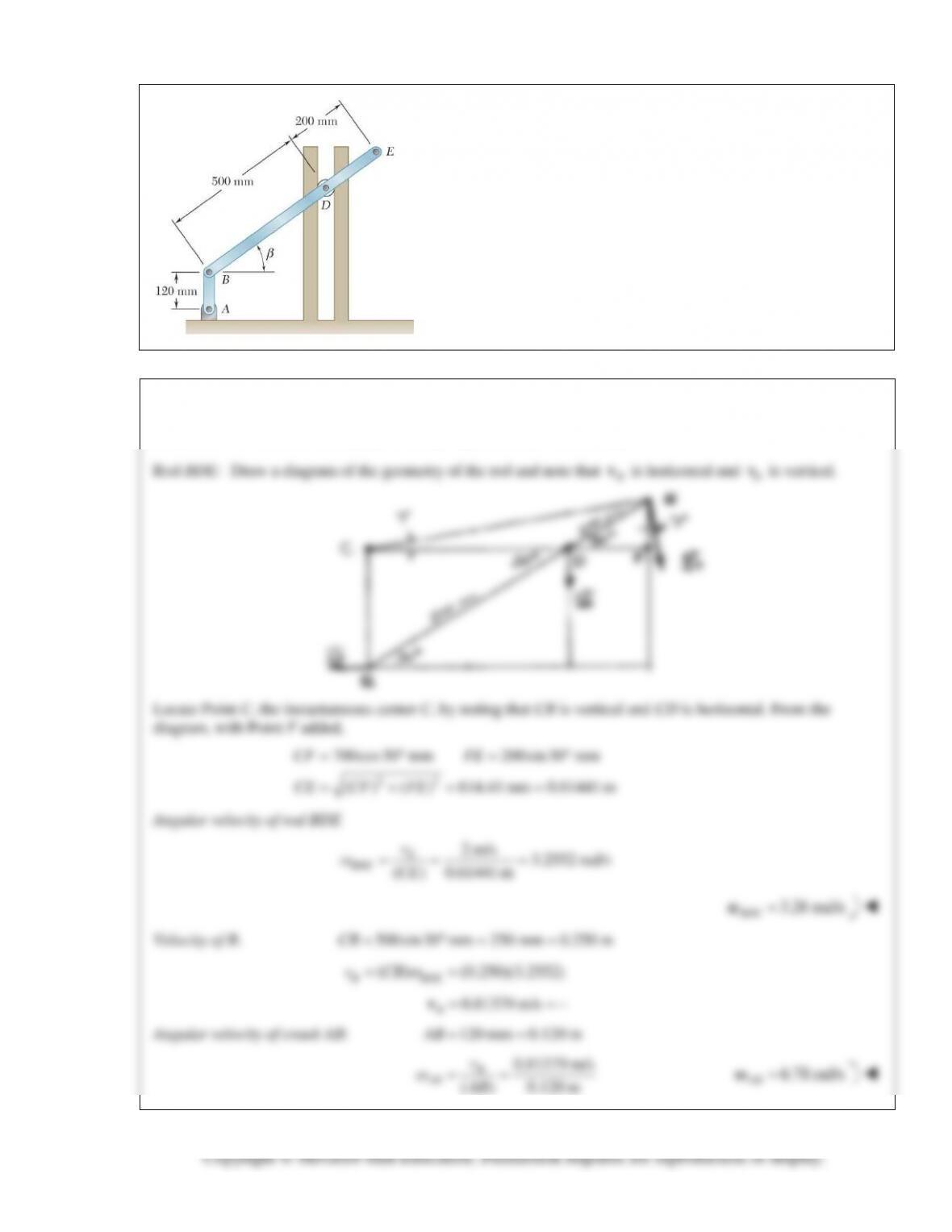
Rod BDE is partially guided by a roller at D that moves in a
vertical track. Knowing that at the instant shown the angular
velocity of crank AB is 5 rad/s clockwise and that
25 ,
β
= °
determine (a) the angular velocity of the rod, (b) the velocity of
Point E.
SOLUTION
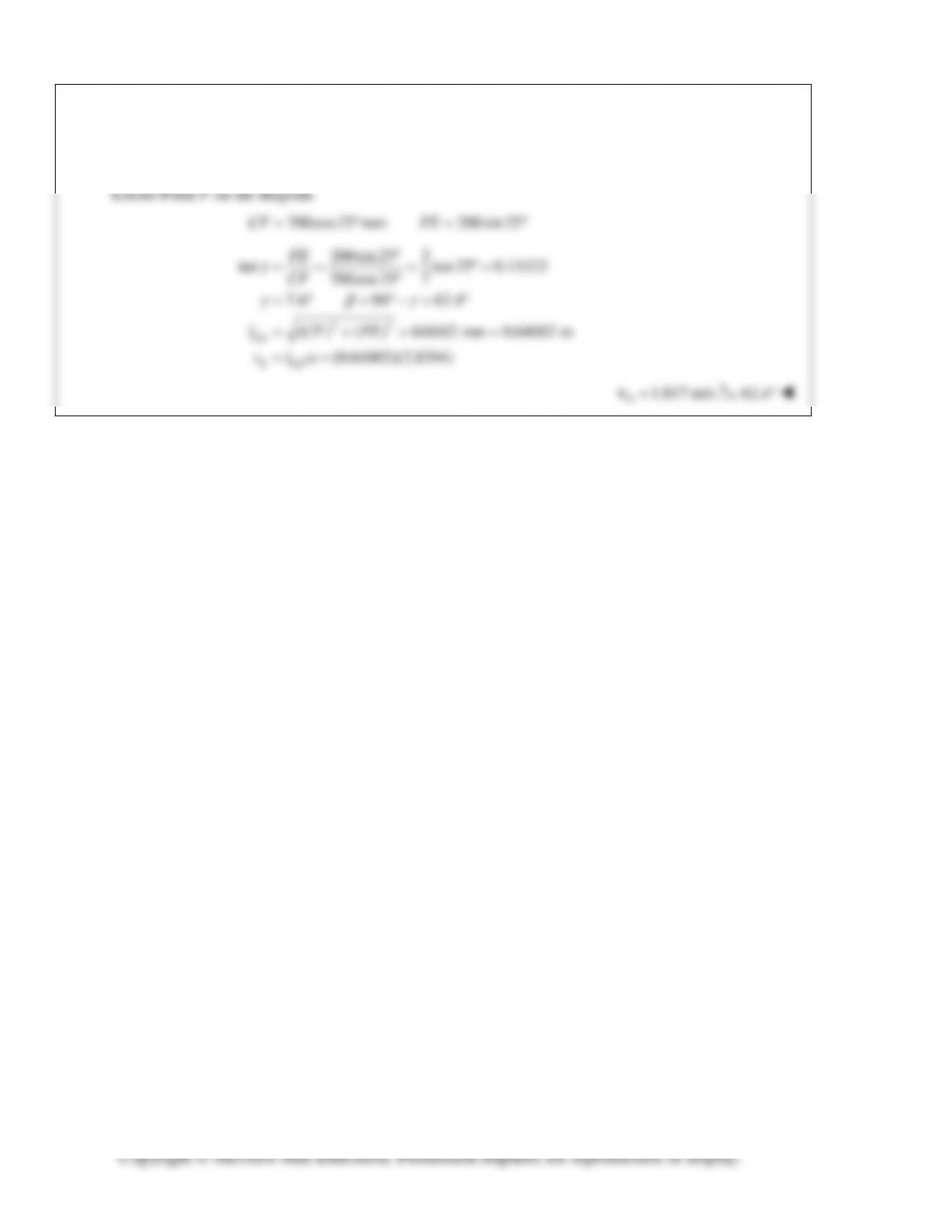
PROBLEM 15.84 (Continued)
(b) Velocity of Point E.
E
PROBLEM 15.85
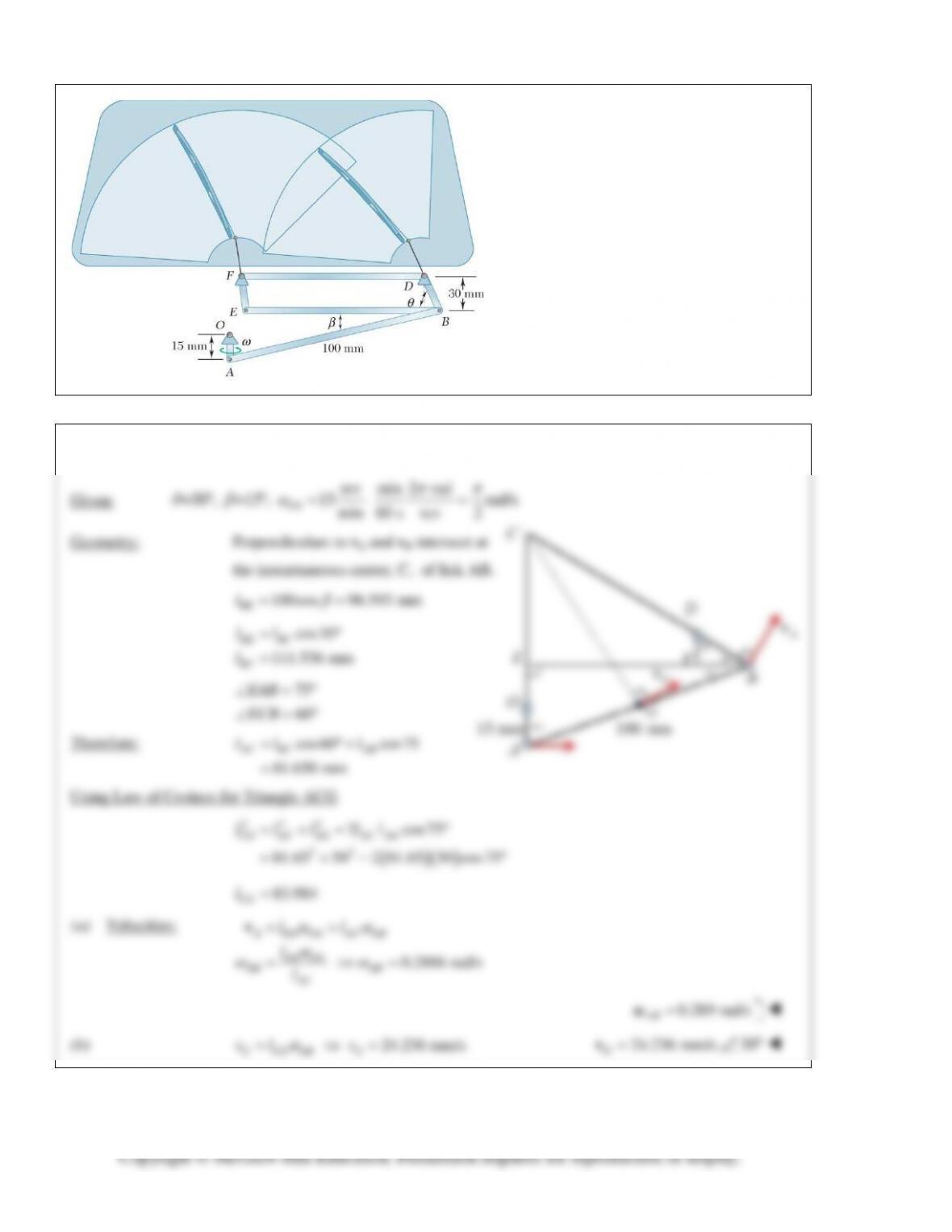
Rod BDE is partially guided by a roller at D which moves in a
vertical track. Knowing that at the instant shown
30 ,
β
= °
Point E
has a velocity of 2 m/s down and to the right, determine the
angular velocities of rod BDE and crank AB.
SOLUTION
Crank AB: When AB is vertical, the velocity
B
v
at Point B is horizontal.
( ) 0.120 m
AB
AB
AB
PROBLEM 15.86
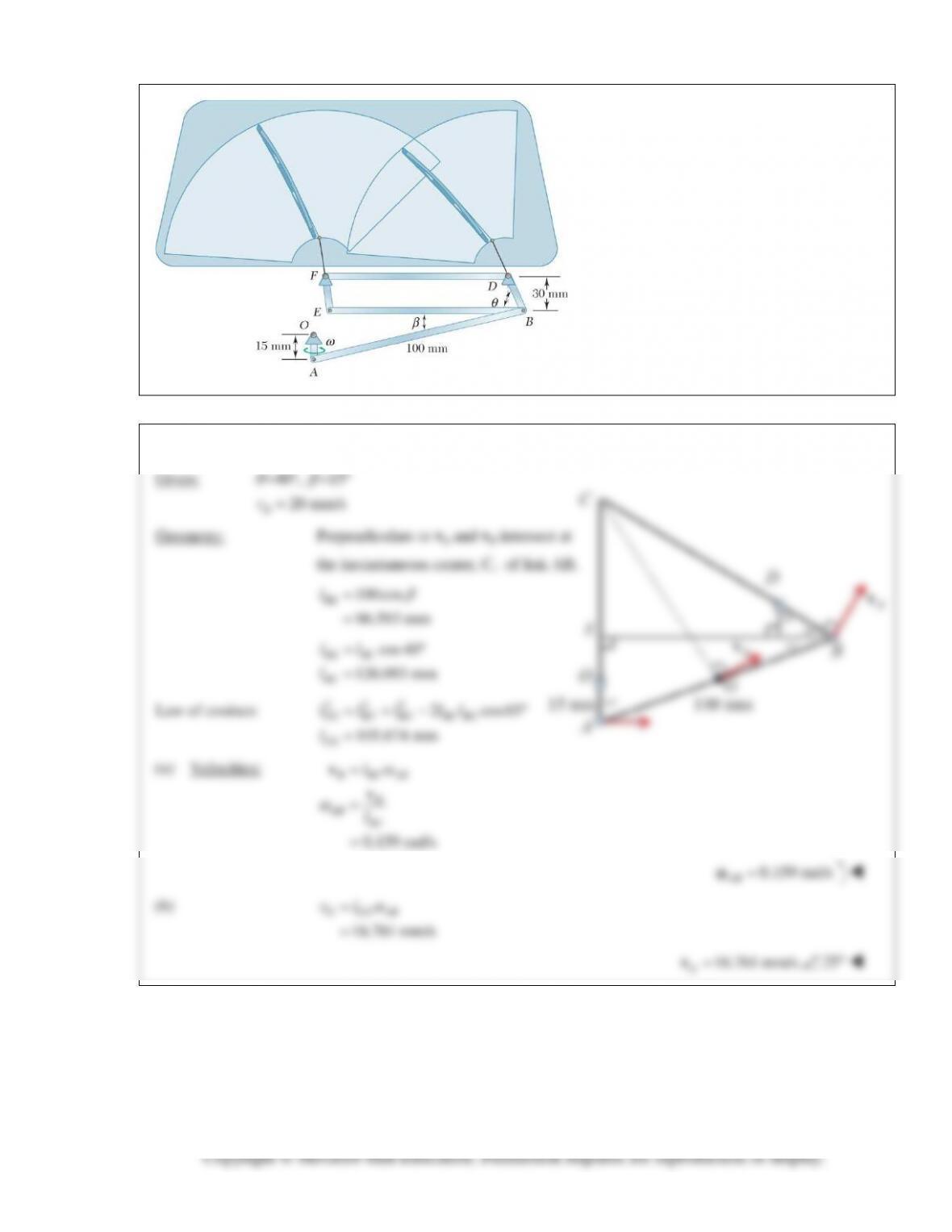
A motor at O drives the windshield wiper
mechanism so that OA has a constant
angular velocity of 15 rpm. Knowing that
at the instant shown linkage OA is vertical,
θ
= 30°, and
β
= 15°, determine (a) the
angular velocity of bar AB, (b) the velocity
of the center of the center of bar AB.
SOLUTION
rev min 2 rad
ππ
G CG AB G
G
PROBLEM 15.87
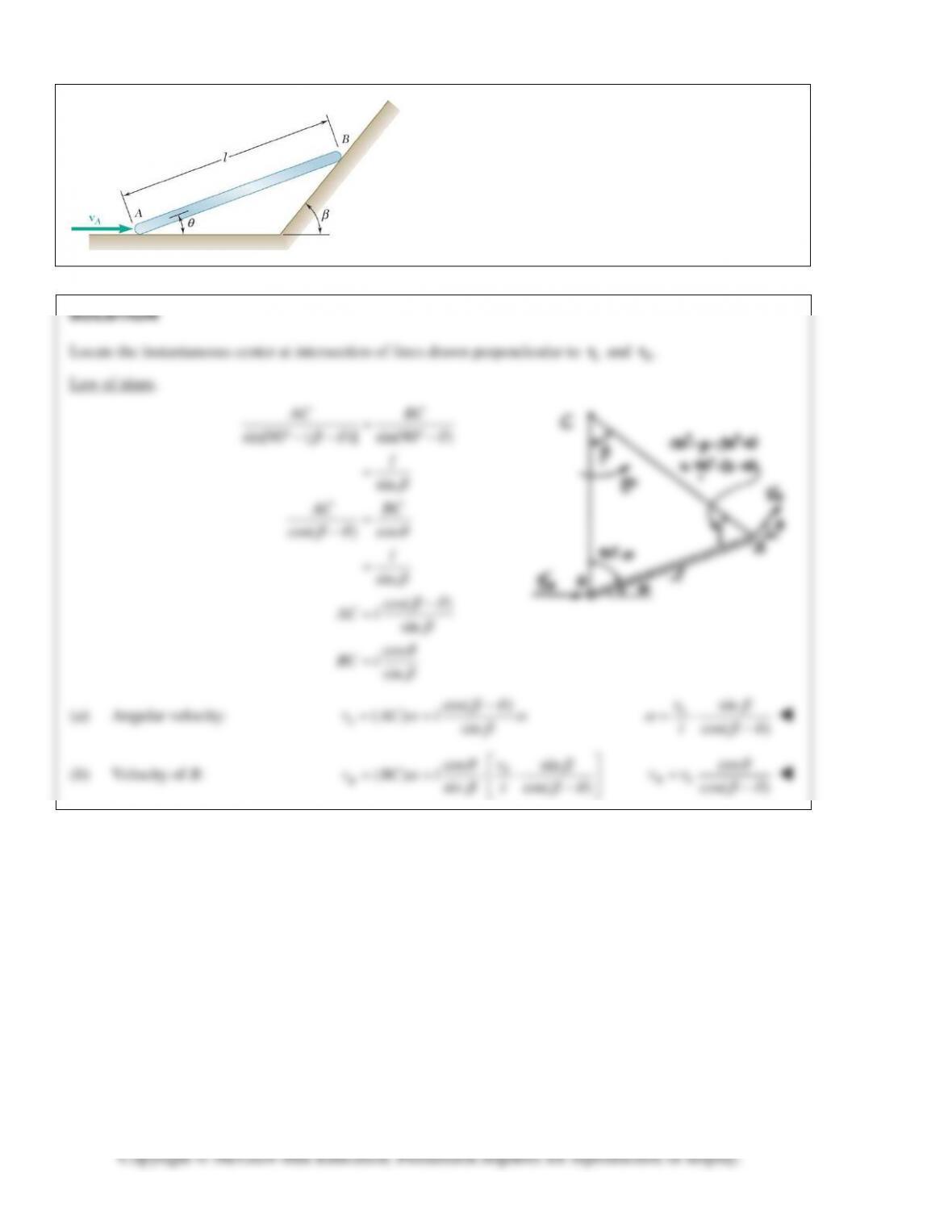
A motor at O drives the windshield wiper
mechanism so that point B has a speed of
20 mm/s. Knowing that at the instant
shown linkage OA is vertical,
θ
= 40°, and
β
= 15°, determine (a) the angular velocity
of bar OA, (b) the velocity of the center of
the center of bar AB.
SOLUTION
G
PROBLEM 15.88
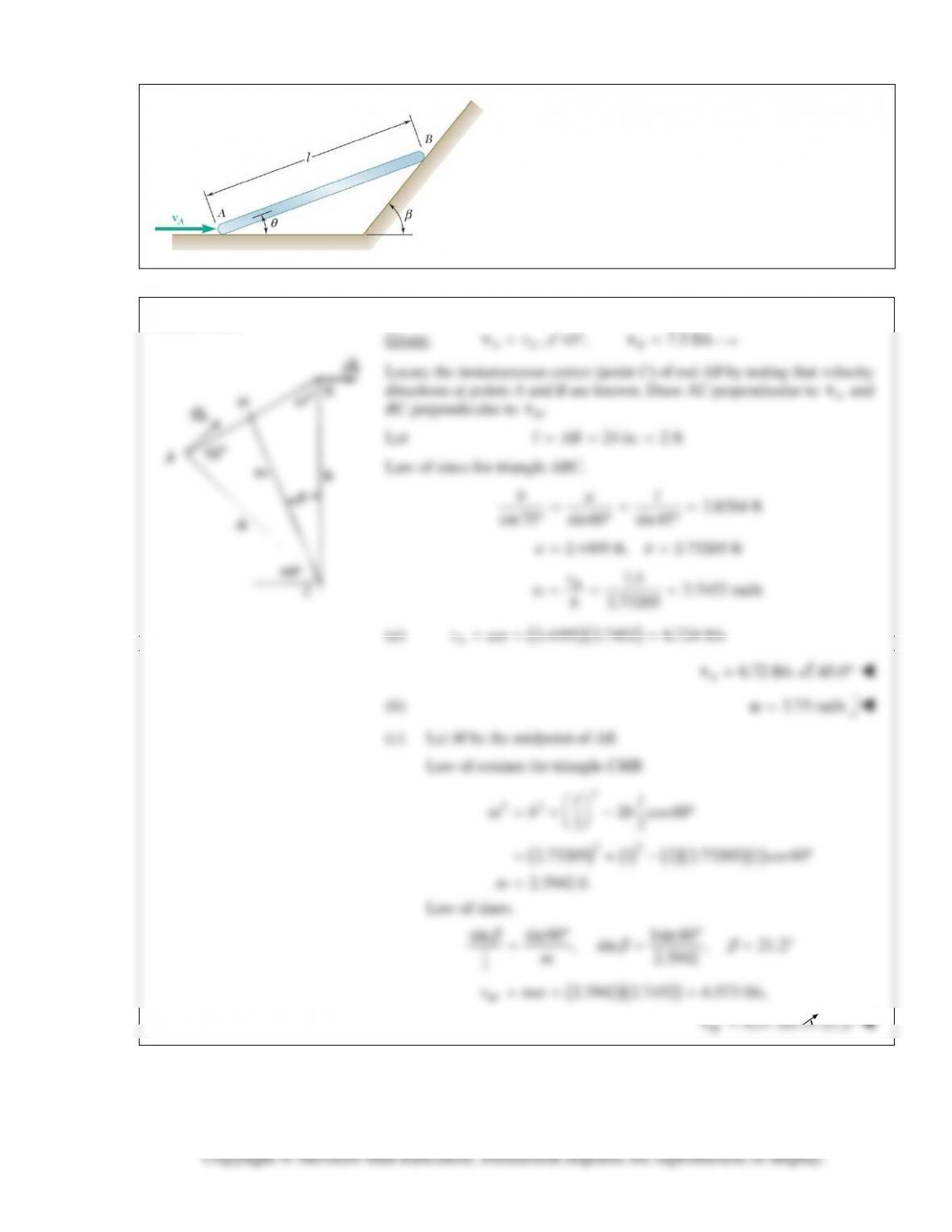
Rod AB can slide freely along the floor and the inclined
plane. Denoting by
A
v
the velocity of Point A, derive an
expression for (a) the angular velocity of the rod, (b) the
velocity of end B.
B
−
cos( )
BA
βθ
PROBLEM 15.89
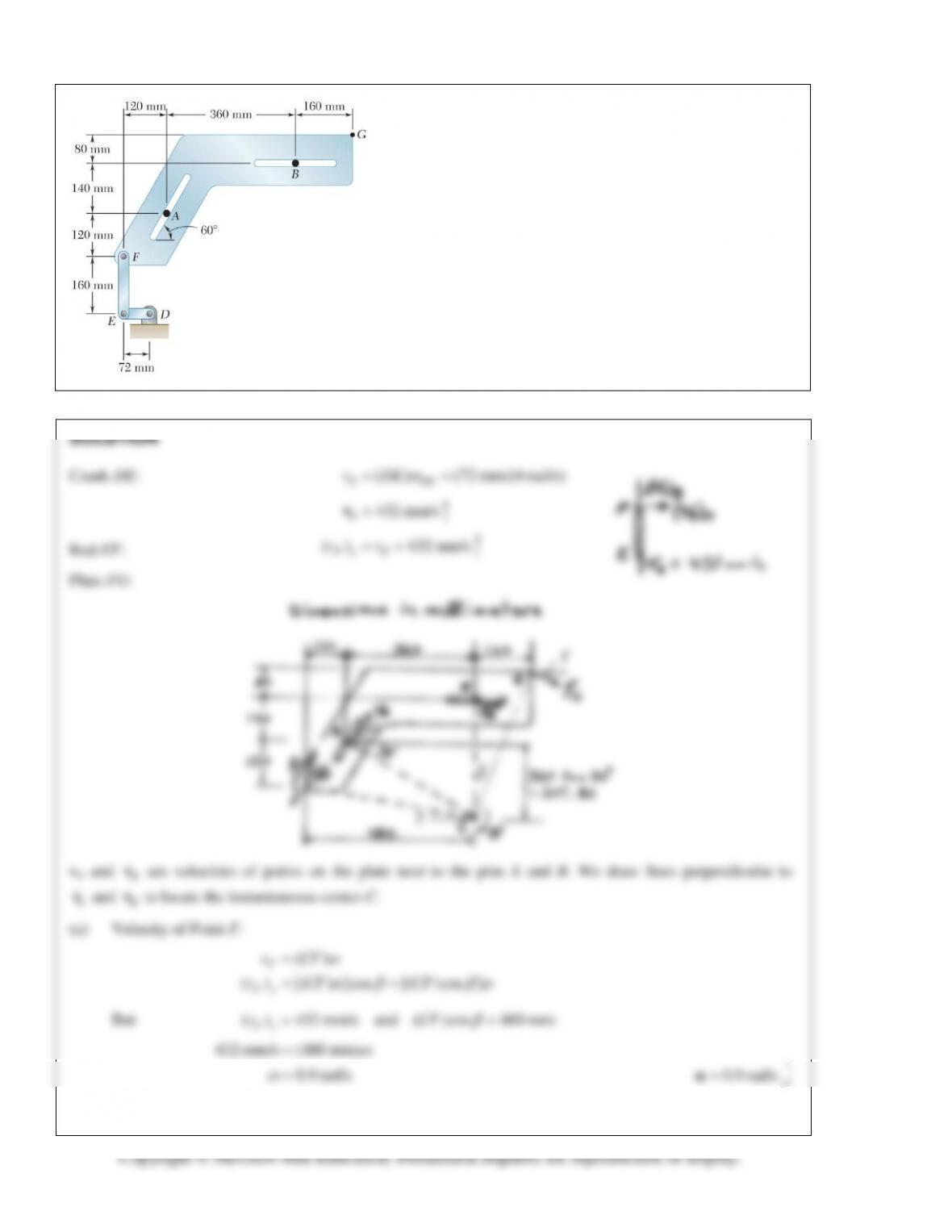
Small wheels have been attached to the ends of bar AB
and roll freely along the surfaces shown. Knowing that
the velocity of wheel B is 7.5 ft/s to the right at the
instant shown, determine (a) the velocity of end A of the
bar, (b) the angular velocity of the bar, (c) the velocity of
the midpoint of the bar.
SOLUTION
Given:
AA
v=v
45 ,°
7.5 ft/s
B
=v
Locate the instantaneous center (point
C) of rod AB by noting that velocity
directions at points
A and B are known. Draw AC perpendicular to
A
v
and
BC
perpendicular to
.
B
v
Let
24 in. 2 ftl AB= = =
Law of sines for triangle
ABC.
2.8284 ft
sin 75 sin 60 sin 45
bal
= = =
°°°
M
PROBLEM 15.90
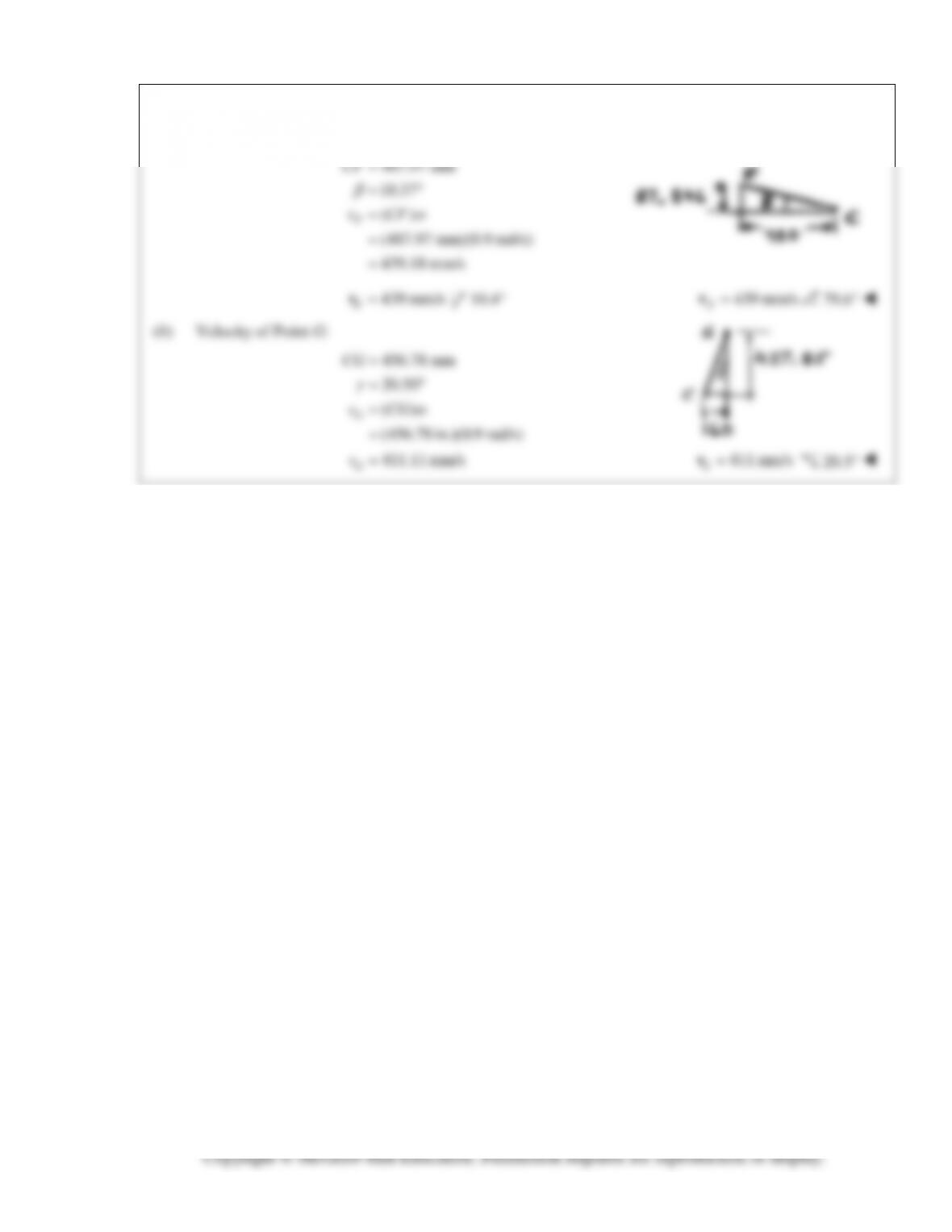
Two slots have been cut in plate FG and the plate has been
placed so that the slots fit two fixed pins A and B. Knowing
that at the instant shown the angular velocity of crank DE is
6 rad/s clockwise, determine (a) the velocity of Point F,
(b) the velocity of Point G.
PROBLEM 15.90 (Continued)
487.97 mm
10.37
CF
β
=
= °
G
G
PROBLEM 15.91
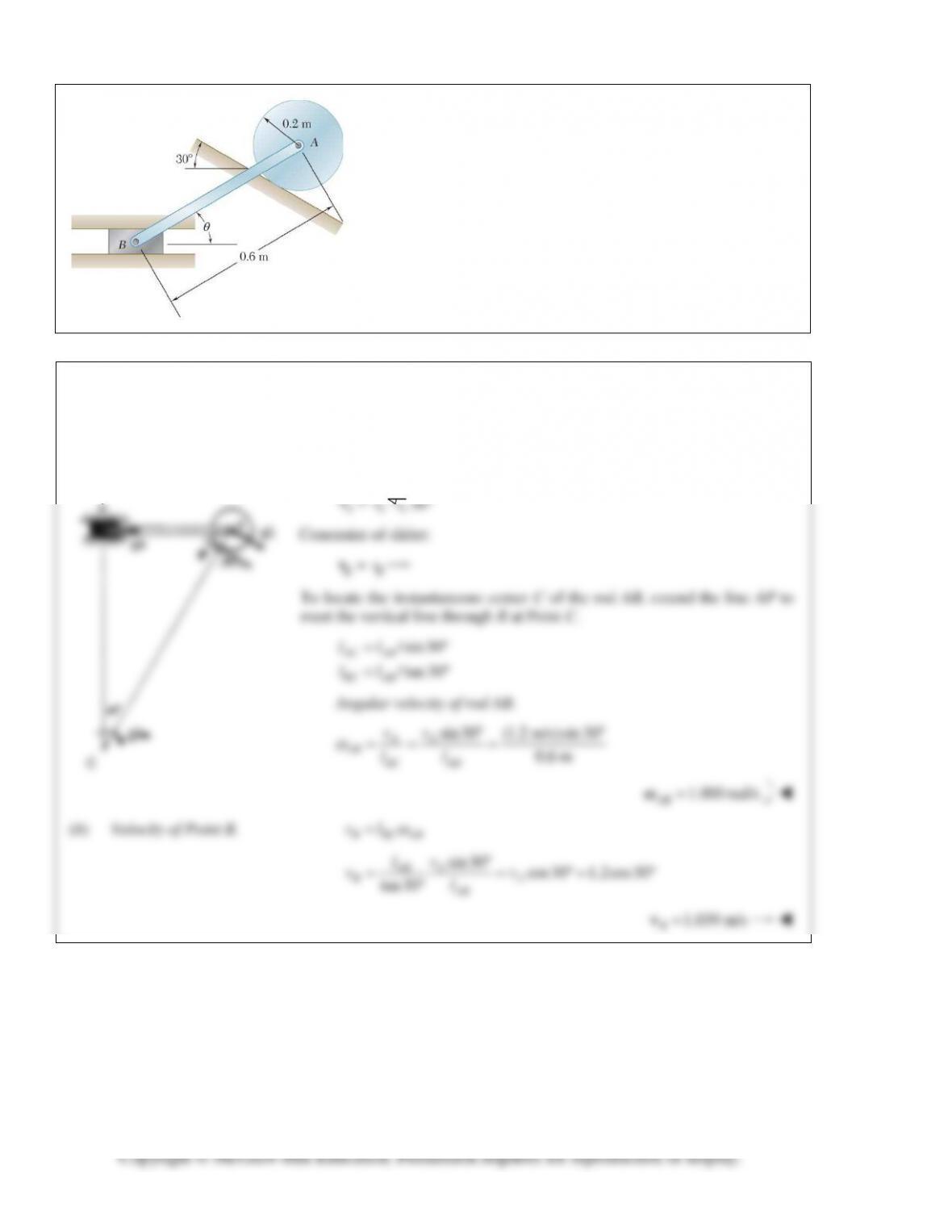
The disk is released from rest and rolls down the incline.
Knowing that the speed of A is 1.2 m/s when
θ
= 0°, determine
at that instant (a) the angular velocity of the rod, (b) the velocity
of B. Only portions of the two tracks are shown.
SOLUTION
Draw the slider, rod, and disk at
0.
θ
= °
Let Point P be the contact point between the disk and the incline. It is the instantaneous center of the disk.
A
v
is parallel to the incline. So that
B
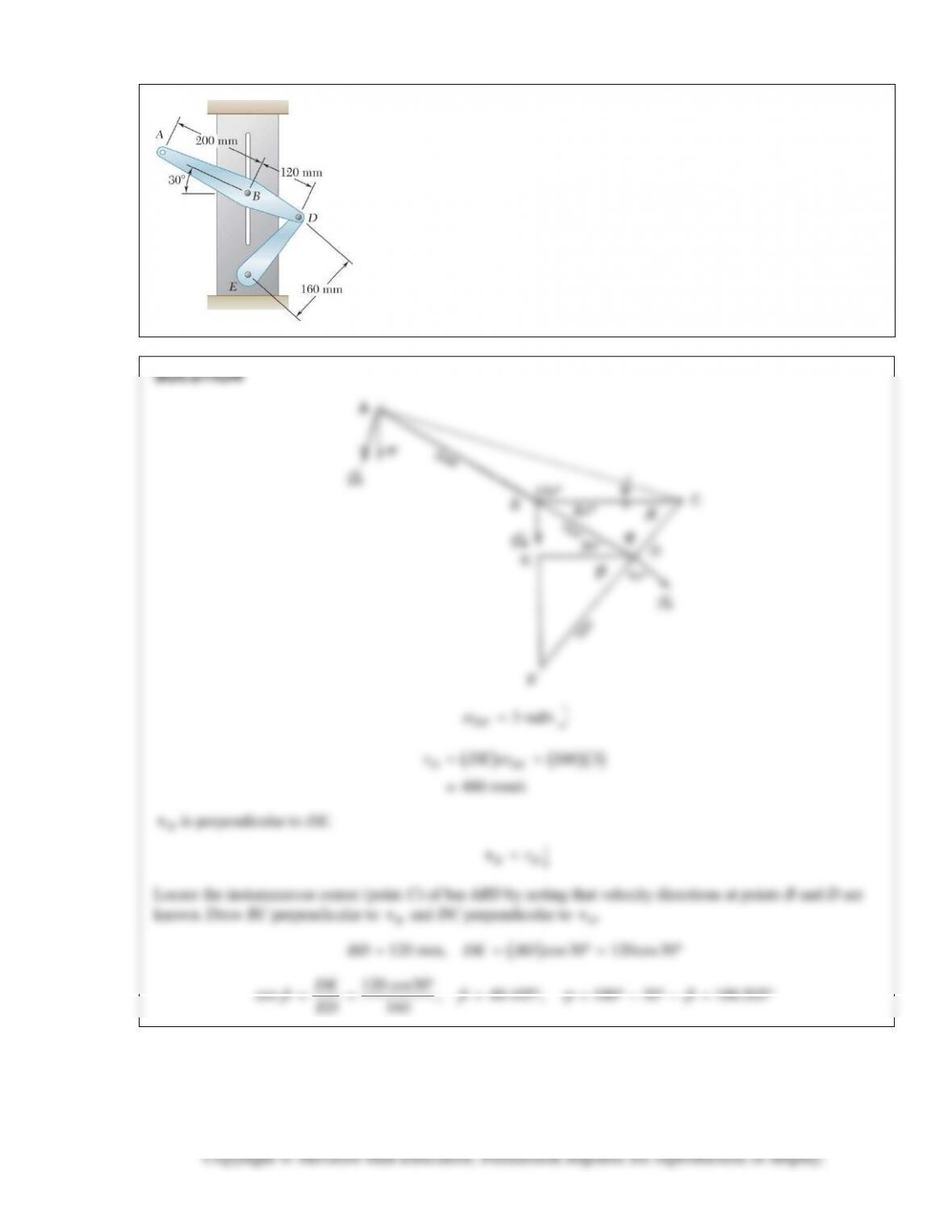
PROBLEM 15.92
The pin at B is attached to member ABD and can slide freely along the slot
cut in the fixed plate. Knowing that at the instant shown the angular velocity
of arm DE is 3 rad/s clockwise, determine (a) the angular velocity of
member ABD, (b) the velocity of point A.
160
ED
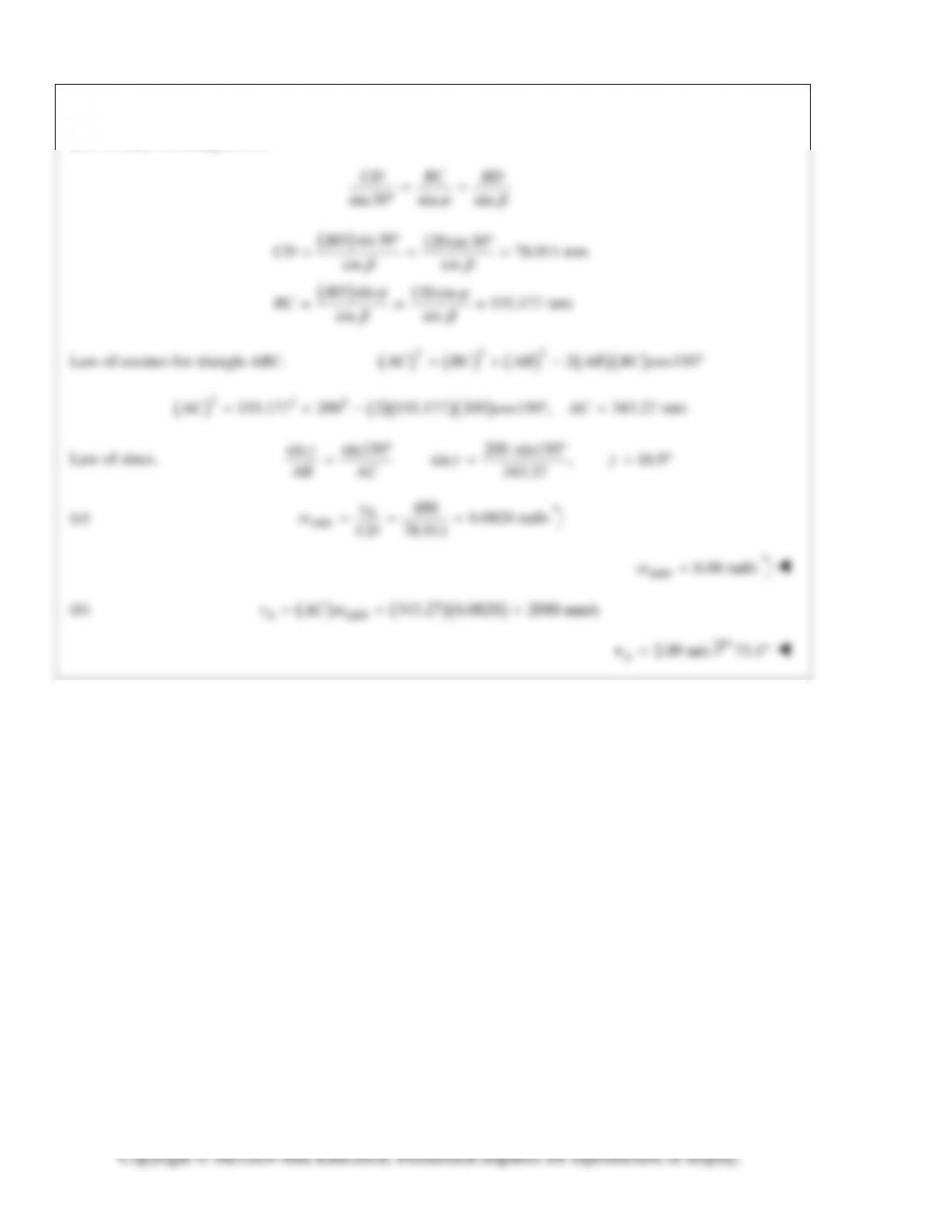
PROBLEM 15.92 (Continued)
Law of sines for triangle BCD.
CD BC BD
A
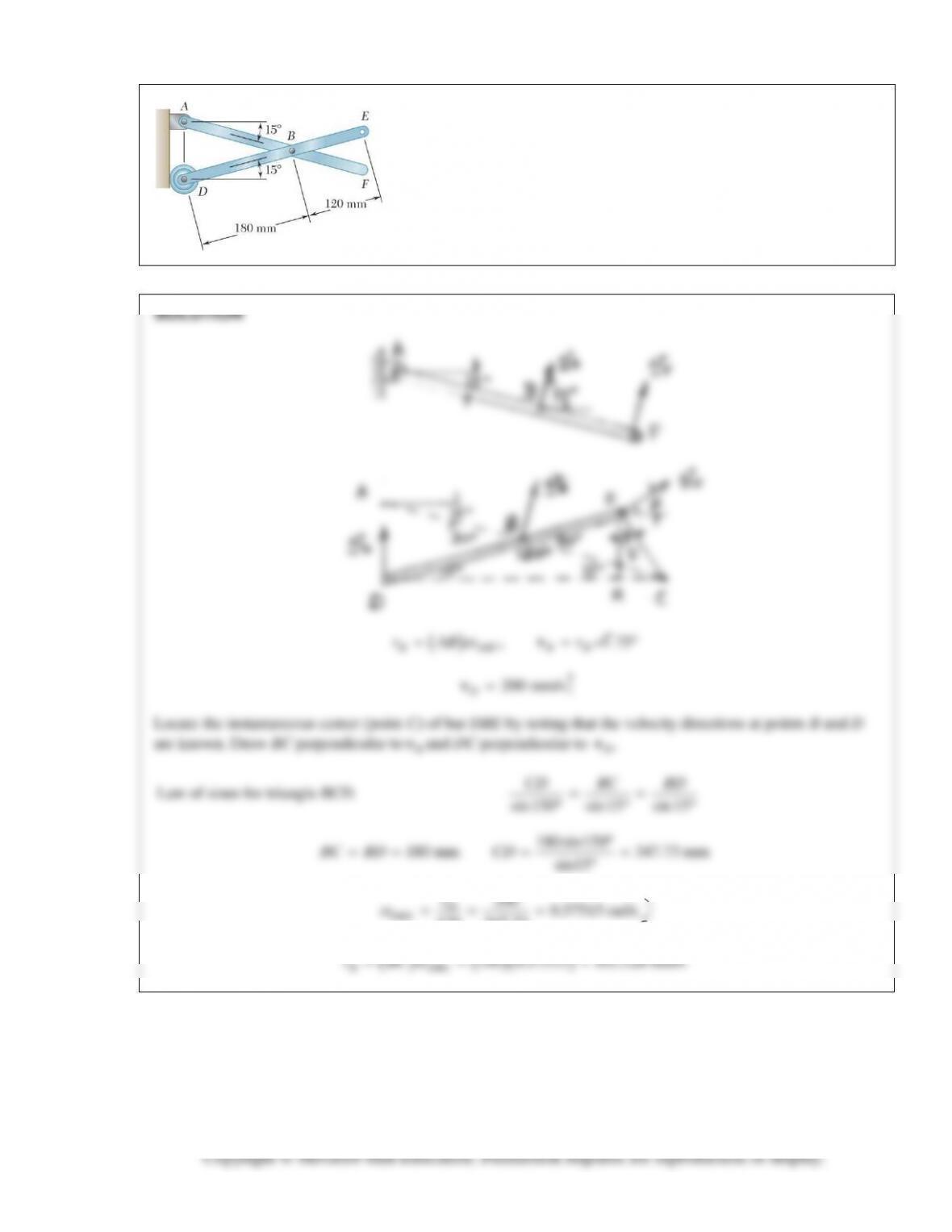
PROBLEM 15.93
Two identical rods ABF and DBE are connected by a pin at B. Knowing
that at the instant shown the velocity of point D is 200 mm/s upward,
determine the velocity of (a) point E, (b) point F.
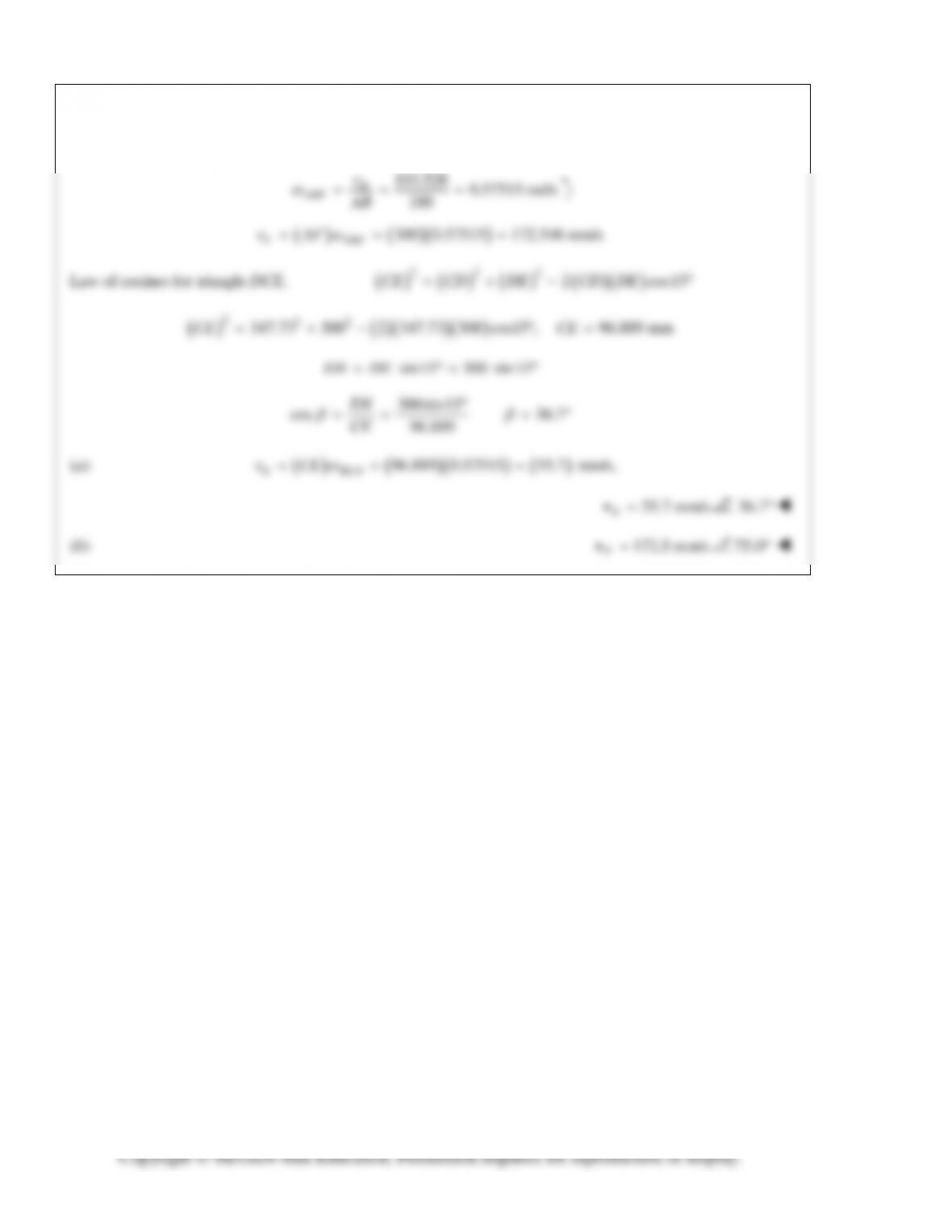
PROBLEM 15.93 (Continued)
103.528 0.57515 rad/s
180
B
ABF
v
AB
ω
= = =
( ) ( )( )
300 0.57515 172.546 mm/s
F ABF
v AF
ω
= = =
Law of cosines for triangle DCE.
( ) ( ) ( ) ( )( )
2 22
2 cos15CE CD DE CD DE=+− °
( ) ( )( )( )
222
347.73 300 2 347.73 300 cos15 , 96.889 mmCE CE= +− ° =
sin15 300 sin15EH DE= °= °
300 sin15
cos 36.7
96.889
EH
CE
ββ
°
= = = °
(a)
( ) ( )( ) ( )
96.889 0.57515 55.7 mm/s,
E BCD
v CE
ω
= = =
55.7 mm/s
E
=v
36.7°
(b)
172.5 mm/s
F
=v
75.0°
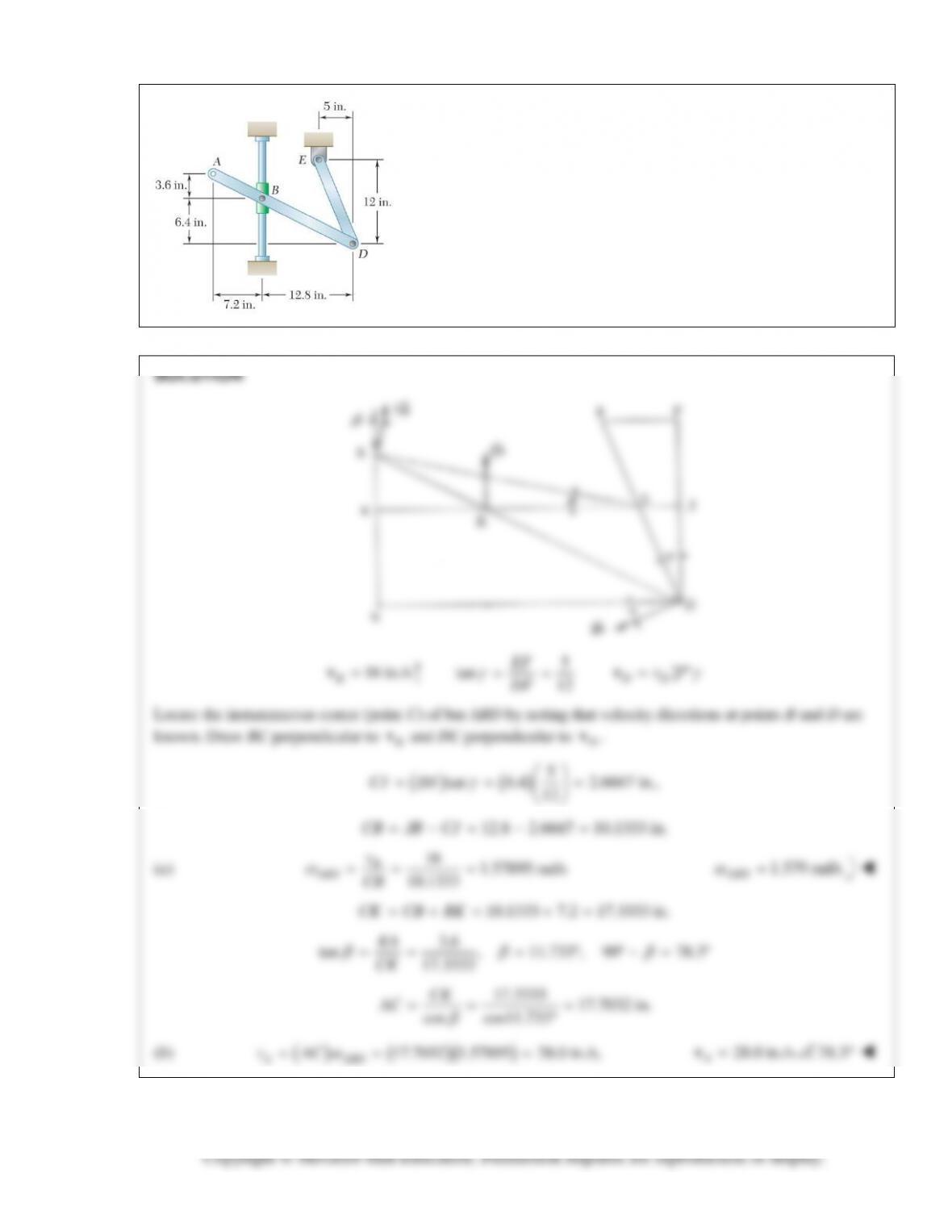
PROBLEM 15.94
Arm ABD is connected by pins to a collar at B and to crank DE.
Knowing that the velocity of collar B is 16 in./s upward, determine
(a) the angular velocity of arm ABD, (b) the velocity of point A.
A ABD
A
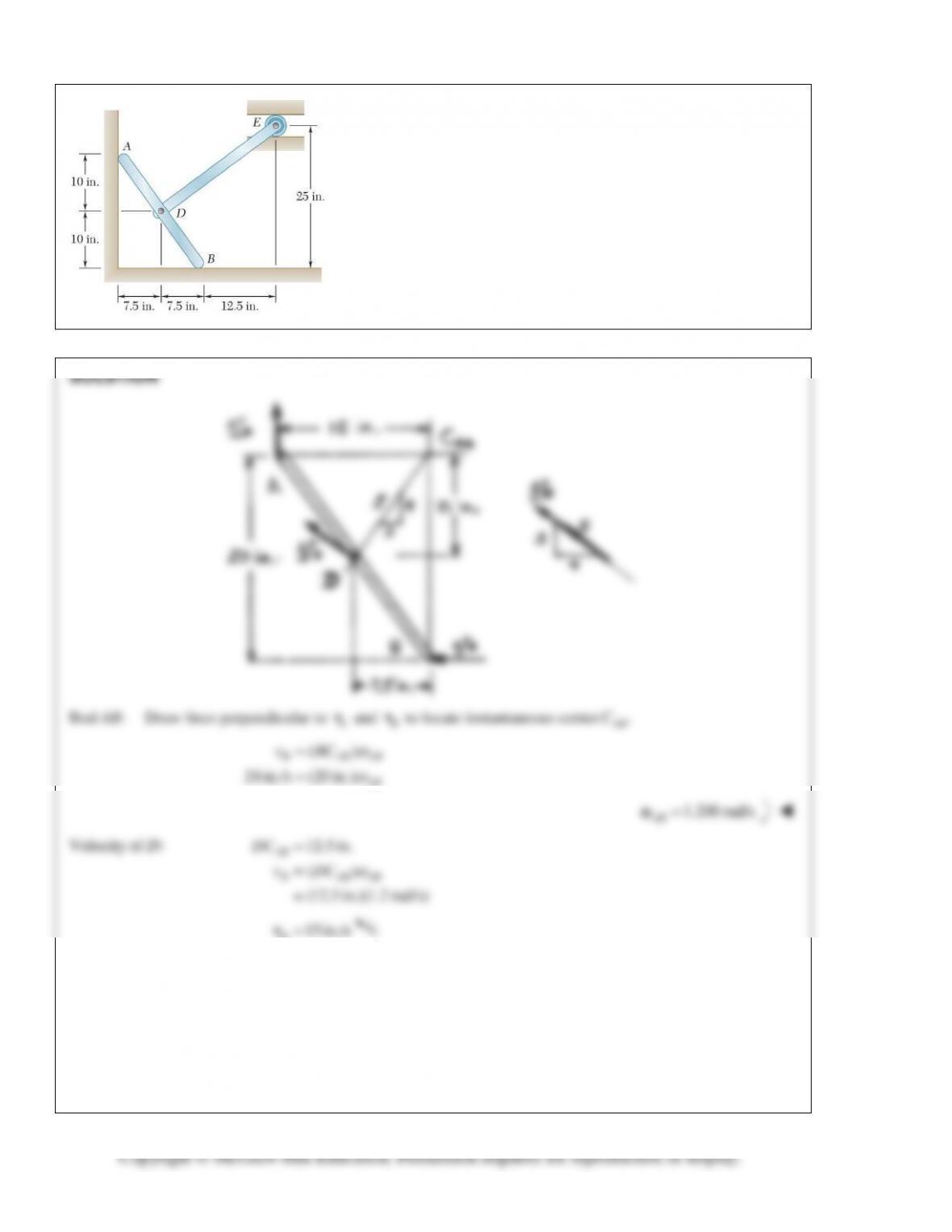
PROBLEM 15.95
Two 25-in. rods are pin-connected at D as shown. Knowing that B
moves to the left with a constant velocity of 24 in./s, determine at
the instant shown (a) the angular velocity of each rod, (b) the
velocity of E.
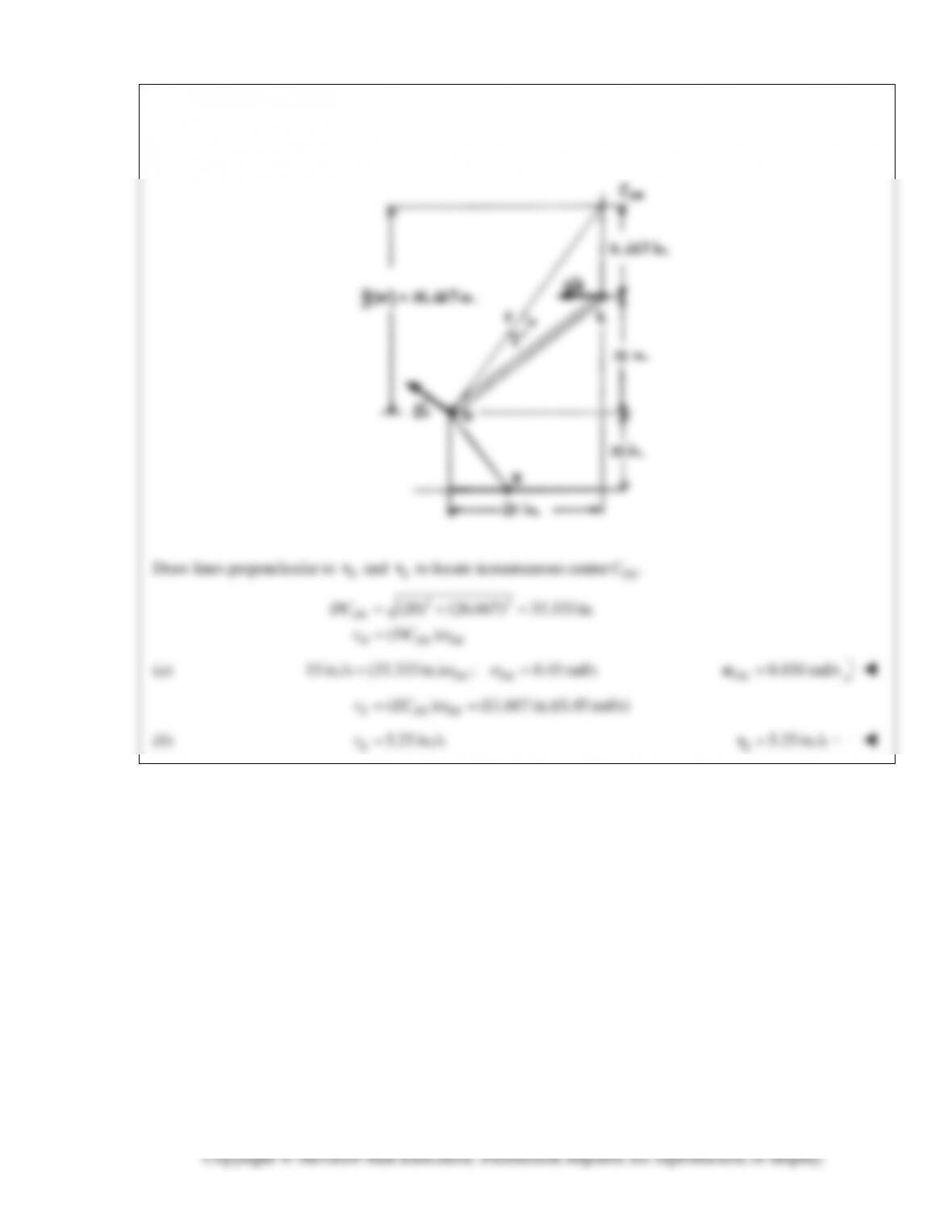
PROBLEM 15.95 (Continued)
Rod DE:
E
E=v
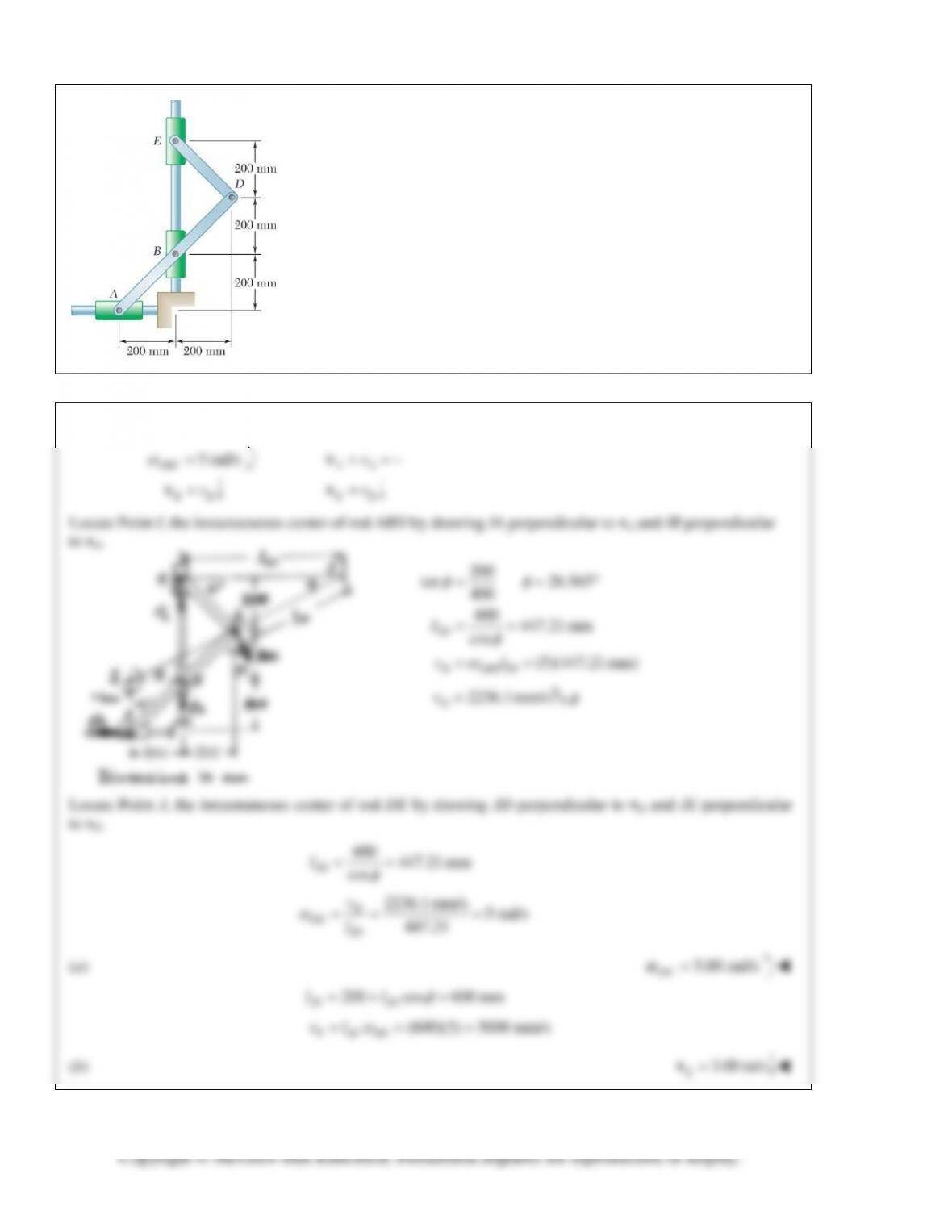
PROBLEM 15.96
Two rods ABD and DE are connected to three collars as shown. Knowing
that the angular velocity of ABD is 5 rad/s clockwise, determine at the
instant shown (a) the angular velocity of DE, (b) the velocity of collar E.
SOLUTION