Sample Syllabi and Course Outlines
1-1
SAMPLE SYLLABI and COURSE OUTLINES
Instructors well experienced in teaching negotiation course using previous editions of
this text have contributed these materials. The materials have been adapted here to
facilitate the use of the 4th edition of Readings, Exercises and Cases. The book
Essentials of Negotiation is a shorter, more applied version of the text Negotiation, but
the chapter structures of the two are closely comparable. Some syllabi here also include
readings and exercises supplemental to, but not included in, Lewicki et al. (Special
thanks to Professors Folger at Tulane and Gerhart at Case Western.)
Please note that the syllabi you develop from these guidelines will, and should, vary
depending on the context and goals of your actual teaching experience.
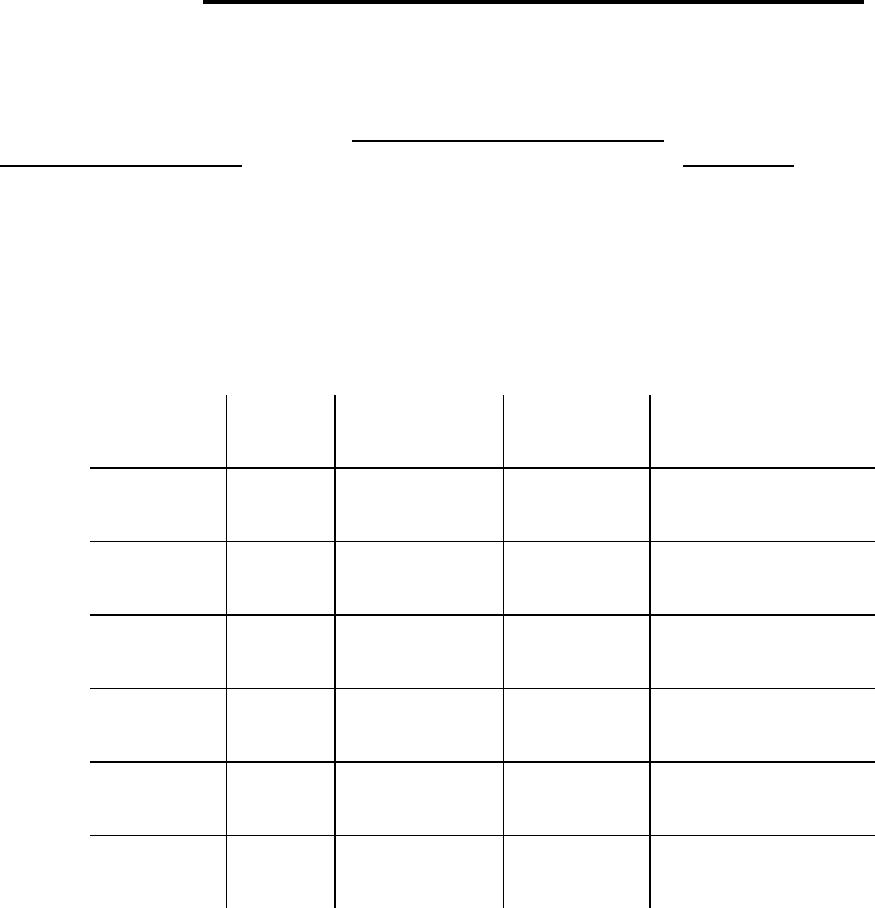
Syllabus #
Pages
Level
Term
Structure
1
551–558
Graduate
Quarter
2 classes/week
2
559–564
Graduate/
Undergraduate
Semester
1 class/week
3
565–578
Graduate
Semester
1 class/week
4
579–588
Graduate
Semester
2 classes/week
5
588–591
Graduate
Compressed
1 week
(5 full days M-F)
Notes
592–596
—–
—–
—–
Sample Syllabi and Course Outlines
1-2
Max M. Fisher College of Business
The Ohio State University
Professor Roy Lewicki
MHR 802 Managerial Negotiations
Spring, 2002
Course Objectives
One objective of the course will be to explore the major concepts and theories of the
psychology of bargaining and negotiation, and the dynamics of interpersonal and intergroup
conflict and its resolution. A second objective will be to help students develop the sophistication
to analyze bargaining and conflict relationships, and to learn (through class discussion and self-
assessment) about their own individual “bargaining styles.”
My interest is to have students in the course who are committed to both goals. That is, I
would prefer to accept students who are committed to the intellectual analysis of bargaining
problems (even, perhaps when the applicability of those ideas is not readily clear). I would also
want the student to be committed to actively participating in the simulations, willing to have
others constructively critique his/her behavior, and willing to try to learn from the feedback as
well as the behavior of others in the course. I believe that a dual commitment to these two goals
will provide the motivation to effectively maximize student learning.
My goal for the course is to help the student effectively integrate the experiential and
intellectual learning components. I do not consider this an easy task.
The course is designed to be relevant to the broad spectrum of bargaining “problems”
that are traditionally faced by the manager. Thus, the content is not be restricted to students
interested in human resources or industrial relations. Students pursuing careers in sales,
marketing, merger and acquisition, banking, purchasing, real estate, entrepreneurship and other
areas that require skill in negotiation and persuasion should find the course useful and relevant.
Format
There will be two weekly meetings of the class. Class time will be devoted to lectures,
case discussions, videotape, role-plays and quizzes. Lectures will provide analytical concepts
that will integrate the readings and serve as useful frameworks for a richer understanding of
cases and role-plays. Cases, videotape and the role-plays themselves will provide the
“application” aspects of this course. Quizzes will provide a frequent opportunity to test
comprehension of the readings. In addition, there will occasionally be “out of class” role-plays
that must be completed before the next class begins. These will be described in extensive
detail.
During the quarter, you will also be placed in a discussion group, called a
“D-Group.” The purpose of the D-Group is to create an opportunity for students
to talk with other students, in an organized manner, about events in the course.
More will be said about the group below.

Sample Syllabi and Course Outlines
1-3
Textbooks
Two books have been ordered for this course:
Roy J. Lewicki, David Saunders and John Minton, Essentials of Negotiation.
2nd Edition. Burr Ridge, IL. Irwin/McGraw Hill, 2000. (Green/white cover)
(T in outline)
Roy J. Lewicki, David Saunders and John Minton, Negotiation: Readings,
Exercises, and Cases. 3rd Edition. Burr Ridge, IL: Irwin/McGraw Hill,
1999. (Red/white cover) (R in outline).
Both books will be used extensively in the course.
Handouts
The role-play and simulation activities in this course require extensive handouts. The
number of pages exceeds the number that the College will provide gratis. As a result, a
materials charge of $5 will be assessed all students in the course.
Copies of handouts not received in class can always be obtained from Prof. Lewicki or
the course assistant, or from a collection of materials kept in a notebook at the reception desk in
700 Fisher Hall. Students are responsible for obtaining any materials not received due to
missed classes.
Student Work Requirements
1. Class Preparation and Participation. This course will require that students come
prepared to class. There are two forms of preparation: reading and assignments.
a. Reading has been assigned to provide an enriched understanding of activities just
completed in class, or to “set the stage” for upcoming activities. The instructor has attempted to
select a blend of reading that combines analytical richness with detailed examples and
applications. Students will be responsible for completing the reading assignments. There will
be occasional weekly short quizzes on the readings.
b. Assignments are cases, role-plays, and questionnaires that must be completed for
class, or in between class periods. It is essential that students be prepared by reading the
assigned case or briefing information and/or completing the required assignment.
Students are expected to be prepared for class, to attend class, and to complete the
required role-plays outside of class. Therefore, you will be required to make time outside of
class to complete required negotiations. Attendance at class is expected unless the instructor is
notified. Missing a role-play or simulation is not acceptable except for medical emergency. You
are also expected to attend D-Group sessions.
The class participation segment of your grade will be based upon your class attendance,
D-Group attendance, preparation for all class activities, and the quality of your contribution to
class discussions.

Sample Syllabi and Course Outlines
1-4
2. Graded Negotiations and Papers: There will be two graded negotiations in the
course. In each graded negotiation, students will be evaluated on the basis of their performance
in the role-play AND the paper they submit on that role-play.
Grading on the role-play itself will focus on the actual results achieved by each
negotiator. Since the role-plays differ, criteria will vary from one scenario to the next; criteria will
be announced prior to the role-play.
The accompanying paper should focus on preparation and goal setting for the
Role-play, an analysis of the actual negotiating events, and a justification of the results
achieved. A good paper will address:
• the preparation and planning process that you used to get ready for the
negotiation, including your goals/objectives;
• a description of the actual progression of events and how the negotiation
evolved;
• the solution you achieved, relative to the goals you set in planning and
preparation, and how you “defend” your solution against your earlier
goals/objectives (for example, how would you sell your solution to your boss);
• an evaluation of your own performance in the negotiation; and
• a summary of what you learned from the exercise (or what you didn’t learn,
and why not).
Papers will be evaluated against these asterisked points. Papers should be no more than 4
pages, typewritten, double-spaced. Points will be deducted for papers with significant defects in
spelling, grammar, punctuation and fundamental written expression.
Short papers are be a completely confidential document between student and instructor.
Candor is encouraged. Talk explicitly about what you did and what your opponent(s) did; no
information will be shared with other students. You may turn in your paper by code number if
you prefer.
3. Group Paper. There will also be a “group” negotiation (usually, but not necessarily,
conducted within the D-Group). The negotiation will be conducted outside of class. Groups are
then responsible for completing the group negotiation and an analytical paper of their efforts as
a team. More information will be given in class.
4. Reputation Index. At the end of the course, the Reputation Index will be calculated on
your negotiating reputation with your classmates, on the basis of their experience with you over
the semester. The Index is a proxy for the long-term effects of reputations created by
negotiation activities in organizations, where the negotiations you conduct today affect the
perceptions and expectations of others tomorrow. The index recognizes that those individuals
who have reputations as trustworthy and effective negotiators will have an advantage in future
negotiations, and those who have reputations as untrustworthy and ineffective will have a
disadvantage.
The index will be converted into points and will be factored into your grade for the
course. In addition to your reputation index, students may earn “extra credit” on this factor by
contributing to others’ learning through helpful feedback, insightful participation and other
actions that help your fellow students learn about their negotiation style.

Sample Syllabi and Course Outlines
1-5
5. Final Project:
Students who are not graduating this quarter may choose to do a final project to
raise their grade at the end of the course. If you are interested, please discuss the
options with the instructor.
6. D-Groups
The purpose of the D-Group is to create an environment in which you can talk about
events in the course, your own personal reaction to them, and the ways those events are
affecting your view of yourself as a negotiator.
D-groups will be composed of 4-6 members. The group is to meet once a week for one
hour. You must find a time to meet when all members can, as a rule, get together. During the
meeting, discussion might focus on:
* the content of the course;
* cases and exercises that may have been done, and your personal reactions to
them;
* personal “negotiations” you have had outside the course, and how you have
conducted yourself;
* issues that are arising for you in the course and their implications for your own
learning and development as a negotiator.
You should spend a few minutes preparing for your D-group meeting each week.
Preparation might include reviewing your answers to the following questions:
* what happened in the role-play simulations this week?
* what strategy/tactics did I use, and what strategy/tactics did my opponent use?
* what did I learn from this activity? what do these activities say about my
strengths/weaknesses as a negotiator?
* how do these activities relate to the ways I have negotiated, or will negotiate,
“real” situations outside of the course?
Each group will submit a 1 page statement per week (due in the Monday class)
indicating group name and members in attendance, summarizing the topics of the group
discussion, and raising any questions or concerns that should be brought to the attention of the
instructor or class. The instructor will review all D-Group input, and will meet with any D-Group
if requested.
With the exception of this written summary, and information shared with the
instructor, IT IS ASSUMED THAT ALL D-GROUP DISCUSSIONS WILL BE CONFIDENTIAL.
Students must be able to assume that information shared within a D-group will not work its way
into the gossip network of the MBA or MLHR Programs.

Sample Syllabi and Course Outlines
1-6
Suggested topics for D-Group discussion:
• After Week 1 Course expectations, past negotiation experiences; Cooperation
and competition, Pemberton’s Dilemma
• After Week 2 Distributive negotiation
• After Week 3 Distributive negotiation
• After Week 4 Integrative Negotiation
• After Week 5 Integrative Negotiation
• After Week 6 Personality Q, Dealing with Difficult Negotiators
• After Week 7 Group negotiations, ethics
• After Week 8 International Negotiation
Summary of Grading Components and Points:
Option A Option B
Percent. Points Percent. Points
Graded Negotiation #1, and
accompanying paper 10% 20 15% 30
Graded Negotiation #2, and
accompanying paper 10% 20 15% 30
Group Negotiation Paper 20% 40 25% 50
Reputation Index 10% 20 10% 20
Quizzes 10% 20 20% 40
Live Negotiation or Summary 25% 50
Paper or Term Paper
Class and D-Group Partic. 15% 30 15% 30
Sample Syllabi and Course Outlines
1-7
Summary of Due Dates:
• D-Group Reports Due in each Monday Class beginning April 8
• April 16 First graded Role Play due
• April 17 Paper #1 due on First GRP
• May 3 Second graded RP due
• May 6 Paper #2 due on Second GRP
• May 22 Group Paper Due on group case
• June 5 Final Paper(s) due for Graduating students
• June 11 Final Paper(s) due for nongraduating students
The Honor Code As It Applies to This Course:
The Academic Misconduct Policy of The Graduate School, The Ohio State
University, applies to all academic work in this course. More specifically, it will be
considered a violation of the Academic Misconduct to engage in the following activities:
1. Misrepresenting the written work of others as your own written work.
2. Reading, viewing or discovering the confidential briefing information held by your
opponents in any graded role play scenario, by gaining access to that information from
your opponent directly or from others in any section of the course who may be playing
your opponent‘s role. (NOTE: THIS MEANS THAT YOU MAY NOT SHOW YOUR BRIEFING
INFORMATION TO YOUR OPPONENT AT ANY TIME, OR READ OR QUOTE VERBATIM
FROM ANY PART OF THAT INFORMATION, AND TO DO SO IS A VIOLATION OF THE
HONOR CODE!)
1. Reading, viewing or discovering the confidential briefing information of role-play
scenarios that may have been used in previous offerings of this course.

Sample Syllabi and Course Outlines
1-8
Course Outline
Class Date Topics Assignment/preparation
Code: T=text, R=reader,
BRC=Bring Reader to Class
1 April 1 Introduction None
Course Objectives Handout Questionnaire
2 April 3 Basics of Cooperation Prepare R Ex 2 Pemberton BRC
and Competition Read T, Ch 1
Read R, 1-2
Return Questionnaire
3 April 8 Basic Structure of Read T, Ch 2
Distributive Bargaining Prepare R Ex 4 The Used Car BRC
Read R, 3-2
4 April 10 Distributive Prepare R Case 1 Cap. Mort. Co. (A)
Bargaining Read T, Ch 3..00
Read R 3-1
5 April 15 Distributive Prepare R Case 2 Pacific Oil (A)
Bargaining Bring $1-2 to class.
Read R. 3-3, 5-1
April 16 First Graded RP Results Due at noon
6 April 17 Distributive Bargaining Read R 1-3, 12-1 (applies to class 5)
Intro to Integrative Negot
PAPER DUE ON FIRST GRADED ROLE-PLAY
7 April 22 Integrative Read T, Ch 4
Negotiation Do RP in class
8 April 24 Integrative Read R 4-1, 4-3
Negotiation
9 April 29 Integrative Read R 4-2
Negotiation
10 May 1 Integrative Read T, Ch. 6
Negotiation
May 3 Second Graded RP due at 5 p.m.
11 May 6 Personality Complete distributed questionnaires
& Gender Prepare R Case 5 Vanessa Abrams (A)
Read R 10-1

Sample Syllabi and Course Outlines
1-9
PAPER DUE ON SECOND GRADED ROLE PLAY
12 May 8 Dealing with Read R, 12-1
Difficult Negotiators Read T, Ch 5
Week of May 6 Group Decision Prepare and do group exercise
Making Read T chapter to be distributed, “Multiparty
Negotiations”, particularly second half of
chapter on groups. Also, Read R 9-3
13 May 13 Agency Negotiations Read T, chapter to be distributed, “The
Social Context of Negotiations”, particularly
second half on “The Agency Relationship”
Read R 8-1
14 May 15 Ethics Complete R Q 2 SINS Scale
Read R, 7-1,7-3
Read T, Ch. 7
15 May 20 Power Bring $ to Class
Read R, 6-1, 6-2
16 May 22 Power Continuation of May 14 class
GROUP NEGOTIATION PAPER DUE
1. May 27 No CLASS—MEMORIAL DAY HOLIDAY
18 May 29 International Prepare R Ex 21 Alpha Beta BRC
Negotiation Read T Ch 8
Read R 11-2, 11-3
19 June 3 International Negot Guest Speaker
11–1, 11-3
20 June 5 Third Parties Prepare R Ex 17 BRC
Read R, 13-1
Read T, Distributed Chapter on Third
Parties

Sample Syllabi and Course Outlines
1-10
SYLLABUS: MBA 698
Managerial Negotiation
PFEIFFER UNIVERSITY
Instructor: John Minton
Overview: This course is designed to explore the processes of bargaining and
negotiation as social and managerial activities. Special emphasis will be given the areas
of interpersonal and intergroup conflict, in addition to interpersonal influence techniques
and the tactics and strategies involved with improved bargaining and negotiation. The
major purpose of the course is for each participant to gain insight into their own
negotiating style and to become a more effective negotiator, as well as a more astute
observer of social process. The course will involve extensive use of cases, role-plays,
and related participative activities, enhanced by rigorous self-review and introspection.
Text: The text for this course provides an introduction to a common base of knowledge
in the fields of negotiation and influence, and is intended to be a springboard for
discussion and inquiry. The required texts are
Negotiation (4th ed.) by R. Lewicki, D. Saunders, B. Barry & J. Minton (McGraw-
Hill/ Irwin, 2003).
Negotiation: Readings, Exercises, and Cases (4th ed.) by R. Lewicki, D.
Saunders, & J. Minton (Irwin, 2003).
The instructor may hand out additional course materials during the semester.
Grading: Course grades will be based on the following components:
Component % of Grade
Participation*…………………………… 30
Journal/Paper**….………………….… 50
Negotiation Analysis***……………… 20
Total 100
* Participation: Given the nature of this course, your participation is absolutely
critical. This is reflected in the relatively heavy weight assigned to it in the overall
grading scheme. In this case, participation has two components: attendance and
activity. All class participants start the semester with the maximum grade for
attendance, and will be allowed two missed classes (for any reason) for the semester.
All classes missed after the second absence will result in a loss of points, at the rate of
three points per missed class, regardless of the reason for the absence. This is not
done for punitive reasons, but is in recognition of the fact that (in a “high-touch” learning
environment) missed classes are once-missed/never-regained learning opportunities.

Sample Syllabi and Course Outlines
1-11
** Journal: Other than reading the assigned materials according to the course
outline, your major out-of-class activity for this class will be the preparation and
maintenance of a personal journal. It is “personal” in that only two people will see it:
you, and the instructor. The journal will be graded only once, at the end of the semester.
More detail on the journal is provided on a separate handout, which will be provided to
you on the first day of class.
Since keeping a journal may be a new experience for some students, the
instructor will provide feedback early in the semester as to whether the journals to that
point are “on the right track”. While submission for this ungraded feedback is voluntary
on the student’s part, the following submission schedule must be adhered to, to enable
the instructor manage the journal review workload:
IF THE LAST DIGIT OF YOUR S.S.# IS: 1,2,3,4, or 5 6,7,8,9 or, 0;
YOU MAY SUBMIT YOUR JOURNAL ON: 1st class in 4th week 1st class in 5th
week
Your grade on the journal will be based only on entries after voluntary review submission
occurs. Journals not submitted for voluntary review will be graded from the beginning of
the course. Finished journals must be turned in at the beginning of the last class.
** Paper: You have the option of writing a paper in lieu of keeping a journal.
While most participants in past classes have found the journal valuable, individual
students may feel that greater value will come from taking an in-depth view of some
particular negotiation theory, problem, or opportunity. Papers must be typed, double-
spaced, with one-inch margins on 8.5″ X 11″ paper. The minimum length is 20 pages
(more is OK, less is not), excluding title pages, tables, figures, references, and so forth.
Papers must be prepared in accordance with some standard style guide (MLA, APA,
etc.) and should be polished and professional in appearance as well as in content. If
you decide to write a paper in lieu of a journal, that choice must be made by the end of
the 7th week of the semester and the instructor must be so informed in writing; your
decision on journal vs. paper may not be changed later in the semester. It is suggested
that you develop a topic and a production schedule jointly with the instructor. If you
choose to do a paper in lieu of keeping a journal, the finished paper must be turned in no
later than the beginning of the last class session.

Sample Syllabi and Course Outlines
1-12
*** Negotiation Analysis. Each class participant must prepare a complete
analysis of an actual negotiation in which they have participated, are participating, or
plan to participate in. Each analysis will consist of three sections: an introduction, a
functional analysis, and a retrospective or prospective summation (depending on
whether the negotiation has been completed, is ongoing, or has yet to be commenced.).
Introduction. This must be a complete description of the negotiation, its setting,
participants and other stakeholders, and intended goals or aims. This information can
be true and factual, or can be changed to protect individual and/or organizational
interests, but it must be a “real” negotiation! This section of the project will probably
take no more than two pages.
Functional Analysis. The described negotiation must be analyzed exhaustively
from the perspectives of:
• planning, preparation, and strategy;
• communication processes and activities;
• persuasive processed and activities;
• social contextual observations and effects;
• power processes;
• individual difference effects;
• conflict resolution and/or third-party processes;
• ethical considerations; and
• international aspects and effects (if appropriate).
This section of the project will likely be the longest, probably six to eight pages in length.
Summation. Based on the description and analysis of the chosen negotiation,
this section will be where the author will apply the benefits of his/her insight and
education to assess, or improve the negotiation outcome(s). For retrospective analyses,
the focus should be on what was done, the correctness of assumptions and choices, the
effects of tactics and strategies, and what might be done differently in future, similar
instances. For analyses of ongoing or proposed negotiations, the focus should be on
these aspects as well as on actually or potentially needed “damage control” and tactical
or strategic options (i.e., ”what if” planning). This section should probably be two to four
pages in length, depending on the nature and status of the negotiation.
The complete analysis should be turned in at the beginning of the final class of
the semester.

Sample Syllabi and Course Outlines
1-13
MBA 698/Managerial Negotiation
Journal Assignment Guidelines
This assignment involves keeping a journal recording your thoughts, insights,
and introspections following each class session. In addition, you should examine and
discuss your reactions and notions about how the material pertinent to a given session
relates to your own past/future work/nonwork situations. The purpose of this assignment
is to let you take a little time twice a week to reflect, so as to improve your understanding
of yourself and others particularly in regard to negotiation styles, strengths, and
weaknesses. Ultimately, such reflection should make you a more effective negotiator.
Since this is a personal journal, there is a good bit of leeway in specifically what
you write. However, there should be an entry following each class session. Each entry
should discuss the exercises and readings for the session covered, as the readings have
been picked and assigned to be helpful and/or provocative. For example, for a given
negotiation exercise you might include (as appropriate):
1. focusing on pre-class activity:
– what was unique about this exercise? What did I do differently to
accommodate
these unique attributes?
– what specific skill or process did I work on?
– what were my plans for the impending negotiation?
– what experiments did I try?
– what did I expect of the opposing negotiator(s) and how did I think I should
respond?
2. focusing on class observation/experience and post-class introspection:
– what did I learn?
– what tactics did I use? Did they work? Who drove the use of tactics, me or
my
opponent?
– was I right in my choice of strategy, about my strengths, and about the
opposition? If not, why not?
– how does what I did or learned relate to my everyday, personal situation?
How
can this help me function better in the future?
– what do I need to work on in the future, in and/or out of class?
can I think of an example of this type of negotiation process at work or
elsewhere?
-do I (did I) behave the same, or differently?
-what are my ruminations on negotiation, in general?
Journal entries do not have to be restricted to what we cover in class. You may
(or perhaps should) write about any negotiation you are or have been involved in at work
or in some other setting. Your analysis, though, should deal with issues similar to those
just outlined above, and should be driven thematically by the focus of the class period
about which you are writing.

Sample Syllabi and Course Outlines
1-14
MBA 698/Managerial Negotiation
Journal Assignment Guidelines
Journal Grading
The journal is worth 50% of your course grade. The basic grading criterion is
apparent effort to gain insight; the best journals in the past have been those that exhibit
some evidence of thought and creativity, blending together anticipated and
accomplished class experiences (and observations), material from assigned readings,
and personal insights and extensions relevant to negotiation. The better these three
areas are handled and integrated, the better the journal grade. Creativity is encouraged.
The journal may be handed in once early in the semester (if you choose), for
review and comment by the instructor (see above for appropriate dates). The beginning
of the last class for final grading must turn it in. Journals will be kept by the instructor,
and (given the personal nature of the contents) disposed of discreetly. You are advised
to keep a copy of whatever you turn in if you are interested in maintaining a copy for
future use or reference.
If you have questions about this assignment, ask yourself “How can I use this
assignment to help maximize the degree of learning I get from this course?” then do
whatever your answer is.

Sample Syllabi and Course Outlines
1-15
Course Number: MBA 698 Course Name: Managerial Negotiation
(class meets once a week)
Class
Subject
Text
Readings
Cases
Exercises &
Questionnaires
1
Overview/Orientation
—–
—–
—–
——
2
The Nature of
Negotiation
Ch.
1
Section
One
—–
Q.1,Personal
Bargaining Inventory,
Option 2
3
Prenegotiation Planning
Ch.
2
Section
Two
—–
Ex. 25, Planning for
Negotiations
4
Distributive Bargaining
Ch.
3
Section
Three
Case 1
Capital
Mortgage (A)
Ex. 4, The Used Car
5
Integrative Bargaining
Ch.
4
Section
Four
—–
Ex. 26, Sanibel Island
6
Communication &
Cognitive Biases
Ch.
5
Section
Five
Case 3
Ken Griffey, Jr.
Ex 11, Job Offer
Negotiations
7
Finding & Using
Leverage
Ch.
6
Section Six
—–
Ex.16, The Power
Game
8
Ethics
Ch.7
Section
Seven
—–
Q. 2, SINS II Scale,
Ex. 6, GTechnica—
AccelMedia
9
Social Context
Ch.
8
Section
Eight
—–
Q.4, Trust Scale,
Ex. 22, New House
Negotiation
10
Teams and Groups
Ch.
9
Section
Nine
—–
Ex. 13, Newtown
School Dispute
11
Individual Differences
Ch.
10
Section
Ten
Case 5
Vanessa
Abrams (A)
—–
12
Global Negotiations
Ch.
11
Section
Eleven
Case 7
Sick Leave
Ex. 21, Alpha-Beta
14
Managing Difficult
Negotiations, Part One
Ch.
12
Section
Twelve
Case 2
Pacific Oil (A)
Ex. 12, Employee Exit
Interview
15
Managing Difficult
Negotiations, Part Two
Ch.
13
Section
Thirteen
Case 4
Coll. Barg. @
MCA (A)
Ex. 19, 3rd Party
Conflict Resolution
16
Applied Negotiations
—–
Section
Fourteen
—–
Sample Syllabi and Course Outlines
1-16
CASE WESTERN RESERVE UNIVERSITY
Weatherhead School of Management
Negotiation, Conflict Management & Dispute Resolution
Professor P. Gerhart
SYLLABUS
One objective for this course is to enhance the self-confidence of students with
respect to their negotiation skills. An equally important objective is to help students
develop an analytical understanding of negotiations and the management of differences
so they can become more effective problem solvers in the face of conflict.
The need for bargaining and dispute resolution skills arises wherever joint
decision-making is necessary. The context may be bi-lateral, or it may involve
three or more interested parties, each with veto power over any particular
solution. As in most decision-making, the aim of effective negotiation is not
simply to reach an acceptable outcome for all participants, but to create maximum
value in the deal making process.
In that light, individuals with an interest in managing any enterprise, including all
areas of business, non-profits and government, should find the lessons of the course
useful. Although technically advisable solutions for all sorts of problems can be
developed by skilled managers trained in the Weatherhead School, implementation often
requires overcoming, or accommodating, different opinions and interests. Negotiating
skills are therefore as critical as technical skills for effective managers. Moreover,
managers are increasingly confronted with conflicting viewpoints offered by subordinates
as firms emphasize employee participation in the operation of the enterprise. The
effective manager will secure cooperative resolution to such conflict through the use of
mediation skills. “The manager as negotiator and dispute resolver” is therefore the
theme of the course.
The text for the course is Negotiation: Readings, Exercises and Cases, by Roy J.
Lewicki, et al., Fourth Edition (Irwin, 2003) designated LSBM in the syllabus. In addition,
a CWRU Notes packet of readings will be available at the bookstore after the first week
of classes.
ASSIGNMENTS
In addition to the reading, students will participate in a number of simulations.
Most require preparation in advance of class. Thorough preparation is essential for
an adequate learning experience, both for you and the person(s) with whom you
are negotiating. This is a win-win opportunity. The better you prepare and play your
role, the better your negotiating partner’s experience and vice-versa. Half of your class
participation grade will be based on your partners’ assessments of your preparation for
the simulations.
For most exercises, students are asked to prepare a follow-up report and
critique. In general, the length of such papers should be 4-5 pages. A suggested format
for these reports/critiques is attached to this syllabus. Students will also participate in a
negotiation simulation (Global Aeronautical Products) for which the outcome is graded.
Finally, each student will be asked to prepare a final Negotiation Analysis paper (15-20

Sample Syllabi and Course Outlines
1-17
pp) based on a negotiations episode in which the student has been directly involved, or
for which the student has been a close observer. A description of this assignment is
also attached to this syllabus.
Evaluation: Students will be evaluated on the following basis:
Simulation Reports/Critiques 30%
Global Aeronautical Products Simulation Outcome 10%
Powerscreen/Hackerstar Analysis 10%
Class Participation 20%
Negotiation Analysis (Final Paper) 30%
~~~~~~~~~~~~~~~~~~~~~~
CLASS ATTENDANCE POLICY
This is important. Please read it carefully!
Ordinarily, student attendance is a matter of personal choice with the conse-
quence of absence being born entirely by the absent student. In this course, however,
attendance is critical for proper execution of simulations. One student’s unexpected
absence, like inadequate preparation, will have negative consequences for other class
members. Therefore, the policy in LHRP 431 is that unless the instructor is notified
by 5 P.M. of the class day when a simulation is scheduled, the absent or tardy
student will be assessed a five-point penalty against his/her course grade. This is
a “no–fault” policy. That is, if you are absent or tardy without proper notice, regardless of
the reason, the penalty will be assessed. So check your car battery, drive carefully, and
make sure you are here when class begins. If there is any doubt that you will be absent
or late for class, call or send e-mail before 5 P.M.
No penalty will be assessed for absence after appropriate notice, but students
should recognize that simulation performance grades will suffer, and analysis of
simulations will be impossible unless the student participates. Students who anticipate
more than two absences during the term are advised to discuss their schedules with the
instructor before the end of the drop/add period.

Sample Syllabi and Course Outlines
1-18
OUTLINE AND READING
WK 1 Basic Negotiation Skills
N.B. This class session is an introduction to the basic negotiation skills that are
covered more fully in MBAC 413L or MGMT 418 – the Negotiation Skills Lab. If
your have taken the lab within the past year, this class is optional, BUT materials
for subsequent classes will be distributed. You will be excused from this class if
you:
▪ E-mail the instructor noting the semester you took the
Negotiations Lab.
▪ Make alternative arrangements to pick up the materials
that will be distributed from my secretary.
▪ You agree that you will do the assigned reading.
Discussion Outline
• What sort of conflict are we addressing in this course?
• Strategies for dealing with conflict
• Mechanisms for managing conflict
▪ “Ps & Qs” in-class exercise & discussion
• Seven Elements of Effective Negotiations
▪ Focus
▪ Your BATNA and your Power
▪ Intangibles
• Interdependence: Francis Memorial Hospital Simulation
Reading: LSBM, Section 1 (all).
WK 2 Conflict and Interdependence
• The negotiator’s dilemma
• The prisoner’s dilemma
• DEC v. Riverside Simulation NB: Always record the name(s) of
your negotiating partner(s).
Reading:
• Lax & Sebenius, The Manager As Negotiator (Free Press,
1986), Chapter 2, “The Negotiator’s Dilemma: Creating and
Claiming Value”.
• LSBM, Reading 4-2
• Lewicki, Litterer, et al., Negotiation (McGraw-Hill Irwin, 2003),
Fourth Edition, Chapter 1, pp, 8-15, “Interdependence”
Assignment: Prepare for your role in the DEC v. Riverside
Simulation.

Sample Syllabi and Course Outlines
1-19
WK 3 Distributive (POWER) Bargaining
• No one is powerless
• French & Raven model of power and influence
• Alternatives to a negotiated agreement (your “BATNA”)
• LSBM, Ex, 4, The Used Car Simulation
Reading: LSBM, Sections 3 (3-1 & 3-2 only),, 6 (6-1 & 6-2 only),
& 10, (10-1,3only).
Assignment #1: Read the assignment for Week 3 first. Due at
the beginning of class: Report/Critique of DEC v Riverside
simulation. (See Appendix #1, attached)
Assignment #2: Review your role for The Used Car Simulation.
WK 4 Integrative Bargaining
• Is there really such a thing as “win-win” negotiations?
• How can negotiations create value?
• Factors that create an environment for integrative outcomes
(and those that don’t)
• Understanding the relationship between integrative and
distributive bargaining
• Rapid Printing v Scott Computers Simulation.
Reading:
• LSBM, Section 4 (4-1 & 4-2 only)
• “Negotiating Settlements” from Henry & Lieberman, The
Manager’s Guide to Resolving Legal Disputes
• Press, Glass & Foot, “Winning by Negotiation” in Lewicki, et
al. (eds.), Negotiation: Readings, Exercises & Cases (Irwin,
1985), First Edition.
Assignment #1: Review your role for Rapid Printing v Scott
Computers Simulation.
WK 5 Multilateral Negotiations (1)
• Self-interest may be a legitimate basis for lack of agreement
• The real reasons why committees are formed
• Look out for coalitions – how to prepare for multilateral
negotiations
• Mosesburg Stadium Simulation (Note that this simulation may
not be completed before the end of class so that participants
may have to continue and complete the negotiations during
the following week.)
Sample Syllabi and Course Outlines
1-20
Reading: LSBM, Section 9 (9-1 & 9-3 only.
Assignment #1: Due at the beginning of class: Report/Critique
of The Used Car simulation. (See Appendix #1, attached)
Assignment #2: Review your role for Mosesburg Stadium
Simulation.
WK 6 (Oct 4) Multilateral Negotiations (2)
• Recap Mosesburg Stadium
• Identifying interests: Recognizing potential coalition partners
• Recognizing your BATNA and identifying your Bottom Line
• Toys for Torts Simulation
Reading: There is no additional reading assignment for Week 6.
Assignment #1: Due at the beginning of class: Report/Critique
of Rapid v. Scott simulation. (See Appendix #1, attached)
Assignment #2: Review your role for Toys for Torts Simulation.
WK 7 Individual/Cultural/Gender Differences (Guest Speaker).
Reading: LSBM, Section 11 (all).
Assignment #1: Due at the beginning of class: Report/Critique
of Mosesburg Stadium simulation. (See Appendix #1,
attached)
Assignment #2: Read “Reluctant Researcher” Exercise.
WK 8 Public Interest Negotiations (Guest Speaker).
Reading: (There is no reading assignment for this class.)
Assignment #1: Due at the beginning of class: Report/Critique
of Toys for Torts simulation. (See Appendix #1, attached)
WK 9 Intra-Organizational Negotiation in a Bilateral Setting
• Representative vs. principal in negotiation: The “Boundary
Spanner” role
• Intra-Organizational priority setting: “Factional conflict”
• Predicting and controlling Intra-Organizational conflict
• Global Aeronautical Simulation.