
DCF to All Investors
−
+=
)1(
t
t
wf CrP
=
−−+=
1
)()1(
t
tt
t
dd LIrP
−−+=
)()1(
t
Value to
Common Equity
–Pd
Value to all
debtholders
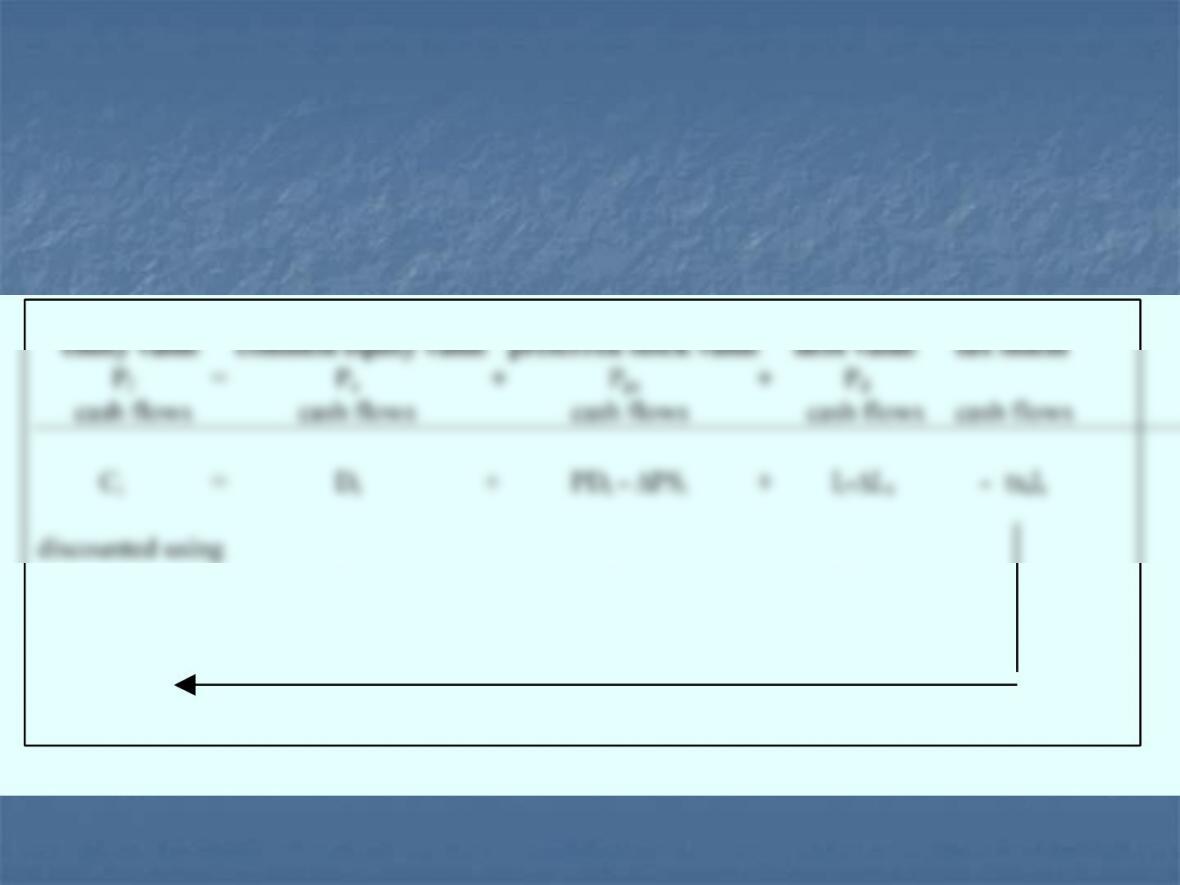
entity value common equity value preferred stock value debt value tax shield
Pf = Pe + Pps + Pd
cash flows cash flows cash flows cash flows cash flows
of re, rps, and (1-tx)rd
Figure 10.6 The Variables in each DCF Valuation Equation
value of txtIt is incorporated into entity value by using (1-tx)rd in rw computation.
Ct= Dt+ It(1–txt) –L + PDt–PSt.
Where did all the money go?

Pe=
Pf
–Pps
investors
Value to
Value to preferred
stockholders
=
++=
1
0)1(
t
t
wf RNOIrNOAP
=
−
−−++=
1
10 )()1(
t
tdt
t
dd LrIrLP
=
−
−−++=
1
10 )()1(
t
tpst
t
psps PSrPDrPSP

◼What is the after–tax weighted average
cost of capital?
◼How do we compute the present value of
a perpetuity?

The Cost of Equity Capital
B from http://finance.yahoo.com/ under key statistics
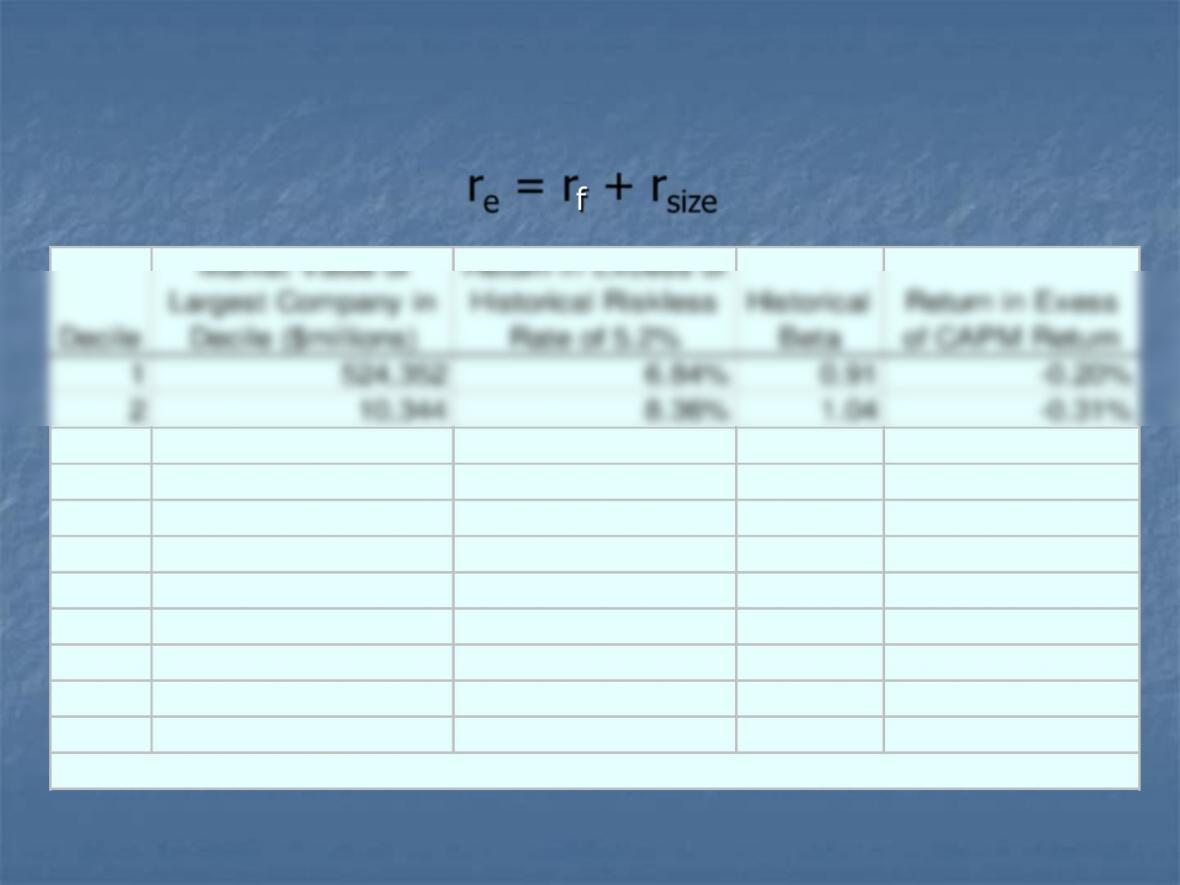
◼SIZE model
re= rf+ rsize
Decile
Market Value of
Largest Company in
Decile ($millions)
Return in Excess of
Historical Riskless
Rate of 5.2%
Historical
Beta
Return in Exess
of CAPM Return
1 524,352 6.84% 0.91 –0.20%
2 10,344 8.36% 1.04 –0.31%
3 4,144 8.93% 1.09 0.47%
4 2,177 9.38% 1.13 0.62%
5 1,328 9.95% 1.16 0.93%
6840 10.26% 1.18 1.08%
7538 10.46% 1.24 0.88%
8333 11.38% 1.28 1.47%
9193 12.17% 1.34 1.74%
10 85 15.67% 1.42 4.63%
Source: Stocks, Bonds, Bills and Inflation 2001 Yearbook, Ibbotson Associates (2001).
Size Model
re= rf+ rsize

One standard deviation variation in risk
premium and beta, assuming rf= 5.2%
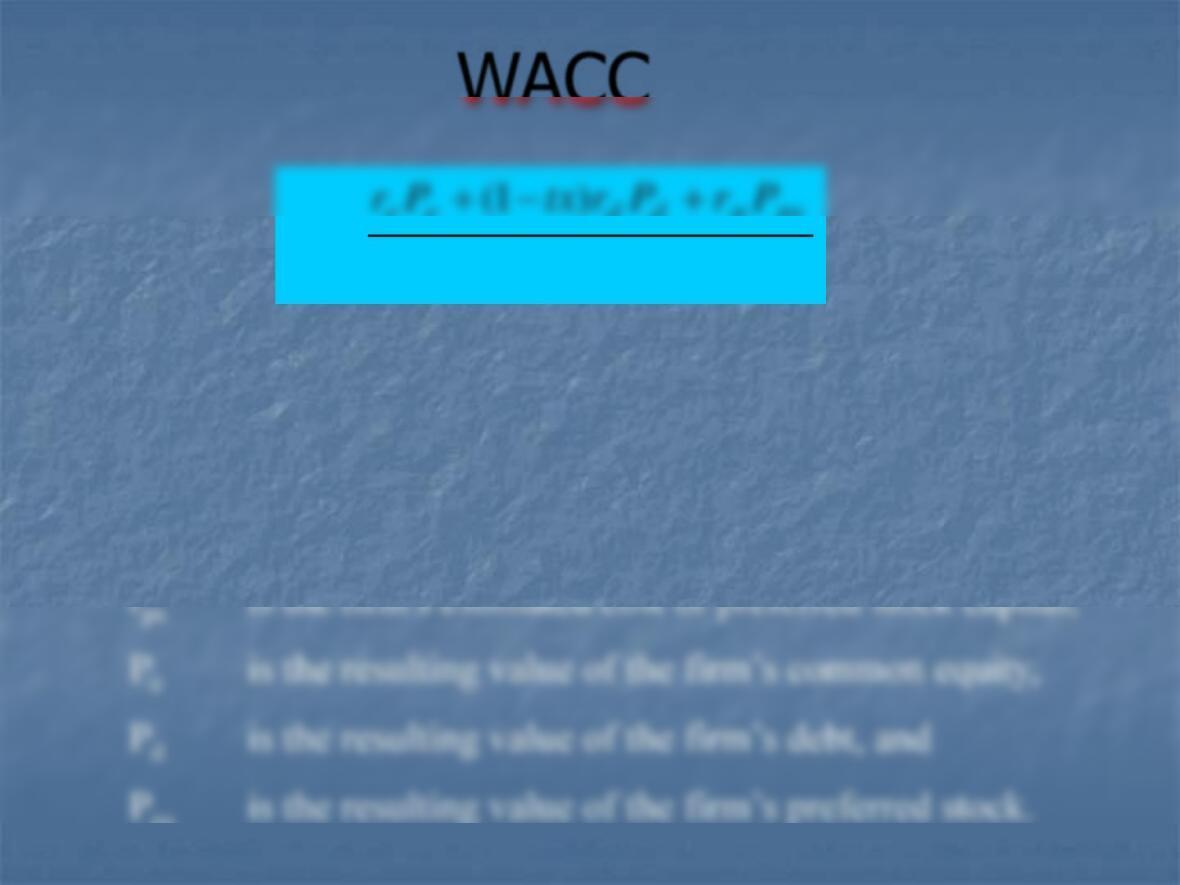
psde
pspddee
wPPP
PrPrtxPr
r++
+−+
=)1(
tx is the firm’s estimated effective tax rate,
reis the firm’s estimated cost of equity capital,
rdis the firm‘s estimated cost of debt capital,

the perpetuity formula???
gr
PMT
PV −
=
But which sequence does this apply to?
t0t1t2t3 t4
pmt pmt(1+g) pmt(1+g)2…………………..
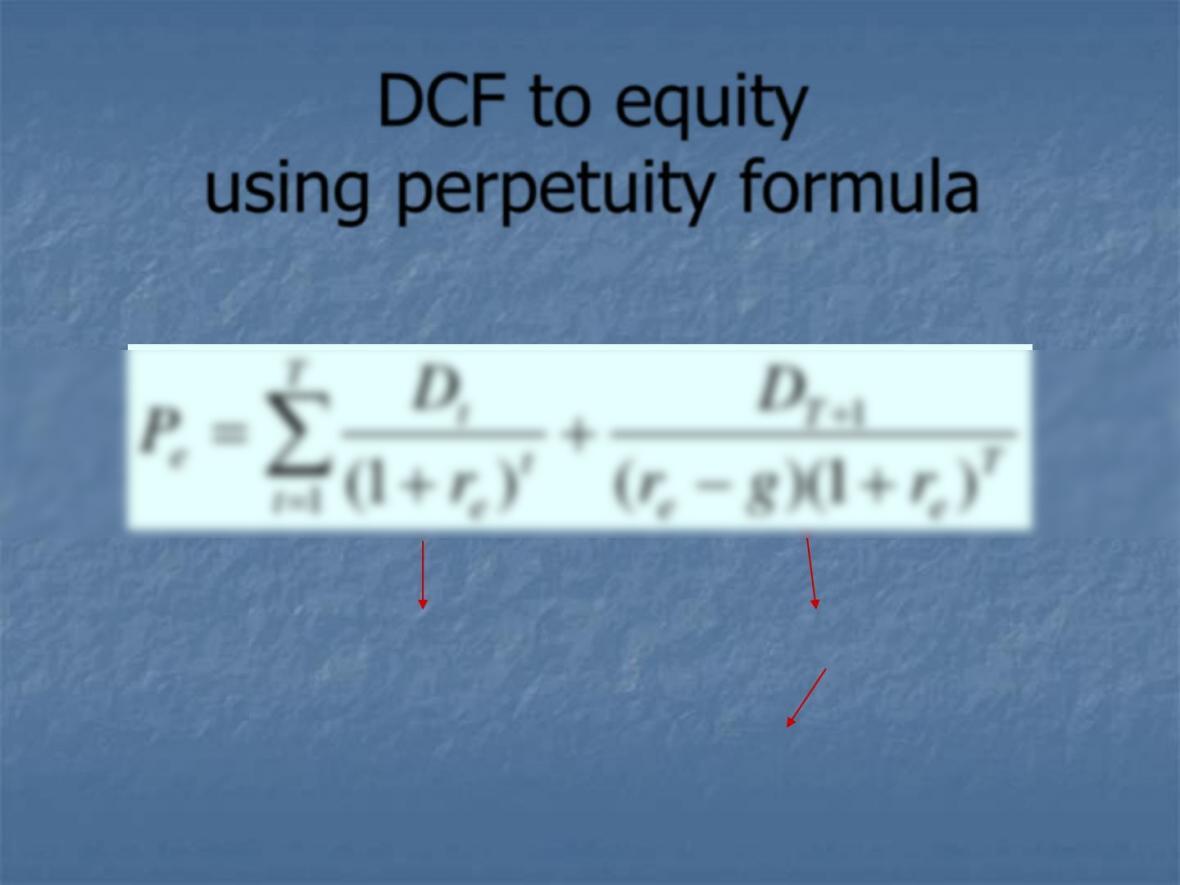
DCF to equity
using perpetuity formula
T
ee
T
T
t
t
e
t
ergr
D
r
D
P)1)(()1(
1
1+−
+
+
=+
=
finite horizon value terminal value
= PV at of time 0 of perpetuity of
payments, growing at rate g,
starting with DT+1 .