
Ratio Analysis
Framework for Business Analysis
and Valuation
STEP 1
Understanding the Past
1. Information
Collection
2. Understanding the
Business
3. Accounting Analysis
STEP 2
Forecasting the Future
1. Structured
Forecasting
2. Income Statement
Forecasts
3. Balance Sheet
Forecasts
STEP 3
Valuation
1. Cost of Capital
2. Valuation Models
Residual Income-Based
Valuation
Cash Flow-Based
Valuation
Overview of Ratio Analysis
⚫Techniques
⚫Caveats
⚫Interactive Case Using eVal
Techniques of Ratio Analysis
⚫Time-Series Analysis: Comparing a firm’s ratios across
time
–Facilitates the identification of changes in performance and the
detection of the underlying causes
Three Caveats of Ratio Analysis
⚫There is no generally accepted set of rules for
computing ratios
⚫Ratios do not provide answers, they just help
direct you in your search for answers

Decision Context:
The Key Drivers of Value
⚫ROE
⚫Create value by generating long-run ROE that exceeds r
⚫Business strategy and competitive environment
⚫Accounting distortions affect short-run ROE
⚫Growth in Equity
⚫Magnifies value created by ROE
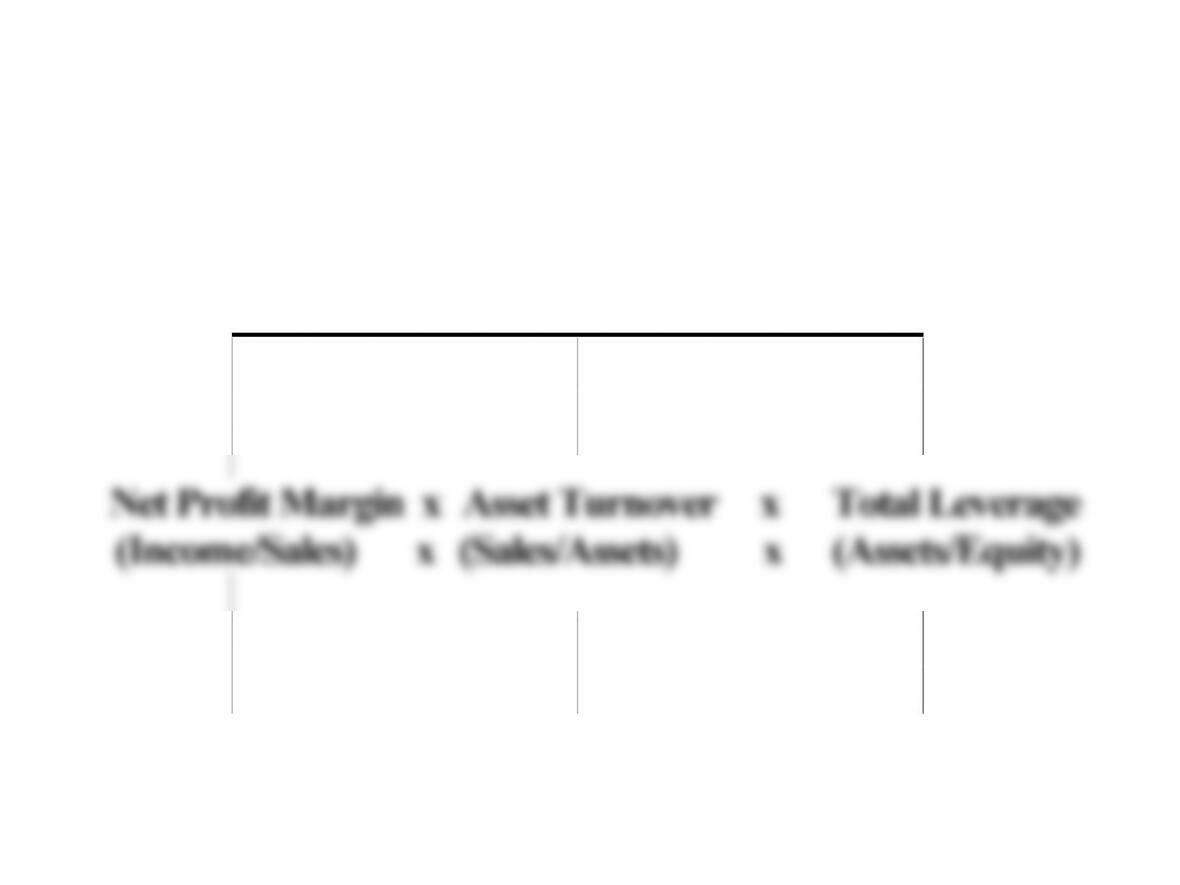
Basic Dupont Framework
Return on Equity
(Income/Equity)
detailed detailed detailed solvency
margin analysis turnover analysis and liquidity anlysis
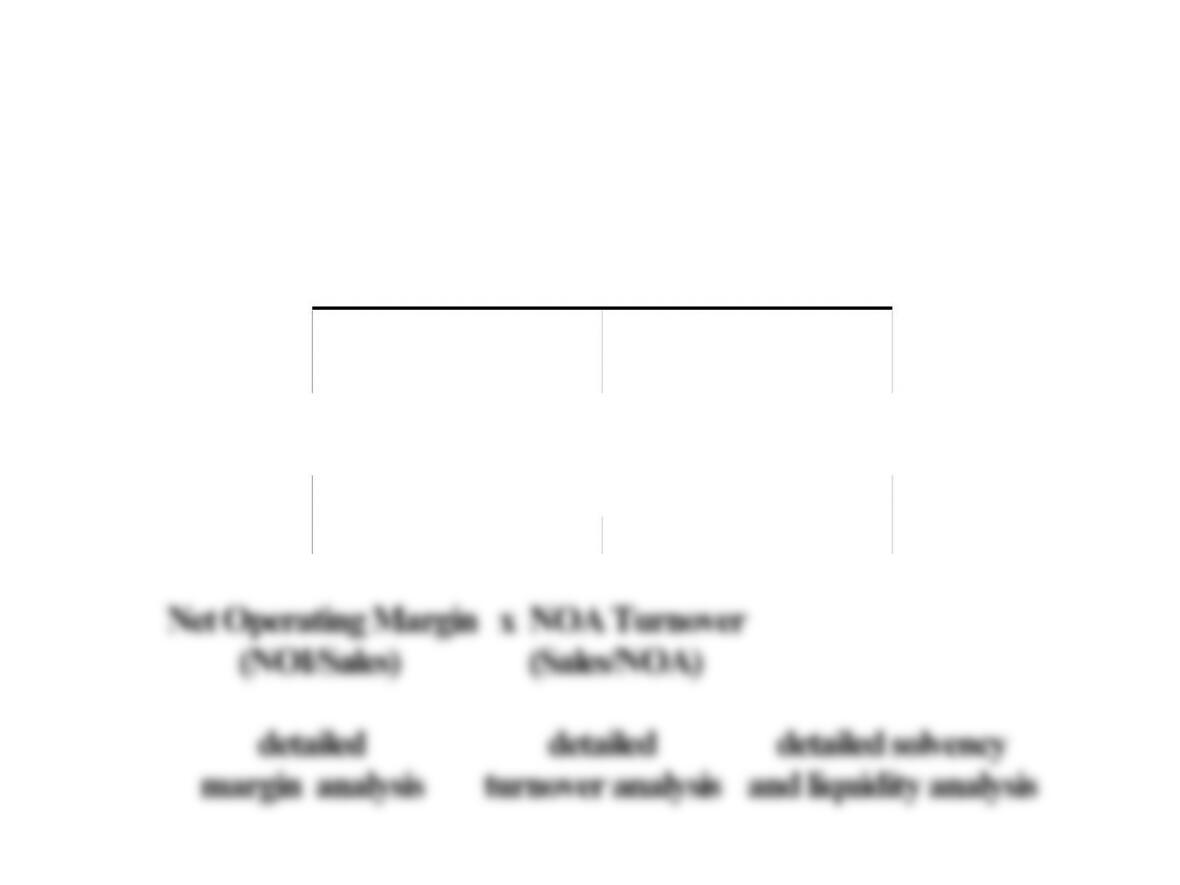
Advanced Dupont Framework
Return on Equity
(Income/Equity)
RNOA + ( Spread x Financial Leverage )
(NOI/NOA) (RNOA – (1–t).i) (Debt/Equity)
__________________