
Equity Valuation and Analysis with
eVal
The Gabelli Utility Trust

Case Objectives
⚫To illustrate security mispricing in a setting where it is
relatively straightforward to estimate intrinsic value
⚫Identify common impediments to arbitrage in securities markets
What is GUT’s ‘Intrinsic’ Value?
⚫From the ‘Schedule of Investments’ on page 5 (note
that this is like a balance sheet):
⚫Market Value of Total Investments = $212,378,237
⚫Net Asset Value Per Common Share = $5.20
What is GUT’s Price?
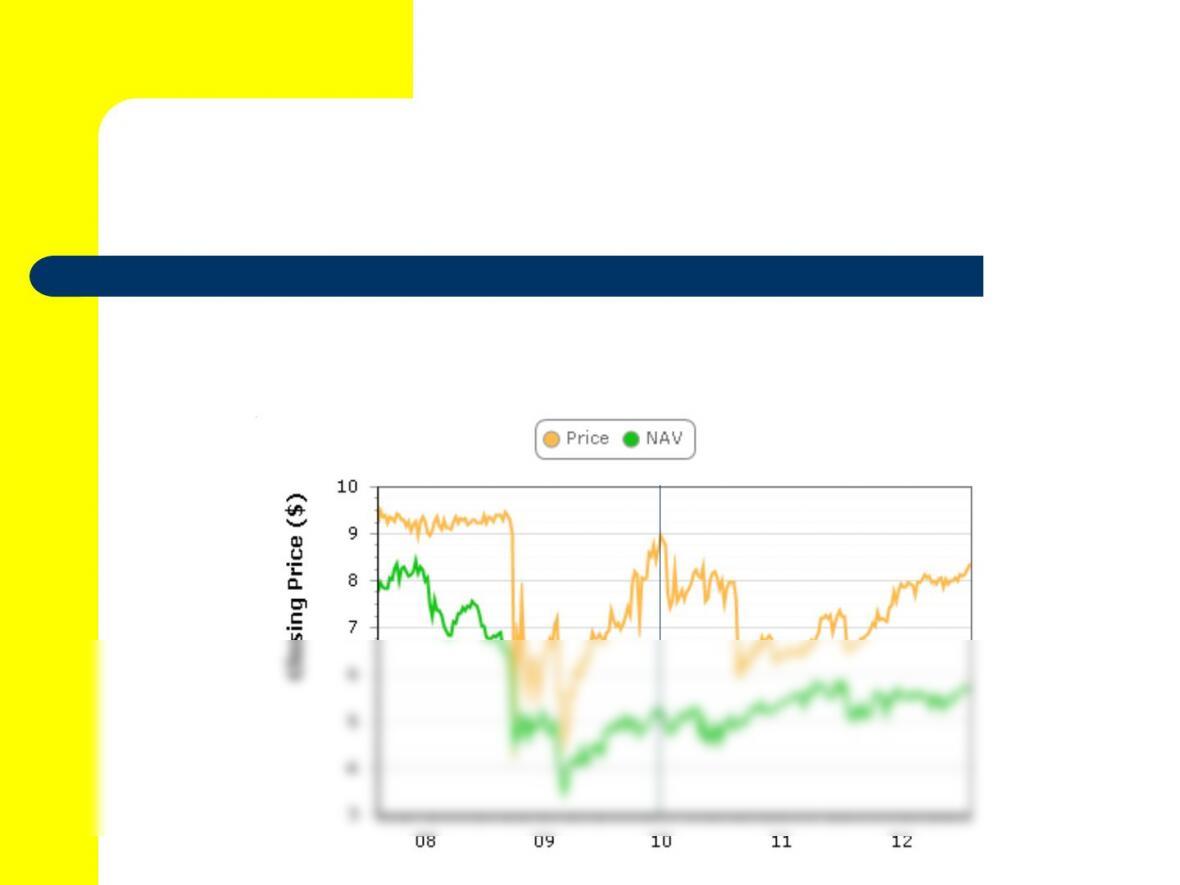
⚫Closing Price on December 31, 2009 = $8.95/share
⚫Premium = (8.95-5.20)/5.20 = 72%

Potential Explanations
⚫Managerial skill
⚫(see table on page 1; remember that GUT uses leverage)
⚫http://performance.morningstar.com/funds/cef/ratings-risk.action?t=GUT®ion=USA&culture=en-us
⚫Tax issues
⚫Naïve investors
–PRESS RELEASE. August 19, 2010. GABELLI UTILITY TRUST REVIEWING
DISTRIBUTION RATE. The Board of Trustees of The Gabelli Utility Trust
(NYSE:GUT) (the “Fund”) reaffirmed the distribution for September 2010 of $0.06
per share payable on September 23, 2010 to common shareholders of record on
September 16, 2010.Each quarter, the Board of Trustees reviews the amount of any
periods. The Board of Trustees also believes that the excessive premium at which
the Fund shares trade relative to net asset value is not likely to be sustainable. The
distribution rate should not be considered the dividend yield or total return on an
investment in the Fund.
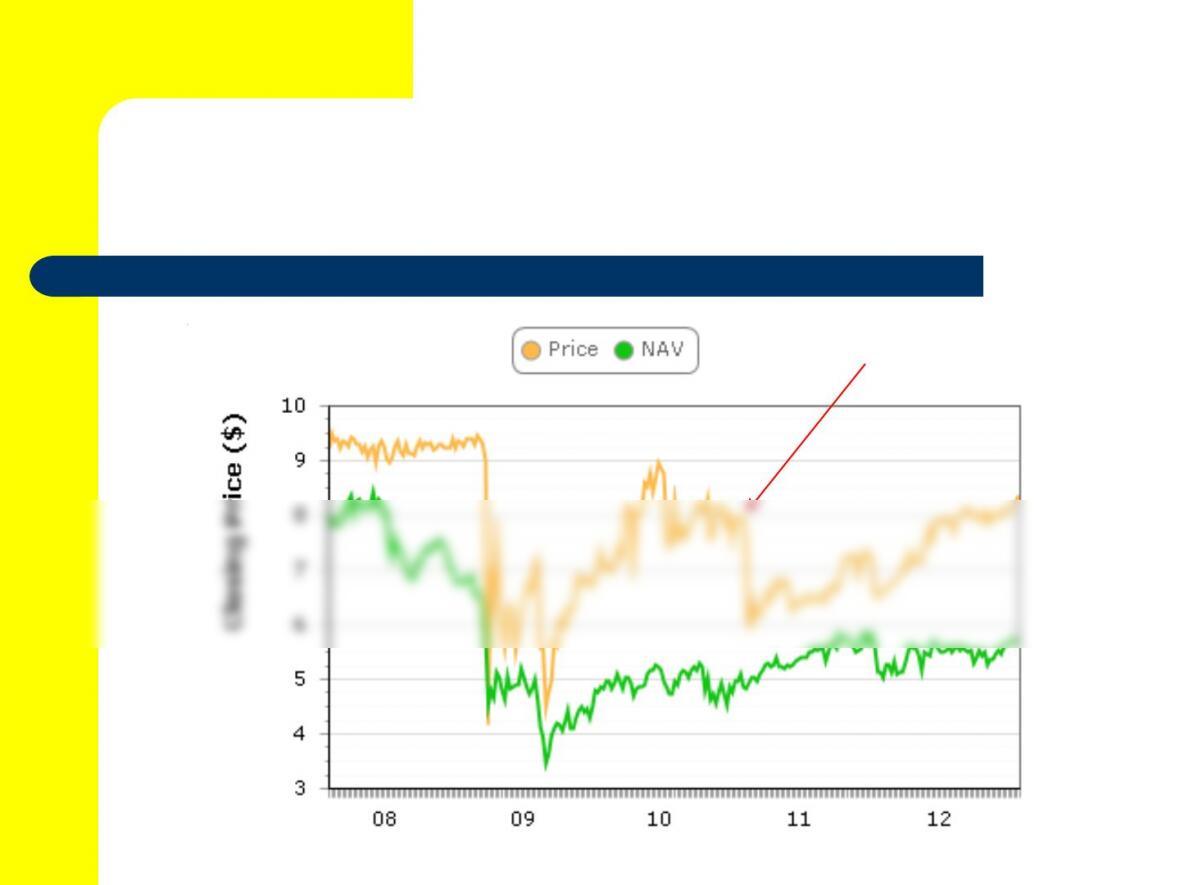
Price Reaction on August 19, 2010
August 19, 2010
Arbitrage Strategy to Exploit
Excessive Premium
⚫Replicate the fund’s underlying holdings (or
buy an index fund that closely tracks the
holdings)

Obstacles to Practical
Implementation
⚫Unable to short-sell the security (or negative
rebate rate)

Key Takeaways
⚫We see clear evidence of security mispricing even in
cases where intrinsic value is easy to estimate
⚫We can’t simply assume that the market price is ‘fair’