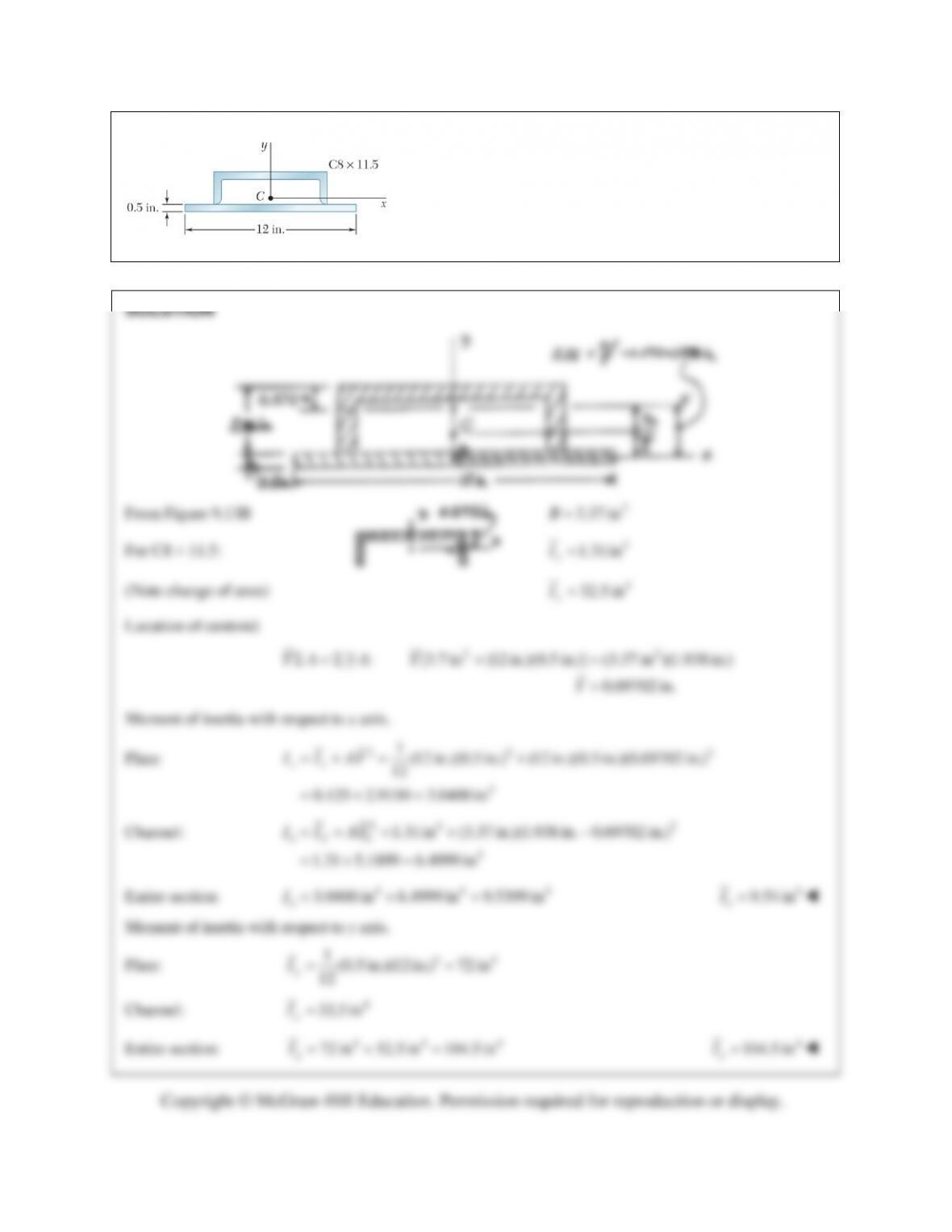
PROBLEM 9.53
A channel and a plate are welded together as shown to form a
section that is symmetrical with respect to the y axis.
Determine the moments of inertia of the combined section
with respect to its centroidal x and y axes.
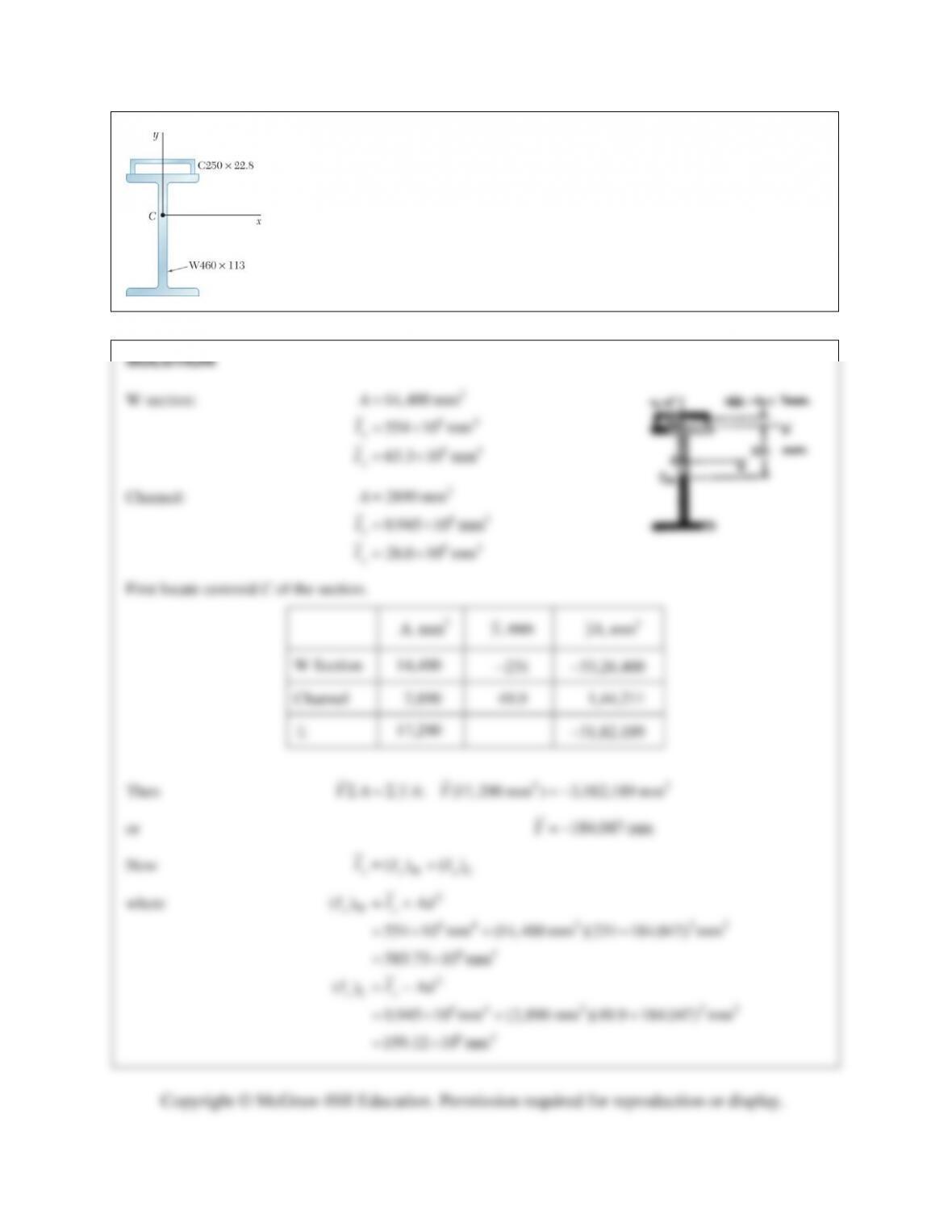
PROBLEM 9.54
The strength of the rolled W section shown is increased by welding a channel to
its upper flange. Determine the moments of inertia of the combined section with
respect to its centroidal
x
and
y
axes.
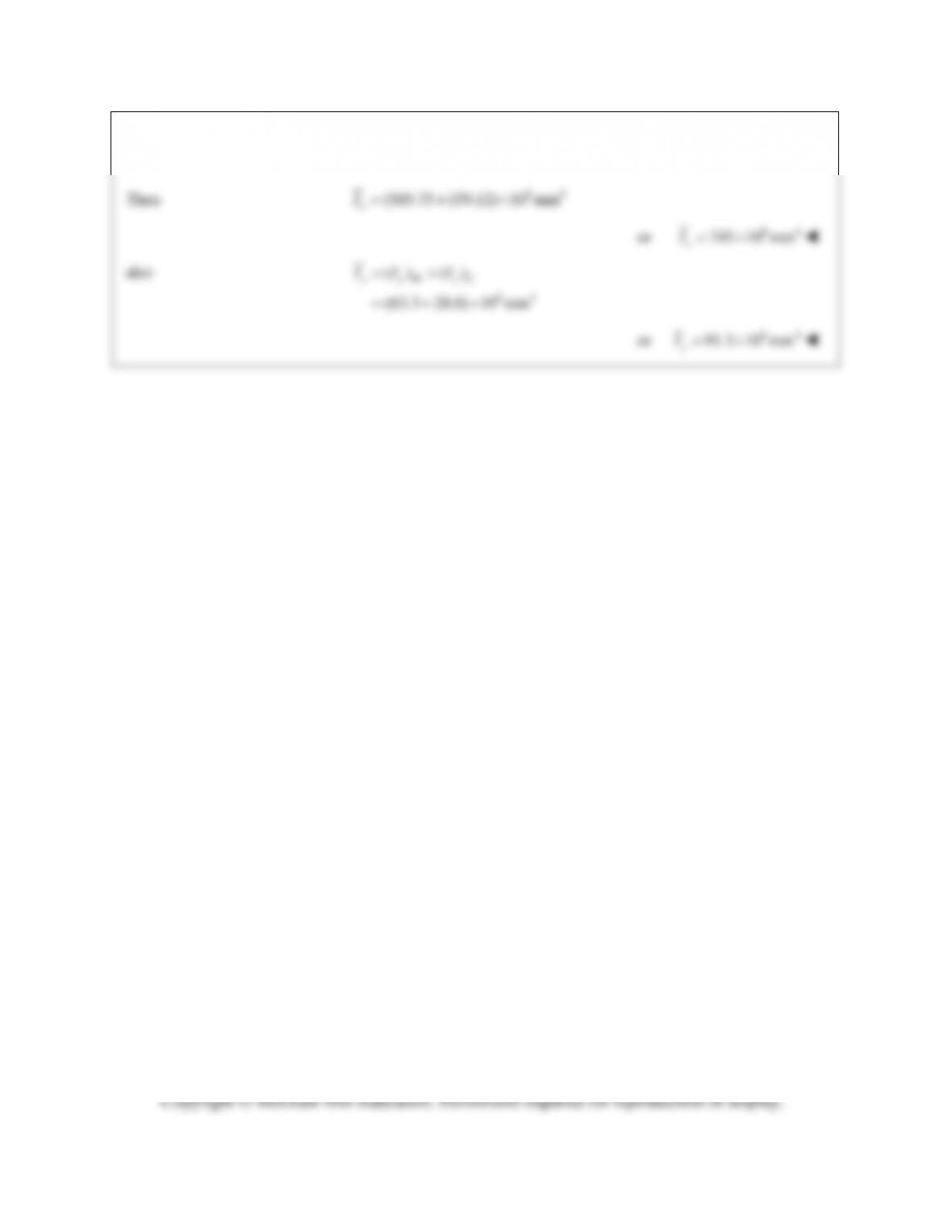
PROBLEM 9.54 (Continued)
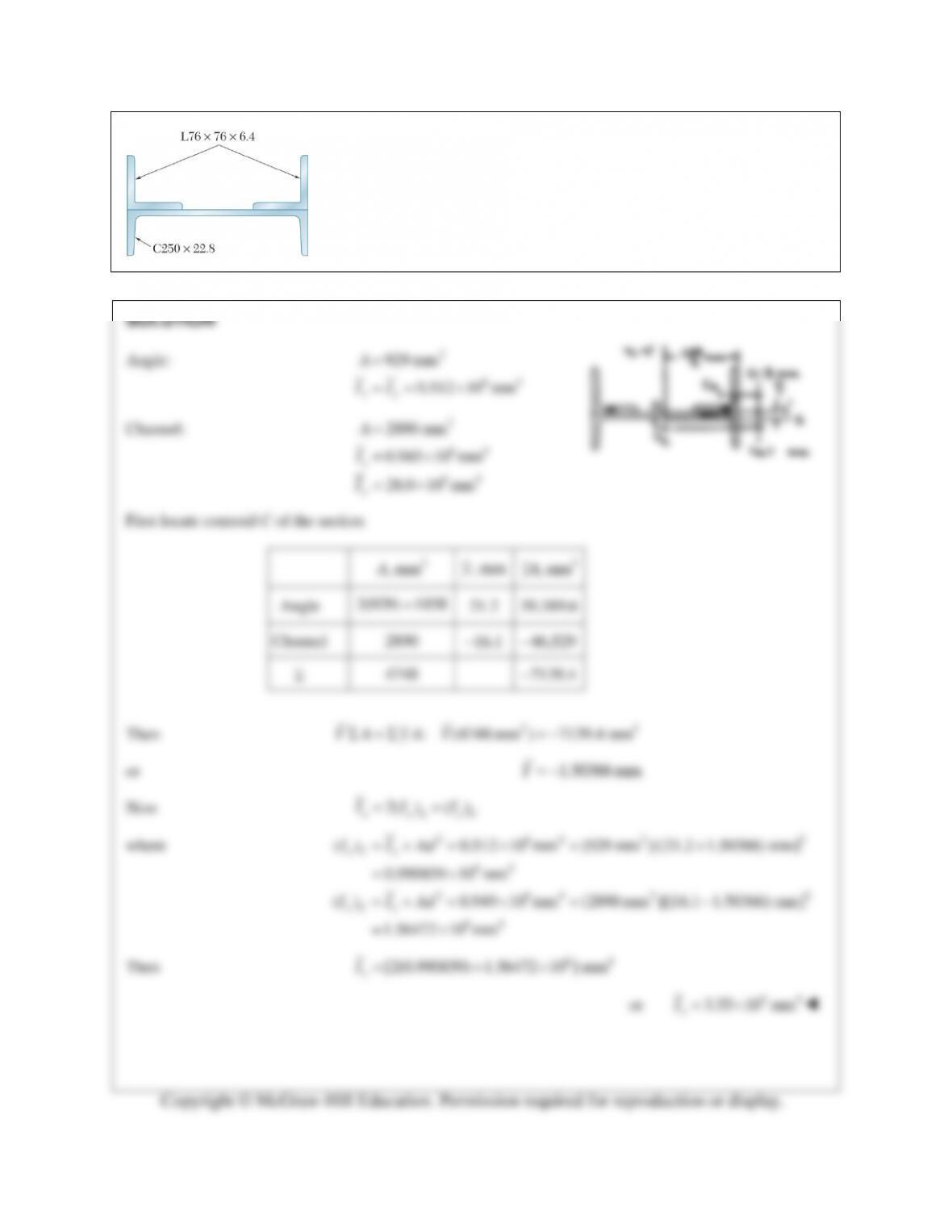
PROBLEM 9.55
Two L76 76 6.4-mm angles are welded to a C250 22.8 channel.
Determine the moments of inertia of the combined section with respect to
centroidal axes respectively parallel and perpendicular to the web of the
channel.
PROBLEM 9.55 (Continued)
PROBLEM 9.56
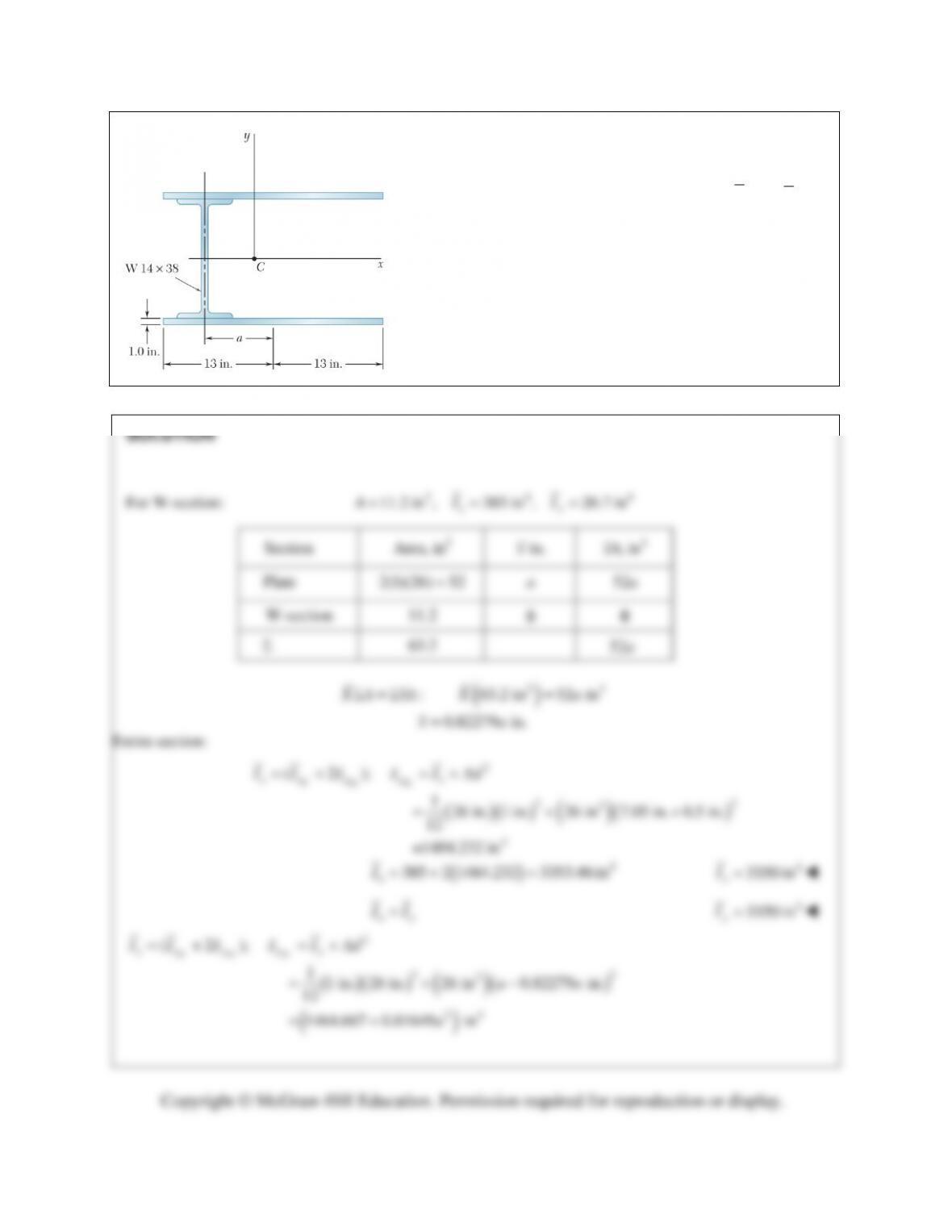
Two steel plates are welded to a rolled W section as indicated.
Knowing that the centroidal moments of inertia
x
I
and y
I
of
the combined section are equal, determine (a) the distance a,
(b) the moments of inertia with respect to the centroidal x and y
axes.
x
PROBLEM 9.56 (Continued)
PROBLEM 9.57
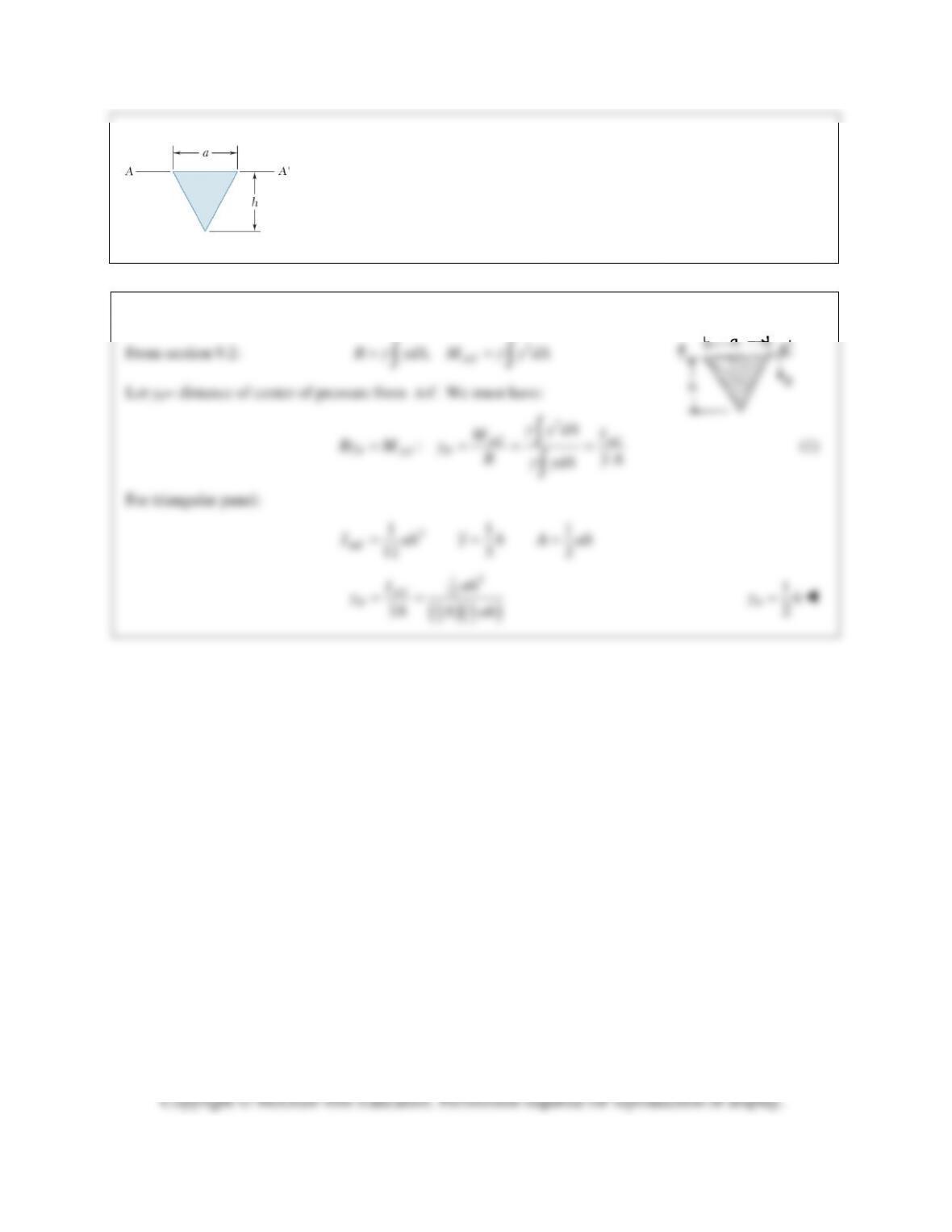
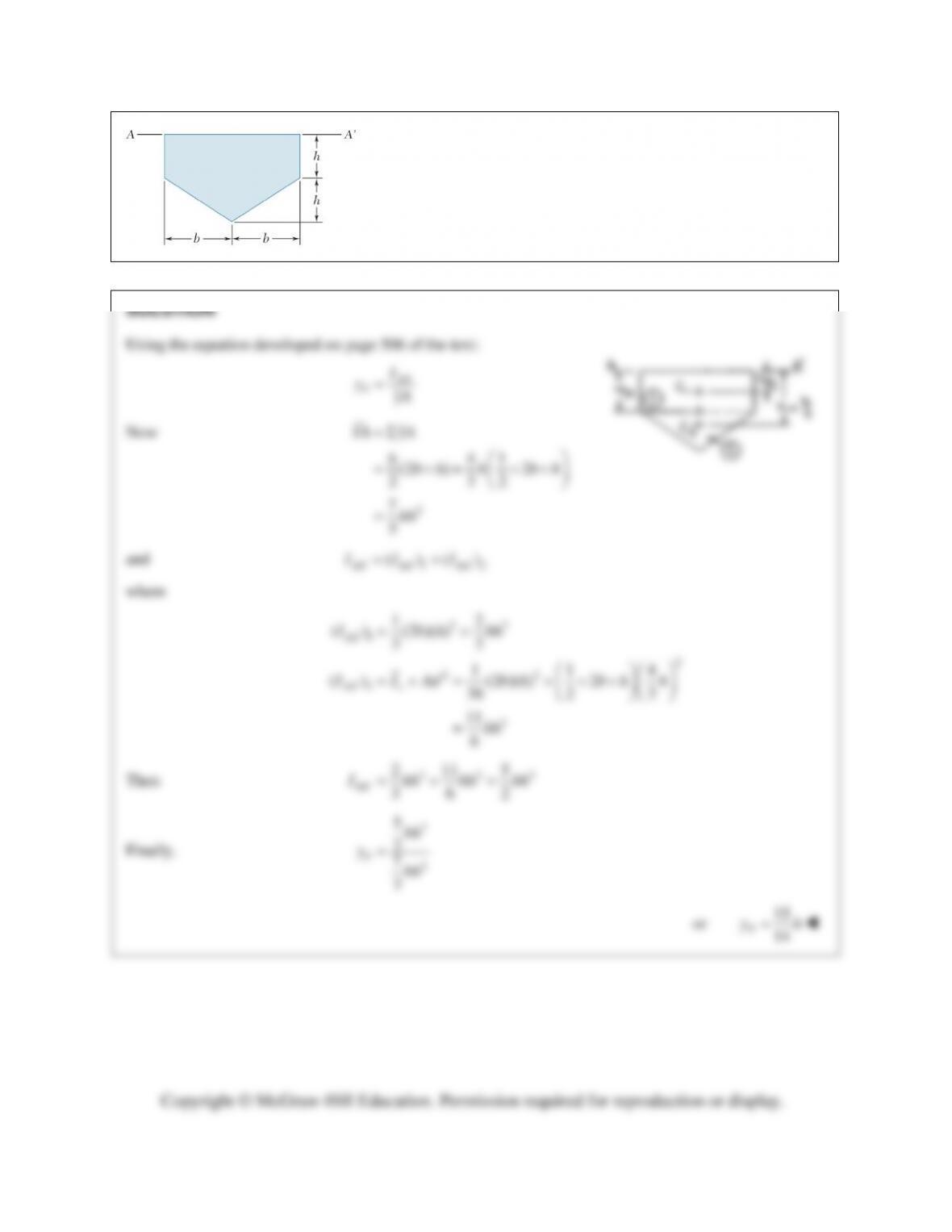
The panel shown forms the end of a trough that is filled with water to the
line
AA
. Referring to section 9.2, determine the depth of the point of
application of the resultant of the hydrostatic forces acting on the panel (the
center of pressure).
SOLUTION
2
PROBLEM 9.58
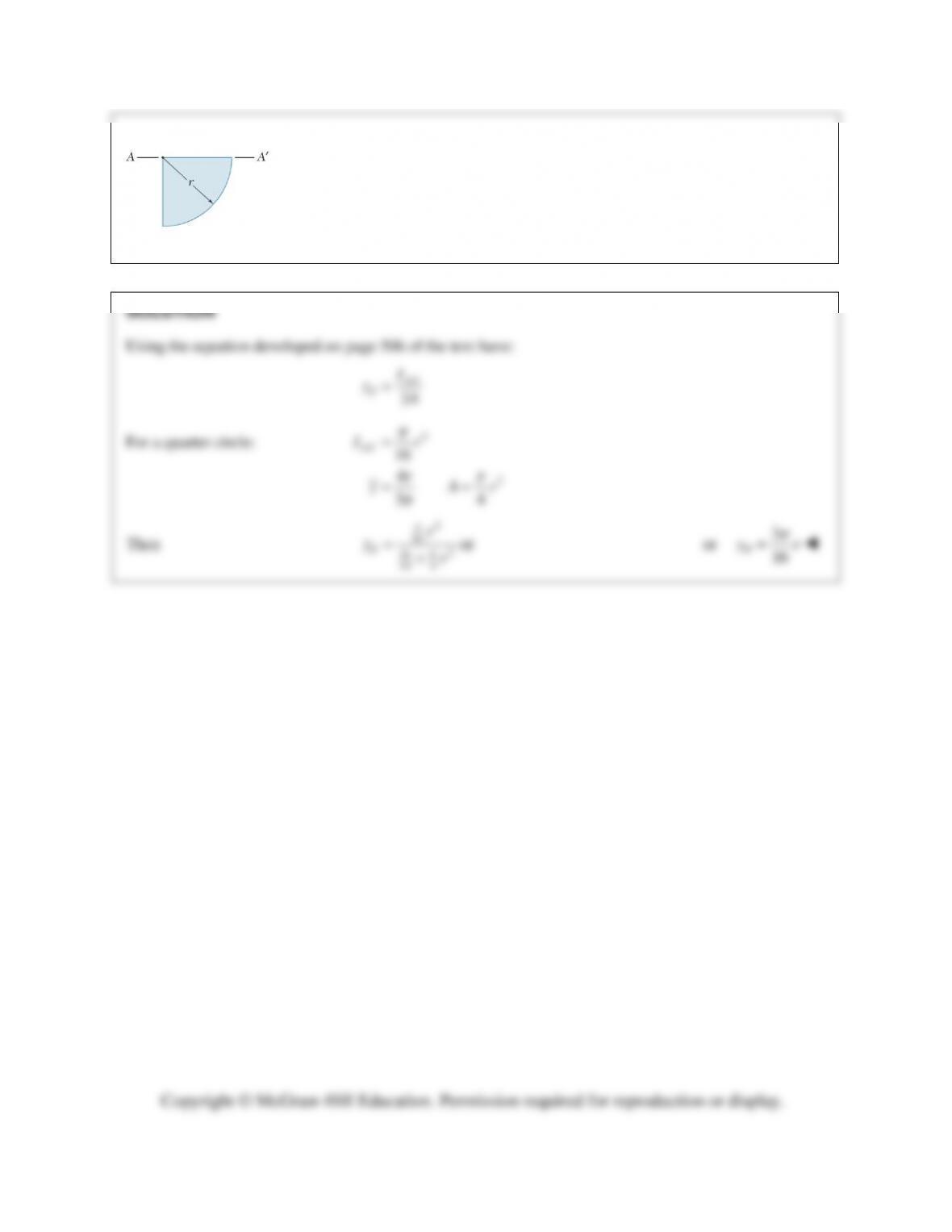
The panel shown forms the end of a trough that is filled with water
to the line
AA
. Referring to Section 9.2, determine the depth of the
point of application of the resultant of the hydrostatic forces acting
on the panel (the center of pressure).
Copyright © McGraw-Hill Education. Permission required for reproduction or display.
PROBLEM 9.59
The panel shown forms the end of a trough that is filled with water to the line
AA. Referring to section 9.2, determine the depth of the point of application of
the resultant of the hydrostatic forces acting on the panel (the center of
pressure).