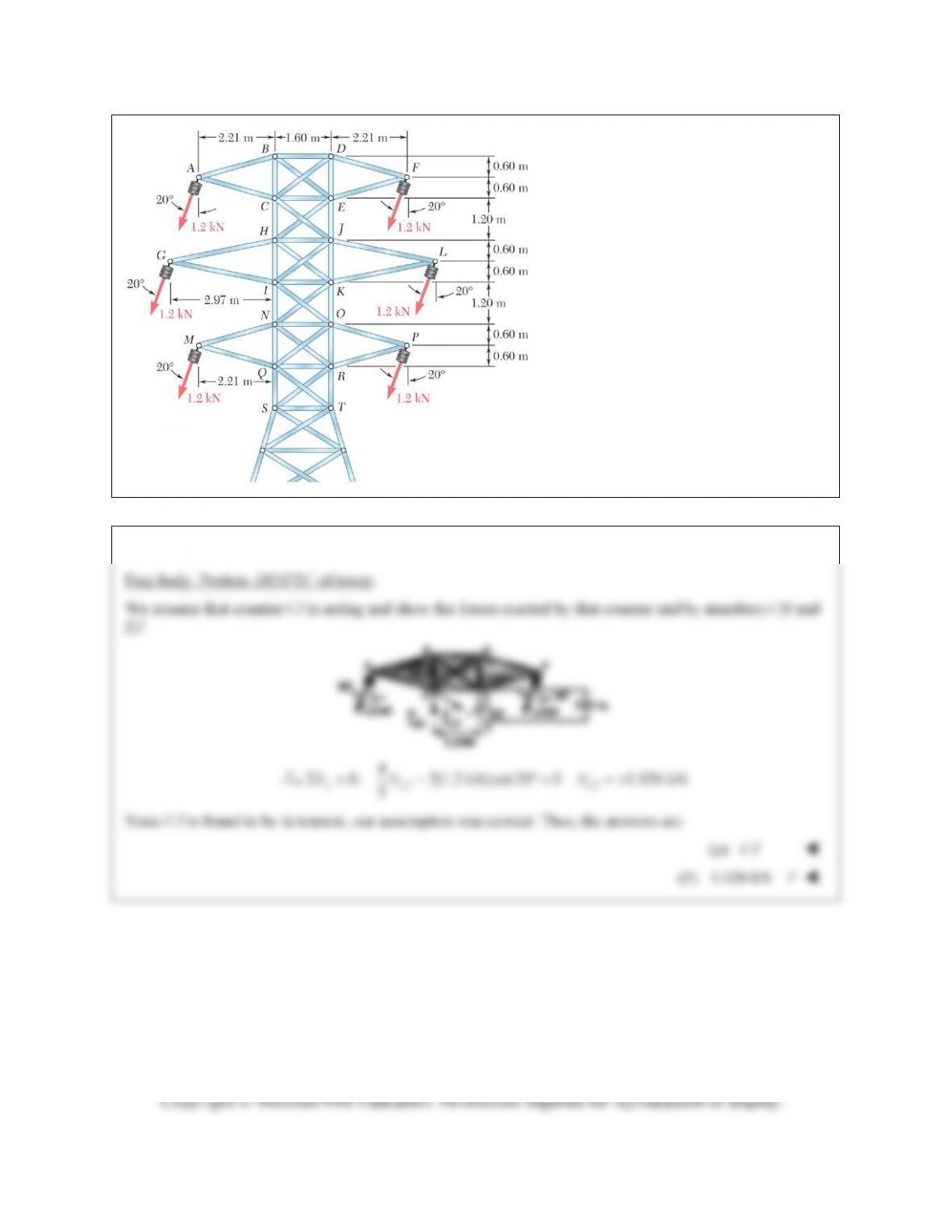
PROBLEM 6.65
The diagonal members in the center
panels of the power transmission line
tower shown are very slender and can act
only in tension; such members are known
as counters. For the given loading,
determine (a) which of the two counters
listed below is acting, (b) the force in
that counter.
Counters CJ and HE
SOLUTION
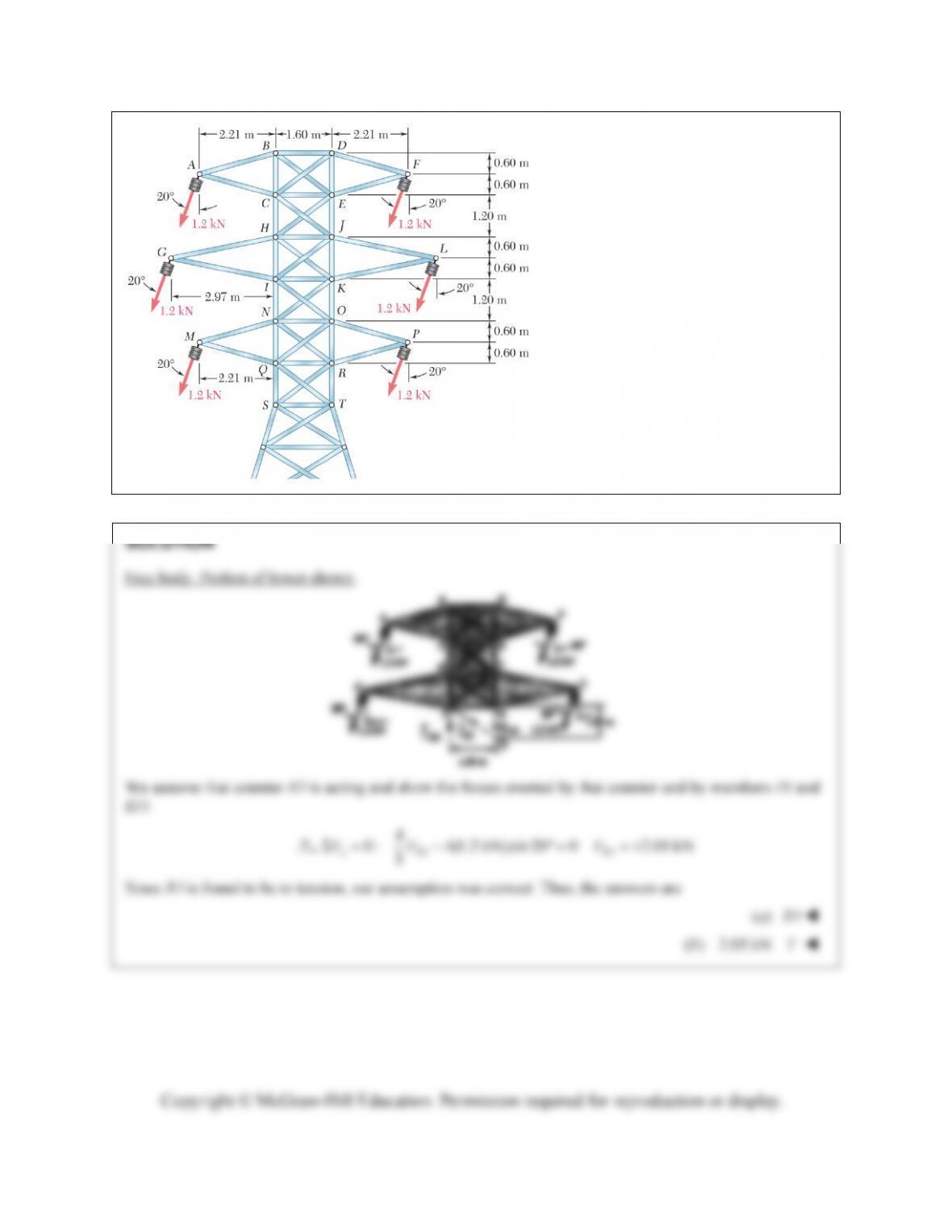
PROBLEM 6.66
The diagonal members in the center
panels of the power transmission line
tower shown are very slender and can act
only in tension; such members are known
as counters. For the given loading,
determine (a) which of the two counters
listed below is acting, (b) the force in that
counter.
Counters IO and KN
Copyright © McGraw-Hill Education. Permission required for reproduction or display.
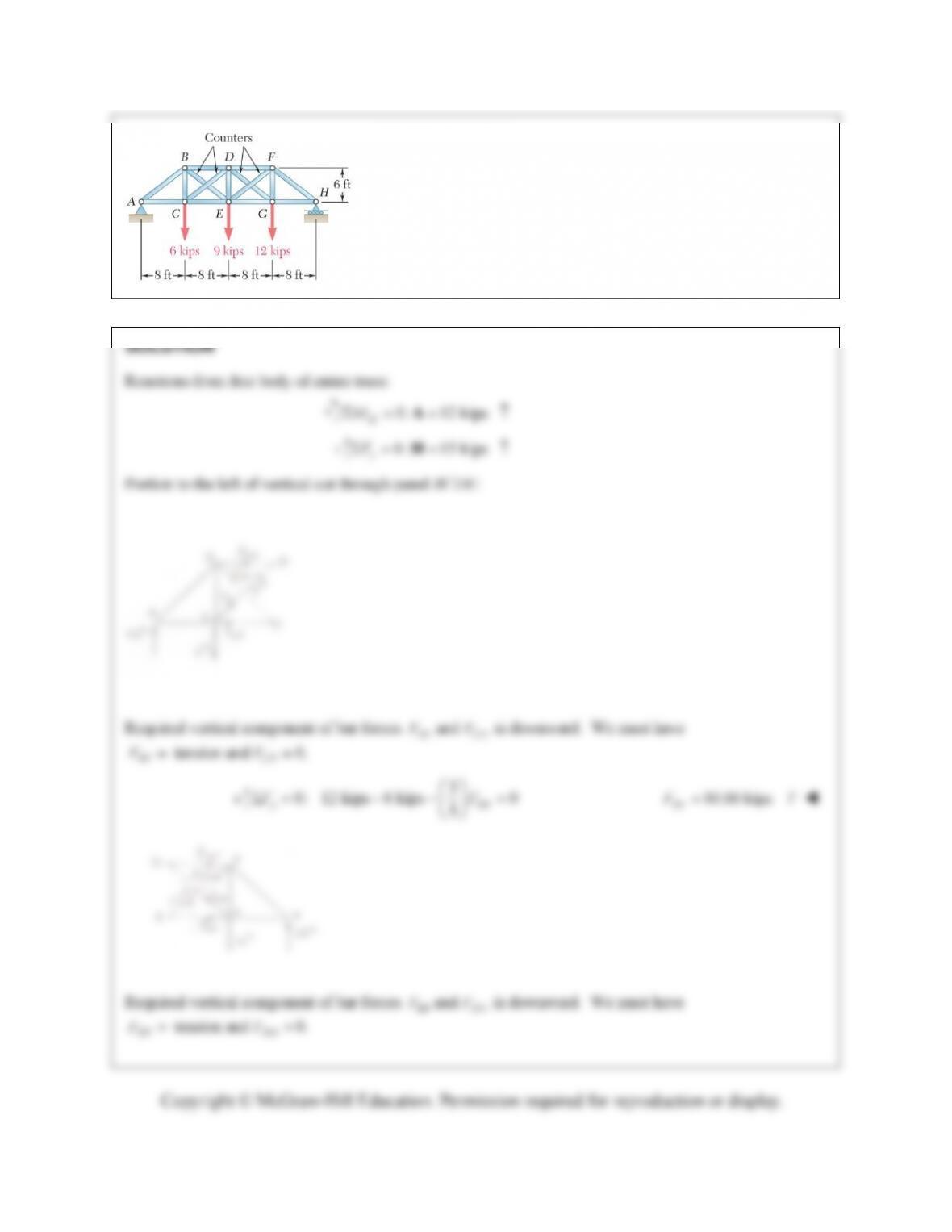
PROBLEM 6.67
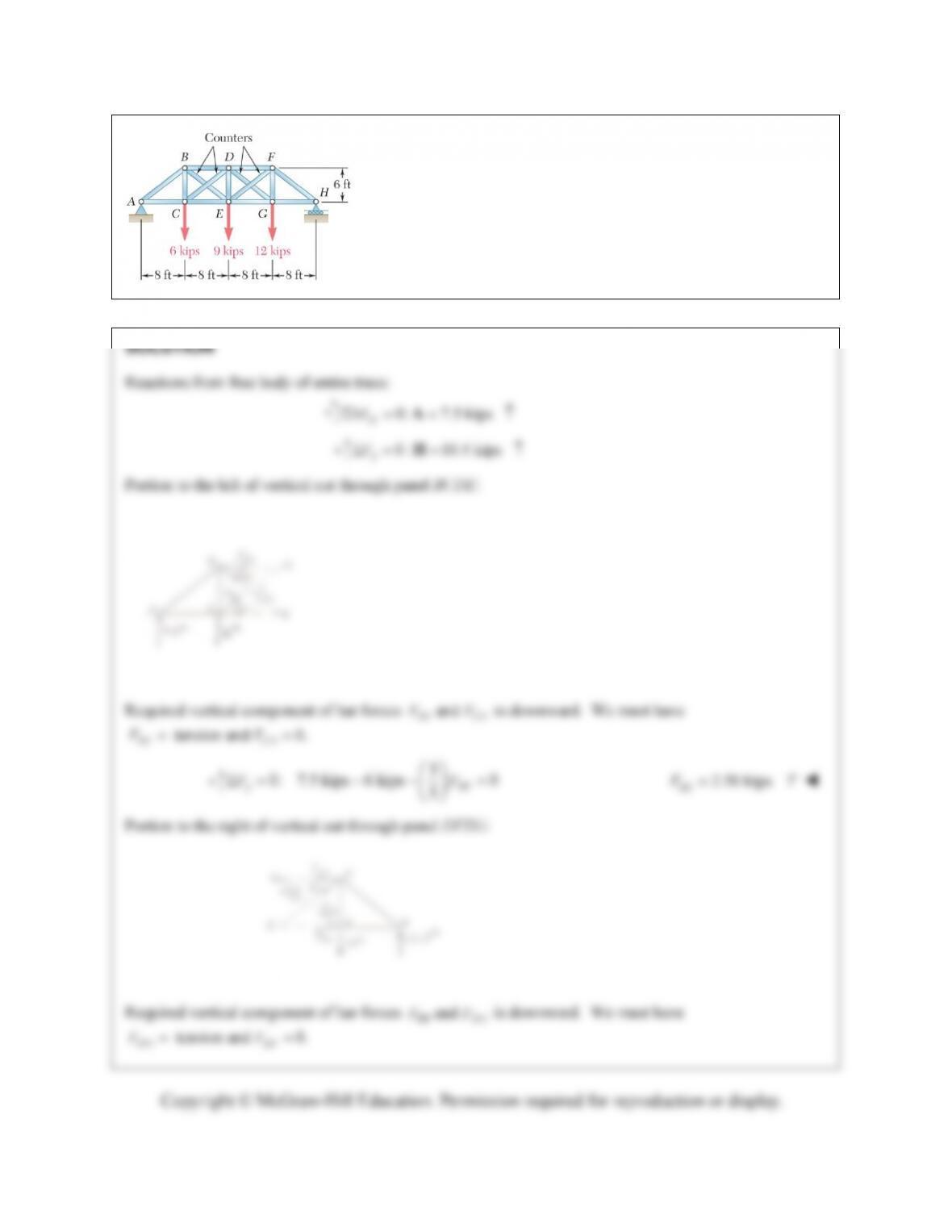
The diagonal members in the center panels of the truss shown are
very slender and can act only in tension; such members are known
as counters. Determine the force in member DE and in the counters
that are acting under the given loading.
PROBLEM 6.67 (Continued)
3
PROBLEM 6.68
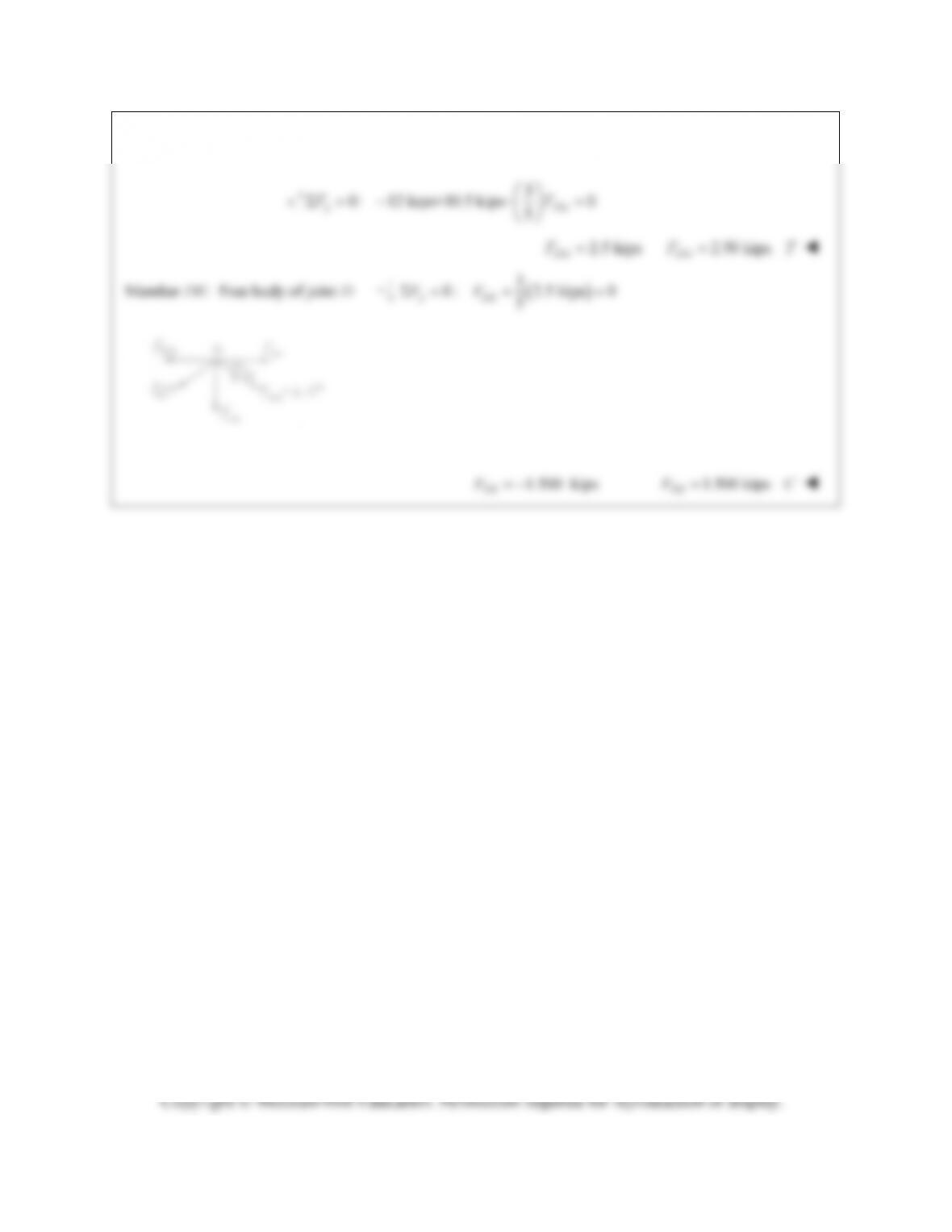
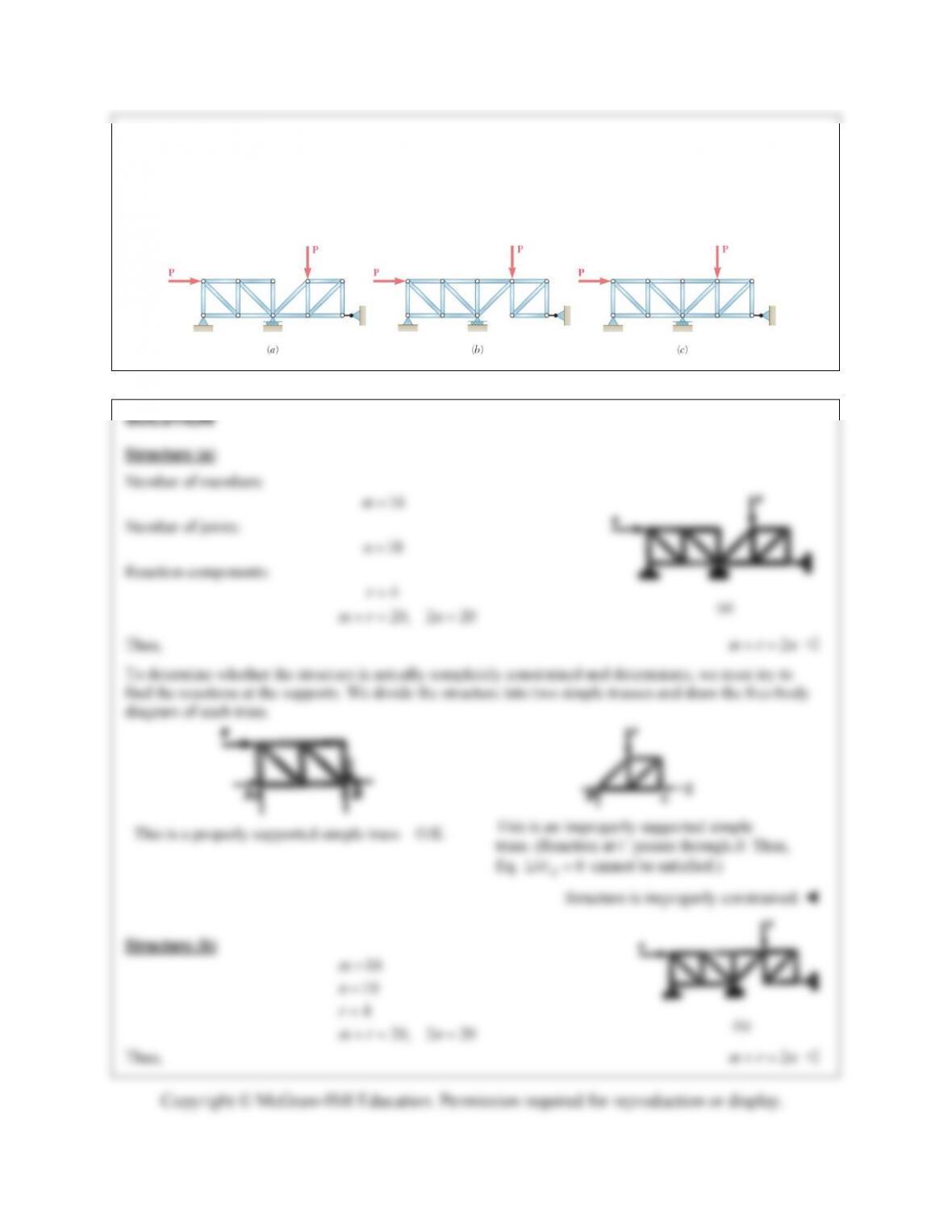
Solve Prob. 6.67 assuming that the 9-kip load has been removed.
Problem 6.67
The diagonal members in the center panels of the
truss shown are very slender and can act only in tension; such
members are known as counters. Determine the force in member
DE and in the counters that are acting under the given loading.
PROBLEM 6.68 (Continued)
Copyright © McGraw-Hill Education. Permission required for reproduction or display.
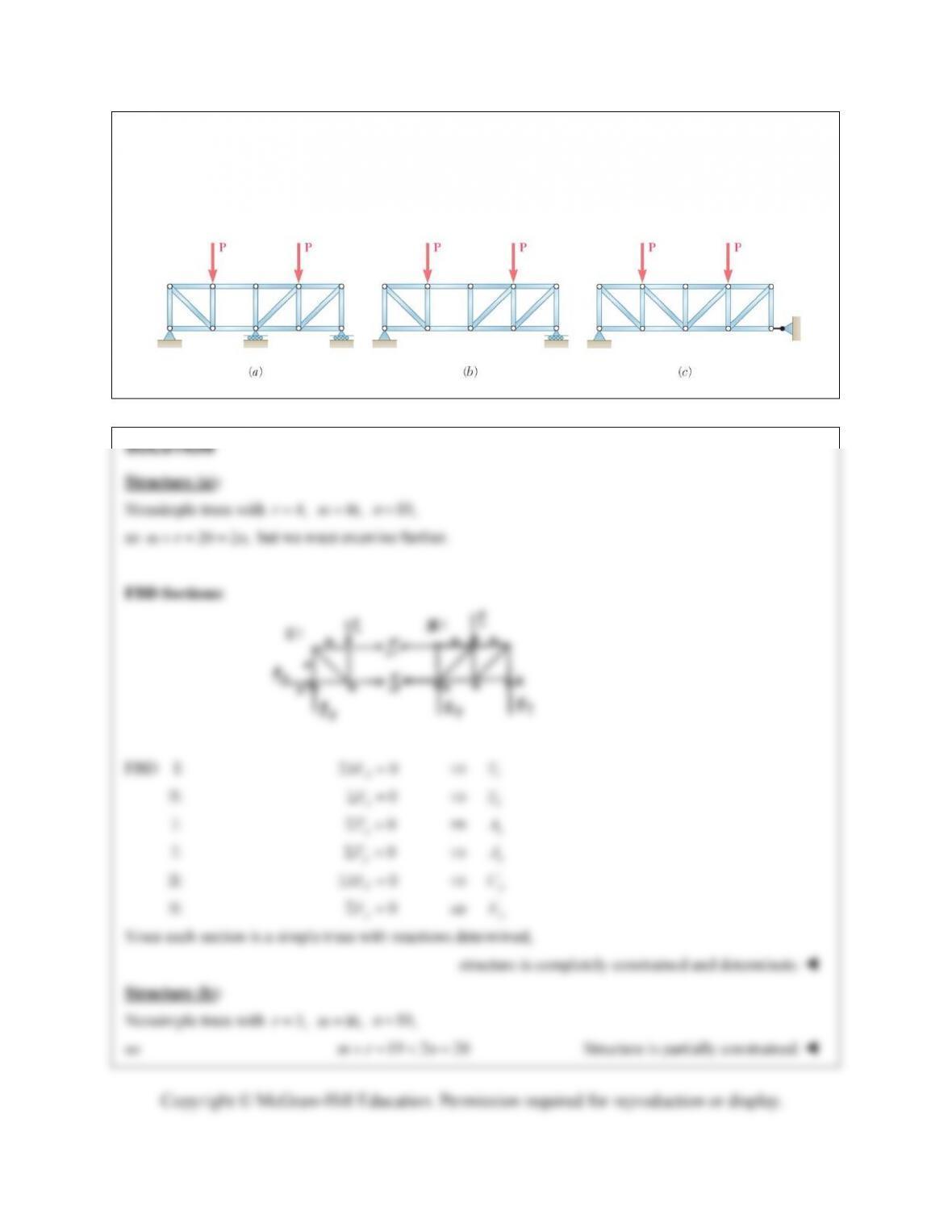
PROBLEM 6.69
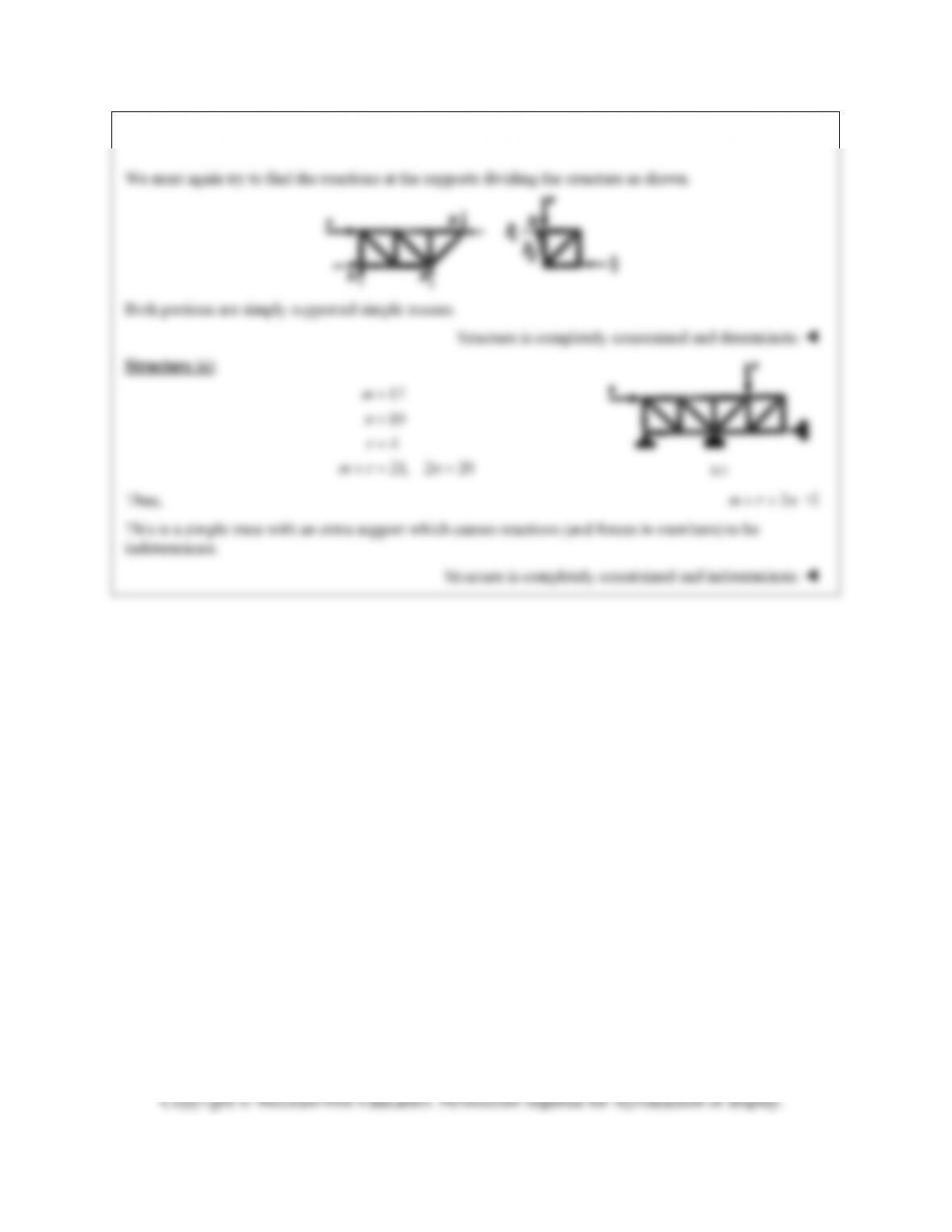
Classify each of the structures shown as completely, partially, or improperly constrained; if completely
constrained, further classify as determinate or indeterminate. (All members can act both in tension and in
compression.)
20, 2 20
mr n
Thus, 2mr n
PROBLEM 6.69 (Continued)
Thus, 2mr n
This is a simple truss with an extra support which causes reactions (and forces in members) to be
indeterminate.
Structure is completely constrained and indeterminate.
PROBLEM 6.70
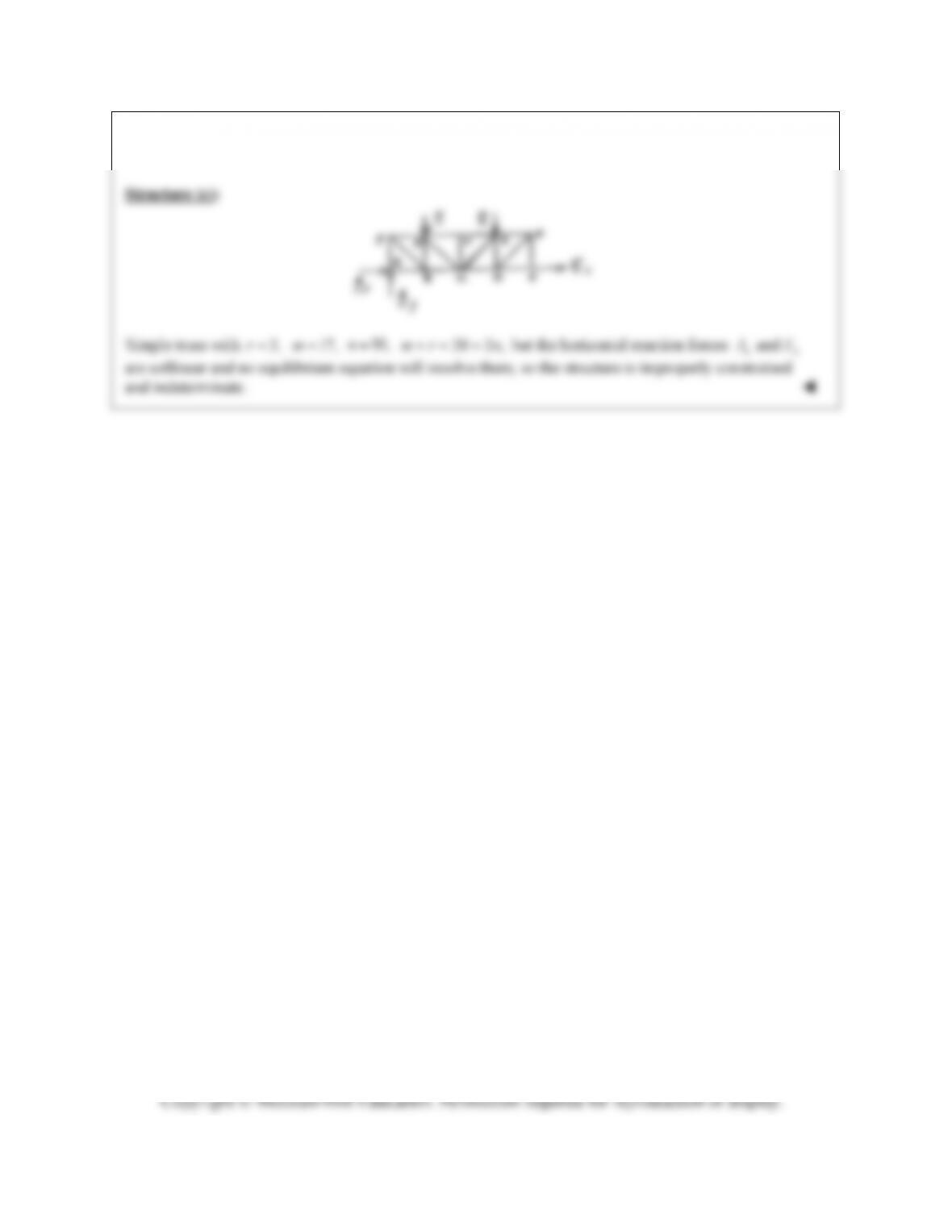
Classify each of the structures shown as completely, partially, or improperly constrained; if completely
constrained, further classify as determinate or indeterminate. (All members can act both in tension and in
compression.)
PROBLEM 6.70 (Continued)