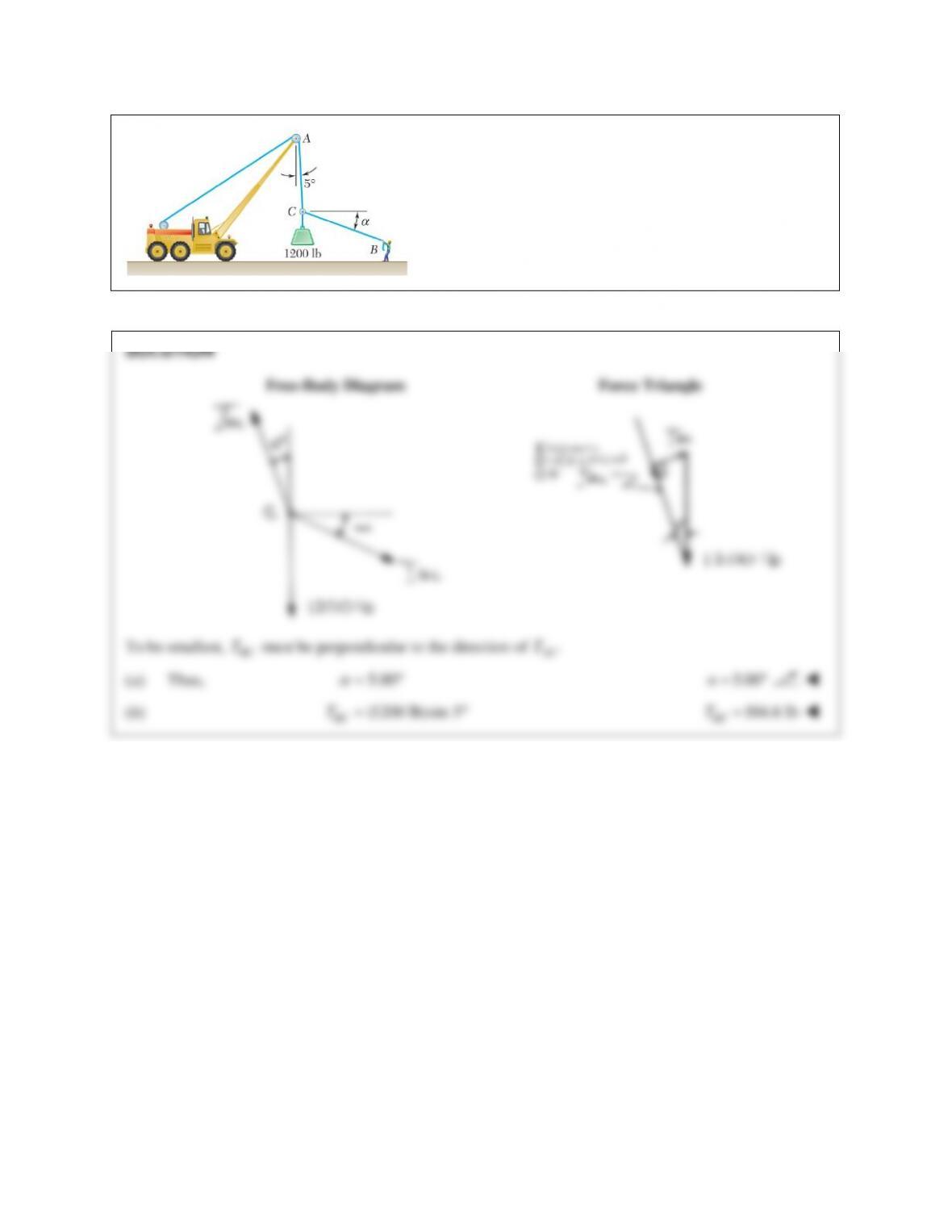
PROBLEM 2.59
For the situation described in Figure P2.48, determine (a)
the value of
α
for which the tension in rope BC is as small
as possible, (b) the corresponding value of the tension.
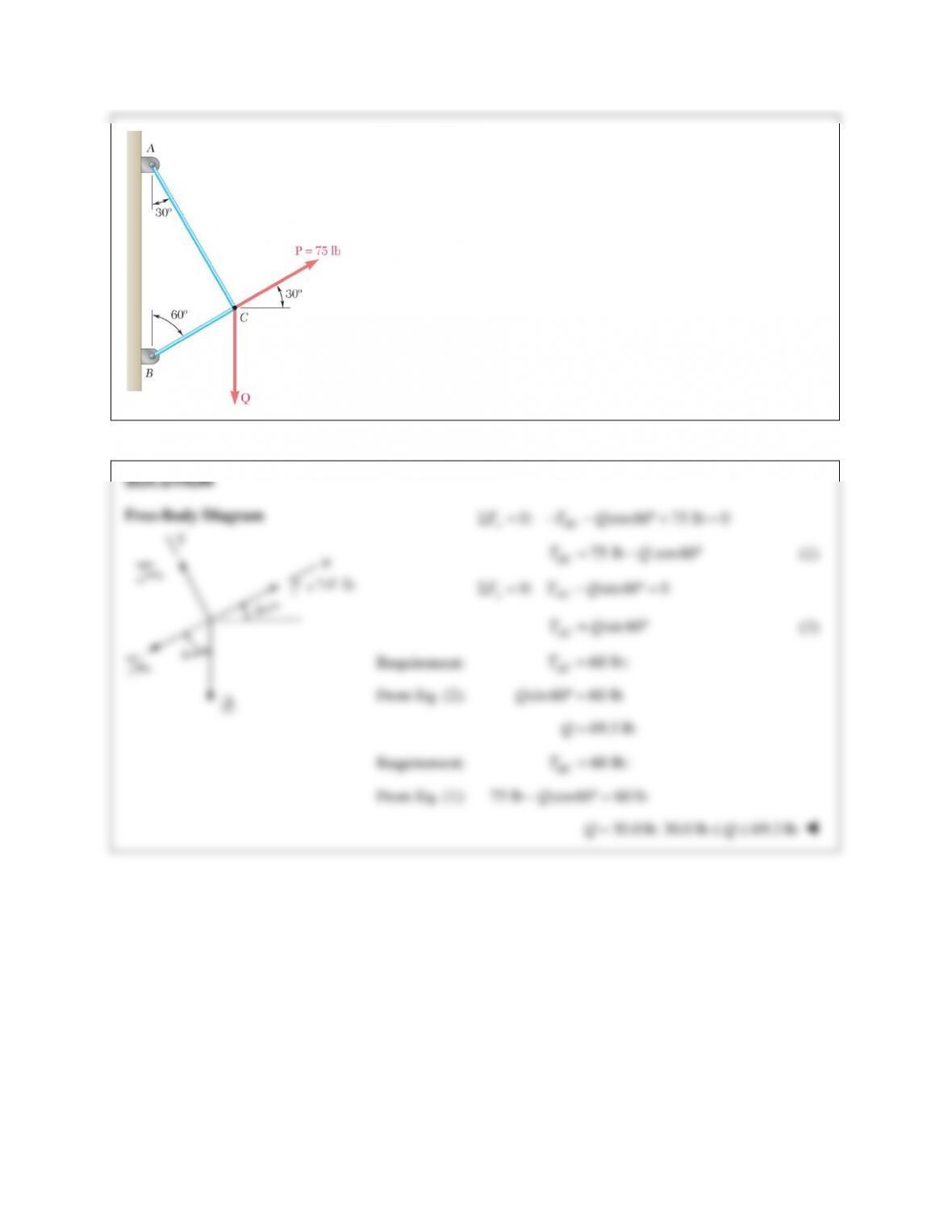
PROBLEM 2.60
Two cables tied together at C are loaded as shown. Determine the
range of values of Q for which the tension will not exceed 60 lb in
either cable.
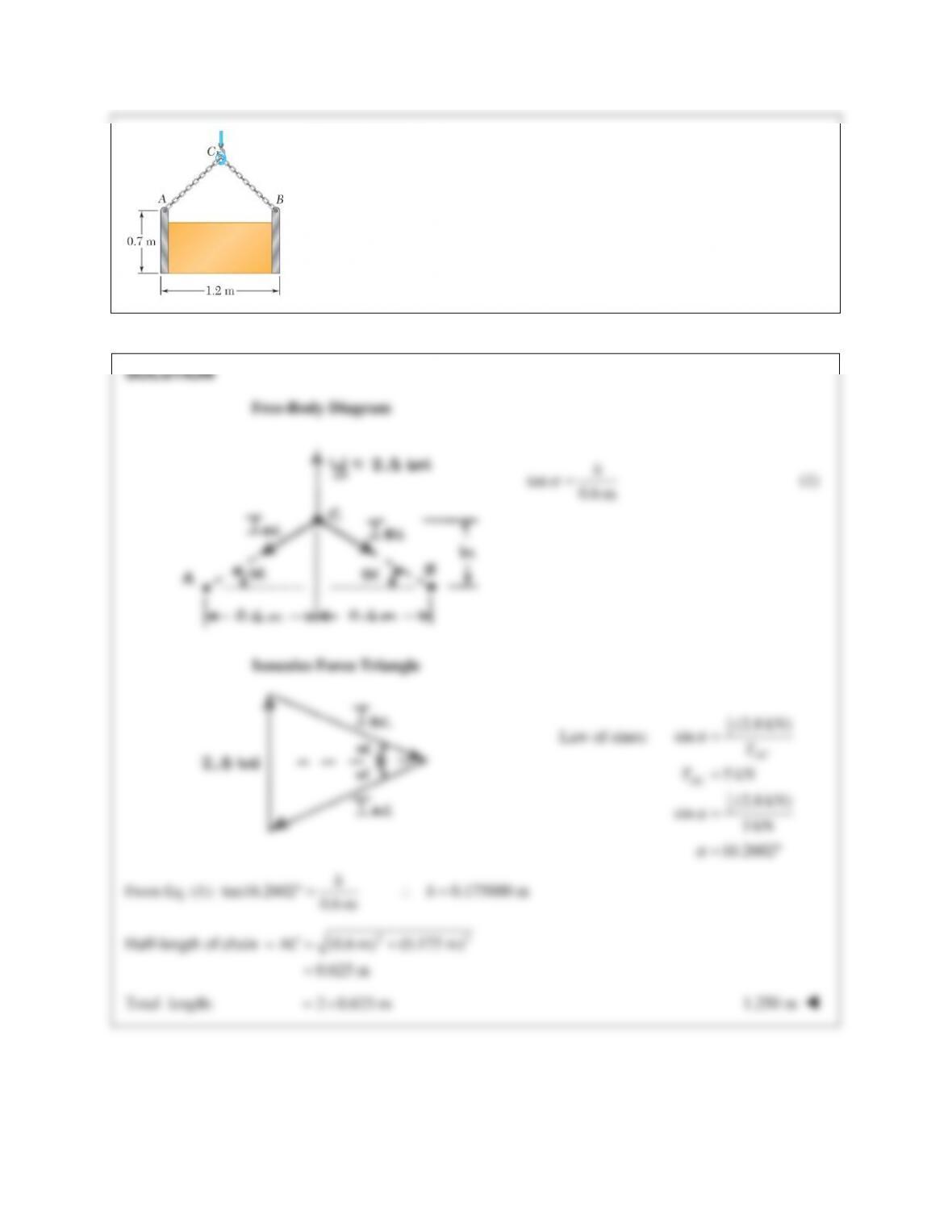
PROBLEM 2.61
A movable bin and its contents have a combined weight of 2.8 kN. Determine
the shortest chain sling ACB that can be used to lift the loaded bin if the
tension in the chain is not to exceed 5 kN.
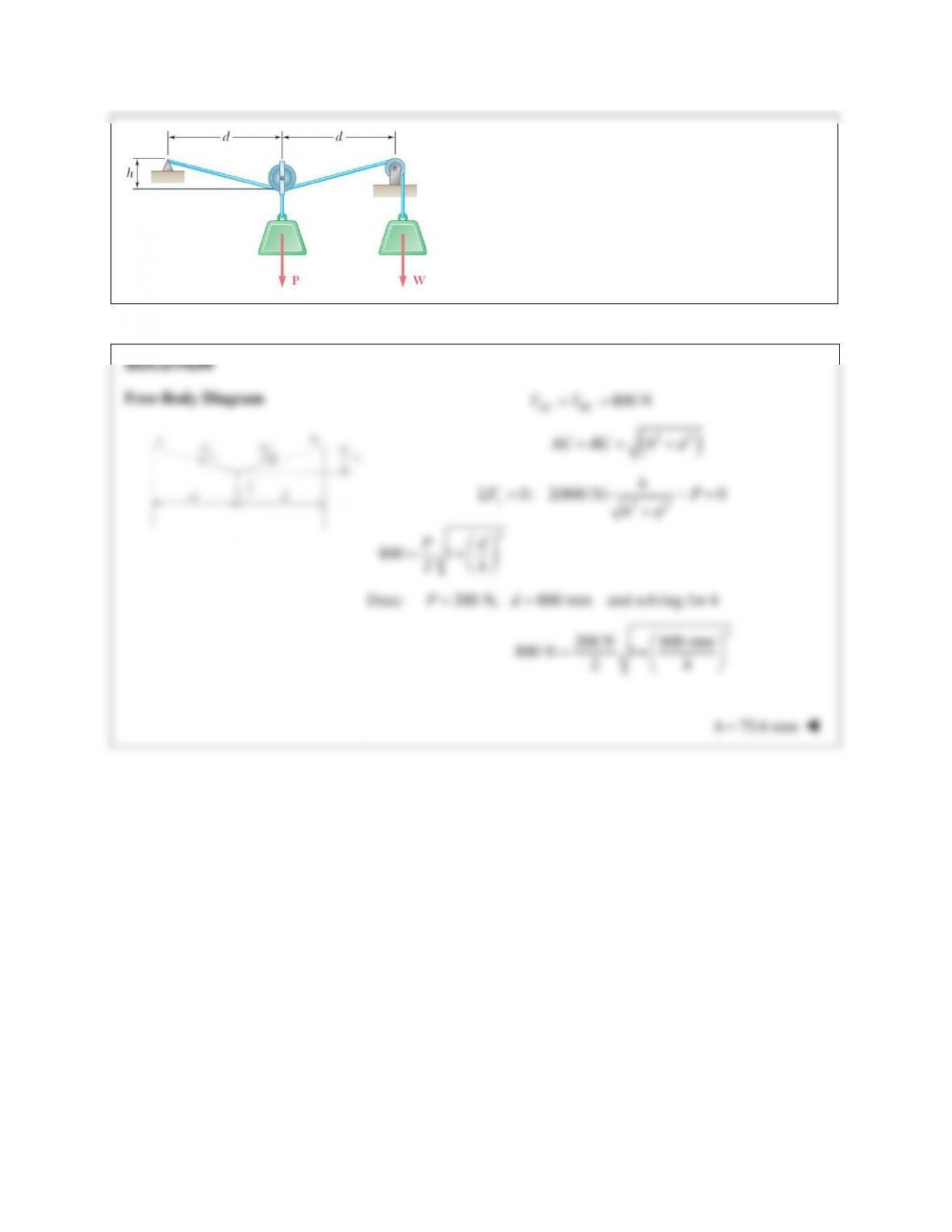
PROBLEM 2.62
For W = 800 N, P = 200 N, and d = 600 mm,
determine the value of h consistent with
equilibrium.
PROBLEM 2.63
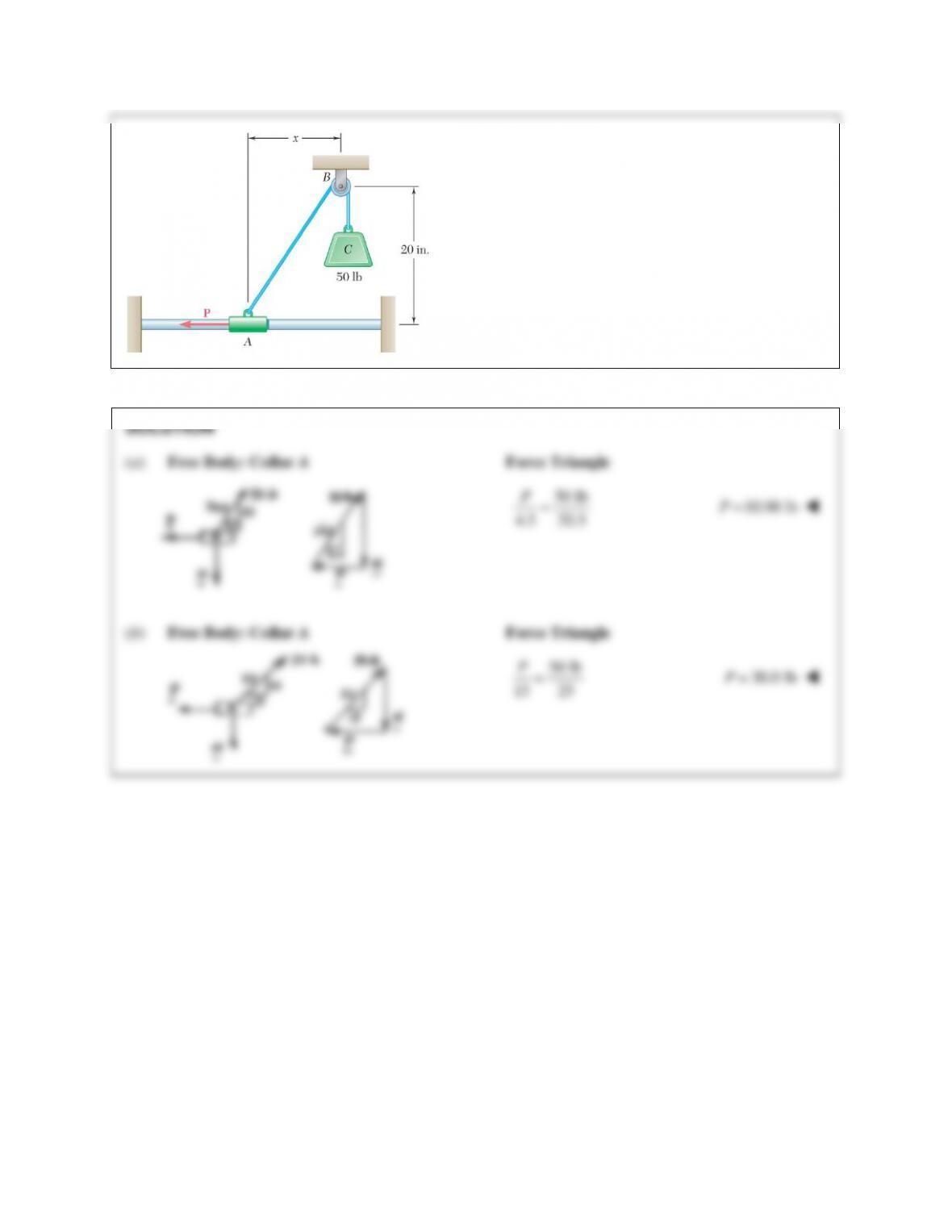
Collar A is connected as shown to a 50–lb load and can
slide on a frictionless horizontal rod. Determine the
magnitude of the force P required to maintain the
equilibrium of the collar when (a)
4.5 in.,x=
(b)
15 in.x=
PROBLEM 2.64
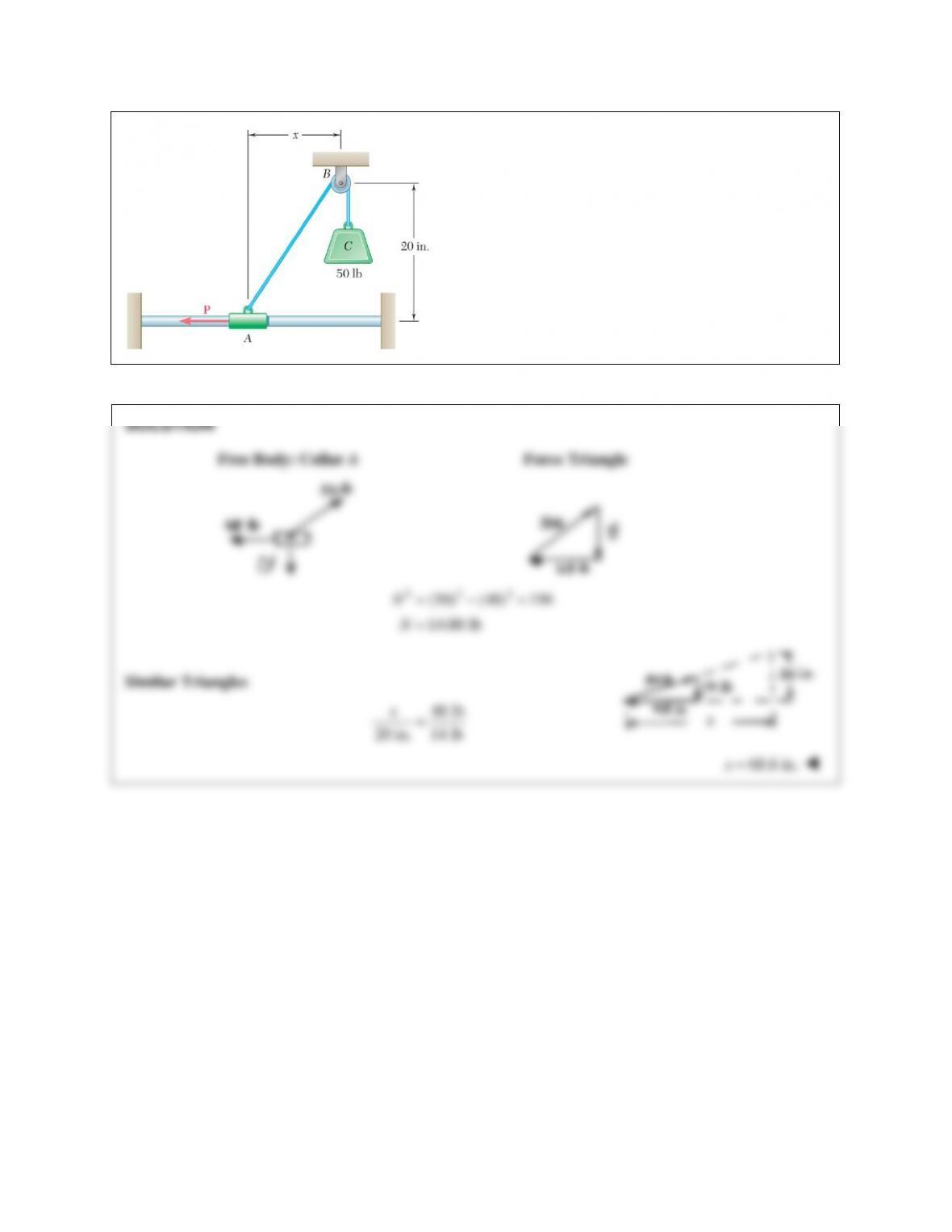
Collar A is connected as shown to a 50–lb load and can
slide on a frictionless horizontal rod. Determine the
distance x for which the collar is in equilibrium when
P = 48 lb.
PROBLEM 2.65
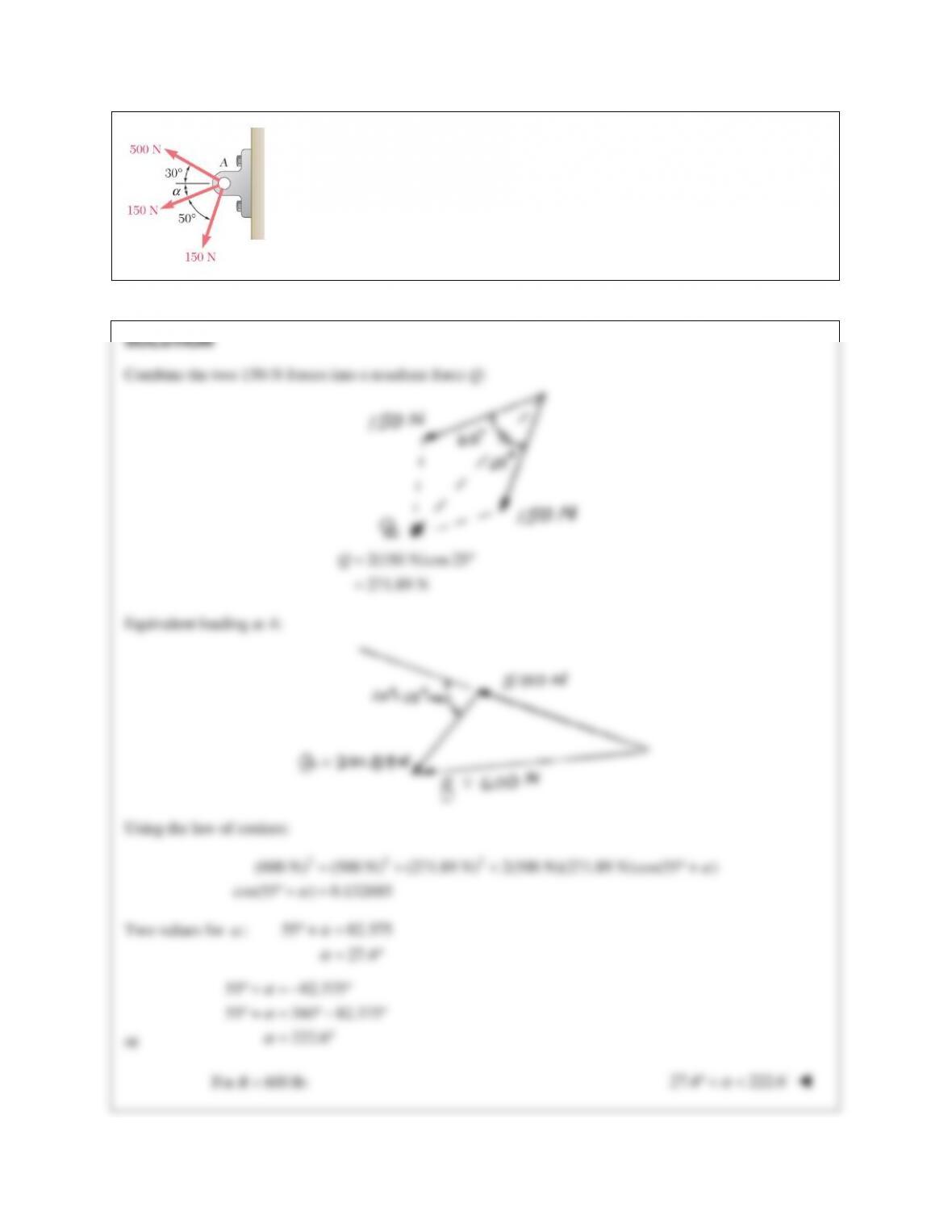
Three forces are applied to a bracket as shown. The directions of the two 150–N
forces may vary, but the angle between these forces is always 50°. Determine
the range of values of α for which the magnitude of the resultant of the forces
acting at A is less than 600 N.
PROBLEM 2.66
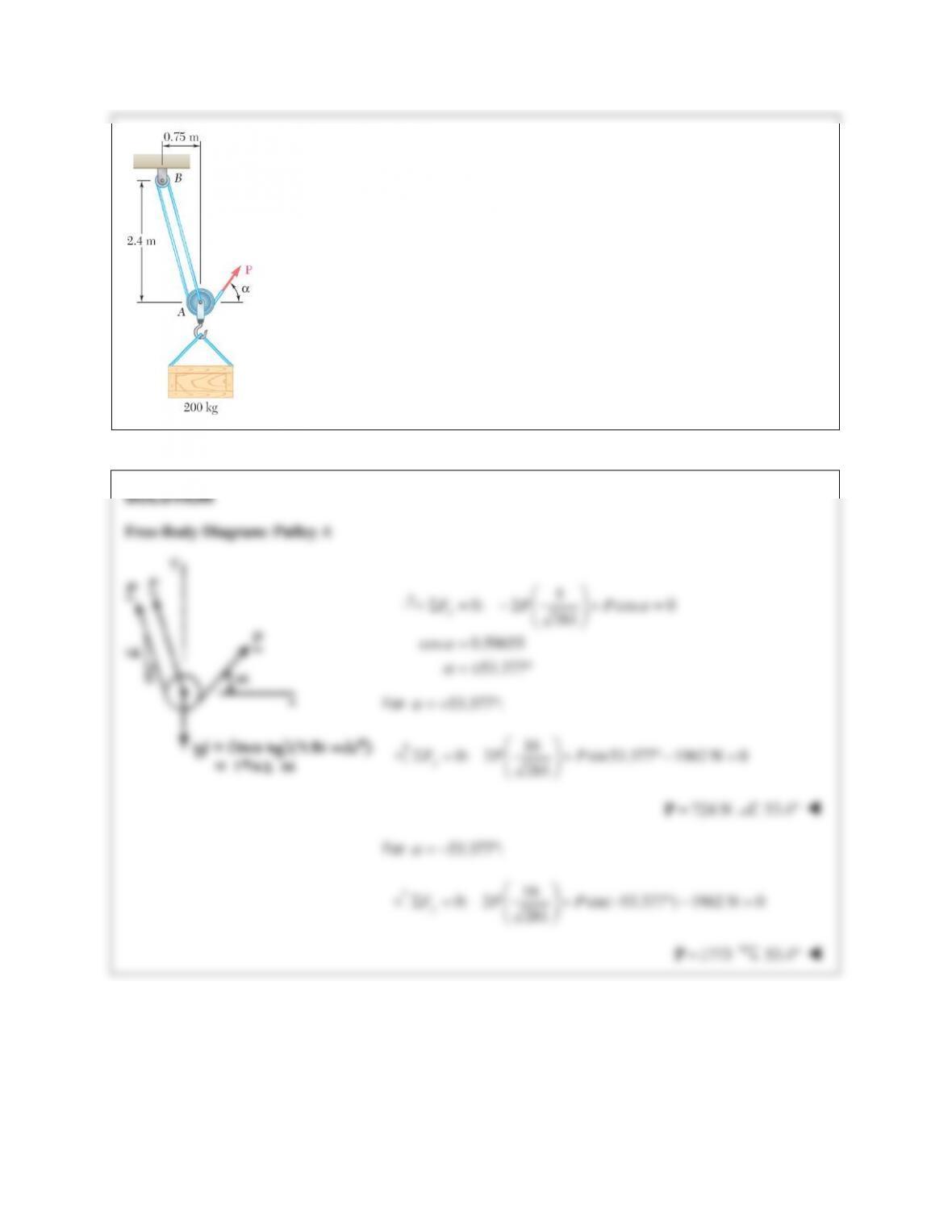
A 200–kg crate is to be supported by the rope–and–pulley arrangement shown.
Determine the magnitude and direction of the force P that must be exerted on
the free end of the rope to maintain equilibrium. (Hint: The tension in the rope is
the same on each side of a simple pulley. This can be proved by the methods of
Ch. 4.)
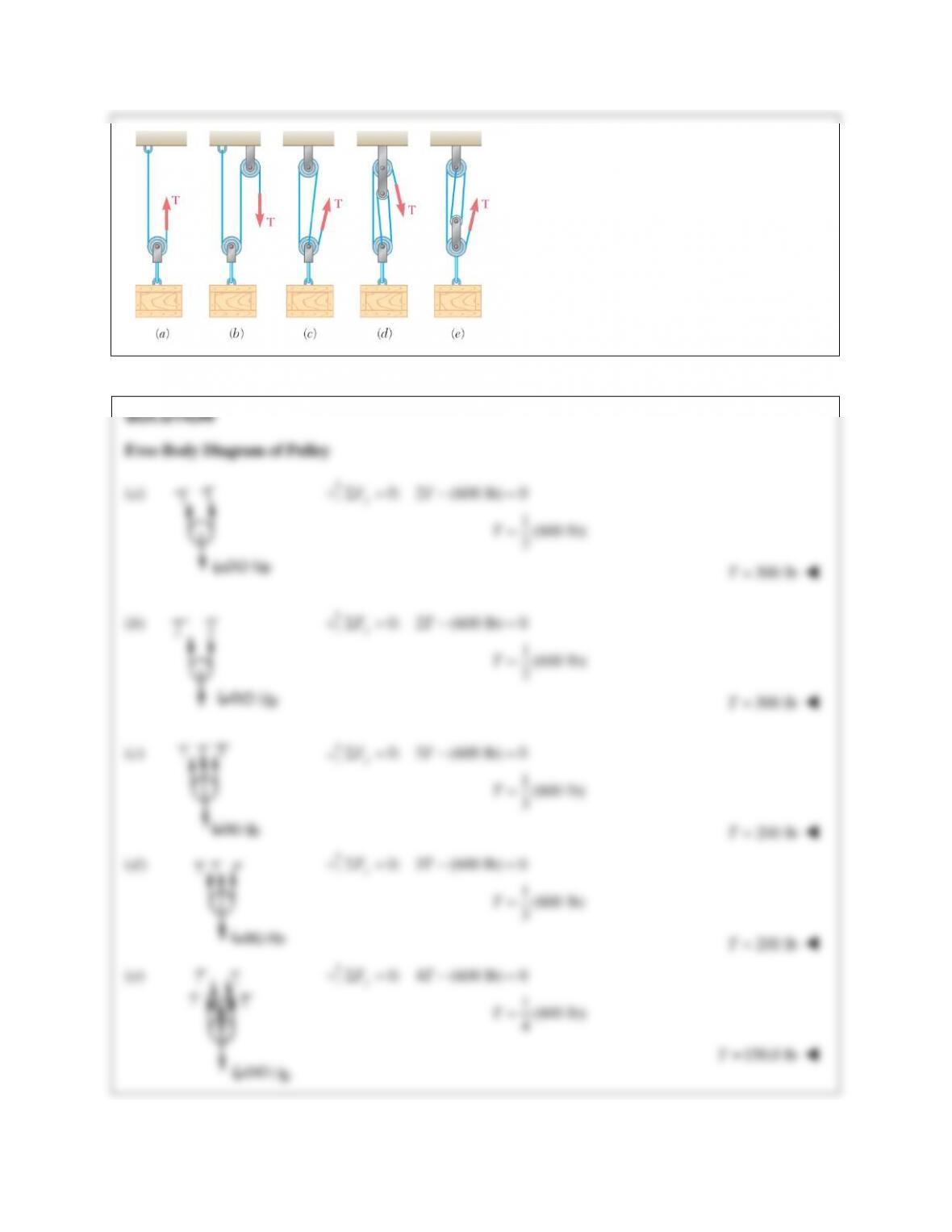
PROBLEM 2.67
A 600–lb crate is supported by several rope-
and–pulley arrangements as shown. Determine
for each arrangement the tension in the rope.
(See the hint for Problem 2.66.)
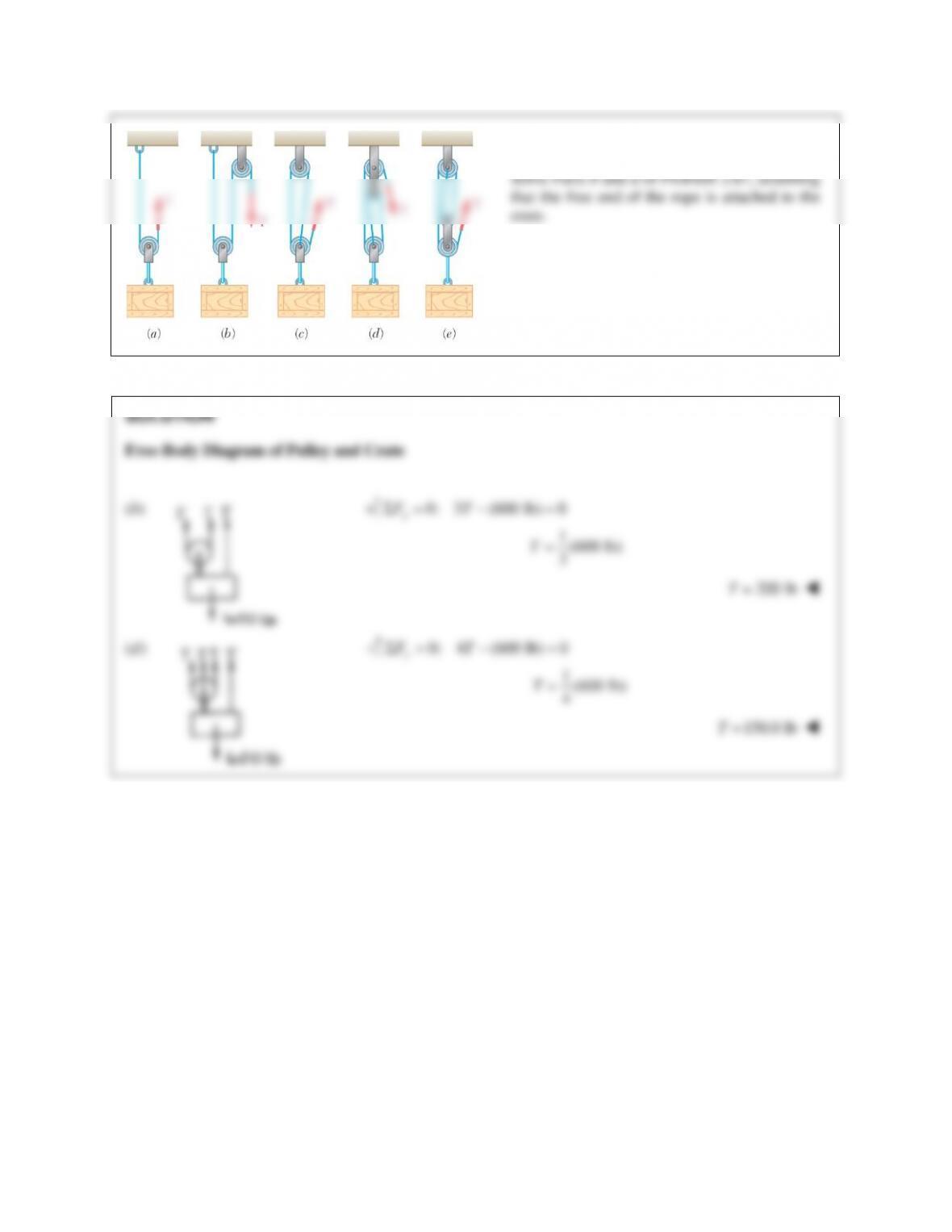
PROBLEM 2.68
PROBLEM 2.67 A 600–lb crate is supported
by several rope–and–pulley arrangements as
shown. Determine for each arrangement the
tension in the rope. (See the hint for Problem
2.66.)