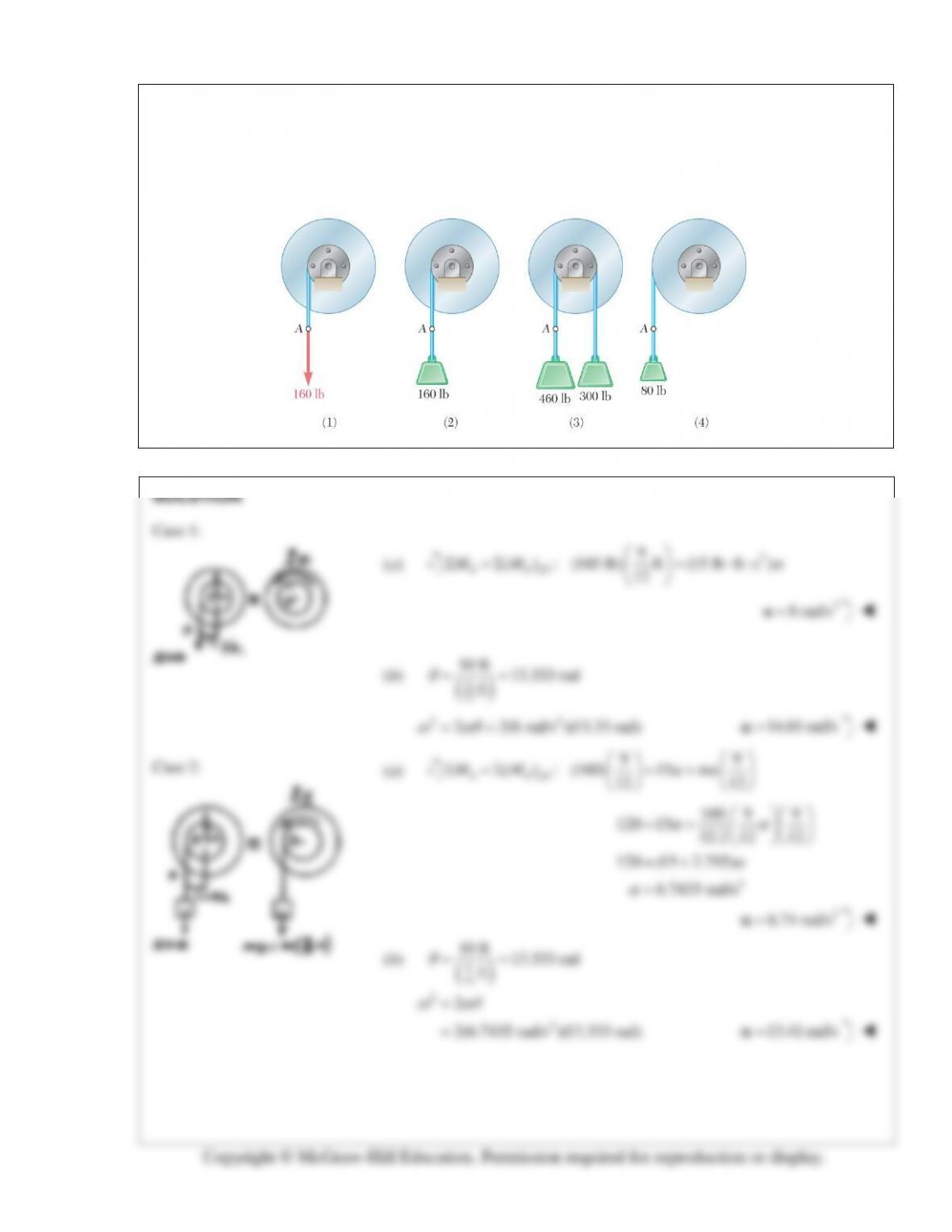
PROBLEM 16.34
Each of the double pulleys shown has a mass moment of inertia of
2
15 lb ft s⋅⋅
and is initially at rest. The
outside radius is 18 in., and the inner radius is 9 in. Determine (a) the angular acceleration of each pulley,
(b) the angular velocity of each pulley after Point A on the cord has moved 10 ft.
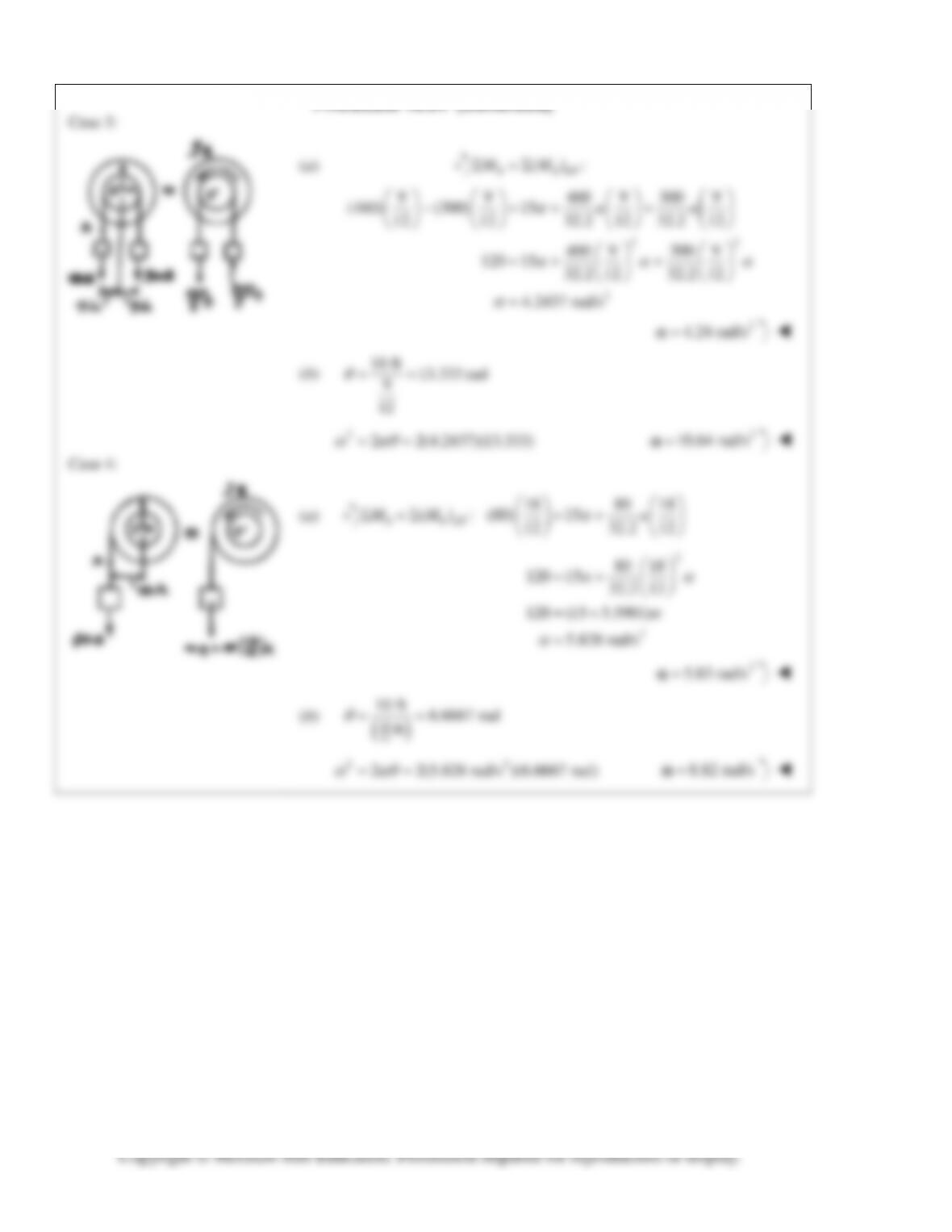
PROBLEM 16.34 (Continued)
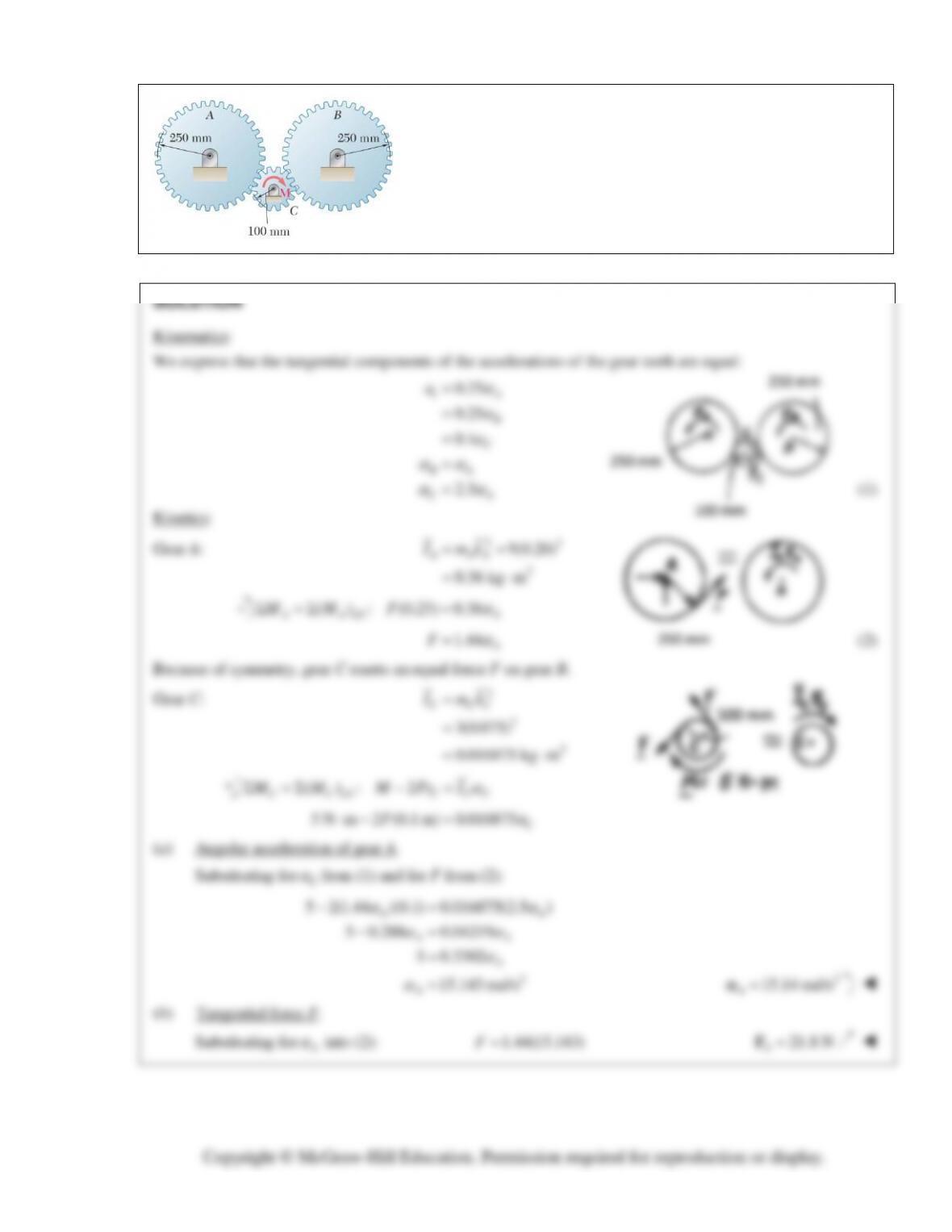
PROBLEM 16.35
Each of the gears A and B has a mass of 9 kg and has a radius of
gyration of 200 mm; gear C has a mass of 3 kg and has a radius of
gyration of 75 mm. If a couple M of constant magnitude 5 N–m is
applied to gear C, determine (a) the angular acceleration of gear A,
(b) the tangential force which gear C exerts on gear A.
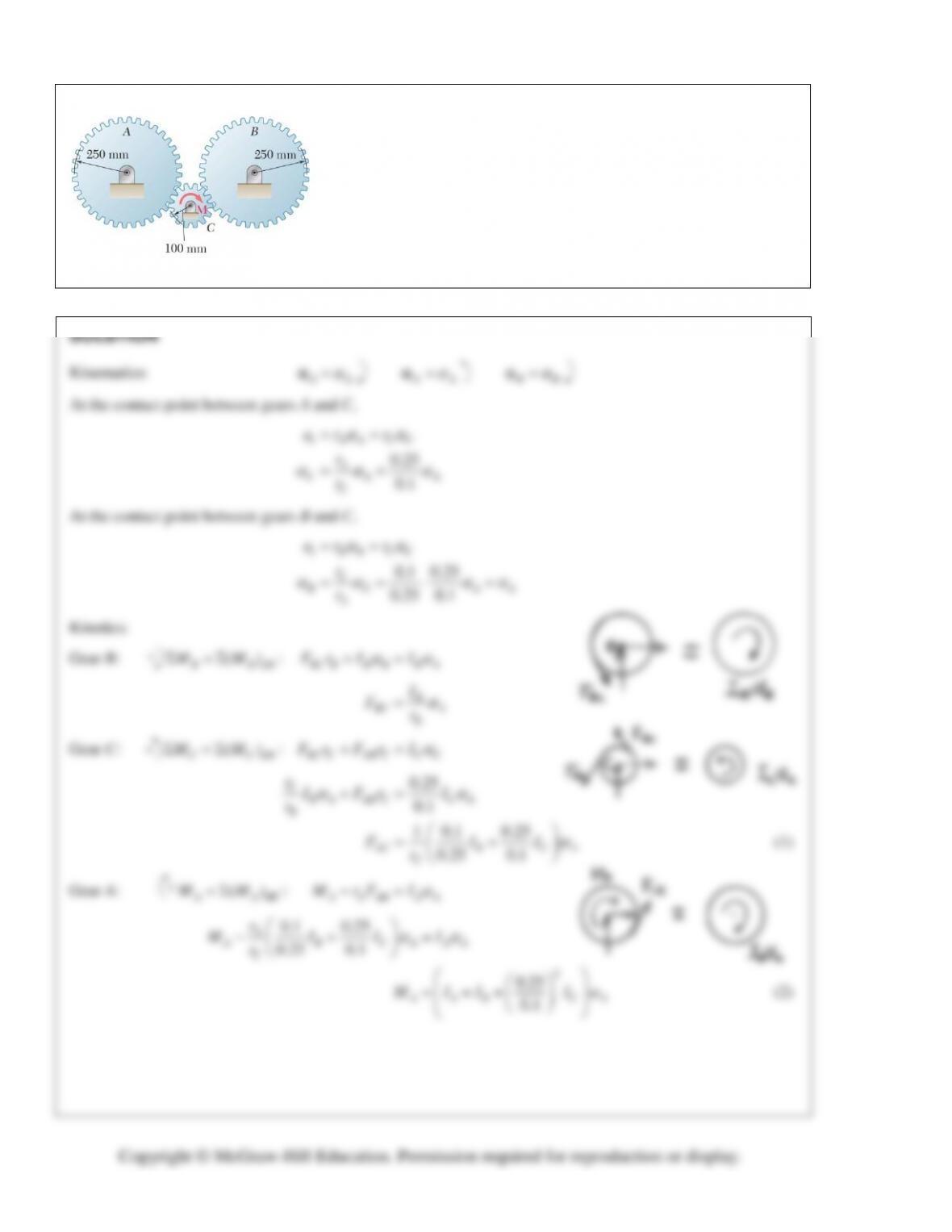
PROBLEM 16.36
Solve Problem 16.35, assuming that the couple M is applied to disk A.
PROBLEM 16.35 Each of the gears A and B has a mass of 9 kg and
has a radius of gyration of 200 mm; gear C has a mass of 3 kg and has
a radius of gyration of 75 mm. If a couple M of constant magnitude 5
N-m is applied to gear C, determine (a) the angular acceleration of
gear A, (b) the tangential force which gear C exerts on gear A.
PROBLEM 16.36 (Continued)
AC
PROBLEM 16.37
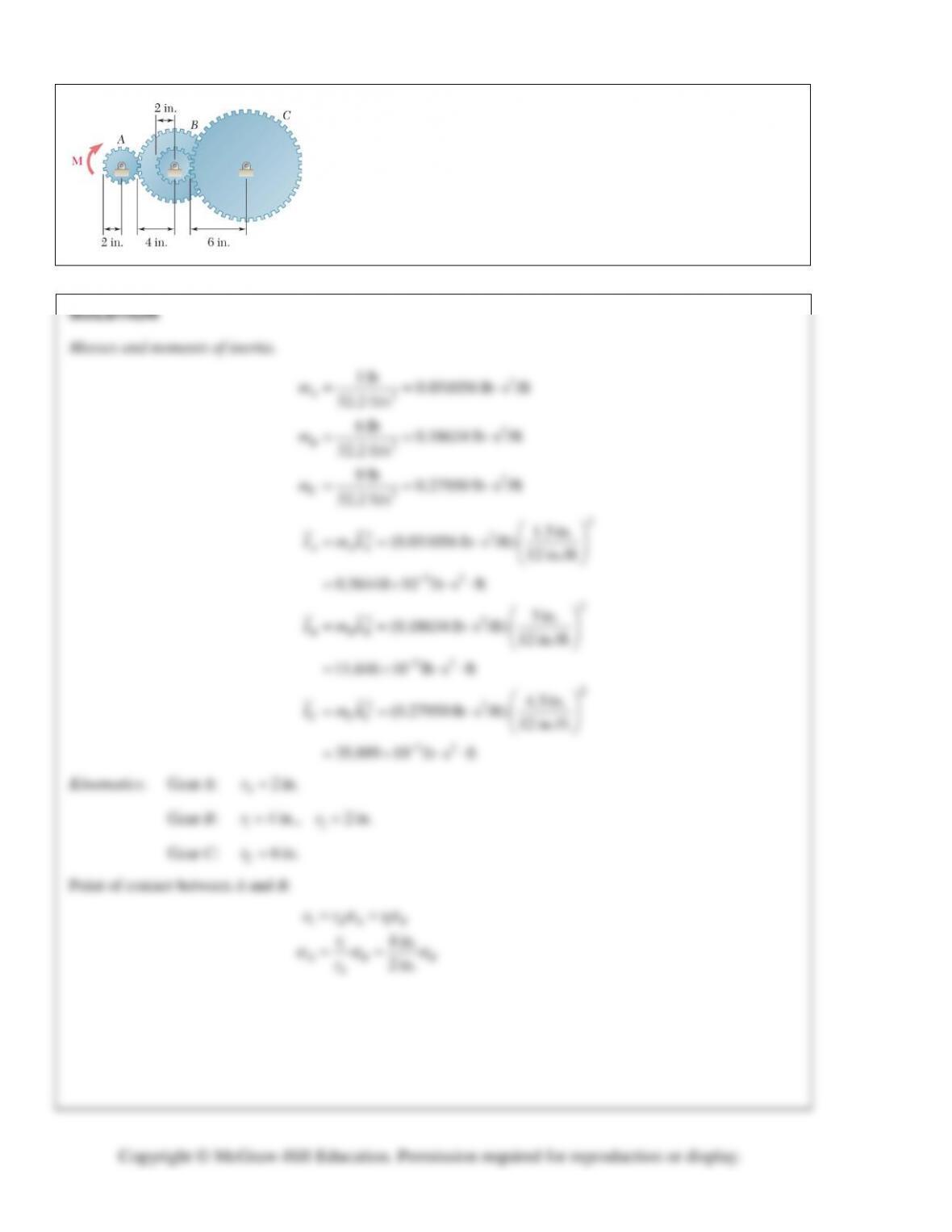
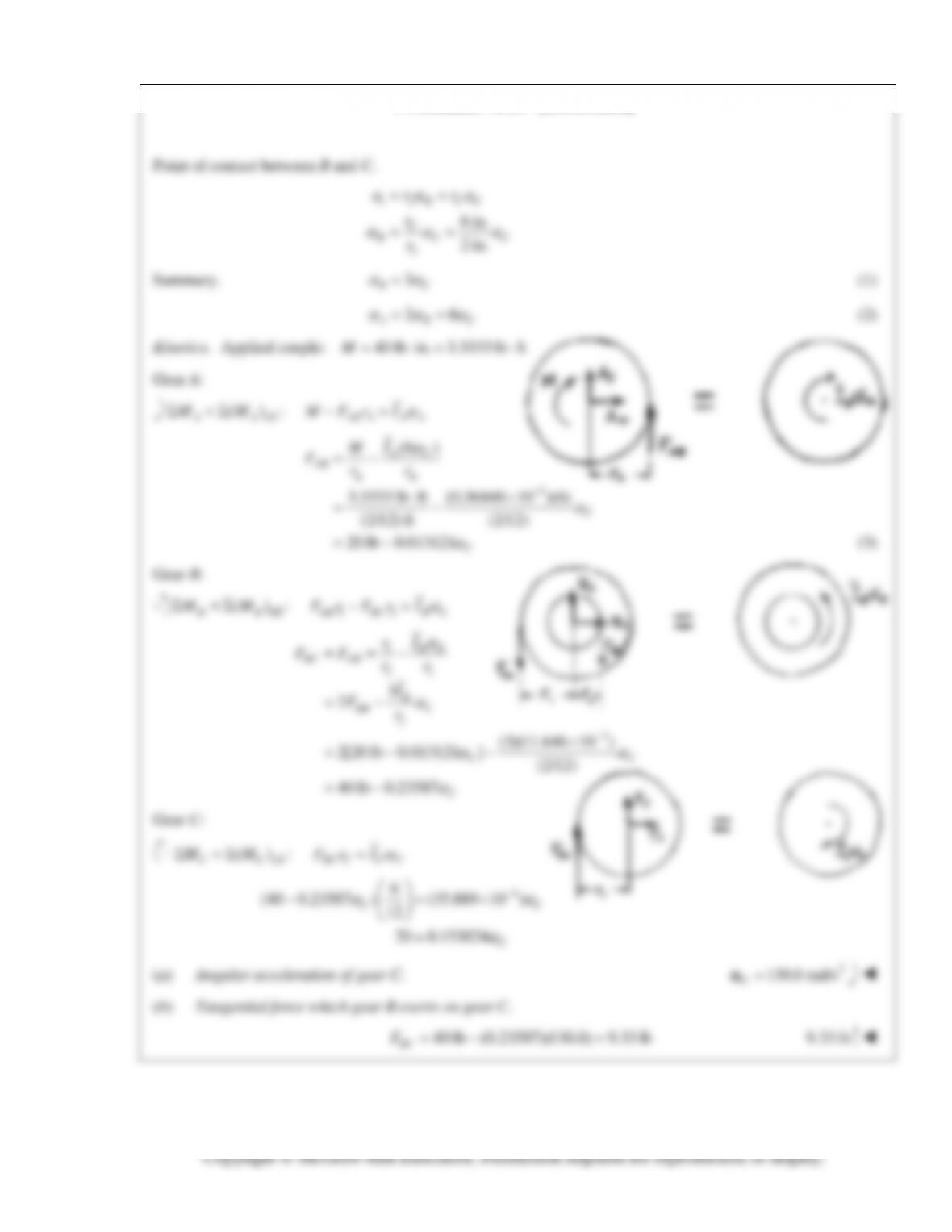
Gear A weighs 1 lb and has a radius of gyration of 1.3 in; Gear B weighs
6 lb and has a radius of gyration of 3 in.; gear C weighs 9 lb and has a
radius of gyration of 4.3 in. Knowing a couple M of constant magnitude
of 40 lb ⋅ in is applied to gear A, determine (a) the angular acceleration
of gear C, (b) the tangential force which gear B exerts on gear C.
PROBLEM 16.37 (Continued)
PROBLEM 16.38
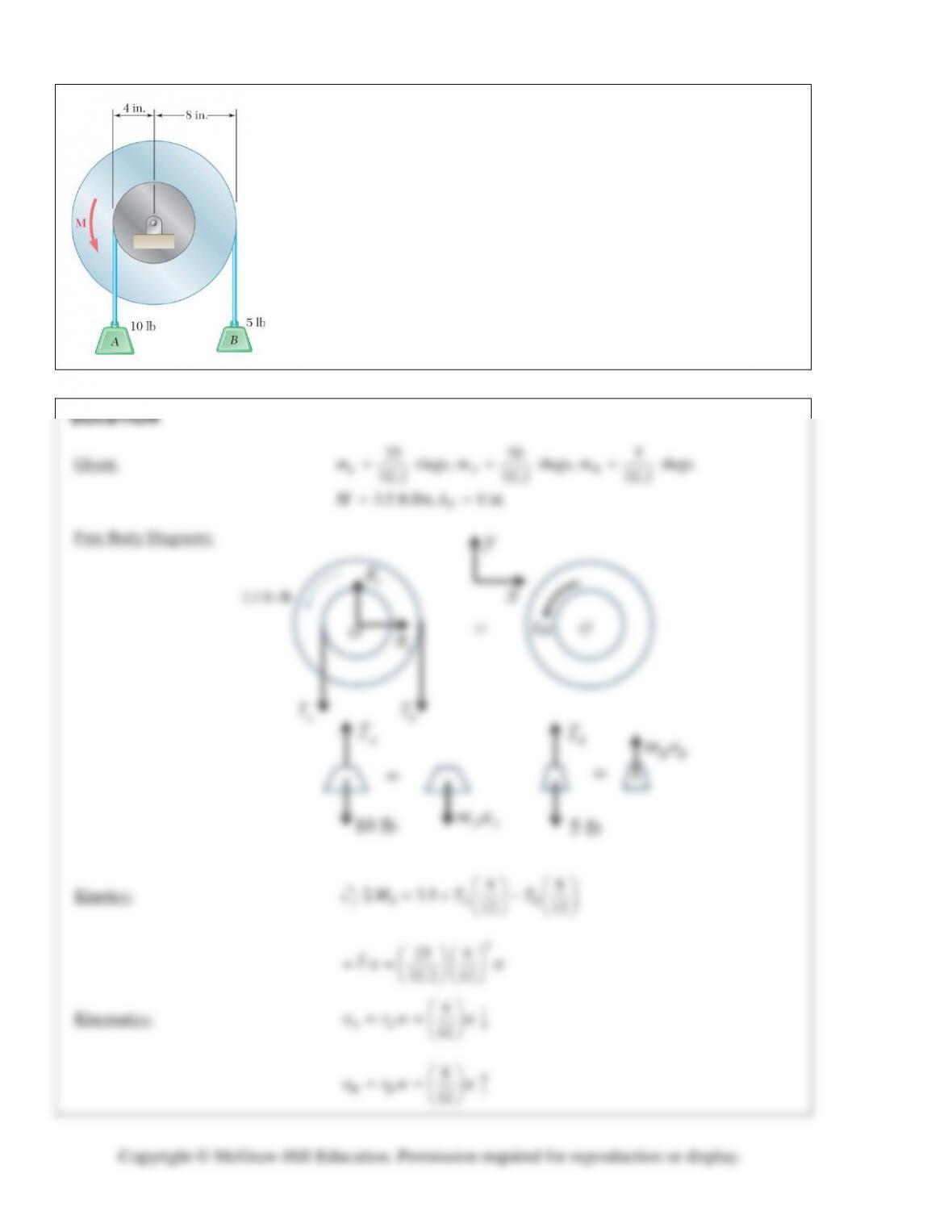
The 25–lb double pulley shown is at rest and in equilibrium when a constant
3.5 lb ft⋅
couple M is applied. Neglecting the effect of friction and knowing
that the radius of gyration of the double pulley is 6 in., determine (a) the
angular acceleration of the double pulley, (b) the tension in each rope.
PROBLEM 16.38 (Continued)
10
PROBLEM 16.39
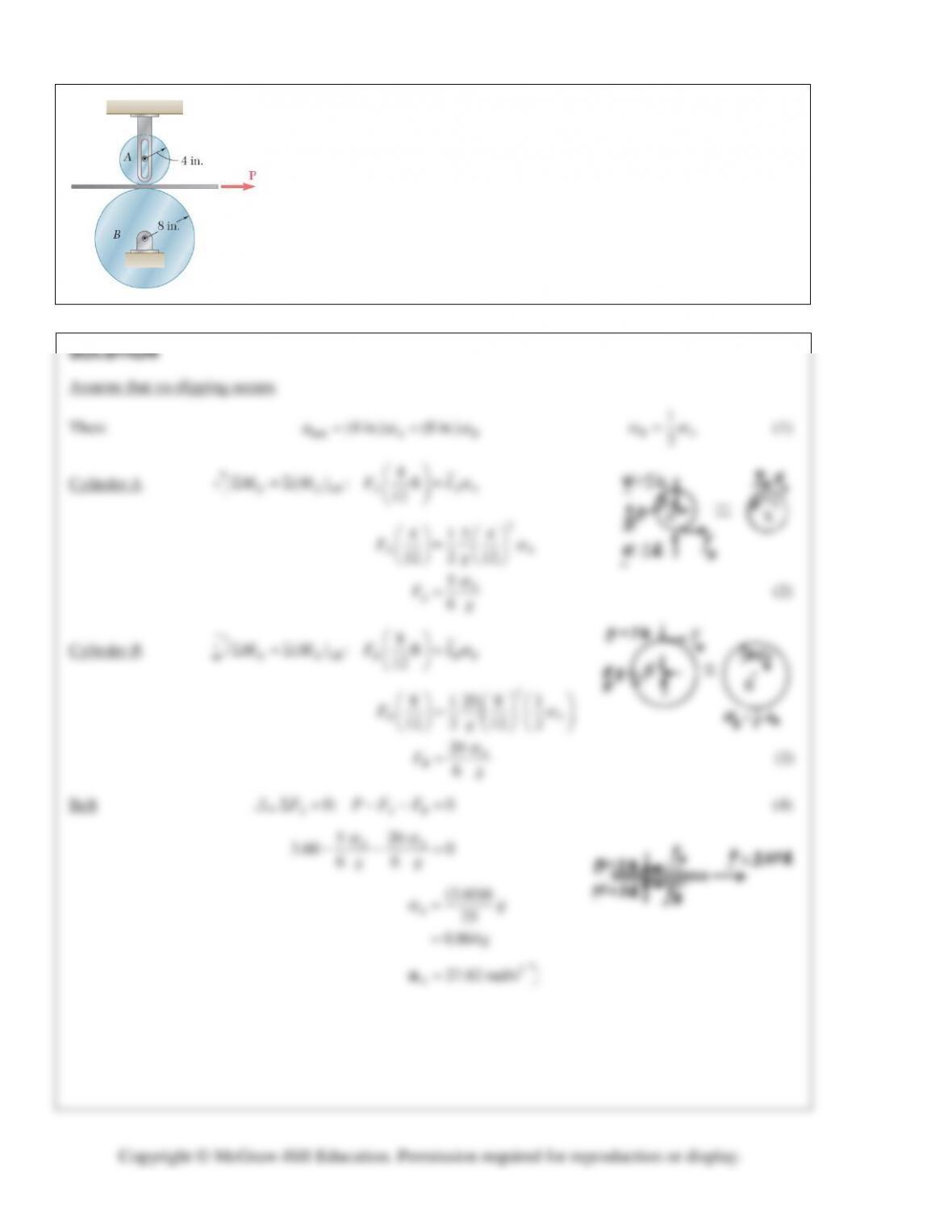
A belt of negligible mass passes between cylinders A and B and is pulled to
the right with a force P. Cylinders A and B weigh, respectively, 5 and 20 lb.
The shaft of cylinder A is free to slide in a vertical slot and the coefficients of
friction between the belt and each of the cylinders are
0.50
s
µ
=
and
µ
k
0.40.=
For
3.6 lb,P=
determine (a) whether slipping occurs between the
belt and either cylinder, (b) the angular acceleration of each cylinder.