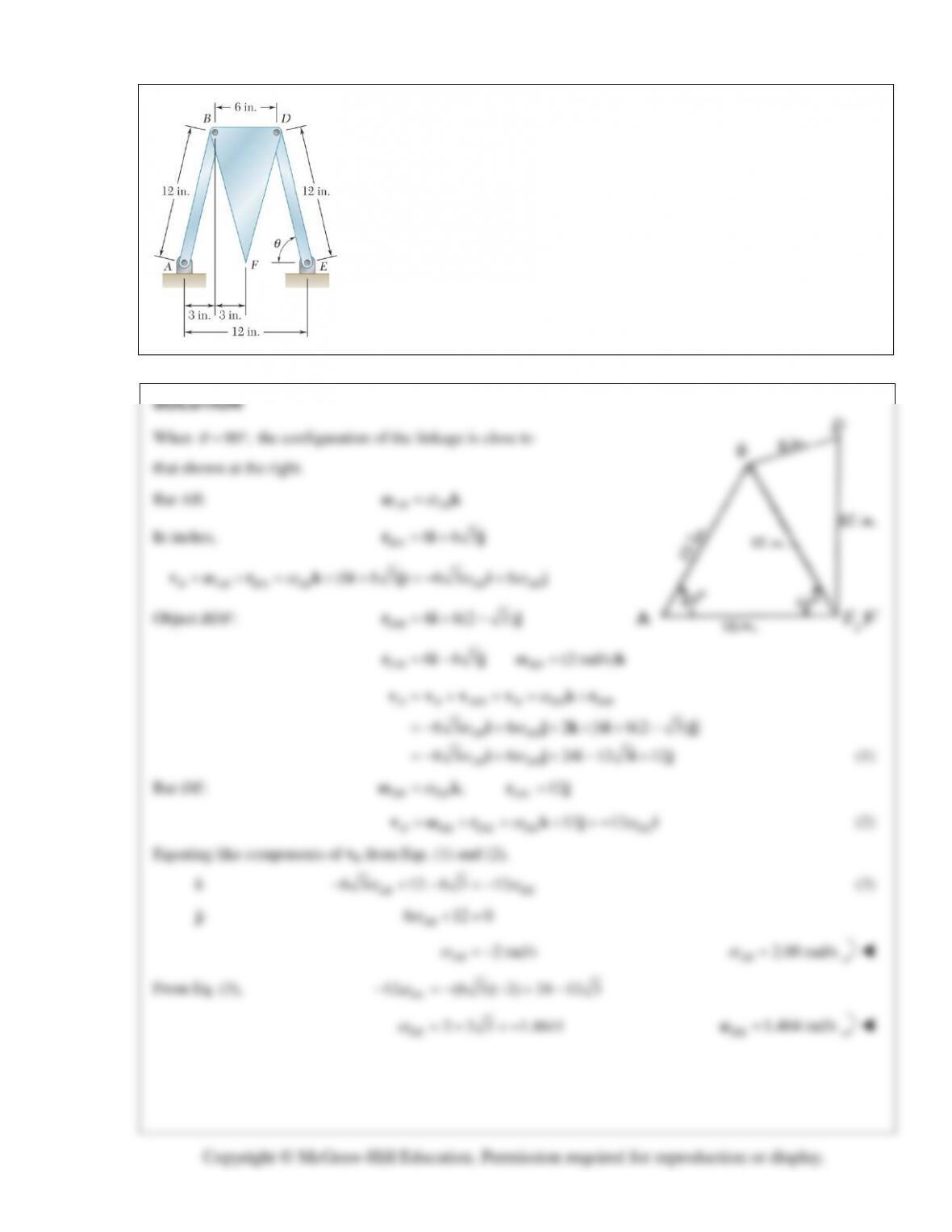
PROBLEM 15.67
Robert’s linkage is named after Richard Robert (1789–1864) and can be used
to draw a close approximation to a straight line by locating a pen at Point F.
The distance AB is the same as BF, DF and DE. Knowing that the angular
velocity of plate BDF is 2 rad/s counterclockwise when
θ
= 90°, determine
(a) the angular velocities of bars AB and DE, (b) the velocity of Point F.
When point F may be assumed to coincide with point E, with
negligible error in the velocity analysis.
90 ,
θ
= °
PROBLEM 15.67 (Continued)
/
(12)( 1.4641) 17.569
17.569 2 ( 12 ) (41.569 in./s)
D
F D BD F D
ω
=−− =
=+×
= + ×− =
v ii
v v kr
ik j i
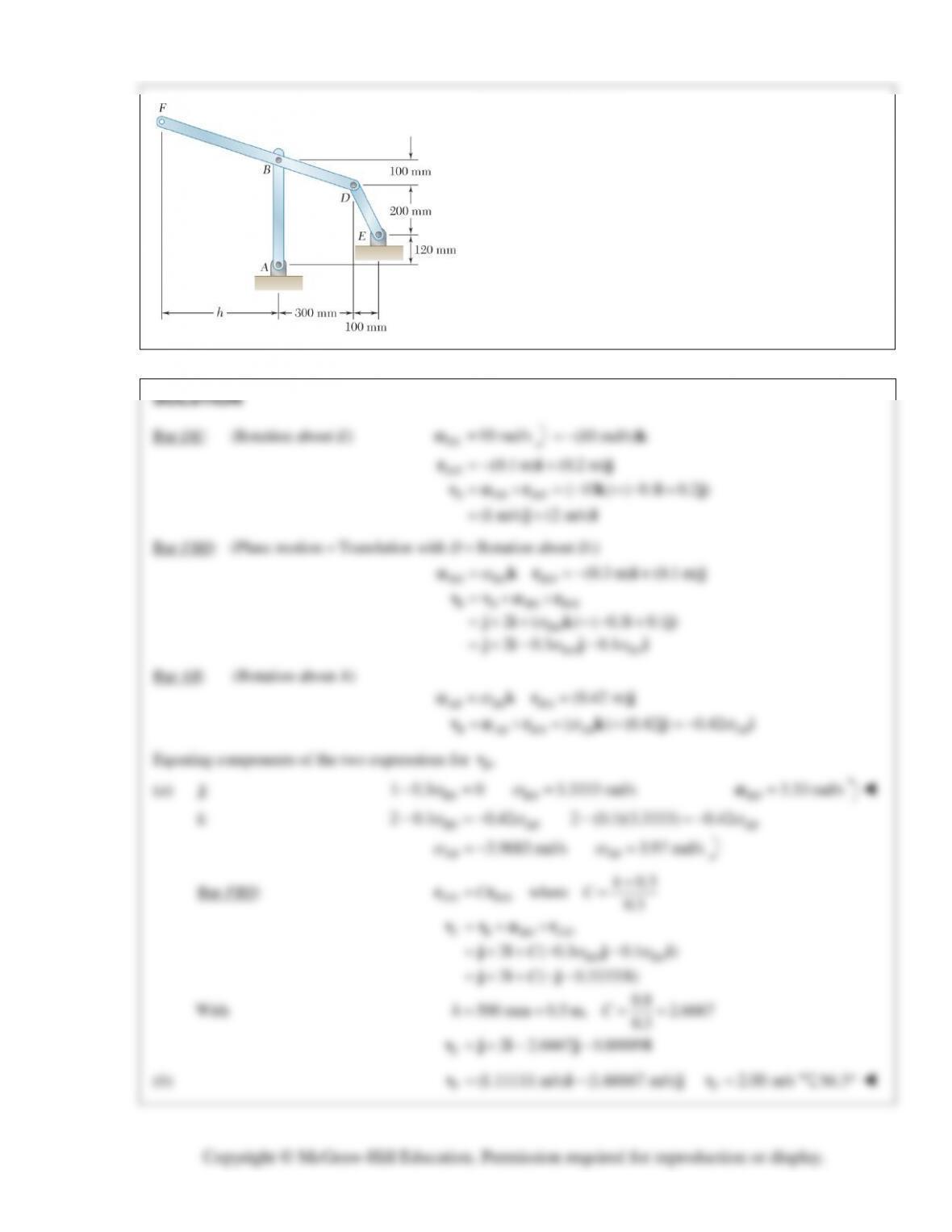
PROBLEM 15.68
In the position shown, bar DE has a constant angular
velocity of 10 rad/s clockwise. Knowing that
500 mm,h=
determine (a) the angular velocity of bar FBD, (b) the
velocity of Point F.
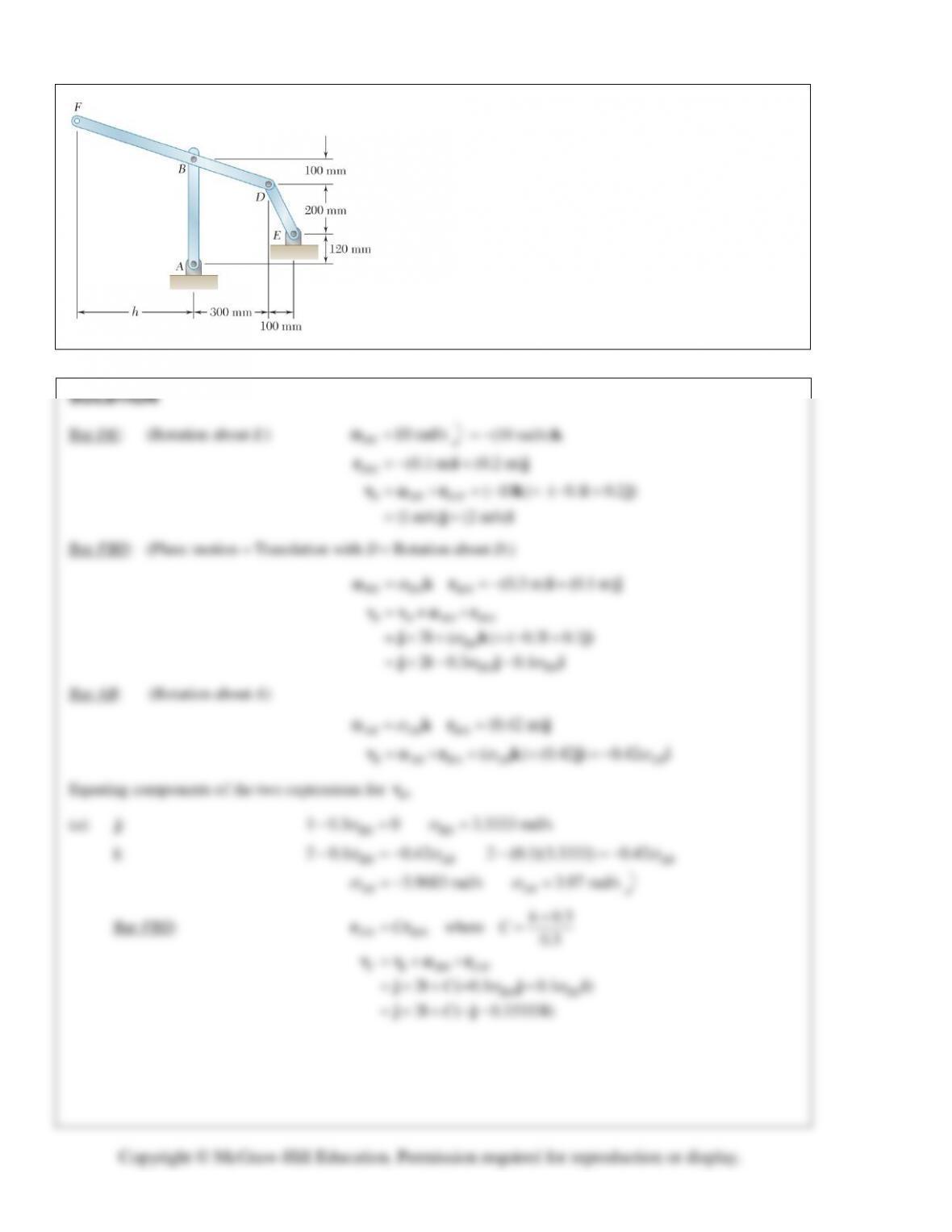
PROBLEM 15.69
In the position shown, bar DE has a constant angular
velocity of 10 rad/s clockwise. Determine (a) the distance h
for which the velocity of Point F is vertical, (b) the
corresponding velocity of Point F.
PROBLEM 15.69 (Continued)
But
.
FF
v=vj
Equating components of the two expressions for
,
F
v
PROBLEM 15.70
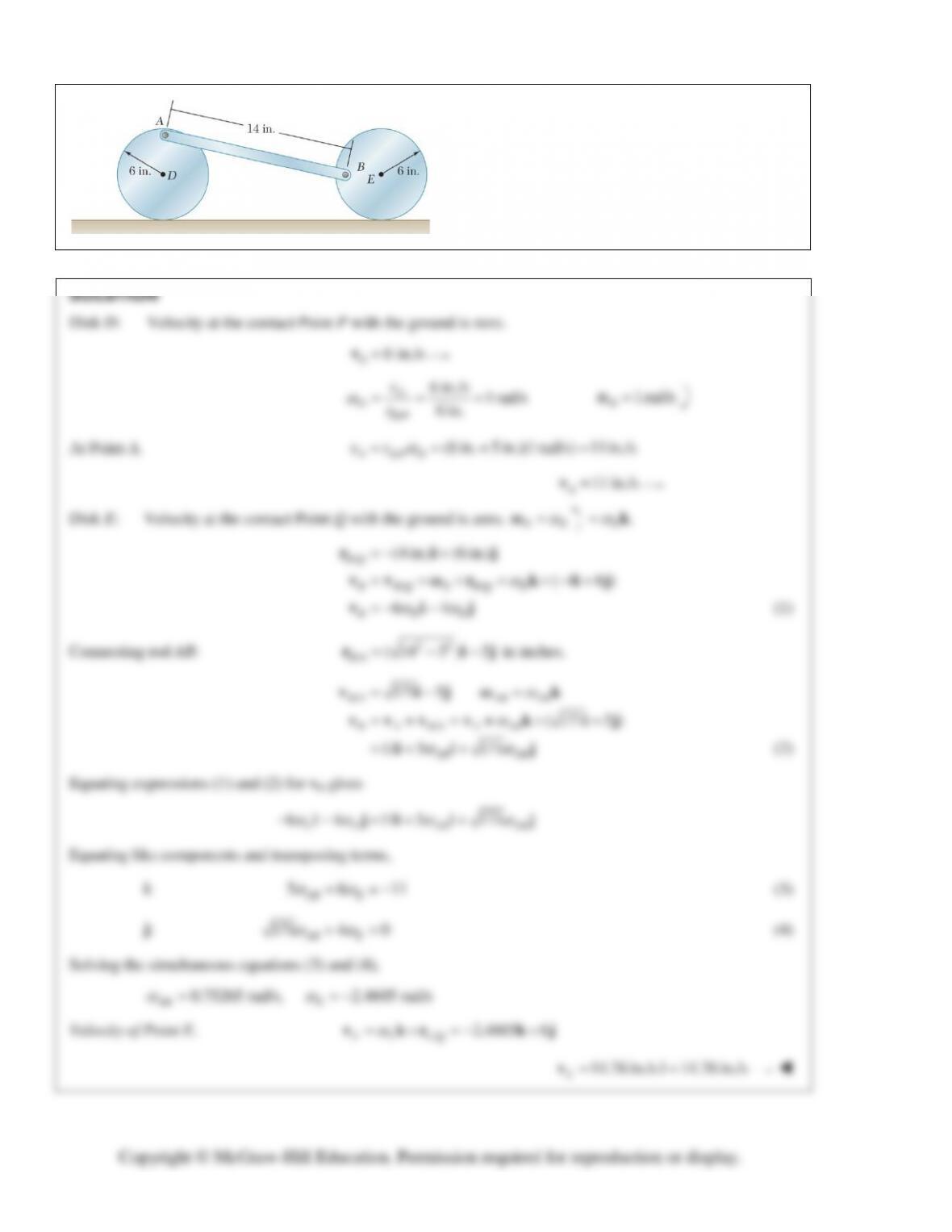
Both 6–in.–radius wheels roll without slipping on
the horizontal surface. Knowing that the distance
AD is 5 in., the distance BE is 4 in. and D has a
velocity of 6 in./s to the right, determine the
velocity of Point E.
PROBLEM 15.71
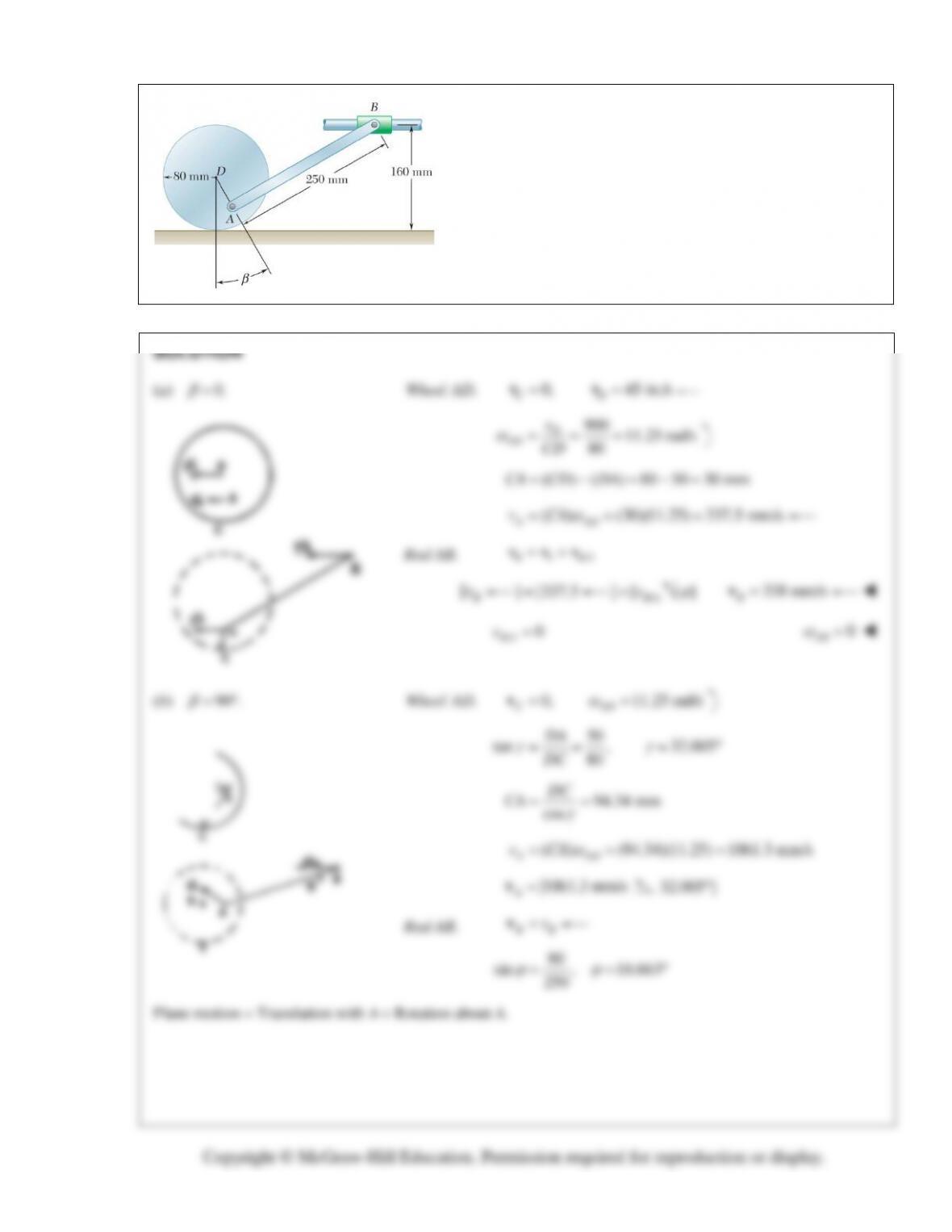
The 80–mm–radius wheel shown rolls to the left with a velocity
of 900 mm/s. Knowing that the distance AD is 50 mm,
determine the velocity of the collar and the angular velocity of
rod AB when (a)
0,
β
=
(b)
90 .
β
= °
=
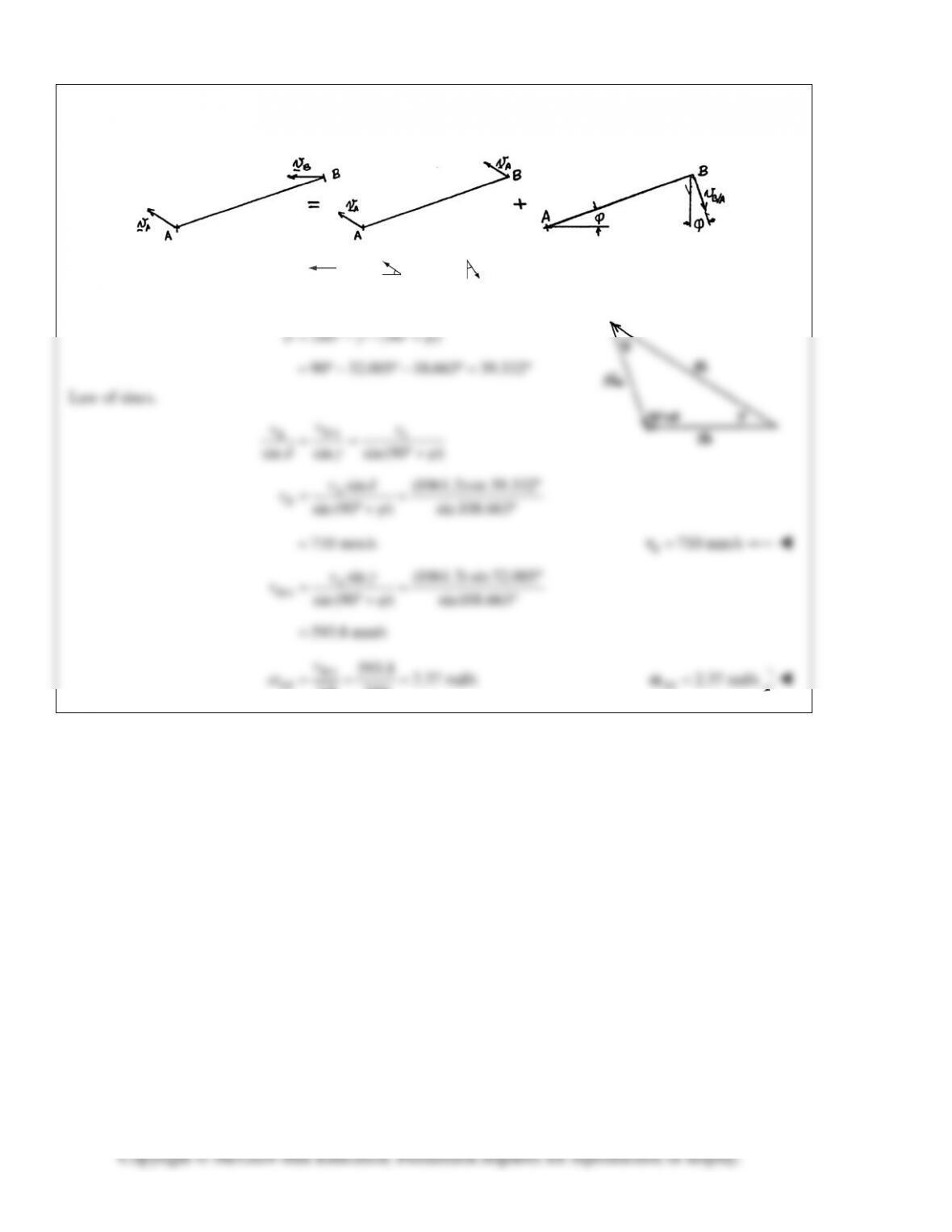
PROBLEM 15.71 (Continued)
/
[
B A BA B
v= +vvv
][
A
v=
/
][
BA
v
γ
+
]
ϕ
Draw velocity vector diagram.
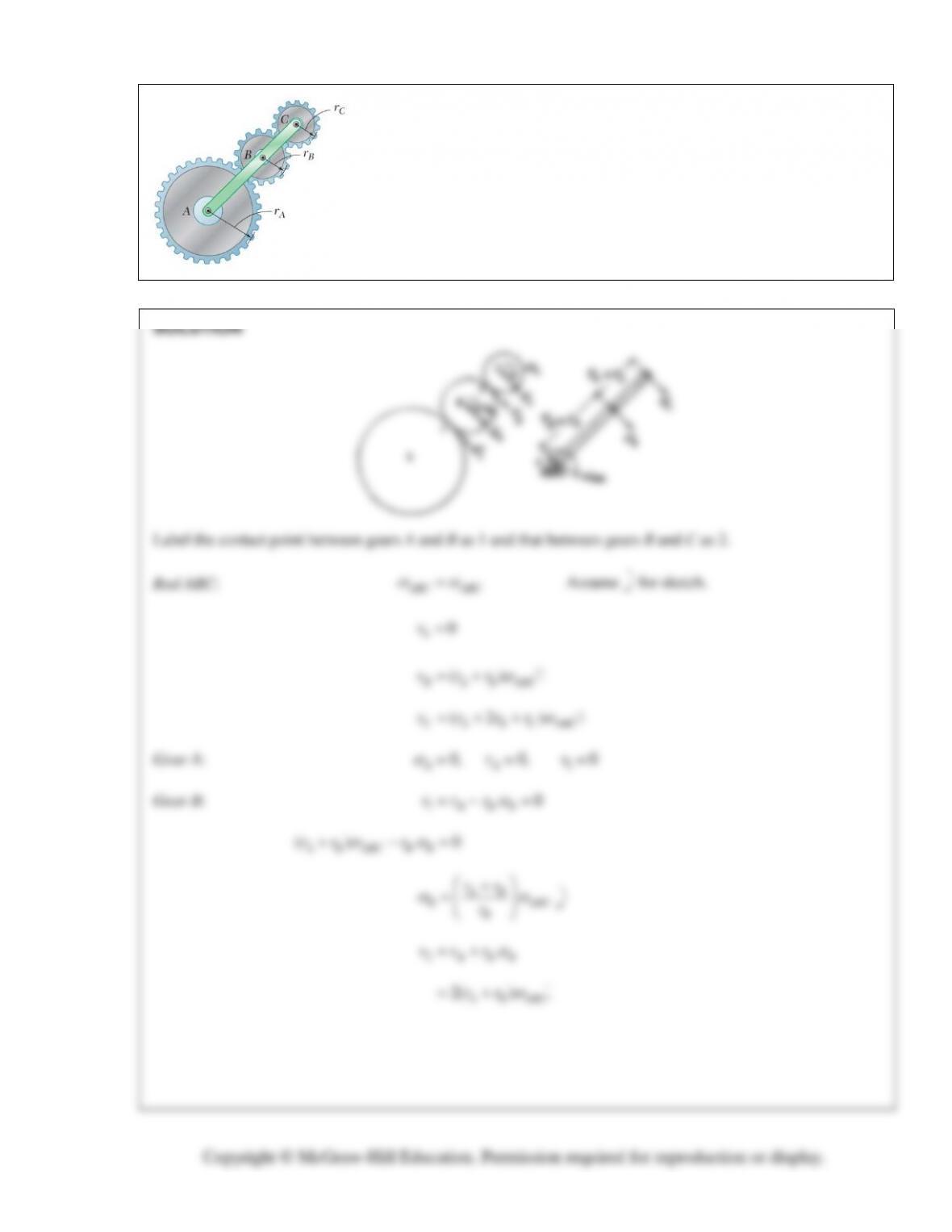
PROBLEM 15.72*
For the gearing shown, derive an expression for the angular velocity
C
ω
of
gear C and show that
C
ω
is independent of the radius of gear B. Assume that
Point A is fixed and denote the angular velocities of rod ABC and gear A by
ABC
ω
and
A
ω
respectively.
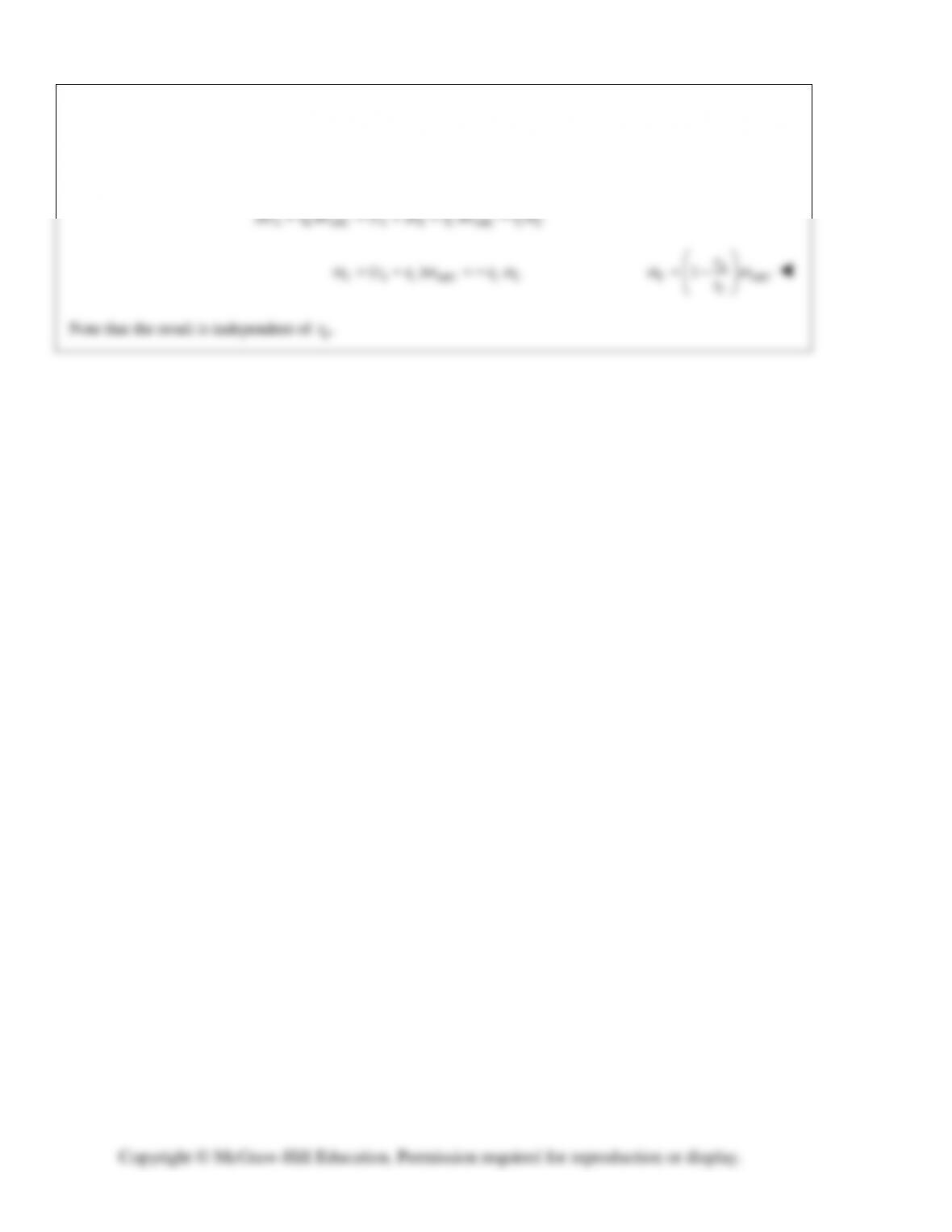
PROBLEM 15.72* (Continued)
Gear C:
2C CC
vvr
ω
= −