PROBLEM 15.117 (Continued)
.Acceleration of Point D
PROBLEM 15.118
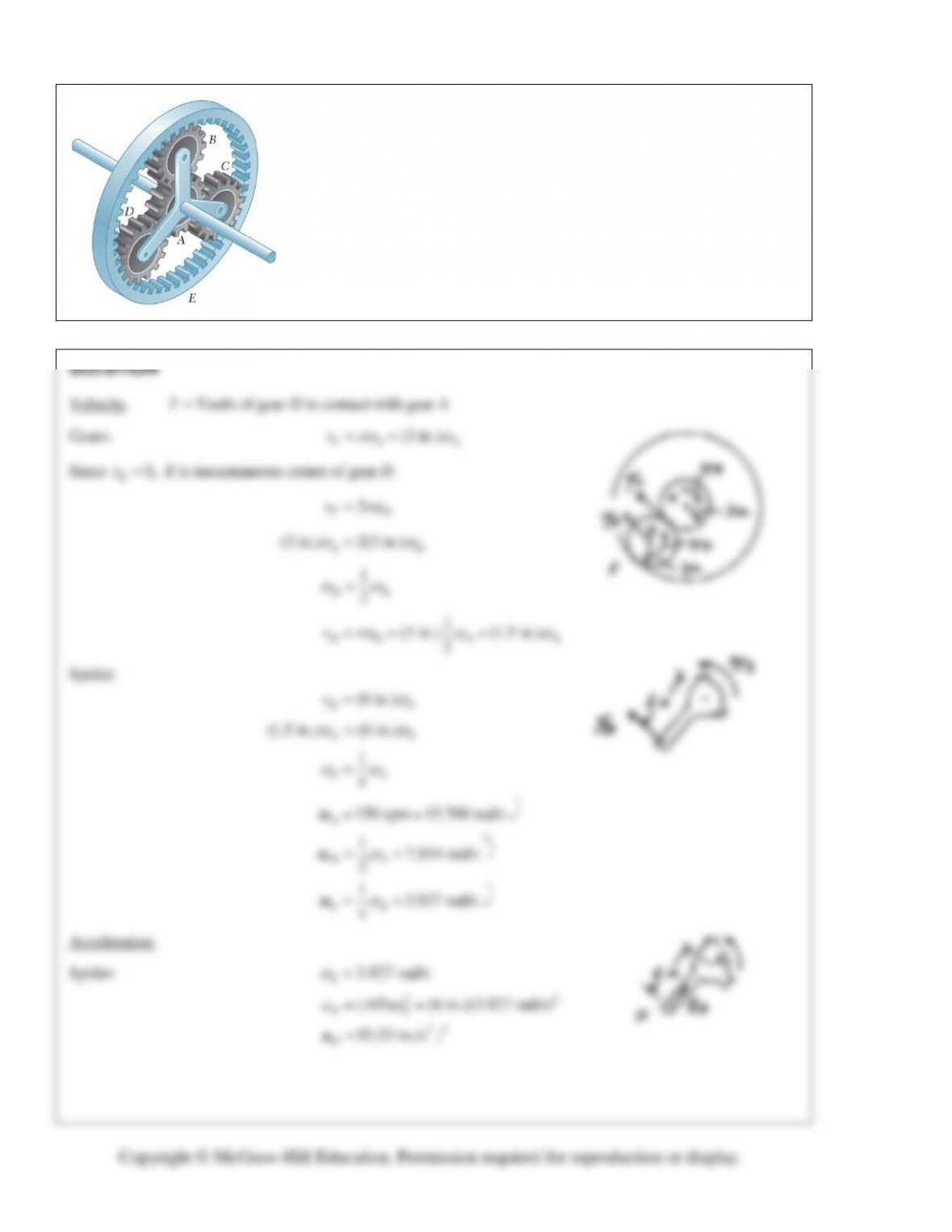
In the planetary gear system shown the radius of gears A, B, C, and D is
3 in. and the radius of the outer gear E is 9 in. Knowing that gear A has a
constant angular velocity of 150 rpm clockwise and that the outer gear E is
stationary, determine the magnitude of the acceleration of the tooth of gear
D that is in contact with (a) gear A, (b) gear E.
PROBLEM 15.118 (Continued)
PROBLEM 15.119
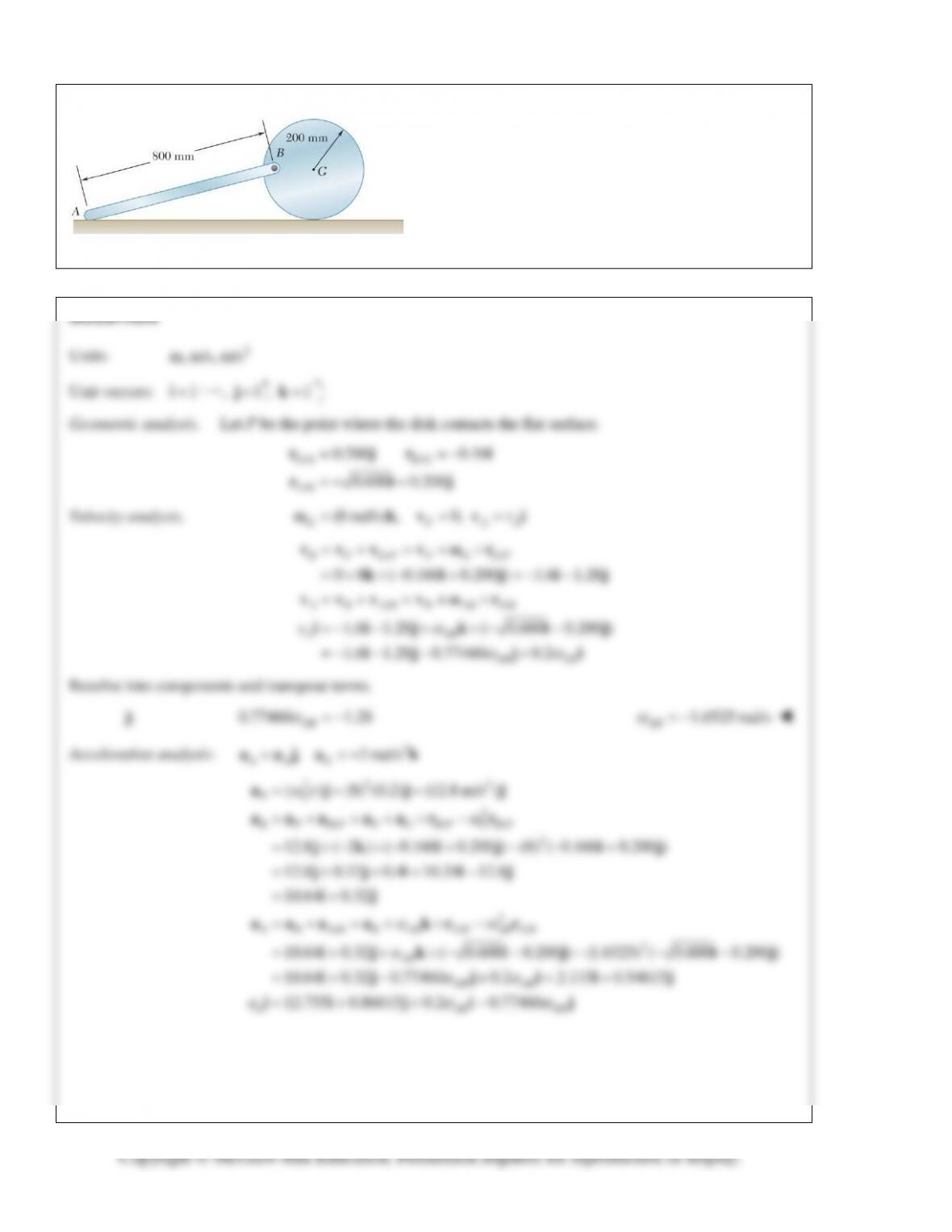
The 200–mm–radius disk rolls without sliding on the
surface shown. Knowing that the distance BG is 160
mm and that at the instant shown the disk has an
angular velocity of 8 rad/s counterclockwise and an
angular acceleration of 2 rad/s2 clockwise, determine
the acceleration of A.
PROBLEM 15.119 (Continued)
PROBLEM 15.120
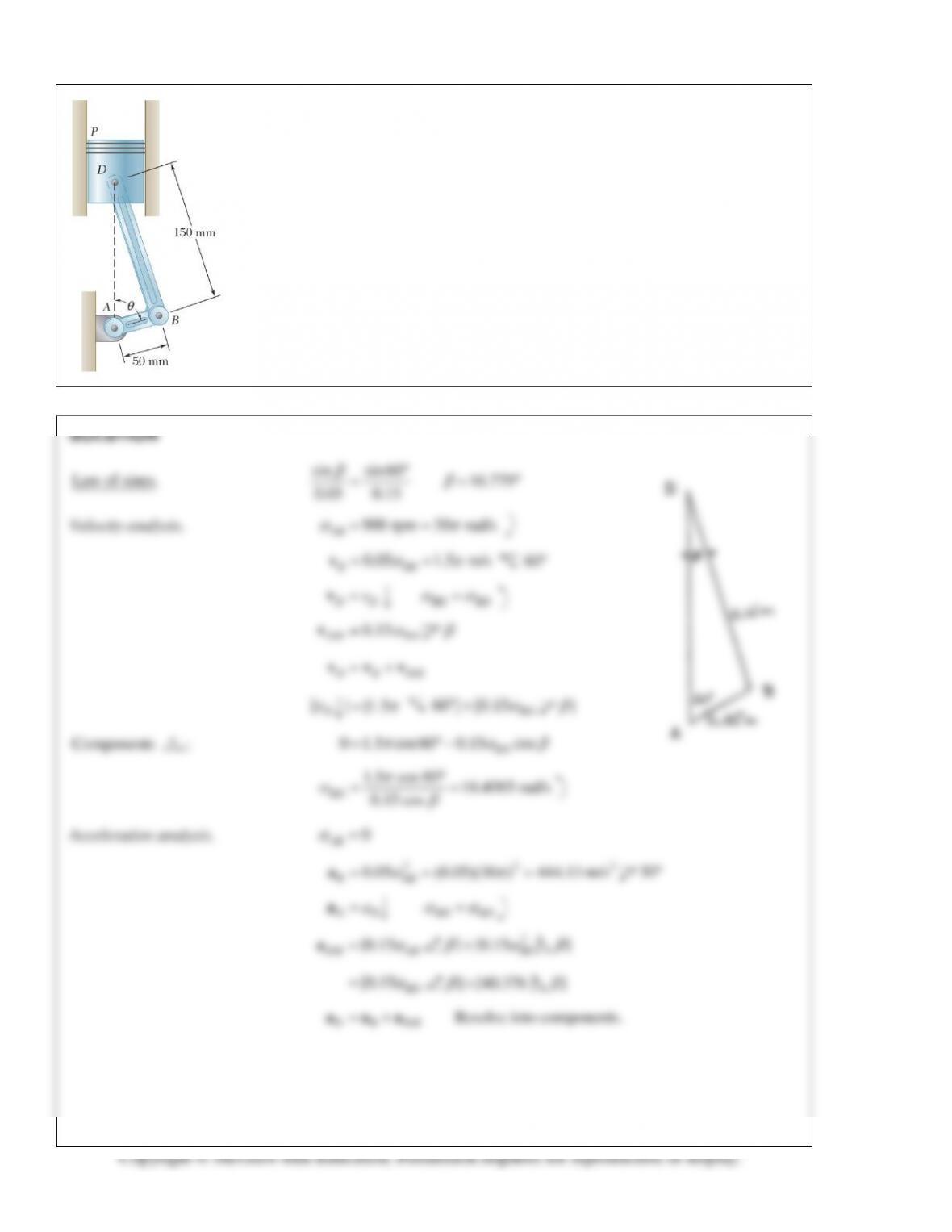
Knowing that crank AB rotates about Point A with a constant angular velocity of
900 rpm clockwise, determine the acceleration of the piston P when
60 .
θ
= °
PROBLEM 15.120 (Continued)
:
0 444.13 cos 30 0.15 cos 40.376 sin
BD
αβ β
=− °+ +
2
2597.0 rad/s
BD
α
=
:
444.13 sin 30 (0.15)(2597.0)sin 40.376 cos
D
a
ββ
= °− +
2
148.27 m/s PD
= =aa
2
148.3 m/s
P
=
a
PROBLEM 15.121
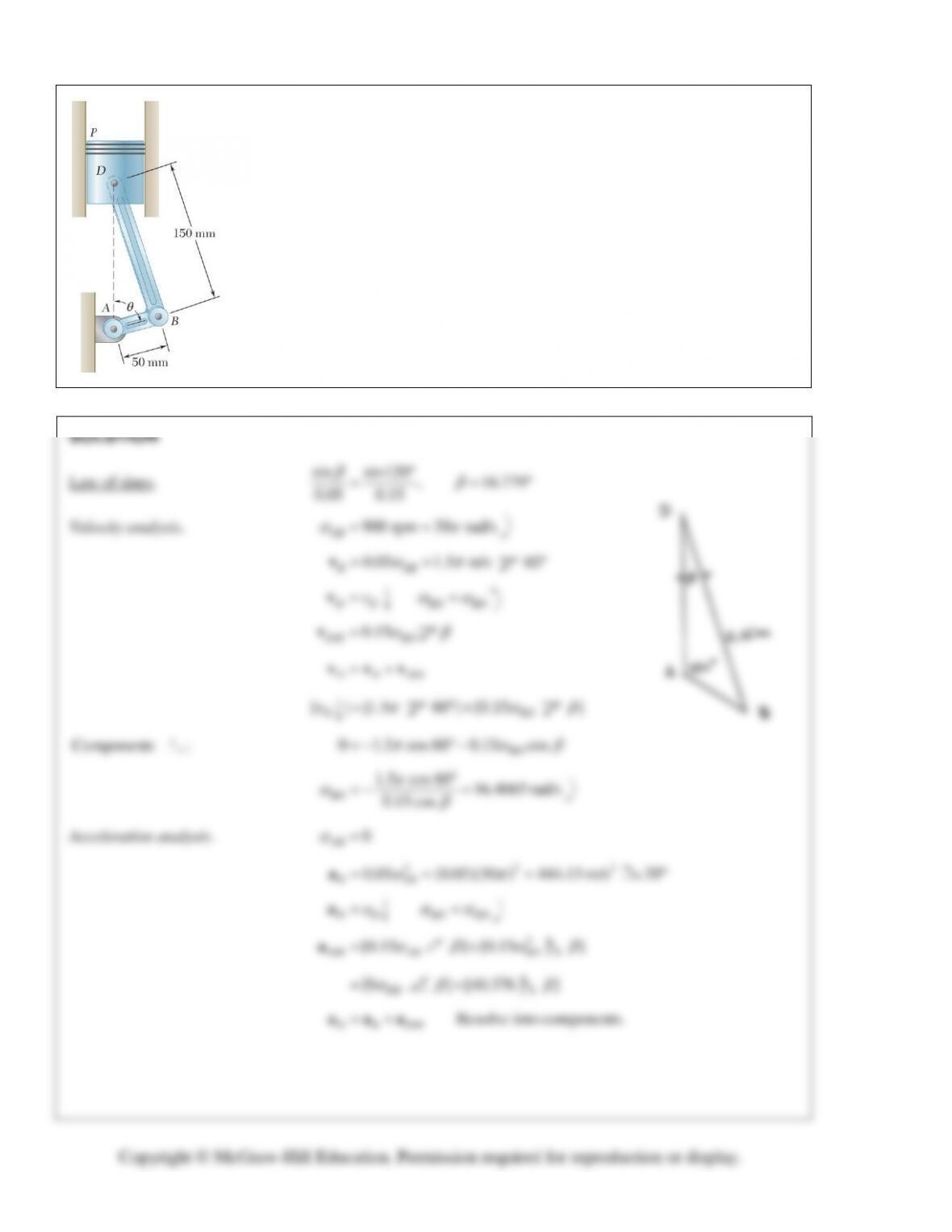
Knowing that crank AB rotates about Point A with a constant angular velocity of
900 rpm clockwise, determine the acceleration of the piston P when
120 .
θ
= °
PROBLEM 15.122
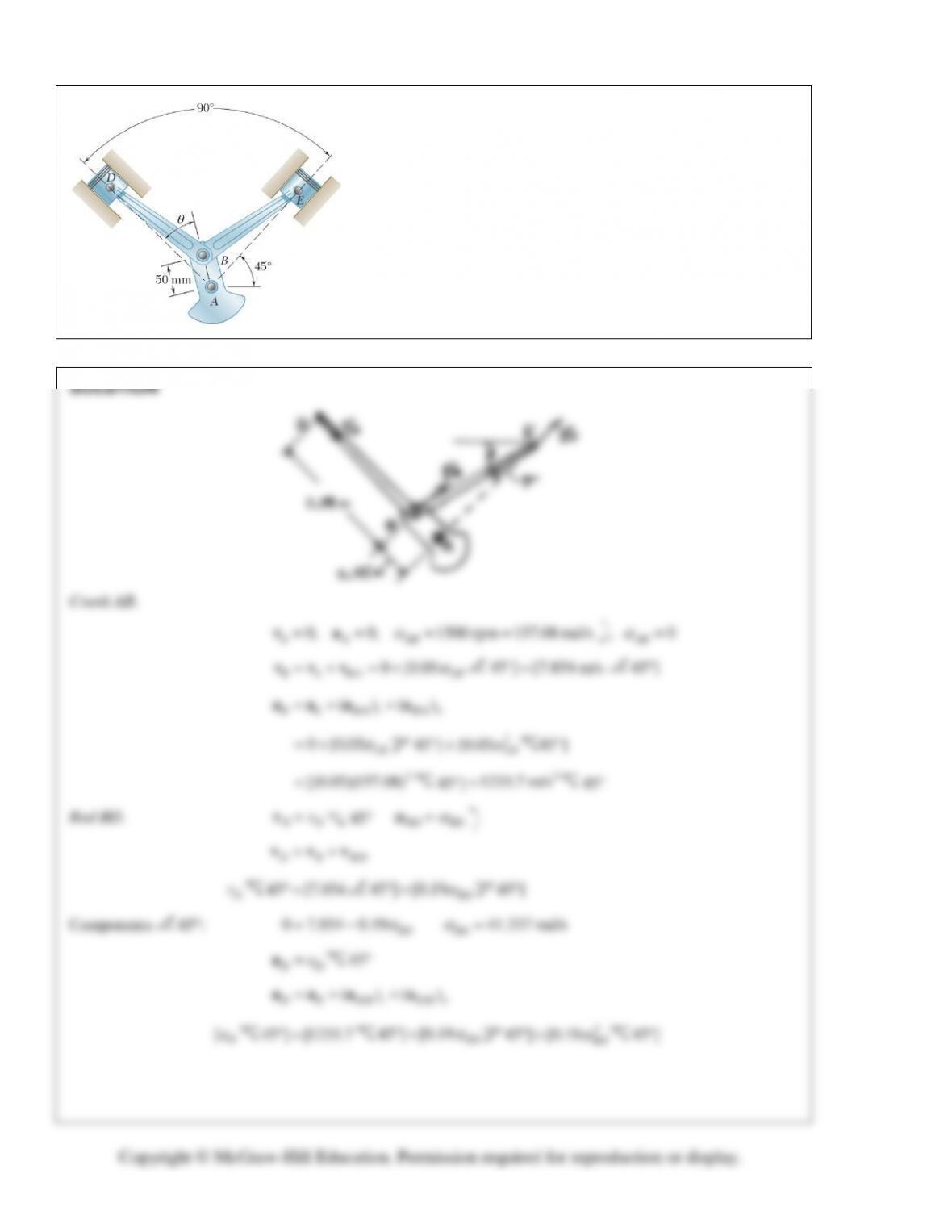
In the two–cylinder air compressor shown, the connecting rods
BD and BE are each 190 mm long and crank AB rotates about the
fixed Point A with a constant angular velocity of 1500 rpm
clockwise. Determine the acceleration of each piston when
θ
= 0.