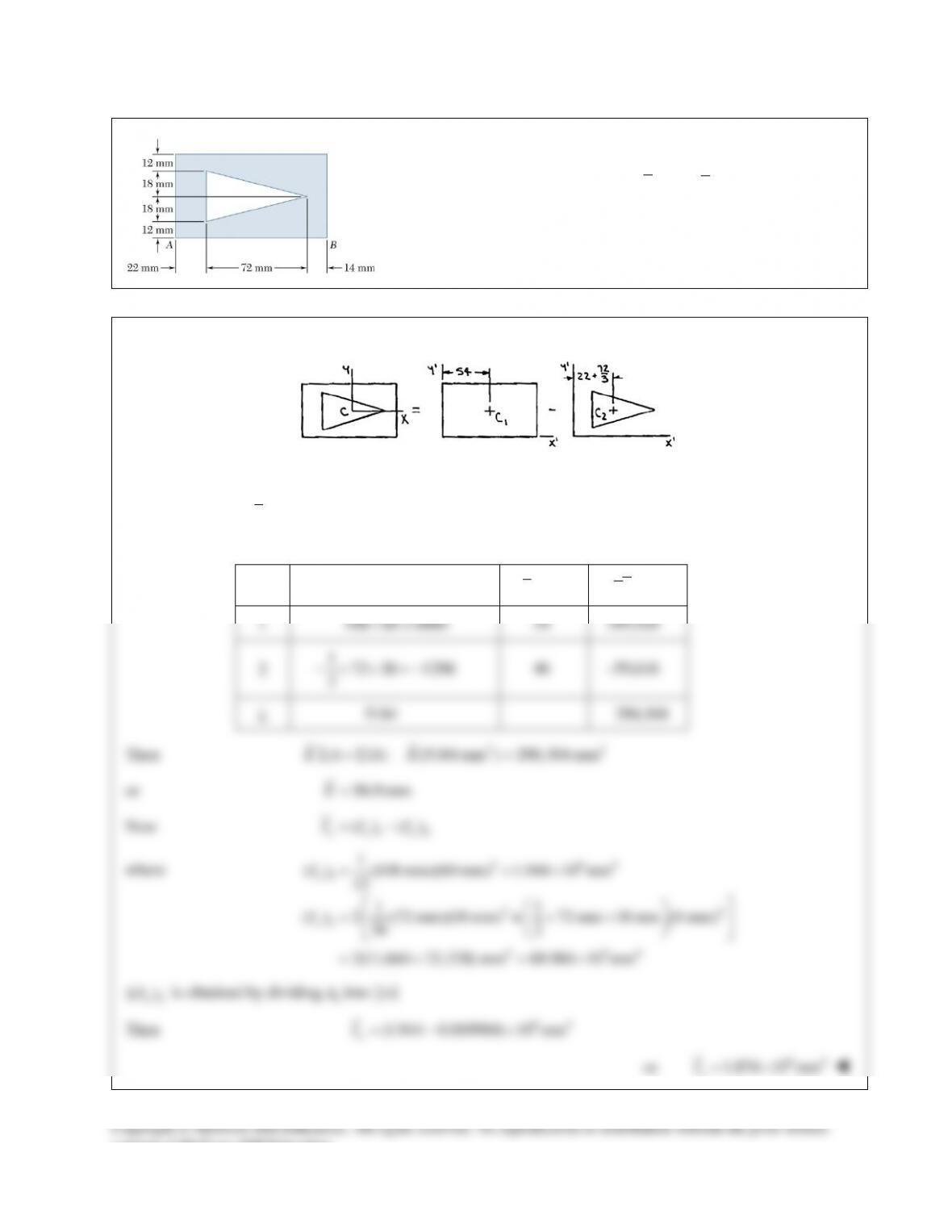
consent of McGraw–Hill Education.
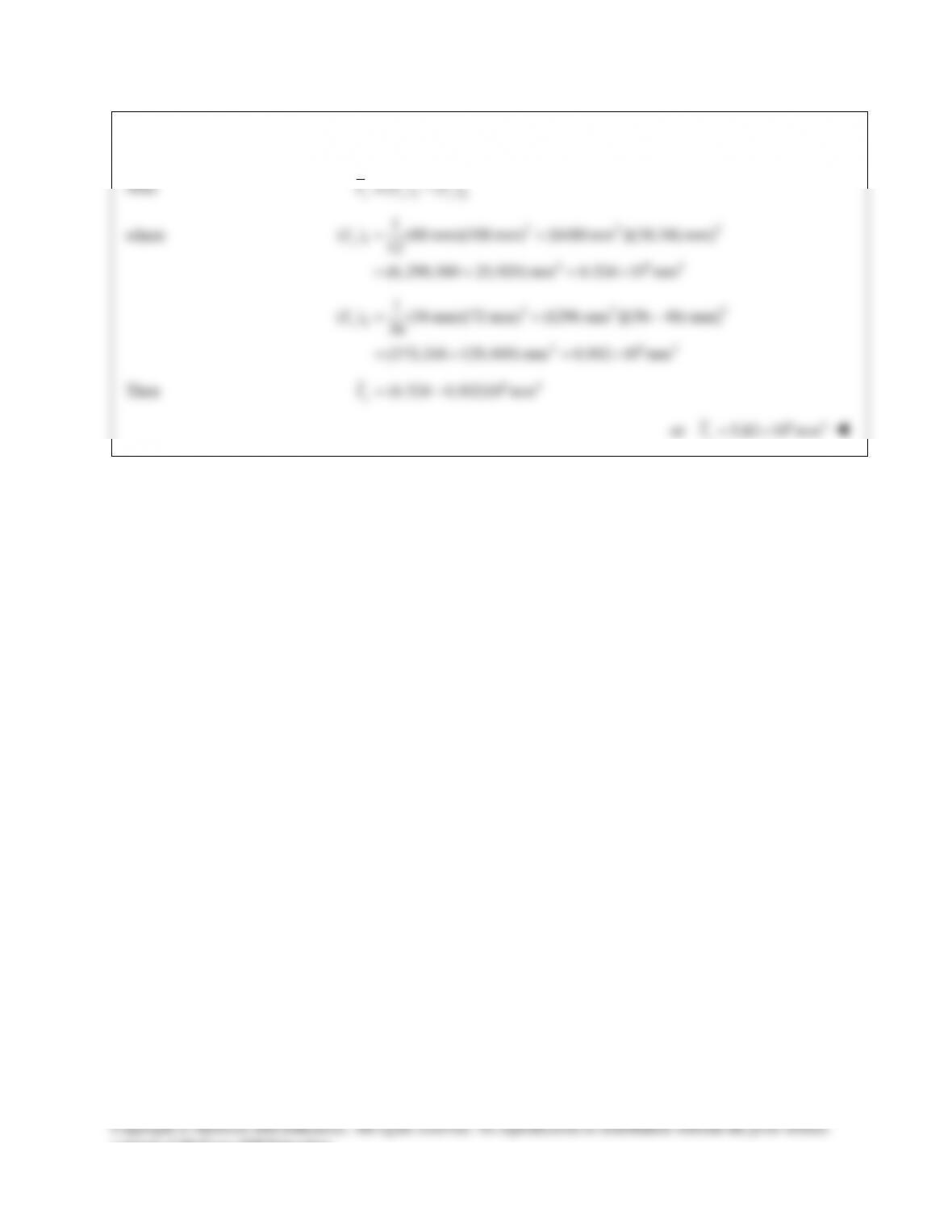
SOLUTION Continued
Also
12
() ()
yy y
II I= −
where
32 2
1
4 64
1
( ) (60 mm)(108 mm) (6480 mm )[(56.54) mm]
12
(6,298,560 25,920) mm 6.324 10 mm
y
I= +
=+=×
32 2
2
4 64
1
( ) (36 mm)(72 mm) (1296 mm )[(56 46) mm]
36
(373,248 129,600) mm 0.502 10 mm
y
I= +−
=+=×
Then
64
(6.324 0.502)10 mm
y
I= −
or
64
5.82 10 mm
y
I= ×
consent of McGraw–Hill Education.
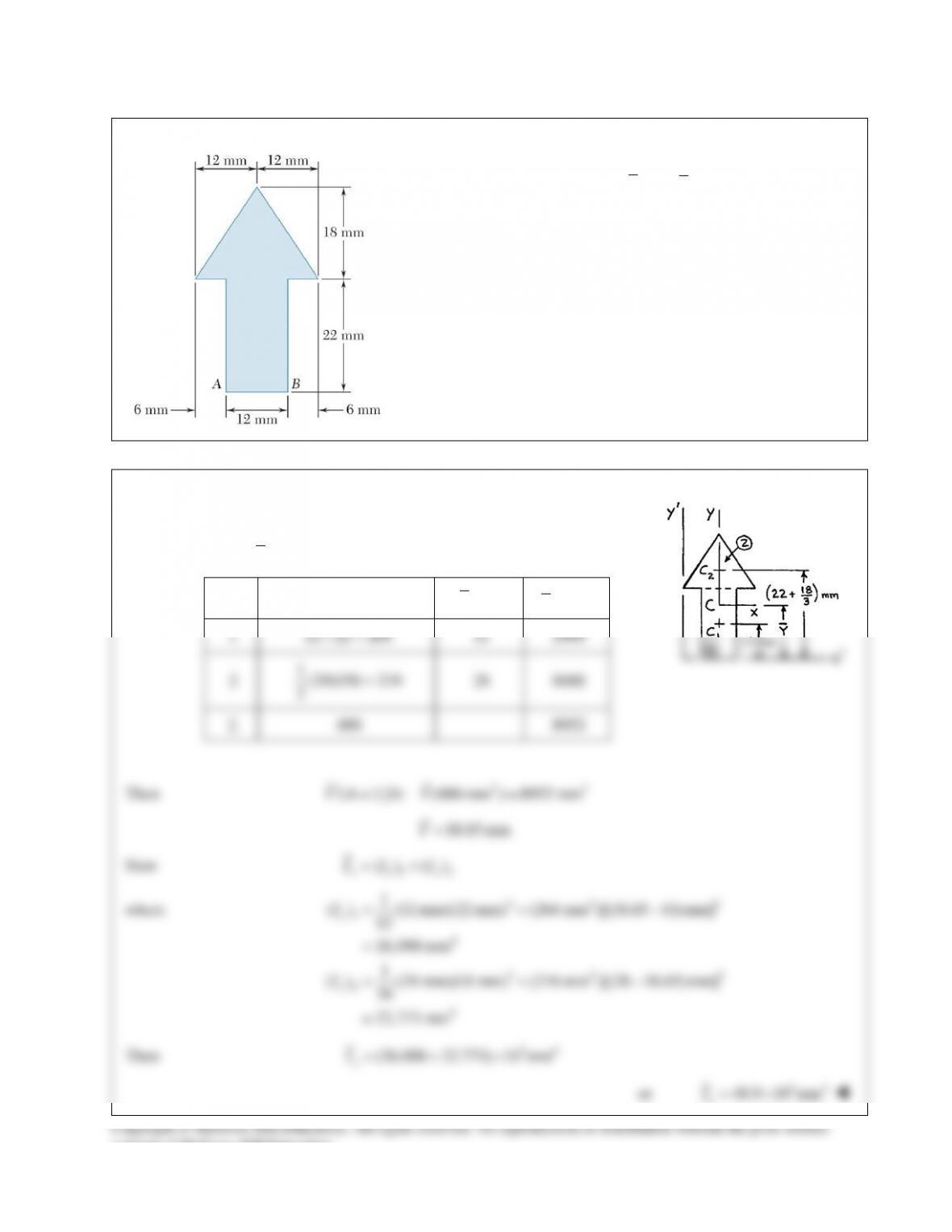
PROBLEM 7.56
Determine the moments of inertia
x
I
and
y
I
of the area shown with
respect to centroidal axes respectively parallel and perpendicular to
side AB.
SOLUTION
First locate C of the area:
Symmetry implies
12 mm.X=
2
, mmA
, mmy
3
, mmyA
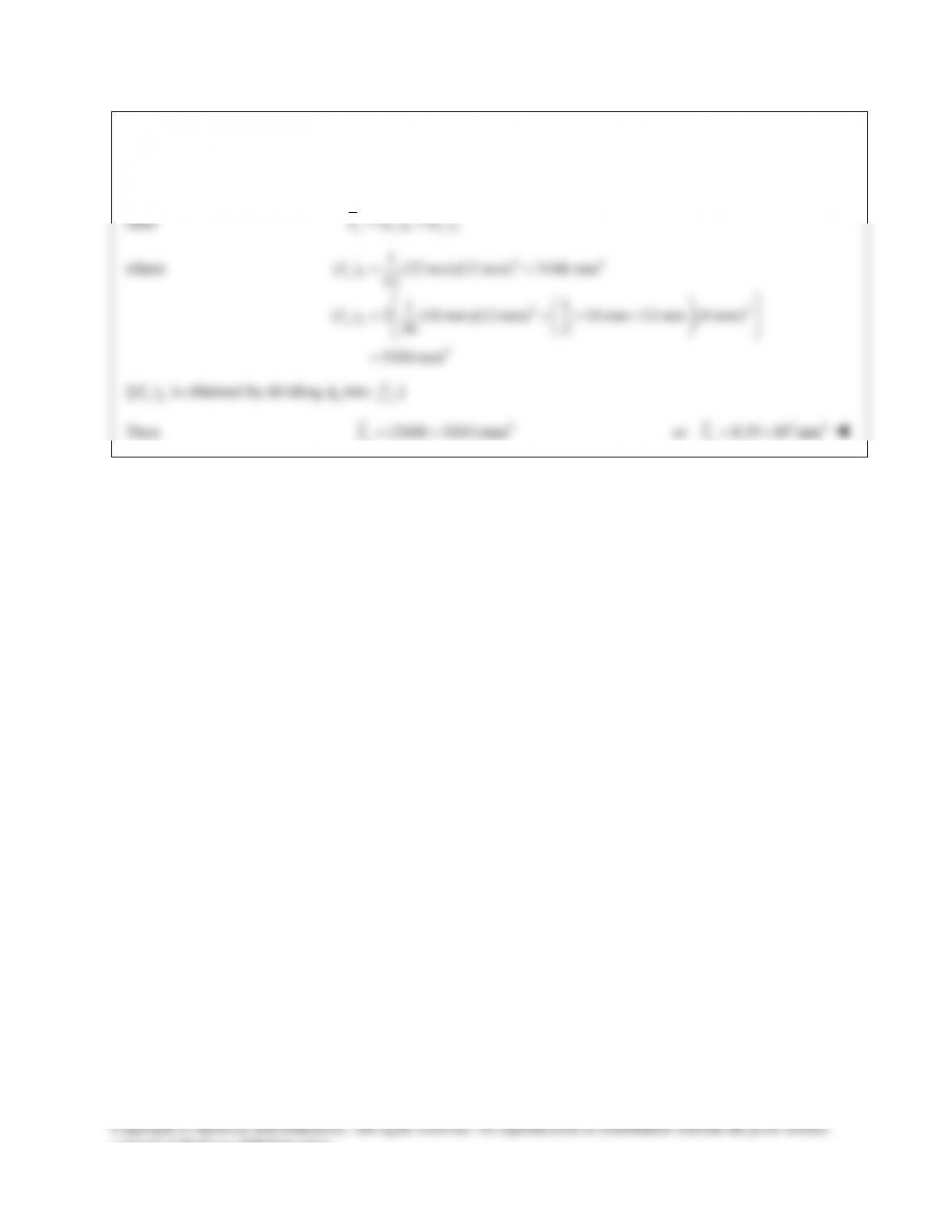
SOLUTION Continued
Also
12
() ()
yy y
II I
= +
where
34
1
32
2
4
1
( ) (22 mm)(12 mm) 3168 mm
12
11
( ) 2 (18 mm)(12 mm) 18 mm 12 mm (4 mm)
36 2
5184 mm
y
y
I
I
= =
= +× ×
=
2
[( )
y
I
is obtained by dividing
2
A
into ]
Then
4
(3168 5184)mm
y
I= +
or
34
8.35 10 mm
y
I= ×
consent of McGraw–Hill Education.
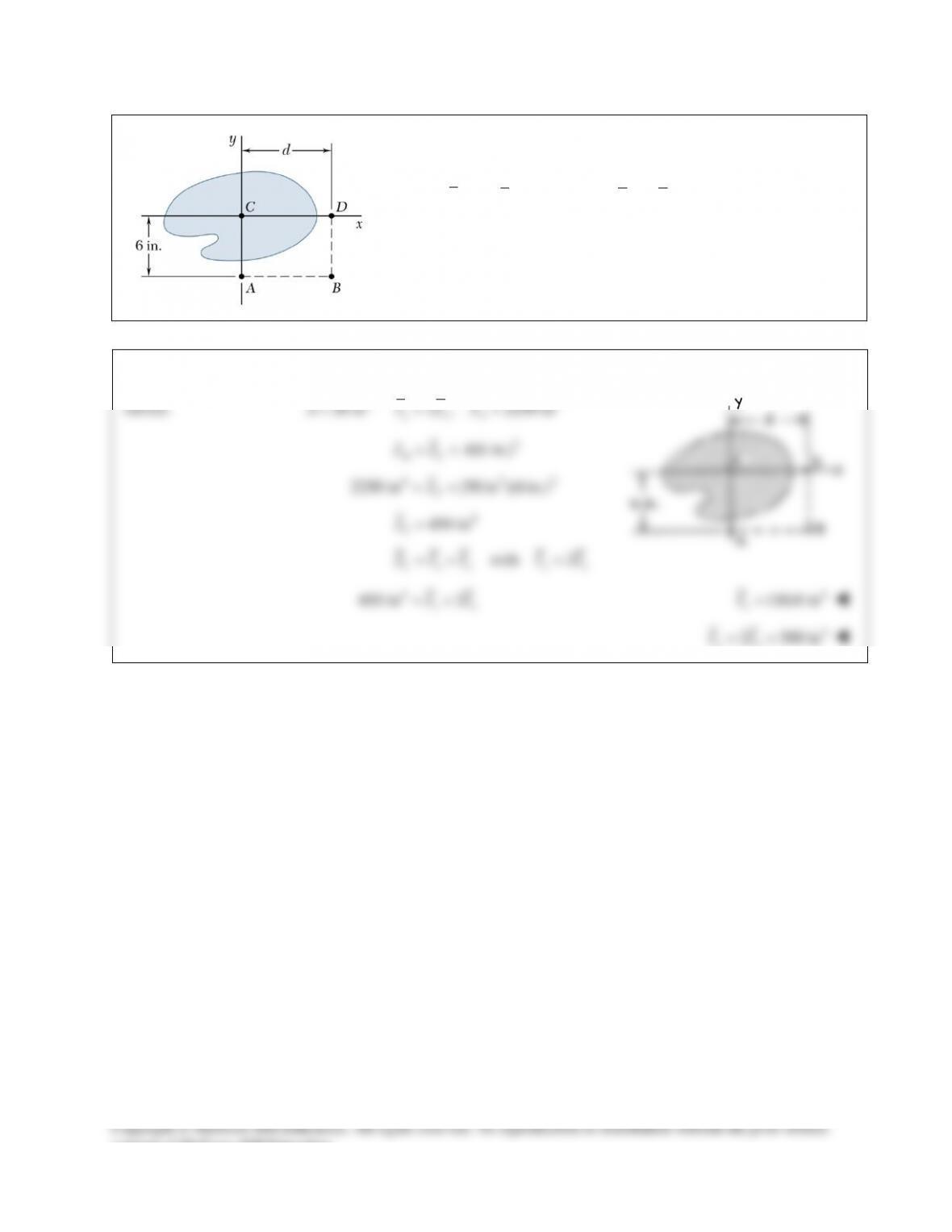
PROBLEM 7.57
The shaded area is equal to
2
50 in .
Determine its centroidal moments
of inertia
x
I
and
,
y
I
knowing that
2
yx
II=
and that the polar moment
of inertia of the area about Point A is
4
2250 in .
A
J=
SOLUTION
Given:
2
50 inA=
4
2 , 2250 in
y xA
I IJ= =
2
(6 in.)
AC
JJA= +
4 22
2250 in (50 in )(6 in.)
C
J= +
4
450 in
C
J=
with 2
Cxy y x
J II I I=+=
4
450 in 2
xx
II= +
4
150.0 in
x
I=
4
2 300 in
yx
II= =
consent of McGraw–Hill Education.
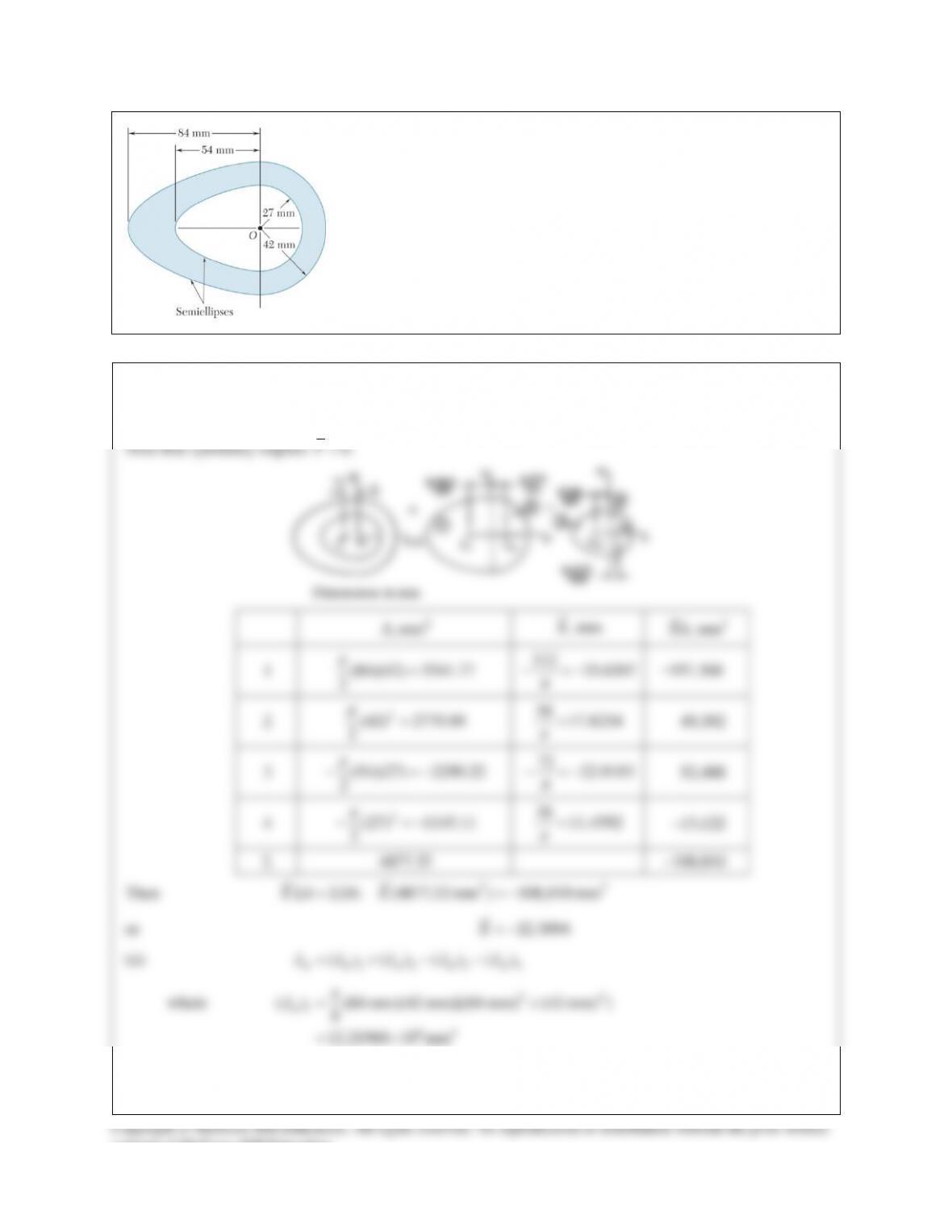
PROBLEM 7.58
Determine the polar moment of inertia of the area shown with respect
to (a) Point O, (b) the centroid of the area.
SOLUTION
First locate centroid C of the figure.
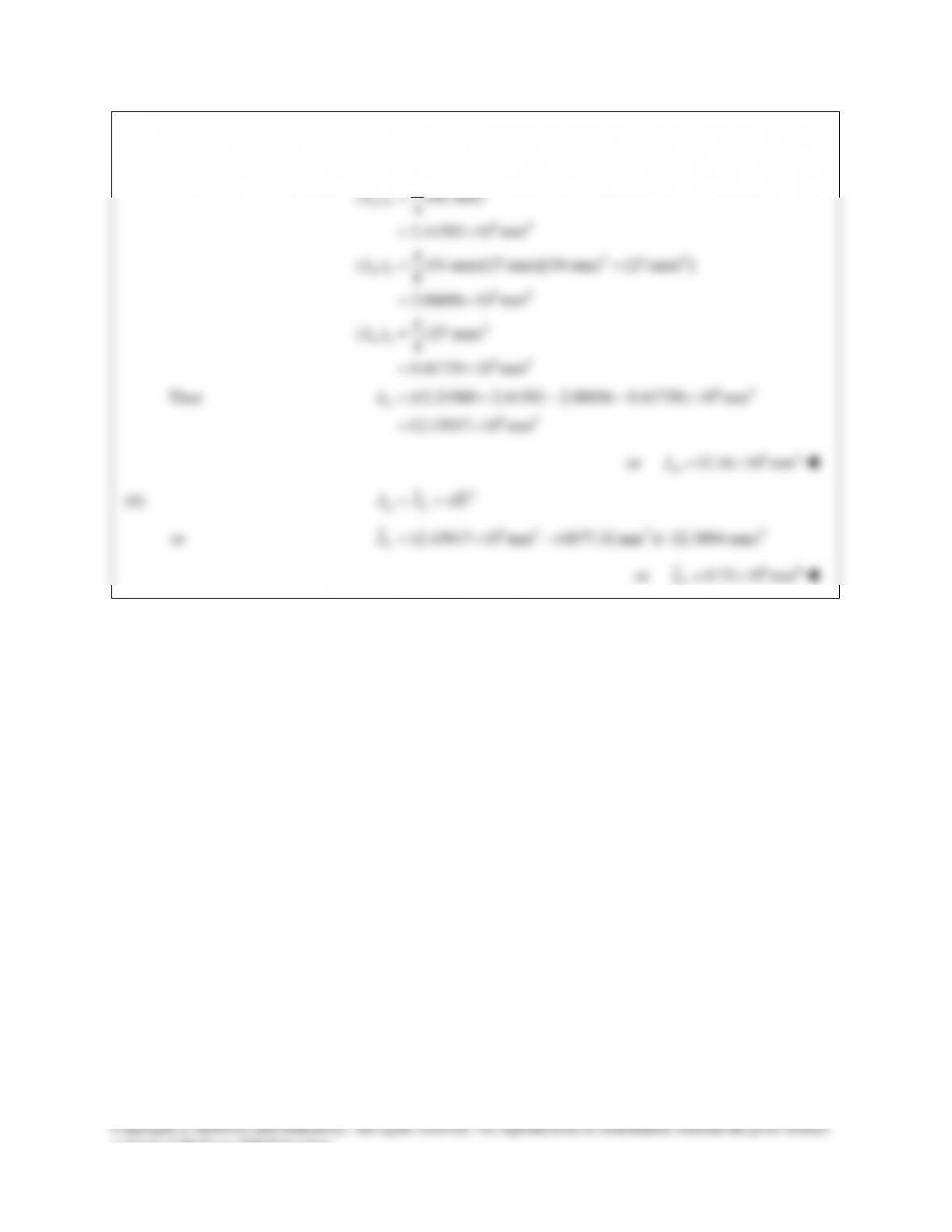
SOLUTION Continued
4
2
64
22
3
64
4
4
64
( ) (42 mm)
4
2.44392 10 mm
( ) (54 mm)(27 mm)[(54 mm) (27 mm) ]
8
2.08696 10 mm
( ) (27 mm)
4
0.41739 10 mm
O
O
O
J
J
J
π
π
π
=
= ×
= +
= ×
=
= ×
Then
64
64
(12.21960 2.44392 2.08696 0.41739) 10 mm
12.15917 10 mm
O
J= +−− ×
= ×
or
64
12.16 10 mm
O
J= ×
(b)
2
OC
J J AX= +
or
64 2 2
12.15917 10 mm (4877.32 mm )( 22.3094 mm)
C
J= ×− −
or
6
9.73 10 mm
C
J
4
= ×
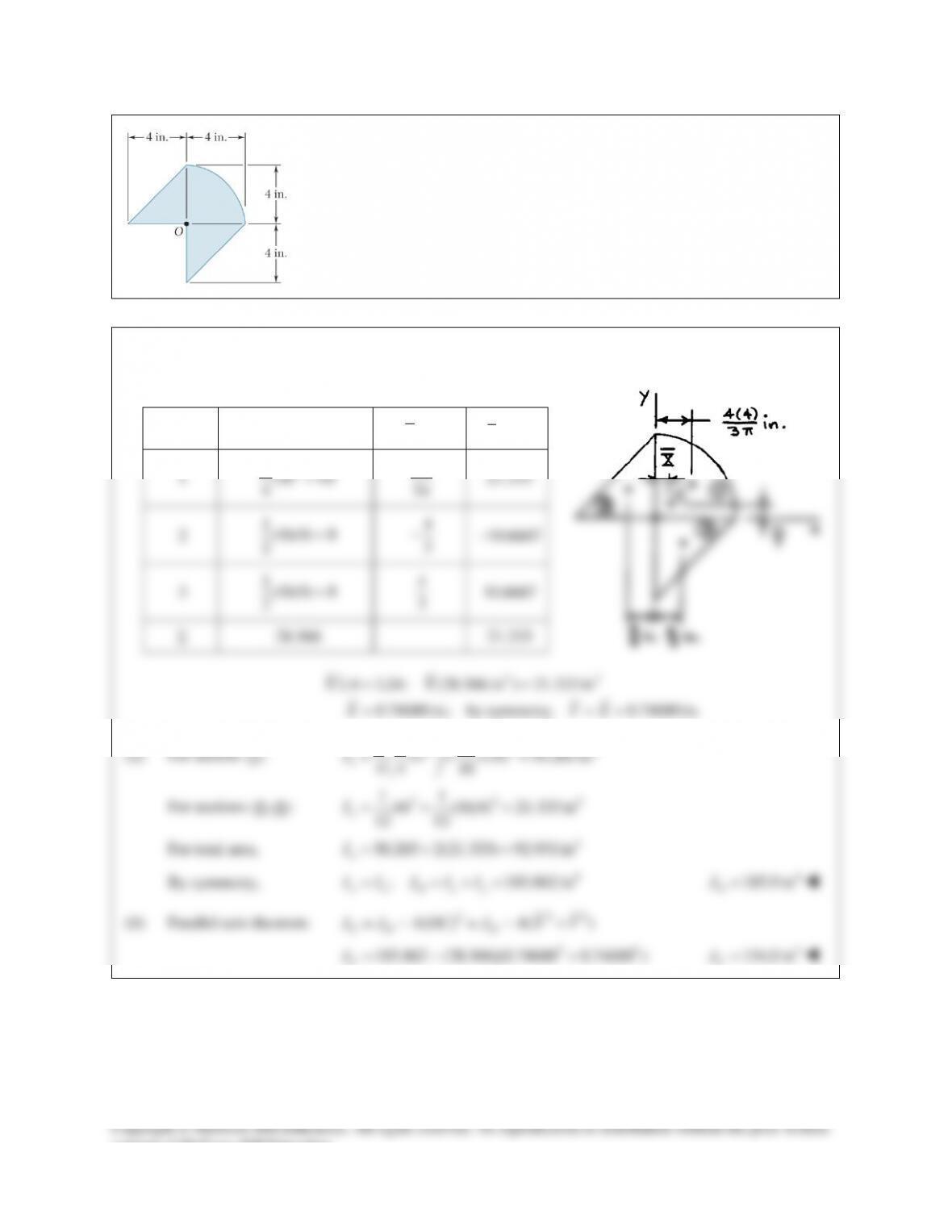
PROBLEM 7.59
Determine the polar moment of inertia of the area shown with respect to
(a) Point O, (b) the centroid of the area.
SOLUTION
Determination of centroid C of entire section:
Section Area, in2
, in.x
3
, inxA
2
ππ
16
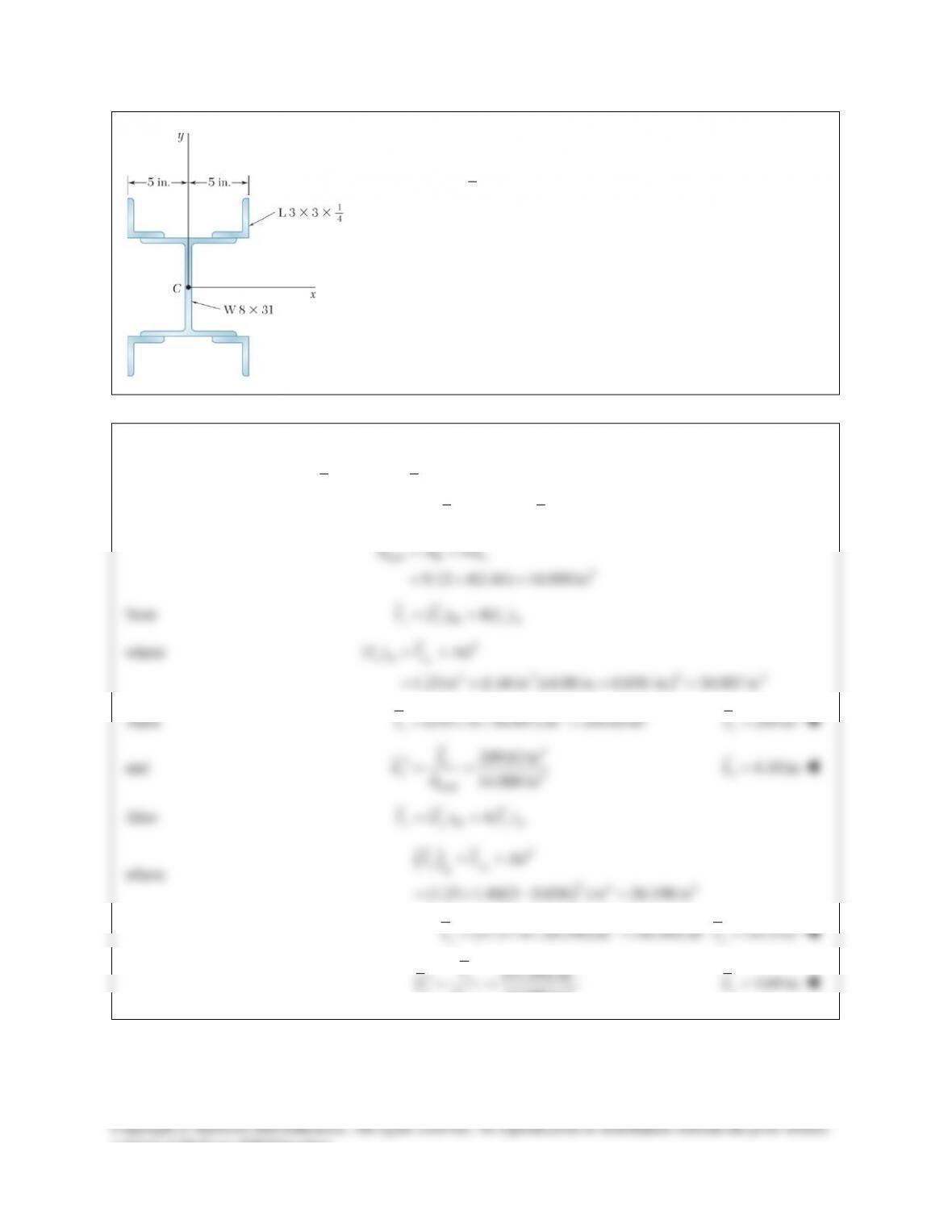
PROBLEM 7.60
Two L6 × 4 ×
1
2
–in. angles are welded together to form the section
shown. Determine the moments of inertia and the radii of gyration
of the combined section with respect to the centroidal x and y axes.
SOLUTION
W section:
24 4
9.12 in 110 in 37.1in
xy
AI I= = =
Angle:
244
1.44 in 1.23 in 1.23in
xy
AI I= = =
total W A
2
4
9.12 4(1.44) 14.880 in
AAA
= +
=+=
Now
WA
() 4()
xx x
II I= +
where
A
2
A
42 2 4
()
1.23 in (1.44 in )(4.00 in. 0.836 in.) 34.907 in
xx
I I Ad= +
=+ +=
Then
44
(110 4 34.907) in 249.63 in
x
I= +× =
4
250 in
x
I=
and
4
22
total
249.63 in
14.880 in
x
xI
kA
= =
4.10 in.
x
k=
Also
WA
() 4()
yy y
II I= +
where
( )
( )
A
2
A
244
(1.23 1.44 5 0.836 ) in 26.198 in
yy
I I Ad= +
=+− =
44
(37.1 4 26.198) in 141.892 in
y
I= +× =
4
141.9 in
y
I=
4
22
total
141.892 in
14.880 in
y
y
I
kA
= =
3.09 in.
y
k=
consent of McGraw–Hill Education.
SOLUTION Continued
Also
12
() ()
yy y
II I= −
where
32 2
1
4 64
1
( ) (60 mm)(108 mm) (6480 mm )[(56.54) mm]
12
(6,298,560 25,920) mm 6.324 10 mm
y
I= +
=+=×
32 2
2
4 64
1
( ) (36 mm)(72 mm) (1296 mm )[(56 46) mm]
36
(373,248 129,600) mm 0.502 10 mm
y
I= +−
=+=×
Then
64
(6.324 0.502)10 mm
y
I= −
or
64
5.82 10 mm
y
I= ×
consent of McGraw–Hill Education.
PROBLEM 7.56
Determine the moments of inertia
x
I
and
y
I
of the area shown with
respect to centroidal axes respectively parallel and perpendicular to
side AB.
SOLUTION
First locate C of the area:
Symmetry implies
12 mm.X=
2
, mmA
, mmy
3
, mmyA
SOLUTION Continued
Also
12
() ()
yy y
II I
= +
where
34
1
32
2
4
1
( ) (22 mm)(12 mm) 3168 mm
12
11
( ) 2 (18 mm)(12 mm) 18 mm 12 mm (4 mm)
36 2
5184 mm
y
y
I
I
= =
= +× ×
=
2
[( )
y
I
is obtained by dividing
2
A
into ]
Then
4
(3168 5184)mm
y
I= +
or
34
8.35 10 mm
y
I= ×
consent of McGraw–Hill Education.
PROBLEM 7.57
The shaded area is equal to
2
50 in .
Determine its centroidal moments
of inertia
x
I
and
,
y
I
knowing that
2
yx
II=
and that the polar moment
of inertia of the area about Point A is
4
2250 in .
A
J=
SOLUTION
Given:
2
50 inA=
4
2 , 2250 in
y xA
I IJ= =
2
(6 in.)
AC
JJA= +
4 22
2250 in (50 in )(6 in.)
C
J= +
4
450 in
C
J=
with 2
Cxy y x
J II I I=+=
4
450 in 2
xx
II= +
4
150.0 in
x
I=
4
2 300 in
yx
II= =
consent of McGraw–Hill Education.
PROBLEM 7.58
Determine the polar moment of inertia of the area shown with respect
to (a) Point O, (b) the centroid of the area.
SOLUTION
First locate centroid C of the figure.
SOLUTION Continued
4
2
64
22
3
64
4
4
64
( ) (42 mm)
4
2.44392 10 mm
( ) (54 mm)(27 mm)[(54 mm) (27 mm) ]
8
2.08696 10 mm
( ) (27 mm)
4
0.41739 10 mm
O
O
O
J
J
J
π
π
π
=
= ×
= +
= ×
=
= ×
Then
64
64
(12.21960 2.44392 2.08696 0.41739) 10 mm
12.15917 10 mm
O
J= +−− ×
= ×
or
64
12.16 10 mm
O
J= ×
(b)
2
OC
J J AX= +
or
64 2 2
12.15917 10 mm (4877.32 mm )( 22.3094 mm)
C
J= ×− −
or
6
9.73 10 mm
C
J
4
= ×
PROBLEM 7.59
Determine the polar moment of inertia of the area shown with respect to
(a) Point O, (b) the centroid of the area.
SOLUTION
Determination of centroid C of entire section:
Section Area, in2
, in.x
3
, inxA
2
ππ
16
PROBLEM 7.60
Two L6 × 4 ×
1
2
–in. angles are welded together to form the section
shown. Determine the moments of inertia and the radii of gyration
of the combined section with respect to the centroidal x and y axes.
SOLUTION
W section:
24 4
9.12 in 110 in 37.1in
xy
AI I= = =
Angle:
244
1.44 in 1.23 in 1.23in
xy
AI I= = =
total W A
2
4
9.12 4(1.44) 14.880 in
AAA
= +
=+=
Now
WA
() 4()
xx x
II I= +
where
A
2
A
42 2 4
()
1.23 in (1.44 in )(4.00 in. 0.836 in.) 34.907 in
xx
I I Ad= +
=+ +=
Then
44
(110 4 34.907) in 249.63 in
x
I= +× =
4
250 in
x
I=
and
4
22
total
249.63 in
14.880 in
x
xI
kA
= =
4.10 in.
x
k=
Also
WA
() 4()
yy y
II I= +
where
( )
( )
A
2
A
244
(1.23 1.44 5 0.836 ) in 26.198 in
yy
I I Ad= +
=+− =
44
(37.1 4 26.198) in 141.892 in
y
I= +× =
4
141.9 in
y
I=
4
22
total
141.892 in
14.880 in
y
y
I
kA
= =
3.09 in.
y
k=
consent of McGraw–Hill Education.