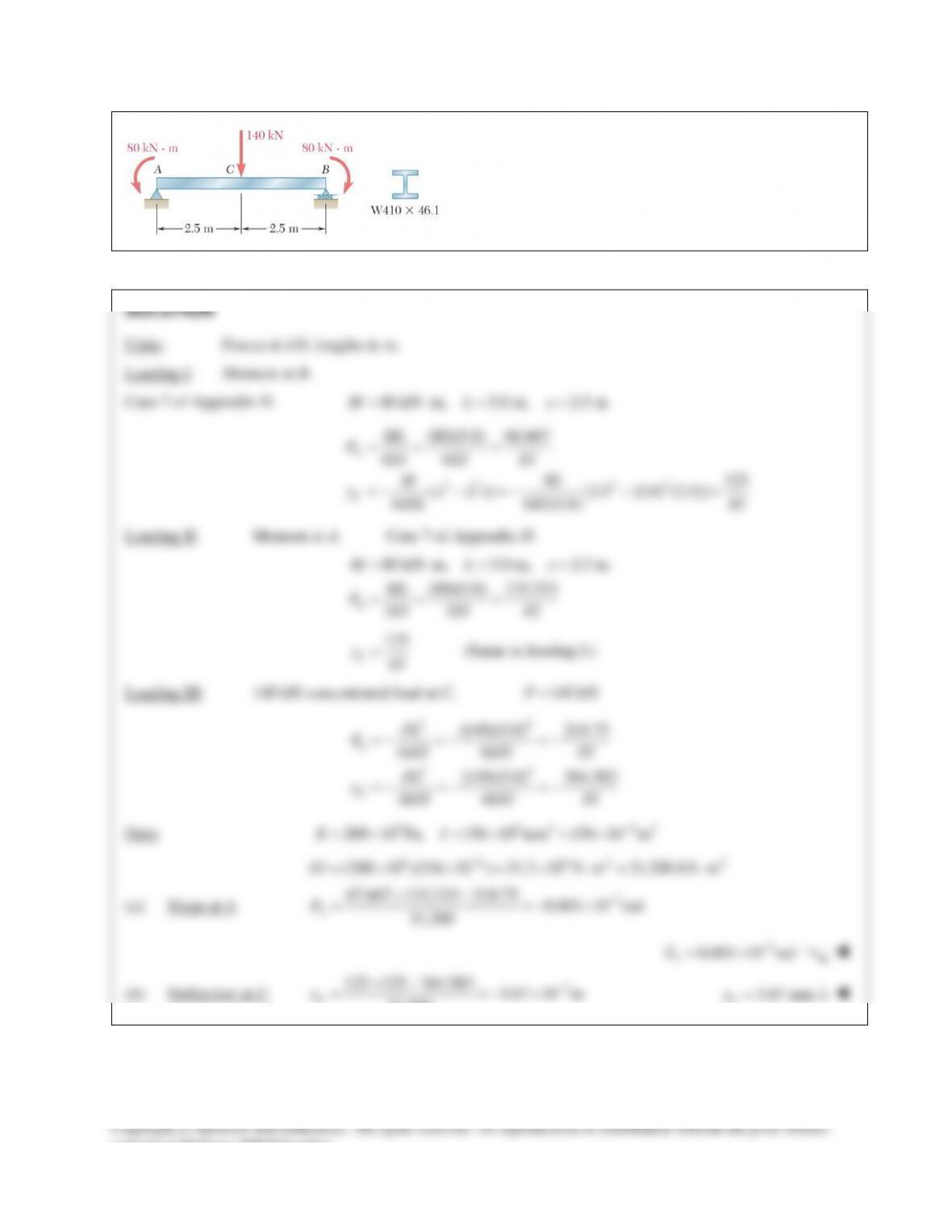
PROBLEM 15.37
For the beam and loading shown, determine (a) the slope at
end A, (b) the deflection at point C. Use
200 GPa.E=
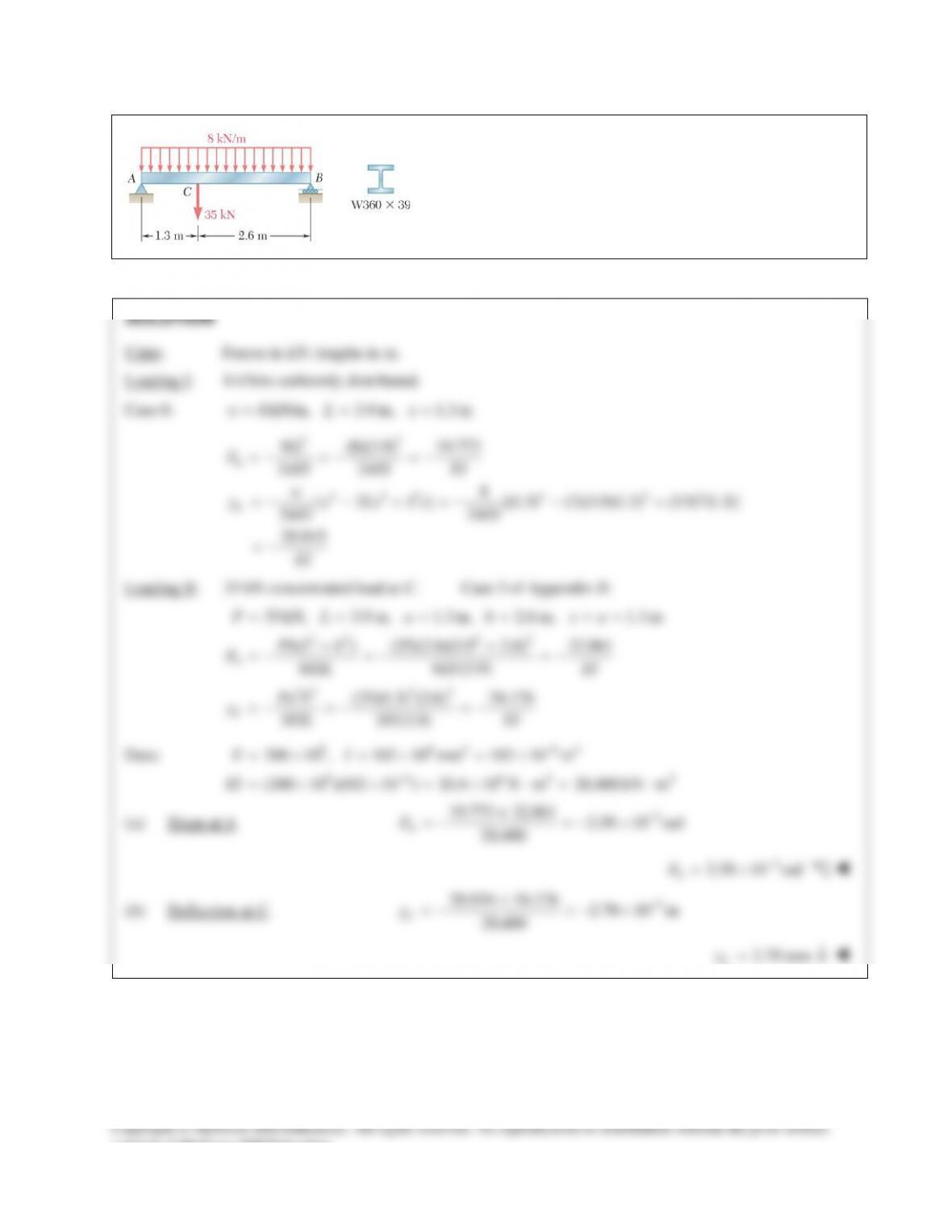
PROBLEM 15.38
For the beam and loading shown, determine (a) the slope at
end A, (b) the deflection at point C. Use
200 GPa.E=
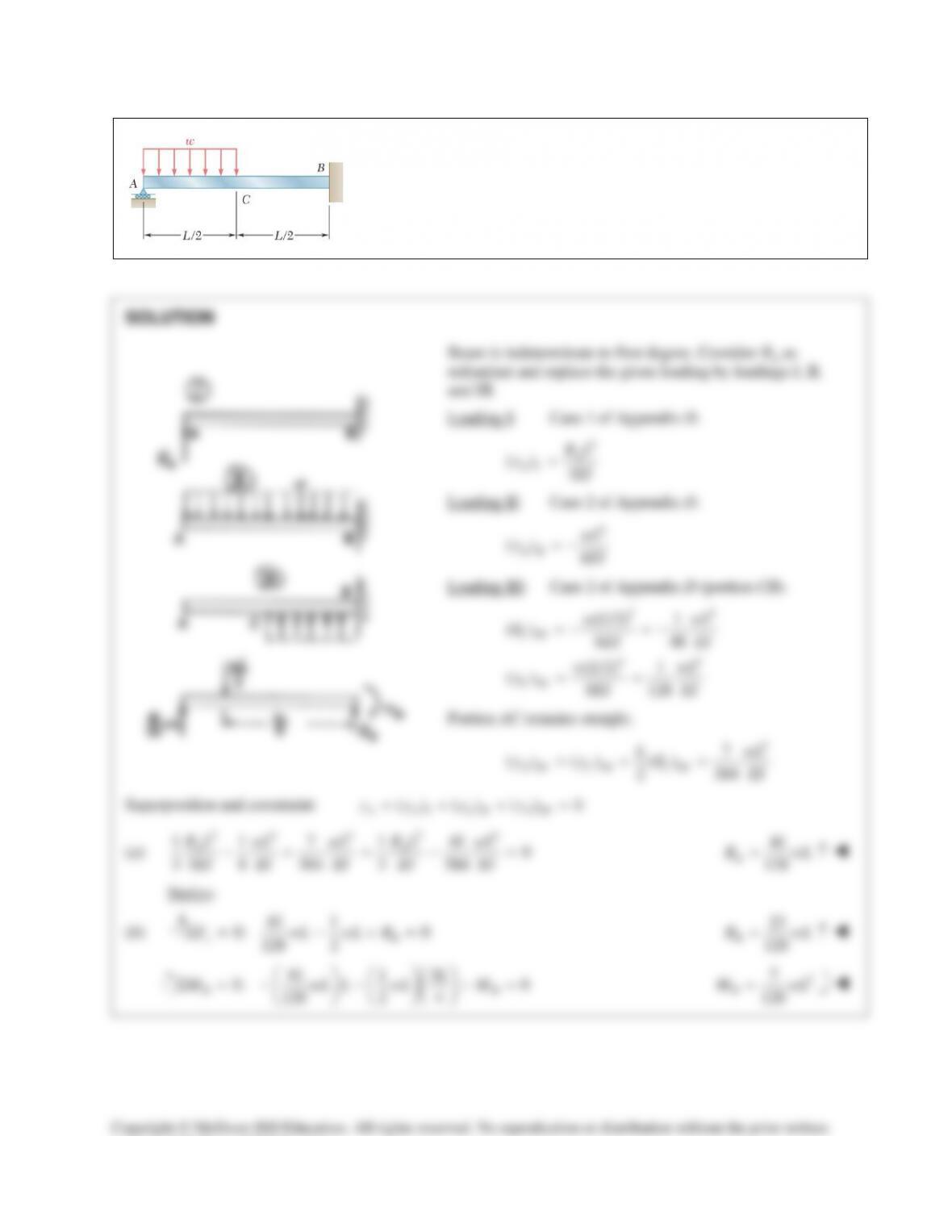
PROBLEM 15.39
For the uniform beam shown, determine (a) the reaction at A, (b) the
reaction at B.
consent of McGraw–Hill Education.
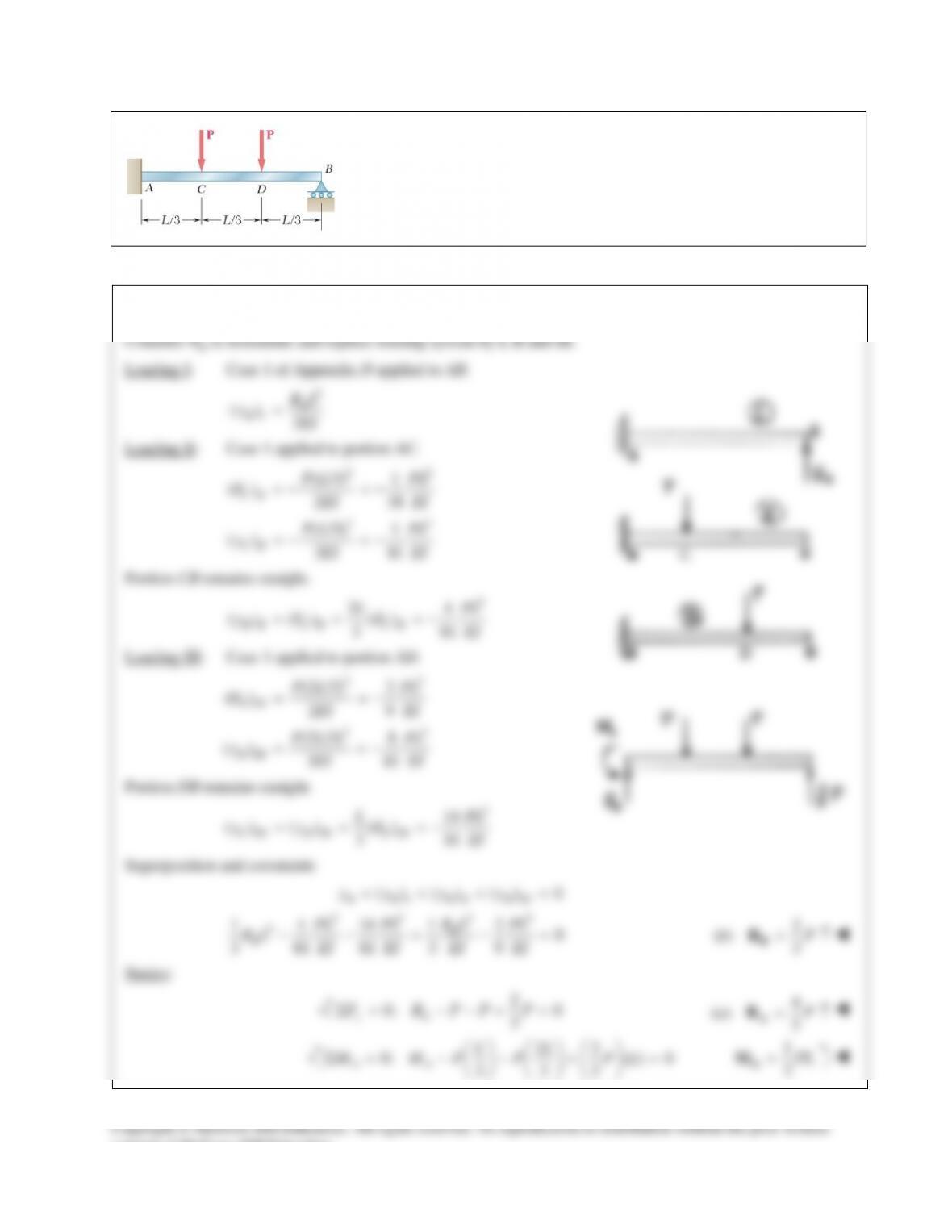
PROBLEM 15.40
For the uniform beam shown, determine (a) the reaction at A, (b) the
reaction at B.
SOLUTION
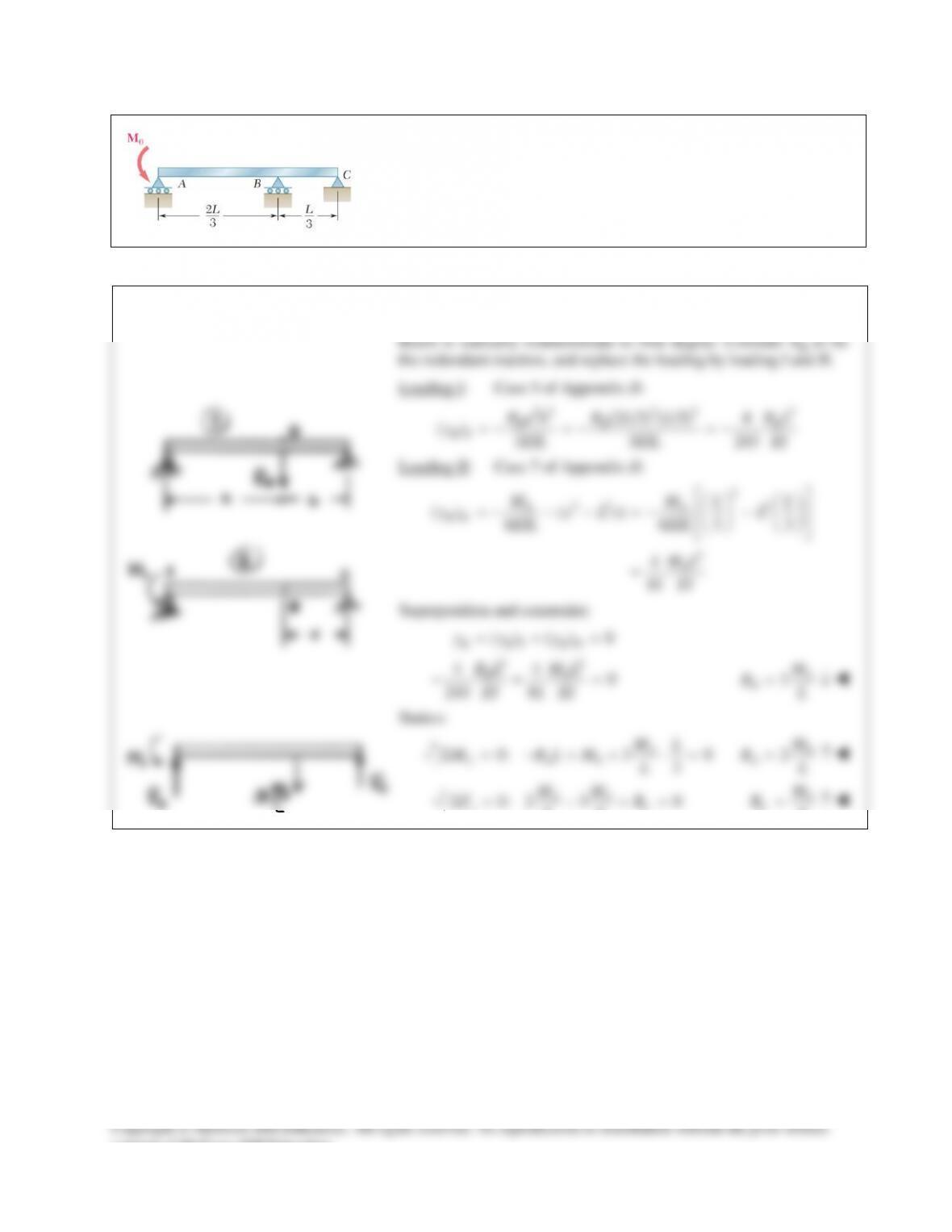
PROBLEM 15.41
For the uniform beam shown, determine the reaction at each of the three
supports.
SOLUTION
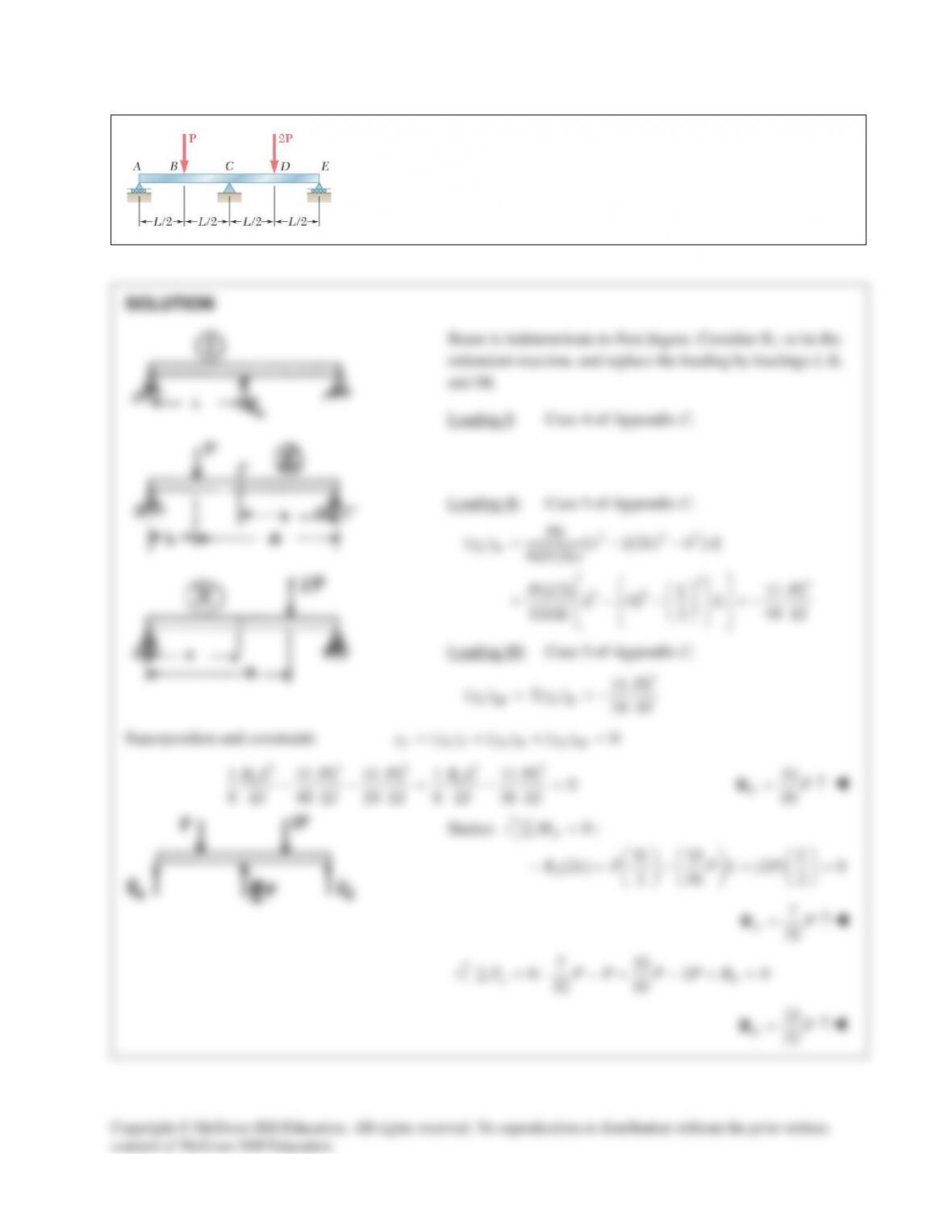
PROBLEM 15.42
For the uniform beam shown, determine the reaction at each of the three
supports.
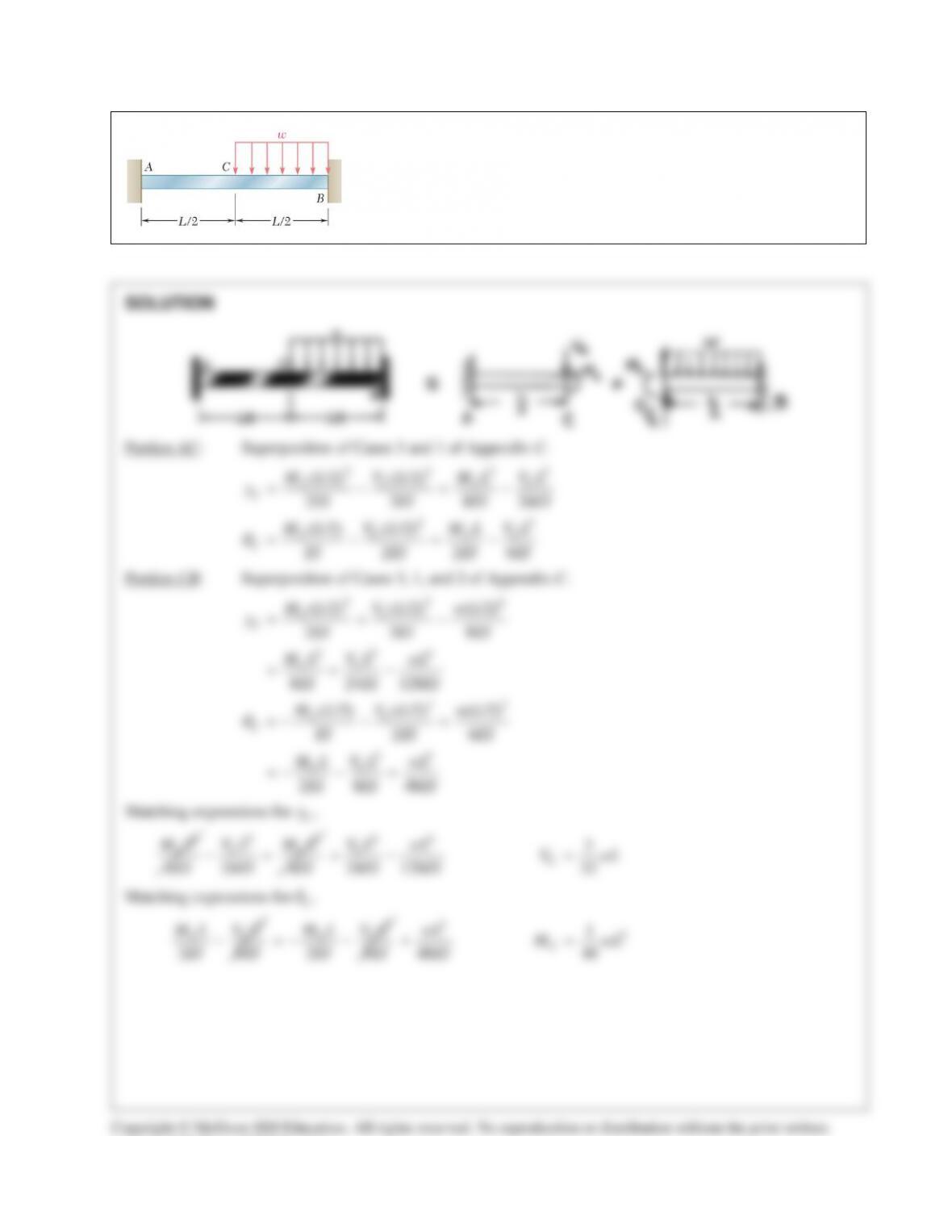
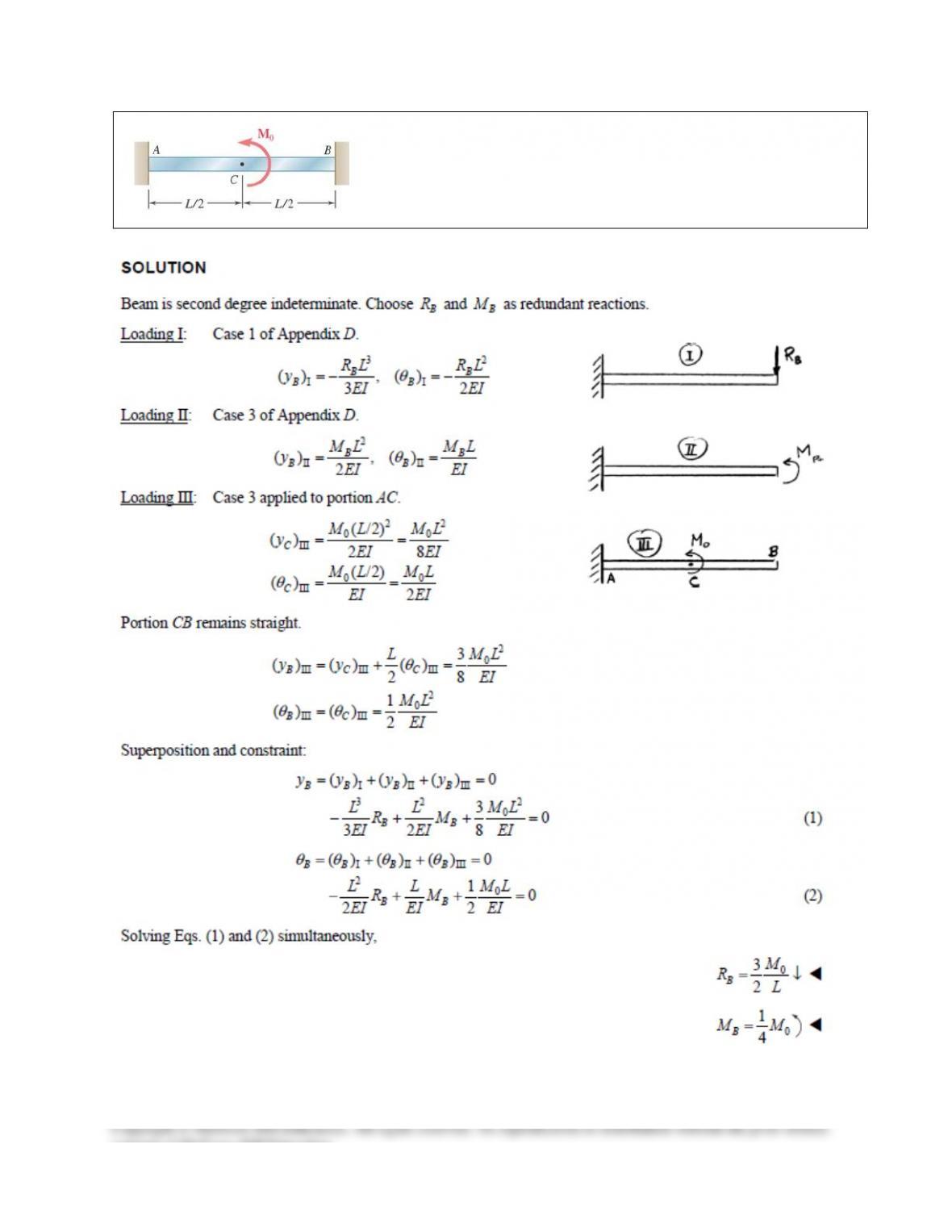
PROBLEM 15.43
For the beam shown, determine the reaction at B.
consent of McGraw–Hill Education.
consent of McGraw-Hill Education.
192
192
PROBLEM 15.44
For the beam shown, determine the reaction at B.
consent of McGraw–Hill Education.
PROBLEM 15.37
For the beam and loading shown, determine (a) the slope at
end A, (b) the deflection at point C. Use
200 GPa.E=
PROBLEM 15.38
For the beam and loading shown, determine (a) the slope at
end A, (b) the deflection at point C. Use
200 GPa.E=
PROBLEM 15.39
For the uniform beam shown, determine (a) the reaction at A, (b) the
reaction at B.
consent of McGraw–Hill Education.
PROBLEM 15.40
For the uniform beam shown, determine (a) the reaction at A, (b) the
reaction at B.
SOLUTION
PROBLEM 15.41
For the uniform beam shown, determine the reaction at each of the three
supports.
SOLUTION
PROBLEM 15.42
For the uniform beam shown, determine the reaction at each of the three
supports.
PROBLEM 15.43
For the beam shown, determine the reaction at B.
consent of McGraw–Hill Education.
consent of McGraw-Hill Education.
192
192
PROBLEM 15.44
For the beam shown, determine the reaction at B.
consent of McGraw–Hill Education.