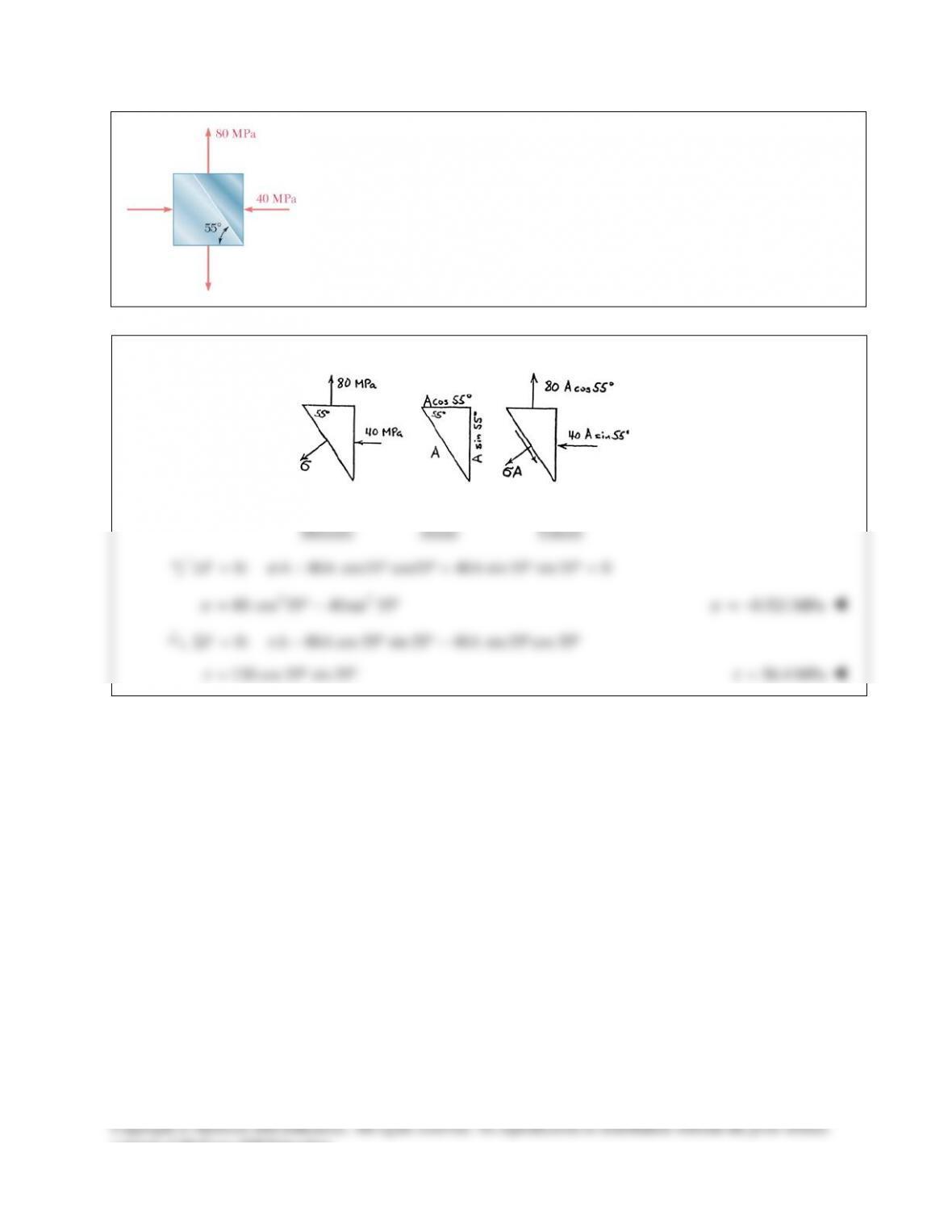
PROBLEM 14.1
For the given state of stress, determine the normal and shearing stresses exerted
on the oblique face of the shaded triangular element shown. Use a method of
analysis based on the equilibrium of that element, as was done in the derivations
of Sec. 14.2.
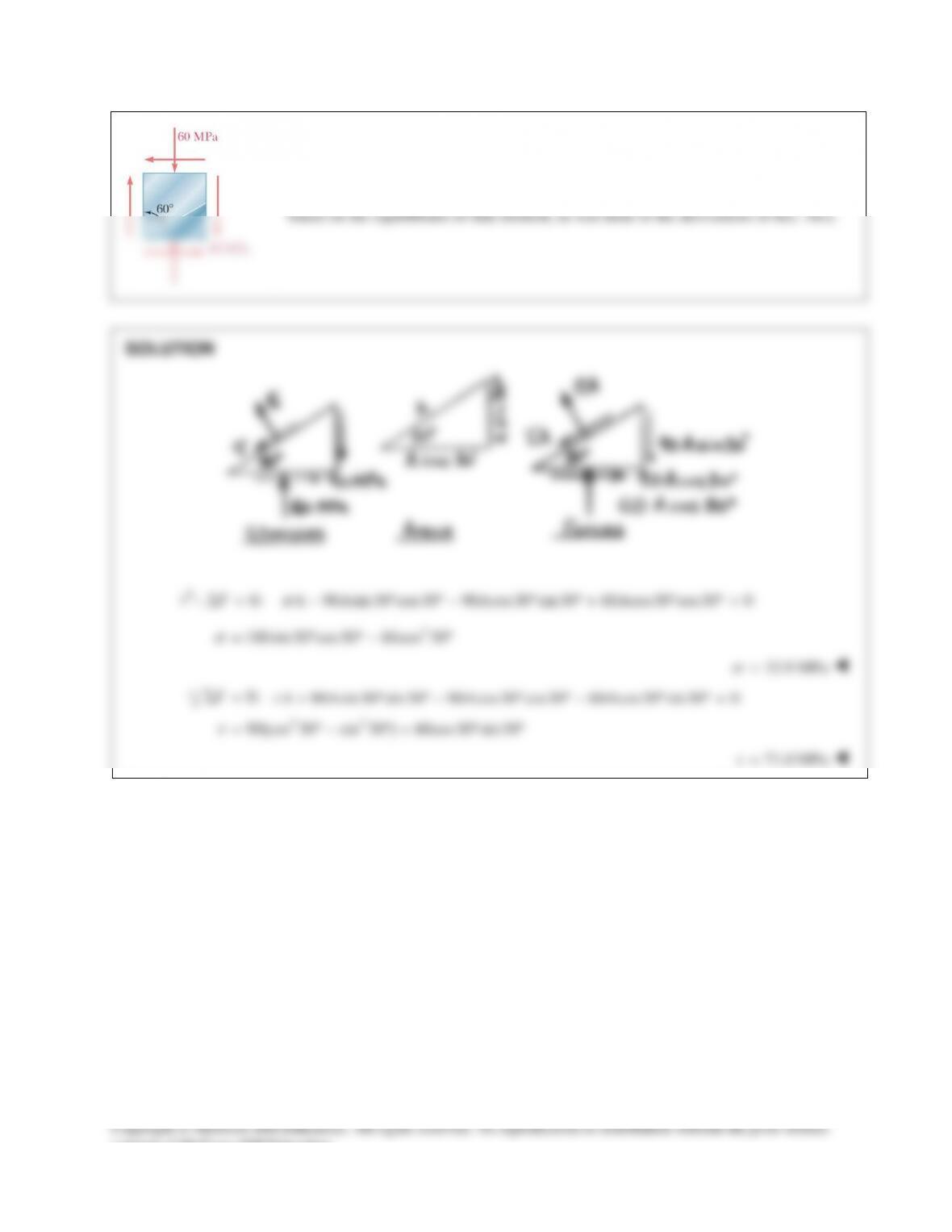
PROBLEM 14.2
For the given state of stress, determine the normal and shearing stresses exerted on
the oblique face of the shaded triangular element shown. Use a method of analysis
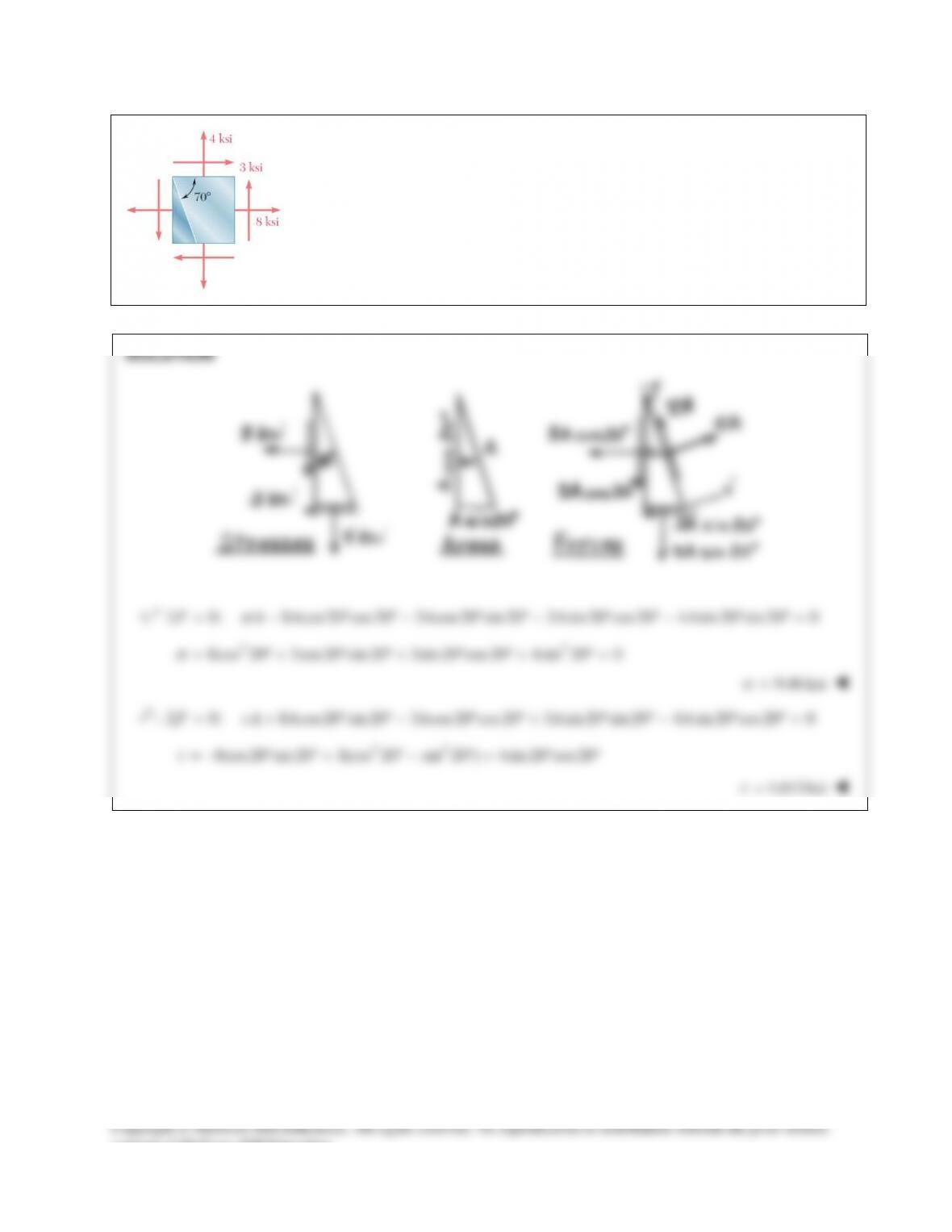
PROBLEM 14.3
For the given state of stress, determine the normal and shearing stresses exerted
on the oblique face of the shaded triangular element shown. Use a method of
analysis based on the equilibrium of that element, as was done in the derivations
of Sec. 14.2.
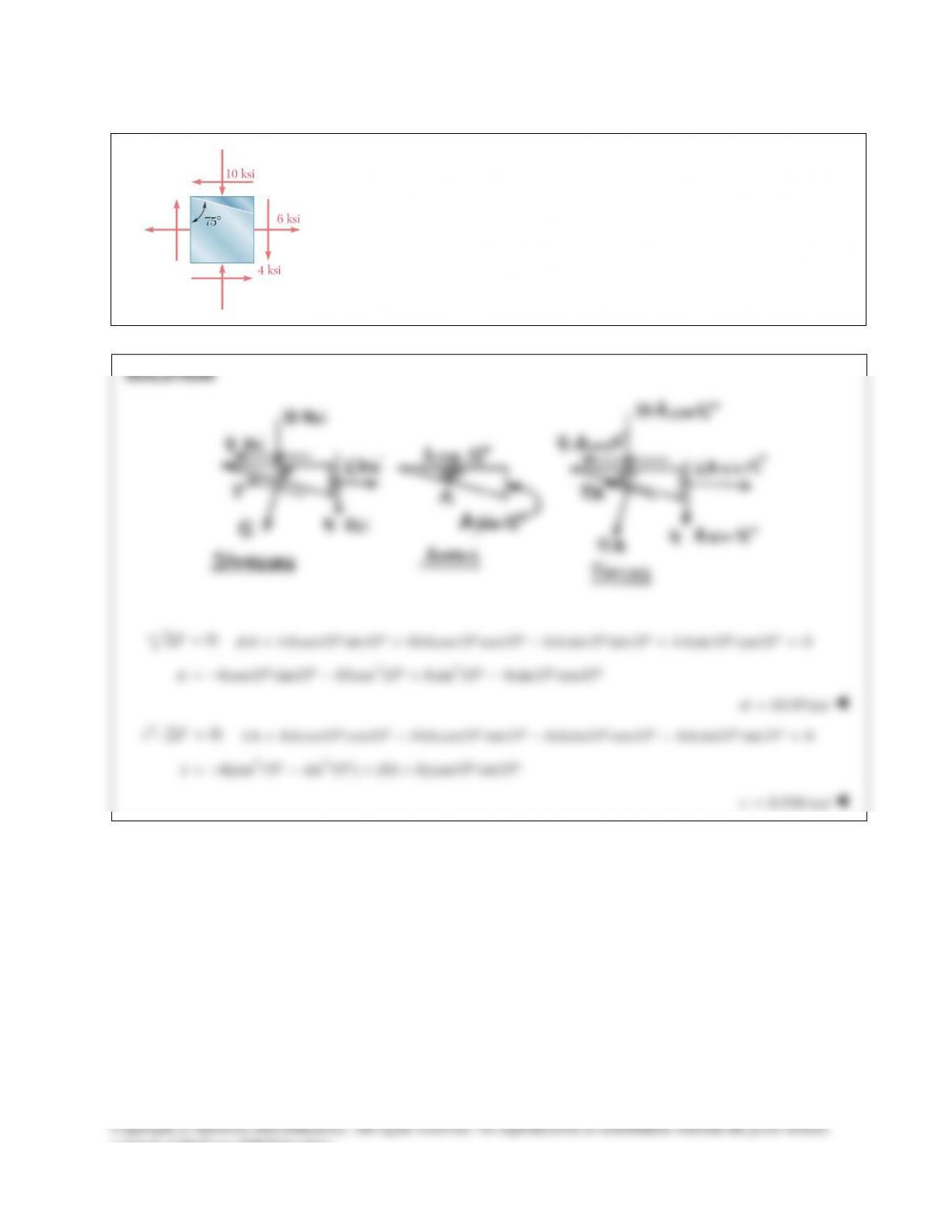
PROBLEM 14.4
For the given state of stress, determine the normal and shearing stresses
exerted on the oblique face of the shaded triangular element shown. Use a
method of analysis based on the equilibrium of that element, as was done in
the derivations of Sec. 14.2.
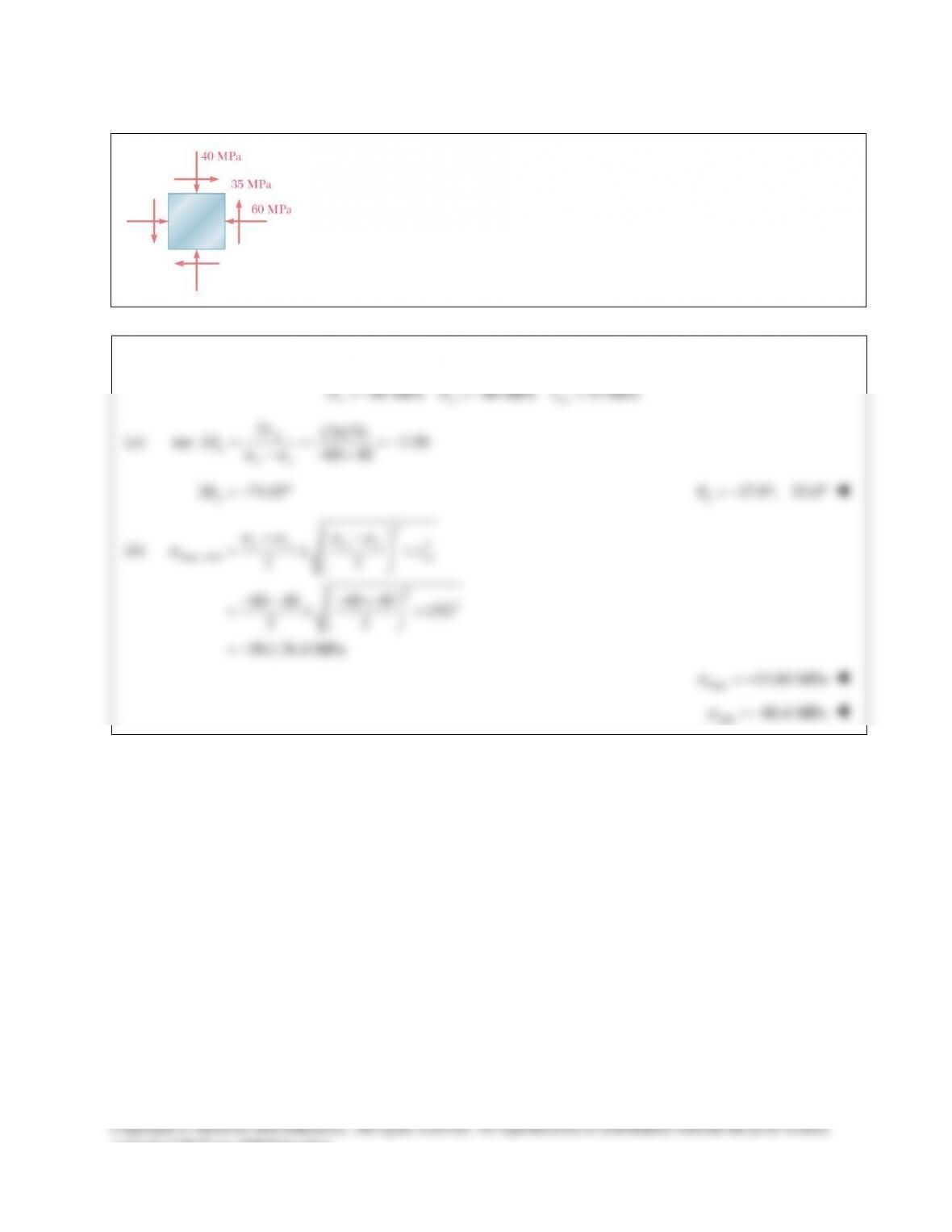
PROBLEM 14.5
For the given state of stress, determine (a) the principal planes, (b) the principal
stresses.
SOLUTION
60 MPa 40 MPa 35 MPa
x y xy
σστ
=−=−=
(a)
2(2)(35)
tan 2 3.50
60 40
xy
pxy
τ
θσσ
= = = −
− −+
2 74.05
p
θ
=−°
37.0 , 53.0
p
θ
=−° °
(b)
2
2
max, min
22
22
60 40 60 40 (35)
22
50 36.4 MPa
xy xy xy
σσ σσ
στ
+−
=±+
−− −+
=±+
=−±
max 13.60 MPa
σ
= −
min 86.4 MPa
σ
= −
consent of McGraw–Hill Education.
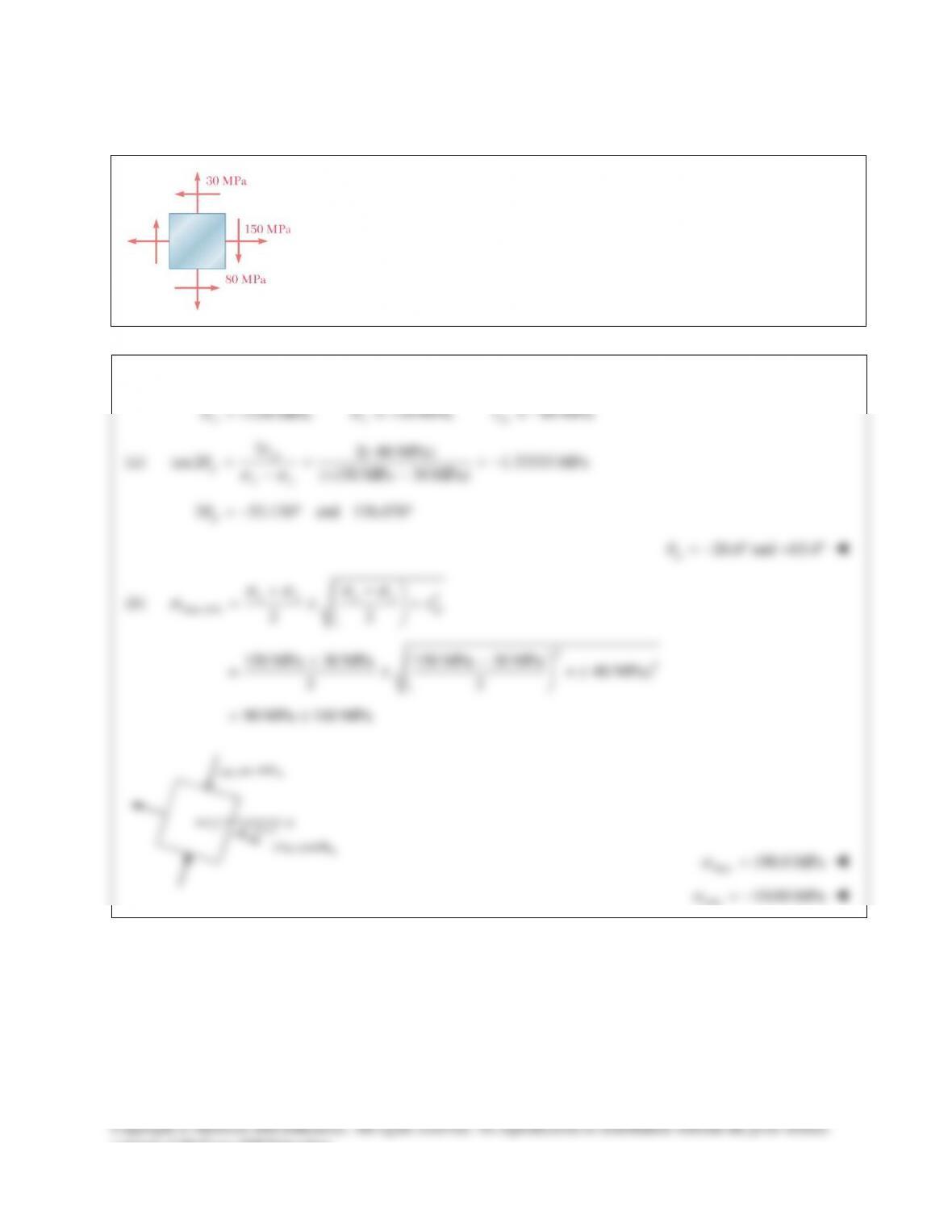
PROBLEM 14.6
For the given state of stress, determine (a) the principal planes, (b) the principal
stresses.
SOLUTION
150 MPa,
x
σ
= +
30 MPa,
y
σ
= +
80 MPa
xy
τ
= −
(a)
22( 80 MPa)
tan 2 1.33333 MPa
( 150 MPa 30 MPa)
xy
pxy
τ
θσσ
−
= = = −
−+ −
2 53.130 and 126.870
p
θ
=−° °
26.6 and 63.4
p
θ
=−° +°
◄
(b)
2
max,min
22
xy xy xy
σσ σσ
στ
+−
=±+
22
150 MPa 30 MPa 150 MPa 30 MPa ( 80 MPa)
22
+−
= ± +−
90 MPa 100 MPa= ±
max
190.0 MPa
σ
=
◄
min
10.00 MPa
σ
= −
◄
consent of McGraw–Hill Education.
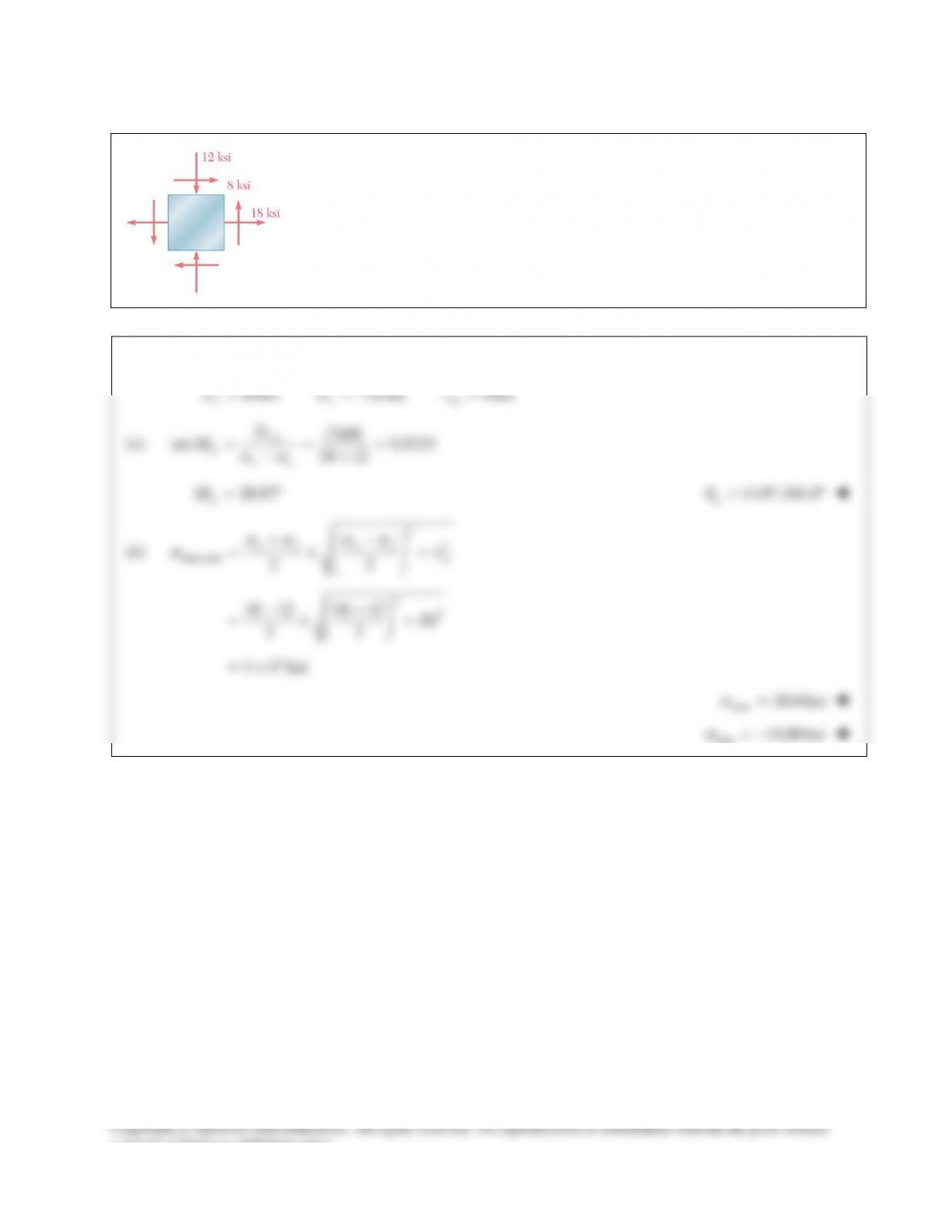
PROBLEM 14.7
For the given state of stress, determine (a) the principal planes, (b) the principal
stresses.
SOLUTION
18 ksi
x
s
=
12 ksi
y
s
= −
8 ksi
xy
τ
=
(a)
2(2)(8)
tan 2 0.5333
18 12
xy
pxy
τ
θss
= = =
−+
2 28.07
p
θ
= °
14.0 ,104.0
p
θ
=°°
◄
(b)
2
2
max,min
22
xy xy xy
ss ss
sτ
+−
=±+
22
18 12 18 12 (8)
22
−+
=±+
3 17 ksi= ±
max 20.0 ksi
s
=
◄
min
14.00 ksi
s
= −
◄
consent of McGraw–Hill Education.
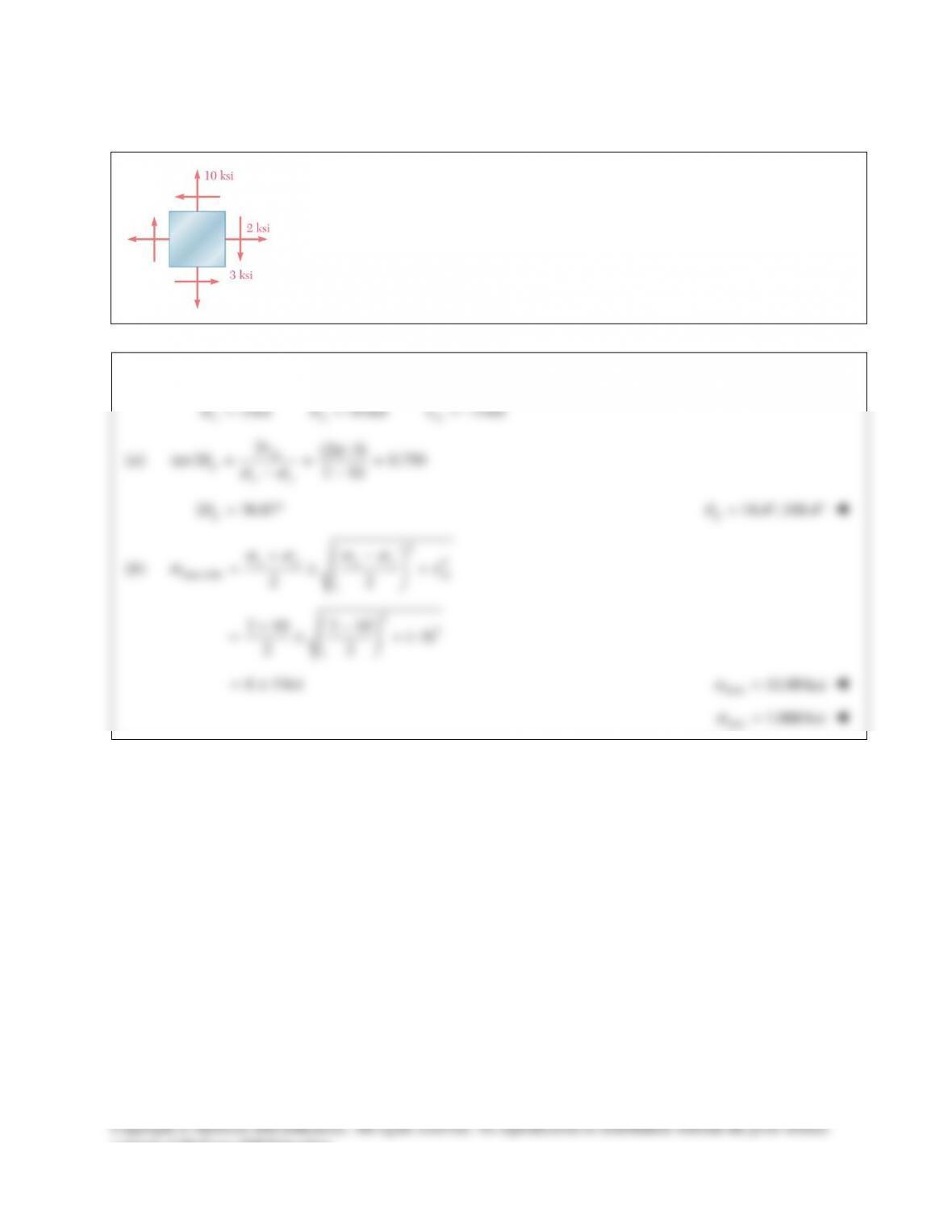
PROBLEM 14.8
For the given state of stress, determine (a) the principal planes, (b) the principal
stresses.
SOLUTION
2 ksi
x
s
=
10 ksi
y
s
=
3 ksi
xy
τ
= −
(a)
2(2)( 3)
tan 2 0.750
2 10
xy
pxy
τ
θss
−
= = =
−−
2 36.87
p
θ
= °
18.4 ,108.4
p
θ
=°°
◄
(b)
2
2
max,min
22
x xy
yxy
ss ss
sτ
+−
=±+
22
2 10 2 10 ( 3)
22
+−
= ± +−
6 5 ksi= ±
max 11.00 ksi
s
=
◄
min 1.000 ksi
s
=
◄
consent of McGraw–Hill Education.
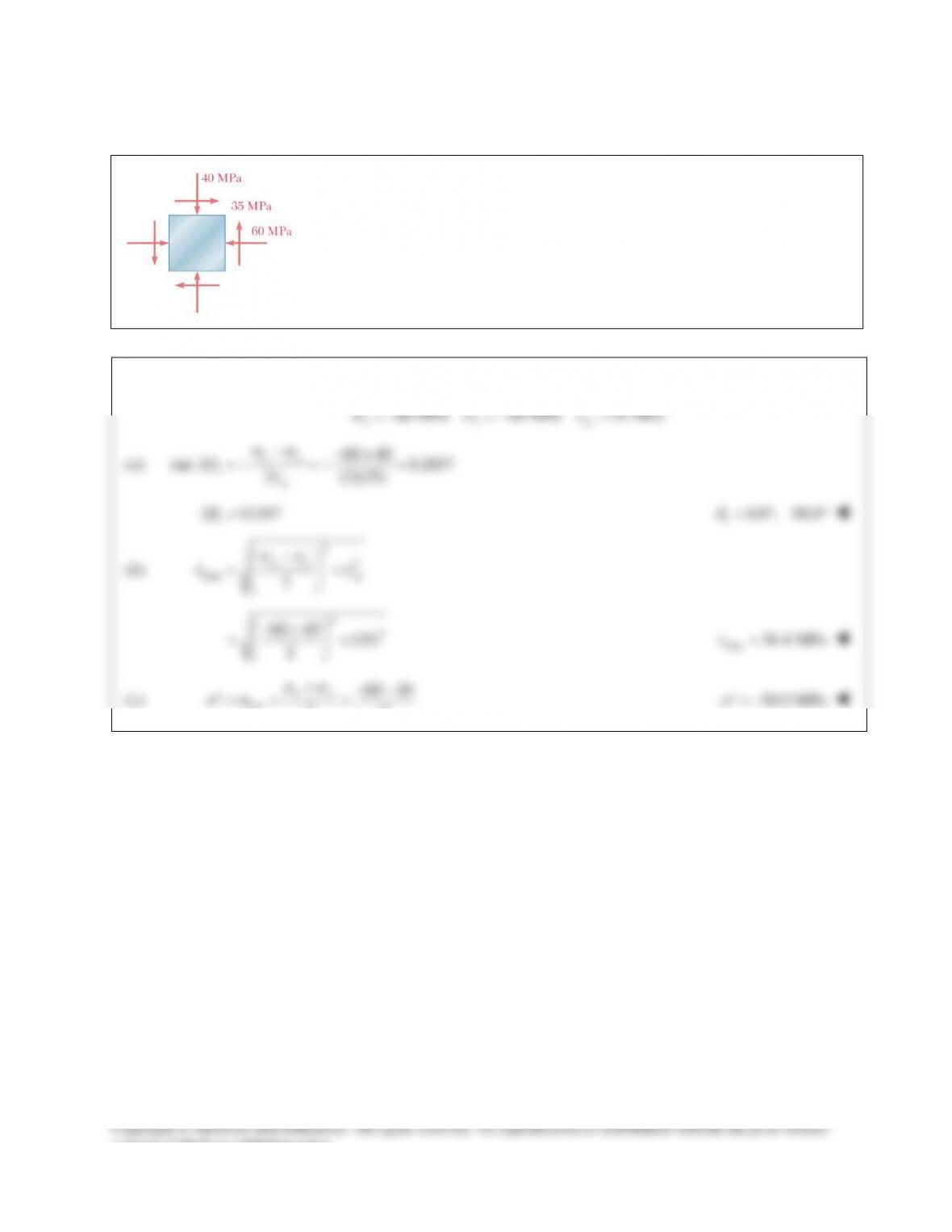
PROBLEM 14.9
For the given state of stress, determine (a) the orientation of the planes of
maximum in–plane shearing stress, (b) the maximum in–plane shearing stress,
(c) the corresponding normal stress.
SOLUTION
60 MPa 40 MPa 35 MPa
x y xy
σστ
=−=−=
(a)
60 40
tan 2 0.2857
2 (2)(35)
xy
sxy
σσ
θτ
−−+
=−=− =
2 15.95
s
θ
= °
8.0 , 98.0
s
θ
=°°
(b)
2
2
max 2
xy xy
σσ
ττ
−
= +
22
60 40 (35)
2
−+
= +
max
36.4 MPa
τ
=
(c)
ave 60 40
22
xy
σσ
σσ
+−−
′= = =
50.0 MPa
σ
′= −
consent of McGraw–Hill Education.
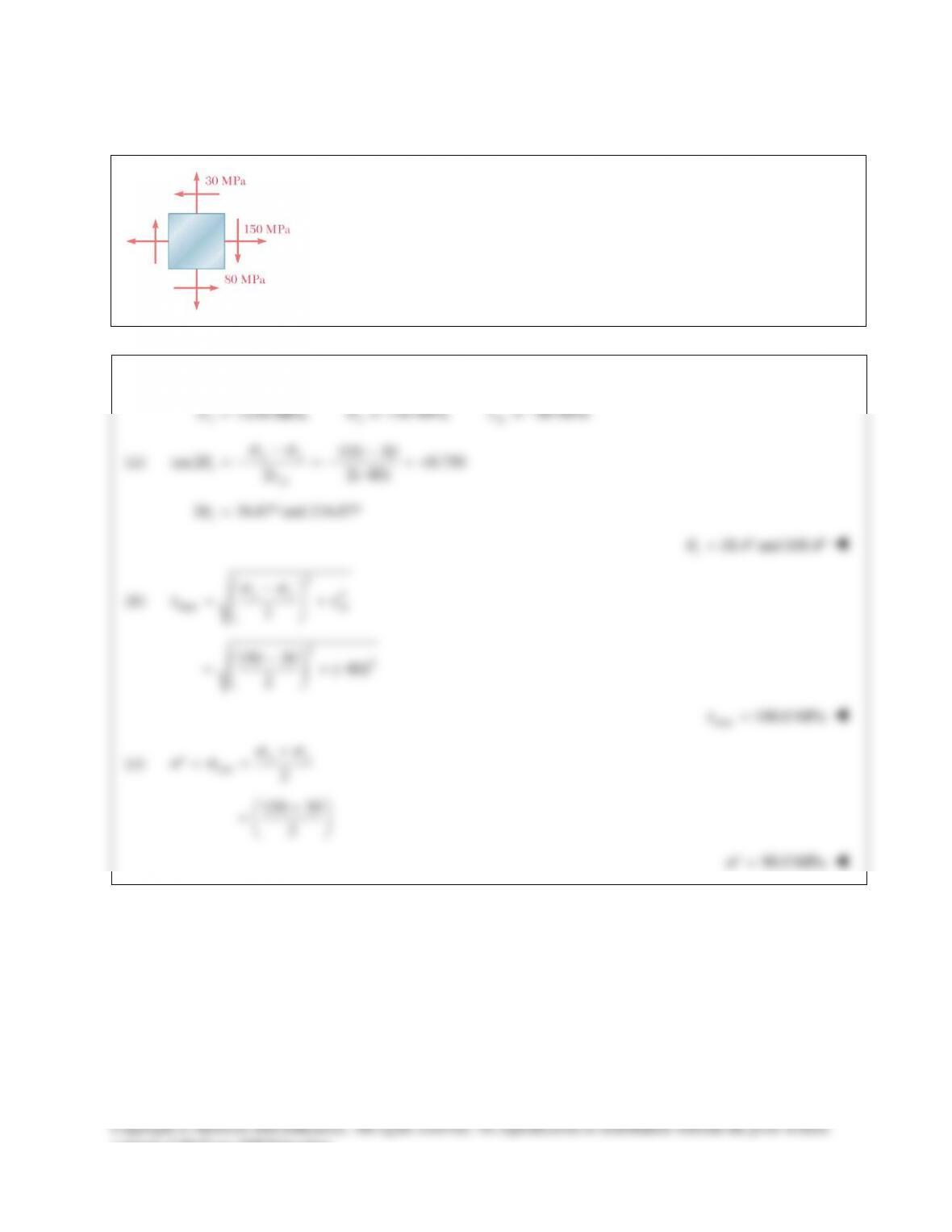
PROBLEM 14.10
For the given state of stress, determine (a) the orientation of the planes of
maximum in–plane shearing stress, (b) the maximum in–plane shearing stress,
(c) the corresponding normal stress.
SOLUTION
150 MPa,
x
σ
= +
30 MPa,
y
σ
= +
80 MPa
xy
τ
= −
(a)
150 30
tan 2 0.750
2 2( 80)
xy
sxy
σσ
θτ
−−
=−=− =+
−
2 36.87 and 216.87
s
θ
=°°
18.4 and108.4
s
θ
=°°
(b)
2
2
max
2
xy xy
σσ
ττ
−
= +
22
150 30 ( 80)
2
−
= +−
max 100.0 MPa
τ
=
(c)
ave
2
xy
σσ
σσ
+
′= =
150 30
2
+
=
90.0 MPa
σ
′=
consent of McGraw–Hill Education.
PROBLEM 14.2
For the given state of stress, determine the normal and shearing stresses exerted on
the oblique face of the shaded triangular element shown. Use a method of analysis
PROBLEM 14.3
For the given state of stress, determine the normal and shearing stresses exerted
on the oblique face of the shaded triangular element shown. Use a method of
analysis based on the equilibrium of that element, as was done in the derivations
of Sec. 14.2.
PROBLEM 14.4
For the given state of stress, determine the normal and shearing stresses
exerted on the oblique face of the shaded triangular element shown. Use a
method of analysis based on the equilibrium of that element, as was done in
the derivations of Sec. 14.2.
PROBLEM 14.5
For the given state of stress, determine (a) the principal planes, (b) the principal
stresses.
SOLUTION
60 MPa 40 MPa 35 MPa
x y xy
σστ
=−=−=
(a)
2(2)(35)
tan 2 3.50
60 40
xy
pxy
τ
θσσ
= = = −
− −+
2 74.05
p
θ
=−°
37.0 , 53.0
p
θ
=−° °
(b)
2
2
max, min
22
22
60 40 60 40 (35)
22
50 36.4 MPa
xy xy xy
σσ σσ
στ
+−
=±+
−− −+
=±+
=−±
max 13.60 MPa
σ
= −
min 86.4 MPa
σ
= −
consent of McGraw–Hill Education.
PROBLEM 14.6
For the given state of stress, determine (a) the principal planes, (b) the principal
stresses.
SOLUTION
150 MPa,
x
σ
= +
30 MPa,
y
σ
= +
80 MPa
xy
τ
= −
(a)
22( 80 MPa)
tan 2 1.33333 MPa
( 150 MPa 30 MPa)
xy
pxy
τ
θσσ
−
= = = −
−+ −
2 53.130 and 126.870
p
θ
=−° °
26.6 and 63.4
p
θ
=−° +°
◄
(b)
2
max,min
22
xy xy xy
σσ σσ
στ
+−
=±+
22
150 MPa 30 MPa 150 MPa 30 MPa ( 80 MPa)
22
+−
= ± +−
90 MPa 100 MPa= ±
max
190.0 MPa
σ
=
◄
min
10.00 MPa
σ
= −
◄
consent of McGraw–Hill Education.
PROBLEM 14.7
For the given state of stress, determine (a) the principal planes, (b) the principal
stresses.
SOLUTION
18 ksi
x
s
=
12 ksi
y
s
= −
8 ksi
xy
τ
=
(a)
2(2)(8)
tan 2 0.5333
18 12
xy
pxy
τ
θss
= = =
−+
2 28.07
p
θ
= °
14.0 ,104.0
p
θ
=°°
◄
(b)
2
2
max,min
22
xy xy xy
ss ss
sτ
+−
=±+
22
18 12 18 12 (8)
22
−+
=±+
3 17 ksi= ±
max 20.0 ksi
s
=
◄
min
14.00 ksi
s
= −
◄
consent of McGraw–Hill Education.
PROBLEM 14.8
For the given state of stress, determine (a) the principal planes, (b) the principal
stresses.
SOLUTION
2 ksi
x
s
=
10 ksi
y
s
=
3 ksi
xy
τ
= −
(a)
2(2)( 3)
tan 2 0.750
2 10
xy
pxy
τ
θss
−
= = =
−−
2 36.87
p
θ
= °
18.4 ,108.4
p
θ
=°°
◄
(b)
2
2
max,min
22
x xy
yxy
ss ss
sτ
+−
=±+
22
2 10 2 10 ( 3)
22
+−
= ± +−
6 5 ksi= ±
max 11.00 ksi
s
=
◄
min 1.000 ksi
s
=
◄
consent of McGraw–Hill Education.
PROBLEM 14.9
For the given state of stress, determine (a) the orientation of the planes of
maximum in–plane shearing stress, (b) the maximum in–plane shearing stress,
(c) the corresponding normal stress.
SOLUTION
60 MPa 40 MPa 35 MPa
x y xy
σστ
=−=−=
(a)
60 40
tan 2 0.2857
2 (2)(35)
xy
sxy
σσ
θτ
−−+
=−=− =
2 15.95
s
θ
= °
8.0 , 98.0
s
θ
=°°
(b)
2
2
max 2
xy xy
σσ
ττ
−
= +
22
60 40 (35)
2
−+
= +
max
36.4 MPa
τ
=
(c)
ave 60 40
22
xy
σσ
σσ
+−−
′= = =
50.0 MPa
σ
′= −
consent of McGraw–Hill Education.
PROBLEM 14.10
For the given state of stress, determine (a) the orientation of the planes of
maximum in–plane shearing stress, (b) the maximum in–plane shearing stress,
(c) the corresponding normal stress.
SOLUTION
150 MPa,
x
σ
= +
30 MPa,
y
σ
= +
80 MPa
xy
τ
= −
(a)
150 30
tan 2 0.750
2 2( 80)
xy
sxy
σσ
θτ
−−
=−=− =+
−
2 36.87 and 216.87
s
θ
=°°
18.4 and108.4
s
θ
=°°
(b)
2
2
max
2
xy xy
σσ
ττ
−
= +
22
150 30 ( 80)
2
−
= +−
max 100.0 MPa
τ
=
(c)
ave
2
xy
σσ
σσ
+
′= =
150 30
2
+
=
90.0 MPa
σ
′=
consent of McGraw–Hill Education.