12
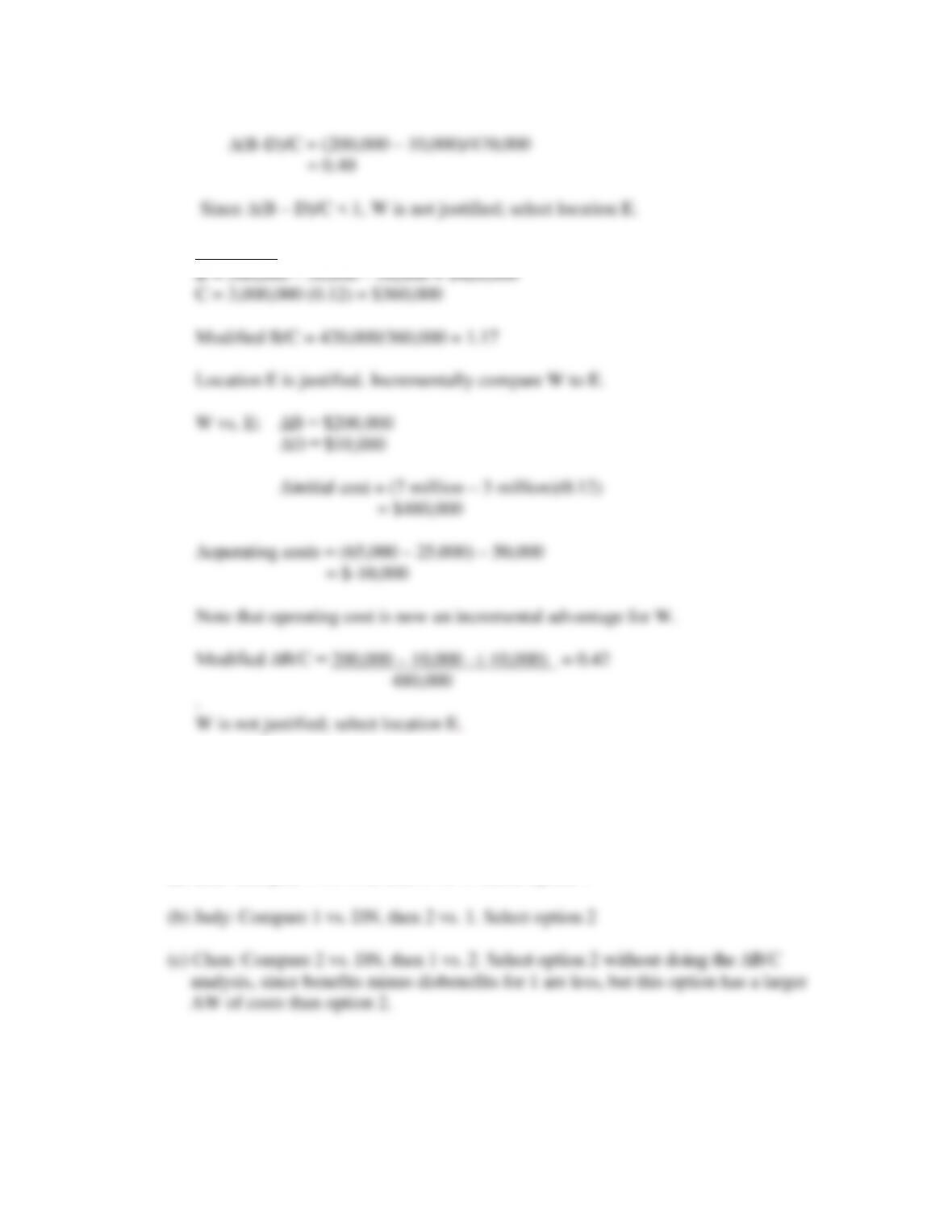
(b) Location E
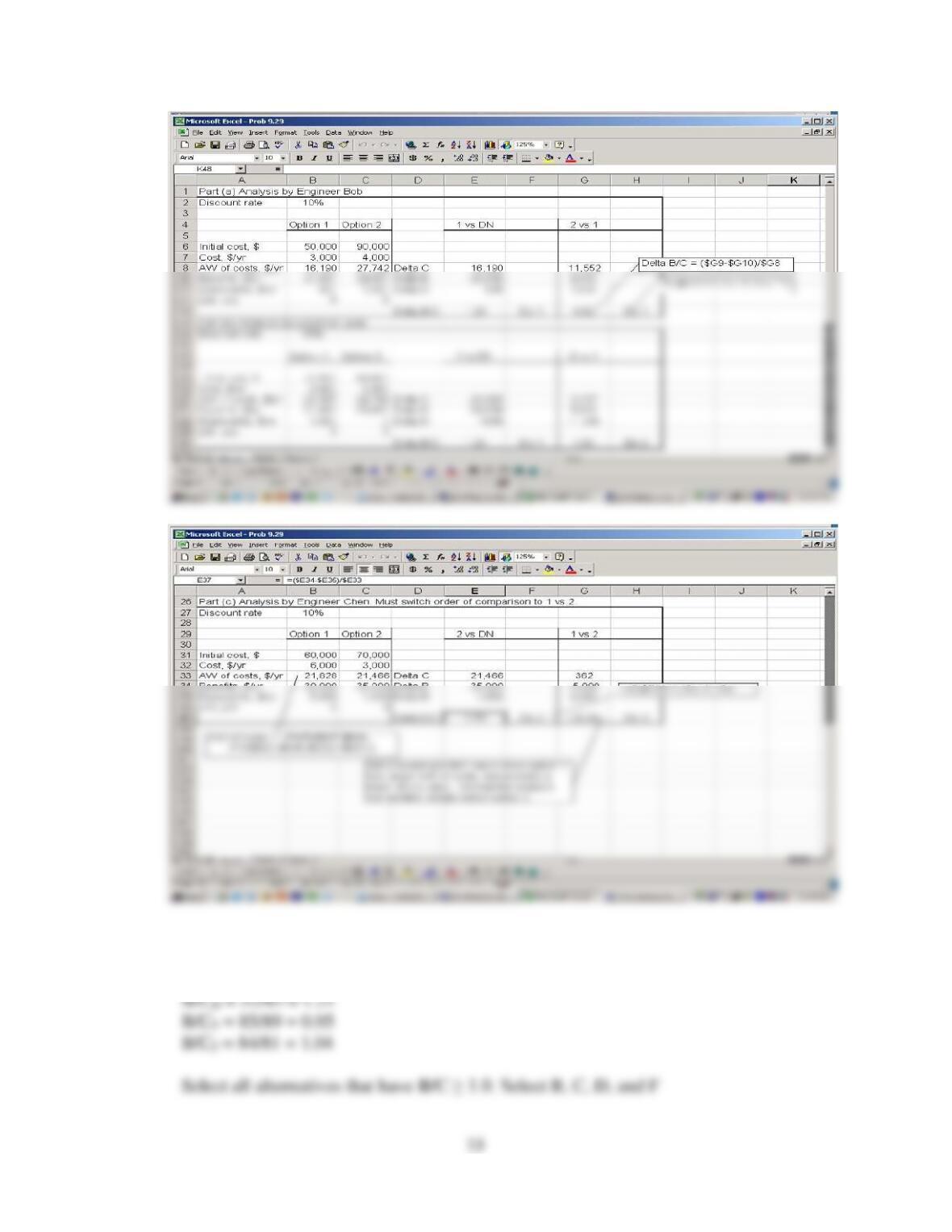
9.39 Set up the spreadsheet to find AW of costs, perform the initial B/C analyses using cell
reference format. Changes from part to part needed should be the estimates and possibly a
switching of which options are incrementally justified. All 3 analyses are done on a
rolling spreadsheet shown below.
(a) Bob: Compare 1 vs. DN, then 2 vs. 1. Select option 1
9.40 (a) B/CA = 70/80 = 0.88
B/CB = 55/50 = 1.10
B/CC = 76/72 = 1.06
14
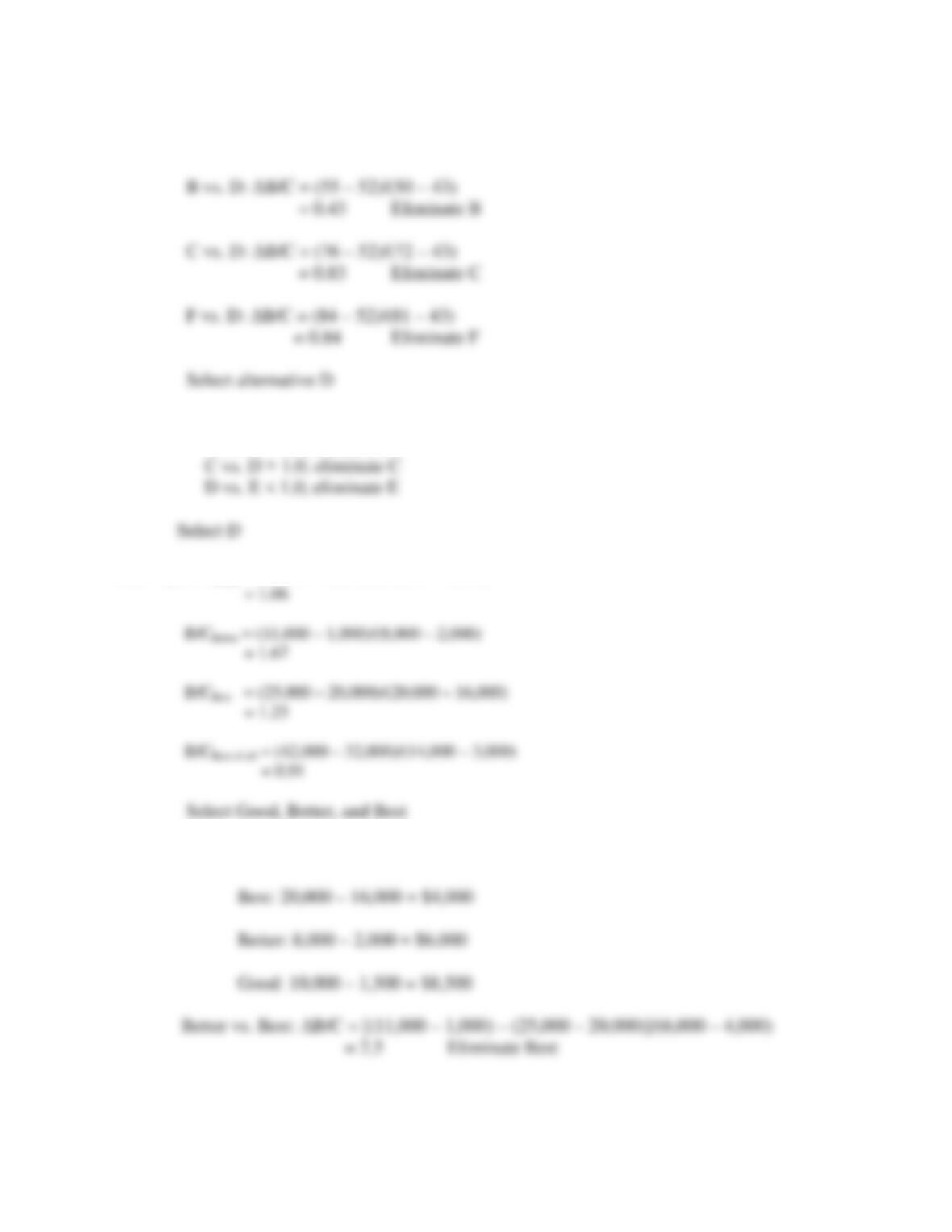
(b) Rank acceptable alternatives (i.e., B/C ≥ 1.0) by increasing cost (D, B, C, F) and do
incremental analysis
9.41 A vs. B < 1.0; eliminate B
A vs. C > 1.0; eliminate A
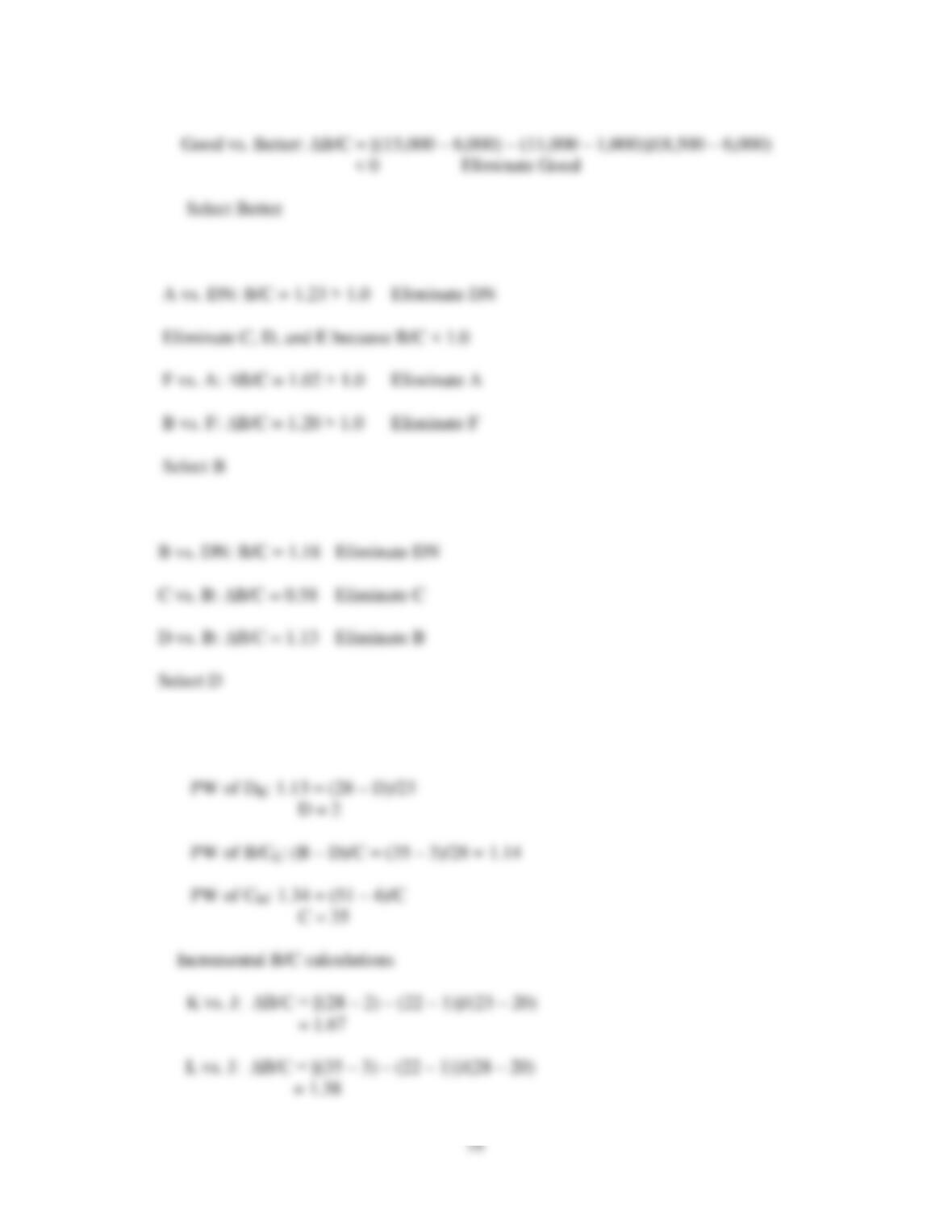
9.42 (a) B/CGood = (15,000 – 6,000)/(10,000 – 1,500)
(b) Rank acceptable alternatives in terms of increasing FW of net cost
9.43 Ranking: DN, A, C, E, F, B, D
9.44 Ranking is A, B, C, D. Eliminate A because B/C < 1.0
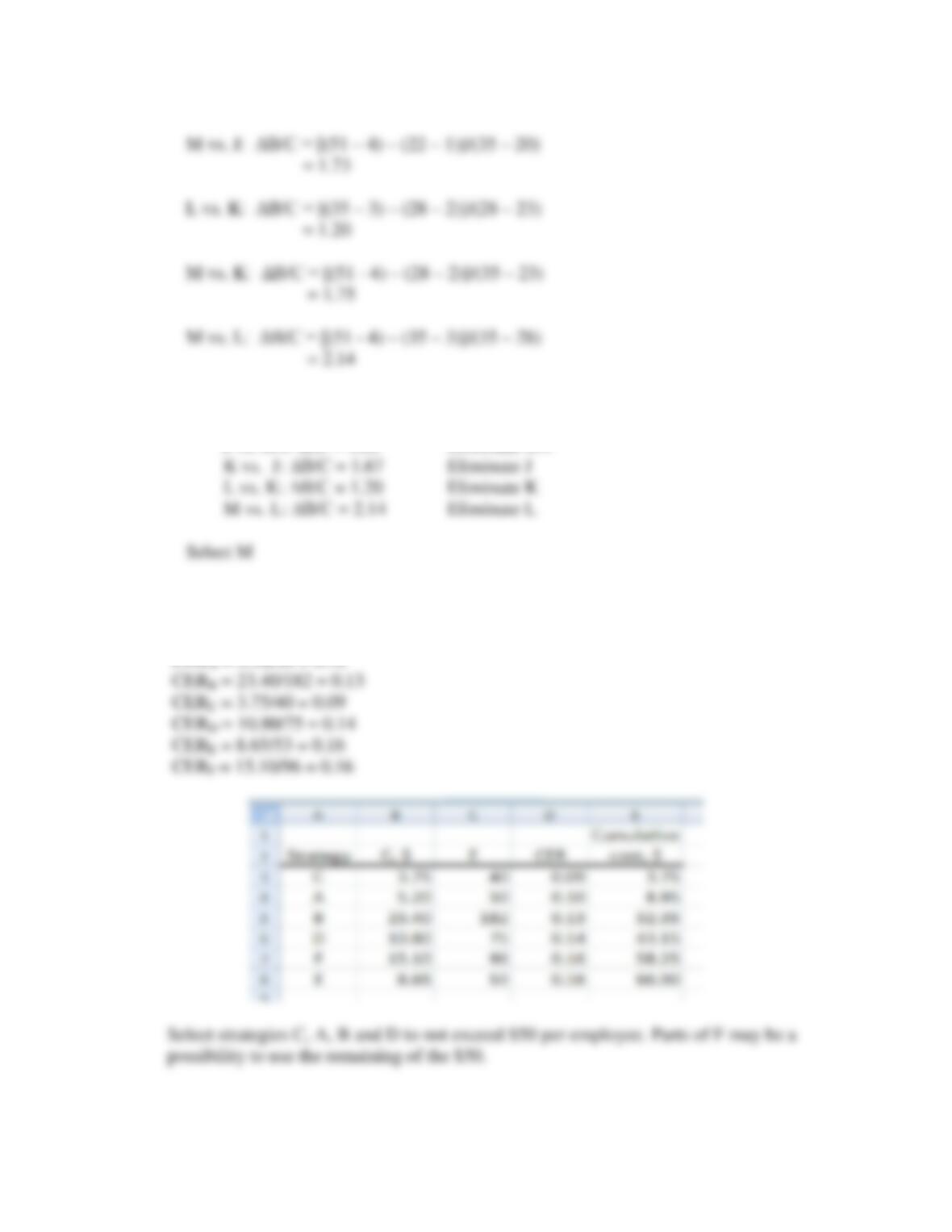
9.45 (a) PW of BJ: 1.05 = (B – 1)/20
B = 22
16
(b) Revenue alternatives. Perform the incremental comparisons
J vs. DN: B/C = 1.05 Eliminate DN
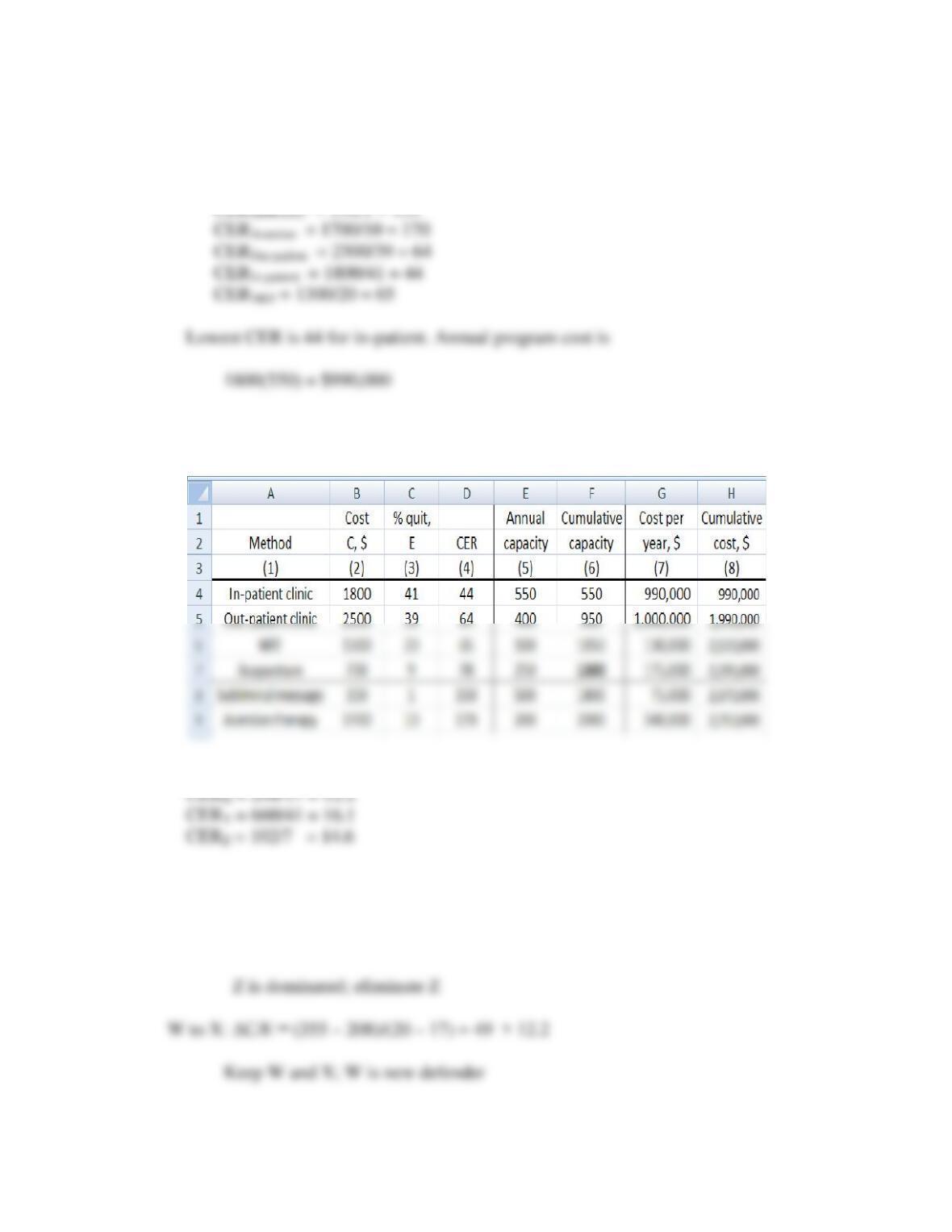
9.46 Strategies are independent; calculate CER values, rank in increasing order and select
those to not exceed $50/employee.
CERA = 5.20/50 = 0.10
17
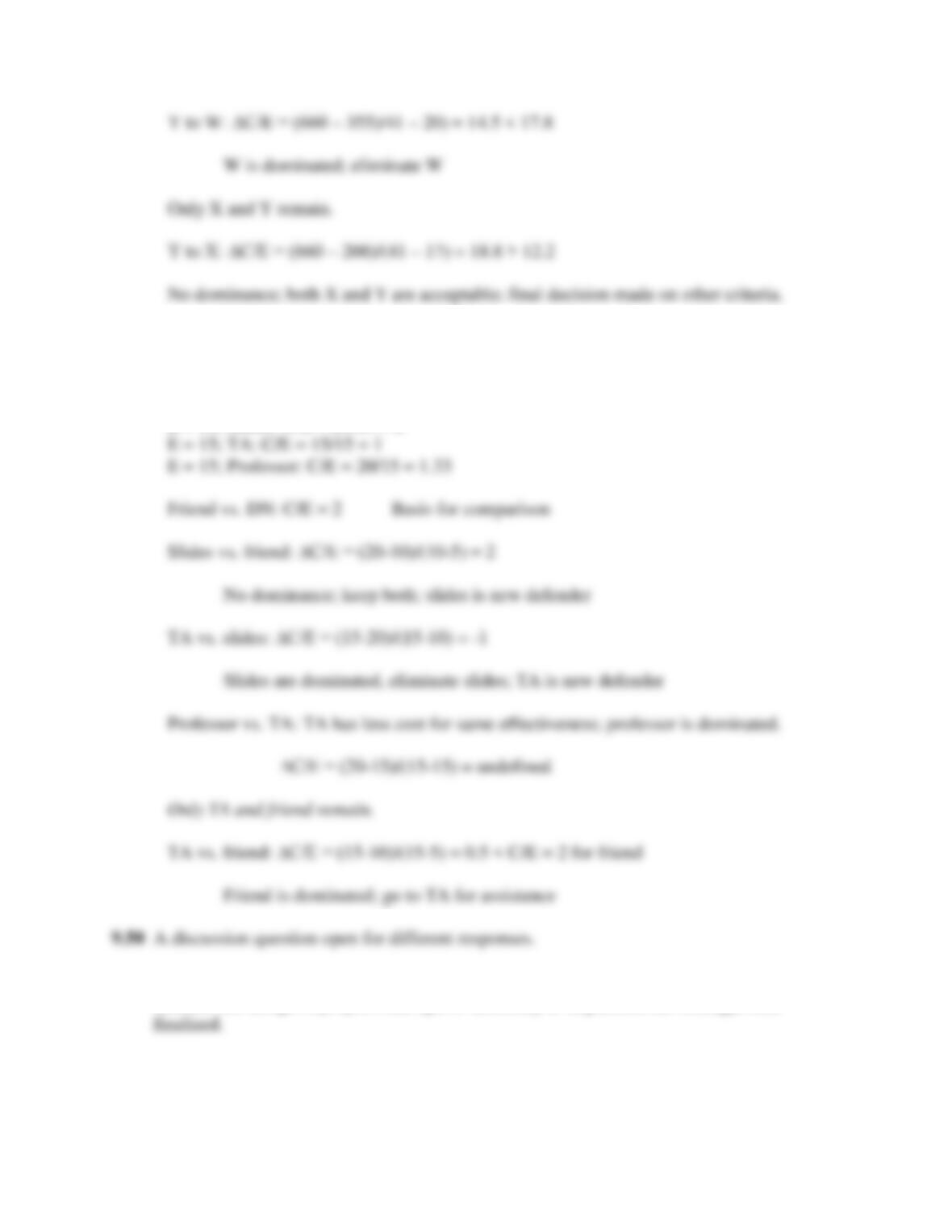
9.47 (a) Methods are independent. Calculate CER values, rank in increasing order, select
lowest CER, determine total cost.
CERAcupuncture = 700/ 9 = 78
CERSubliminal = 150/1 = 150
(b) Rank by CER (column 4) and select techniques to treat 1300 people. Request is for
$2,295,000 (column 8).
9.48 (a) CERW = 355/20 = 17.8
(b) Rank alternatives according to E, salvaged items/year (lowest to highest): Z, X, W, Y.
Perform incremental comparison.
X to Z: ΔC/E = (208 – 102)/(17 – 7) = 10.6 < 14.6
18
9.49 Minutes are the cost, C, and points gained are the effectiveness measure, E. Order on basis
of E and calculate CER values, then perform ∆C/ analysis.
E = 5; Friend: C/E = 10/5 = 2
E = 10; Slides: C/E = 20/10 = 2
9.51 Public policy deals with strategy and policy review and development. Public planning
includes the design of projects and efforts necessary to implement the strategy, once
9.52 Some example projects to be described might be:
• Change of ingress and egress ramps for all major thoroughfares
9.61 B/C = (50,000 – 27,000)/[250,000(0.10) + 10,000]
9.62 B/C = (60,000 – 29,000 – 15,000)/20,000 = 0.8
9.66 ΔC/E = (33,000 – 25,000)/(6 – 4) = 4000

20
Solution to Case Study, Chapter 9
Sometimes, there is not a definitive answer to a case study exercise. Here are example responses.
COMPARING B/C ANALYSIS AND CEA
OF TRAFFIC ACCIDENT REDUCTION
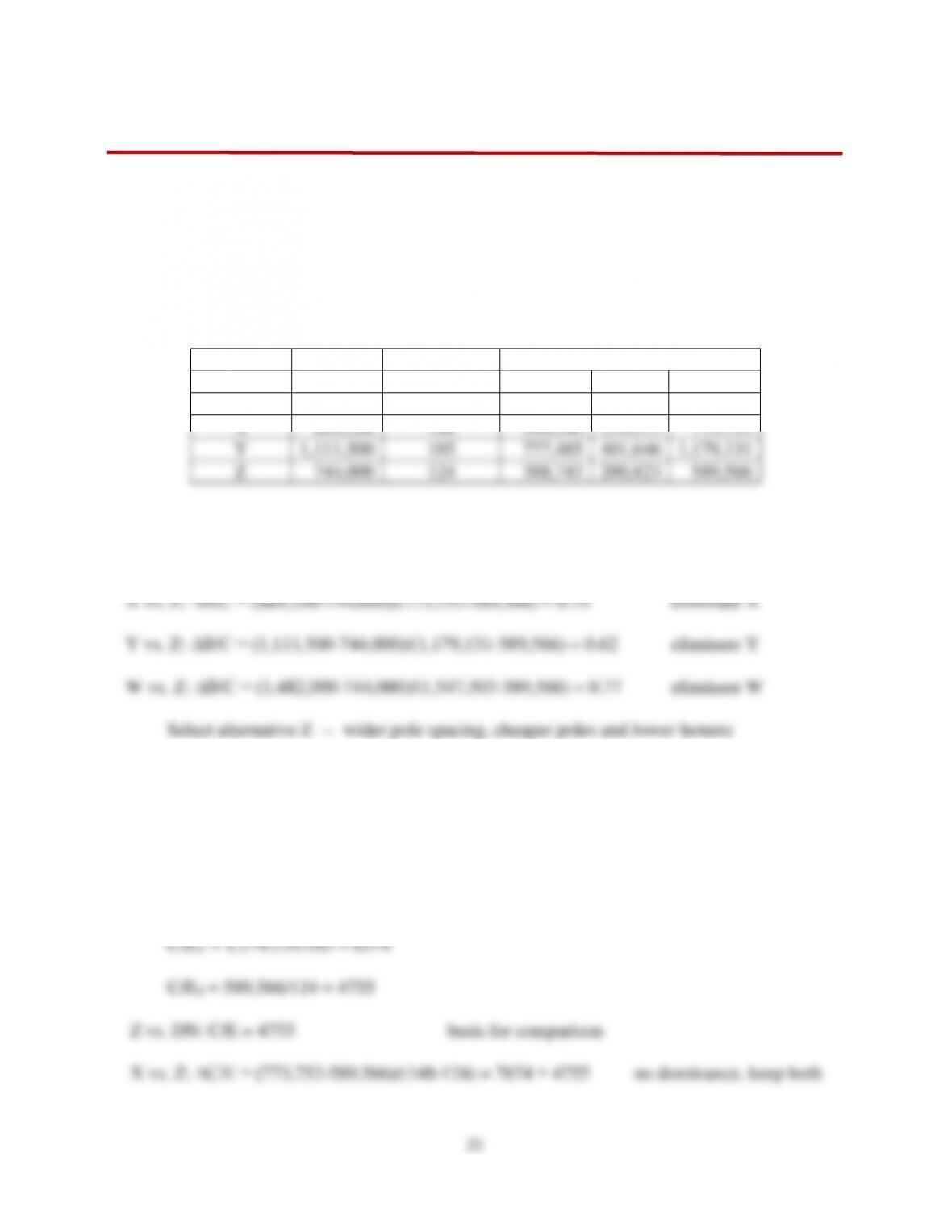
Computations similar to those for benefits (B), costs (C) and effectiveness measure (E) of
accidents prevented in the case study for each alternative results in the following estimates.
Benefits
Effectiveness
Cost, $ per year
Alternative
B, $/year
Measure, C
Poles
Power
Total
W
1,482,000
247
1,088,479
459,024
1,547,503
X
889,200
148
544,240
229,512
773,752
Y
1,111,500
185
777,485
401,646
1,179,131
Z
744,000
124
388,743
200,823
589,566
1. B/C analysis order based on total costs: Z, X, Y, W. Challenger is placed first below.
Z vs. DN: B/C = 744,000/589,566 = 1.26 eliminate DN
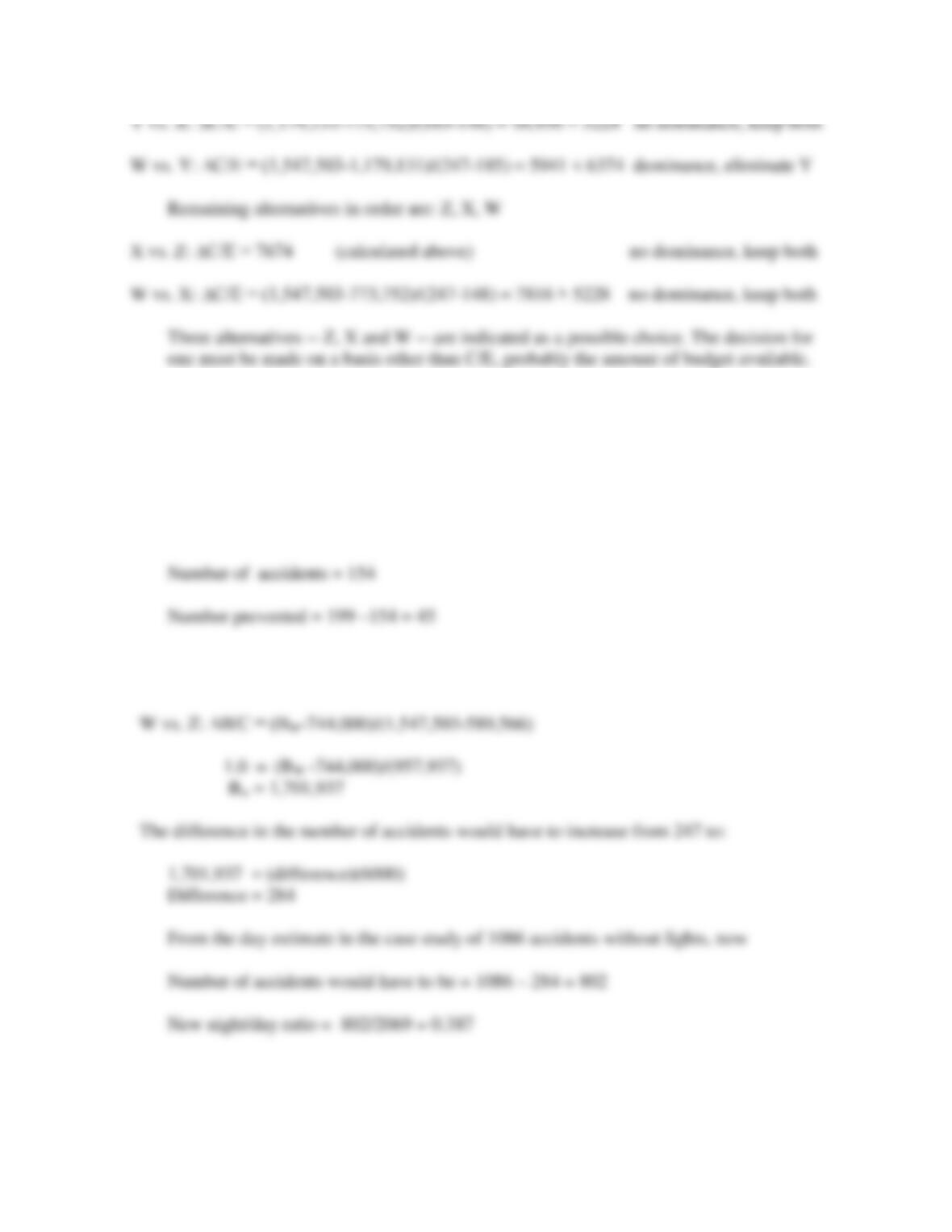
2. C/E analysis order based on effectiveness measure, E: Z, X, Y, W. Challenger listed first.
Calculate C/E for each alter native.
C/EW = 1,547,503/247 = 6265
C/EX = 773,752/148 = 5228
22
3. Ratio of night/day accidents, lighted = 839/2069 = 0.406
If the same ratio is applied to unlighted sections, number of accidents prevented is calculated
as follows:
0.406 = no. of accidents
379
4. For Z to be justified, the incremental comparison of W vs. Z would have to be ≥ 1.0. The
benefits would have to increase. Find BW in the incremental comparison.