17
PWB = –22,000 + 1450(P/F,7%,1) + … + 2500(P/F,7%,10)
17.47 Alternative A
Year
P & S
GI – OE
D
TI
Taxes
CFAT
0 -8000 – – – – -8000
1 3500 2666 834 333 3167
2
3500
3556
-56
-22
3522
3
3500
1185
2315
926
2574
Alternative B
Year
P & S GI – OE D TI Taxes CFAT
0
-13,000
–
–
–
–
-13,000
1
5000
4333
667
267
4733
4
0
0
963
-963
-385
385
2000
–
–
2000
800
1200
All monetary values are in $1000 units.
Year 1
Years 2 – 5
18
The rate of return relation over 5 years is:
(b) Use MACRS with n = 5 year recovery period. In $1000 units,
Year
P
GI-OE
Depr
TI
Taxes
CFAT
0
$-2,500
–
–
–
–
$-2500
1
$1,500
$500
$1,000
$300
1,200
2
300
800
-500
-150
450
3
300
480
-180
-54
354
4
300
288
12
4
296
5
300
288
12
4
296
The ROR relation and i* over 5 years are:
0 = –2500 + 1200(P/F,i*,1) + … + 296(P/F,i*,5)
19
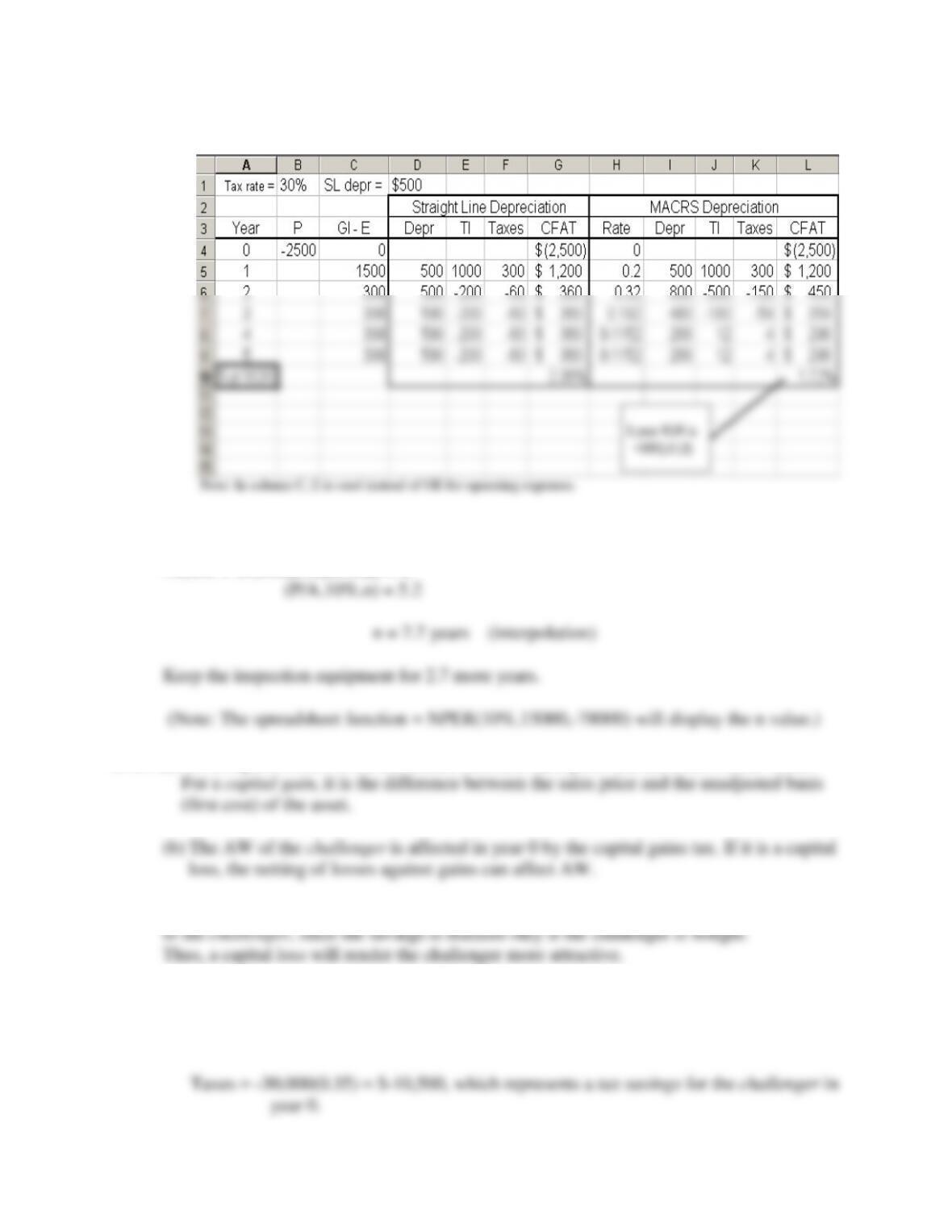
(a) and (b) Spreadsheet solution, in $1000 units, shows MACRS has a lower ROR.
17.49 For a 10% after-tax return, solve for n in an after–tax PW relation.
-78,000 + 15,000(P/A,10%,n) = 0
17.50 (a) For a capital loss, it is the difference between sales price and the asset’s book value.
17.51 A capital loss will result in reduced taxes to the company. The tax savings will be applied
17.52 (a) Defender: CL = BV – Sales price = [300,000 – 2(60,000)] – 150,000 = $-30,000
The CL of $-30,000 by the defender will result in tax consequences as follows:
(b) Defender: TI = -120,000 – 60,000 = $-180,000
(c) AWD = -150,000(A/P,15%,3) – 57,000
AWC = -409,500(A/P,15%,3) + 29,500
17.53 TI, next year = -70,000 – 69,960 = -139,960
17.54 Find after-tax PW of costs over 4-year study period. DR is involved on the defender
trade in.
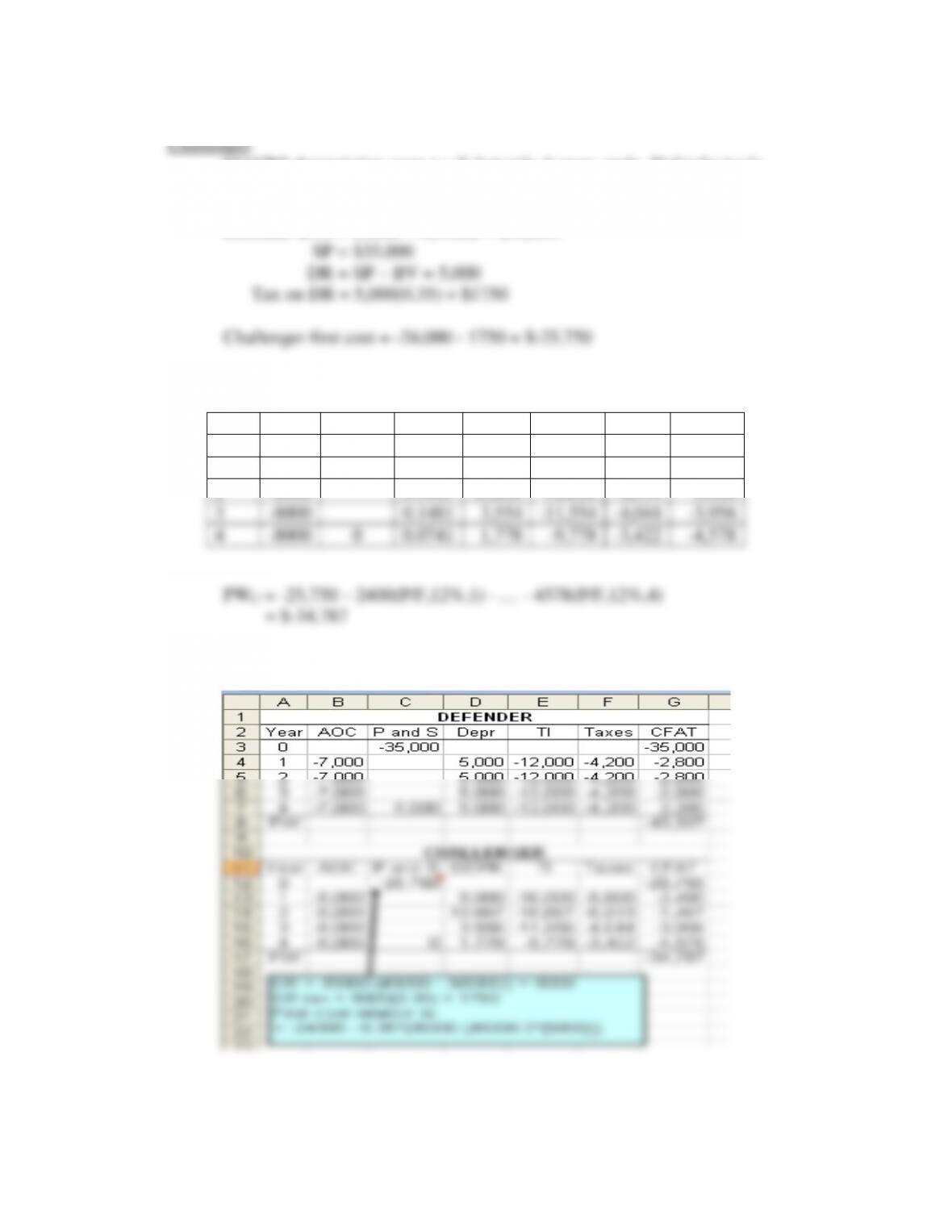
Defender
SL depreciation is (45,000-5000)/8 = $5000
Annual tax = (-OE – D)(Te)
21
MACRS depreciation over n = 5, but only 4 years apply. Defender trade
depreciation recapture must be included.
Defender BV3 = 45,000 – 3(5000) = $30,000
MACRS depreciation is based on $24,000 first cost
3
-8000
0.1481
3,554
-11,554
-4,044
-3,956
4
-8000
0.0741
1,778
-9,778
-3,422
-4,578
Select the challenger with a lower PW of cost. Spreadsheet solution follows.
Year
Exp
P and S
Rate
Depr
TI
Taxes
CFAT
0
-25,750
-25,750
1
-8000
0.3333
8,000
-16,000
-5,600
-2,400
2
-8000
0.4445
10,668
-18,668
-6,534
-1,466
22
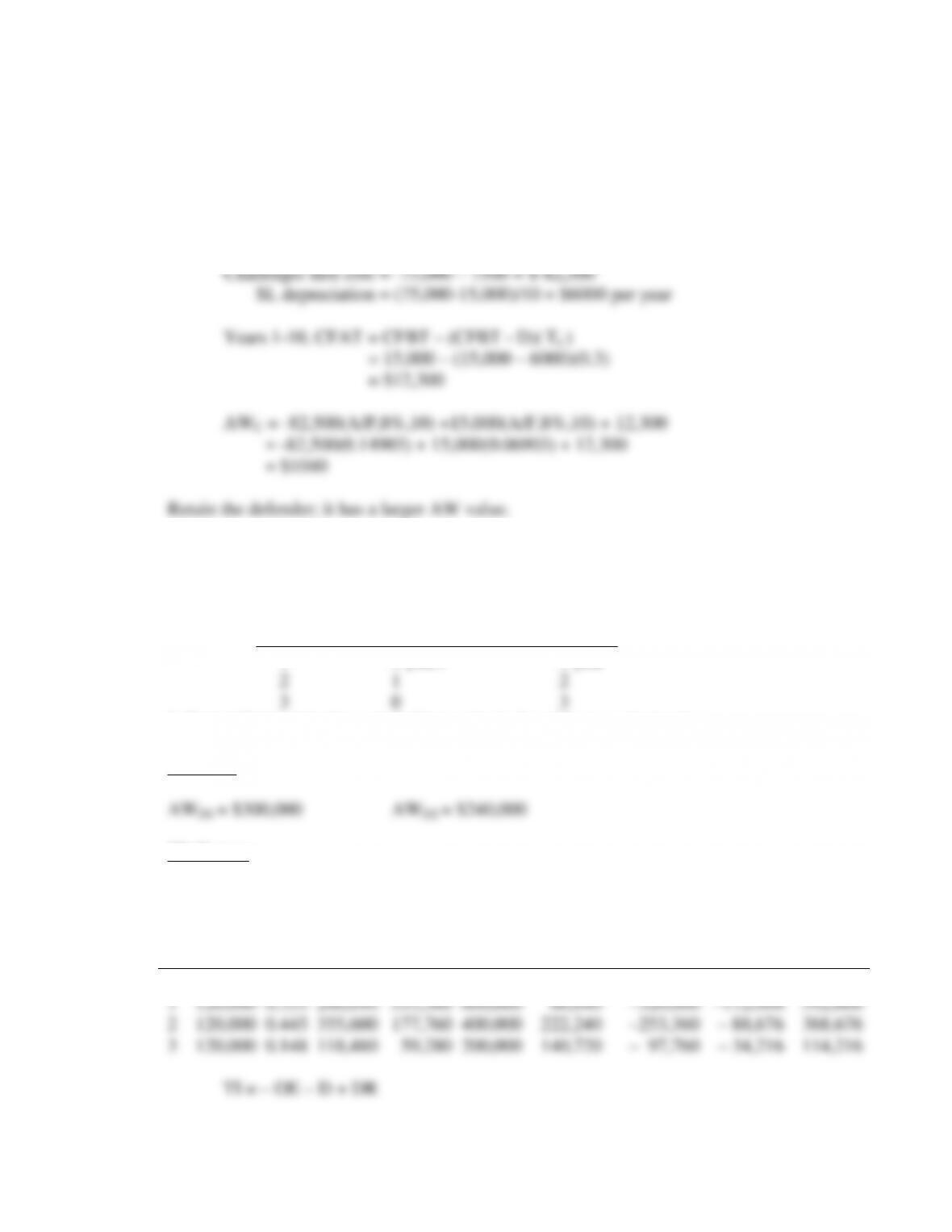
17.55 Determine AWC and compare it with AWD = $2100. Defender has DR on trade
since BV = 0 now.
DR = SP – BV = 25,000 – 0 = $25,000
Tax on DR = 25,000(0.3) = $7500
17.56 Study period is fixed at 3 years.
1. Succession options
Option Defender Challenger
1 2 years 1 year
2. Find AW for defender and challenger for 1, 2 and 3 years of retention.
Defender
Challenger
No tax effect if (defender) contract is cancelled. Calculate CFAT for 1, 2, and 3 years
of ownership. Tax rate is 35%. There is DR each year.
Tax
Year OE, $ d D, $ BV, $ SP, $ DR, $ TI, $ savings, $ CFAT, $
0 – – – 800,000 – – – – -800,000
23
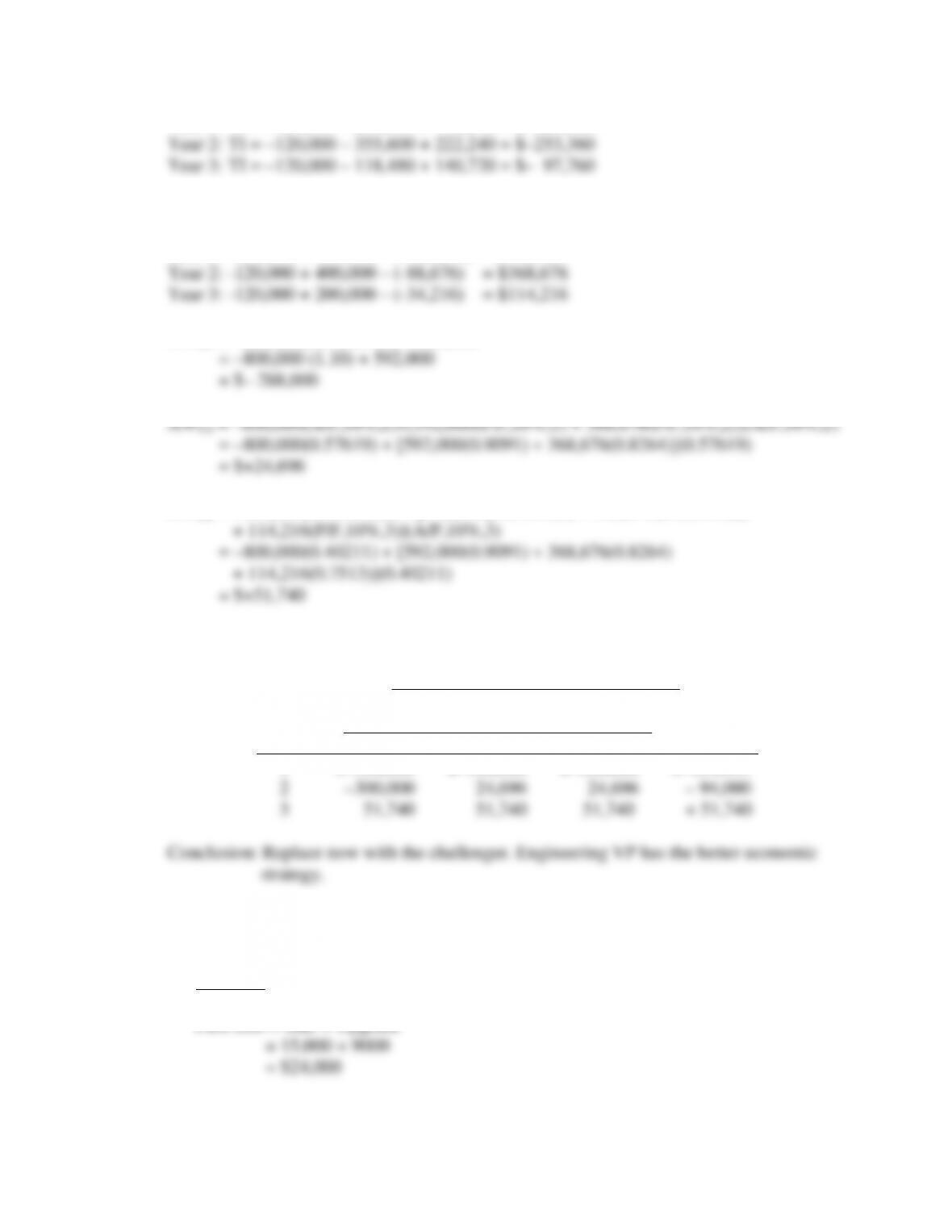
Year 1: TI = –120,000 – 266,640 + 66,640 = $–320,000
CFAT = –OE + SP – taxes (where negative taxes are a tax savings)
Year 1: -120,000 + 600,000 – (-112,000) = $592,000
AWC1 = –800,000(A/P,10%,1) + 592,000
AWC3 = –800,000(A/P,10%,3) + [592,000(P/F,10%,1) + 368,676(P/F,10%,2)
Selection of best option: Determine AW for each option first.
Summary of cost/year and project AW
Year
Option 1 2 3 AW___
1 $–240,000 $–240,000 $–288,000 $–254,493
17.57 (a) Study period is set at 5 years. The only option is the defender for 5 years and the
challenger for 5 years.
Defender
First cost = Sale + Upgrade
24
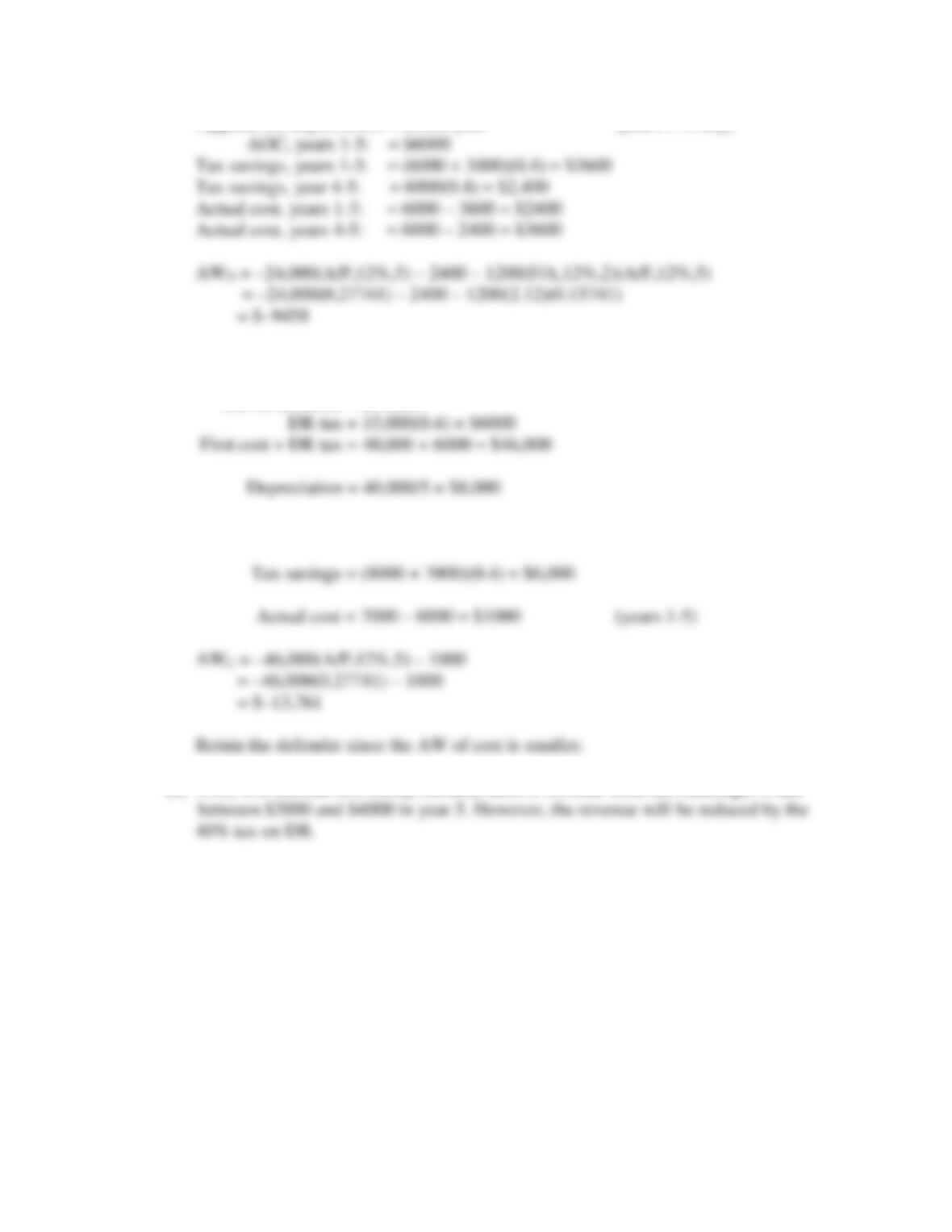
Upgrade SL depreciation = $3000 year (years 1-3 only)
Challenger
DR on defender = $15,000
Operating expenses = $7,000 (years 1-5)
(b) AWC will become less costly, because there is revenue from the challenger’s sale
25
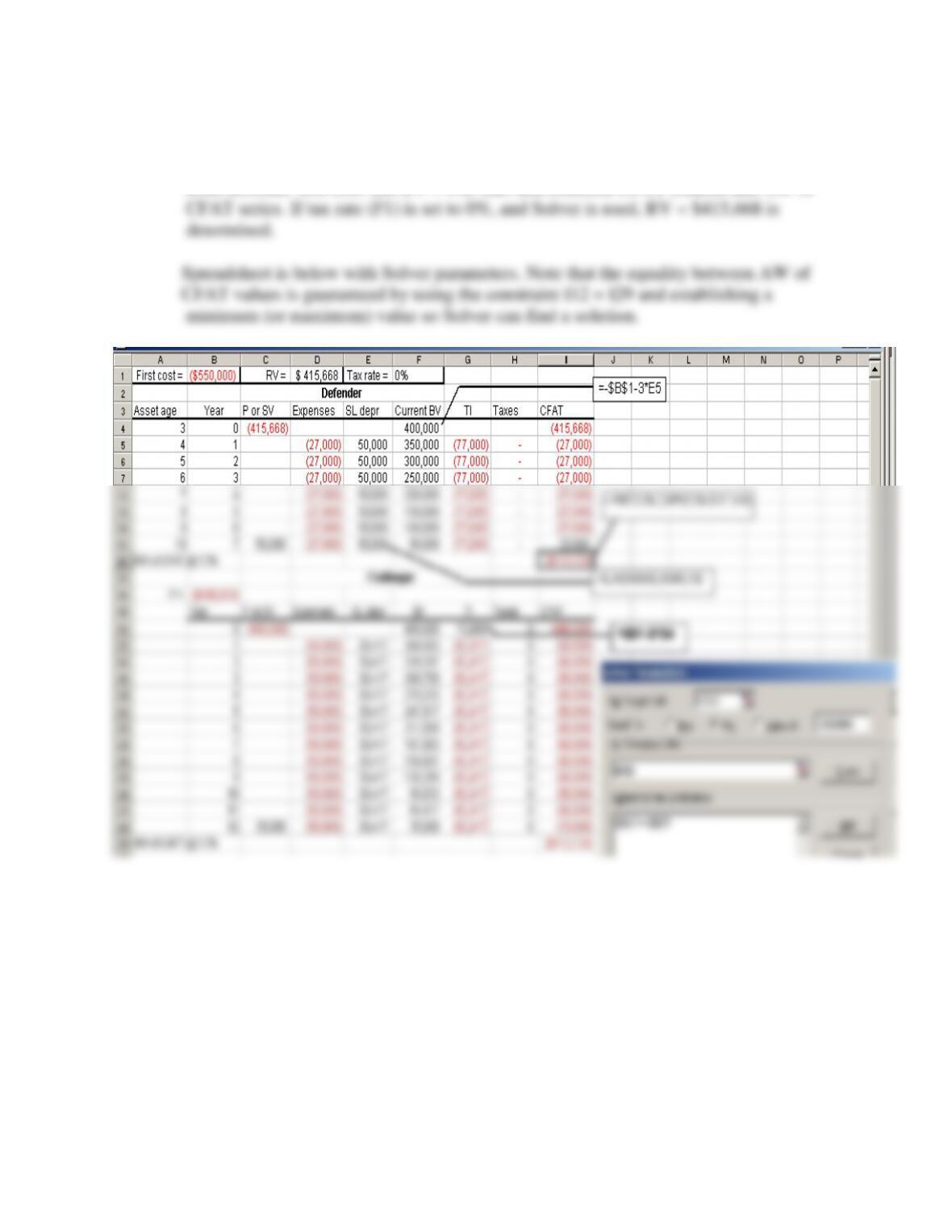
17.58 (a) Before taxes: Spreadsheet is similar to Figure 17-8 with RV in a separate cell (D1)
from defender first cost. Let RV = 0 to start and establish CFAT column and AW of
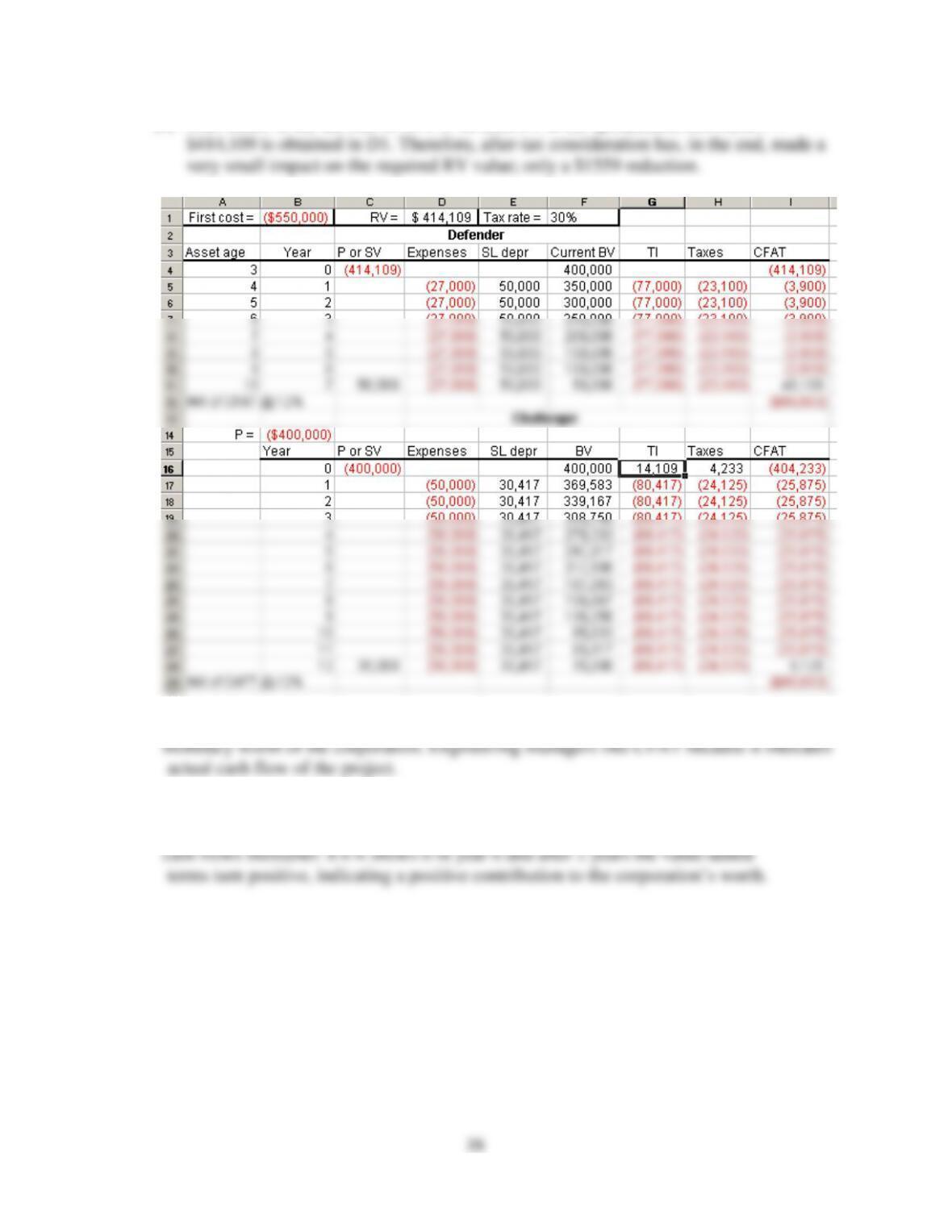
(b) After taxes: If the tax rate of 30% is set (cell F1 in the spreadsheet below), RV =
17.59 A finance manger likes EVA because it indicates the enhancement of a project to the
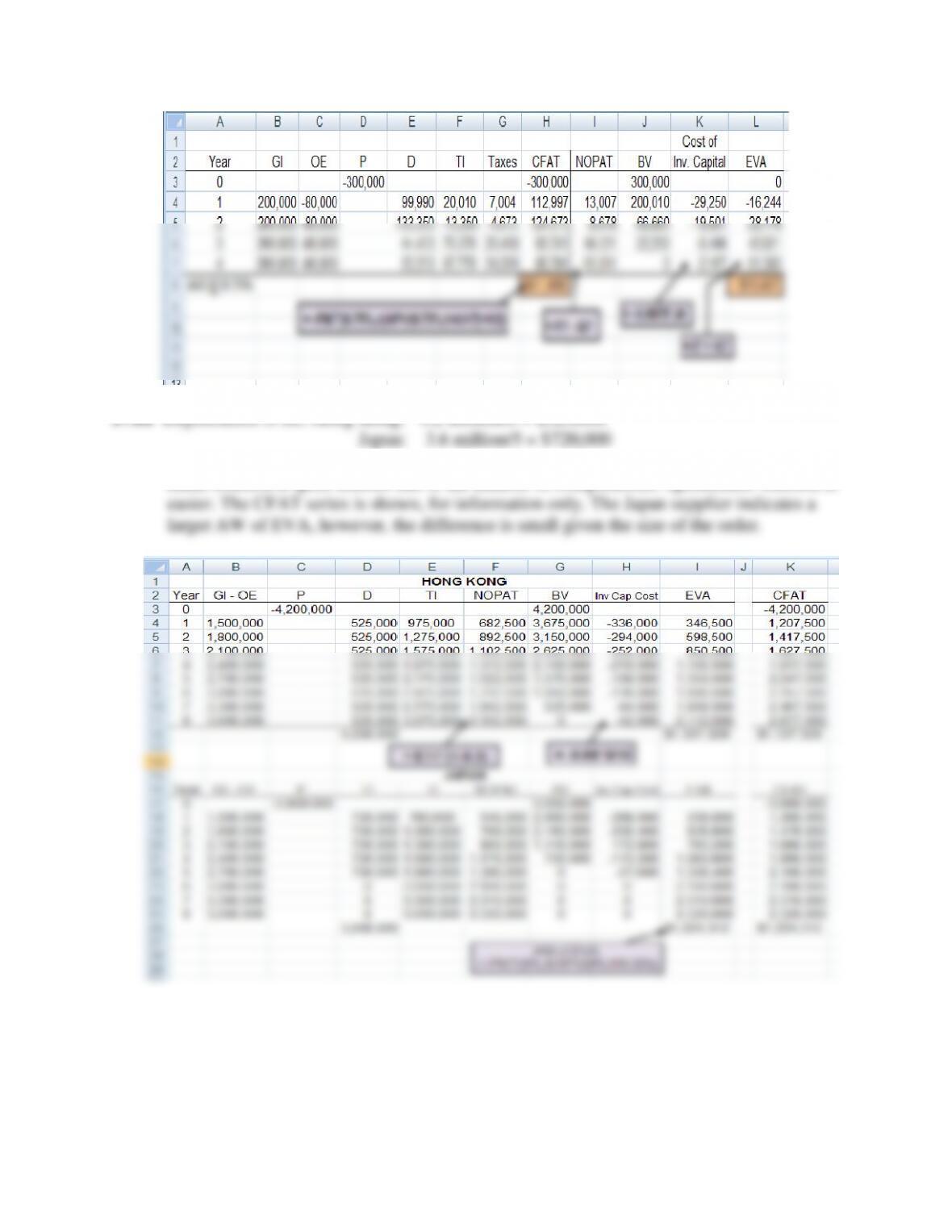
17.60 A spreadsheet solution is presented. The AW values are the same. Note the difference in
the patterns of the CFAT and EVA series. CFAT shows a big cost in year 0 and positive
27
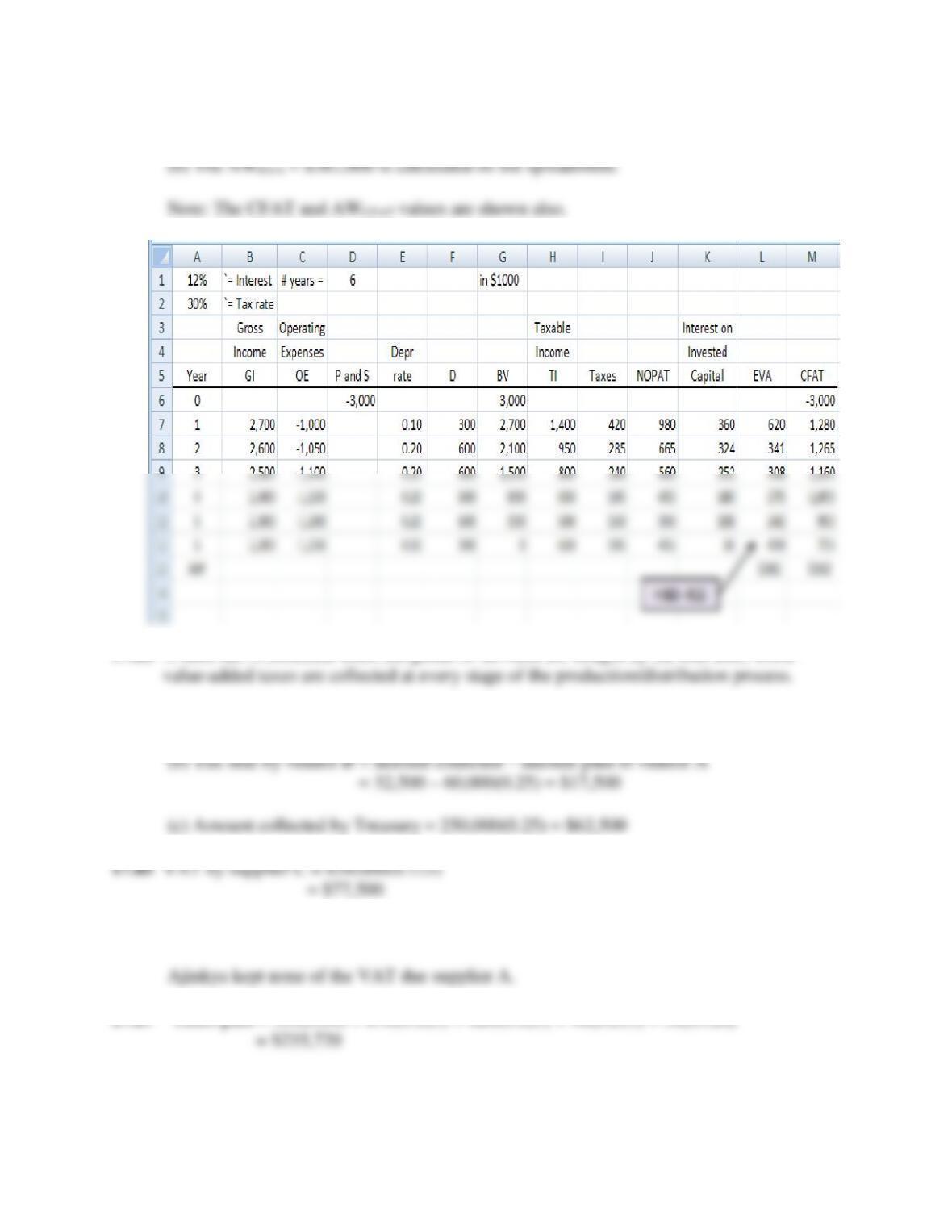
Hand solution is quite tedious due to the number of computations. Spreadsheet solution is
28
17.62 (a) Column L shows the EVA each year. Use Equation [17.23] to calculate EVA.
17.63 A sales tax is collected when the goods or services are bought by the end-user, while
17.64 (a) Tax collected by vendor B = 130,000(0.25) = $32,500
17.66 Taxes paid to supplier A = 350,000(0.04) = $14,000
17.67 Taxes paid = 350(0.04) + 870(0.125) + 620(0.125) + 90(0.213) + 50(0.326)
29
17.68 Average VAT rate = taxes paid/value of goods and services
17.69 Taxes sent = amount collected – amount paid
17.70 Taxes collected = taxes sent by suppliers + taxes sent by Ajinkya
30
17.80 Before–tax ROR = After–tax ROR/(1– Te)
17.81 BV5 = 100,000(0.0576) = $5760
Solution to Case Study, Chapter 17
There is not always a definitive answer to case study exercises. Here are example responses.
AFTER–TAX ANALYSIS FOR BUSINESS EXPANSION
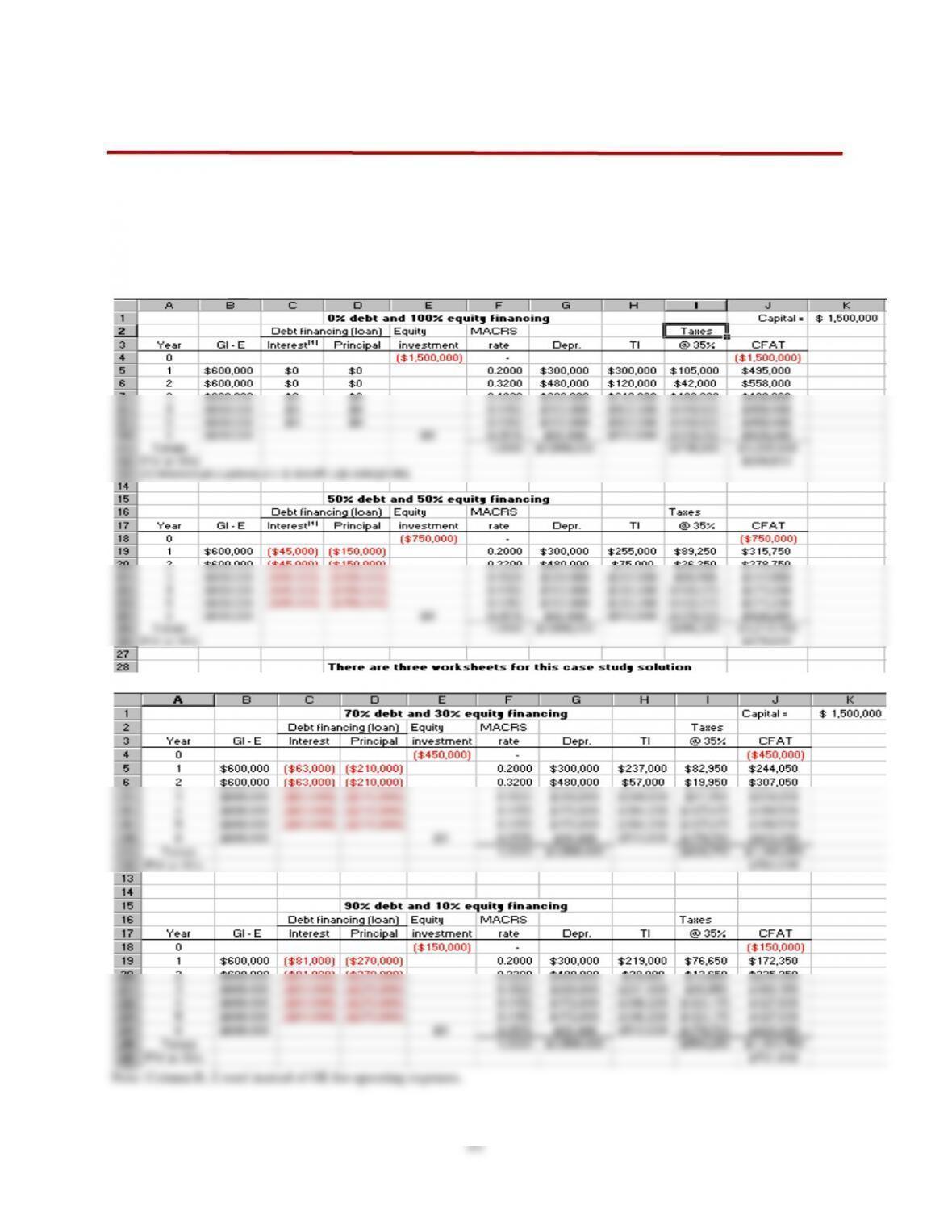
1. The next two spreadsheets perform an analysis of the four D-E mix scenarios
32
2. Subtract 2 different equity CFAT totals.
For 30% and 10%:
(1,160,250 – 1,101,750) = $58,500
3. This happens because as less of Pro–Fence’s own (equity) funds are committed to the Victoria
site, the larger the loan principal.
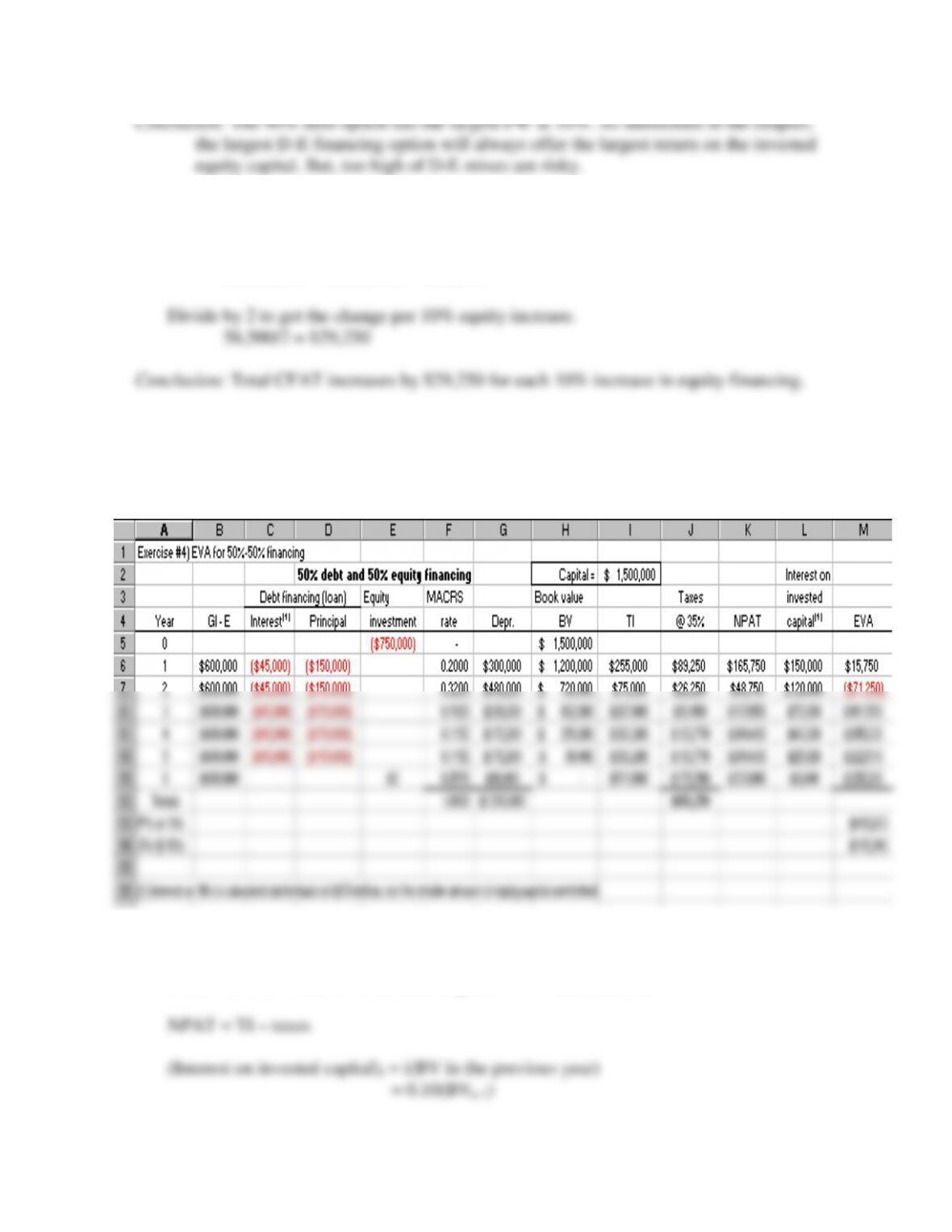
4. Use the EVA series as an estimate of contribution to Pr-Fence’s bottom line through time.
Equations used to determine the EVA use NOPAT (or NPAT) and interest on invested capital.
EVA = NPAT – interest on invested capital (column M)

33