174
CHAPTER 17
17.1
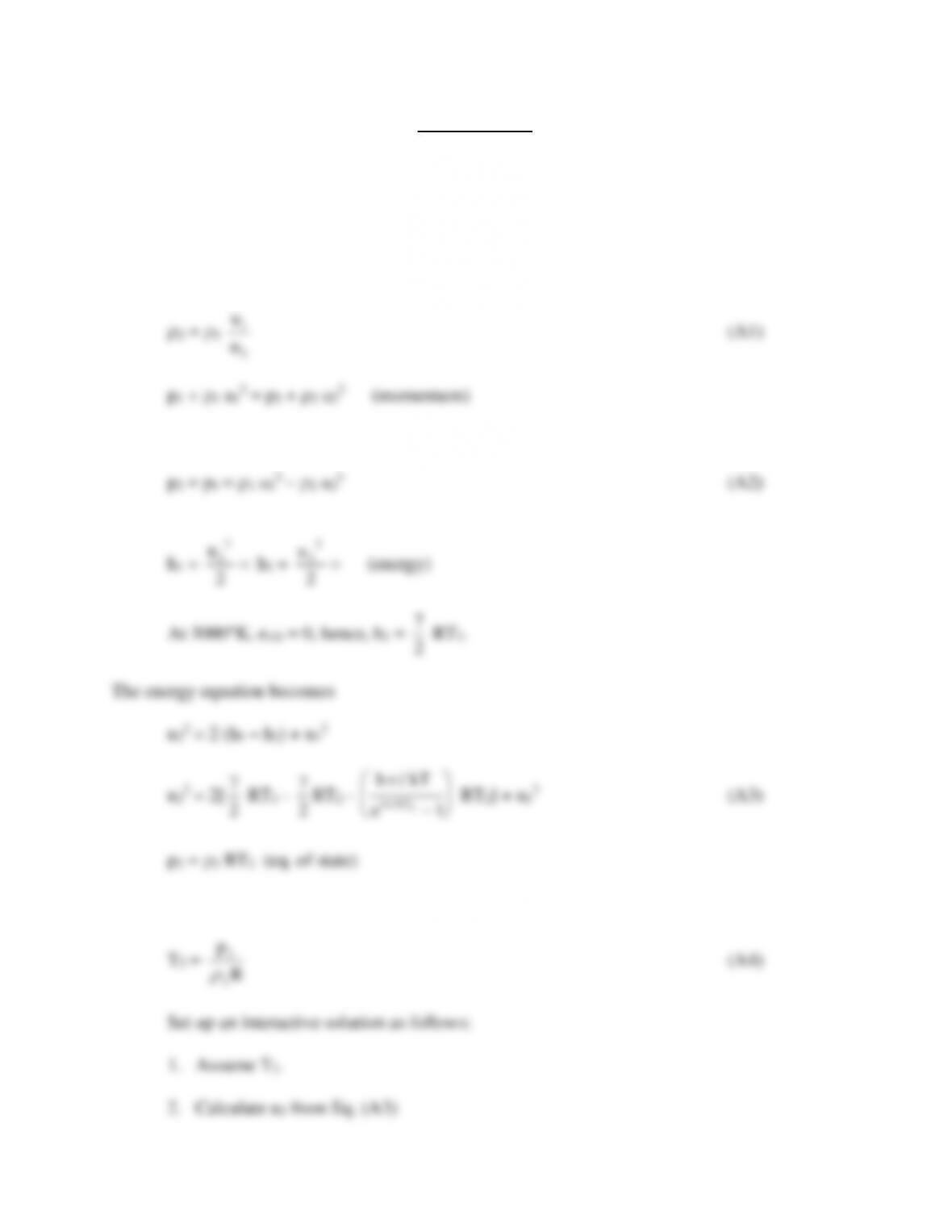
1 u1 = 2 u2 (continuity)
or,
u
1
or,
or,
p
2
175
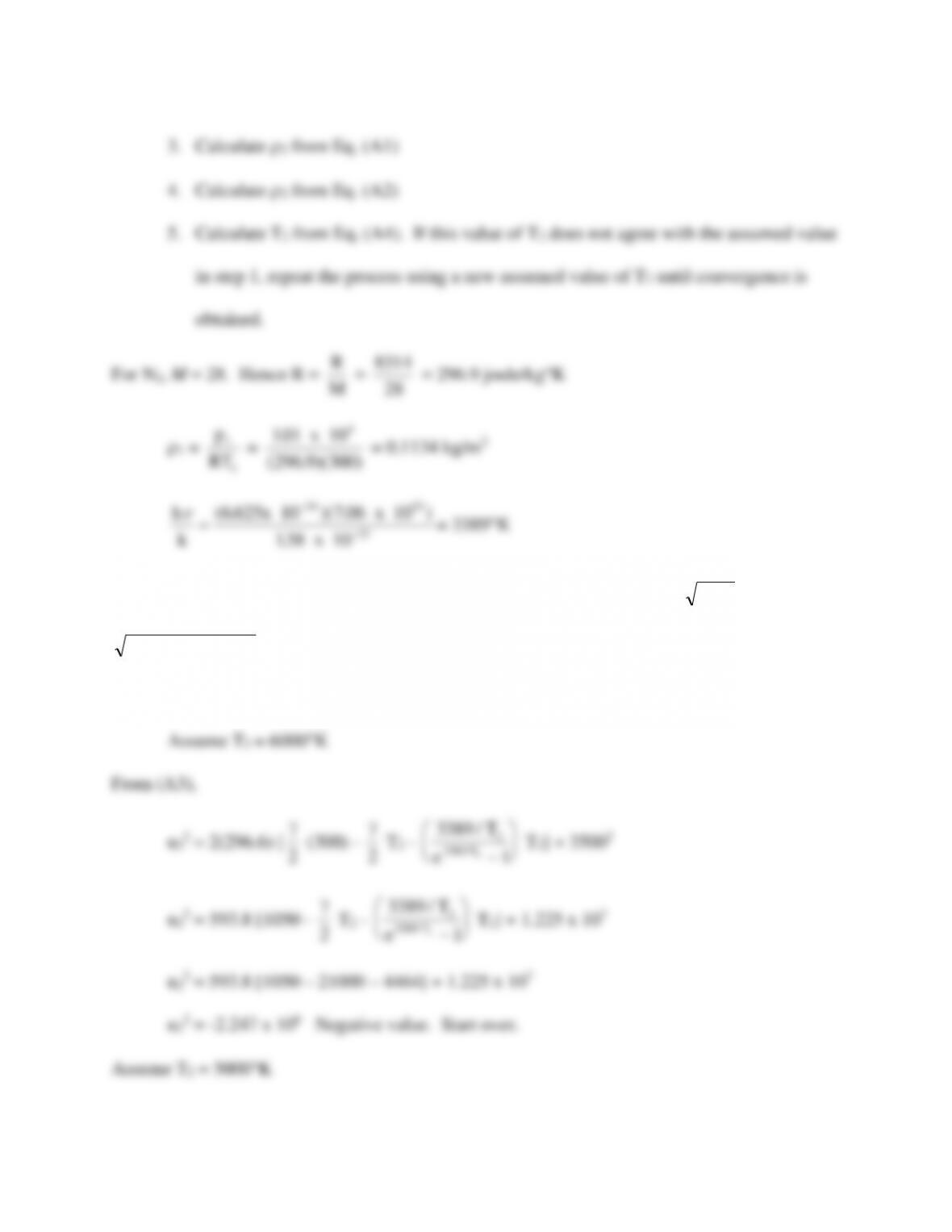
3. Calculate 2 from Eq. (A1)
k
x
−
.
138 10
23
For a first assumed value of T2, use the calorically perfect value. Since a1 =
RT1
=
( . )( .14 296 6)(300)
= 353 m/sec, M1 = u1/a1 = 3500/353 = 9.92. From Table II, T2/T1 = 20, T2 =
6000K.
176
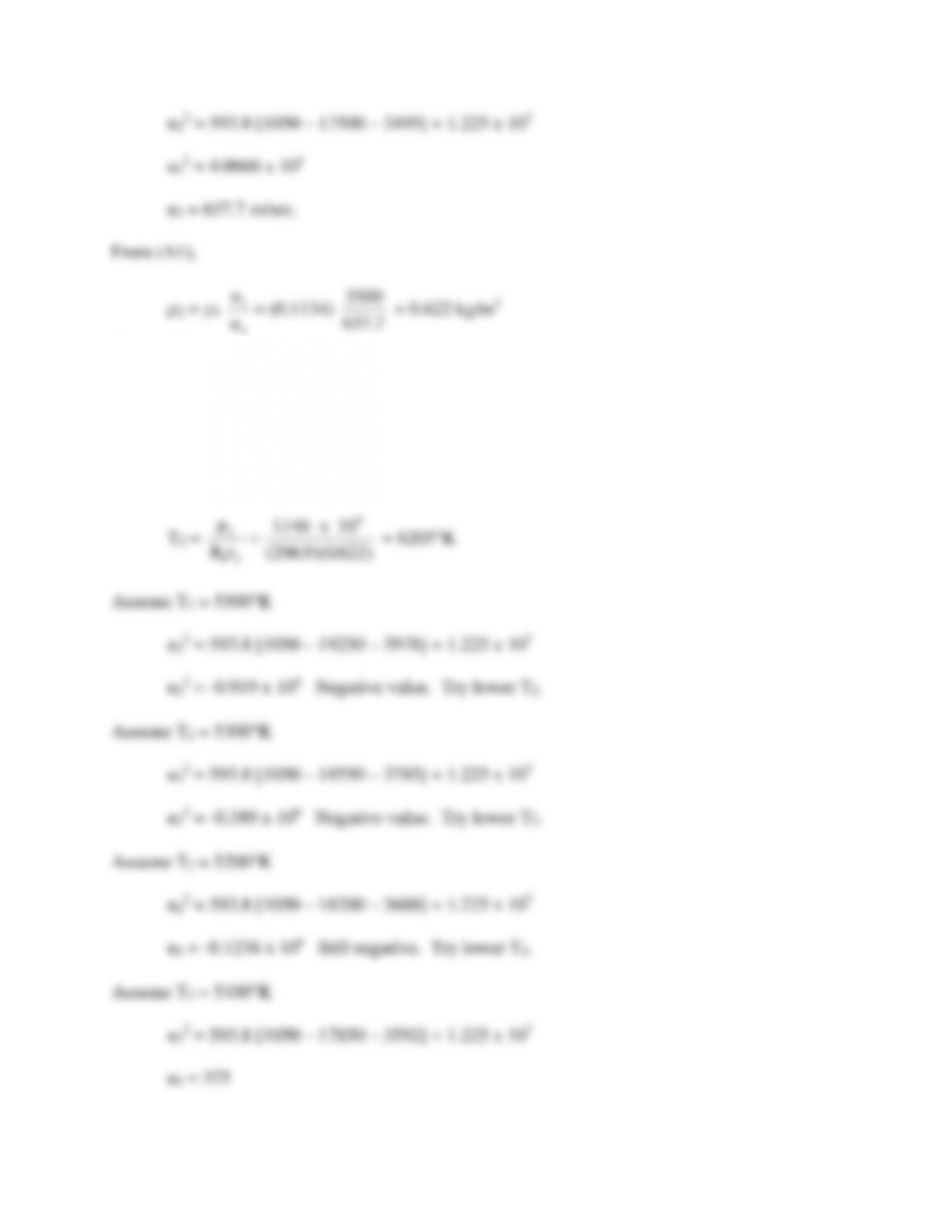
u
2
637.7
From (A2),
p2 = p1 + 1 u12 – 2 u22 = 1.01 x 10⁴ + (0.1134) (3500)2 –
– (0.622) (637.7)2 = 1.146 x 10⁶ N/m2
From (A4)
p
x
2
6
1146 10
177
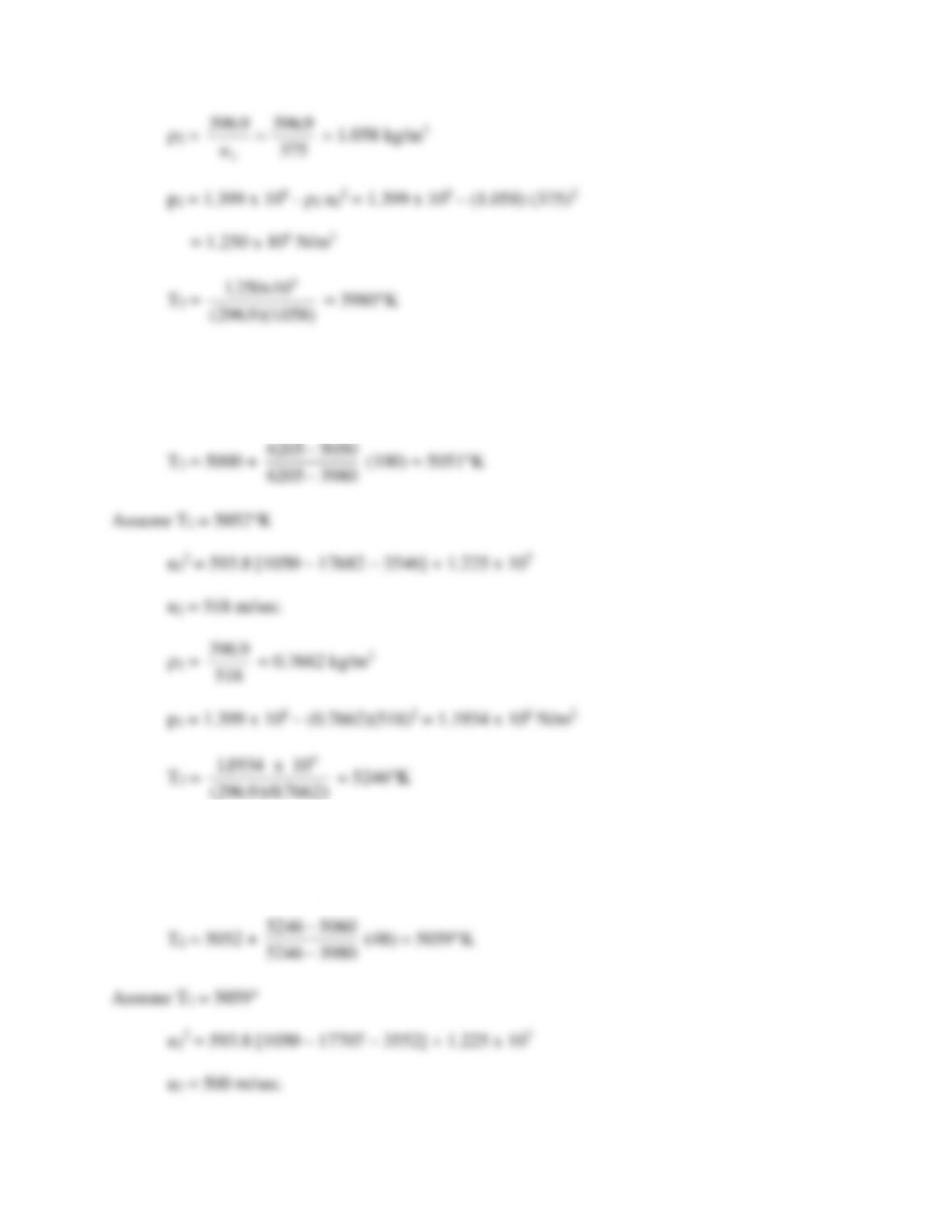
396 9396 9
. .
296 9 1058)
( . )( .
Using the results from the assumed values of 5000K and 5100K, we can interpolate to obtain a
better assumed value. Assuming the final T2 will be close to 5050K,
6205 5050
−
296 9 0 7662
( . )( . )
Interpolate again, using results for 5052K and 5100K, and assuming the final T2 will be close
to 5060K.
5246 5060
−
178
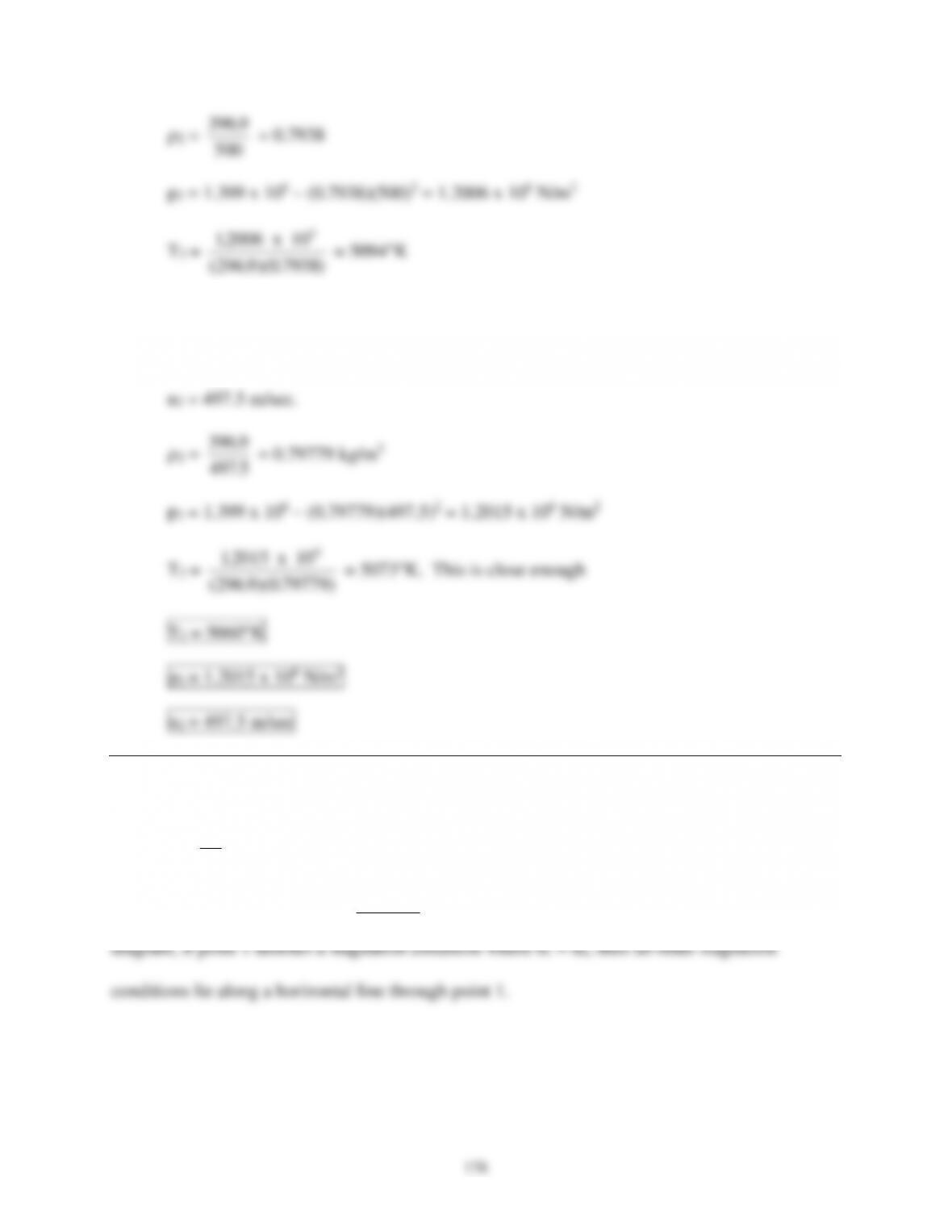
2 =
3969
500
.
= 0.7938
p2 = 1.399 x 10⁶ – (0.7938)(500)2 = 1.2006 x 10⁶ N/m2
T2 =
12006 10
2969 07938
6
.
( . )( . )
x
= 5094K
Assume T2 = 5060K
u22 = 593.8 [1050 – 17710 – 3553] + 1.225 x 10⁷
3969
.
17.2 Since the energy equation,.
h +
u2
2
= const = h0
holds for all four cases, the total enthalpy is constant throughout each flow. On a Mollier
179
This holds even for a nonequilibrium flow between point 1 and any other point in the flowfield.
The Mollier diagram is constructed for equilibrium properties; in a nonequilibrium flow, when
the fluid elements are slowed to zero velocity reversibly and adiabatically (the definition of total
conditions), the properties of the fluid element have enough time to come to equilibrium during
the stagnation process. So the stagnation properties of a nonequilibrium flow can be given on a
Mollier diagram.
180