163
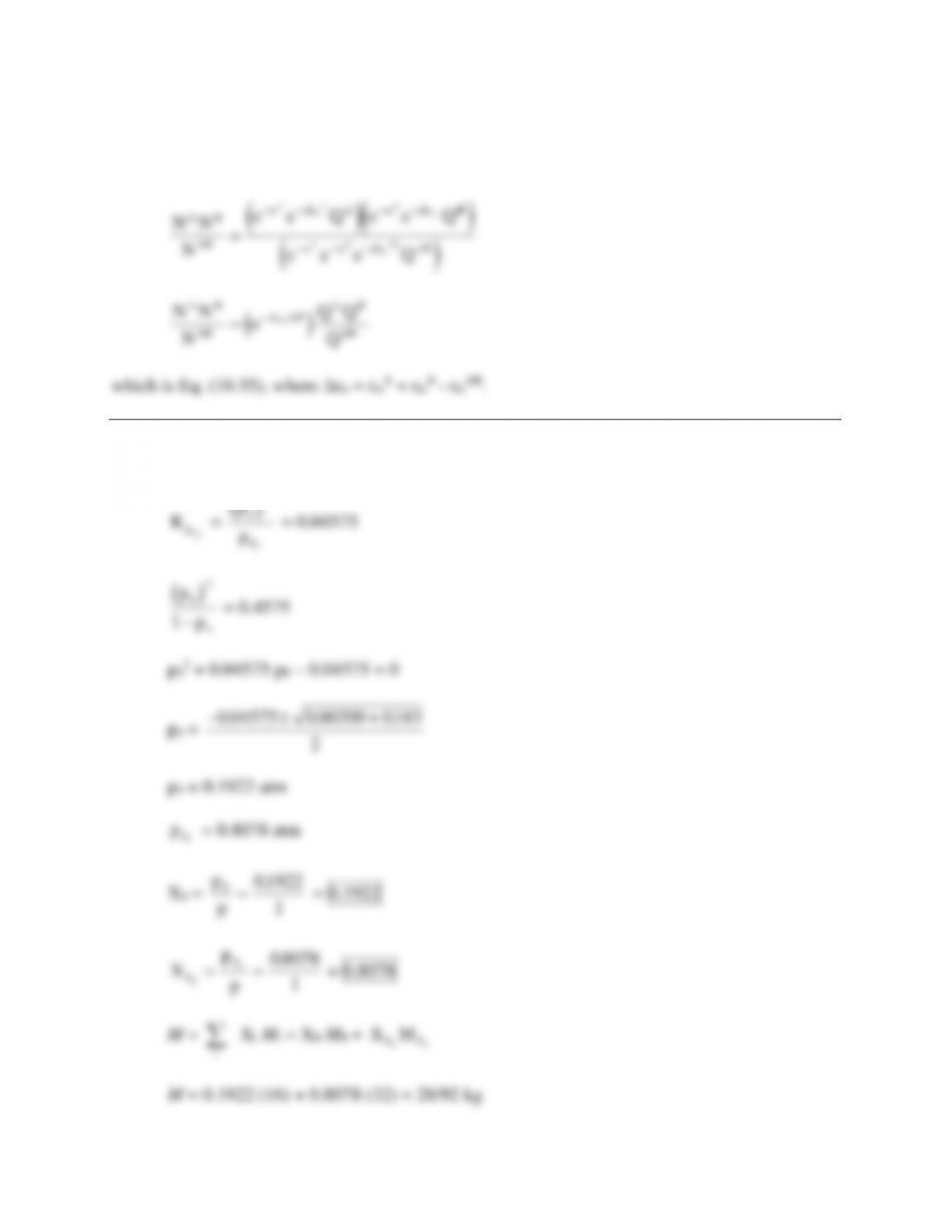
which is Eq. (13.54c).
Finally, multiply Eqs. (Q16) and (Q17), and divide by (Q18).
( )( )
N N
e e Q e e Q
A B
A
AoAo
− − − −
B
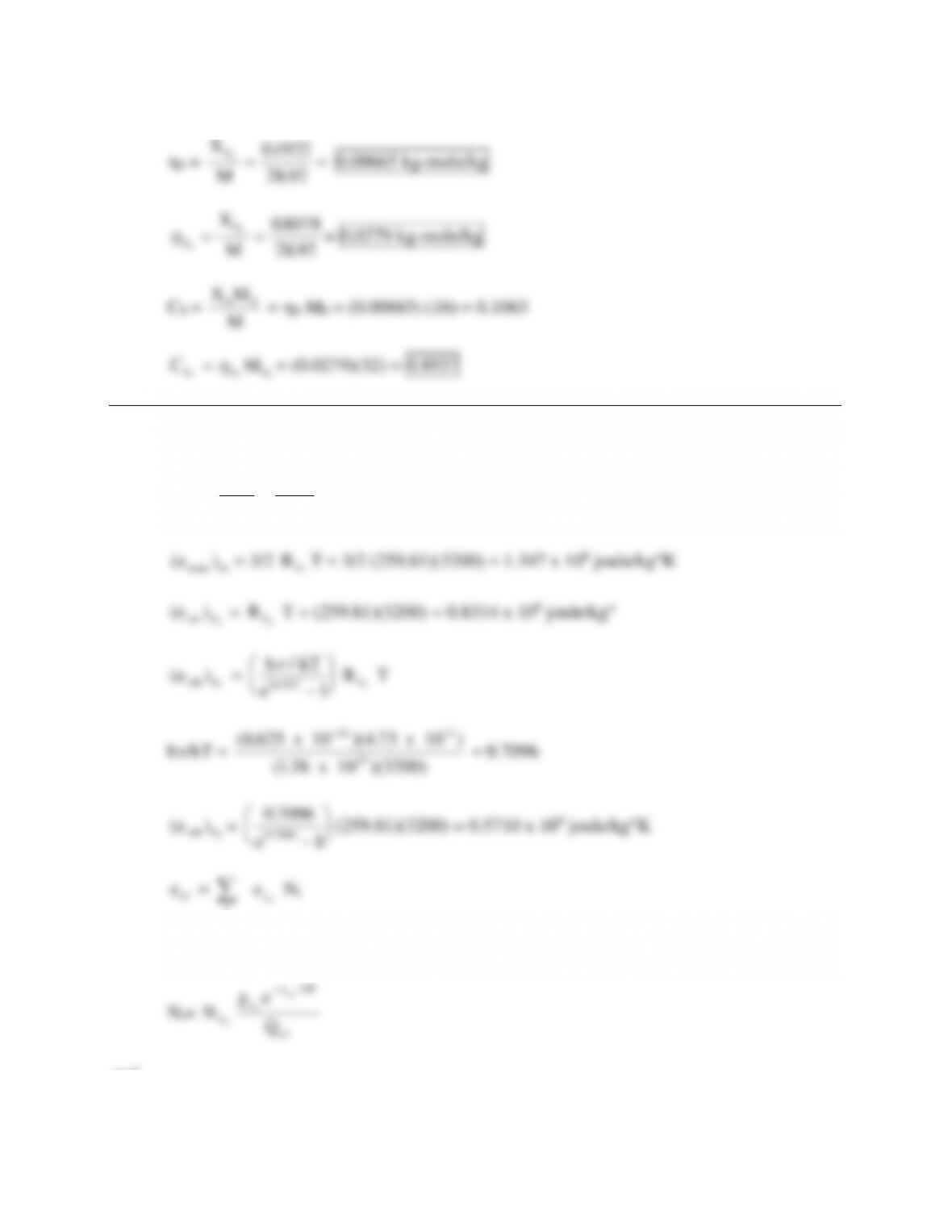
16.9 p =
p02
+ p0 = 1 atm
Kp02
=
( )
p
p
0
2
02
= 0.04575
( )
p
po
0
2
1−
= 0.4575
p02 + 0.04575 p0 – 0.04575 = 0
p0 =
− +004575 000209 0183
2
. . .
p0 = 0.1922 atm
p02
= 0.8078 atm
X0 =
p
p
001922
1
=.
= 0.1922
Xp
p
0
0
2
208078
1
= = .
= 0.8078
M =
i
Xi Mi = X0 M0 +
X M
0 0
2 2
M = 0.1922 (16) + 0.8078 (32) = 28/92 kg
164
X
0201922
.
0 0 0
2 2 2
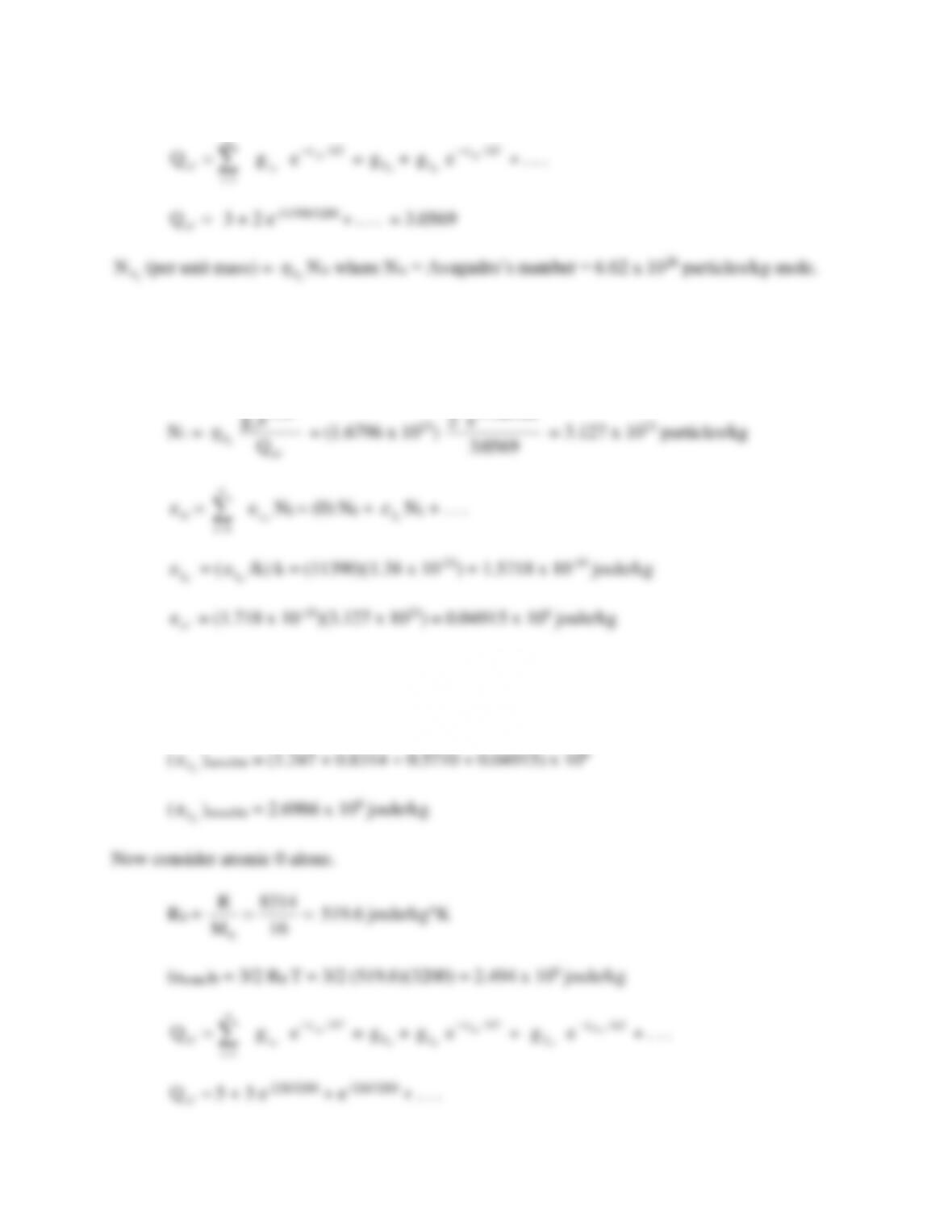
16.10 Consider 02 alone
RR
M
0
0
2
2
8314
32
= =
= 259.81 joule/kgK
i
where,
g e
i
kT
e
ie
−
/
and
165
/
1/
N02
02
From Problem 13.9,
02
= 0.0279 kg-mole.kg. Hence,
N02
=
02
NA = (0.0279(6.02 x 1026) = 1.6796 x 1025 particles/kg
02
g e
Q
kT
e
11
−
2
30569
11390 3200
e−/
.
ee
ee
Hence,
(
e02
)sensible = (etrans + erot + evib +
ee
)
02
e02
e02
166
i=
0
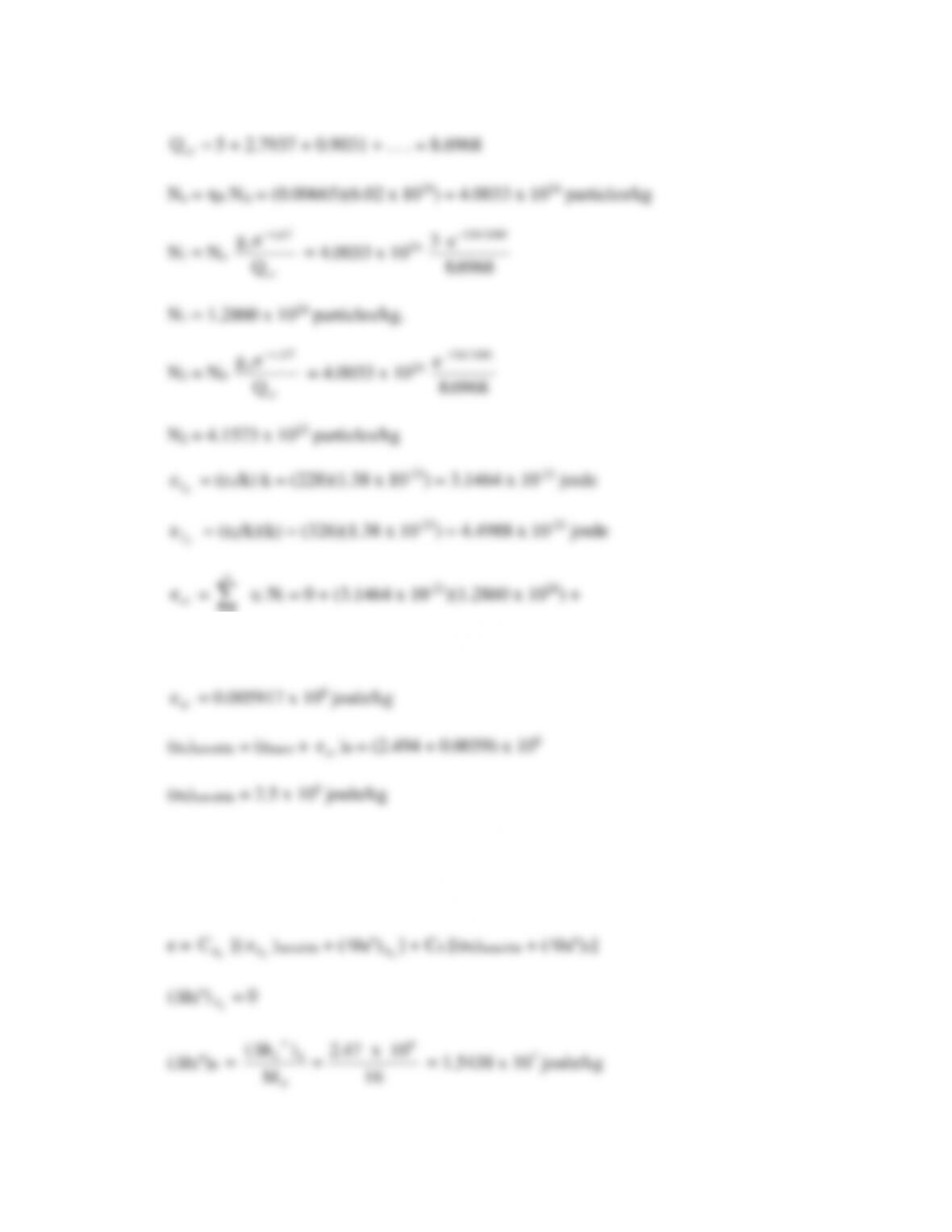
+ (4.4988 x 10⁻²¹)(4.1573 x 10²³) + . . .
For the mixture:
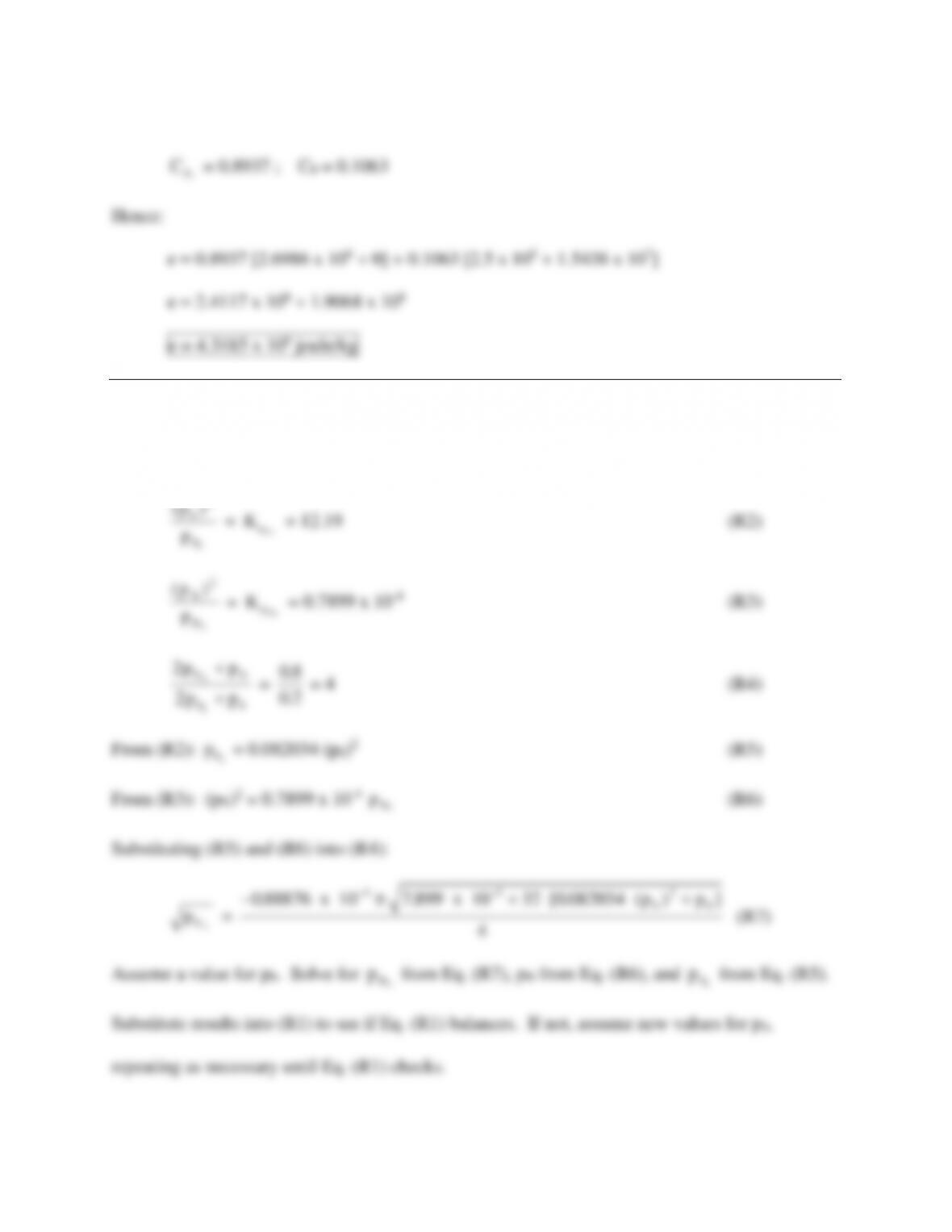
e =
i
ci ei=
C02
e02
+ C0 e0
C02
e02
167
Also, from problem 16.9,
16.11
p02
+ p0 +
pN2
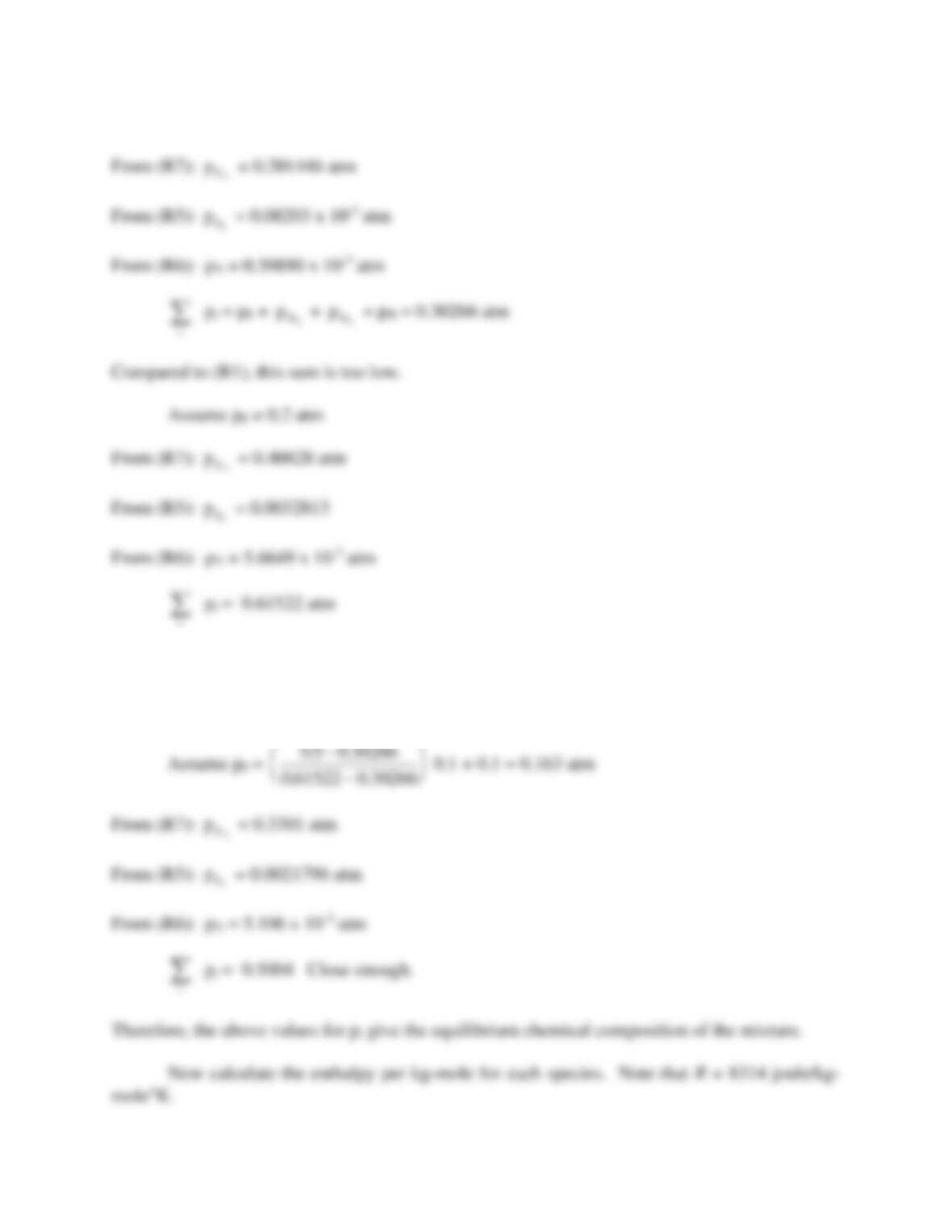
+ pN = 0.5 (R1)
p02
( )p
02
pN2
pN2
168
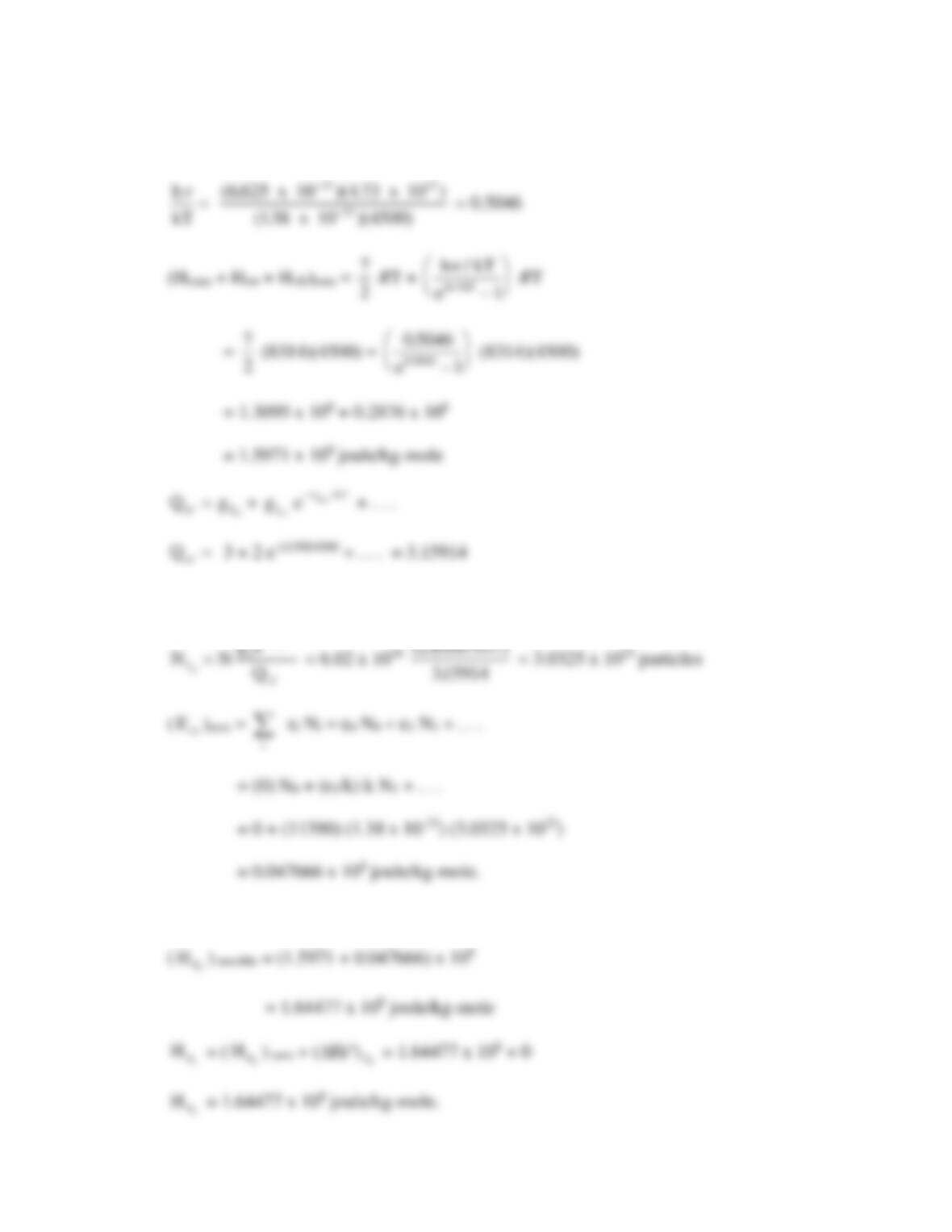
Assume p0 = 0.1 atm.
i
i
Compared to (R1), this sum is too high. To obtain a better guess for p0, interpolate between
the above two results.
i
05 0 30266
. .
−
169
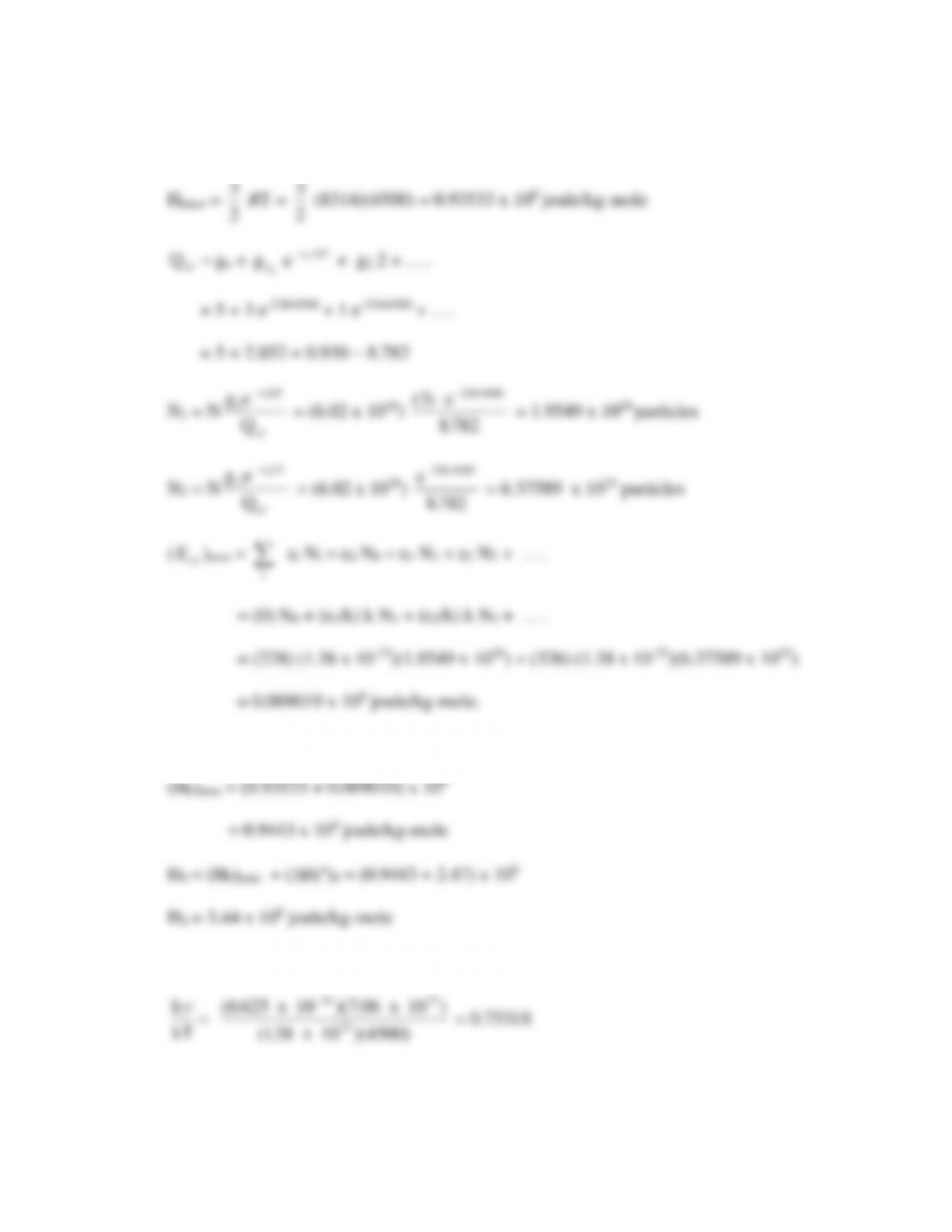
For 02:
h
( . )( . )
6625 10 473 10
34 13
x x
−
Avagado’s number = 6.02 x 1026 particles/kg-mole. Hence, from the Boltzmann distribution:
Ne
1
= N
g e
Q
kT
e
11
−
= 6.02 x 1026
()( . )
.
2 0 07957
315914
= 3.0325 x 1025 particles
(
Ee
)sens =
i
i Ni = 0 N0 + 1 N1 + . . .
= (0) N0 + (1/k) k N1 + . . .
= 0 + (11390) (1.38 x 10⁻²³) (3.0325 x 1025)
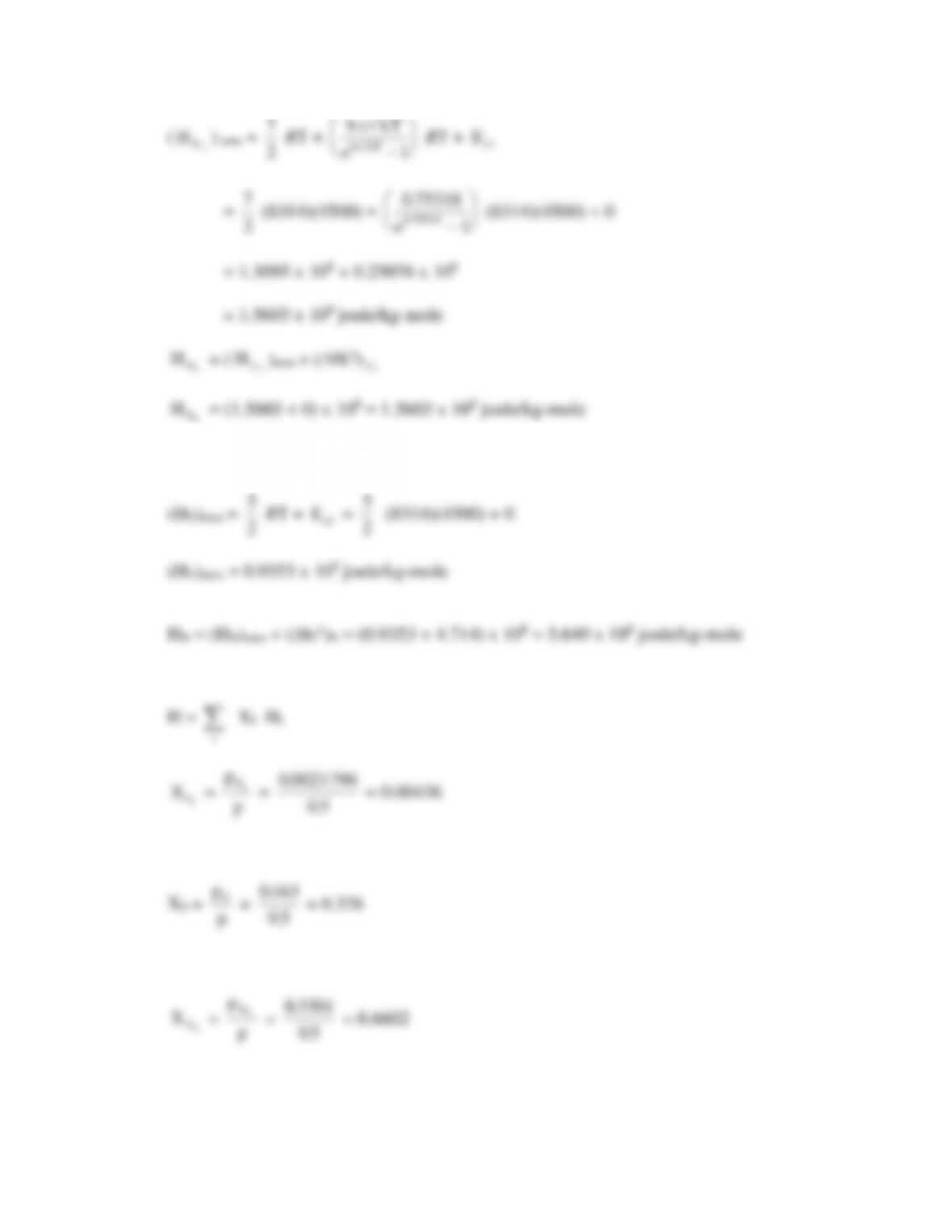
= 0.047666 x 10⁸ joule/kg-mole.
Thus:
170
For 0:
5
5
Thus,
For N2:
h
kT
( . )( . )
( . )( )
6625 10 706 10
138 10 4500
34 13
23
x x
x
−
171
7
7
hkT
/
For N:
5
5
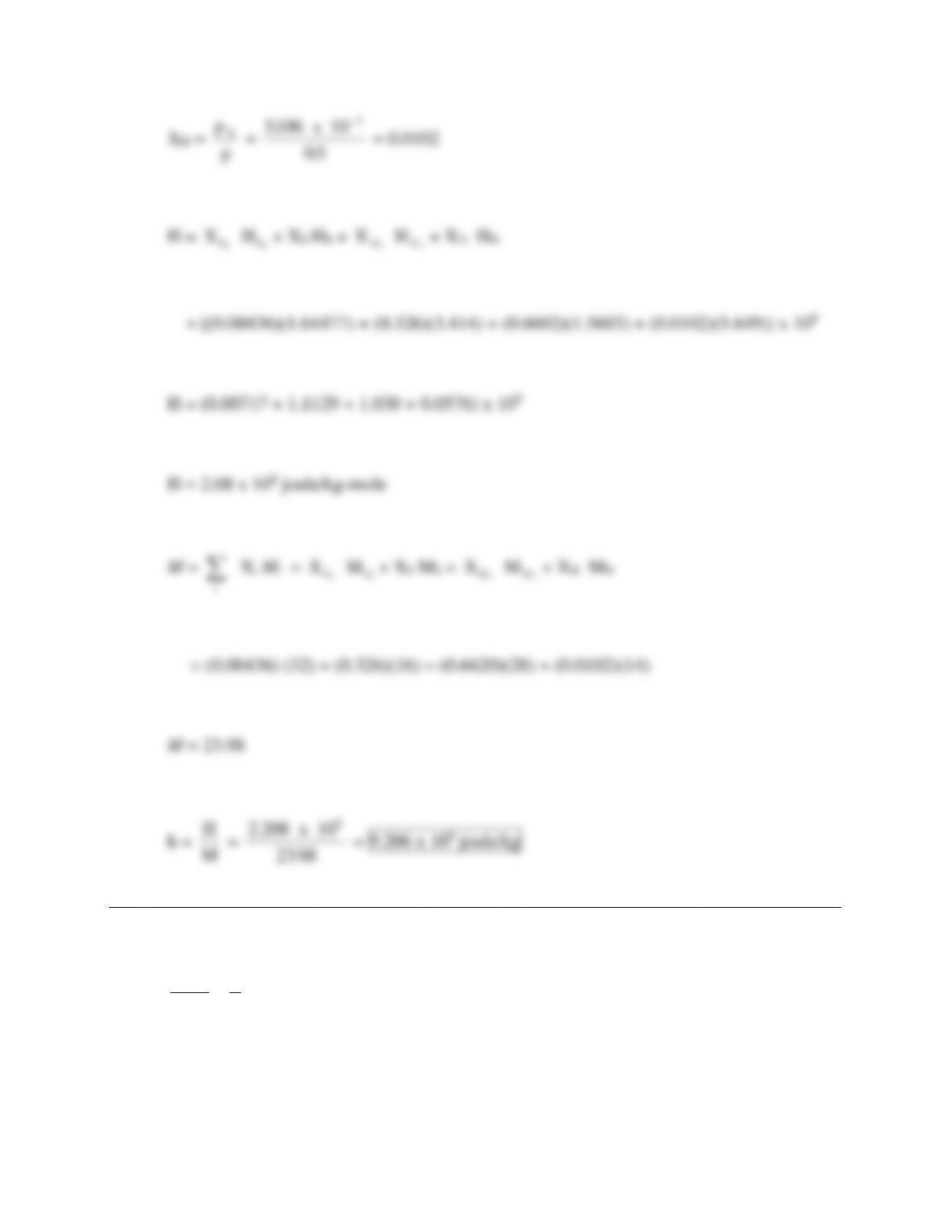
p
05
.
172
p
N
5106 10
3
.
x−
i
M
2398
.
16.12
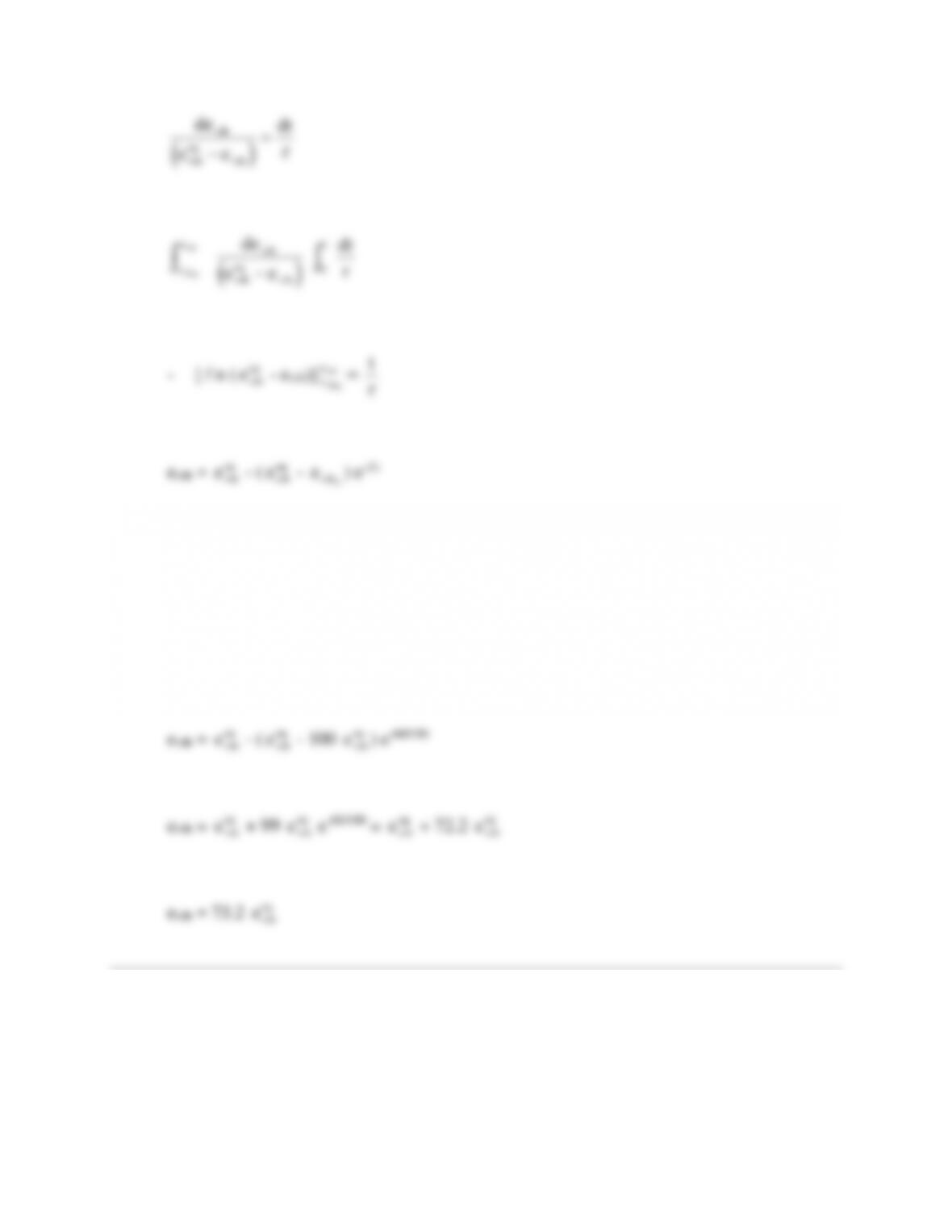
de
dt
vib =1
( )
e e
vib
eq vib
−
173
evib
eq
de
dt
vib
eq
eq
where
evib0
is the initial value of evib at t = 0.
For the conditions of this problem,
evib0
= 100
evib
eq
, = sec, t = 1 min = 60 sec.
Hence,
evib
eq
eq
eq
eq
evib
eq
evib
eq
eq
eq