
Chapter 45: Hospital Procedures
MATCHING
Match the following terms with the correct definition:
a.
emergency
b.
diluent
c.
force feeding
d.
nosocomial
e.
observation
f.
dentition
g.
isolation ward
h.
neck band
i.
secondary bandage
j.
stirrups
k.
aspiration
l.
anogenital distance
m.
bandage
n.
hospital treatment board
o.
crash cart
p.
bandage scissors
q.
primary bandage
r.
nasogastric tube
s.
tertiary bandage
1. watching an animal during hospitalization to note its behavior
2. third layer of a bandage
3. equipment placed into the nose that is used to force feed food into the stomach
4. patient identification information placed around the head area of an animal
5. situation requiring immediate life saving measures
6. first bandage layer
7. infection caused while being hospitalized
8. arrangement of teeth in the mouth
9. movable table that holds emergency equipment
10. placing food into an animal’s mouth and making it swallow the food
11. ingesting food into the lungs
12. liquid portion of a vaccine
13. area where hospitalized patient information is recorded
14. area where infectious animals are kept to reduce the spread of disease
15. pieces of tape that hold a bandage in place on a limb
16. the length from the vulva or penis to the rectum that helps determine gender
17. protective layer of material placed over a wound or fracture
18. equipment used to remove a bandage

Match the following terms with the correct definition:
a.
protective covering of a wound or fracture area
b.
first layer of a bandage
c.
the arrangement of teeth in the mouth
d.
liquid portion of a vaccine
e.
movable table with emergency equipment
f.
watching an animal during hospitalization to note its behavior
g.
infection acquired by patients during hospitalization
h.
situation requiring immediate life saving measures
i.
placing food into the mouth for an animal to swallow
j.
third layer of a bandage
k.
swallowing food that enters the lungs
l.
information placed on a board for all hospitalized patients
m.
equipment used to force feed an animal by placing it into the nose
19. diluent
20. emergency
21. aspiration
22. observation
23. tertiary bandage
24. nasogastric tube
25. dentition
26. nosocomial
27. crash cart
28. bandage

COMPLETION
1. An emergency __________________ should be in place in all veterinary hospitals with
regular training each month.
2. An emergency _____________________ should detail all emergency supplies, drugs and
equipment located in the facility.
3. A female cat has a ________________ and ________________ shaped vulva.
4. The baby teeth are called _____________________ teeth.
5. Middle aged horses have __________________ shaped teeth.
6. A vaccine that is reconstituted should be used within ________________________.
7. Multiple dose vaccine vials usually require ____________ to be removed for use with a single
animal.

8. The vaccine vial when mixed with a powder and diluent, should be inverted ____ to ____
times to mix.
9. Force feeding may be done using a __________________, ____________________ or
________________________.
MULTIPLE CHOICE
1. Which of the following is the anogenital distance describing a female animal?
a.
round opening
b.
distance from vulva to rectum is short
c.
outward projection
d.
distance from vulva to rectum is wide
2. Which of the following helps determine the age of an animal?
a.
tartar and stains on teeth
b.
the angle of the teeth
c.
deciduous or permanent teeth
d.
all of the above help determine the age of an animal
3. Which of the following is NOT necessary when preparing a vaccine?
a.
alcohol
c.
pen
b.
proper size syringe
d.
vaccine label
4. Which of the following is a term for a vaccine?
a.
biological
c.
supplemental
b.
pharmaceutical
d.
nosocomial
5. Which of the following is the first step in wound cleaning?
a.
Flush the wound
b.
Apply KY gel to the wound area for clipping and preparation
c.
Scrub the wound with antibacterial soap
d.
Clip the area around the wound
6. Which of the following is a purpose for bandaging?
a.
protection
c.
immobilization
b.
prevention of movement
d.
all of the above
TRUE/FALSE
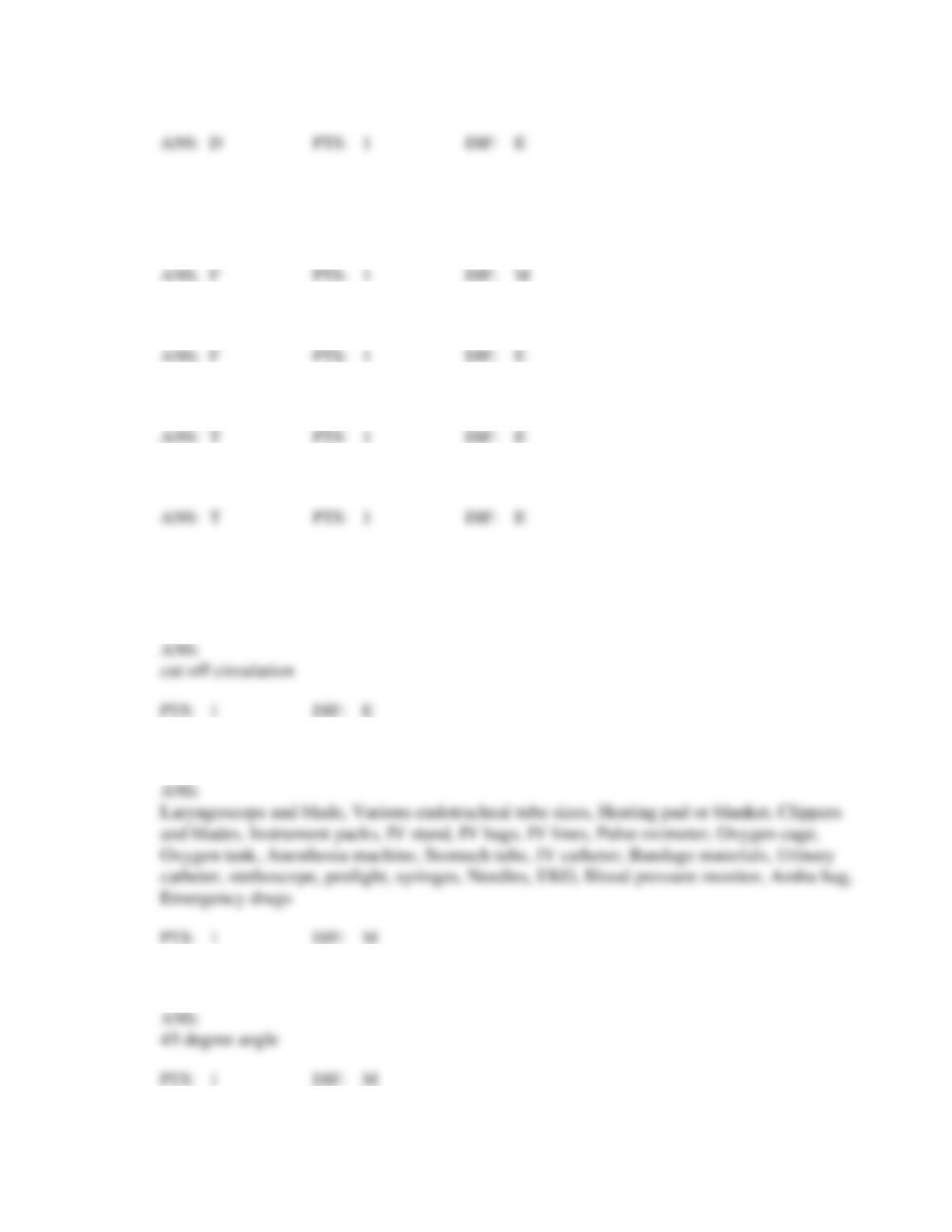
1. A basic bandage has 4 layers.
2. Bandage application should begin at the top of the area to be bandaged.
3. Vet wrap is commonly used in bandages.
4. Plastic bags should be applied over bandages to keep them dry.
SHORT ANSWER
1. What can happen if a bandage is applied too tight?
2. List 4 pieces of emergency equipment.
3. How should bandage material be applied onto a limb?
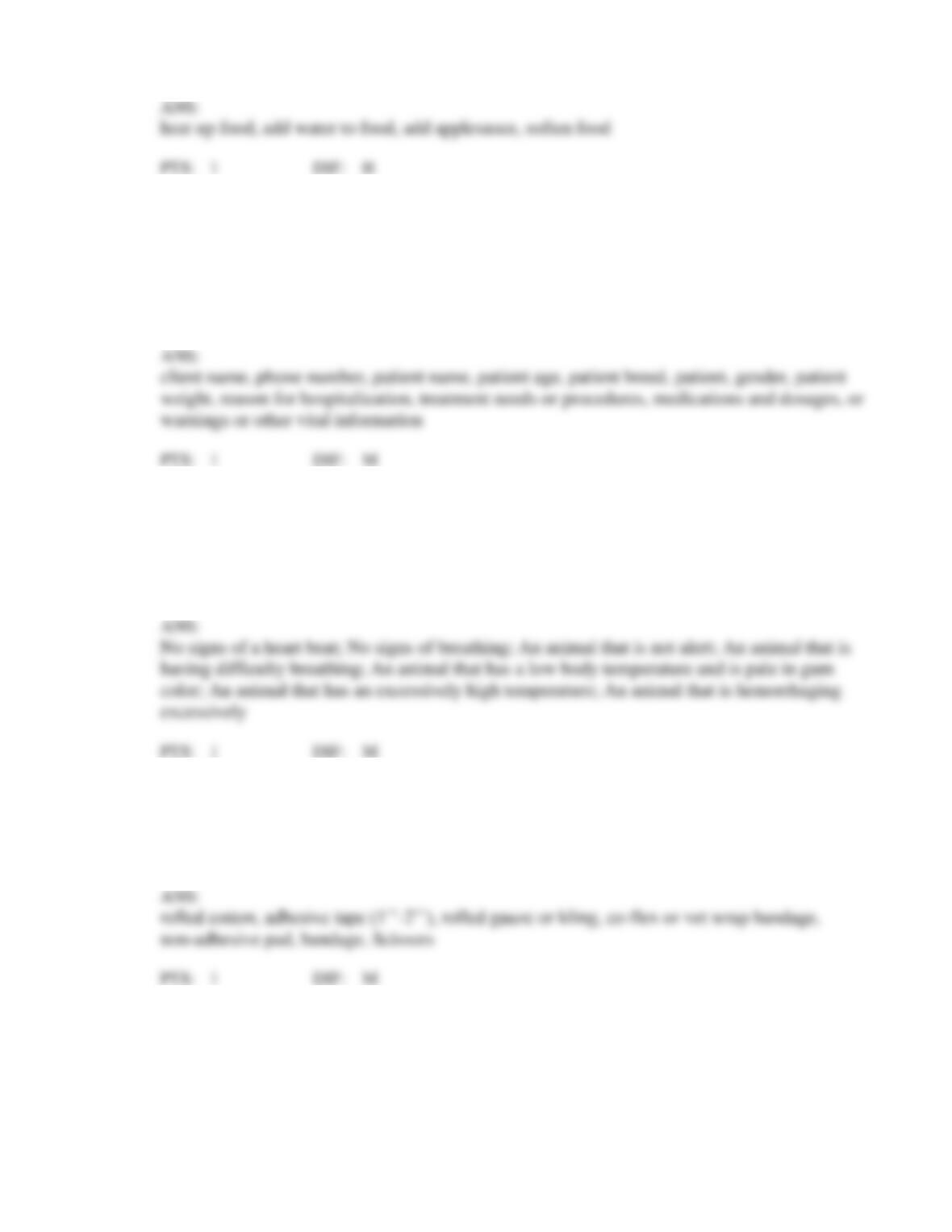
4. List 3 ways to encourage an animal to eat when hospitalized.
5. List 5 items placed on a hospital treatment board.
a.
b.
c.
d.
e.
6. List 4 signs of an emergency in an animal.
a.
b.
c.
d.
7. Name 3 materials used in bandages.
a.
b.
c.