101
CHAPTER 5
MULTIPLE CHOICE
1) In what year was the term learning disabilities coined?
A) 1963
B) 1975
C) 1980
D) 1990
2) Which of the following students would NOT qualify as learning disabled according
to the federal definition?
A) Ashley, a student with dyslexia
B) Blake, a student with cerebral palsy
C) Carmen, a student with perceptual problems
D) Damien, a student with developmental aphasia
3) Before IDEA 2004, the most common way to identify a severe discrepancy between
expected and actual achievement is _____.
A) interviewing parents
B) observing the student in various classes and comparing performance
C) comparing student scores on IQ tests with scores on an achievement test
D) comparing student scores on reading and math tests with those of peers in the
same grade
4) What is a drawback to using a discrepancy approach to identifying children with
learning disabilities?
A) It is a subjective approach.
B) fail approach.
C)
D) Too few students are being identified as learning disabled.
5) One advantage of the response to intervention approach to identifying students with
learning disabilities is _____.
A) it is simpler to use
B) it is less time-consuming
C) it is preferred by teachers and parents
D) it results in early identification and prevention
6) The NJCLD definition of learning disabilities is different from the IDEA definition in
that _____.
A) it pertains to school-age children only
B) social difficulties are recognized as a learning disability
C) a specific formula for calculating a discrepancy score is provided
D) central nervous system dysfunction is presumed to the cause of learning disabilities
102
7) Which of the following terms is considered obsolete by the NJCLD?
A) Dyslexia
B) Dysgraphia
C) Learned helplessness
D) Perceptual impairments
8) Most students with learning disabilities have problems with _____.
A) attention
B) hyperactivity
C) reading
D) written language
9) Carter is having difficulty learning to read. Although he is in third grade, his teacher
says that he does not seem to have a conscious understanding that language is made
up of sounds. Carter has a deficit in _____.
A) attention
B) phonological awareness
C) reading comprehension
D) word recall
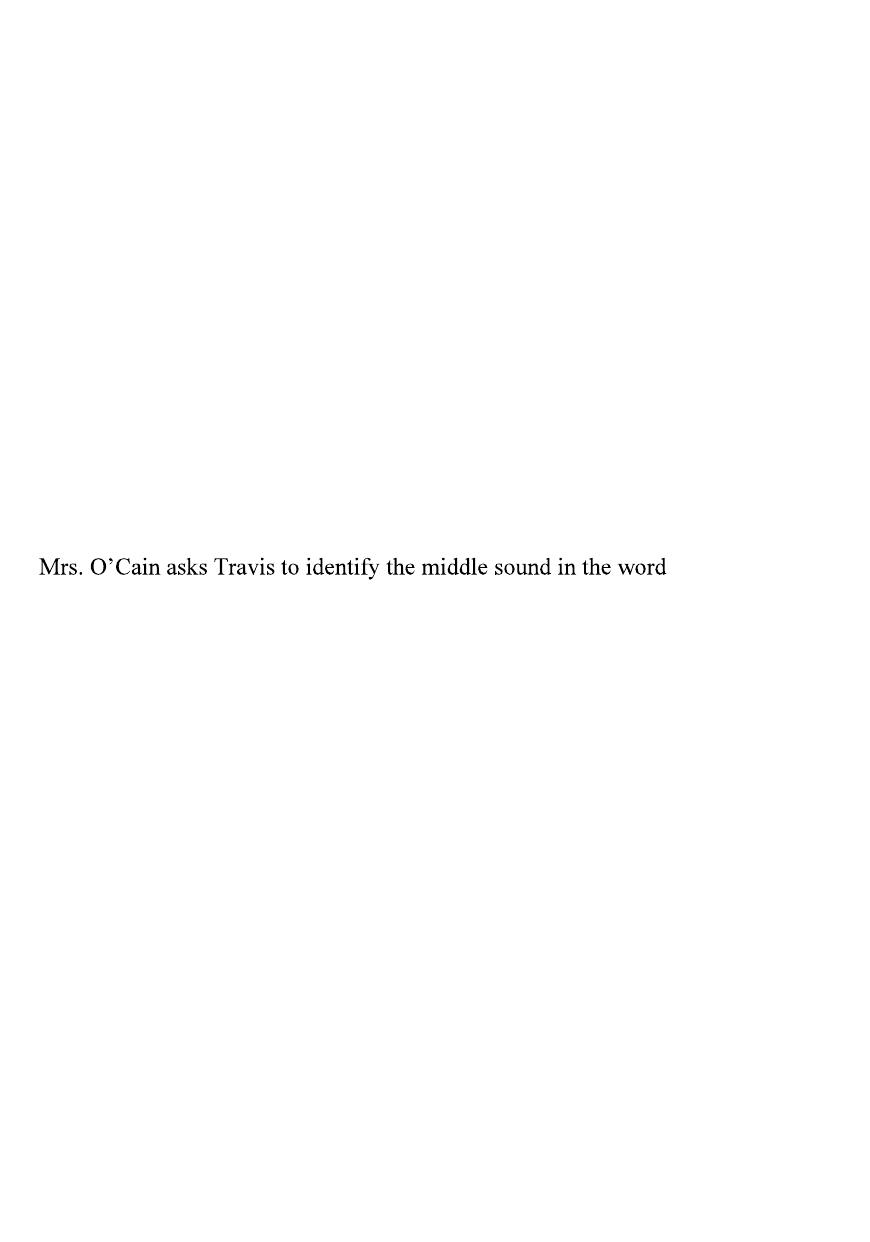
10) hit. Which
phonemic awareness skill does this task involve?
A) Isolating sounds
B) Manipulating sounds
C) Orally blending sounds
D) Segmenting a word into sounds
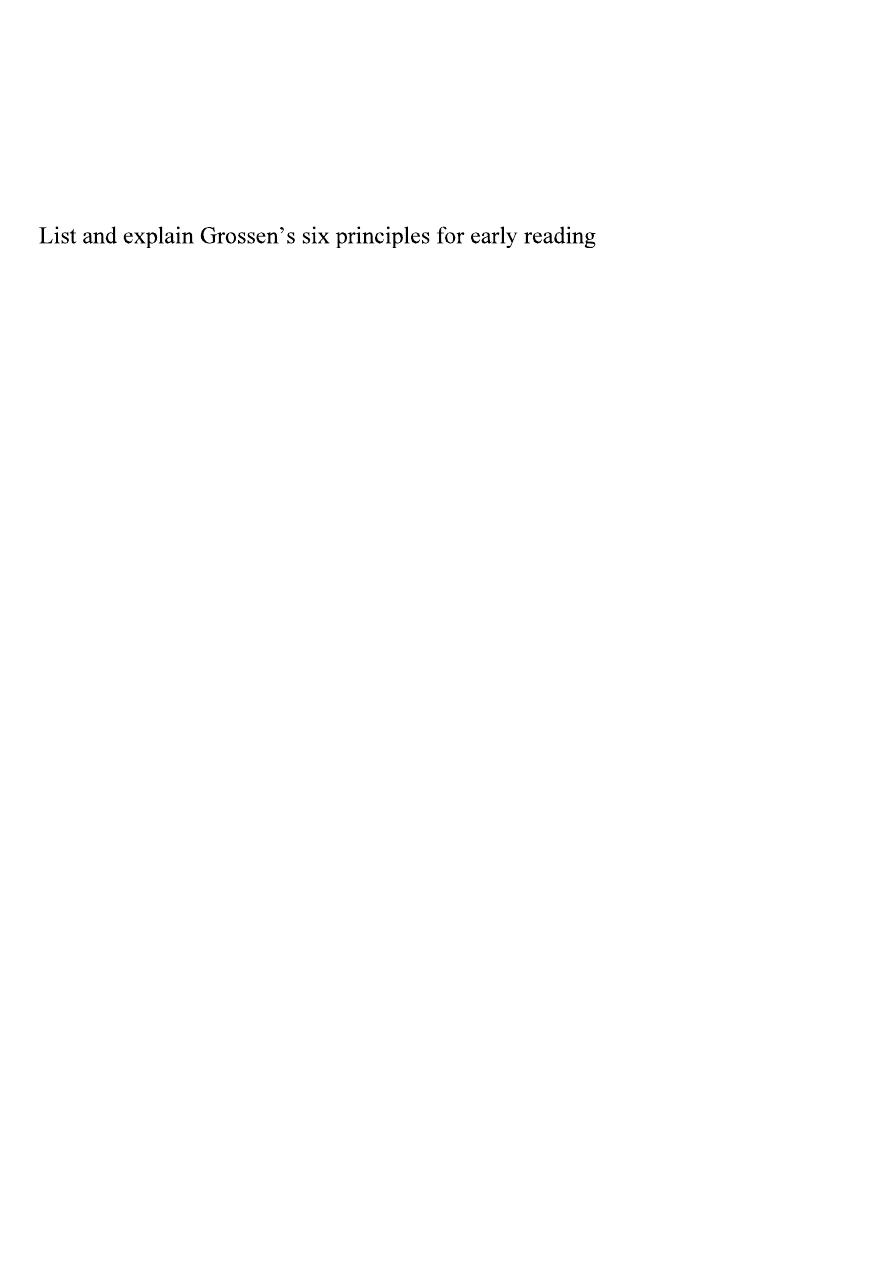
11) All of the following are research-based principles of early reading instruction
EXCEPT_____.
A) use the COPS strategy
B) show children how to sound out words
C) begin teachings phonemic awareness in kindergarten
D) use interesting stories
12) Which of the following is NOT true regarding students with learning disabilities and
written language?
A) Some of their difficulties are due to confusion about spelling.
B) Their written language deficits reflect their weak language base.
C) They spend a large amount of time planning their ideas for writing.
D) They tend to write compositions with undeveloped ideas.

103
13) Which of the following statements about math skills and students with learning
disabilities is NOT accurate?
A) Working memory problems predict deficiencies in math.
B) Students with learning disabilities are fluent in recalling number facts.
C) Students with learning disabilities have difficulty solving story problems.
D) Their math performance, at middle and high school, is three or more grades
below their actual grade.
14) Which of the following is NOT identified, by the author of your textbook, as likely
to improve the math performance of students with learning disabilities?
A) Discovery learning
B) Fluency training
C) Guided practice
D) Systematic instruction
15) Current research on behavior problems and students with learning disabilities indicates that
_____.
A) they engage in more risk-taking behaviors
B) they are immature and over dependent on adults
C) their negative behaviors are caused by hyperactivity
D) their negative behaviors are caused by academic deficits
16) What is the defining characteristic of students with learning disabilities?
A) Severe reading problems
B) Poor memory and attention
C) Difficulty understanding and using language
D) Achievement deficits in spite of adequate intelligence and effective instruction
17) What percentage of school-aged students with disabilities have learning disabilities?
A) 36.7%
B) 23.2%
C) 42.3 %
D) 62.5%
18) An environmental agent suspected as a cause of learning disabilities is _____.
A) impoverished living conditions
B) food allergies
C) food gluten and dyes
D) vitamin deficiency

104
19) Larry scored below basic level on a statewide achievement test; however, his teacher
has evidence that he has made small incremental improvements in both reading
fluency and comprehension this year. Which type of assessment is likely to provide
this evidence?
A) Criterion-referenced assessment
B) Curriculum-based measurement
C) Norm-referenced assessment
D) Summative assessment
20) One of the major concerns about using RTI to identify those in need of special
education is that _____.
A) culturally diverse students are overlooked
B) professionals are resistant to this approach
C) it takes longer to convince parents of the value of the approach
D) application of RTI across schools is inconsistent
21) Criterion-referenced tests are most useful for _____.
A) diagnosing a learning disability
B) determining what skills a student has learned and need to learn
C) measuring small changes in achievement over time
D) c
22) Mr. Carson is a middle school science teacher in an inclusive classroom. He wants all
of his students to be successful, so he plans and sequences instruction to show the
commonalities and differences between old and new knowledge. Which principle of
effective instructional design does this exemplify?
A) Big ideas
B) Conspicuous strategies
C) Strategic integration
D) Primed background knowledge
23) Which of the following is NOT true of content enhancement?
A) It may involve teaching mnemonics.
B) It includes a wide array of teaching techniques
C) It may increase the complexity of the curriculum.
D) It requires the teacher to simultaneously teach content and how to learn the
content.
24) Mrs. Cooper prepares handouts for her students with learning disabilities to help them
understand her lecture. The handouts contain an outline of lecture content and include
spaces for writing key facts, concepts, or relationships. This is an example of _____.
A) a graphic organizer
B) guided notes
C) prescribed notes
D) strategic note taking

105
25) Mr. Romano teaches his students to think of the acronym HOMES to remember the
names of the five great lakes. What type of mnemonic device is this?
A) A cryptic strategy
B) A keyword method
C) A letter strategy
D) A pegword method
26) Special educators can best help students with learning disabilities succeed in general
education classes by _____.
A) providing assistance with homework
B) providing assistance with assessments
C) teaching them basic skills in the resource room
D) teaching them behaviors that general educators value
27) On average, how many students does a resource teacher serve?
A) 10
B) 20
C) 30
D) 40
28) Which of the following service options for students with learning disabilities is the
most restrictive?
A) Consultation
B) General education classroom
C) Resource room
D) Separate classroom
29) Neuroimaging research has indicated that students with dyslexia have differences in
the brain structure or functioning in the _____.
A) cerebral cortex
B) corpus callosum
C) frontal lobe
D) left temporal lobe
30) A special form of direct daily measurement in which instructional decisions are based
on changes in the frequency of student performance is known as _____.
A) acceleration
B) CBM
C) precision teaching
D) tertiary intervention
106
ESSAY
1) Define guided notes and explain two advantages of guided notes for both students and
teachers.
2) Define CBM and explain the advantages it has over summative evaluations.
3) Explain the resource room model of serving students with LD. Include the advantages
and disadvantages of this approach.
4) instruction.
5) List, in sequential order, and explain the components to include as teachers plan a
lesson using explicit instruction. Identify the aspect of explicit instruction that the
textbook omits and explain why that component is important.