153
CHAPTER 14
MULTIPLE CHOICE
1) Which is NOT
A) Down syndrome
B) fetal alcohol syndrome
C) fragile X syndrome
D) premature birth
2) Developmental domains include areas such as _____.
A) home, center, school, community
B) health, welfare, well-being, education
C) physical, cognitive, communication, social
D) nutrition, medical, parent involvement, school intervention
3) Which statement best exemplifies current research on the importance of early
intervention?
A)
B) children, of parents who are deaf, need intensive early intervention to
C)
D) as long as services start in the
4) Which is true of early intervention for infants and toddlers?
A) It must be focused upon the child alone as the client.
B) Early intervention services are not provided in all states.
C) Services are mandatory under IDEA for children with disabilities younger than
three years.
D) Only children who currently exhibit delays may receive services.
5) As most commonly used, in the early childhood and special education literature, the
_____.
A) birth to 5 years
B) birth through 2 years
C) birth to 9 years
D) 3 to 5 years
6) Of all the people needed to make early intervention work, who is the most important?
A) Early intervention specialist
B) Parents/family
C) Service coordinator
D) Speech therapist
154
7) Which of the following is one of the longest running and most carefully controlled
and respected study on early intervention?
A) The Skeels and Dye Project
B) The Infant Health and Development Program
C) The Milwaukee Project
D) The Abecedarian Project
8) The Infant Health and Development Program focused on _____.
A) infants at risk for language delays
B) infants at risk of inadequate nutrition
C) infants who were premature or of low birth weight
D) infants who had conditions that caused developmental delays
9) All of the following exemplify transition as the term is used in early childhood special
education EXCEPT _____.
A) Alvin to goes to lunch after center time
B) Bianca moves from home-based services to center-based services
C) Clyde received services at a preschool for children with disabilities but he is now
included in a regular preschool
D) Davita received special education services in a Head Start program, and at age 5
she receives services in kindergarten
10) The Apgar scale is basically used as _____.
A) a measure of physical development
B) an evaluation for developmental delays
C) a screening test to identify high-risk infants
D) a screening test for metabolic disorders
11) Which did the landmark Skeels and Dye (1939) study conclude?
A) Intelligence is not fixed.
B) Parental involvement in intervention is crucial.
C) Early intervention is not helpful for children with disabilities.
D) Certain inherited traits place children at risk for developing later disabilities.
12) Which
A) A curriculum-based assessment technique for deciding on intervention strategies.
B) A procedural safeguard in IDEA that applies to assessment and identification in
early childhood special education.
C) A philosophy and practice guidelines for basing teaching on what is typically
expected of and experienced by children of different ages and stages.
D) A philosophy and guidelines promoting the concepts of inclusion and natural
learning environments (e.g., home) in early childhood.
155
13) Which of the following is a disadvantage of center-based programs?
A) Inclusion of typical peers
B) Transportation expenses incurred
C) Availability of a team of professionals
D) Provision of intensive instruction
14) The Milwaukee project targeted children at risk for developmental delays because of
_____.
A) prematurity or low birth weight
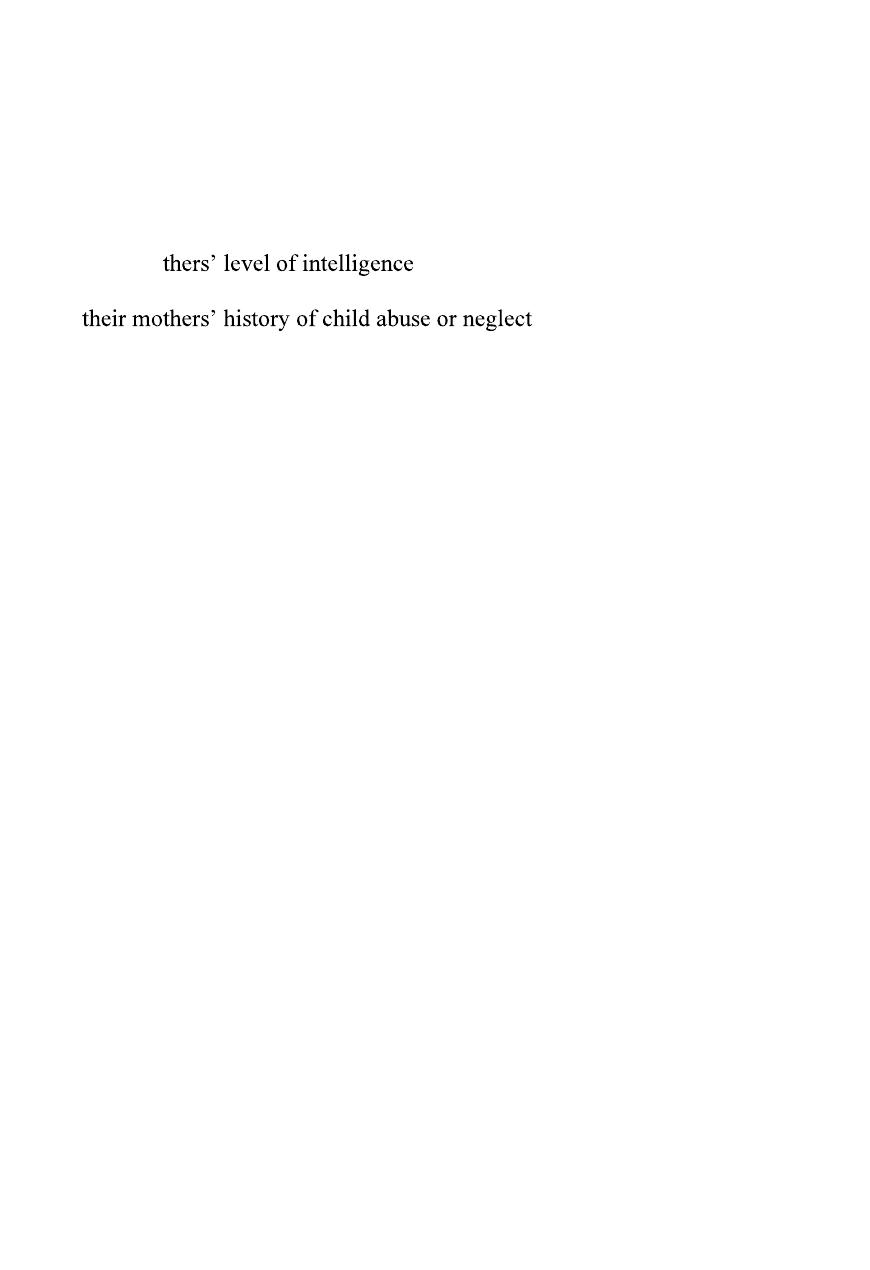
B) their mo
C) prenatal exposure to drugs or alcohol
D)
15) An IFSP must be reviewed with the family of a child receiving early intervention services
_____.
A) once a month
B) every 3 months
C) every 6 months
D) once a year
16) Which best characterizes the primary difference between an IFSP and an IEP?
A) An IFSP is less restrictive.
B) An IFSP is more family-centered.
C) An IFSP focuses on short-term goals.
D) An IFSP requires increased accountability.
17) Which is NOT a suggested way to create a supportive physical environment for
young children with disabilities?
A) Provide an open area for large group activities.
B) Locate quiet areas together away from the flow of traffic.
C) Arrange equipment so students can move between areas easily.
D) Designate an adult to locate and retrieve materials to maintain order.
18) Which term best applies to looking and planning for ways to include brief, systematic
instructional interactions, focusing on IEP objectives, in the context of typical
classroom activities?
A) Direct teaching
B) Discovery learning
C) Embedded learning
D) 0ptimal learning
19) Preschool activity schedules should include all but which of the following?
A) Outdoor and indoor activities
B) Small and large-group instruction
C) A majority of child-initiated activities
D) Opportunities to develop and practice new skills

156
20) Mrs. Clyburn is teaching Otis to ask and answer questions during conversations. She
knows that this skill will increase his ability to interact with people in his daily
environment. Which quality indicator is the focus of this objective?
A) Functionality
B) Generality
C) Measurability
D) Instructional context
21) Four-year-old Darrell is participating in comprehensive assessments in adaptive,
cognitive, language, motor, and social development to determine whether or not he
needs early intervention services or special education. What is the most likely
purpose of these assessments?
A) Determining eligibility for service
B) Progress monitoring
C) Individualized planning
D) Screening
22) Which of the following is an example of an embedded learning activity?
A) Four-year-old Darius eats lunch with peers who are not disabled.
B) Three-year-old Shelby listens to the ABC song and sings it during circle time.
C) Five-year-old Madison learns to tie her shoes, and then teaches a classmate the skill.
D) Melvin works on throwing and catching in occupational therapy so his teacher
includes a bean bag game in centers.
23) Tamara is three days old and weighs almost 2 pounds. Her parents just learned that
she has Down syndrome. What is the most likely setting for her early intervention
services?
A) Center based
B) Combined home center based
C) Home based
D) Hospital based
24) Home-based early intervention services may be least effective for _____.
A) teenage mothers
B) mothers with college degrees
C) mothers who live in rural areas
D) mothers with more than two children
25) Which of the following is NOT a core principle of developmentally appropriate
practice (DAP)?
A) Learning must involve all of the senses.
B) Knowledge must inform decision making.
C) Goals must be challenging and attainable.
D) Teaching must be intentional to be effective.

157
26) Which best describes the treatment and control groups of the Abecedarian Project?
A) Children receiving early intervention services in school-based settings vs. those
receiving them at home
B) Parents receiving consultation from a parent trainer vs. those provided readings
on child development
C) Children receiving medical, nutritional, and social services vs. those who
received the same plus early intervention
D) Teachers with special early childhood endorsements vs. those without special
certification from their state boards of education
27) Which of the following is NOT an element, listed by the authors of the textbook, that
makes puppets delightful to most young children?
A) Their vivid colors
B) Their interesting textures
C) Their larger than life expressions
D) Their technological component
28) Which of the following has been referred to as the most important legislation enacted
for young children with developmental delays?
A) P.L. 94-142
B) No Child Left Behind
C) P. L. 99-457
D) Section 504 of the Rehabilitation Act of 1973
29) How are IDEA regulations for services to young children similar to those for school–
age children?
A) The regulations specify who must receive services.
B) Outside agencies may have contracted to provide services to both groups.
C) Children in both groups must be labeled with a specific disability to receive
services.
D) The regulations specify that IEPs for children in both groups must include
suggestions for parents.
30) Current best practices guidelines for early childhood services calls for which
approach to the delivery of related services?
A) Multidisciplinary
B) Transdisciplinary
C) Interdisciplinary
D) Intradisciplinary
158
ESSAY
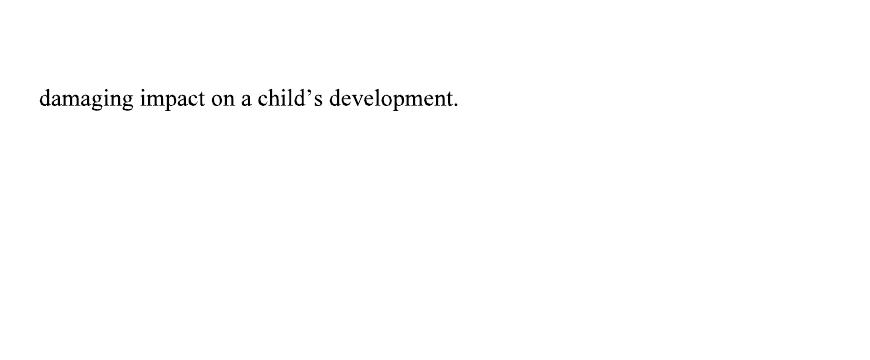
1) Define and give two examples for each of the following: environmental risk,
established risk, and biological risk conditions. Which do you feel has the most
Explain your response.
2) Describe six elements of an individualized family services plan, and contrast an IFSP
with an IEP.
3) Describe and give an example of the five major developmental areas or domains.
4) List and explain five of the program outcomes or goals for early childhood special
education.
5) List and explain the four early intervention service options. For each option, provide
an advantage and a disadvantage.