1
Chapter 13: Students with Multiple Disabilities and Traumatic Brain Injury
Multiple Choice
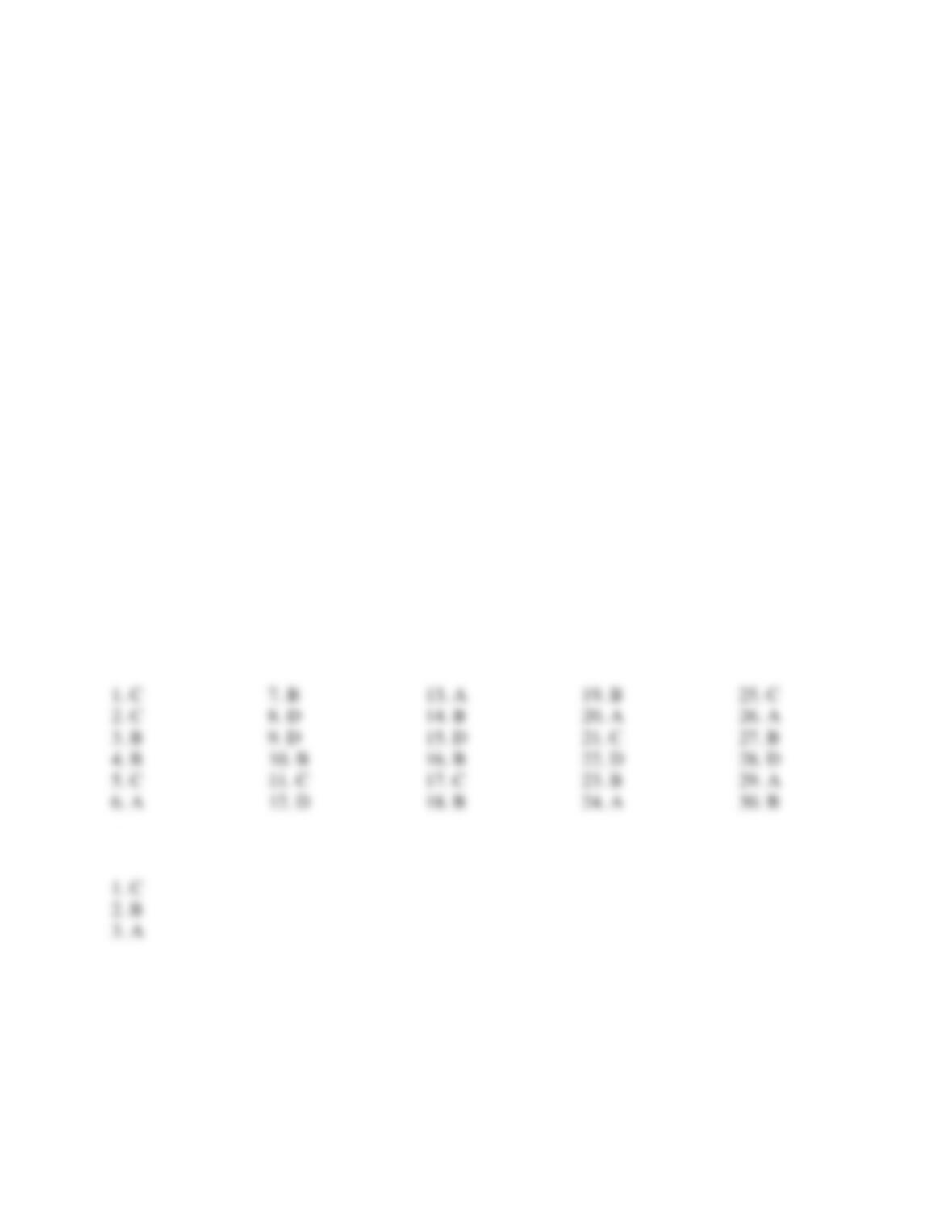
1. Each of the following is a component of the definition of multiple disabilities except:
A. There are concomitant impairments
B. The combination of impairments causes severe educational needs
C. Needs may be accommodated by programs for just one of the impairments
D. Needs cannot be accommodated by services solely for one of the impairments
2. Most students with multiple disabilities have IQ scores of:
A. 100 or lower
B. 25 or lower
C. 70 or lower
D. Just over 100
3. Students with multiple disabilities often have motor impairments that produce:
A. Extreme pain
B. Abnormal muscle tone
C. Broken bones
D. Convulsions
4. The Apgar Test is a traditional way to screen for detection of a disability in a newborn. The
test includes ranking the child on five traits, including heart rate, respiratory effort, muscle
tone, gag reflex, and which of the following?
A. Mobility
B. Skin color
C. Grasping
D. Eyesight
5. The “E” in the SETT framework for making evaluation decisions stands for which of the
following?
A. Evaluation of equipment to be used
B. Extension of learning for generalization
C. Environment in which technology will be used
D. Equipment to be used to support needs
6. A popular person-centered approach that customizes students’ IEPs to their specific visions,
strengths, and needs is:
2
A. MAP
B. SETT
C. AAC
D. Wraparound
7. Which of the following enables students who cannot communicate verbally or through other
formats, to do so through technology?
A. MAP
B. AAC
C. SETT
D. Sign language
8. AAC devices typically have all of the following features except:
A. Symbol choices
B. Display systems
C. Selection options
D. Calculators
9. Which of the following involves students learning to collect data on their progress toward
educational goals?
A. Self-instruction strategies
B. Student-directed learning strategies
C. Antecedent cue regulation
D. Self-monitoring strategies
10. Suggestions for implementing self-monitoring strategies include: implementing self-
monitoring strategies after the student has already learned to do the task; teaching the self-
monitoring strategy to the student before implementing the strategy; and which of the
following?
A. Teaching problem-solving skills
B. Building in checks to determine accuracy
C. Teaching the what-where strategy
D. Task sequencing
11. What percent of students with multiple disabilities spend all of their time in separate
educational settings?
A. 16%
B. 46%
C. 24%
3
D. 14%
12. The definition of traumatic brain injury includes all of the following aspects except:
A. TBI must be a acquired after a child is born
B. TBI must be caused by an external force
C. TBI applies to both closed and open head injuries
D. TBI is acquired during the birth process
13. Inflammation of the brain is:
A. Encephalitis
B. Meningitis
C. Epilepsy
D. Congenital
14. An injury that does not involve penetration or fracture of the bones of the skull but results
from an external blow or from the brain being whipped back and forth rapidly is which of the
following?
A. An open head injury
B. A closed head injury
C. Encephalitis
D. A congenital injury
15. What percent of all students are classified as having a traumatic brain injury?
A. About 2%
B. About 5%
C. More than 5%
D. Approximately 0.4%
16. Which of the following is least likely to sustain a TBI?
A. Children birth to age four.
B. Children 4 to 8.
C. Adolescents age 15-19.
D. Senior citizens over the age of 65.
17. Students with TBI often share similar characteristics with students who have:
A. Autism
B. Visual impairments
C. Learning disabilities
D. AD/HD
4
18. The term for lost or reduced muscle strength is:
A. Rigidity
B. Ataxia
C. Atrophy
D. Spasticity
19. Weakness, fatigue, and which of the following are common side effects of TBI?
A. Sleeplessness
B. Coordination problems
C. Immobility
D. Repetitive movements
20. The two factors affecting cognitive functioning of students with TBI are the extent of the
injury and:
A. The age at the time of injury
B. The location of the injury
C. Cause of the injury
D. Size of the injury
21. Each of the following is true of TBI except:
A. One year after the injury, they are more likely to show improvements in cognitive
skills than in behavioral skills.
B. Students with TBI are more likely to be diagnosed with obsessive compulsive
disorders, anxiety, and depression.
C. Approximately 10% of students experience post traumatic stress disorder in the first
three months following TBI.
D. Behavioral problems occur in 35 to 70% of students with TBI.
22. Which of the following refers to TBI resulting from a caregiver who has shaken a child
violently, often in situations when the caregiver is frustrated because of the child‘s crying?
A. Child abuse
B. Concussion
C. Sudden infant death syndrome
D. Shaken baby syndrome
23. The number one cause of TBI is:
A. Car accidents
B. Falls
C. Abuse
D. Gun injuries
5
24. What percent of students with TBI spend 80-100% of their time in general education
settings?
A. About 50%
B. 23%
C. Only 9%
D. Over 70%
25. Which of the following is a recommended accommodation for students with TBI?
A. Large print tests
B. Allow oral responses
C. Use multiple choice rather than essay
D. Use essay rather than multiple choice
26. ________ skills include conceptual, social, and practical competencies for functioning in
typical community settings.
A. Adaptive
B. Self-care
C. Self-determining
D. Accommodating
27. ________ skills include eating, dressing, and going to the bathroom.
A. Adaptive
B. Self-care
C. Self-determining
D. Accommodating
28. The prevalence of vision and hearing impairments is estimated to be ________ times more
common in people with intellectual disability.
A. 10
B. 20
C. 30
D. 40
6
29. School staff who, under IDEA, are regarded as supplementary aids and services and who
provide instructional support are known as:
A. Paraprofessionals
B. Counselors
C. School nurses
D. Administrators
30. What percentage of students with multiple disabilities are served in a separate setting?
A. 5%
B. 24%
C. 58%
D. 93%
Praxis style questions
1. Michael is a student with multiple disabilities. His educational and functional skills are very
limited but he is included in the general education setting for portions of the school day.
What should the teachers do for Michael to enhance his general education experiences?
A. Let him complete tasks that are within his abilities.
B. Determine another placement for Michael since he cannot handle the regular education
setting.
C. Create opportunities for him to benefit from peer tutoring.
D. Let Michael sit in the back of the classroom and sleep.
2. Kate is a student with multiple disabilities who has tantrums and hits herself and others.
Which of the following is the most appropriate action for Kate’s behaviors?
A. Write a behavior plan for Kate.
B. Learn to identify cues that trigger problem behavior.
C. Discipline Kate when she acts out.
D. Isolate Kate from other students.
3. Judy is a student in your class who has suffered a closed head traumatic brain injury in a car
accident. When Judy returns to your classroom after the accident, you notice changes in her
behavior that include temper outbursts, anxiety, fatigue, and depressions. The best way to help
Judy with her behavior is which of the following?
A. Teach problem-solving skills to reduce frustration and behaviors.
B. Create a 504 behavior plan that has strict consequences for Judy’s behavior.
C. When Judy exhibits her poor behavior, have her removed from the classroom.
D. Discuss the behaviors with Judy and tell her they will not be accepted in your
classroom.
7
Short Answer
1. Describe the areas of adaptive skills that are a challenge for students with multiple disabilities.
2. What are the causes of multiple disabilities?
3. Describe the Apgar test and how it is used.
4. Identify the major causes of TBI.
5. Explain how doctors make the determination of TBI.
Essay
1. Describe problems with determining the intellectual capabilities of students with multiple
disabilities, and state general conclusions about their intellectual functioning.
2. How can peer tutoring be effective with students who have multiple disabilities?
3. Describe the SETT framework for making evaluation decisions.
4. Describe the characteristics of cognitive change in students with traumatic brain injury.
5. Describe the emotional, behavioral, and social changes of students with TBI.
Chapter 13: Students with Multiple Disabilities and Traumatic Brain Injury
Questions Related to Multiple Disabilities:
Multiple Choice
Praxis
8
Short Answer
Essay
9