1) A routine collection on a customer’s account was recorded and posted as a debit to
Cash and a credit to Sales Revenue. The journal entry to correct this error would be
a. a debit to Sales Revenue and a credit to Accounts Receivable
b. a debit to Sales Revenue and a credit to Unearned Revenue
c. a debit to Cash and a credit to Accounts Receivable
d. a debit to Accounts Receivable and a credit to Sales Revenue
2) When bonds are sold between interest dates, any accrued interest is credited to
a. Interest Payable
b. Interest Revenue
c. Interest Receivable
d. Bonds Payable
3) Accounts receivable usually are factored
a. with recourse on a notification basis
b. with recourse on a no-notification basis
c. without recourse on a notification basis
d. without recourse on a no-notification basis
4) On January 1, 2014, Logan Company leased a machine to Glasgow Company. The
machine had an original cost of $60,000. The lease term was five years and the implicit
interest was on the lease was 15 percent. The lease is properly classified as a
direct-financing lease. The annual lease payments of $17,306 are made each December
31. The machine reverts to Logan at the end of the lease term, at which time the
residual value of the machine will be $4,000. The residual value is not guaranteed.
At the inception of the lease, the balance of Logans net receivable and Glasgows
liability would be
Logan Receivable Glasgow Liability
a. $60,000 $60,000
b. $58,011 $58,011
c. $60,000 $58,011
d. $58,011 $60,000

5) In preparing a statement of cash flows, the reconciliation of net income to cash from
operating activities does NOT include
a. loss on sale of operational assets
b. bond discount or premium amortization for the period
c. gain on sale of debt and equity securities classified as Trading Securitie
d. adjustment to record debt or equity securities classified as Securities Available for
Sale at fair value
6) FASB Statement No. 115 generally applies when the level of ownership of another
company is at what percentage?
a. More than 50%
b. 20%30%
c. 30%50%
d. Less than 20%
7) Which of the following approaches to income measurement underlies financial
accounting and reporting?
a. Physical capital maintenance approach
b. Economic approach
c. Valuation approach
d. Transaction approach
8) On a reconciliation of net income to cash from operations, depreciation is added back
to net income as depreciation
a. is a direct outflow of cash
b. reduces net income but does not involve an outflow of cash
c. reduces net income and involves an outflow of cash
d. is an outflow of cash to a fund established for the replacement of assets
9) Latone Company began operations in 2014. During the first two years of operations,
Latone made undiscovered errors in taking its year-end inventories that understated
2014 ending inventory by $40,000 and overstated 2015 ending inventory by $50,000.
The combined effect of these errors on reported income is
2014 2015 2016
a. understated $40,000 overstated $50,000 not affected
b. understated $40,000 overstated $10,000 not affected
c. understated $40,000 overstated $90,000 understated $50,000
d. overstated $40,000 understated $50,000 overstated $10,000
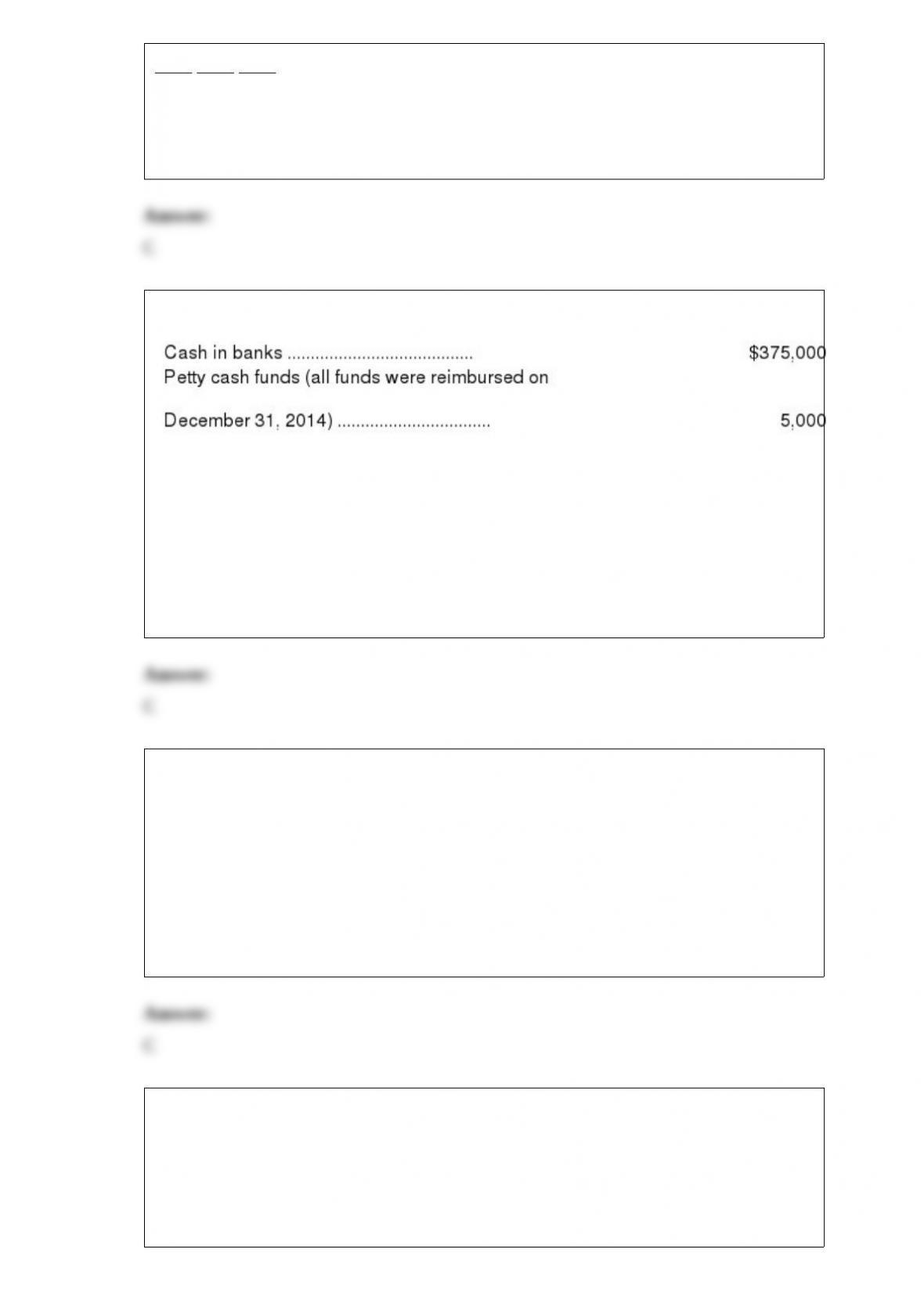
10) Donovan Company had the following cash balances at December 31, 2014:
Cash in banks includes $125,000 of compensating balances against short-term
borrowing arrangements at December 31, 2014. The compensating balances are legally
restricted as to withdrawal by Donovan. In the current asset section of Donovans
December 31, 2014, balance sheet, what total amount should be reported as Cash?
a. $380,000
b. $375,000
c. $255,000
d. $250,000
11) On December 31, 2014, Ohio Corporation appropriately changed its inventory
valuation method to FIFO cost from LIFO cost for both financial statement and income
tax purposes. The change will result in a $140,000 increase in the beginning inventory
at January 1, 2014. Assume a 30 percent income tax rate. The cumulative effect of this
accounting change Ohio for the year ended December 31, 2014, is
a. $0
b. $42,000
c. $98,000
d. $140,000
12) In 2013, Pauley Company paid $1,000,000 to purchase land containing a total
estimated 160,000 tons of extractable mineral deposits. The estimated value of the
property after the mineral has been removed is $200,000. Extraction activities began in
2014, and by the end of the year, 20,000 tons had been recovered and sold. In 2015,
geological studies indicated that the total amount of mineral deposits had been
underestimated by 25,000 tons. During 2015, 30,000 tons were extracted, and 28,000
tons were sold. What is the depletion rate per ton (rounded to the nearest cent) in 2015?
a. $4.24
b. $4.32
c. $4.85
d. $5.19
13) Which of the following is NOT classified as an operating activity?
a. Interest received
b. Interest paid
c. Dividends received
d. Dividends paid
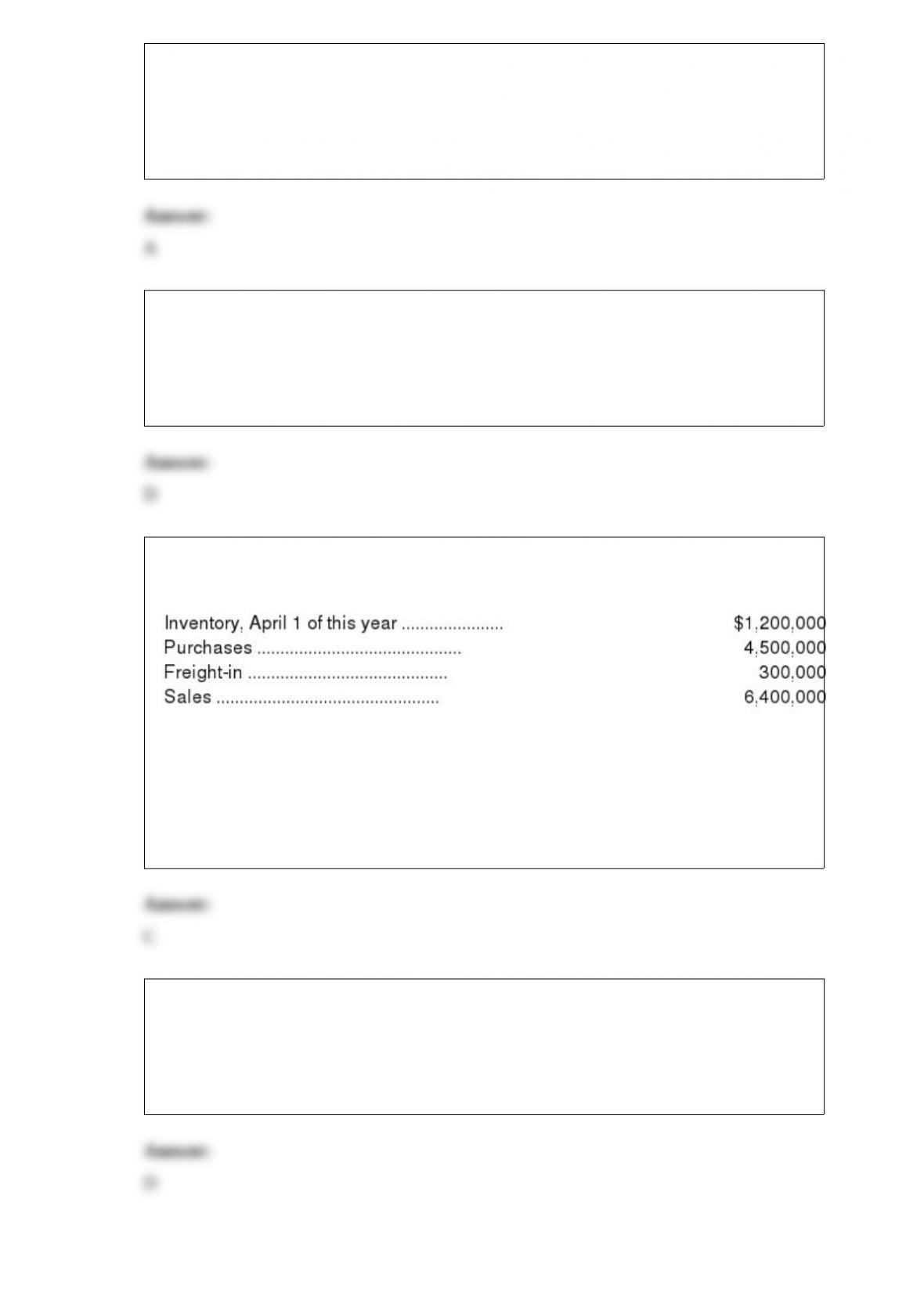
14) The following information is available for the Crystal Company for the three
months ended June 30 of this year:
The gross margin was 25 percent of sales. What is the estimated inventory balance at
June 30?
a. $880,000
b. $933,000
c. $1,200,000
d. $1,500,000
15) The vested benefits of an employee in a pension plan represent benefits
a. to be paid to the retired employee in the current year
b. to be paid to the retired employee in subsequent years
c. to be paid from funds currently in the hands of an independent trustee
d. that are not contingent on the employee’s continuing in the service of the employer
16) On October 1, Ryan Company purchased $200,000 face value 12% bonds for 98
plus accrued interest and brokerage fees and classified them as held-to-maturity
securities. Interest is paid semiannually on January 1 and July 1. Brokerage fees for this
transaction were $700. At what amount should this acquisition of bonds be recorded?
a. $196,000
b. $196,700
c. $202,000
d. $202,700
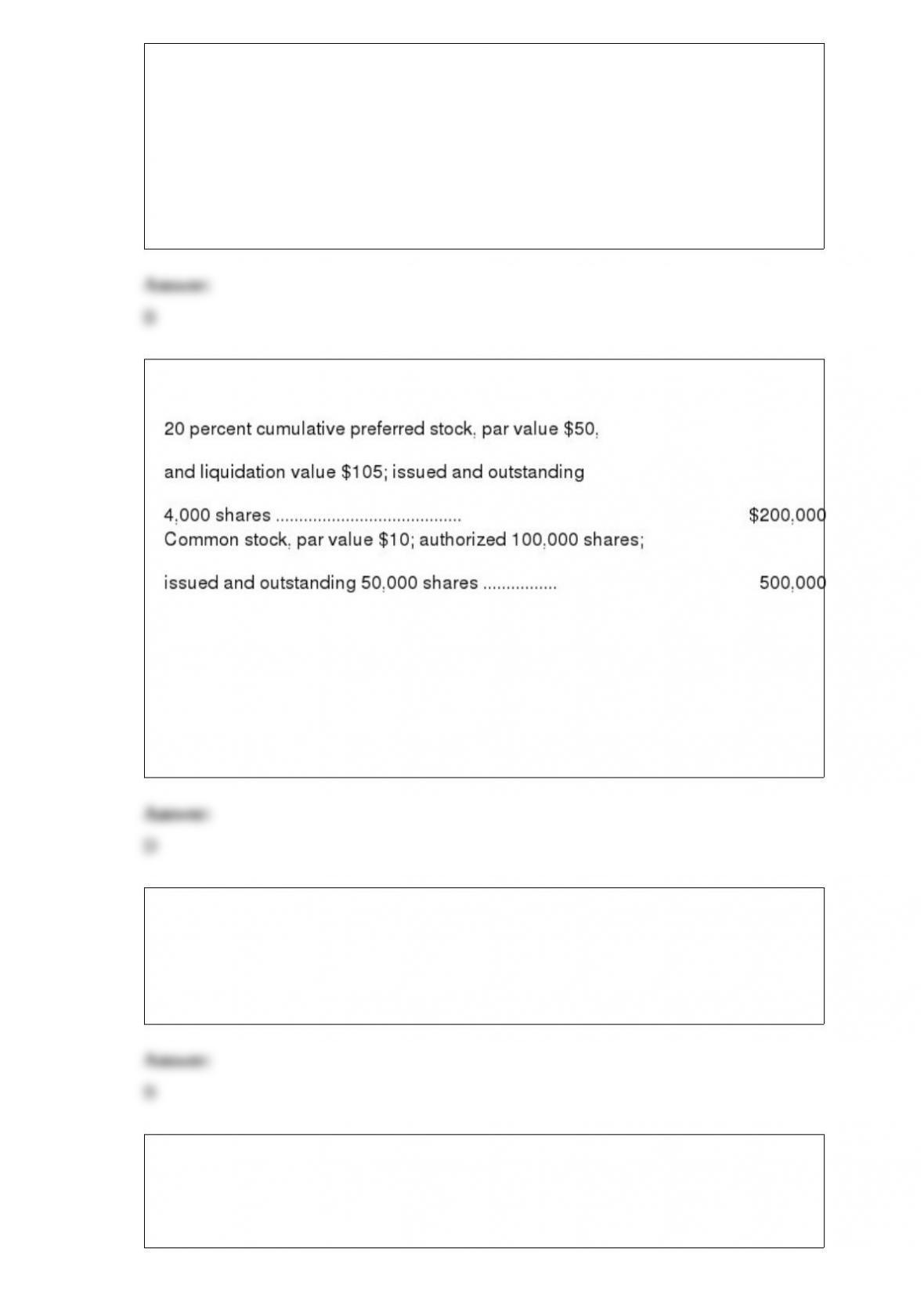
17) Indigo Co. was organized on January 2, 2014, with the following capital structure:
Indigo’s net income for the year ended December 31, 2014, was $750,000, but no
dividends were declared. Indigo’s balance sheet would report Dividends Payable at
December 31, 2014, of
a. $90,000
b. $20,000
c. $2,000
d. $0
18) Which of the following is NOT a change in accounting principle?
a. A change from FIFO to LIFO for inventory valuation
b. A change from eight years to five years in the useful life of a depreciable asset
c. A change from completed-contracts to percentage-of-completion
d. A change from double-declining-balance to straight-line depreciation
19) Which of the following is NOT true regarding standards for interim reporting?
a. Declines in inventory value should be deferred to future interim periods
b. Use of the gross margin method for computing cost of goods sold must be disclosed
c. Costs and expenses not directly associated with interim revenue must be allocated to

interim periods on a reasonable basis
d. Gains and losses that arise in an interim period should be recognized in the interim
period in which they arise if they would not normally be deferred at year-end
20) Aloe Company reports its income from its investment in Palm Company under the
equity method. Aloe recognized income of $125,000 from its investment in Palm during
the current year. Palm declared and paid dividends of which Aloe’s share was $25,000
during the current year. The effect of these activities on the operating section of the
statement of cash flows of Aloe Company prepared for the current year under the
indirect method would be
a. an increase of $125,000
b. a deduction of $125,000
c. a deduction of $100,000
d. an increase of $100,000
21) When a company purchases land with a building on it and immediately tears down
the building so that the land can be used for the construction of a plant, the costs
incurred to tear down the building should be
a. amortized over the estimated time period between the tearing down of the building
and the completion of the plant
b. expensed as incurred
c. added to the cost of the plant
d. added to the cost of the land
22) Which of the inventory cost flow assumptions provides the best measure of
earnings, where “best” means most appropriate for predicting future earnings, when
prices have been declining?
a. Specific identification
b. FIFO
c. LIFO
d. Average cost
23) Which of the following tests may be used to determine if an industry segment of an
enterprise is a reportable segment under FASB ASC Topic 280?
a. Its revenue (both from external customers and internal segments) is equal to or
greater than 10 percent of total revenue (external and internal)
b. The absolute value of its operating profit is equal to or greater than 10 percent of the
total of the operating profit for all segments that reported profits (or the total of the
losses for all segments that reported losses)
c. The segment contains 10 percent or more of the combined assets of all operating
segments
d. All of these
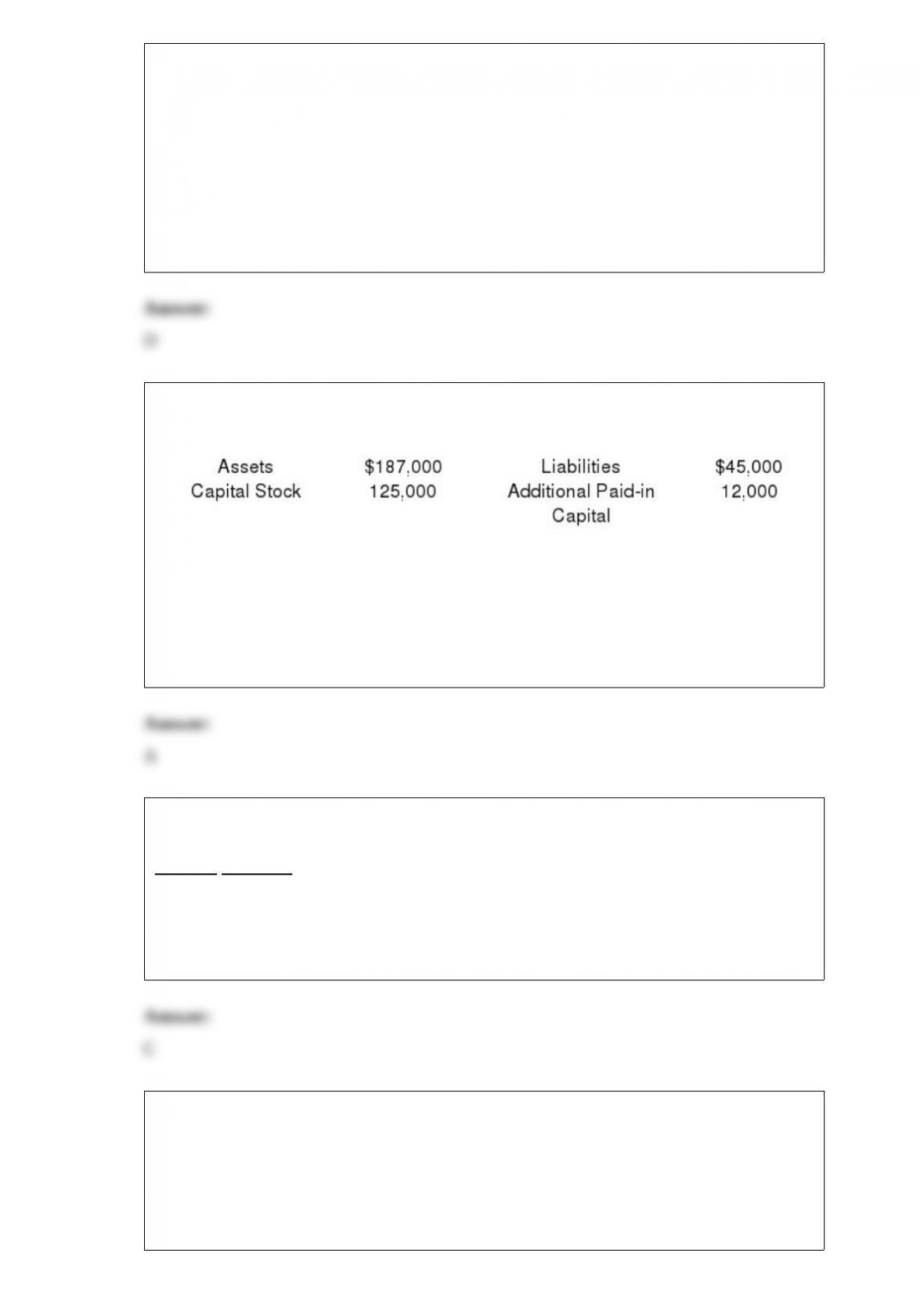
24) The following is a summary of the increases in the account categories of the
balance sheet of Riley Company for the most recent fiscal year:
The only change to retained earnings during the fiscal year was for $20,000 of
dividends. What was the companys net income for the fiscal year?
a. $25,000
b. $15,000
c. $5,000
d. $20,000
25) The LIFO inventory cost flow method may be applied to which of the following
inventory systems?
Periodic Perpetual
a. No No
b. No Yes
c. Yes Yes
d. Yes No
26) Which of the following statements is not correct?
a. A change from an inappropriate accounting principle to a proper one should be
accounted for as an accounting error
b. A change from an inappropriate accounting principle to a proper one should be
accounted for as a change in accounting principle
c. A change from an inappropriate accounting principle to a proper one should be

accounted for retrospectively
d. A change from an inappropriate accounting principle to a proper one may require an
adjustment to beginning retained earnings for the earliest year reported
27) An obligation that is contingent on the occurrence of a future event should be
reported in the balance sheet as a liability if the
a. future event is likely to occur
b. amount of the obligation can be reasonably estimated
c. occurrence of the future event is at least reasonably possible and the amount is
known
d. occurrence of the future event is probable and the amount can be reasonably
estimated
28)
29) In computing earnings per share, convertible preferred stock may increase the
number of shares outstanding if it is
a. dilutive and nonconvertible
b. dilutive and convertible
c. antidilutive and nonconvertible
d. antidilutive and convertible
30) Partial balance sheet data and additional information for Samuelson Company are
listed below:
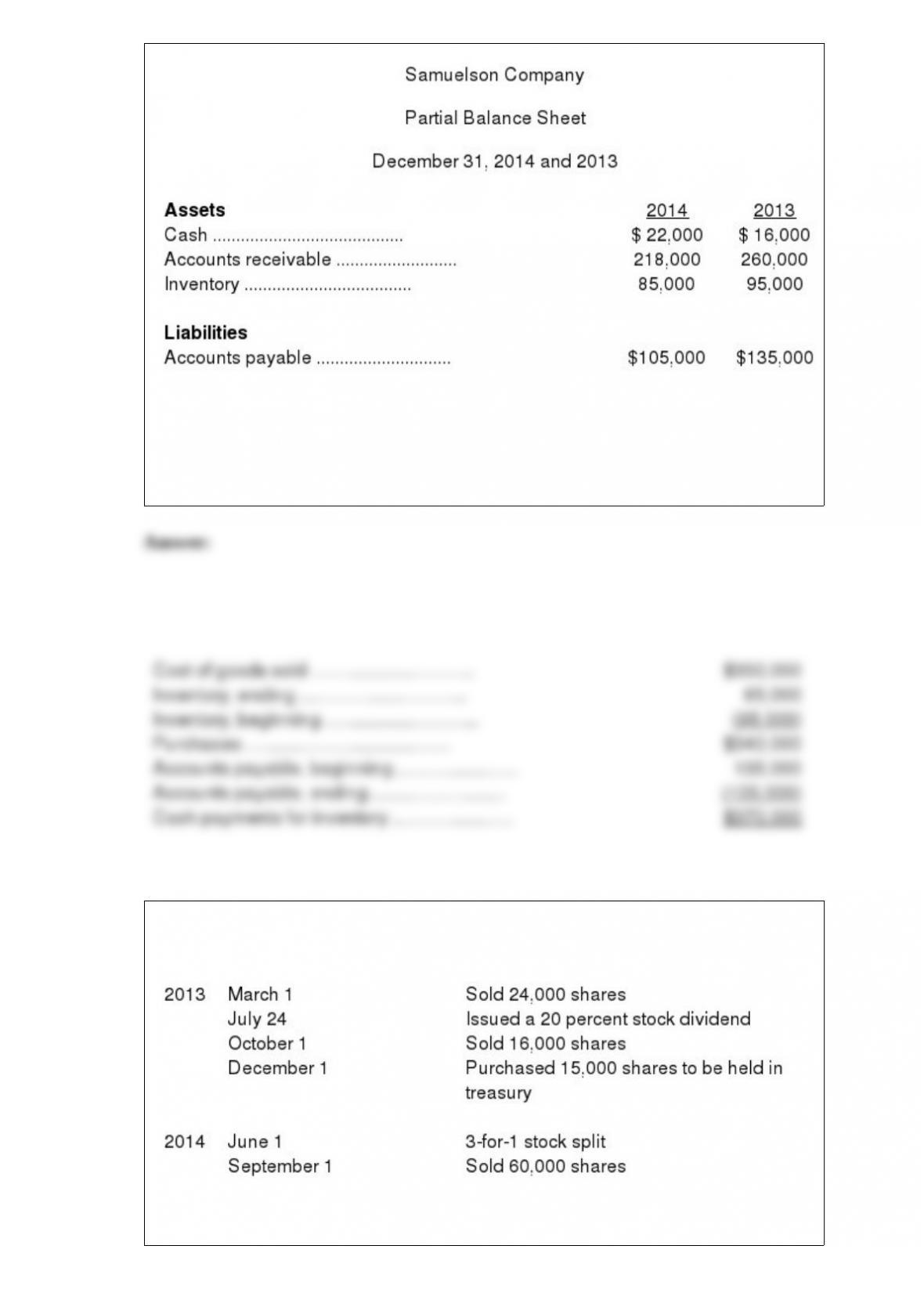
Additional Information:
(a) Net income for 2014 was $15,000.
(b) Depreciation expense for 2014 was $30,000.
(c) Sales for 2014 totaled $490,000; cost of goods sold was $350,000.
Compute the amount of cash paid in 2011 for inventory purchases.
31) Binary Controls Inc. had 250,000 shares of common stock outstanding at the end of
2012. During 2013 and 2014, the following transactions took place.
Binary Controls Inc. has a simple capital structure.
Compute the weighted average number of shares for 2013 and 2014 to be used in the
earnings per share computation for comparative financial statements at the end of 2014.
32) Financial information for Inverness Company at December 31, 2014, and for the
year then ended, are presented below:
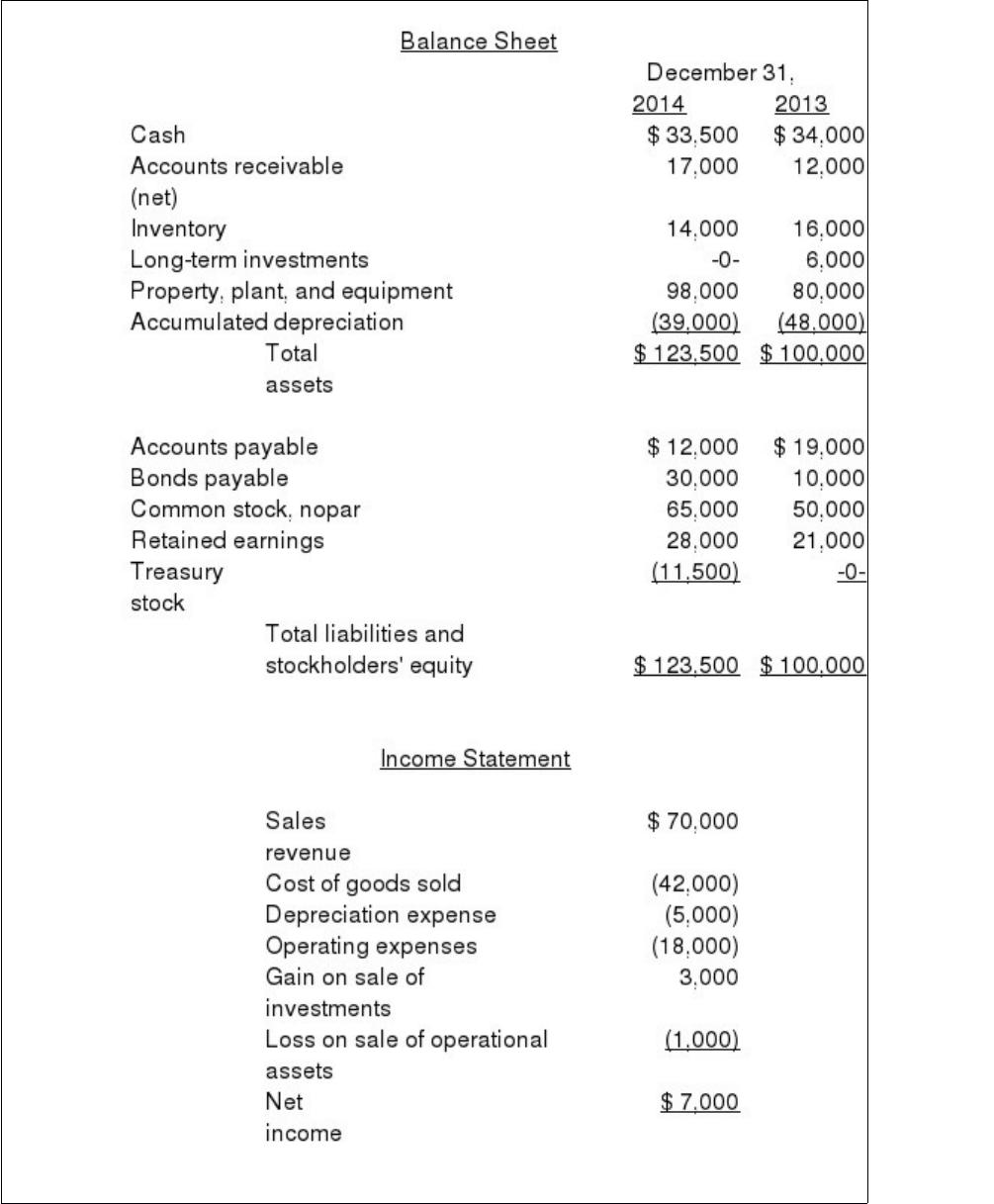
Additional information:
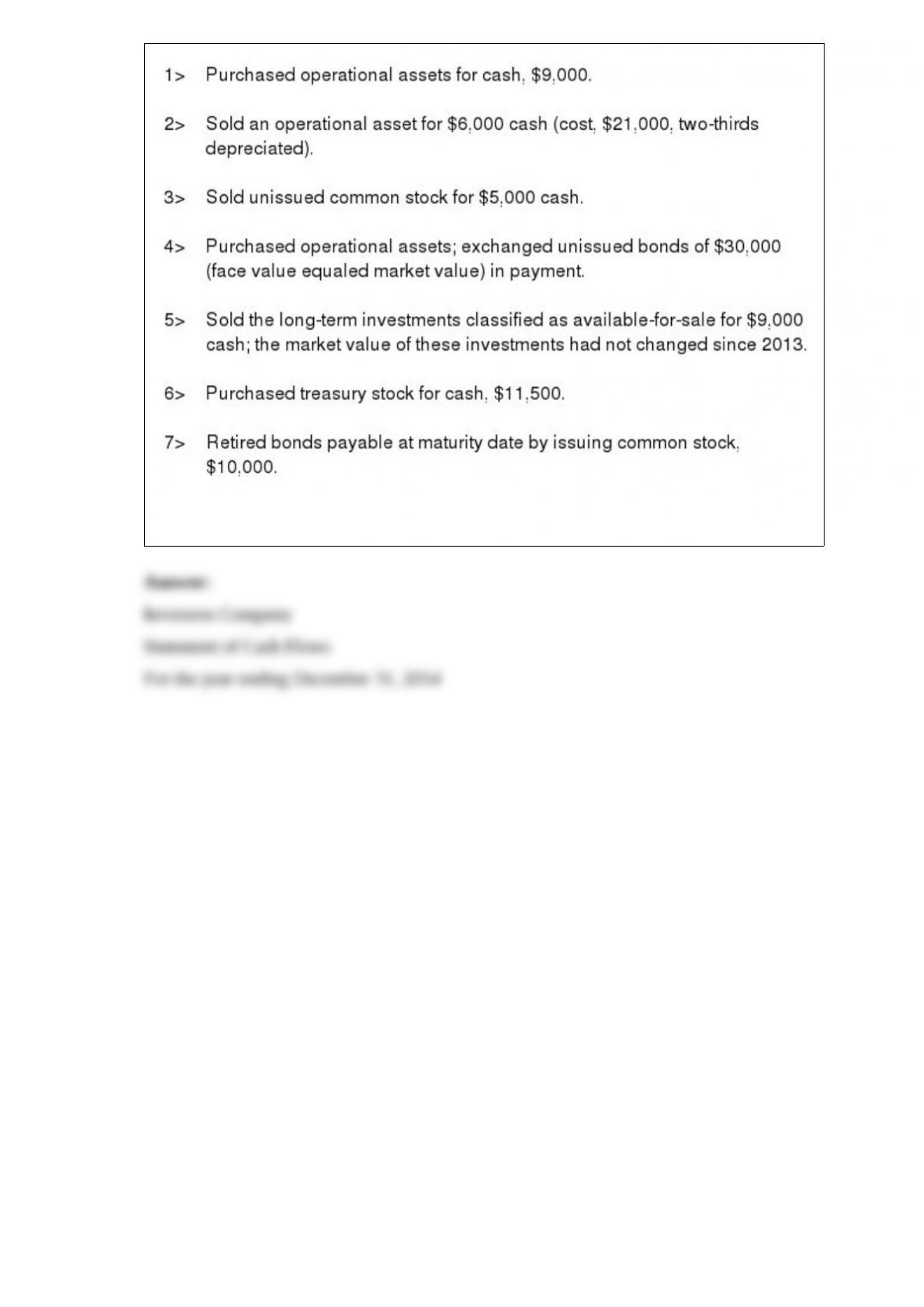
Required:
Prepare the statement of cash flows using the direct method.
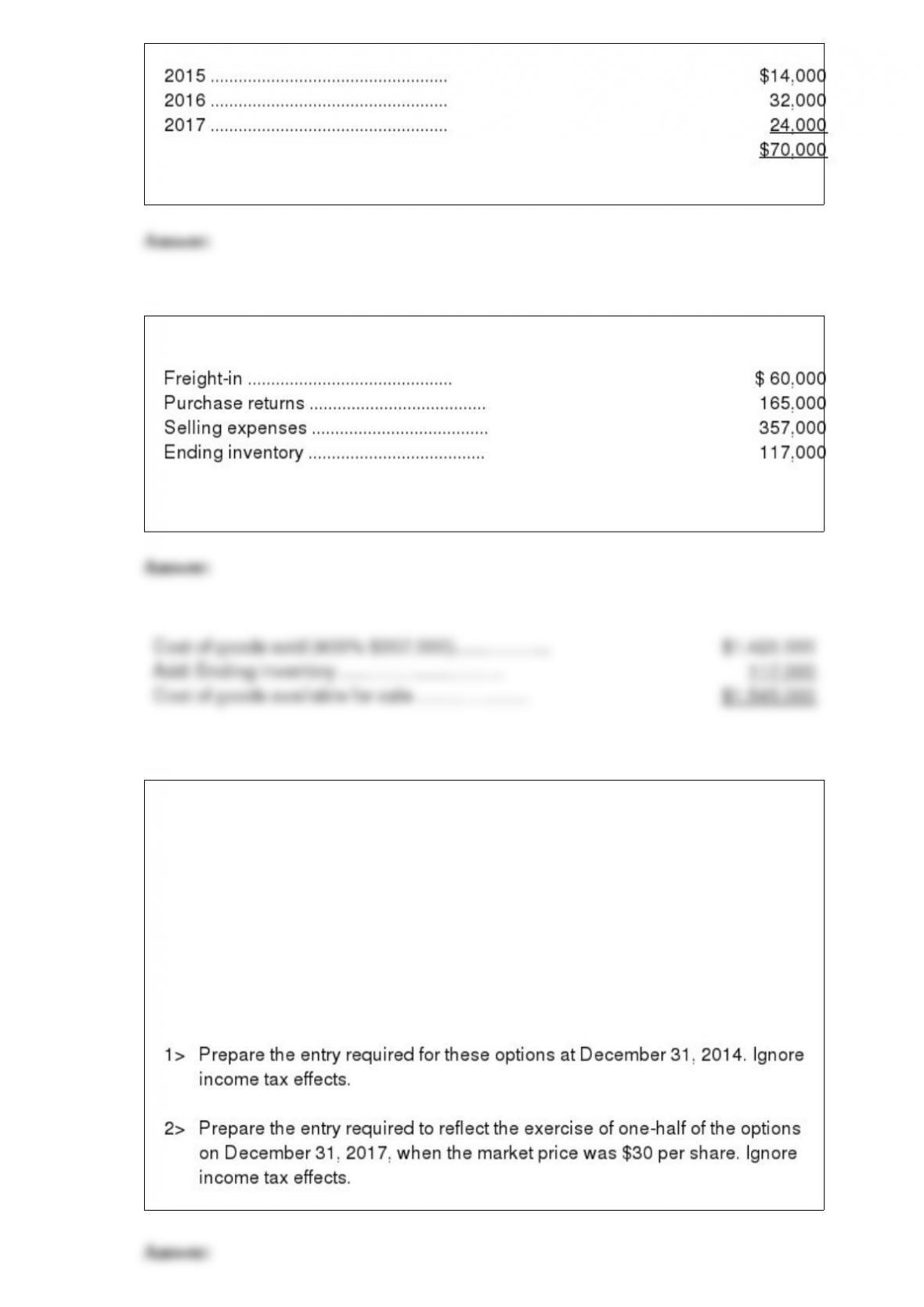
33) The enacted tax rates for this year and the next three years are as follows:
34) The following information is available for the Fawcett Company for 2014:
The cost of goods sold is equal to 400% of selling expenses. Compute the cost of goods
available for sale.
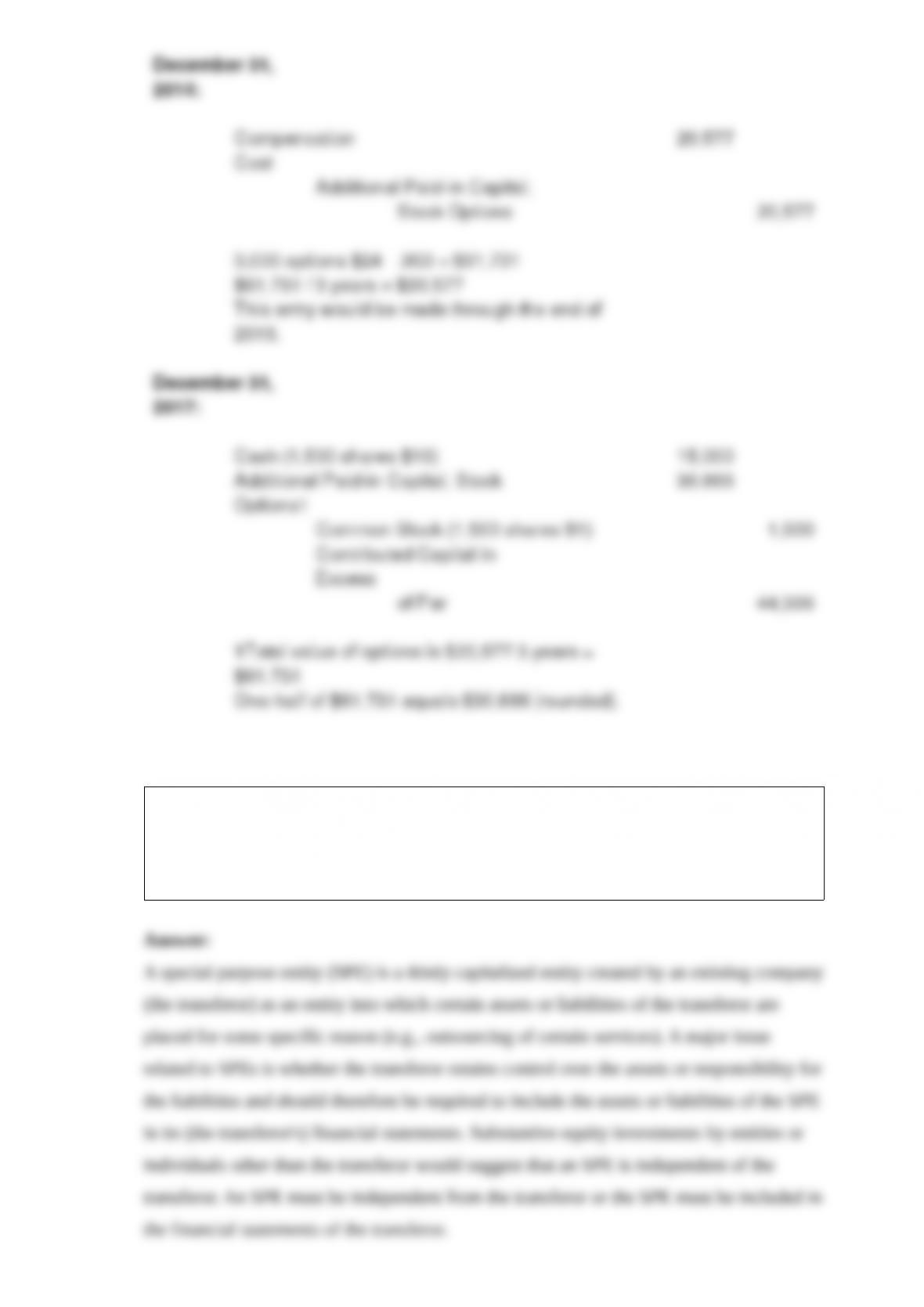
35) Palm Beach Corporation has a stock option plan for its continuing employees that
provides that each qualified employee may receive an option for a specified number of
shares of the companys $1 par value stock. Employees must continue working for the
company for three years to earn the grants, which may be exercised any time after the
three years, at an option price of $10 per share. On January 1, 2014, employees were
granted options for 3,000 shares when the market price was $16 per share. The fair
value of the options was $24 each. The expected annual forfeiture rate is 5%. The
accounting period ends December 31. Palm Beach uses SFAS No. 123R in accounting
for these options. Assume that the estimated and actual forfeiture rates are equal.
Required:
36) Much of the controversy surrounding the Enron scandal centered on the use of
special purpose entities by Enron management.
Briefly explain what a special purpose entity is and identify two ways in which Enron
abused the accounting rules for SPEs.
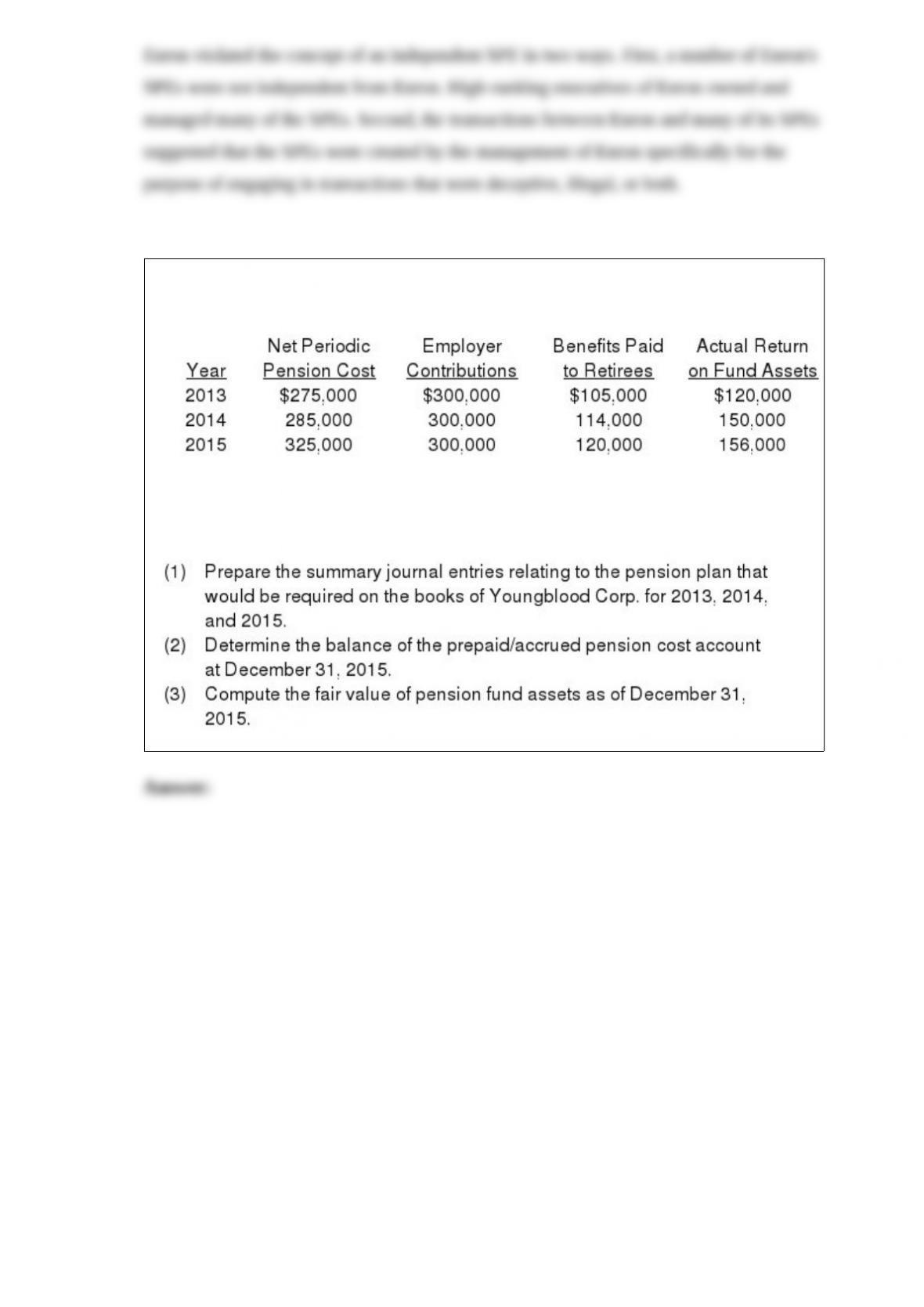
37) The following data relate to the defined benefit pension plan of the Brotherhood
Corp. for the years 2013-2015:
At December 31, 2012, the books of Youngblood Corp. reflected a pension liability of
$30,000. The fair value of pension fund assets at that date was $1,300,000. The pension
fund is administered by an independent trustee.
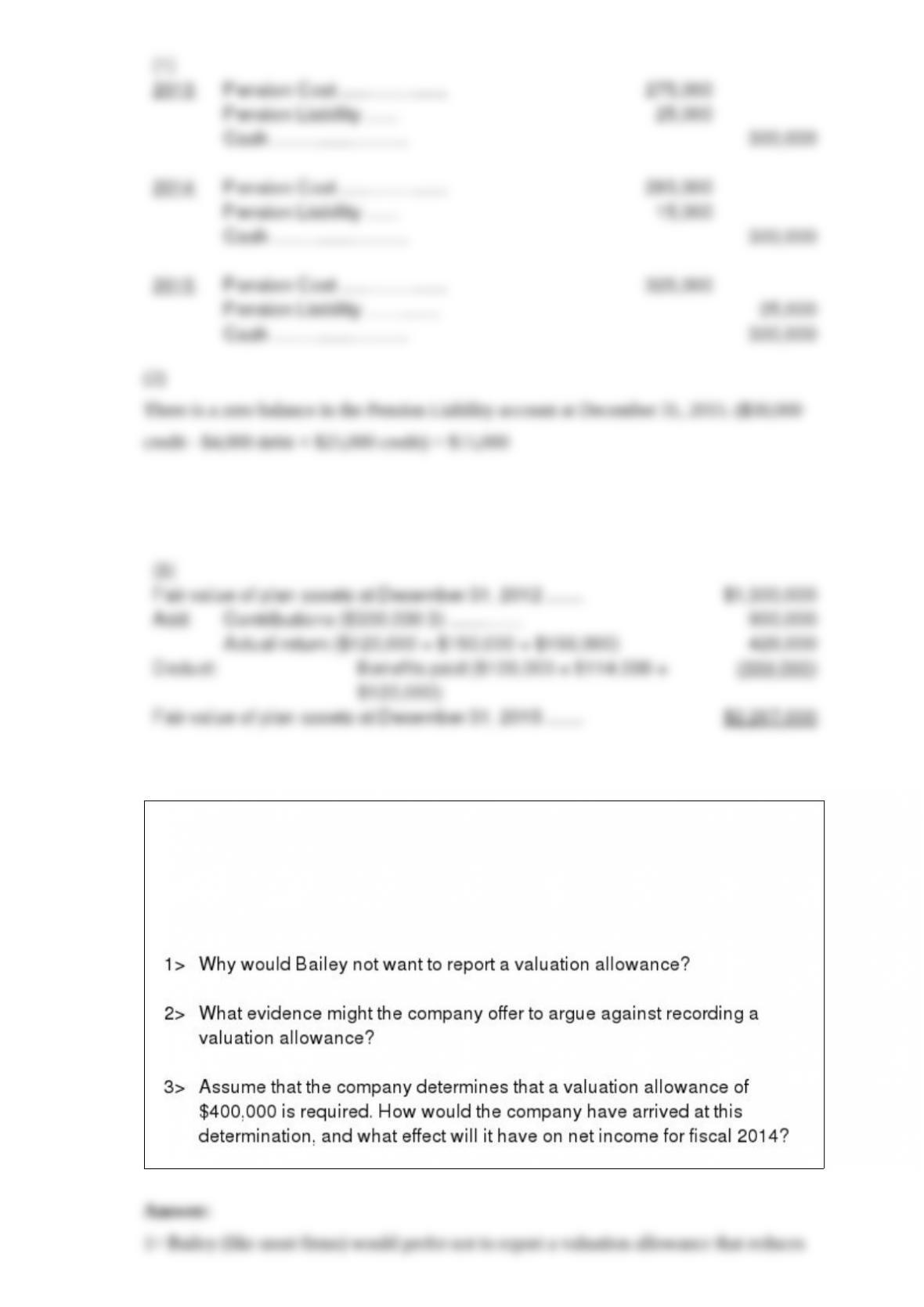
38) Bailey Company has a deferred tax asset of $1,000,000 at December 31, 2014. This
amount arises from the recording of the companys liability for postretirement benefits
other than pensions. The companys CPA has asked management whether a valuation
allowance should be recorded to reduce the deferred tax asset to zero
Required:
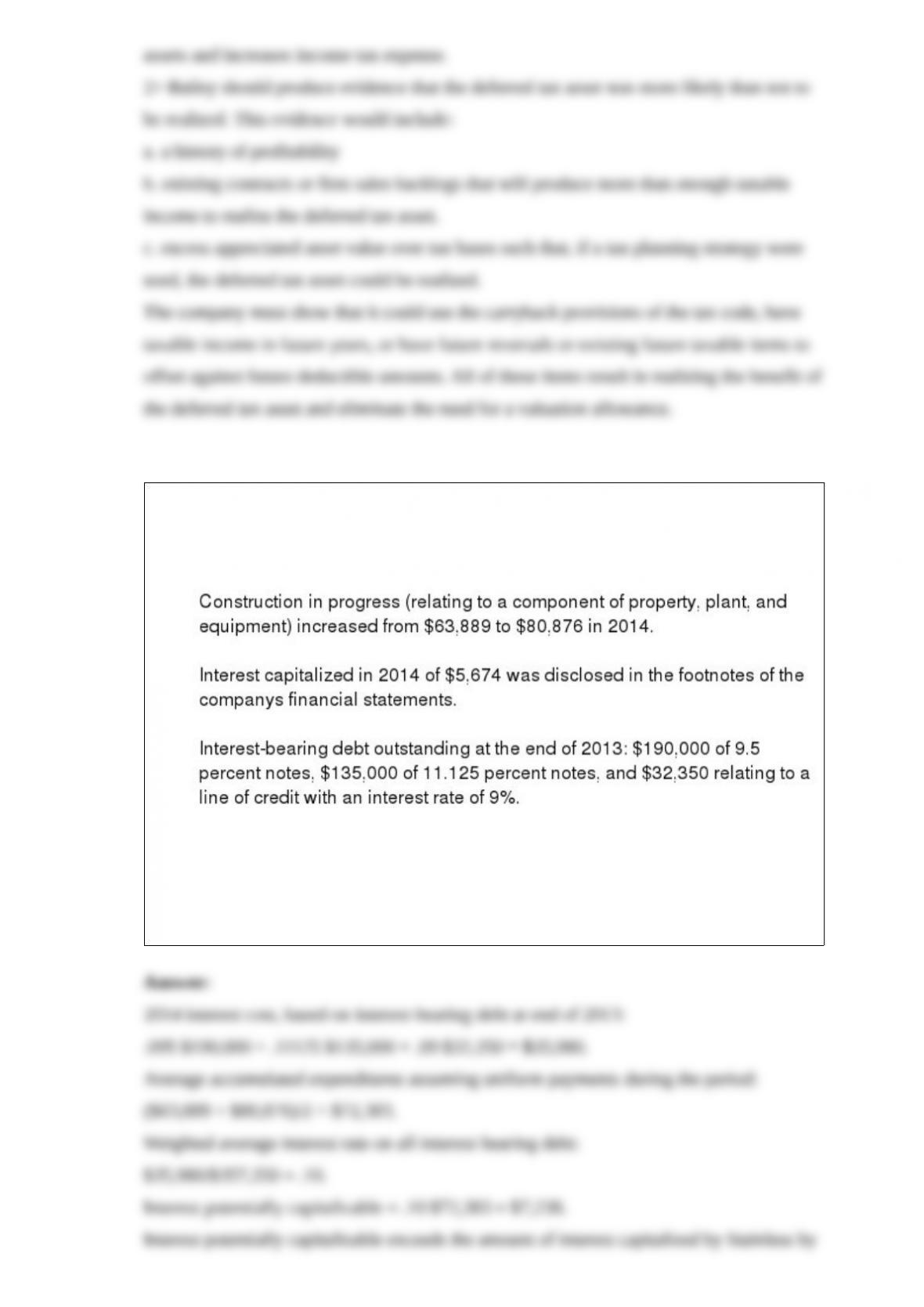
39) The 2014 annual report of Stainless Steel disclosed the following information
relating to the companys construction projects, debt, and interest cost (in thousands of
dollars):
Required:
Based on the information provided in the annual report, estimate the amount of interest
to be capitalized in 2014. Give reasons why your estimate differs from the amount
reported by the company. Assume that the construction payments were made uniformly
during the year.