
In a production environment that manufactures goods to customer specifications, a
job-order costing system
A. can be used only if standard costs are used for materials and labor.
B. will provide reasonable product cost information only when all jobs utilize
approximately the same quantities of material and labor.
C. may be maintained using either actual or predetermined overhead rates.
D. emphasizes that large customers create the most costs even though they also provide
the most revenues.
Crosson Corporation recently sold a used machine for $40,000. The machine had a
book value of $60,000 at the time of the sale. What is the after-tax cash flow from the
sale, assuming the company’s marginal tax rate is 20 percent?
A. $40,000
B. $60,000
C. $44,000
D. $32,000
In a lumber mill, which of the following would most likely be considered a primary
product?
A. 2 x 4 studs
B. sawdust
C. wood chips
D. tree bark
The manager of the Richmond Division of Brazos River Tours is preparing the budget
for the upcoming year. At this point, he has determined that average total assets for the
upcoming year will equal $4,000,000. The manager is evaluated on the amount of
residual income generated by the division. Assume variable costs in the Richmond
Division are expected to equal 60% of total sales and fixed costs are expected to equal
$400,000.
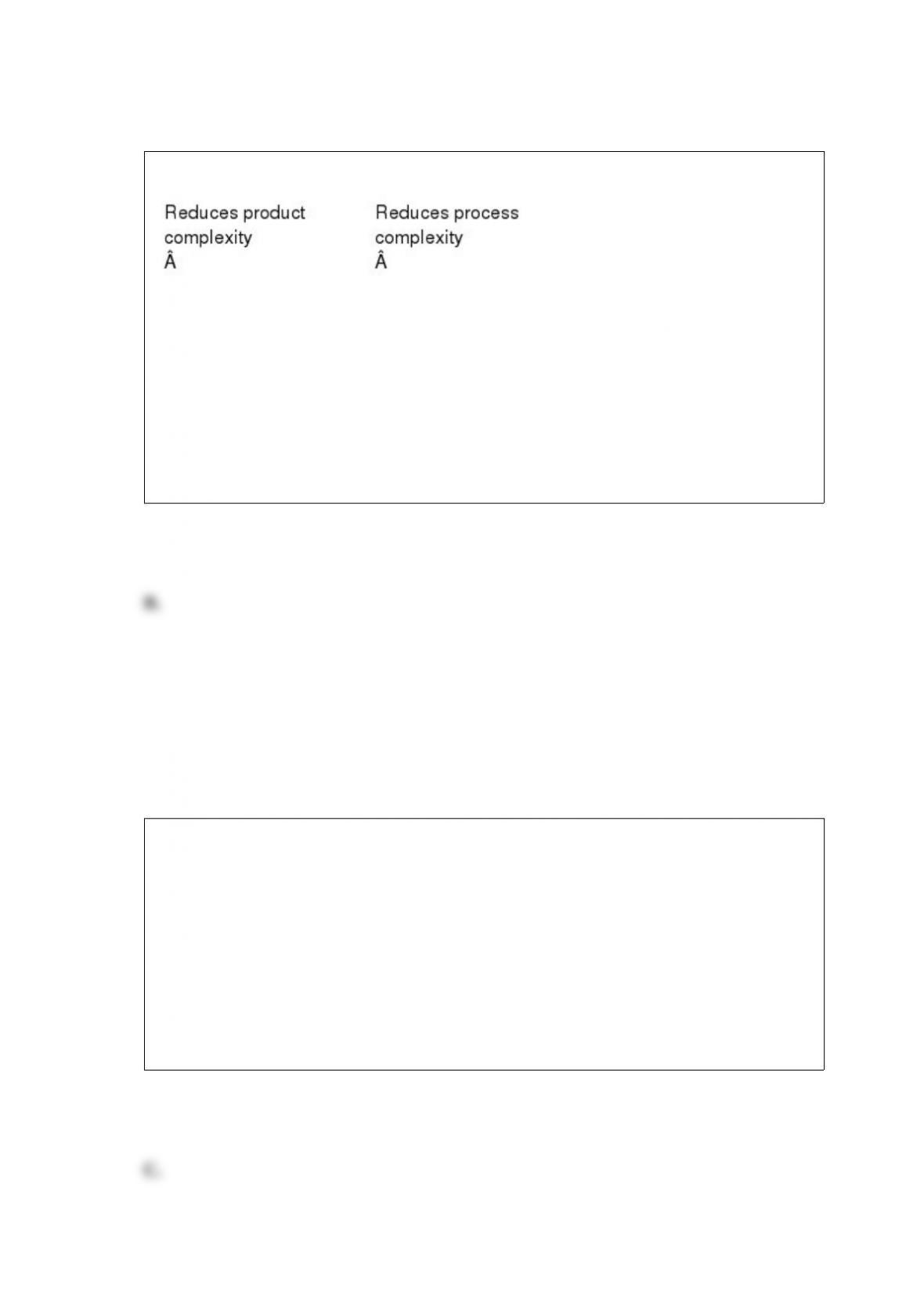
Simultaneous engineering helps companies accomplish which of the following?
A. no no
B. yes yes
C. yes no
D. no yes
A service organization would be most likely to use a predetermined overhead rate
based on
A. machine hours.
B. standard material cost.
C. direct labor.
D. number of complaints.
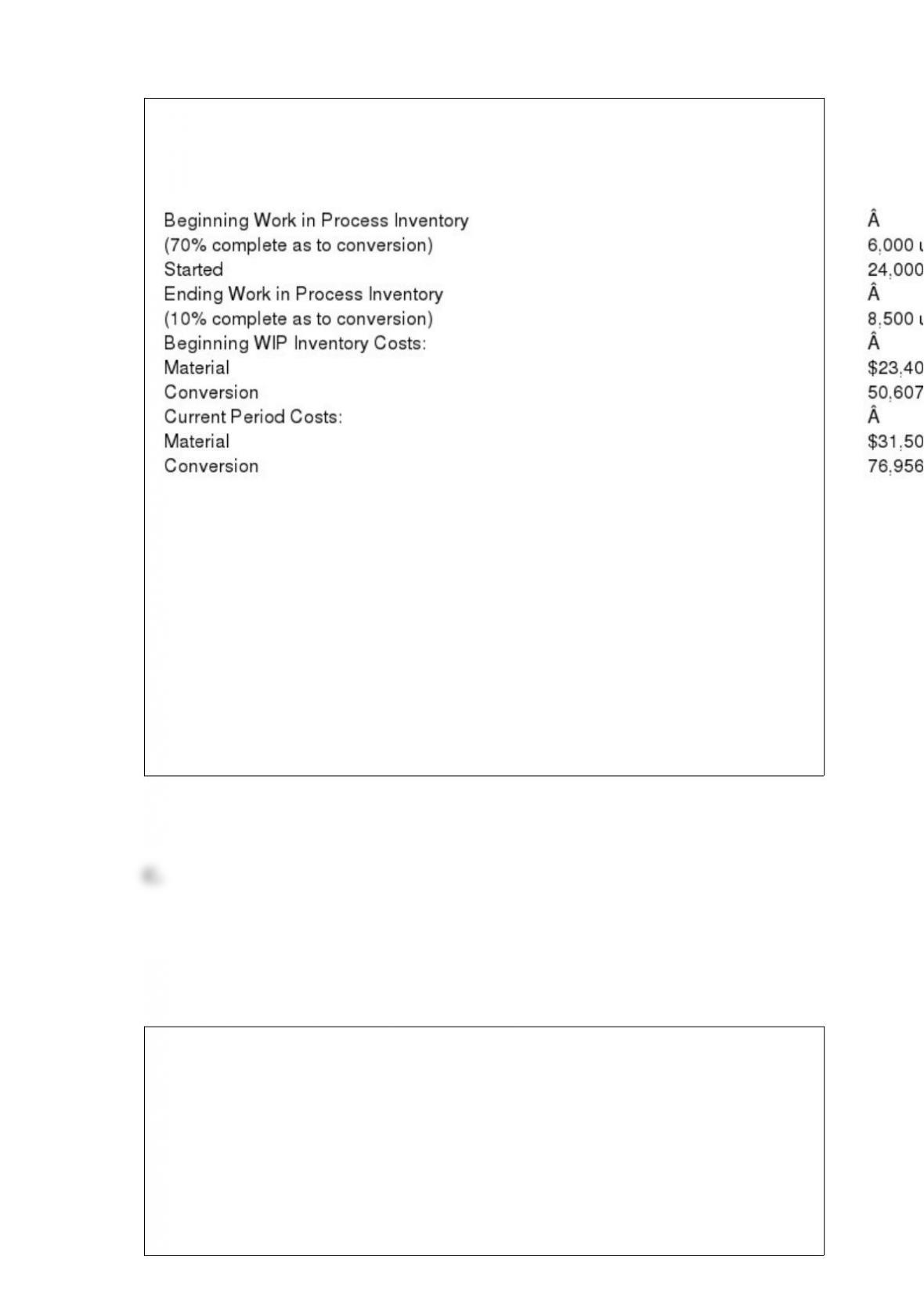
Fox Corporation
Fox Corporation. has the following information for August:
All material is added at the start of the process and all finished products are transferred
out.
Refer to Fox Corporation. How many units were transferred out in August?
A. 15,500
B. 18,000
C. 21,500
D. 24,000
Joint costs are useful for
A. setting the selling price of a product.
B. determining whether to continue producing an item.
C. evaluating management by means of a responsibility reporting system.
D. determining inventory cost for accounting purposes.
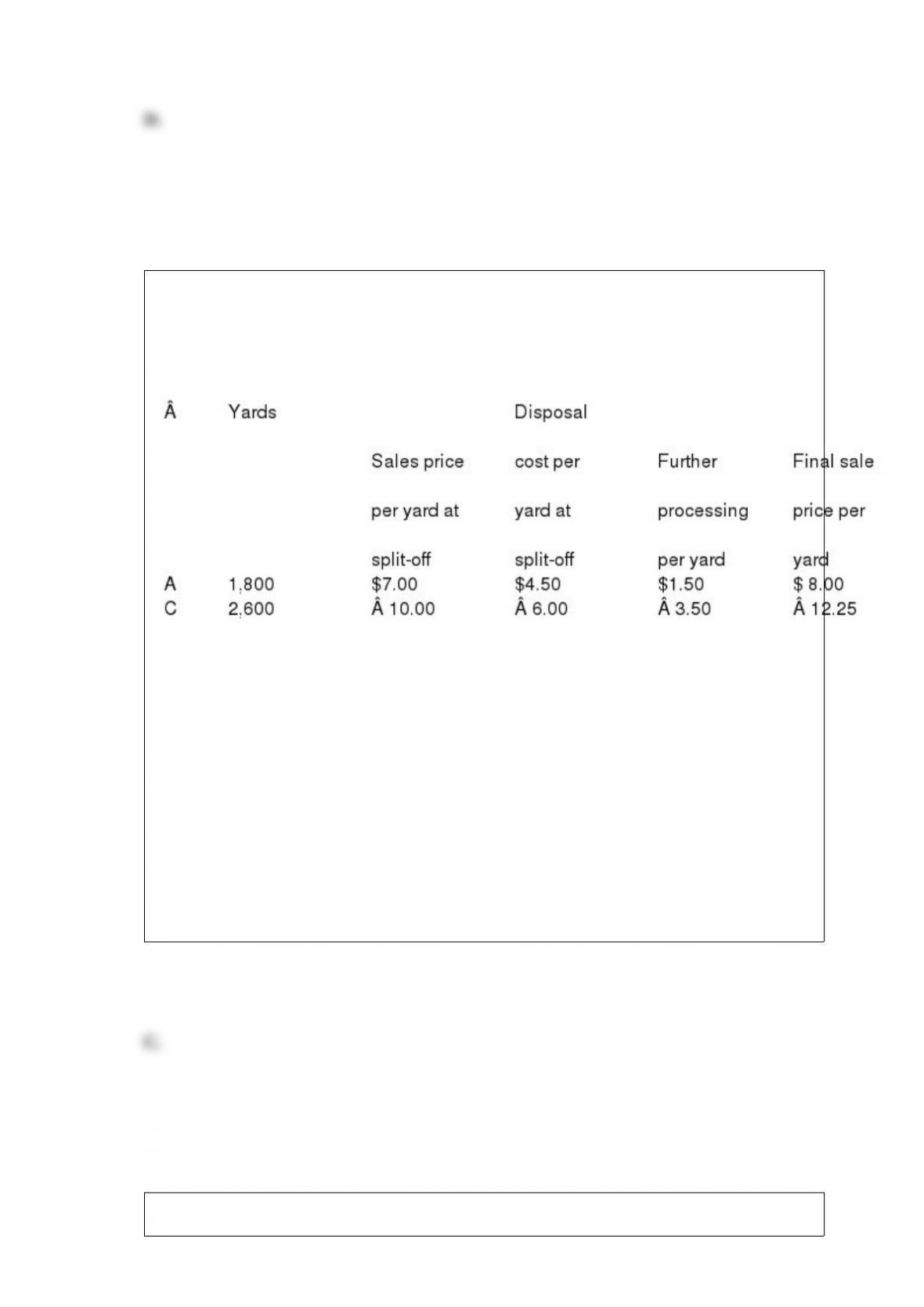
Riley Company
Riley Company produces two products from a joint process: A and C. Joint processing
costs for this production cycle are $9,000.
If A and C are processed further, no disposal costs will be incurred or such costs will be
borne by the buyer.
Refer to Riley Company. Using approximated net realizable value at split-off, what
amount of joint processing cost is allocated to Product A (round to the nearest dollar)?
A. $2,718
B. $2,934
C. $3,014
D. $4,500
Which type of financial measure better predicts the direction of future cash flows?
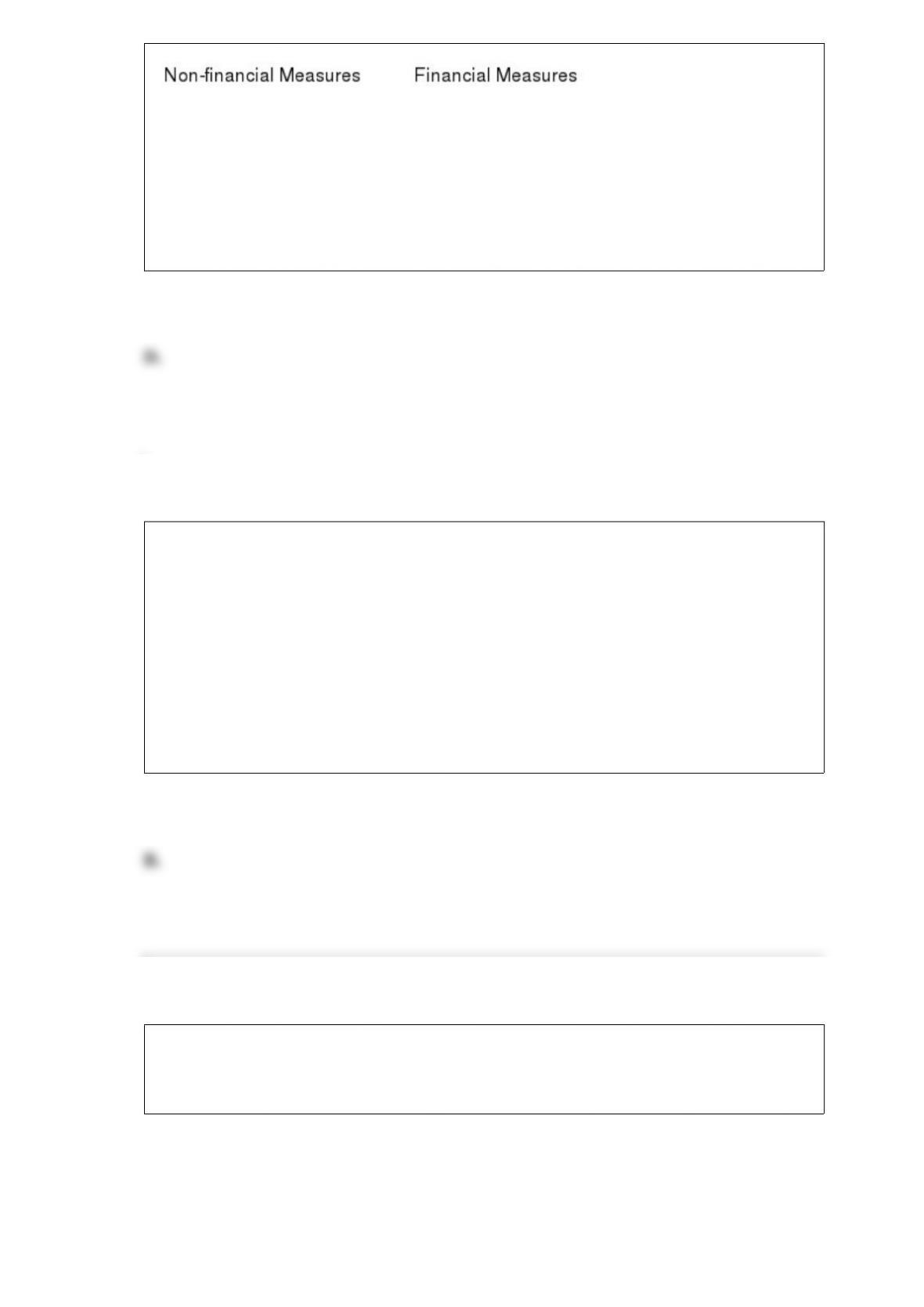
A. yes yes
B. yes no
C. no no
D. no yes
A managerial preference for a very low degree of operating leverage might indicate
that
A. an increase in sales volume is expected.
B. a decrease in sales volume is expected.
C. the firm is very unprofitable.
D. the firm has very high fixed costs.
Robert Wilson Company
Below is an income statement for Robert Wilson Company:
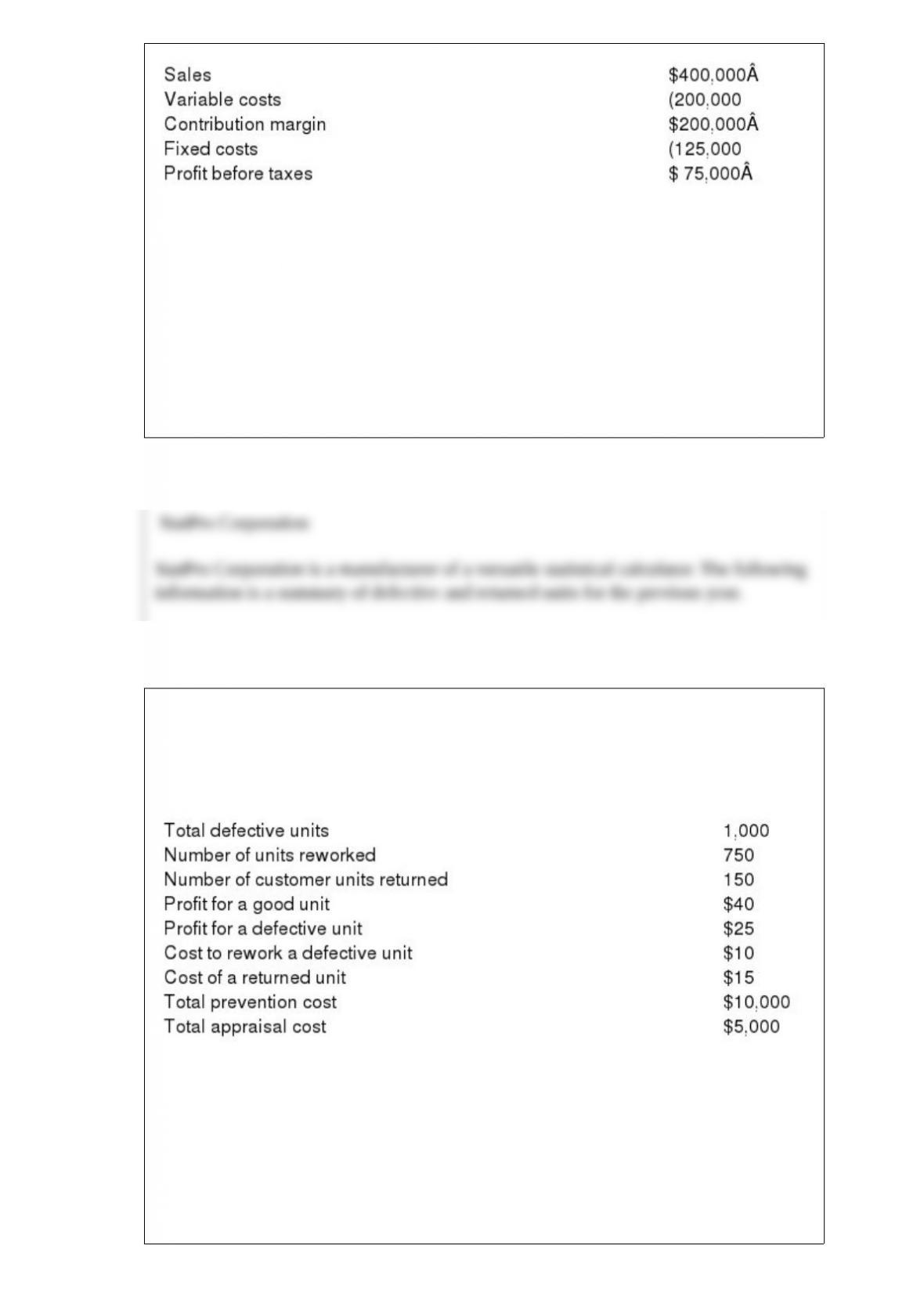
Refer to Robert Wilson Company. What is the company’s degree of operating leverage
(DOL)?
A. 2.67
B. 3.2
C. 5.33
D. 10.67
StatPro Corporation
StatPro Corporation is a manufacturer of a versatile statistical calculator. The following
information is a summary of defective and returned units for the previous year.
Refer to StatPro Corporation. The profit lost by selling defective units not reworked is
A. $25,000.
B. $15,000.
C. $18,750.

D. $3,750.