Ron White Inc. plans to introduce a new product and is using the target cost approach.
Projected sales revenue is $810,000 ($4.05 per unit) and target costs are $730,000.
What is the desired profit per unit?
a. $0.40
b. $2.03
c. $3.65
d. $1.63
All other things equal, a company can increase its operating leverage by converting
a. Fixed costs to variable costs.
b. Variable costs to fixed costs.
c. Period costs to product costs.
d. Product costs to period costs.
When a company approaches market share growth under a harvest strategy,
a.The company aims to increase its market share in the industry, even at the expense of
short-term earnings and cash flow.

b.The company seeks to maintain its current market share but build its return on
investment.
c.The company focuses on short-term profits and cash, even at the expense of market
share.
d.The company focuses on long-term profits and return on investment.
The standard price of direct labor includes which of the following items?
a. FICA taxes
b. Health insurance
c. Retirement contributions
d. All of these answer choices are correct.
Logan, Inc. is considering the purchase of a warehouse directly across the street from
its manufacturing plant. Logan currently warehouses its inventory in a public
warehouse across town. Rent on the warehouse and delivering and picking up inventory
cost Logan $48,000 per year. The building will cost Logan $450,000. Logan will
depreciate the building for 20 years. At the end of 20 years, the building will have a
$125,000 salvage value. Logan’s required rate of return is 10%. The building’s net
present value is
a. ($41,347)
b. ($22,772)
c. $427,228
d. $960,000
Donnie’s Donut Shop sells cream-filled muffins for $1 each. Donnie’s variable cost per
donut is $0.30 and total fixed costs are $2,000 per month. If Donnie wants to earn a
monthly operating income of $5,000, how many muffins must he sell during the month?
a. 2,857
b. 7,000
c. 10,000
d. 23,333
Jackson Brothers Instruments sells stringed instruments. Trent Jackson, the company ‘s
president, just received the following income statement reporting the results of the past
year.
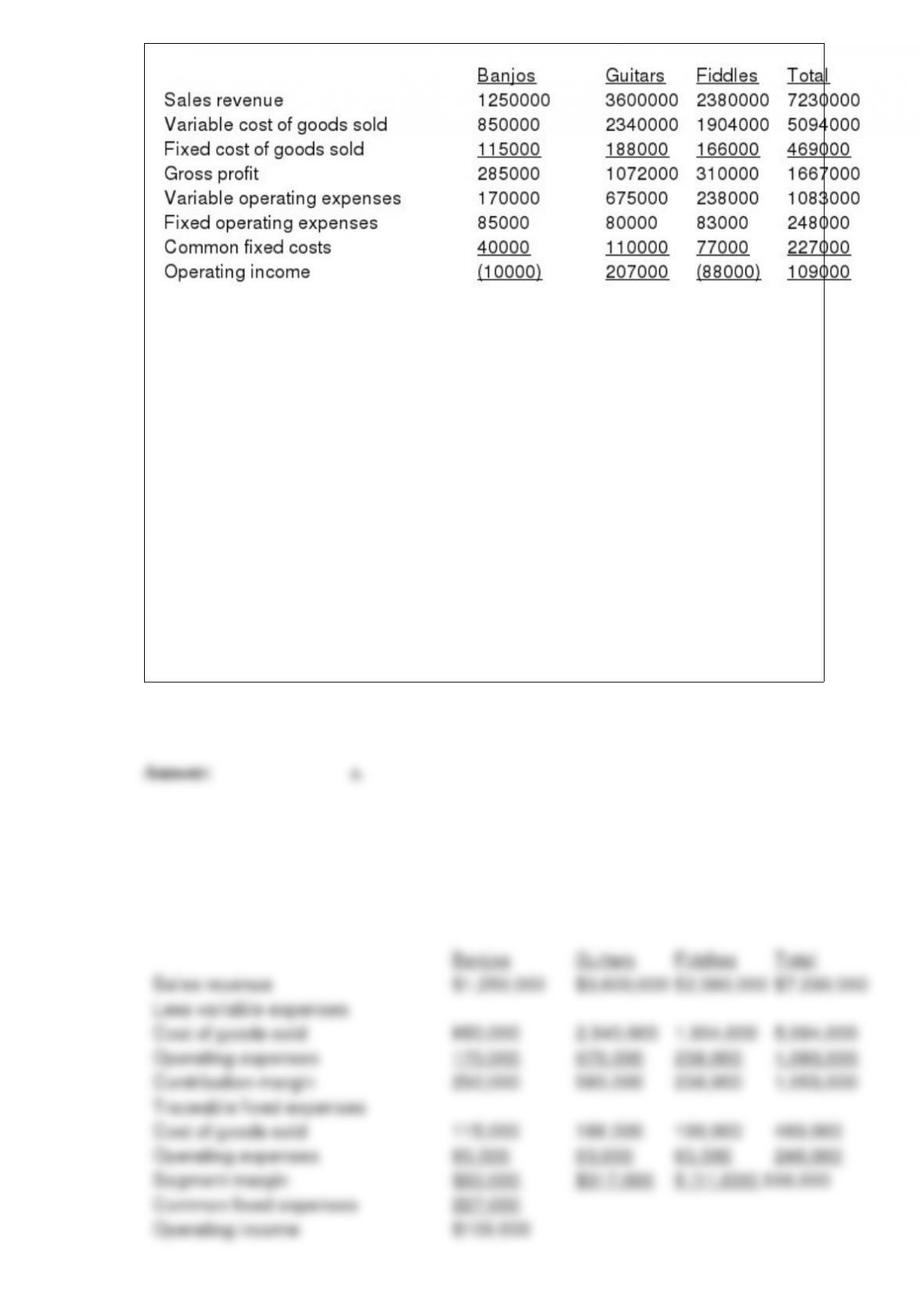
Trent is concerned that two of the company ‘s divisions are showing a loss, and he
wonders if the company should stop selling Banjos and Fiddles to concentrate solely on
guitars.
Required
a. Prepare a segment margin income statement. Fixed cost of goods sold and fixed
operating expenses can be traced to each division.
b. Should Trent close the banjos and fiddles divisions? Why or why not?
c. Trent wants to change the allocation method used to allocate common fixed costs to
the divisions. His plan is to allocate these costs based on sales revenue. Will this new
allocation method change your decision on whether to close the guitars and fiddles
divisions? Why or why not?
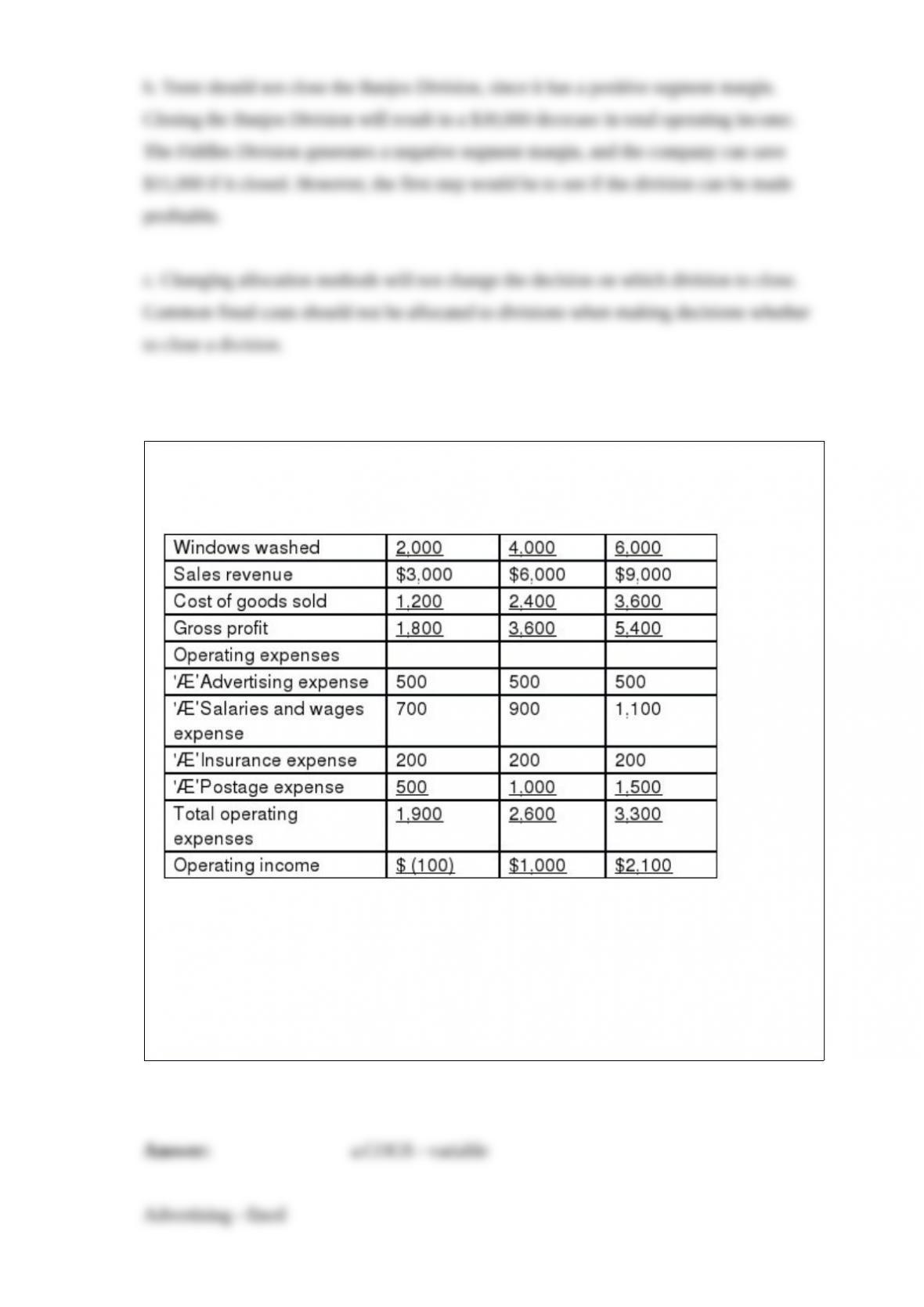
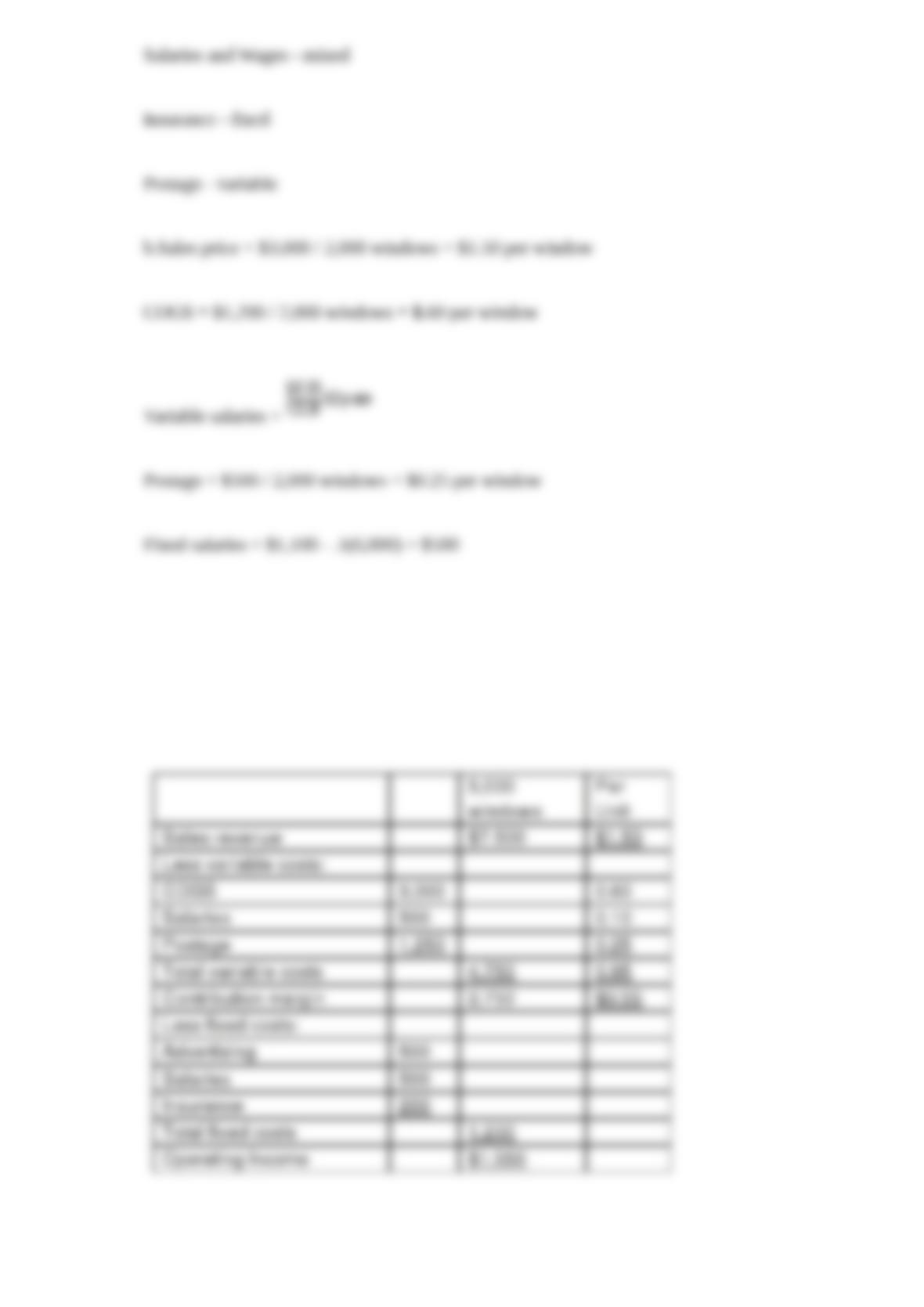
Mega Bright Window Cleaners’ monthly income statement at several levels of activity
is as follows:
Required:
a.Identify each expense as fixed, variable, or mixed.
b.Prepare a contribution margin income statement based on a volume of 5,000
windows.

The formula for calculating the sales dollars required to meet target operating income is
a. (Total fixed costs plus target operating income) divided by contribution margin per
unit.
b. (Total fixed costs plus target operating income) divided by contribution margin ratio.
c. (Total fixed costs plus target operating income) divided by total variable costs.
d. (Contribution margin plus target operating income) divided by total fixed costs.
A difference in cost-plus pricing and target costing is that
a. Target costing is generally determined after introducing a product and cost-plus
pricing is determined before introducing a product.
b. Target costing is a simple approach while cost-plus pricing is relatively complex.
c. Target costing starts with the price customers are willing to pay whereas cost-plus
pricing starts with the cost.
d. Target costing computes the desired markup while cost-plus pricing computes the
maximum cost the company is willing to incur.