1) The potential benefit that is given up when one alternative is selected over another is
called an opportunity cost.
2) Activity-based costing involves a two-stage allocation in which overhead costs are
first assigned to departments and then to jobs.
3) Money received from issuing bonds payable would be included as part of a
company’s financing activities on the statement of cash flows.
4) The required rate of return is the minimum rate of return that an investment project
must yield to the acceptable.
5) Only future costs that differ between alternatives are relevant in decision making.
6) In computing the cost per equivalent unit, costs in the beginning work in process
inventory are kept separate from current period costs when the FIFO method is used.
7) When analyzing a mixed cost, you should always plot the data in a scattergraph, but
it is particularly important to check the data visually on a scattergraph when the R2
from a least squares regression is low. A quick look at the scattergraph can reveal that
there is little relation between the cost and the activity or that the relation is something
other than a simple straight line.
8) The direct labor budget shows the direct labor-hours required to produce the desired
ending inventory.
9) The gross margin percentage is computed by dividing the gross margin by net
income before interest and taxes.
10) Uhri Corporation has provided the following data:
Dividends on common stock during Year 2 totaled $4,000. The market price of common
stock at the end of Year 2 was $6.08 per share. The company’s dividend payout ratio for
Year 2 is closest to:
A.7.8%
B.1.3%
C.11.1%
D.0.8%
11) Cutsinger Corporation has provided the following data from its most recent income
statement:
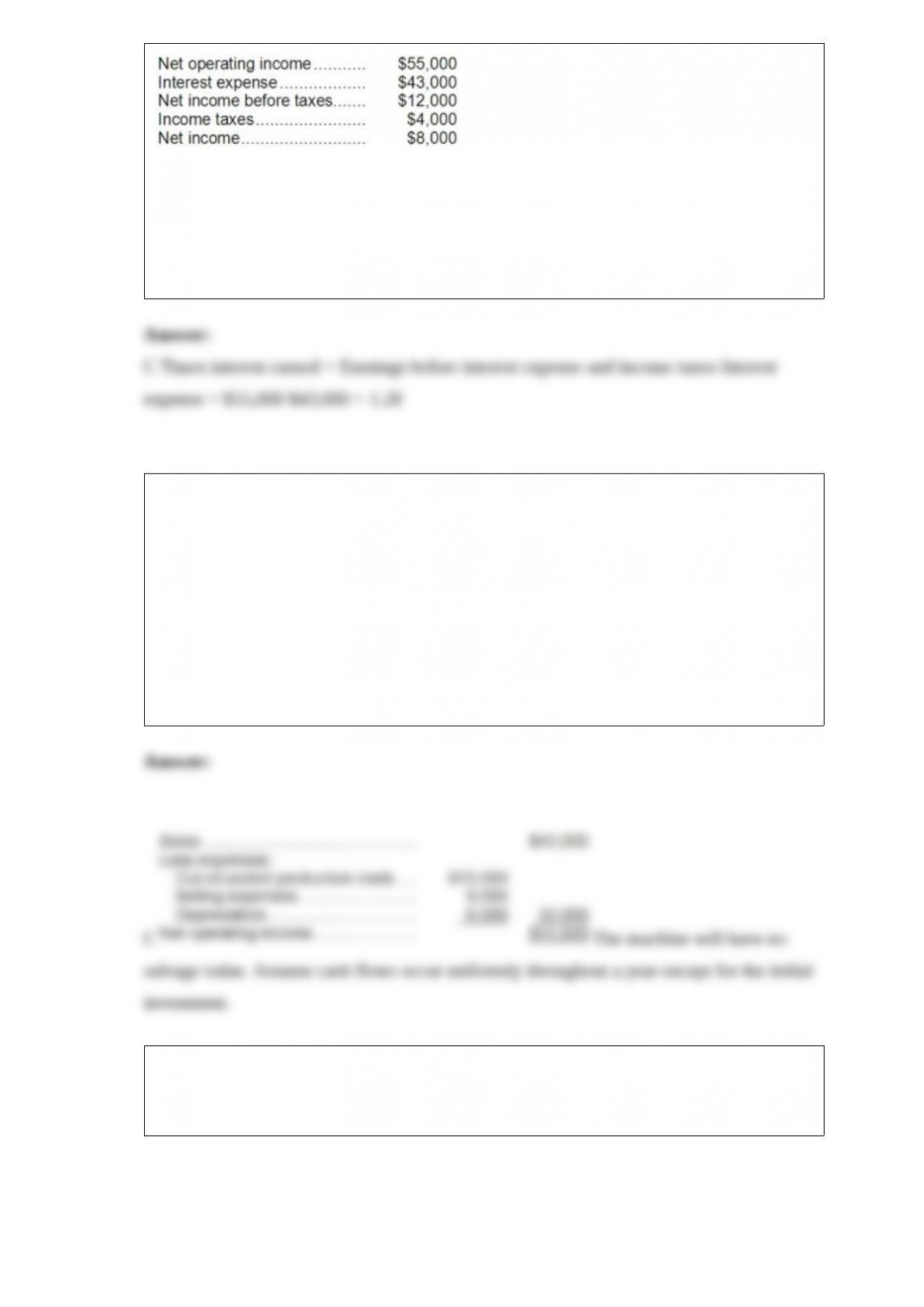
The times interest earned ratio is closest to:
A.1.83
B.0.28
C.1.28
D.0.19
12) The simple rate of return on the new machine is closest to:
A.15%
B.16.7%
C.25%
D.23.3%
Simple rate of return = Annual incremental net operating income / Initial investment
= $5,000 / $20,000 = 25%
( Pro-Mate, Inc. is a producer of athletic equipment. The company is considering the
purchase of a machine to produce baseball bats. The machine will cost $60,000 and
have a 10-year useful life. The following annual revenues and expenses are projected:
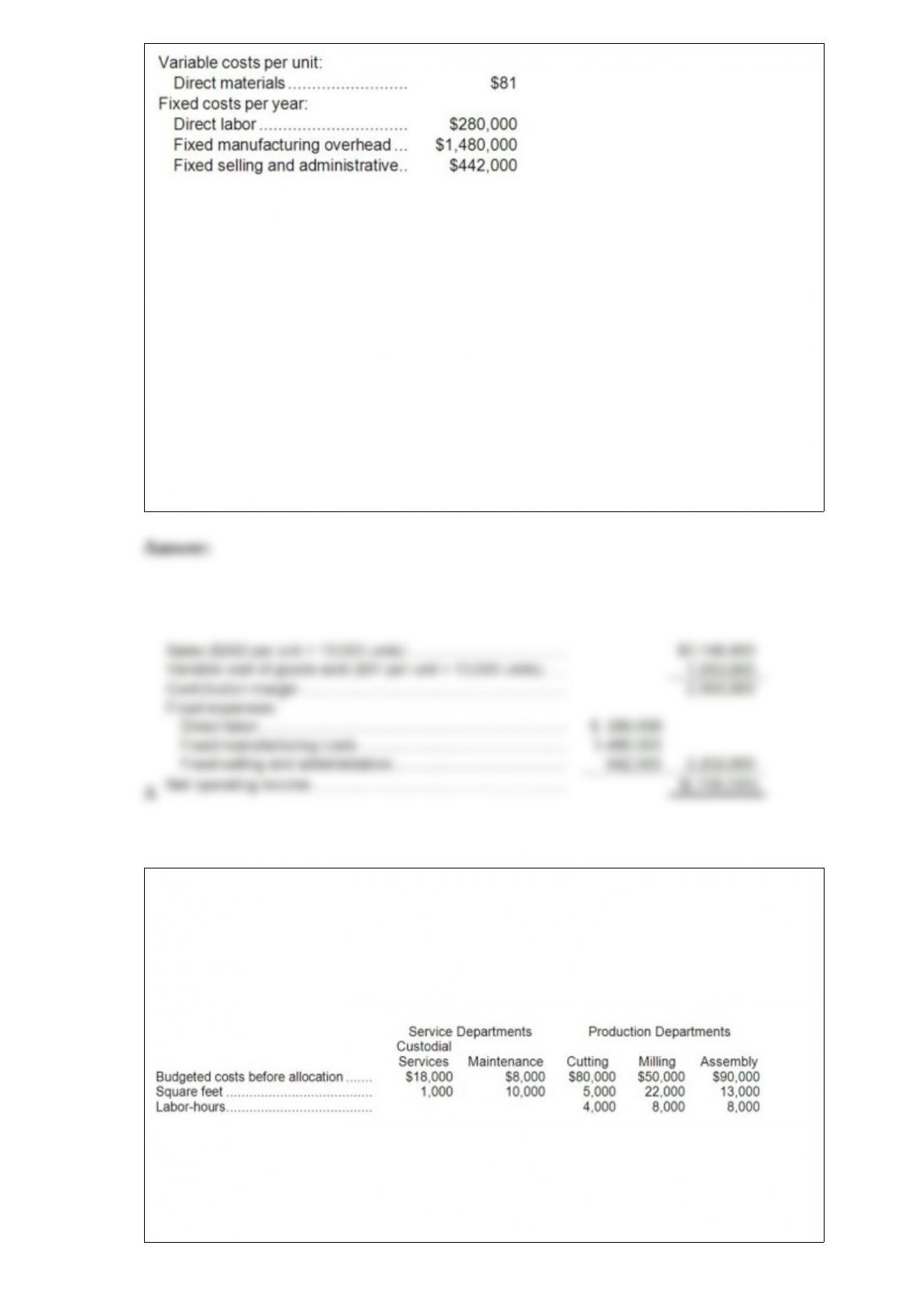
13) Tisch Corporation manufactures and sells one product. The following information
pertains to the company’s first year of operations:
The company does not have any variable manufacturing overhead costs or variable
selling and administrative costs. During its first year of operations, the company
produced 20,000 units and sold 13,000 units. The company’s only product is sold for
$242 per unit.
The net operating income for the year under super-variable costing is:
A.$(109,000)
B.$507,000
C.$(676,000)
D.$(11,000)
14) Delta Manufacturing Company has two service departments, Custodial Services and
Maintenance, and three production departments, Cutting, Milling, and Assembly. Delta
allocates the cost of Custodial Services on the basis of square footage and Maintenance
on the basis of labor-hours. No distinction is made between variable and fixed costs.
Budgeted operating data for the year just completed follow:
Required:
a. Prepare a schedule to allocate service department costs to the production departments
by the direct method (round all dollar amounts to the nearest whole dollar).
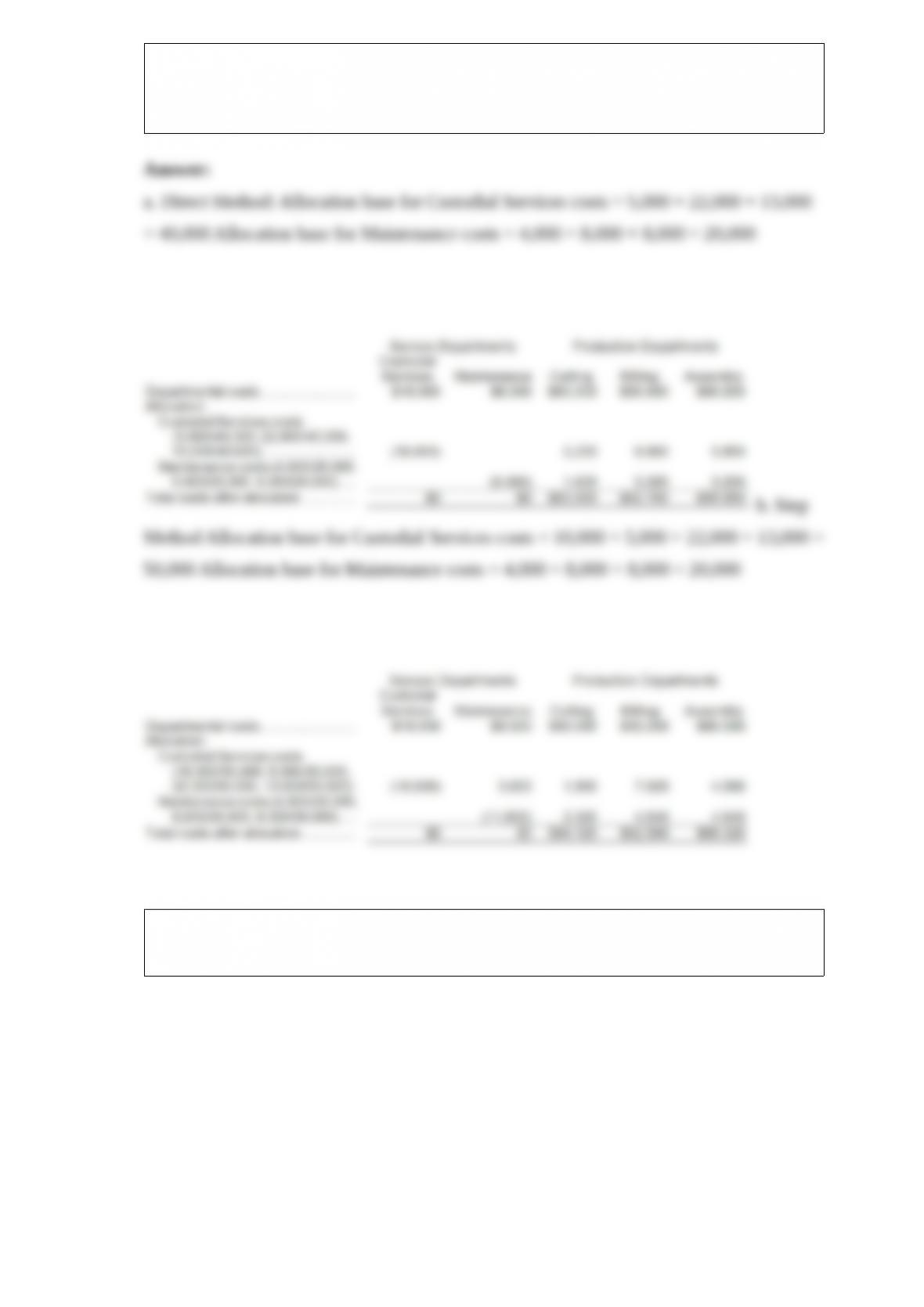
b. Prepare a schedule to allocate service department costs to the production departments
by the step-down method, allocating Custodial Services first (round all amounts to the
nearest whole dollar).
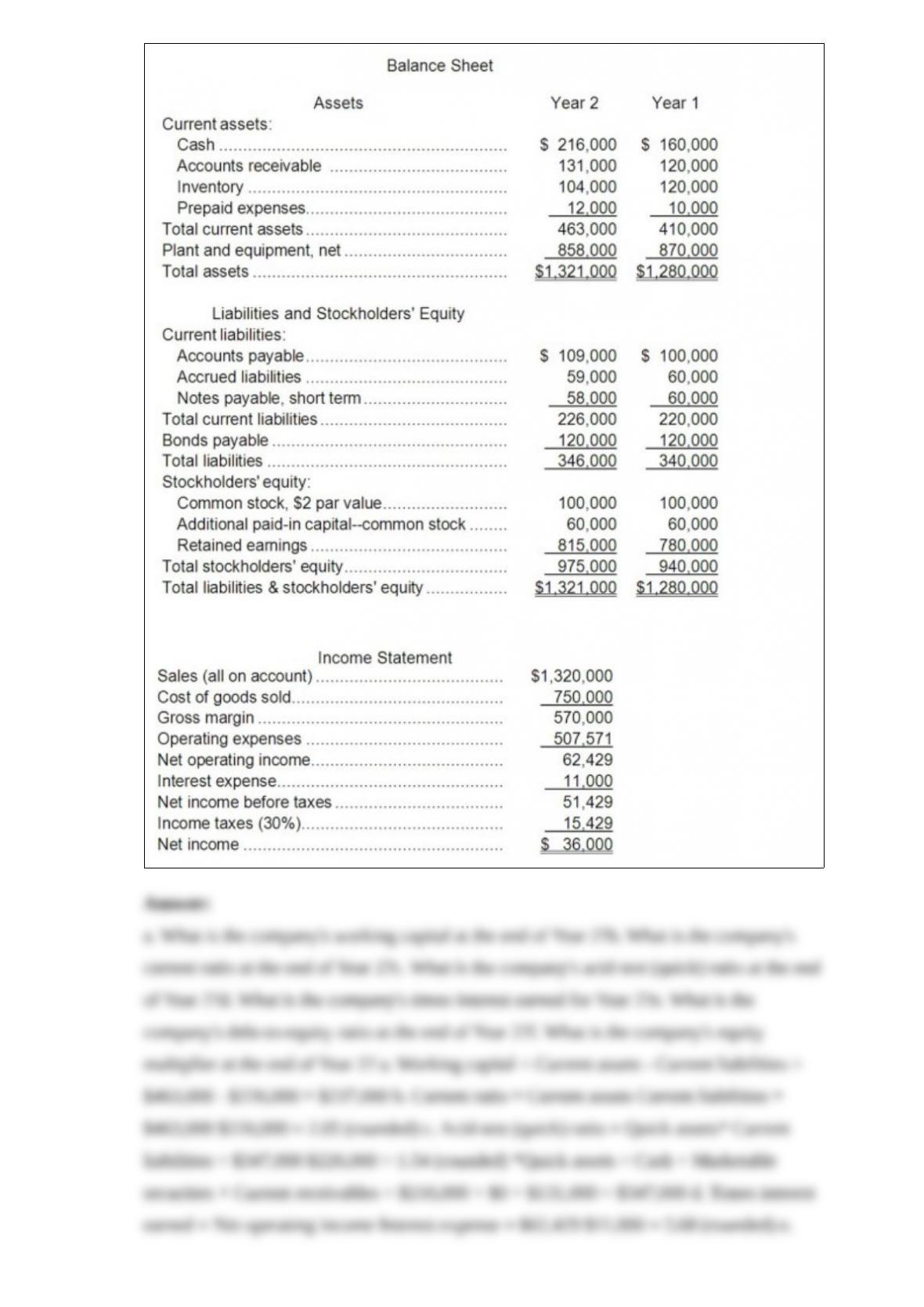
15) A portion of Lapore Corporation’s Balance Sheet appears below:
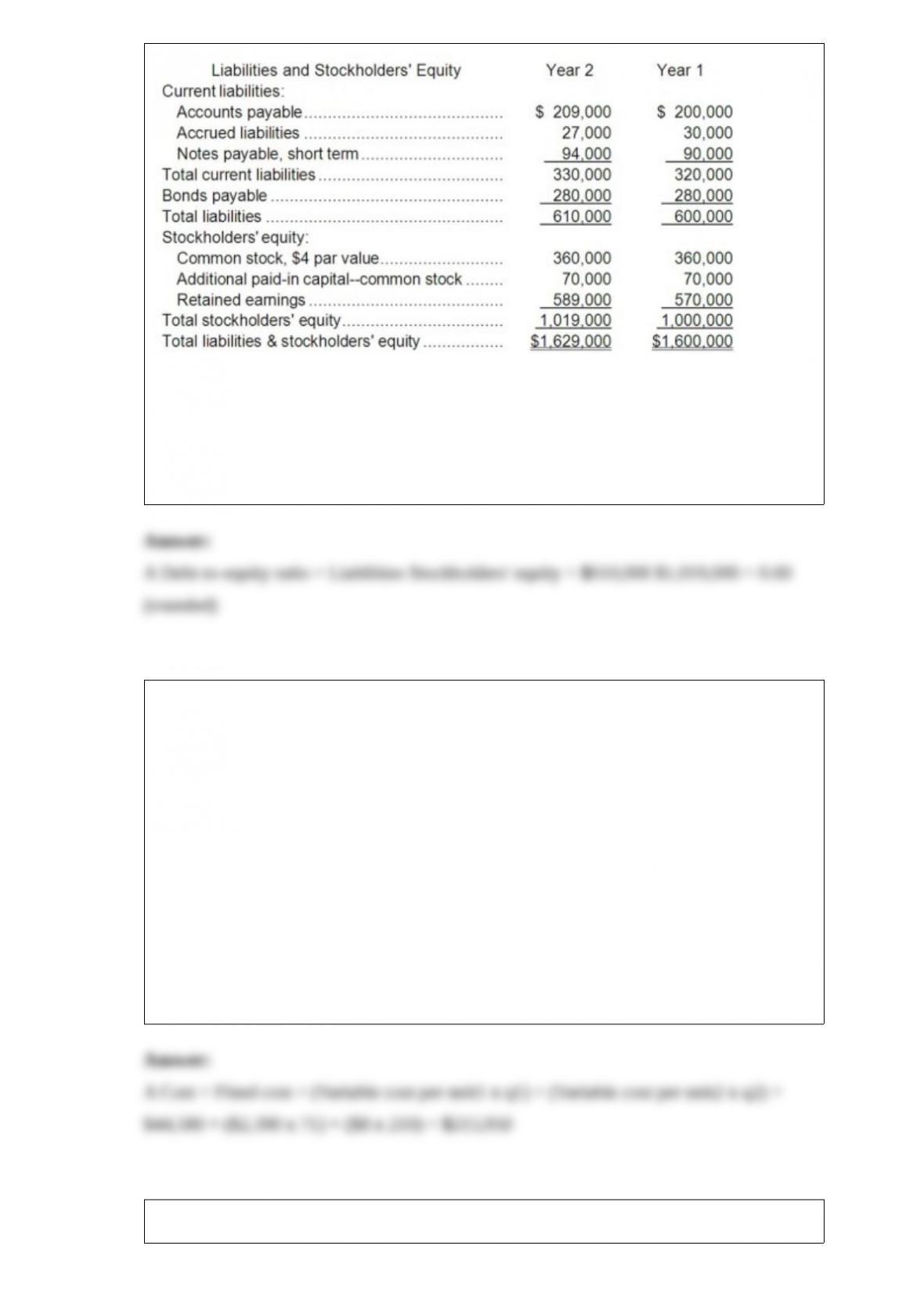
The company’s debt-to-equity ratio at the end of Year 2 is closest to:
A.0.60
B.0.37
C.0.39
D.0.27
16) Bobe Air uses two measures of activity, flights and passengers, in the cost formulas
in its budgets and performance reports. The cost formula for plane operating costs is
$44,580 per month plus $2,390 per flight plus $8 per passenger. The company expected
its activity in May to be 68 flights and 211 passengers, but the actual activity was 71
flights and 210 passengers. The actual cost for plane operating costs in May was
$215,140.
The plane operating costs in the flexible budget for May would be closest to:
A.$215,950
B.$208,788
C.$215,140
D.$217,999
17) Semaan Corporation applies manufacturing overhead to products on the basis of
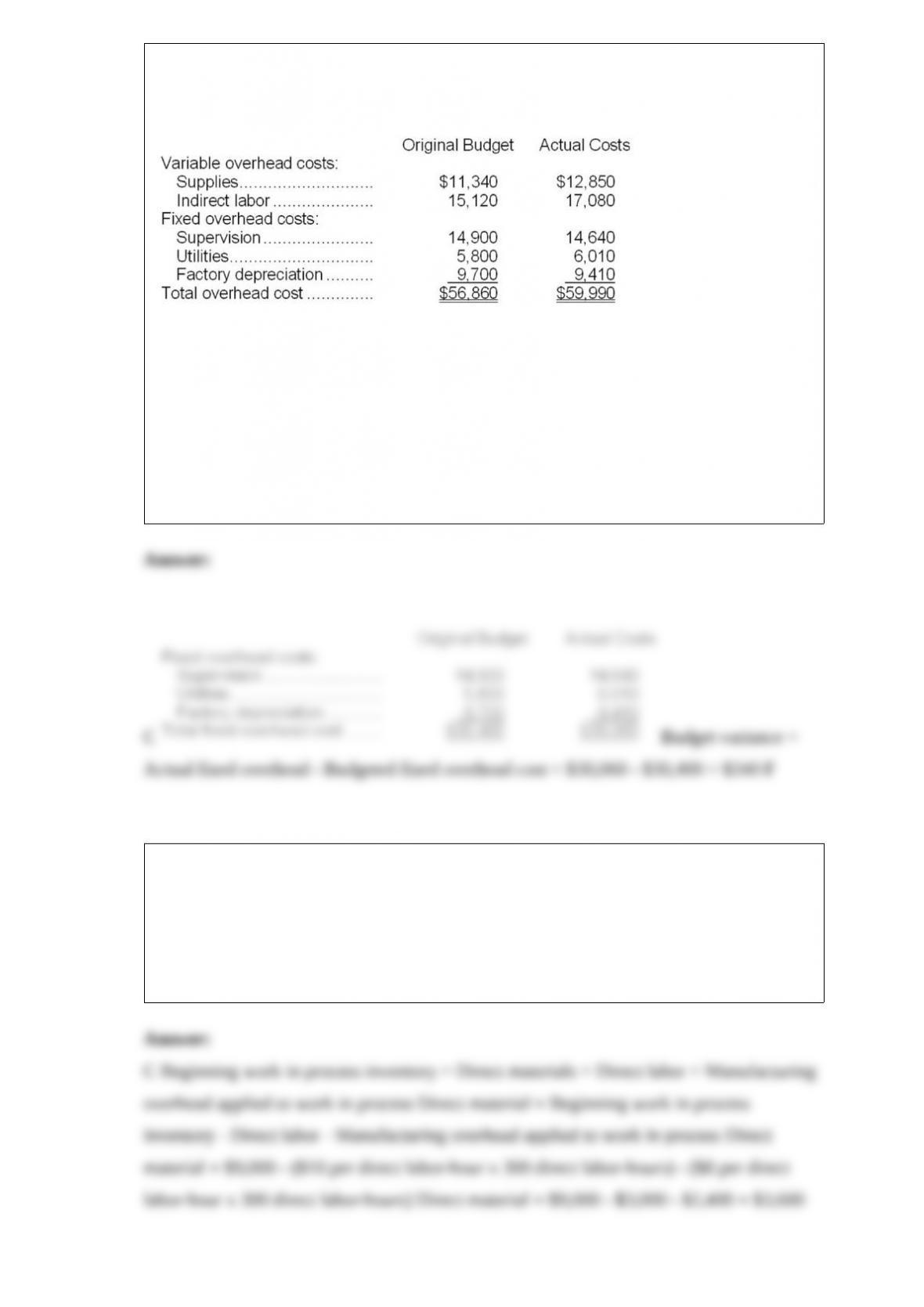
standard machine-hours. Budgeted and actual overhead costs for the month appear
below:
The company based its original budget on 2,700 machine-hours. The company actually
worked 2,960 machine-hours during the month. The standard hours allowed for the
actual output of the month totaled 3,030 machine-hours. What was the overall fixed
manufacturing overhead budget variance for the month?
A.$3,130 Unfavorable
B.$340 Unfavorable
C.$340 Favorable
D.$3,130 Favorable
18) The direct materials cost in the November 1 Work in Process inventory account
totaled:
A.$6,600
B.$6,000
C.$3,600
D.$3,000
19) The net cash provided by (used in) investing activities for the year was:
A.$57
B.$(57)
C.$33
D.$(33)
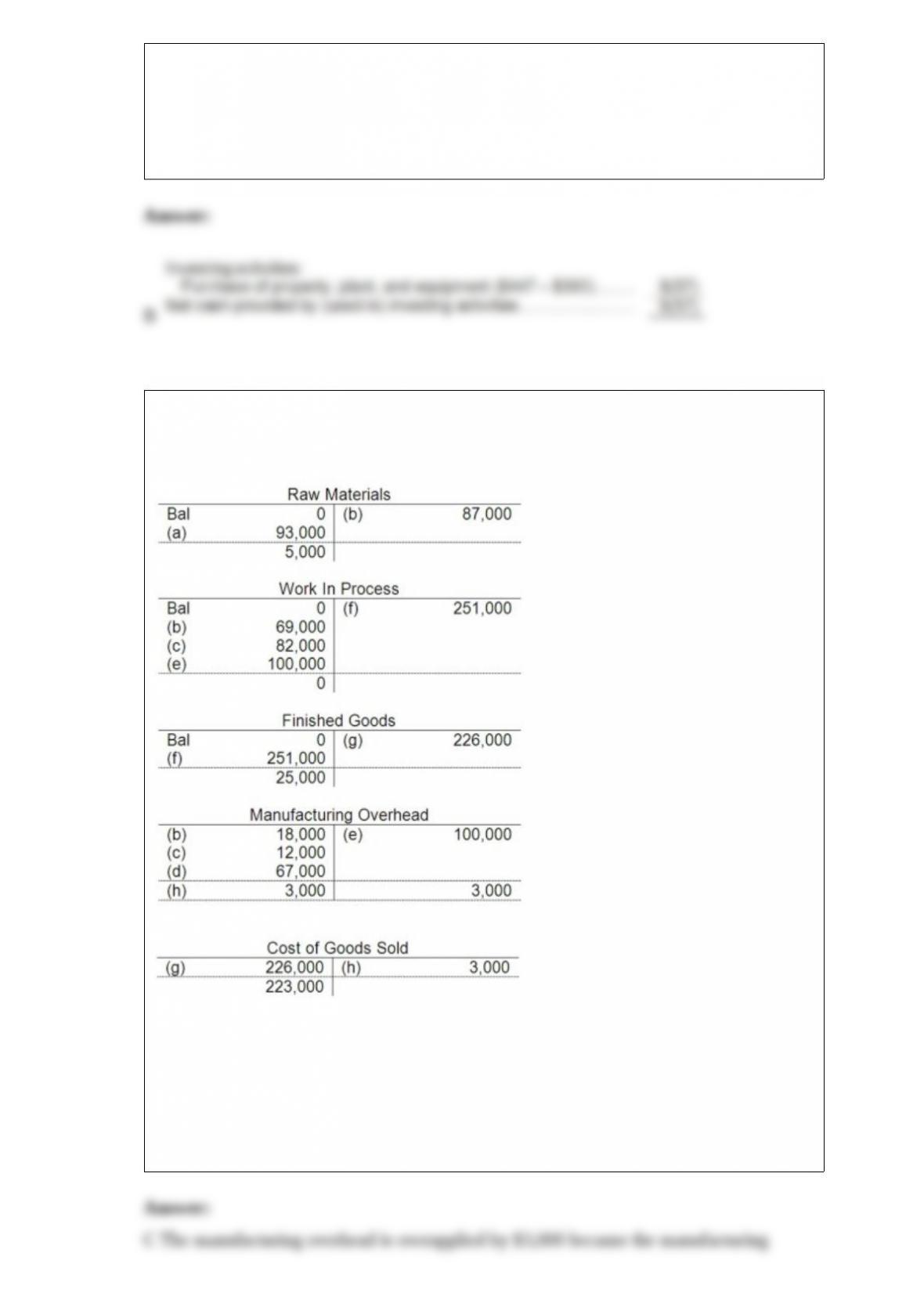
20) The following accounts are from last year’s books at Sharp Manufacturing:
Sharp uses job-order costing and applies manufacturing overhead to jobs based on
direct labor costs. What is the manufacturing overapplied or underapplied for the year?
A.$12,000 overapplied
B.$12,000 underapplied
C.$3,000 overapplied
D.$3,000 underapplied
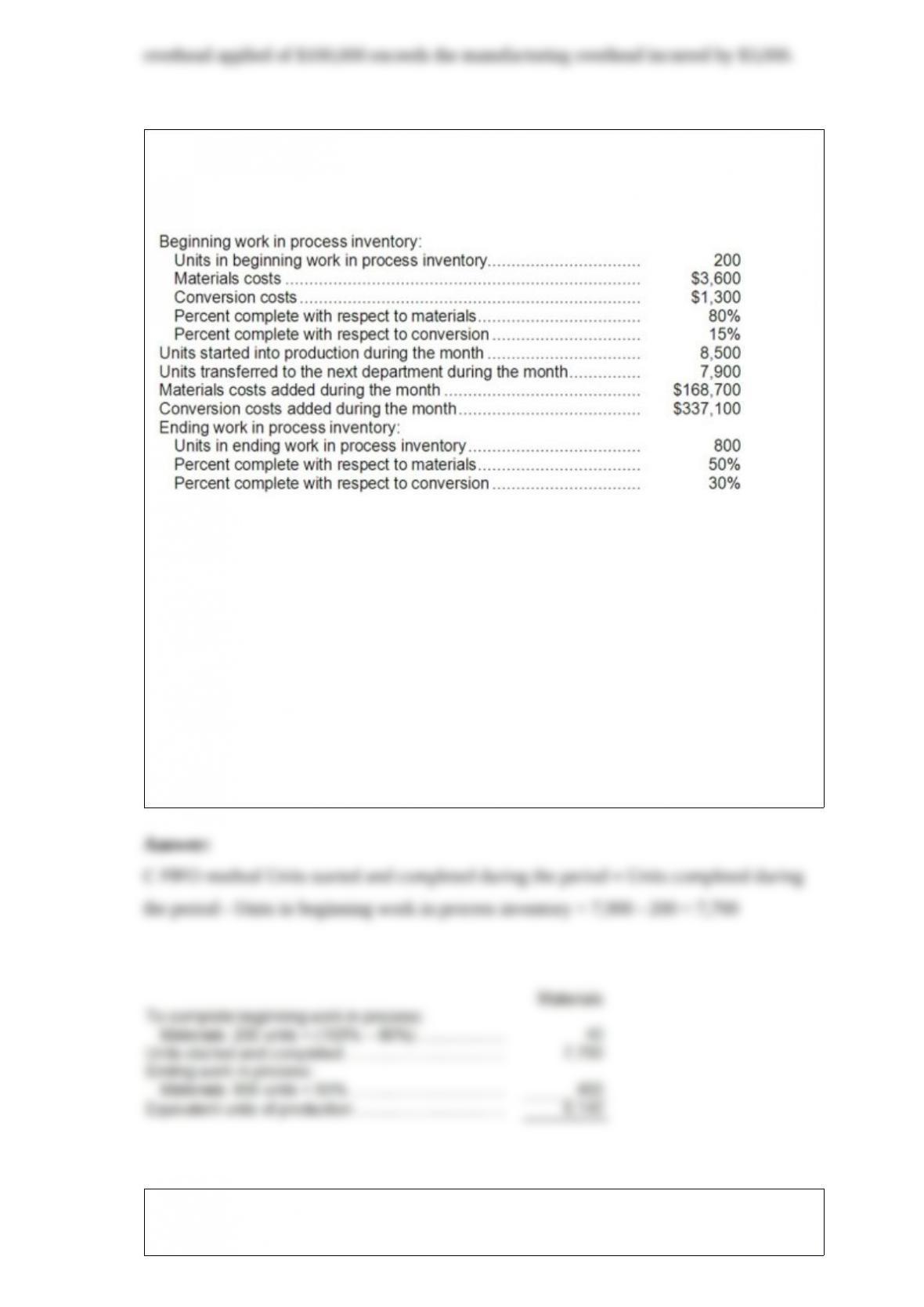
21) Pushkin Corporation uses the FIFO method in its process costing system. Data
concerning the first processing department for the most recent month are listed below:
Note: Your answers may differ from those offered below due to rounding error. In all
cases, select the answer that is the closest to the answer you computed. To reduce
rounding error, carry out all computations to at least three decimal places.
What are the equivalent units for materials for the month in the first processing
department?
A.400
B.8,700
C.8,140
D.7,700
22) Neiger Corporation has provided the following financial data:
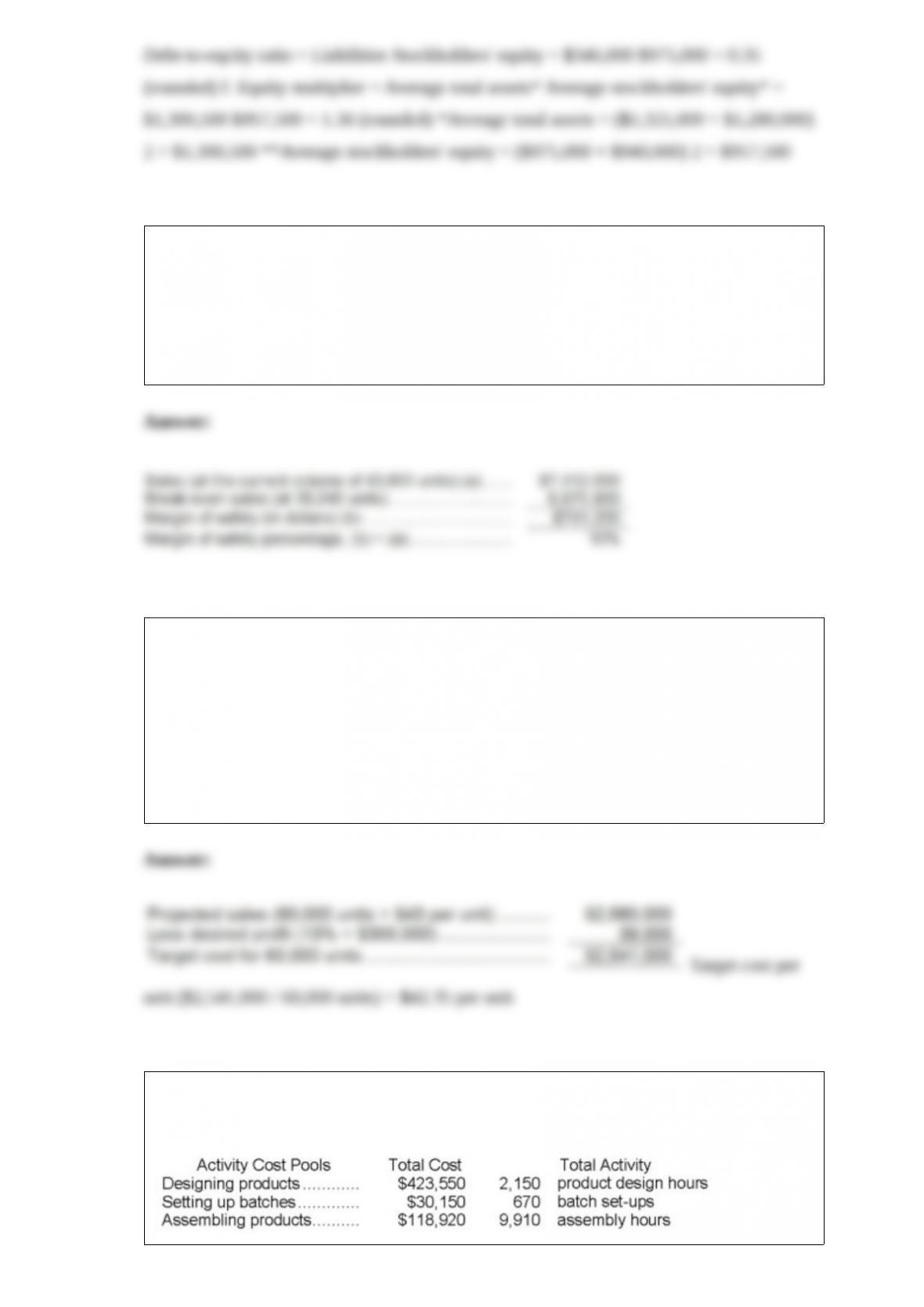
23) Koelsch Corporation’s only product sells for $170 per unit. Its current sales are
43,600 units and its break-even sales are 39,240 units.
Required:
Compute the margin of safety in both dollars and as a percentage of sales.
24) Management of Daubert Corporation is considering a new product, an outdoor
speaker that would have a selling price of $43 per unit and projected sales of 60,000
units. Launching the new product would require an investment of $300,000. The
desired return on investment is 13%.
Required:
Determine the target cost per unit for the outdoor speaker.
25) Malan Corporation has provided the following data from its activity-based costing
accounting system:
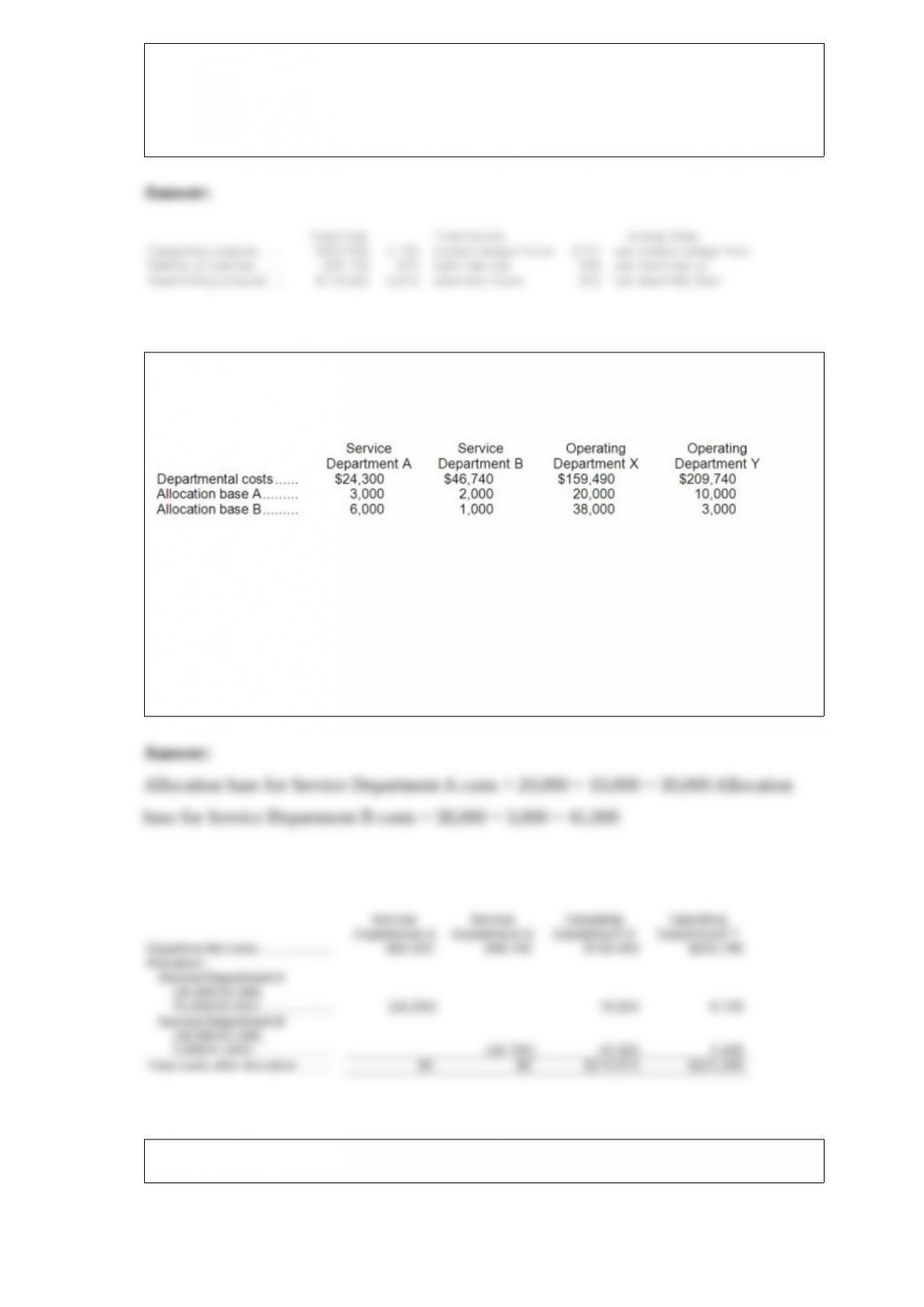
Required:
Compute the activity rates for each of the three cost pools. Show your work!
26) Mazon Corporation uses the direct method to allocate its two service department
costs to its two operating departments. Data concerning those departments follow:
Service Department A costs are allocated on the basis of allocation base A and Service
Department B costs are allocated on the basis of allocation base B.
Required:
Allocate the service department costs to the operating departments using the direct
method.
27) A number of costs and measures of activity are listed below.
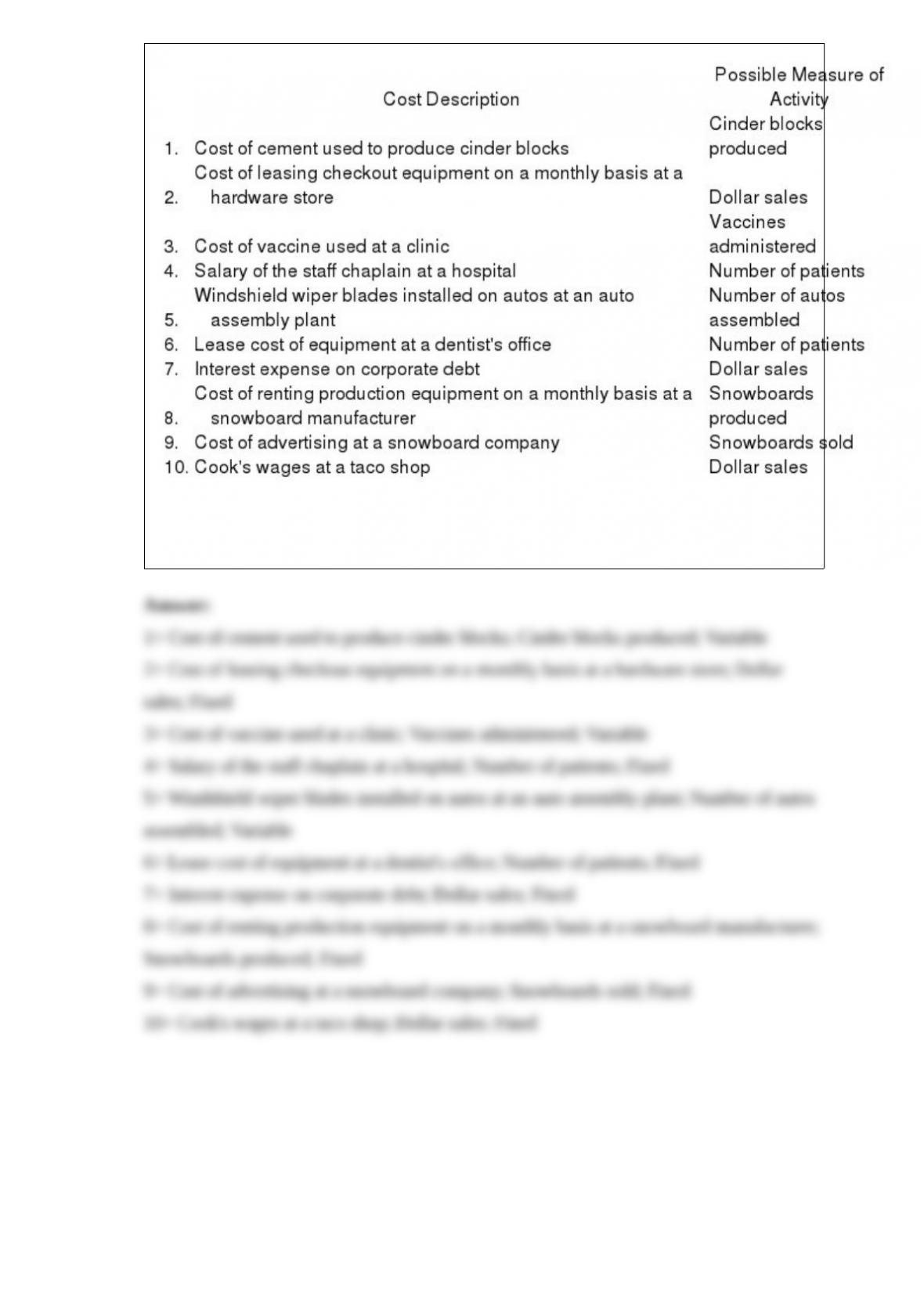
Required:
For each item above, indicate whether the cost is MAINLY fixed or variable with
respect to the possible measure of activity listed next to it.