
In its 2016 annual report to shareholders, the Goodday Chemical Company included the
following disclosure note excerpts on CONTINGENCIES in its annual report to
shareholders: At December 31, 2016, Goodday had recorded liabilities aggregating
$66.5 million for anticipated costs related to various environmental matters, primarily
the remediation of numerous waste disposal sites and certain properties sold by
Goodday. These costs include legal and consulting fees, site studies, the design and
implementation of remediation plans, post-remediation monitoring and related activities
and will be paid over several years. The amount of Goodday’s ultimate liability in
respect of these matters may be affected by several uncertainties, primarily the ultimate
cost of required remediation and the extent to which other responsible parties
contribute. At December 31, 2016, Goodday had recorded liabilities aggregating $218.7
million for potential product liability and other tort claims, including related legal fees
expected to be incurred, presently asserted against Goodday. The amount recorded was
determined on the basis of an assessment of potential liability using an analysis of
available information with respect to pending claims, historical experience, and, where
available, current trends. Goodday is a defendant in numerous lawsuits involving at
December 31, 2016, approximately 63,000 claimants alleging various asbestos-related
personal injuries purported to result from exposure to asbestos in certain rubber-coated
products manufactured by Goodday in the past or in certain Goodday facilities.
Typically, these lawsuits have been brought against multiple defendants in state and
federal courts. In the past, Goodday has disposed of approximately 22,000 cases by
defending and obtaining the dismissal thereof or by entering into a settlement. Goodday
has policies and coverage-in-place agreements with certain of its insurance carriers that
cover a substantial portion of estimated indemnity payments and legal fees in respect of
the pending claims. At December 31, 2016, Goodday has recorded an asset in the
amount it expects to collect under the policies and coverage-in-place agreements with
certain carriers related to its estimated asbestos liability. Goodday has also commenced
discussions with certain of its excess coverage insurance carriers to establish
arrangements in respect of their policies. Subject to the uncertainties referred to above,
Goodday has concluded that in respect of any of the above described liabilities, it is not
reasonably possible that it would incur a loss exceeding the amount recognized at
December 31, 2016, with respect thereto which would be material relative to the
consolidated financial position, results of operations, or liquidity of Goodday. Briefly
explain the GAAP requirement from which the costs/obligations for environmental
cleanup and product liability/tort claim matters were accrued in the financial
statements.
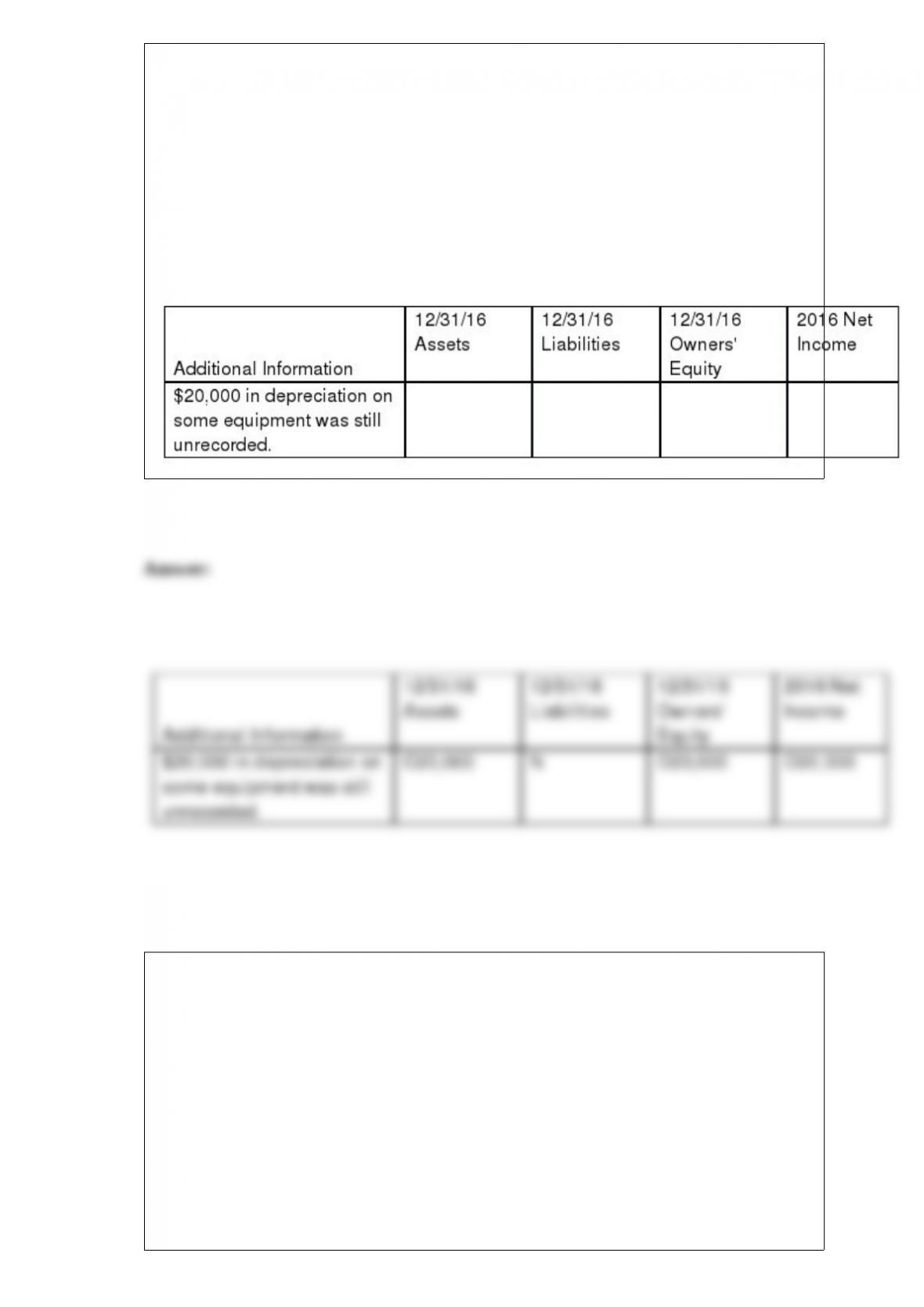
Suppose that Laramie Company’s adjusted trial balance ignored the following
information. For each item of information, indicate what effects, if any, these omissions
would have on the stated components of Laramie Company’s 2016 Income Statement
and 12/31/16 Balance Sheet. Assume no income taxes. Use the following code for your
answers and be sure to include the dollar amounts of the effects next to the letter O or
U: N = No Effect
O = Overstated
U = Understated
Veras Bus Transportation provides on-campus bus services for universities. On January
1, it enters into a one-year contract with Moose University to operate five bus lines
traveling throughout the campus. Under the contract, Veras will be paid $100,000 on the
last day of each month. In addition, Veras will receive an additional $120,000 at the end
of each six-month period, provided it remains free of accidents. – On January 1, based
on historical experience, Veras estimated that there is a 75% chance that it will remain
free of accidents for the entire year.
– On March 20, three of the most senior drivers at Veras abruptly left. As a result, Veras
had to hire inexperienced drivers to fill the vacant positions. Consequently, Veras
revised its estimate to a 30% chance that it would earn the semiannual bonus.
– On June 30, Moose confirmed that there was no accident between January and June,
so Veras would be entitled to the semiannual bonus. Veras bases estimates of variable
consideration on the most likely amount it expects to receive.
Prepare Veras’ June 30 journal entry to account for the revenue earned from June 1 –
June 30, as well as any necessary adjustments to revenue presumed to have been
previously recorded.
GHI Company will issue $2,000,000 in 8%, 10-year bonds when the market rate of
interest is 6%. Interest is paid semiannually.
Required: Determine how much cash GHI Company should realize from the bond
issue.
Below is a list of accounts in no particular order. Assume that all accounts have normal
balances. Required: In column A, indicate whether a debit will:
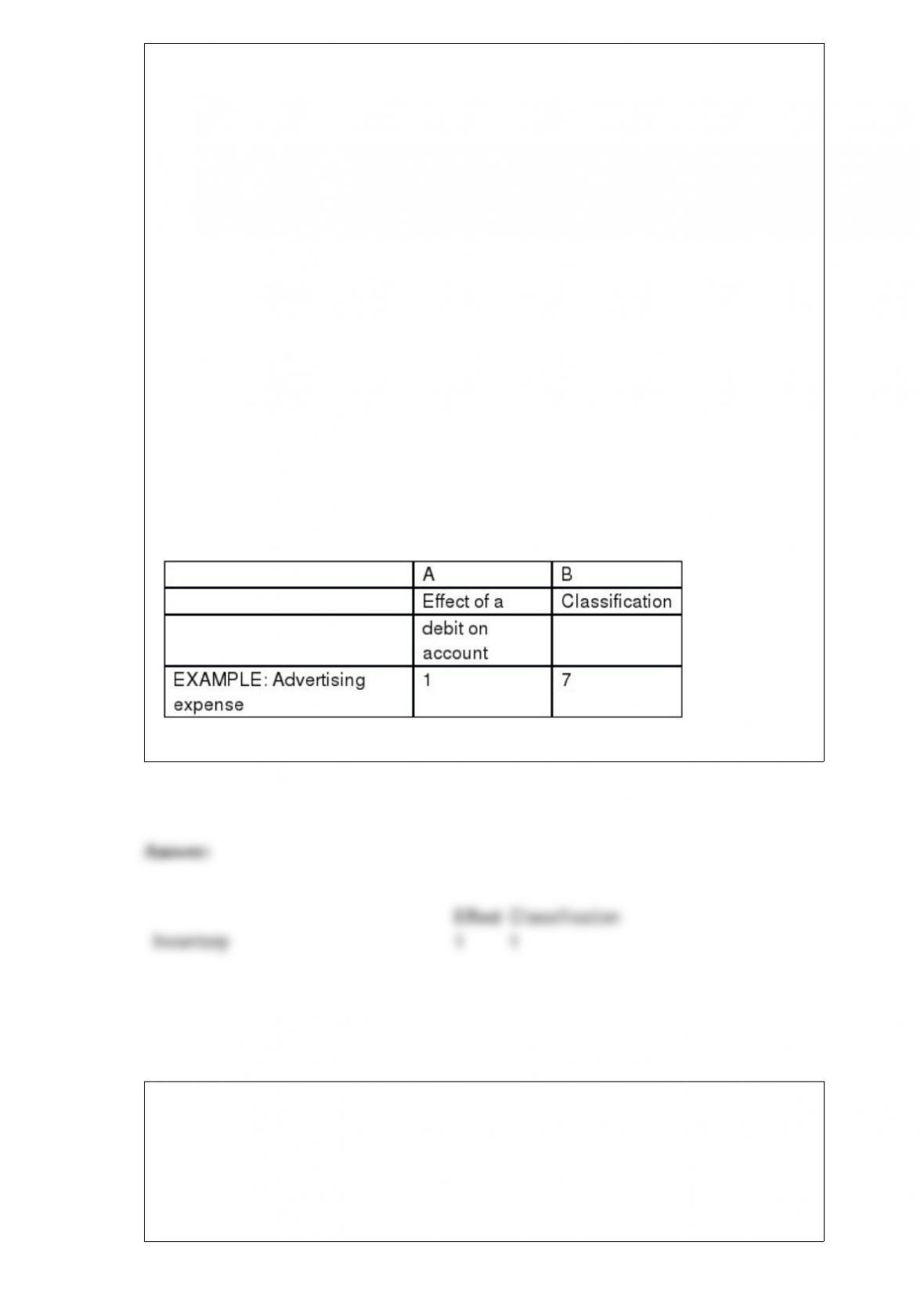
1> Increase the account balance, or
2> Decrease the account balance. In column B, classify each account according to the
following scheme. For contra accounts, indicate the classification of the account to
which it relates.
1>A current asset in the balance sheet.
2>A noncurrent asset in the balance sheet.
3>A current liability in the balance sheet.
4>A long-term liability in the balance sheet.
5>A permanent equity account in the balance sheet.
6>A revenue account in the income statement.
7>An expense account shown in the income statement.
8> Account does not appear in either the balance sheet or the income statement.
Inventory
The following note disclosure is taken from the 2016 annual report to shareholders of
Winchester International Corporation. NOTE 5: ALLOWANCE FOR LOAN LOSSES
The allowance for loan loss is maintained at a level to absorb probable losses inherent
in the loan portfolio. This allowance is increased by provisions charged to operating
expense and by recoveries on loans previously charged off, and reduced by charge-offs
on loans. The following is a summary of the changes in the allowances for loan losses
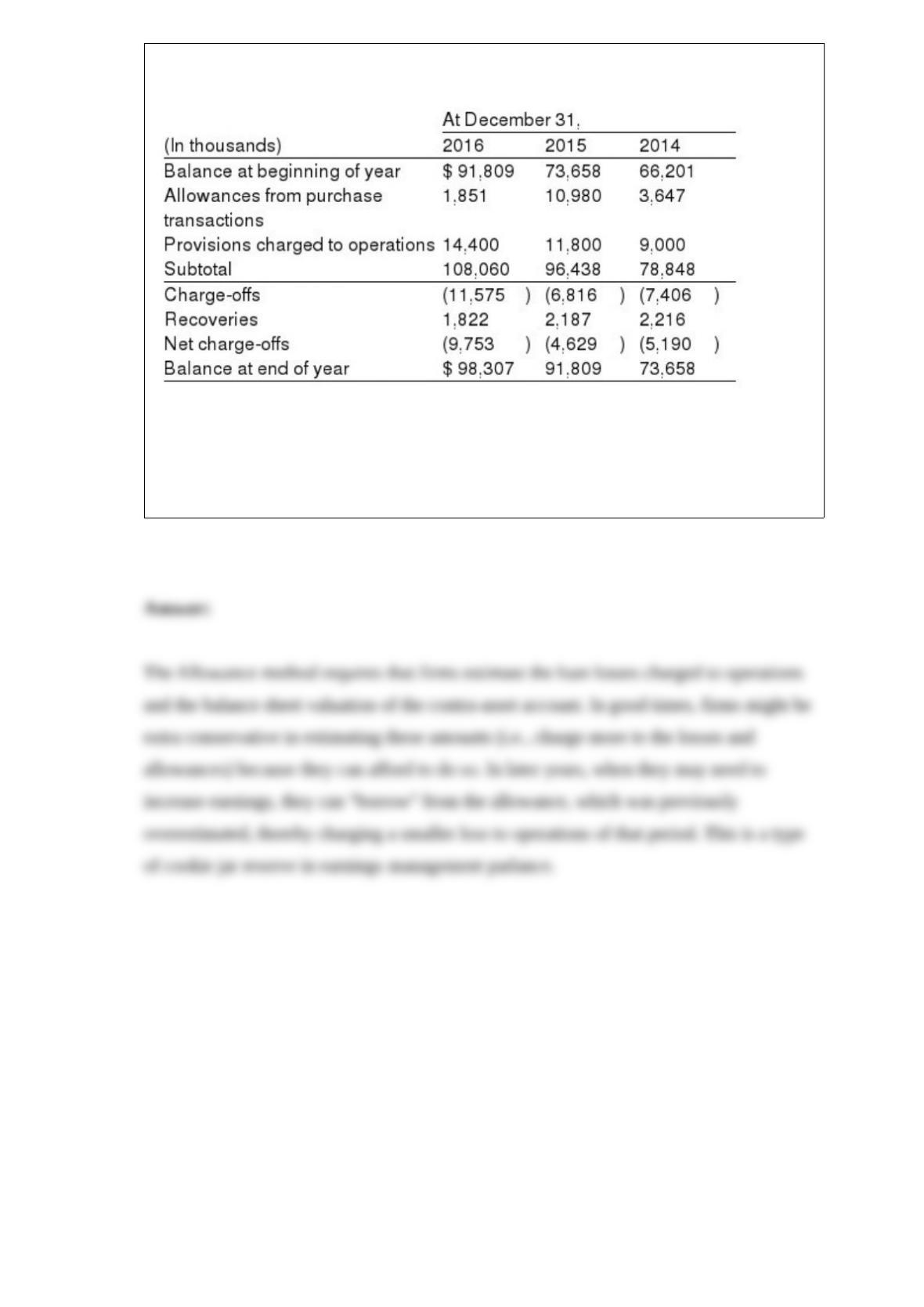
for three years:
Winchester also reported (in thousands) in its comparative balance sheet that it held
Loans receivable, net, of $6,869,911 and $6,819,209 at December 31, 2016, and
December 31, 2015, respectively. How might a company with loan receivables like
Winchester be able to manage earnings in applying generally accepted accounting
principles?