
Put the foliated metamorphic textures in order from lowest level to highest level. (Note: “First”
refers to the lowest level of metamorphism and “Fourth” refers to the highest level.)
A) Gneissic Banding
B) Schistosity
C) Phyllitic Texture
D) Slaty Cleavage
5) First (Lowest level of metamorphism)
Diff: 1
Bloom’s Taxonomy: Knowledge
Global Sci Out: 7
Section: 8.3 – Metamorphic Textures
Focus/Concepts: 8.3
Earth Science LO: 4.6 – Earth materials take many different forms as they cycle through the
geosphere.
6) Second
Diff: 1
Bloom’s Taxonomy: Knowledge
Global Sci Out: 7
Section: 8.3 – Metamorphic Textures
Focus/Concepts: 8.3
Earth Science LO: 4.6 – Earth materials take many different forms as they cycle through the
geosphere.
7) Third
Diff: 1
Bloom’s Taxonomy: Knowledge
Global Sci Out: 7
Section: 8.3 – Metamorphic Textures
Focus/Concepts: 8.3
Earth Science LO: 4.6 – Earth materials take many different forms as they cycle through the
geosphere.
8) Fourth (Highest level of metamorphism)
Diff: 1
Bloom’s Taxonomy: Knowledge
Global Sci Out: 7
Section: 8.3 – Metamorphic Textures
Focus/Concepts: 8.3
Earth Science LO: 4.6 – Earth materials take many different forms as they cycle through the
geosphere.

20
Match the index mineral with the correct metamorphic grade(s).
A) High Grade
B) Low Grade
C) Medium Grade
D) Medium to High Grade
E) Low to Medium Grade
9) Chlorite
Diff: 2
Bloom’s Taxonomy: Knowledge
Global Sci Out: 7
Section: 8.6 – Metamorphic Zones
Focus/Concepts: 8.6
Earth Science LO: 4.6 – Earth materials take many different forms as they cycle through the
geosphere.
10) Staurolite
Diff: 2
Bloom’s Taxonomy: Knowledge
Global Sci Out: 7
Section: 8.6 – Metamorphic Zones
Focus/Concepts: 8.6
Earth Science LO: 4.6 – Earth materials take many different forms as they cycle through the
geosphere.
11) Muscovite
Diff: 2
Bloom’s Taxonomy: Knowledge
Global Sci Out: 7
Section: 8.6 – Metamorphic Zones
Focus/Concepts: 8.6
Earth Science LO: 4.6 – Earth materials take many different forms as they cycle through the
geosphere.
12) Garnet
Diff: 2
Bloom’s Taxonomy: Knowledge
Global Sci Out: 7
Section: 8.6 – Metamorphic Zones
Focus/Concepts: 8.6
Earth Science LO: 4.6 – Earth materials take many different forms as they cycle through the
geosphere.
13) Sillimanite
Diff: 2
Bloom’s Taxonomy: Knowledge
Global Sci Out: 7
Section: 8.6 – Metamorphic Zones
Focus/Concepts: 8.6
Earth Science LO: 4.6 – Earth materials take many different forms as they cycle through the
geosphere.
8.5 Essay Questions
1) What role does heat play in creating new minerals or new crystalline structures in
metamorphic rocks? Name three sources of heat that will accomplish this.
2) Compare and contrast confining pressure and compressional stress relating to metamorphic
rocks. What will happen to the mineral crystals in each situation? Also, provide examples of
geologic environments were such pressure would be the main agent of metamorphism.
3) When trying to identify gneissic banding, students often make the assumption that any
alternating color bands are gneissic banding. What is gneissic banding, how does it form, and
how does it compare to color banding that is often found in marble?
4) Compare and contrast how the aureole of contact metamorphism will change in both thickness
and metamorphic grade (if applicable) depending on the intrusive igneous structure.
5) How can fire metamorphose a rock? What temperature/pressure conditions will be present?
Name a location where you would expect such metamorphism to occur.
6) Explain how migmatites form. Why are they difficult to fit into any of the three basic rock
groups?
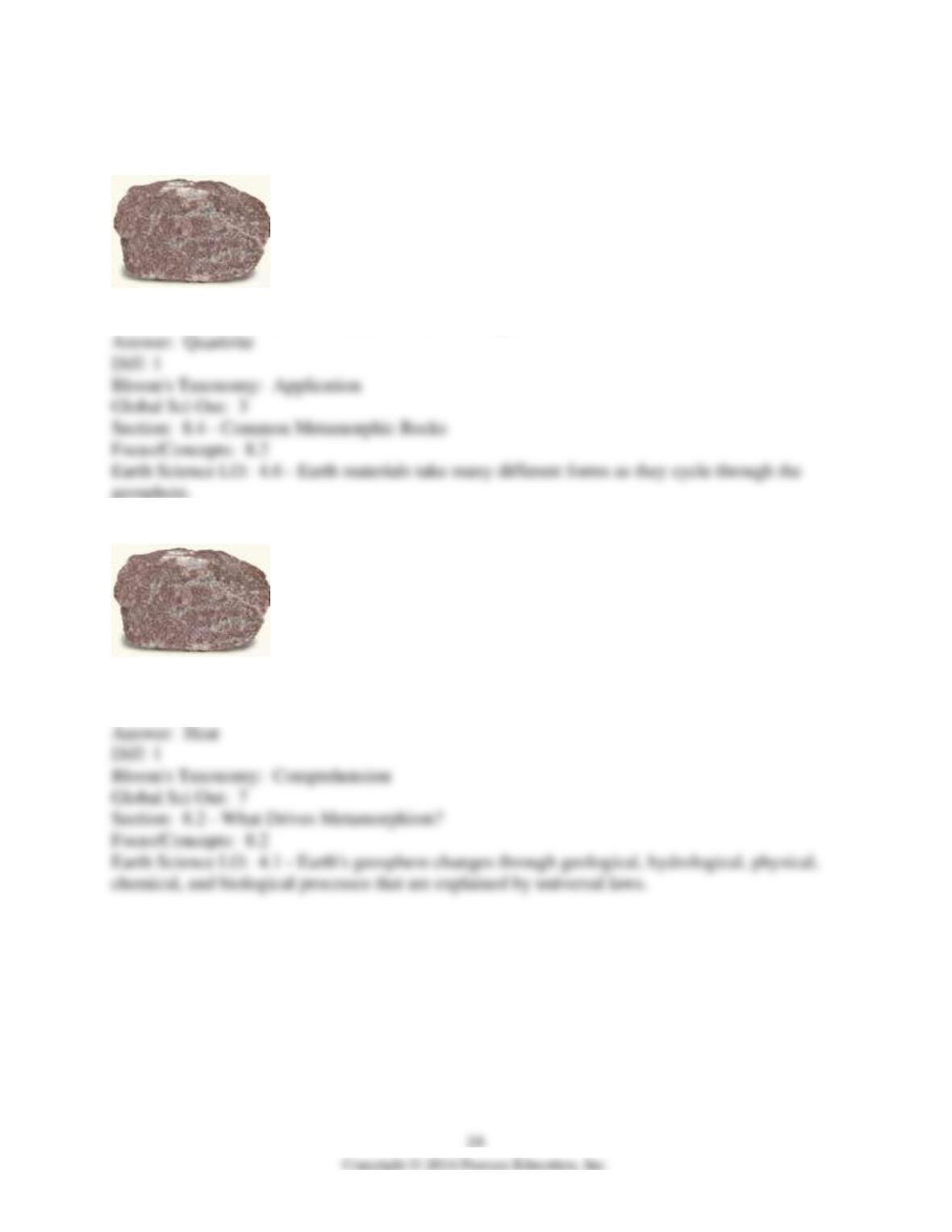
8.6 Visual
1)
What is the name of this rock? (Hint: it can scratch glass.)
2)
Which agent of metamorphism was primarily responsible for generating the rock in the image
above?
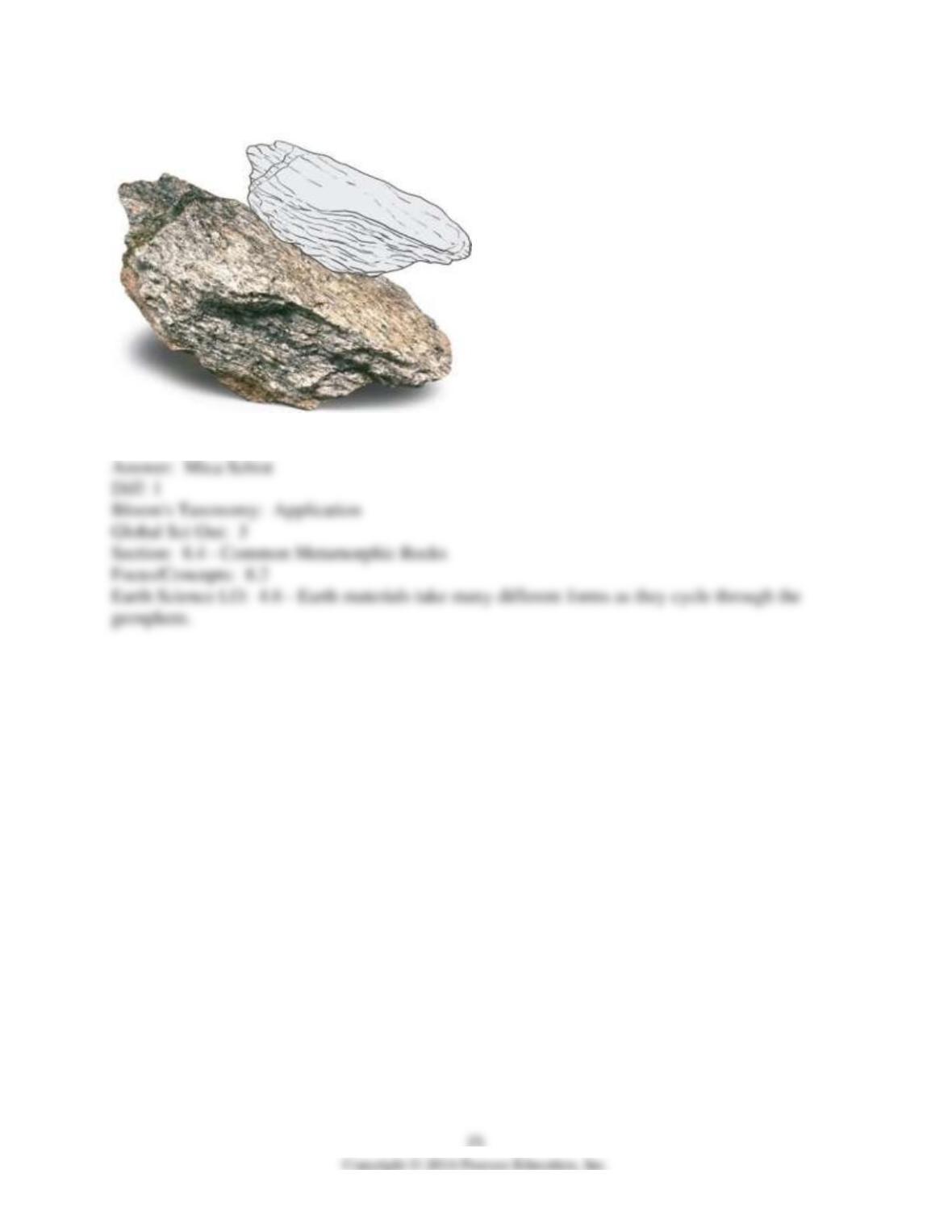
3)
What is the name of this rock?
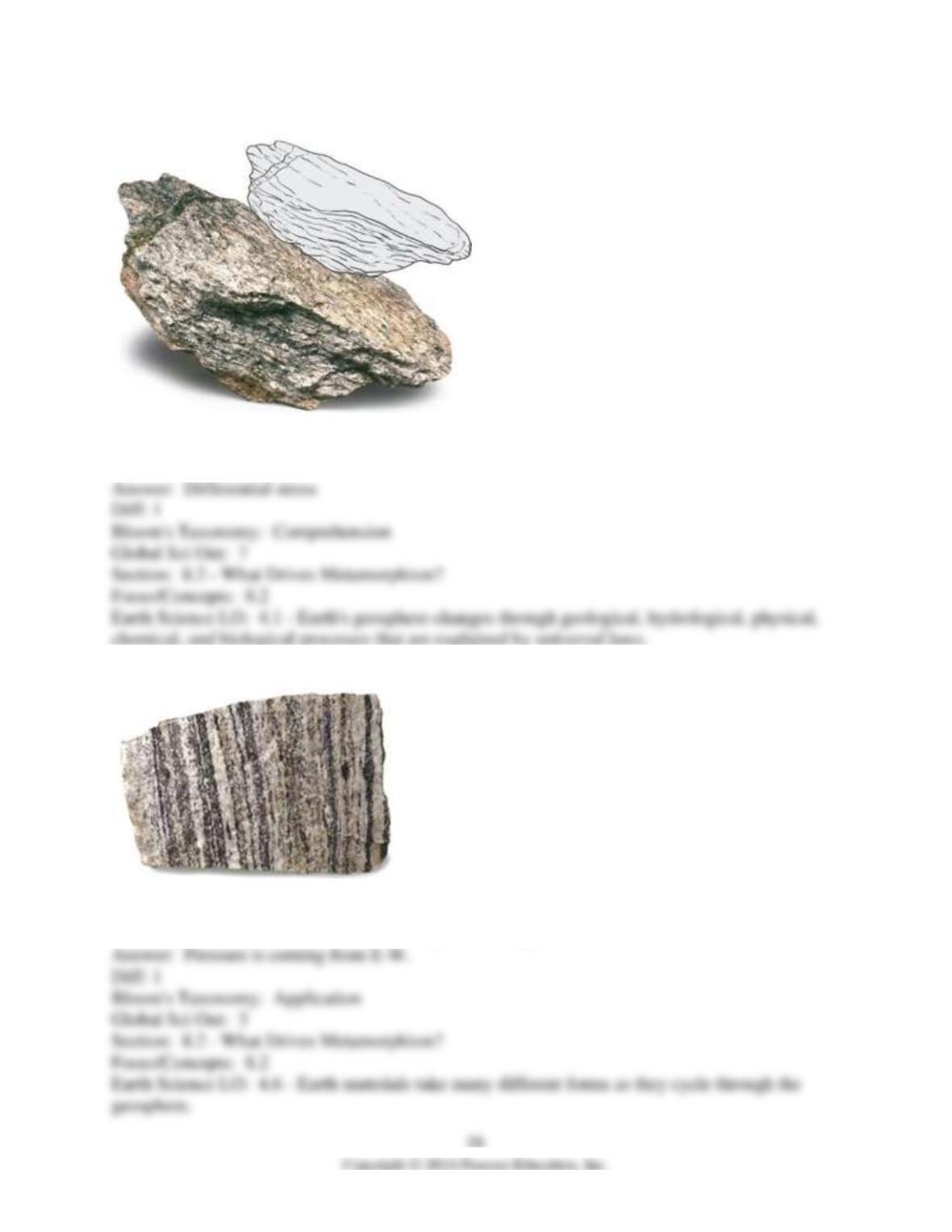
4)
Which kind of stress (confining pressure or differential stress) is responsible for creating the
texture visible in this rock?
5)
Use arrows on the above image to illustrate the direction(s) of greatest pressure during
metamorphism. Assume that north is the top of the image.
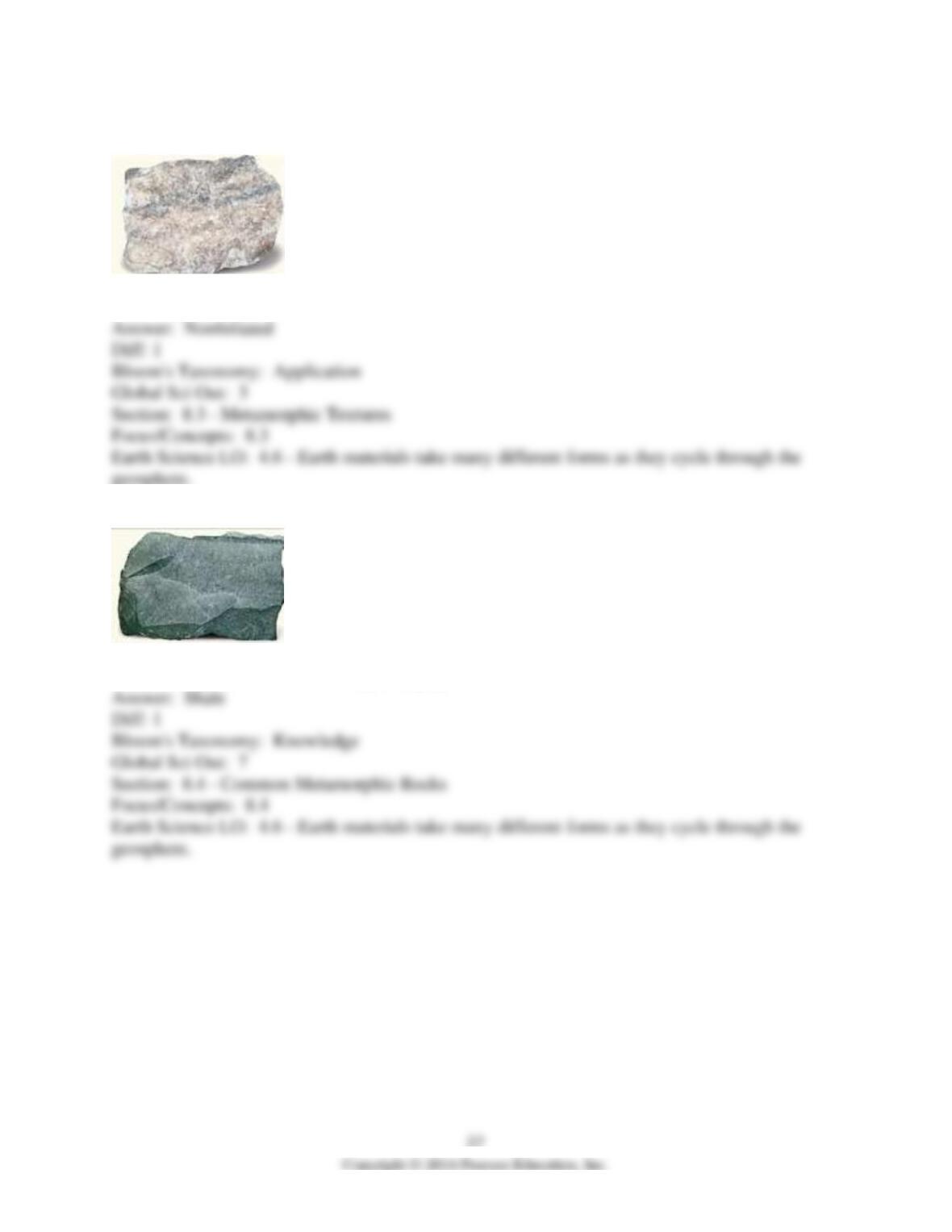
6)
What is the texture of this rock?
7)
What is the parent rock of the sample displayed?
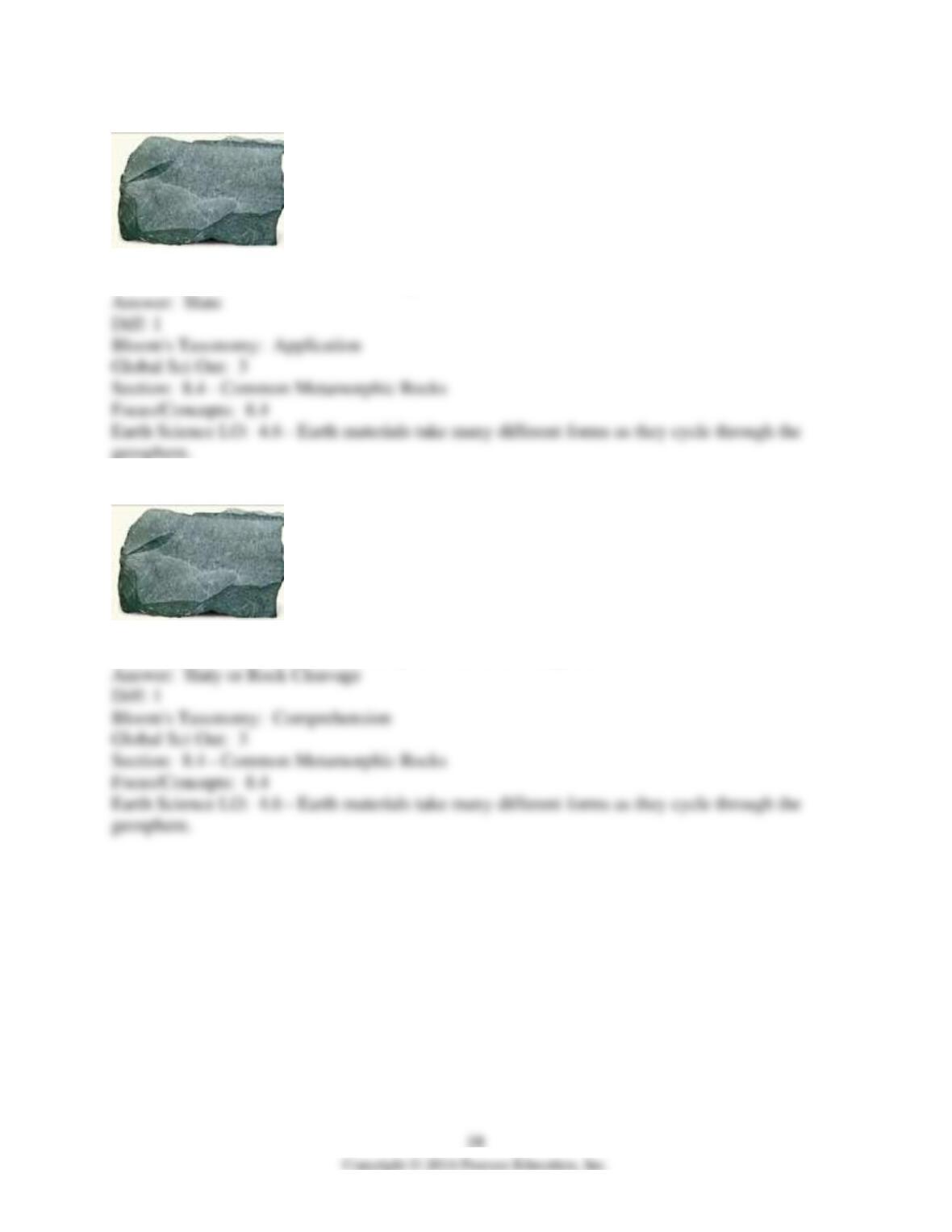
8)
What is the name of the rock in the image above?
9)
What degree of foliation is exhibited by the rock in the image above?
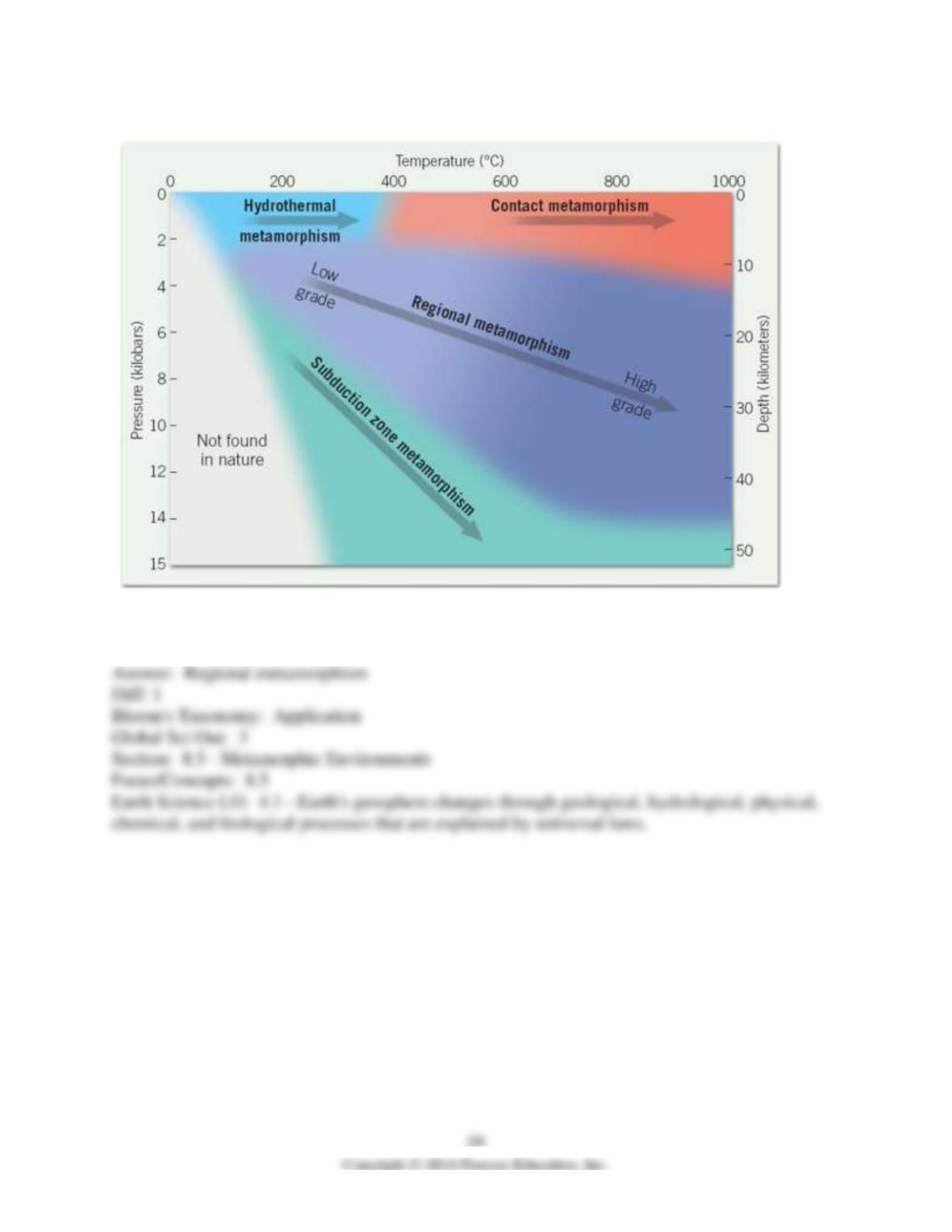
10)
What kind of metamorphism will occur if the environmental conditions are 400° C and 5
kilobars?
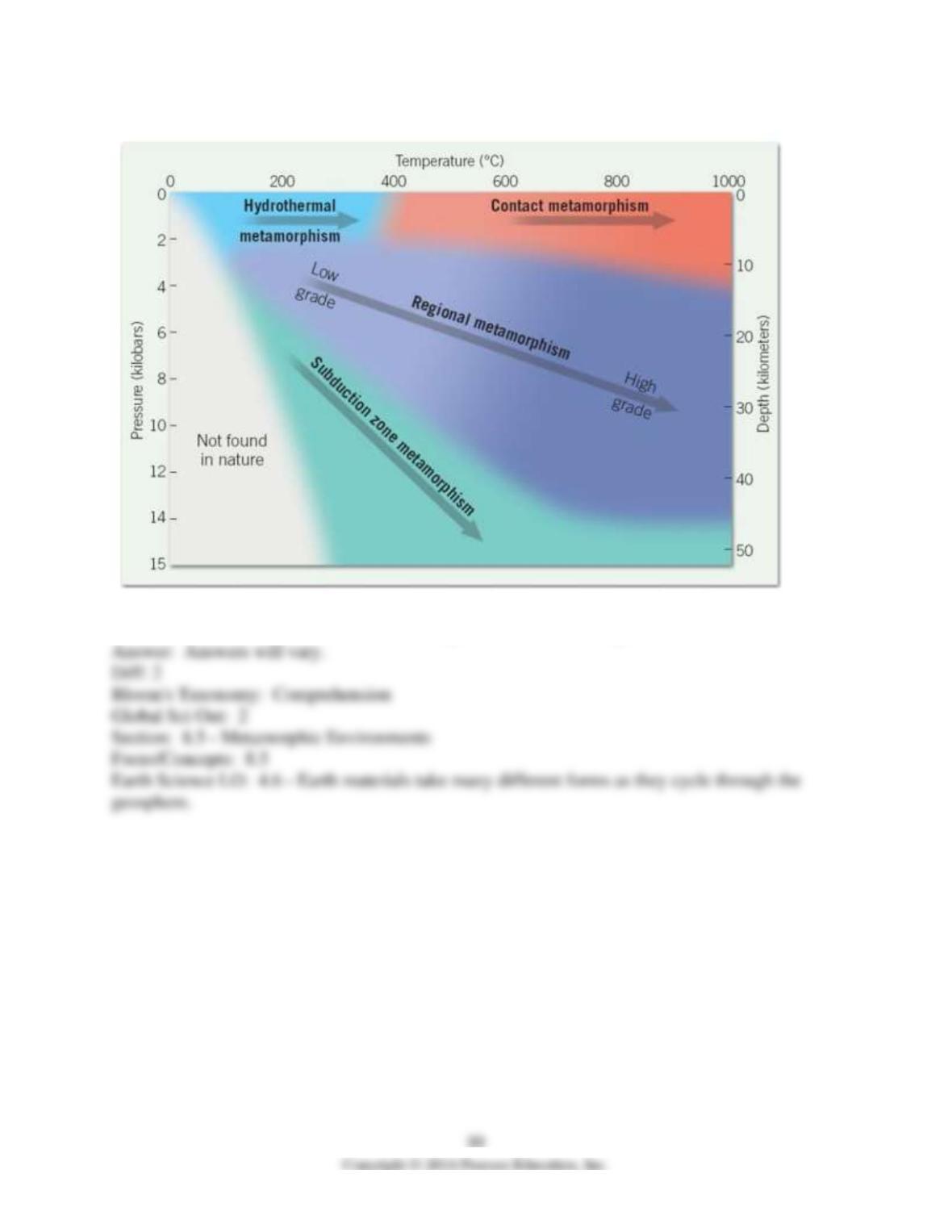
11)
Name a real-life location where this metamorphism occurred in the past.
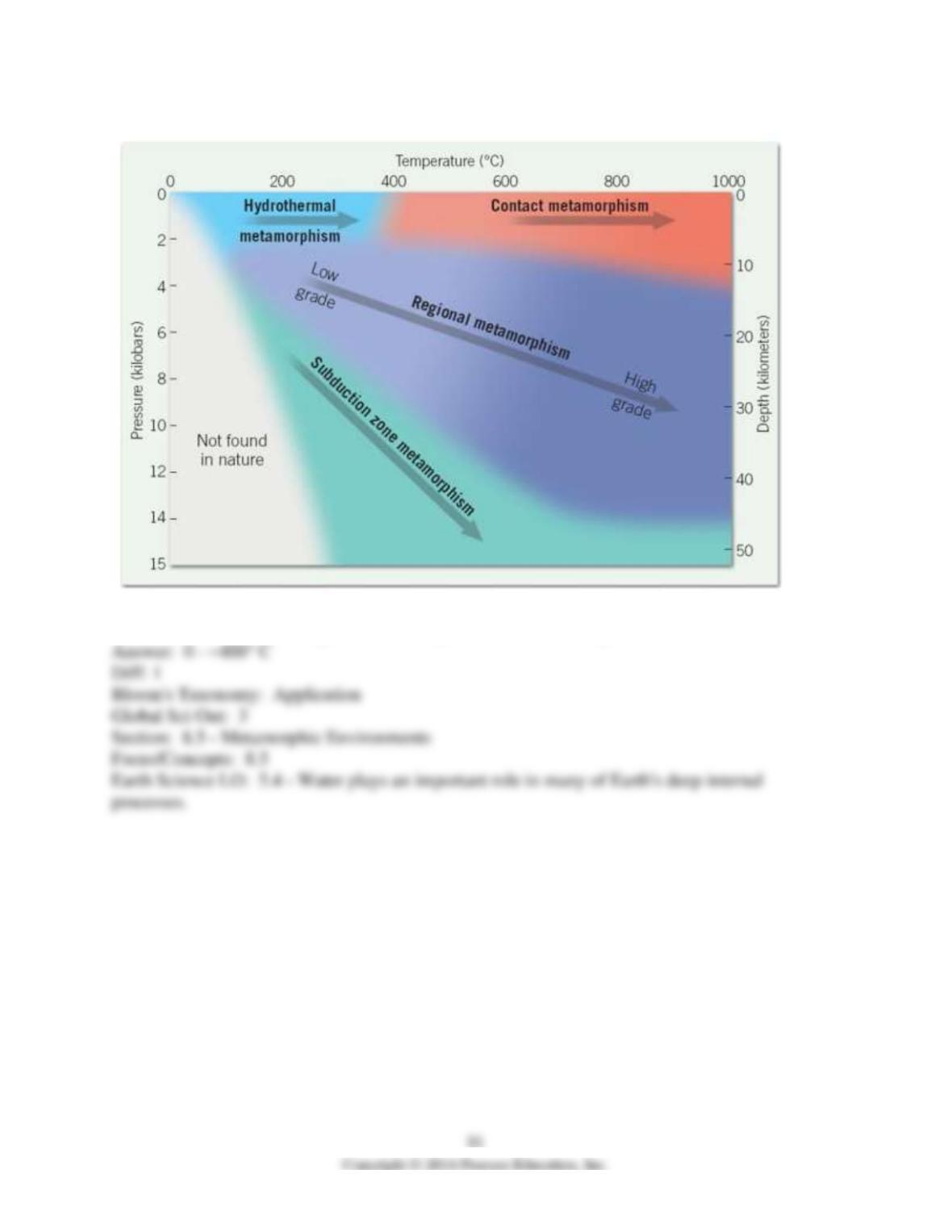
12)
What is the temperature range over which hydrothermal metamorphism will occur?
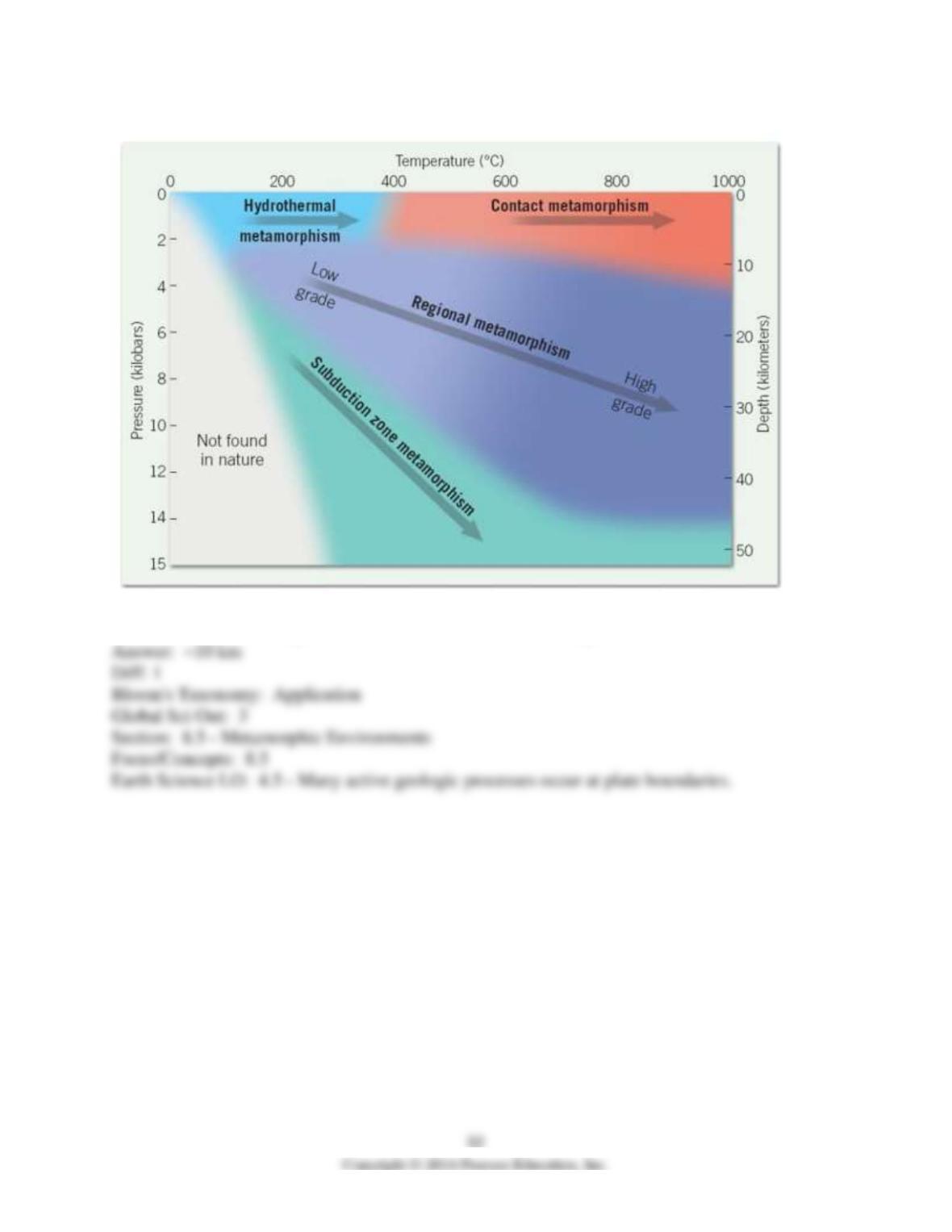
13)
What is the minimum depth at which subduction zone metamorphism will occur?
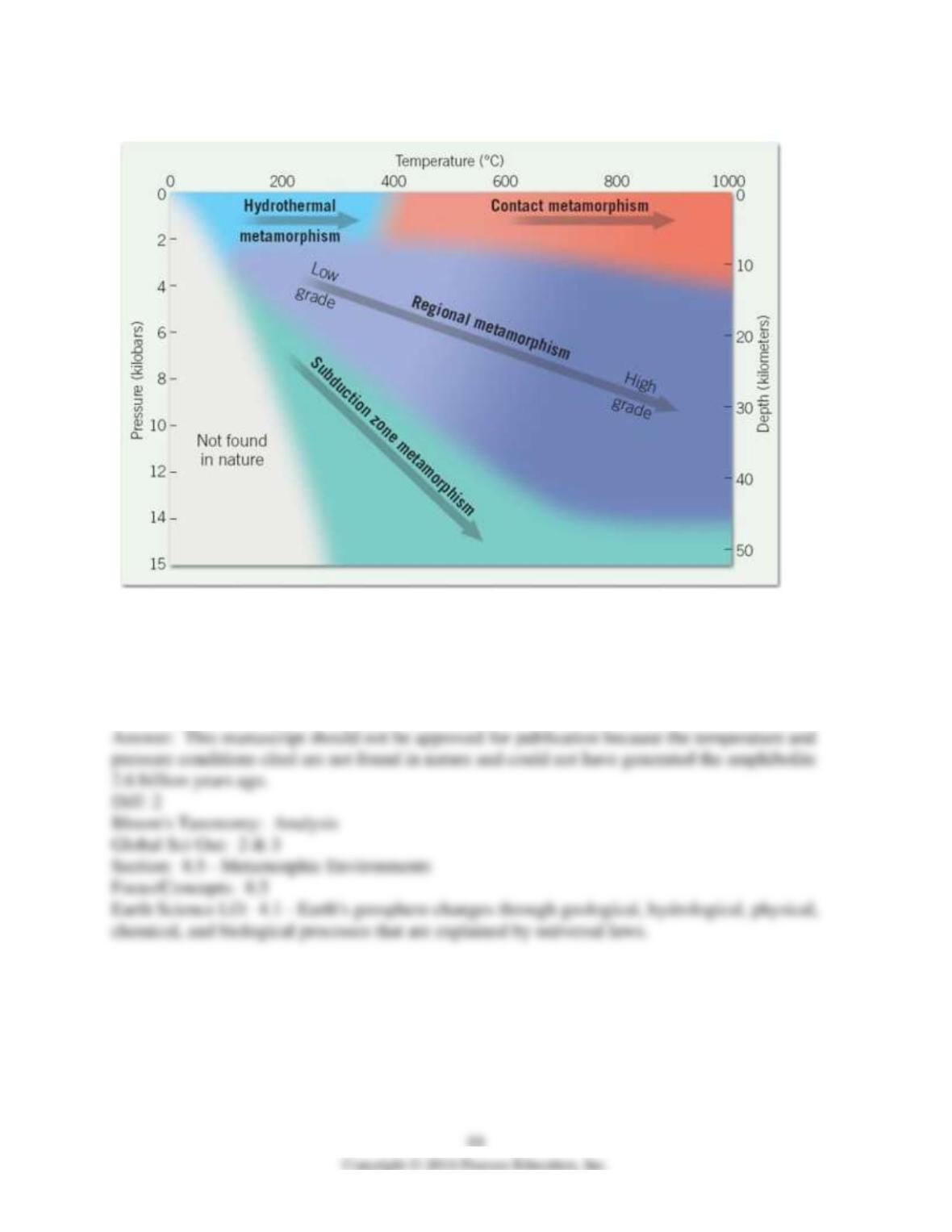
14)
You have been asked to review a manuscript that has been submitted for publication in a
professional journal. The area of interest in this article is an amphibolite exposed along the
Chippewa River at Jim Falls, WI. The researchers state that the amphibolite was believed that
have been altered 2.6 billion years ago by tectonic pressures of 14 kilobars and temperatures of
190° C. Should you approve this manuscript for publication? Why or why not?
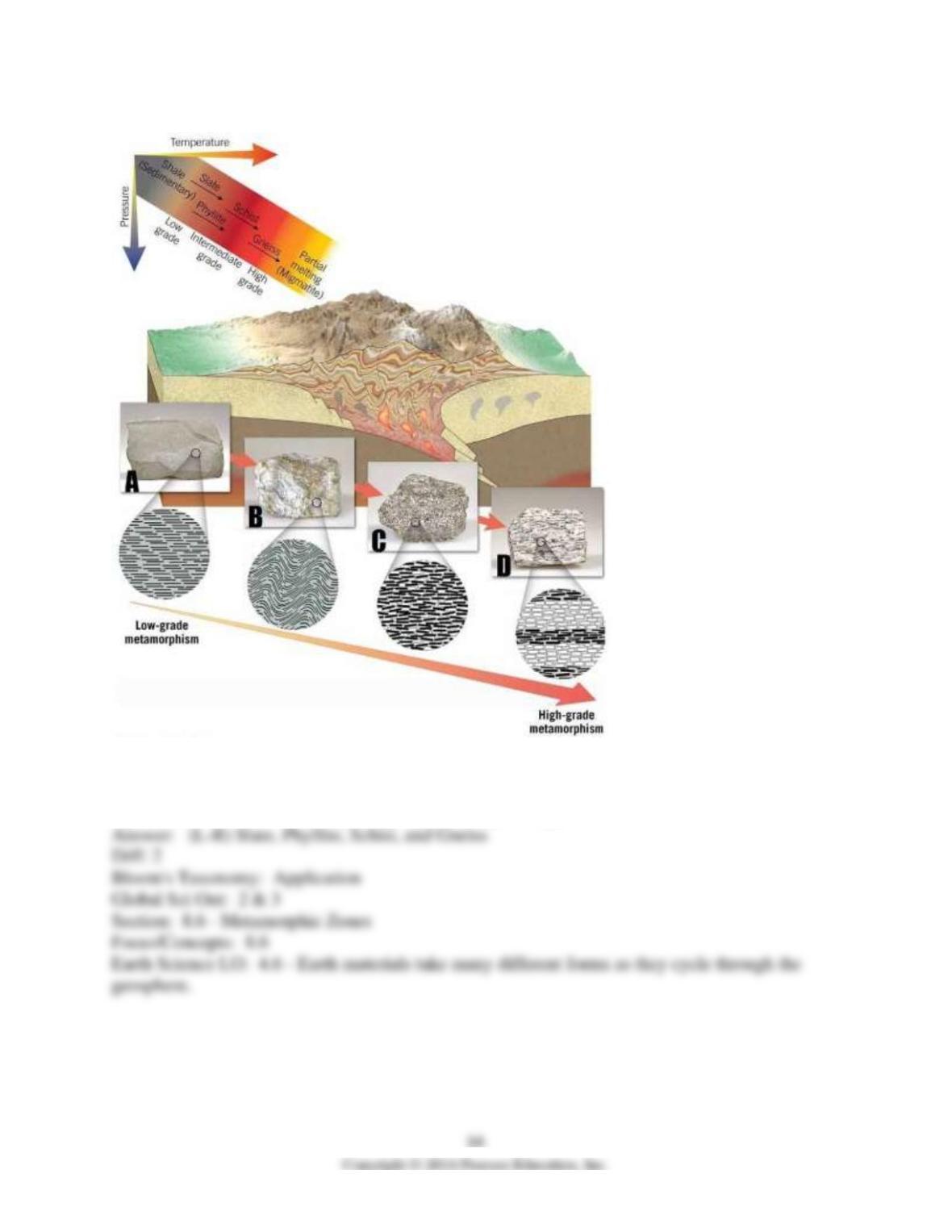
15)
Using the image above, list the appropriate metamorphic rocks in order of increasing
metamorphic grade starting with the parent rock of fine mudstones and shales. Assume this
figure is a cross-section of the geology approaching the Appalachian Mountains from the west.
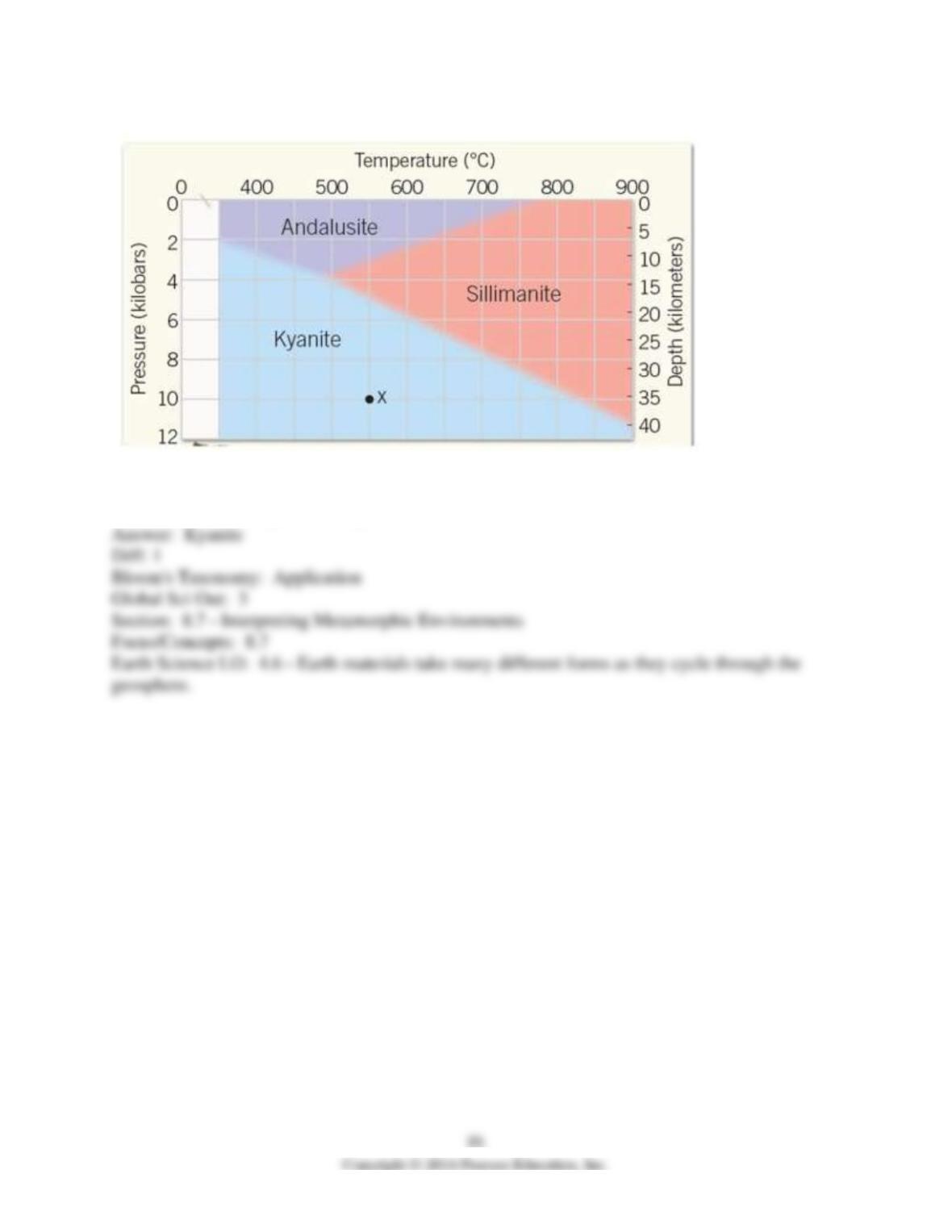
16)
If shale is buried to a depth of 35 km and the temperature were raised to 550° C, which mineral
would form according to the image above?
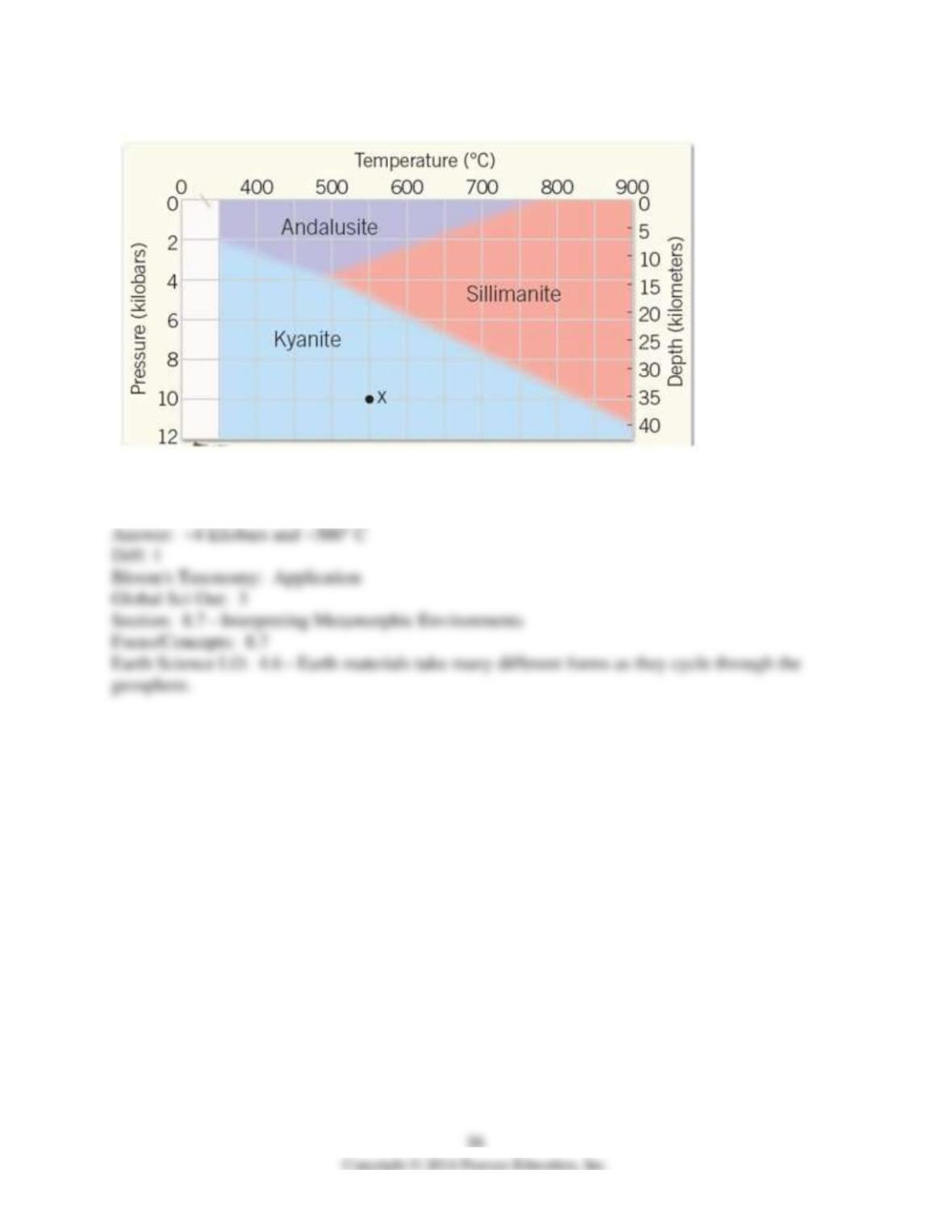
17)
At what temperature and pressure would Kyanite, Sillimanite, and Andalusite form
simultaneously?