
19
Match the sediment size with the appropriate rock. (Answers may be used more than once.)
A) Clay
B) Gravel
C) Silt
D) Sand
7) Breccia
Diff: 1
Bloom’s Taxonomy: Knowledge
Global Sci Out: 7
Section: 7.3 – Detrital Sedimentary Rocks
Focus/Concepts: 7.3
Earth Science LO: 4.6 – Earth materials take many different forms as they cycle through the
geosphere.
8) Graywacke
Diff: 1
Bloom’s Taxonomy: Knowledge
Global Sci Out: 7
Section: 7.3 – Detrital Sedimentary Rocks
Focus/Concepts: 7.3
Earth Science LO: 4.6 – Earth materials take many different forms as they cycle through the
geosphere.
9) Quartz Sandstone
Diff: 1
Bloom’s Taxonomy: Knowledge
Global Sci Out: 7
Section: 7.3 – Detrital Sedimentary Rocks
Focus/Concepts: 7.3
Earth Science LO: 4.6 – Earth materials take many different forms as they cycle through the
geosphere.
10) Siltstone
Diff: 1
Bloom’s Taxonomy: Knowledge
Global Sci Out: 7
Section: 7.3 – Detrital Sedimentary Rocks
Focus/Concepts: 7.3
Earth Science LO: 4.6 – Earth materials take many different forms as they cycle through the
geosphere.

11) Claystone
Diff: 1
Bloom’s Taxonomy: Knowledge
Global Sci Out: 7
Section: 7.3 – Detrital Sedimentary Rocks
Focus/Concepts: 7.3
Earth Science LO: 4.6 – Earth materials take many different forms as they cycle through the
geosphere.

Put the various grades of coal in order from lowest grade to highest grade. (Note: First refers to
lowest grade and Fourth refers to highest grade.)
A) Peat
B) Anthracite Coal
C) Lignite
D) Bituminous Coal
12) First
Diff: 1
Bloom’s Taxonomy: Knowledge
Global Sci Out: 7
Section: 7.5 – Coal: An Organic Sedimentary Rock
Focus/Concepts: 7.5
Earth Science LO: 6.8 – Life changes the physical and chemical properties of Earth’s geosphere,
hydrosphere, and atmosphere.
13) Second
Diff: 1
Bloom’s Taxonomy: Knowledge
Global Sci Out: 7
Section: 7.5 – Coal: An Organic Sedimentary Rock
Focus/Concepts: 7.5
Earth Science LO: 6.8 – Life changes the physical and chemical properties of Earth’s geosphere,
hydrosphere, and atmosphere.
14) Third
Diff: 1
Bloom’s Taxonomy: Knowledge
Global Sci Out: 7
Section: 7.5 – Coal: An Organic Sedimentary Rock
Focus/Concepts: 7.5
Earth Science LO: 6.8 – Life changes the physical and chemical properties of Earth’s geosphere,
hydrosphere, and atmosphere.
15) Fourth
Diff: 1
Bloom’s Taxonomy: Knowledge
Global Sci Out: 7
Section: 7.5 – Coal: An Organic Sedimentary Rock
Focus/Concepts: 7.5
Earth Science LO: 6.8 – Life changes the physical and chemical properties of Earth’s geosphere,
hydrosphere, and atmosphere.

Match the textural descriptions with the appropriate sedimentary composition.
A) Crystalline appearance.
B) Sub-angular clasts, poor sorting.
C) Black, fibrous material. Some layering.
16) Detrital
Diff: 2
Bloom’s Taxonomy: Comprehension
Global Sci Out: 2
Section: 7.7 – Classification of Sedimentary Rocks
Focus/Concepts: 7.7
Earth Science LO: 4.6 – Earth materials take many different forms as they cycle through the
geosphere.
17) Organic
Diff: 2
Bloom’s Taxonomy: Comprehension
Global Sci Out: 2
Section: 7.7 – Classification of Sedimentary Rocks
Focus/Concepts: 7.7
Earth Science LO: 4.6 – Earth materials take many different forms as they cycle through the
geosphere.
18) Chemical
Diff: 2
Bloom’s Taxonomy: Comprehension
Global Sci Out: 2
Section: 7.7 – Classification of Sedimentary Rocks
Focus/Concepts: 7.7
Earth Science LO: 4.6 – Earth materials take many different forms as they cycle through the
geosphere.

23
Match the environment of deposition with the appropriate category. Answers will be used more
than once.
A) Marine Environment
B) Transitional Environment
C) Continental Environment
19) Alluvial Fan
Diff: 1
Bloom’s Taxonomy: Knowledge
Global Sci Out: 7
Section: 7.8 – Sedimentary Rocks Represent Past Environments
Focus/Concepts: 7.8
Earth Science LO: 4.6 – Earth materials take many different forms as they cycle through the
geosphere & 5.6 – Water shapes landscapes.
20) Deep Marine
Diff: 1
Bloom’s Taxonomy: Knowledge
Global Sci Out: 7
Section: 7.8 – Sedimentary Rocks Represent Past Environments
Focus/Concepts: 7.8
Earth Science LO: 4.6 – Earth materials take many different forms as they cycle through the
geosphere & 5.6 – Water shapes landscapes.
21) Mudflat
Diff: 1
Bloom’s Taxonomy: Knowledge
Global Sci Out: 7
Section: 7.8 – Sedimentary Rocks Represent Past Environments
Focus/Concepts: 7.8
Earth Science LO: 4.6 – Earth materials take many different forms as they cycle through the
geosphere & 5.6 – Water shapes landscapes.
22) Swamp
Diff: 1
Bloom’s Taxonomy: Knowledge
Global Sci Out: 7
Section: 7.8 – Sedimentary Rocks Represent Past Environments
Focus/Concepts: 7.8
Earth Science LO: 4.6 – Earth materials take many different forms as they cycle through the
geosphere & 5.6 – Water shapes landscapes.

23) Fluvial
Diff: 1
Bloom’s Taxonomy: Knowledge
Global Sci Out: 7
Section: 7.8 – Sedimentary Rocks Represent Past Environments
Focus/Concepts: 7.8
Earth Science LO: 4.6 – Earth materials take many different forms as they cycle through the
geosphere & 5.6 – Water shapes landscapes.
24) Beach
Diff: 1
Bloom’s Taxonomy: Knowledge
Global Sci Out: 7
Section: 7.8 – Sedimentary Rocks Represent Past Environments
Focus/Concepts: 7.8
Earth Science LO: 4.6 – Earth materials take many different forms as they cycle through the
geosphere & 5.6 – Water shapes landscapes.
25) Lacustrine
Diff: 1
Bloom’s Taxonomy: Knowledge
Global Sci Out: 7
Section: 7.8 – Sedimentary Rocks Represent Past Environments
Focus/Concepts: 7.8
Earth Science LO: 4.6 – Earth materials take many different forms as they cycle through the
geosphere & 5.6 – Water shapes landscapes.
26) Reef
Diff: 1
Bloom’s Taxonomy: Knowledge
Global Sci Out: 7
Section: 7.8 – Sedimentary Rocks Represent Past Environments
Focus/Concepts: 7.8
Earth Science LO: 4.6 – Earth materials take many different forms as they cycle through the
geosphere & 5.6 – Water shapes landscapes.
7.5 Essay Questions
1) Explain how the intrusive igneous rock granite can go from a crystalline igneous rock to a
sediment to a sedimentary rock.
2) Explain how the size, shape, and sorting of sediments can provide information about the
distance the sediment has traveled from its source.
3) One common science project for children is to grow sugar crystals on a string dangling in a jar
of sugar water. Explain how this experiment works. Compare and contrast this experiment to the
current environmental conditions present around the Bahamas. What kind of rocks would you
expect to be forming there?
4) Compare and contrast how the formation of biochemical sediments differs from the formation
of inorganic sediments. (Note: “Inorganic sediments” refers to those formed in chemical
sedimentary rocks.)
5) If coal is composed of organic materials, what prevents them from decaying before they
become a sedimentary rock?
6) When studying sedimentary rocks, it is important to understand their environment of
deposition. What is the environment of deposition and how can it contribute information about
the geologic history of the rock?
7) The River Loop Trail at Black Hawk State Historic Site in Rock Island, IL, has exposures
revealing nearly 130 million years of geologic history. At the base of the hill is Devonian-aged
limestone containing brachiopods and bryozoans. Above the limestone is Pennsylvanian-aged
shale, with an unconformity between the two. The black shale is rich with fossils of ferns and
marsh grasses. Directly on top of the shale is Pennsylvanian-aged sandstone. Using the geologic
materials described, determine the environment of deposition for each unit. How has the overall
environment changed from the Devonian to the end of the Pennsylvanian?
8) The Grinnell Formation in Glacier National Park contains mudcracks that date back nearly 1.5
billion years. How could these delicate structures have been preserved for so long?
9) How will the current cycle of climate change affect the rate of transfer of CO2 between the
geosphere, hydrosphere, and atmosphere?
7.6 Visual
1)
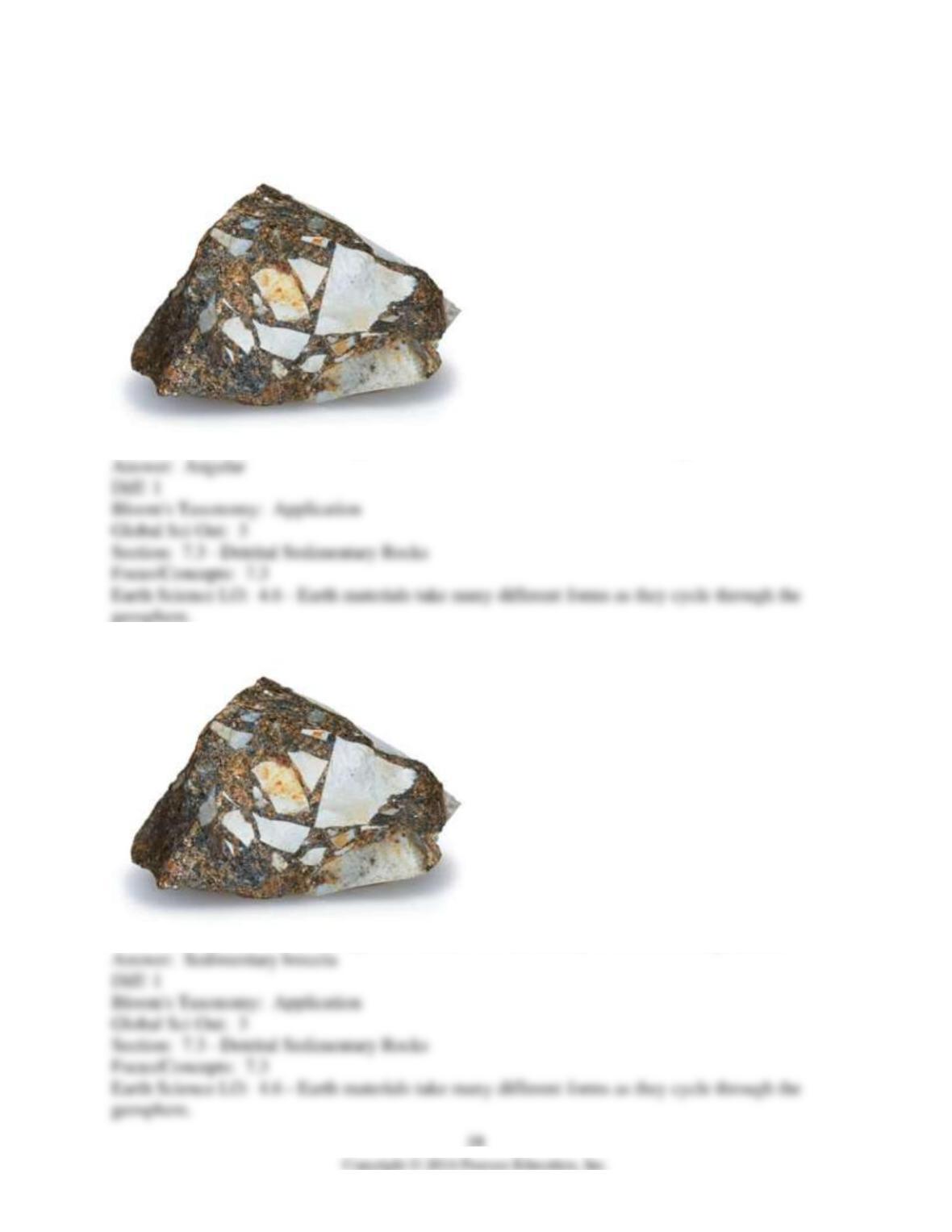
How would you describe the shape of the clasts in the rock in the above image?
2)
Would the rock in the above image be considered a sedimentary breccia or a conglomerate?
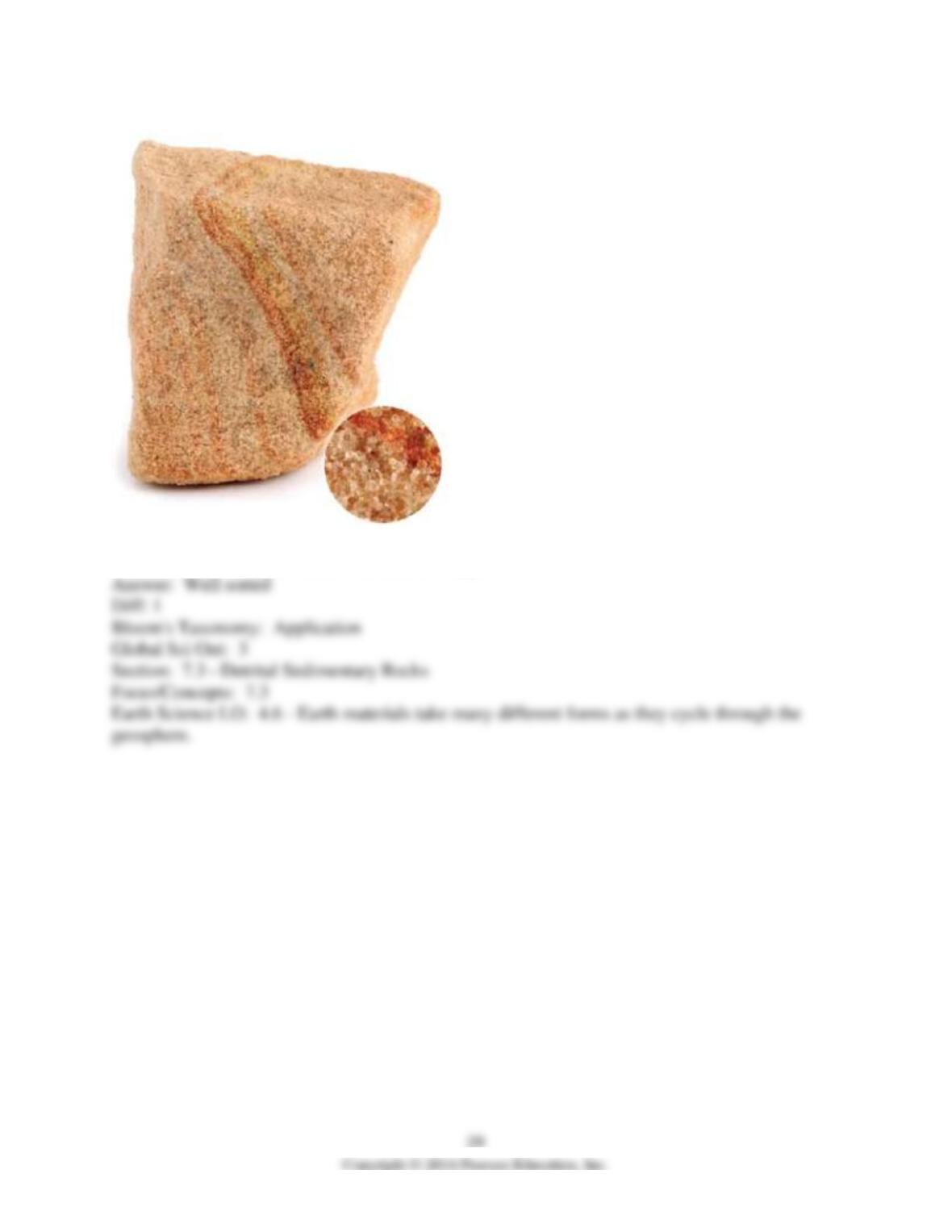
3)
What kind of sorting is visible in the above image?
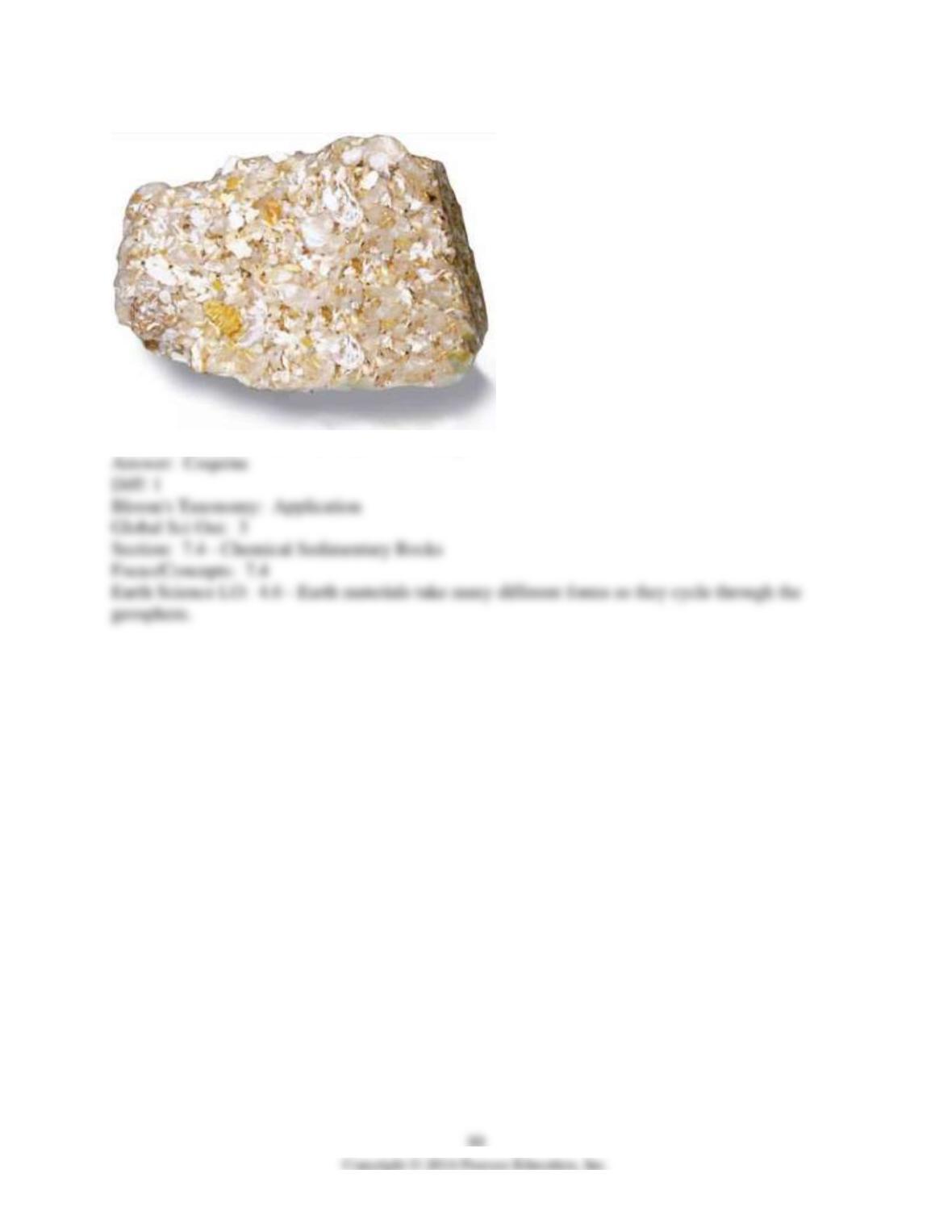
4)
What is the name of the rock in the above image?
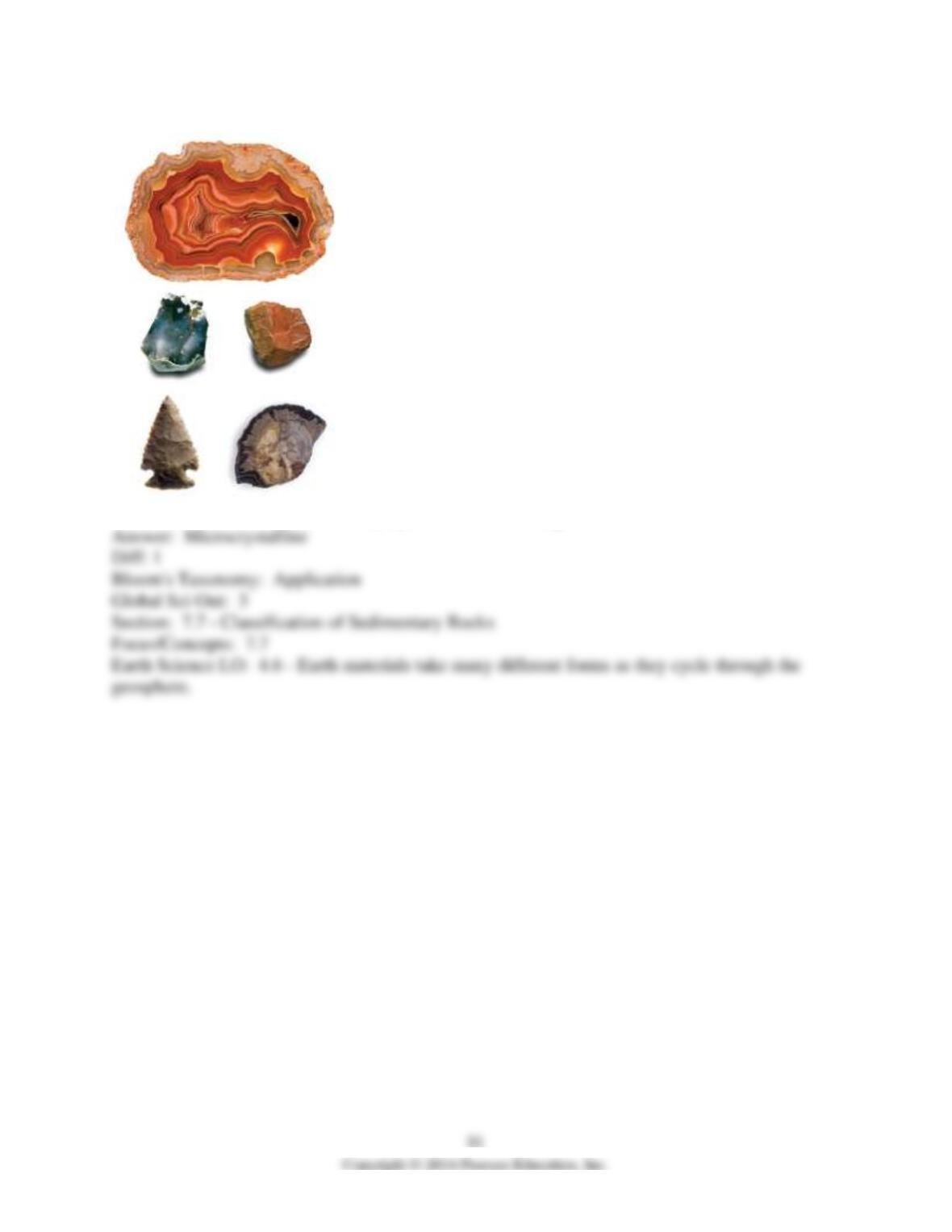
5)
What is the sedimentary texture displayed in the above image?
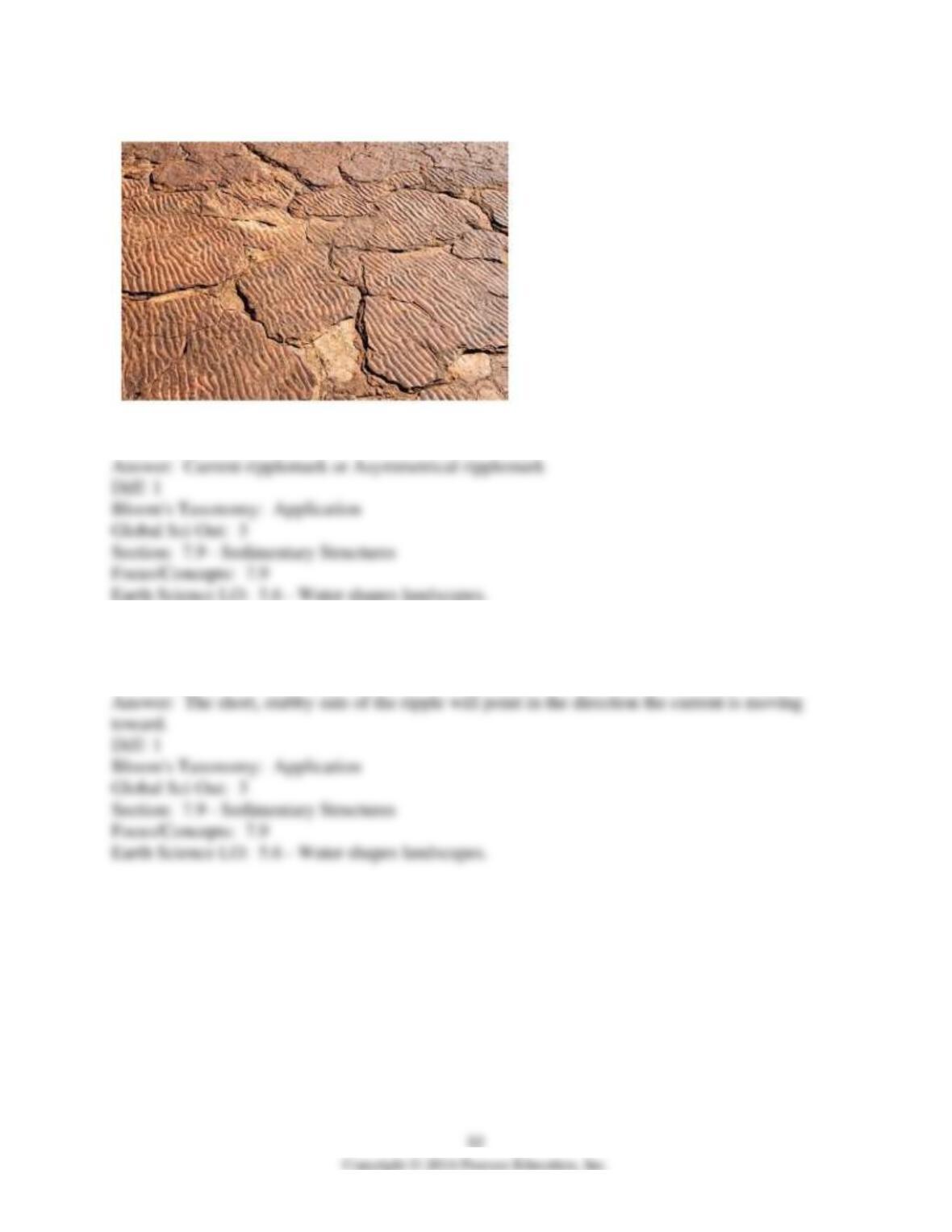
6)
What sedimentary structure is visible in the above image?
7) Assume the left side of the ripple is long with a gentle slope and the right side of the ripple is
short and has a steep slope. Which direction was the current flowing toward when this structure
was created?
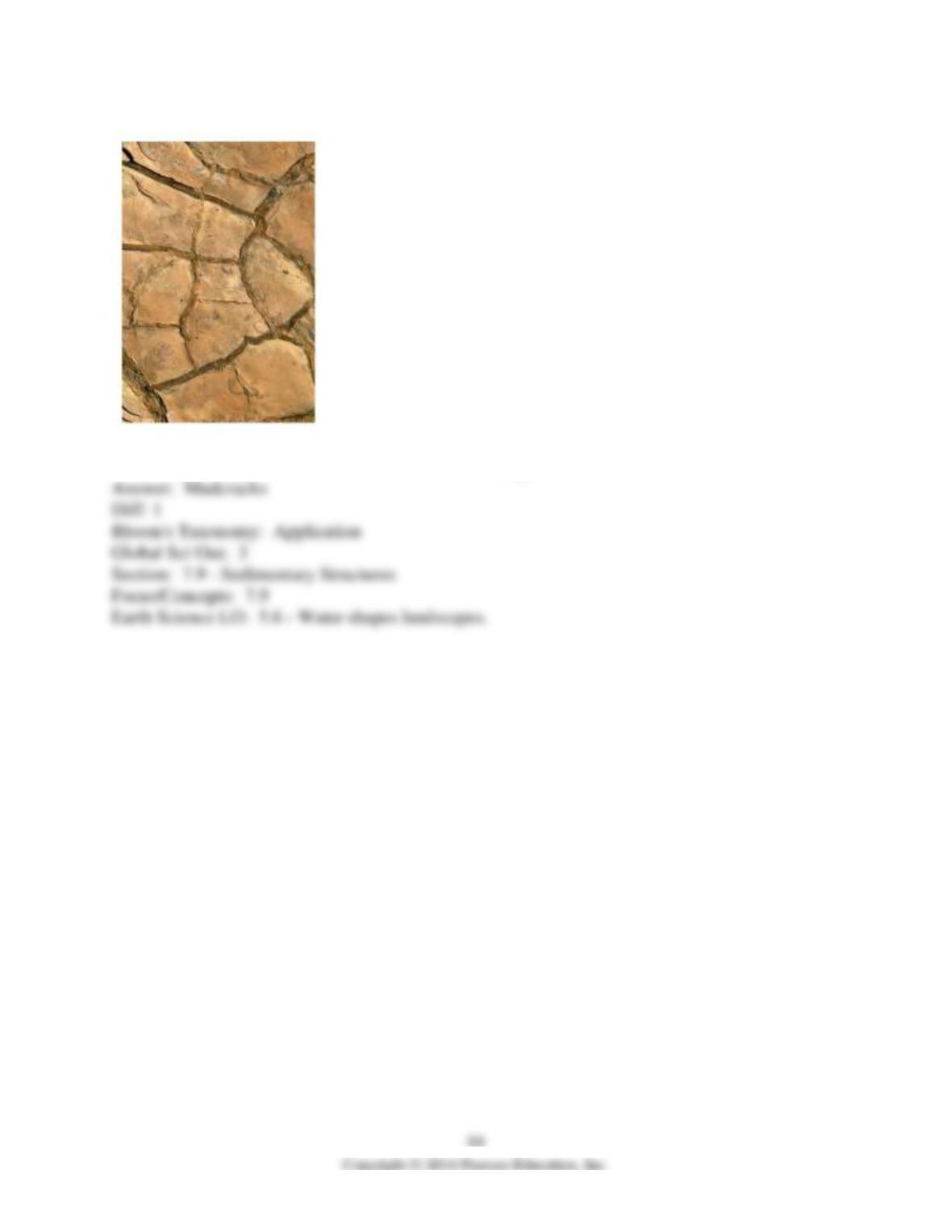
8)
What sedimentary structure is visible in the above image?
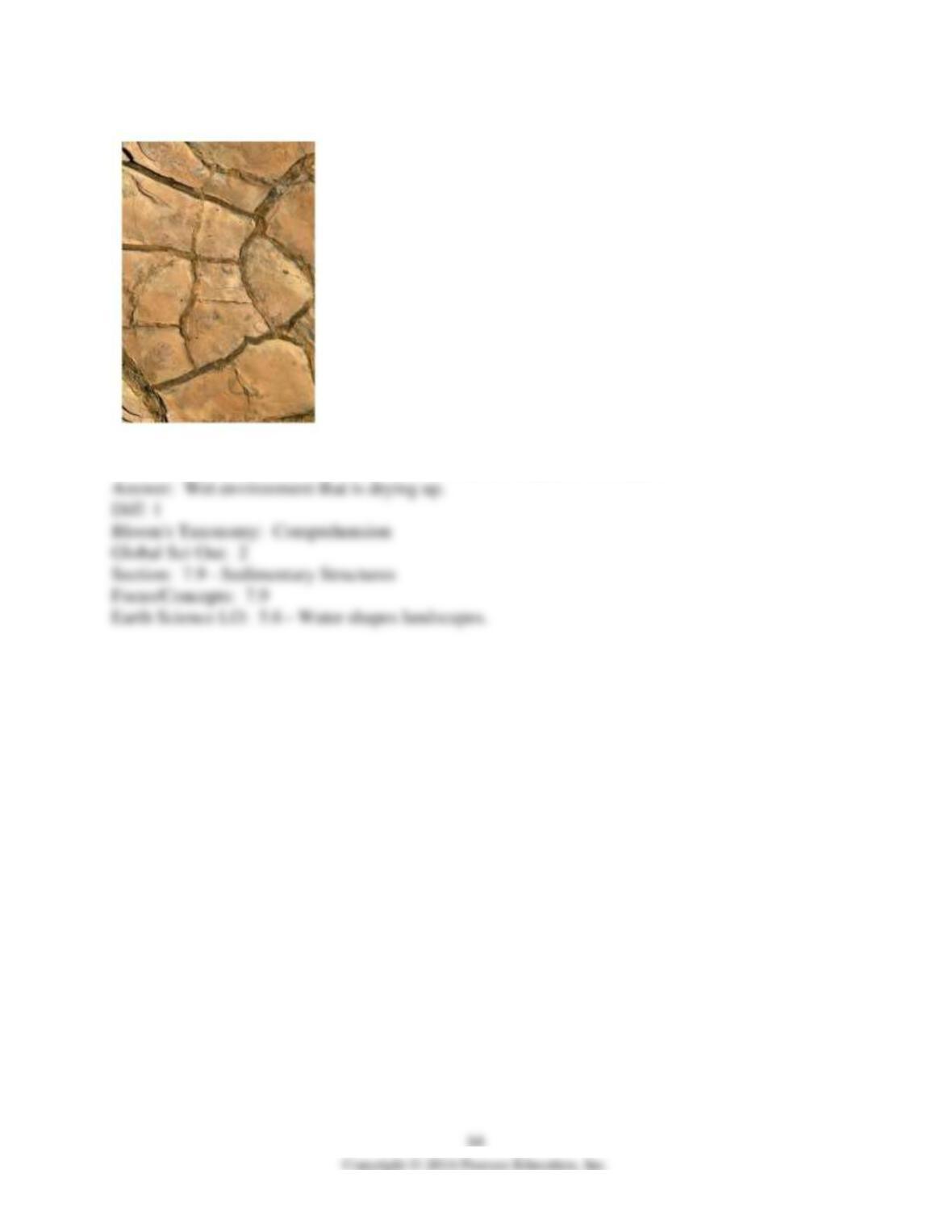
9)
What does the presence of mudcracks indicate about the paleoenvironment?
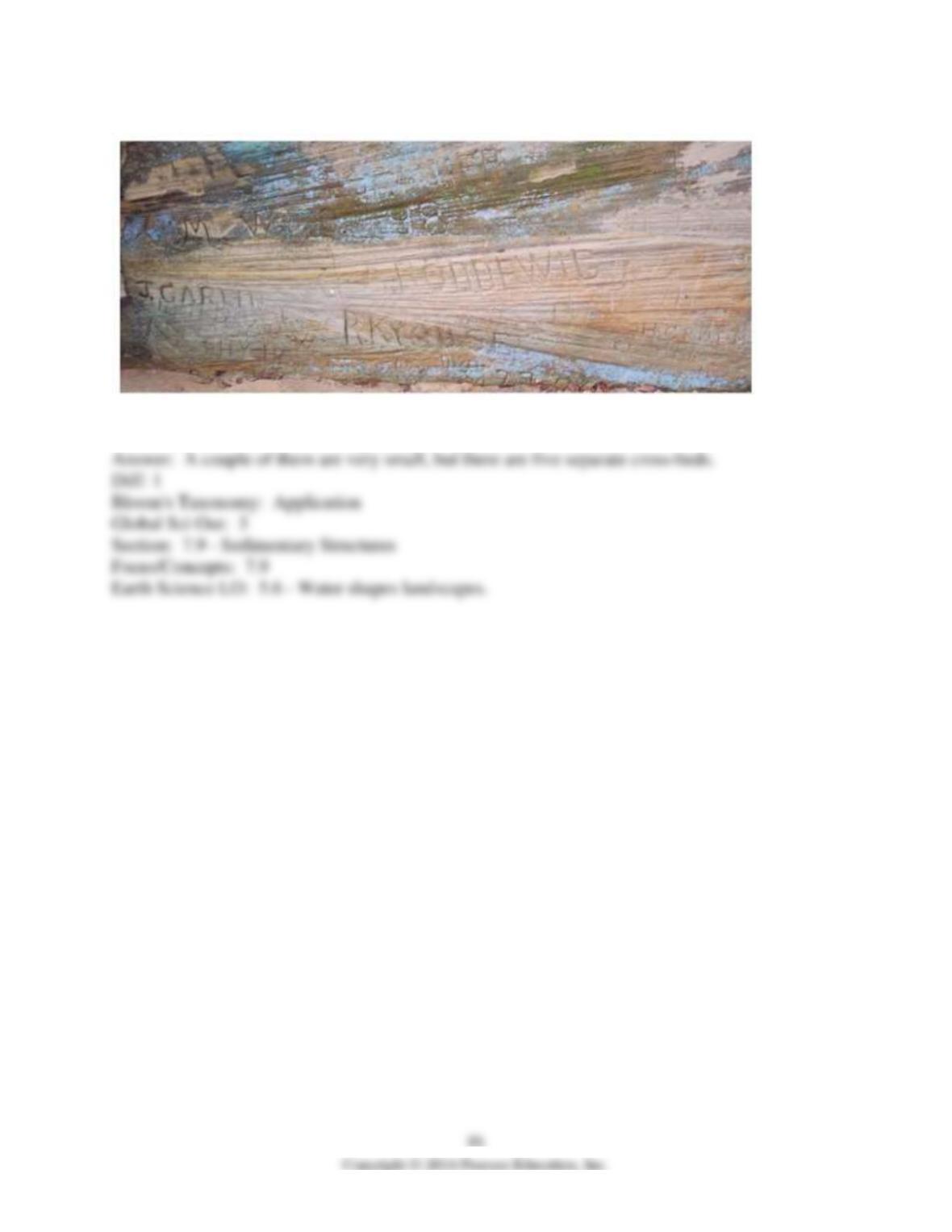
10)
How many sets of cross-beds are present in Figure 7?