
Match the chemical weathering process with the correct definition.
A) Minerals dissolved in acidic water
B) Positive ions lose electrons to Oxygen
C) Positive ions are replaced with H+ or OH–
5) Dissolution
Diff: 1
Bloom’s Taxonomy: Knowledge
Global Sci Out: 7
Section: 6.3 – Chemical Weathering
Focus/Concepts: 6.4
Earth Science LO: 4.1 – Earth’s geosphere changes through geological, hydrological, physical,
chemical, and biological processes that are explained by universal laws.
6) Oxidation
Diff: 1
Bloom’s Taxonomy: Knowledge
Global Sci Out: 7
Section: 6.3 – Chemical Weathering
Focus/Concepts: 6.4
Earth Science LO: 4.1 – Earth’s geosphere changes through geological, hydrological, physical,
chemical, and biological processes that are explained by universal laws.
7) Hydrolysis
Diff: 1
Bloom’s Taxonomy: Knowledge
Global Sci Out: 7
Section: 6.3 – Chemical Weathering
Focus/Concepts: 6.4
Earth Science LO: 4.1 – Earth’s geosphere changes through geological, hydrological, physical,
chemical, and biological processes that are explained by universal laws.

20
Match the soil horizon with the correct definition.
A) Consists largely of organic material
B) Partially altered parent material
C) Accumulation of clay particles from above
D) Composed of humus and mineral material
E) Light-colored, depleted of soluble materials
8) O Horizon
Diff: 1
Bloom’s Taxonomy: Knowledge
Global Sci Out: 7
Section: 6.7 – The Soil Profile
Focus/Concepts: 6.7
Earth Science LO: 7.6 – Soil, rocks, and minerals provide essential metals and other materials
for agriculture, manufacturing, and building.
9) E Horizon
Diff: 1
Bloom’s Taxonomy: Knowledge
Global Sci Out: 7
Section: 6.7 – The Soil Profile
Focus/Concepts: 6.7
Earth Science LO: 7.6 – Soil, rocks, and minerals provide essential metals and other materials
for agriculture, manufacturing, and building.
10) C Horizon
Diff: 1
Bloom’s Taxonomy: Knowledge
Global Sci Out: 7
Section: 6.7 – The Soil Profile
Focus/Concepts: 6.7
Earth Science LO: 7.6 – Soil, rocks, and minerals provide essential metals and other materials
for agriculture, manufacturing, and building.
11) A Horizon
Diff: 1
Bloom’s Taxonomy: Knowledge
Global Sci Out: 7
Section: 6.7 – The Soil Profile
Focus/Concepts: 6.7
Earth Science LO: 7.6 – Soil, rocks, and minerals provide essential metals and other materials
for agriculture, manufacturing, and building.

12) B Horizon
Diff: 1
Bloom’s Taxonomy: Knowledge
Global Sci Out: 7
Section: 6.7 – The Soil Profile
Focus/Concepts: 6.7
Earth Science LO: 7.6 – Soil, rocks, and minerals provide essential metals and other materials
for agriculture, manufacturing, and building.

Match the soil order with the environment in which it will form.
A) Permafrost
B) Grasslands
C) Conifer regions
D) Wetlands
13) Gelisol
Diff: 1
Bloom’s Taxonomy: Knowledge
Global Sci Out: 7
Section: 6.8 – Classifying Soils
Focus/Concepts: 6.8
Earth Science LO: 7.6 – Soil, rocks, and minerals provide essential metals and other materials
for agriculture, manufacturing, and building.
14) Histosol
Diff: 1
Bloom’s Taxonomy: Knowledge
Global Sci Out: 7
Section: 6.8 – Classifying Soils
Focus/Concepts: 6.8
Earth Science LO: 7.6 – Soil, rocks, and minerals provide essential metals and other materials
for agriculture, manufacturing, and building.
15) Spodosol
Diff: 1
Bloom’s Taxonomy: Knowledge
Global Sci Out: 7
Section: 6.8 – Classifying Soils
Focus/Concepts: 6.8
Earth Science LO: 7.6 – Soil, rocks, and minerals provide essential metals and other materials
for agriculture, manufacturing, and building.
16) Mollisols
Diff: 1
Bloom’s Taxonomy: Knowledge
Global Sci Out: 7
Section: 6.8 – Classifying Soils
Focus/Concepts: 6.8
Earth Science LO: 7.6 – Soil, rocks, and minerals provide essential metals and other materials
for agriculture, manufacturing, and building.

23
Put the phenomena associated with soil erosion in order from first to last.
A) Stream
B) Gullying
C) Sheet Erosion
D) Rain Drop Impact
E) Rilling
17) First
Diff: 1
Bloom’s Taxonomy: Knowledge
Global Sci Out: 7
Section: 6.9 – Human Activities Impact Soil
Focus/Concepts: 6.9
Earth Science LO: 4.8 – Weathered and unstable rock materials erode from some parts of Earth’s
surface and are deposited in others.
18) Second
Diff: 1
Bloom’s Taxonomy: Knowledge
Global Sci Out: 7
Section: 6.9 – Human Activities Impact Soil
Focus/Concepts: 6.9
Earth Science LO: 4.8 – Weathered and unstable rock materials erode from some parts of Earth’s
surface and are deposited in others.
19) Third
Diff: 1
Bloom’s Taxonomy: Knowledge
Global Sci Out: 7
Section: 6.9 – Human Activities Impact Soil
Focus/Concepts: 6.9
Earth Science LO: 4.8 – Weathered and unstable rock materials erode from some parts of Earth’s
surface and are deposited in others.
20) Fourth
Diff: 1
Bloom’s Taxonomy: Knowledge
Global Sci Out: 7
Section: 6.9 – Human Activities Impact Soil
Focus/Concepts: 6.9
Earth Science LO: 4.8 – Weathered and unstable rock materials erode from some parts of Earth’s
surface and are deposited in others.
21) Fifth
Diff: 1
Bloom’s Taxonomy: Knowledge
Global Sci Out: 7
Section: 6.9 – Human Activities Impact Soil
Focus/Concepts: 6.9
Earth Science LO: 4.8 – Weathered and unstable rock materials erode from some parts of Earth’s
surface and are deposited in others.
6.5 Essay Questions
1) Because weathering involves the destruction of geologic materials, many people view the
process as a bad thing. However, weathering can also be viewed as a positive process. Provide an
example of one positive aspect of weathering that makes the processes not only important, but
necessary. Explain.
2) A burrowing animal is digging its tunnel through the C horizon of a soil, where identifiable
pieces of bedrock still exist. As burrowing continues, these pieces of bedrock are kicked out
toward the surface with the rest of the burrowed sediment, where it will be exposed to the sun,
wind, and rain. Does this make the burrowing animal an agent of weathering or an agent of
erosion? Explain.
3) Evaluate the following statement: “Humans are agents of weathering and erosion.” Explain.
Also, state whether you agree or disagree.
4) A brick factory used to be located along the Eau Claire River in Eau Claire, WI. Waste
materials and faulty bricks were piled along the banks of the river, some of which fell into the
water. Decades later, some of these materials were removed. The bricks were still recognizable
as bricks, some with the manufacturer’s mark clearly visible on the front, but the edges and
corners were worn smooth. Explain how the processes of weathering are changing the shape of
this rock and why.
5) Using the order of crystallization on the Bowen’s Reaction Series, rate the resistance of
silicate minerals to chemical weathering. In other words, which mineral(s) weather first and
why? And last?
6) Explain why climate is considered to be the most influential control of soil formation.
7) Compare and contrast the state of soil development at the following three locations:
mountaintops, foothills, bottomlands.
8) Using what you know about the local agricultural practices, topography, and climate, evaluate
which erosion control practices would be best suited for your area.
9) Explain why tropical rainforest soils are poor for farming.
10) The Dust Bowl disaster of the 1930s was one of the greatest ecological and agricultural
disasters in American history, resulting in thousands of deaths and a historic mass migration. The
causes of the Dust Bowl, however, were both natural and man-made. Discuss the causes of the
Dust Bowl and rate their severity. In your opinion, which do you think were the most powerful
and did the most damage to the soil?
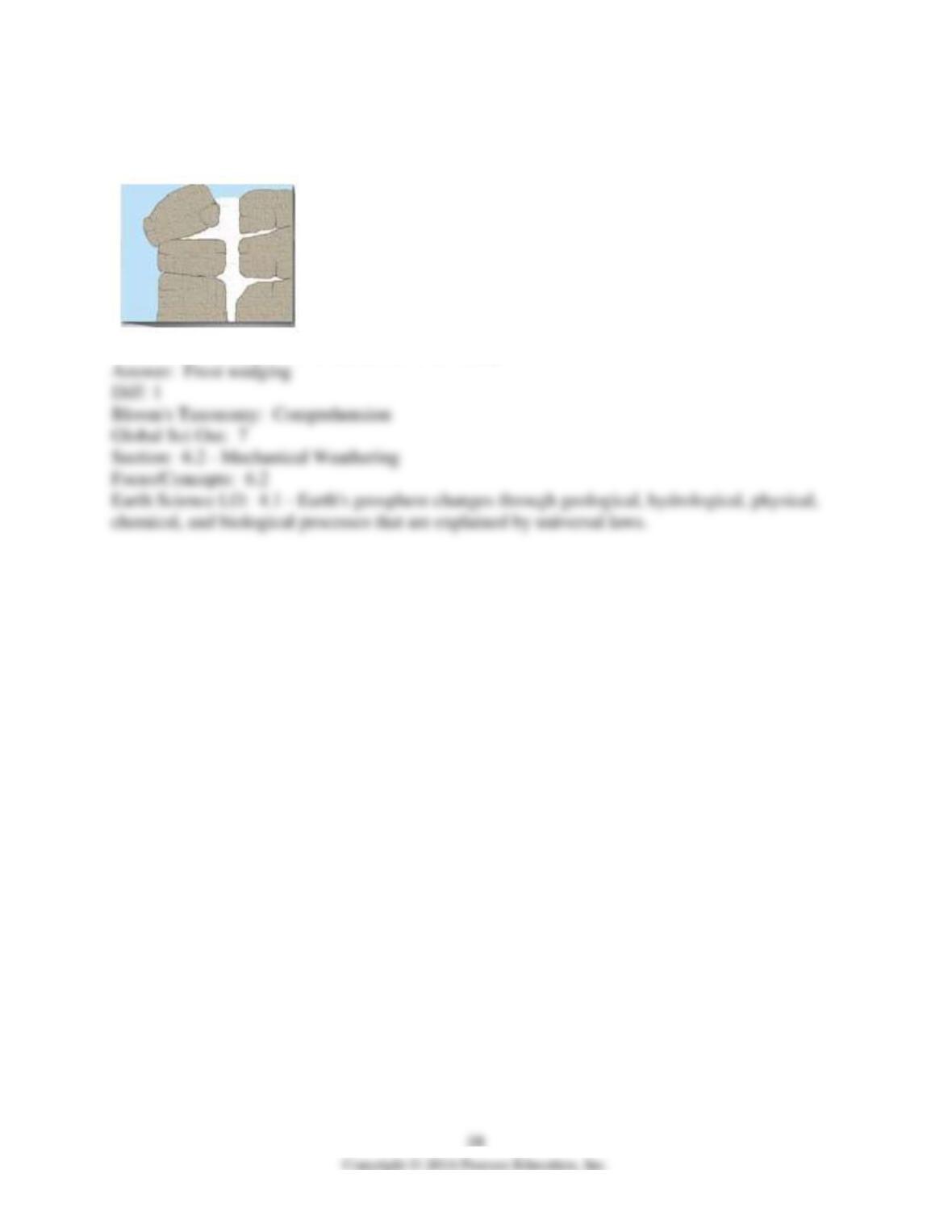
6.6 Visual
1)
Which weathering process is illustrated in this image?
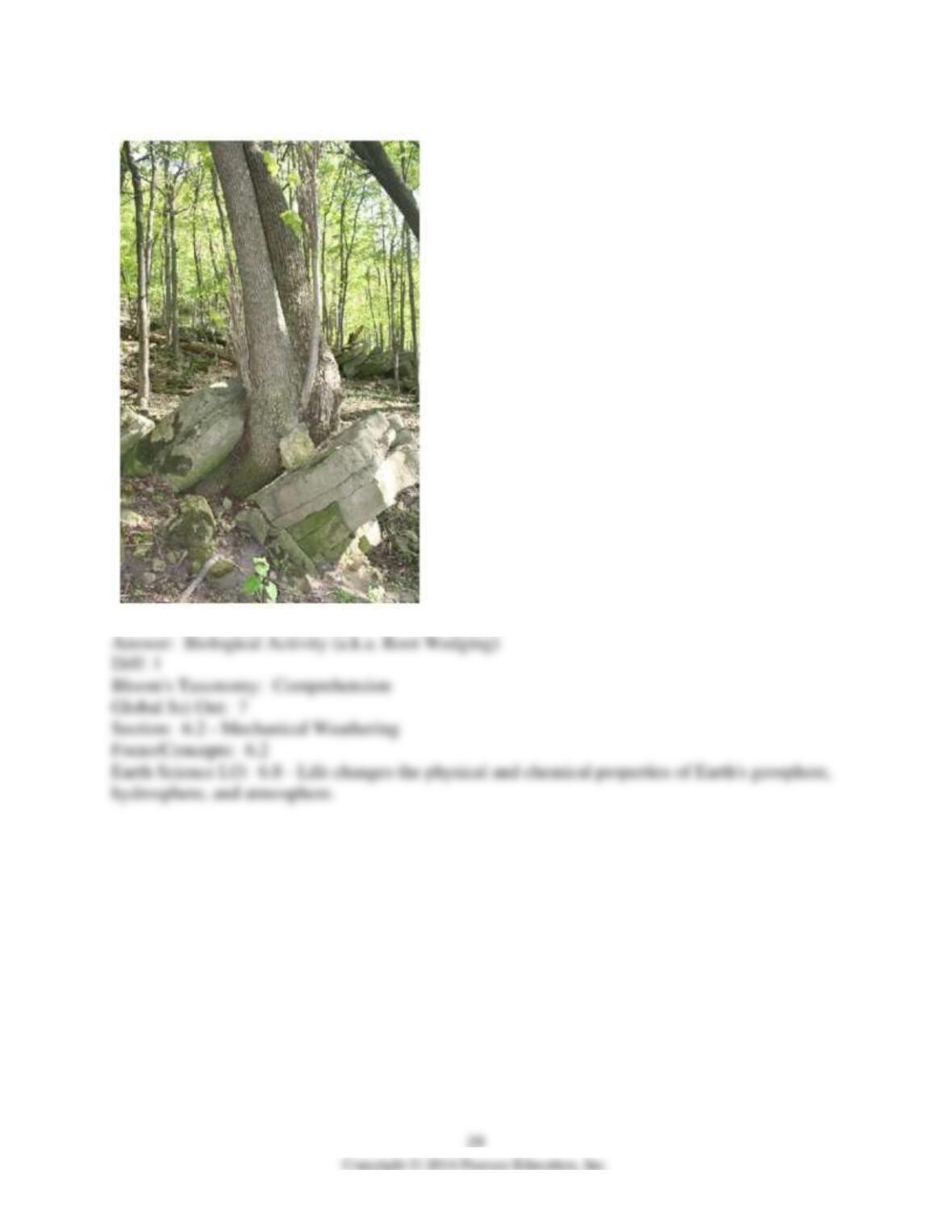
2)
Which weathering process is illustrated in the photo above?
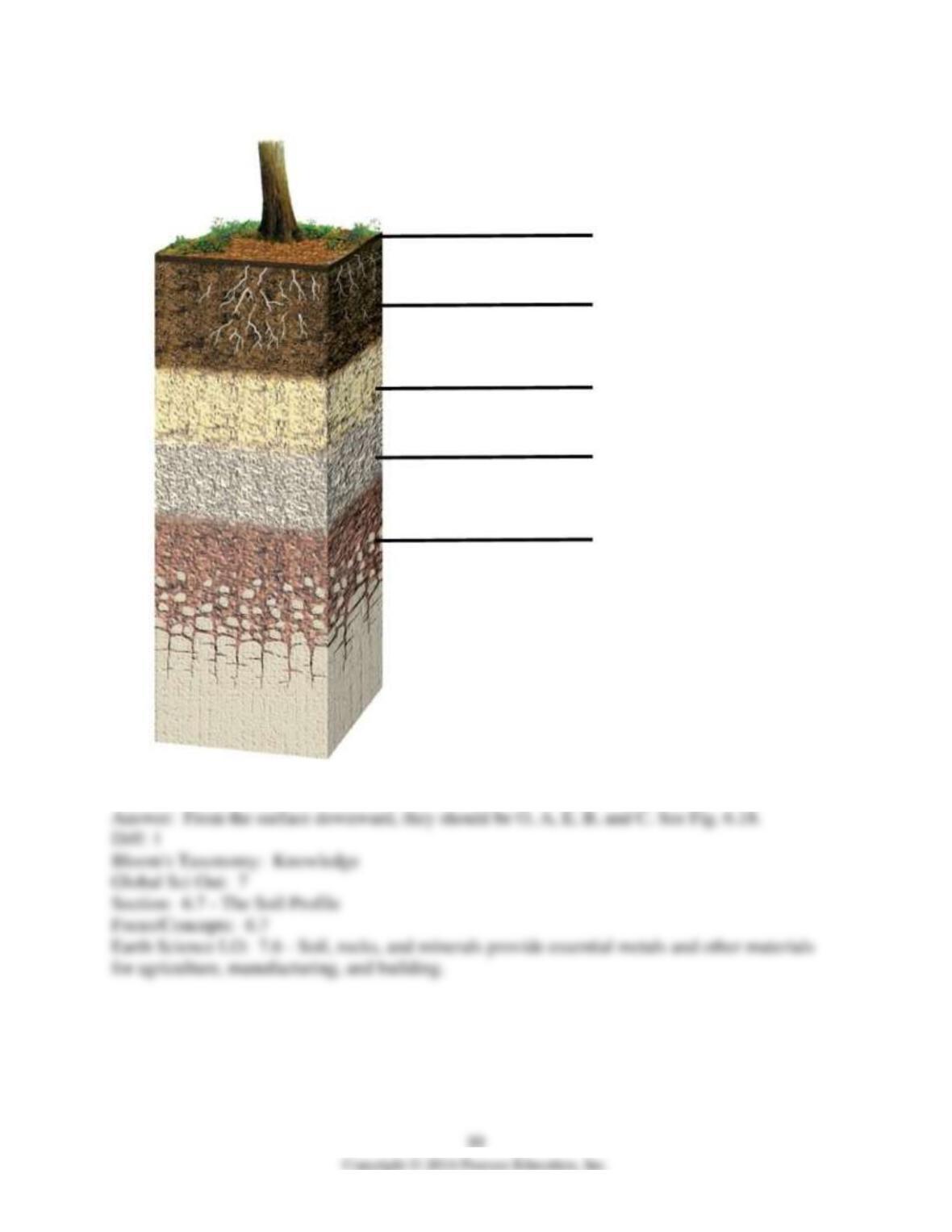
3)
Using the image above, label the five soil horizons from the surface downward.
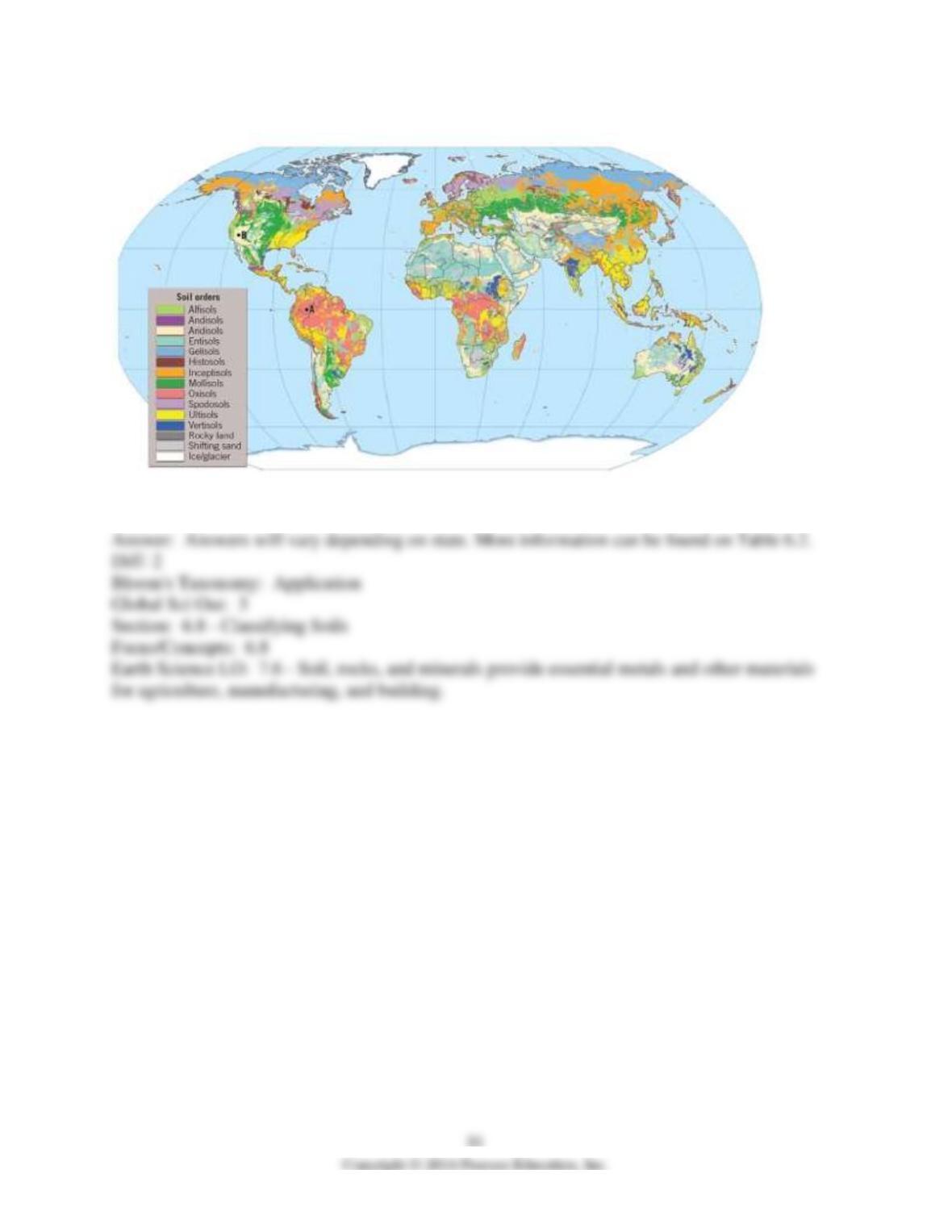
4)
Using the above image, identify the soil order(s) present in your region of the country. Provide a
brief description for each soil order.”
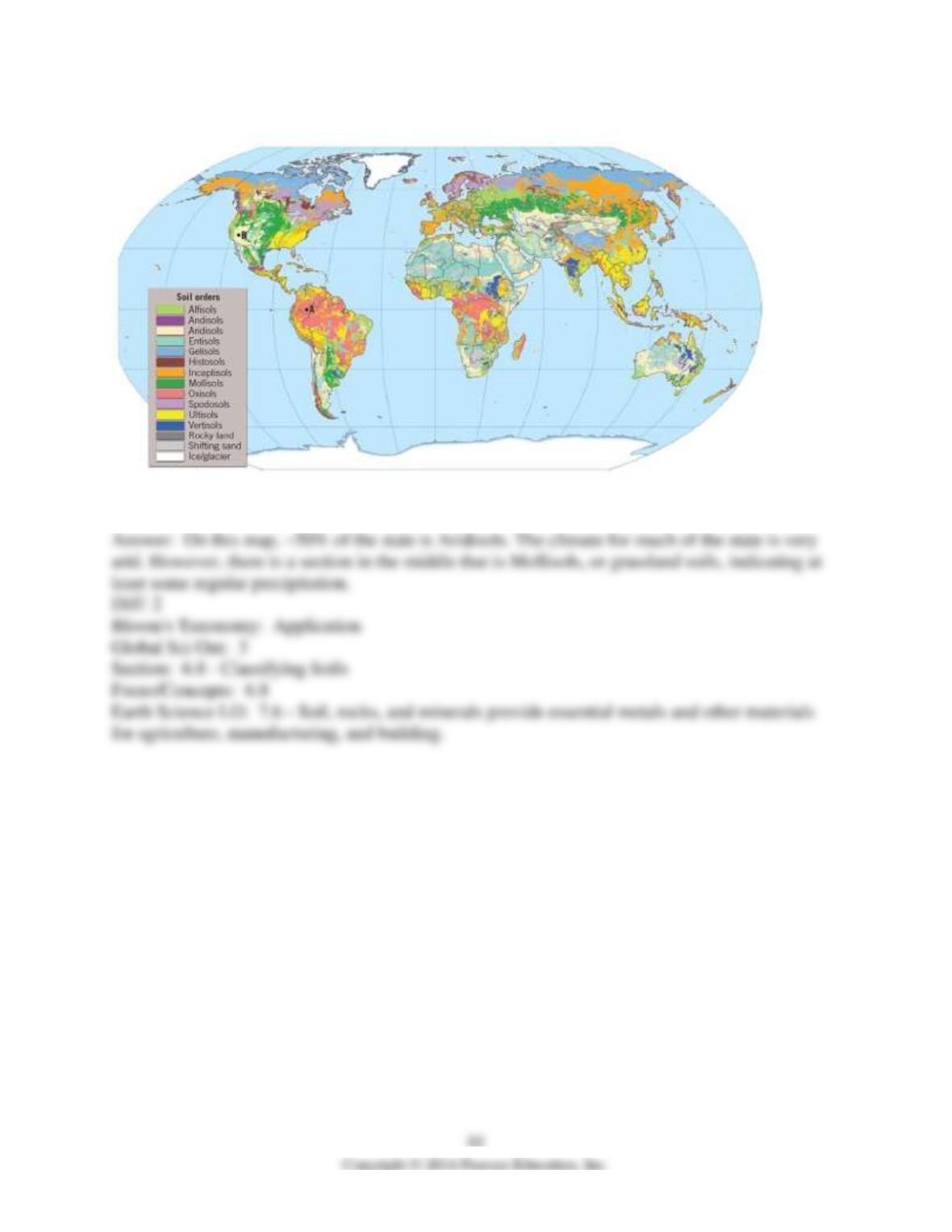
5)
Look at the soil orders around Point B in North America. How would you describe the climatic
conditions present in that part of the continent?”
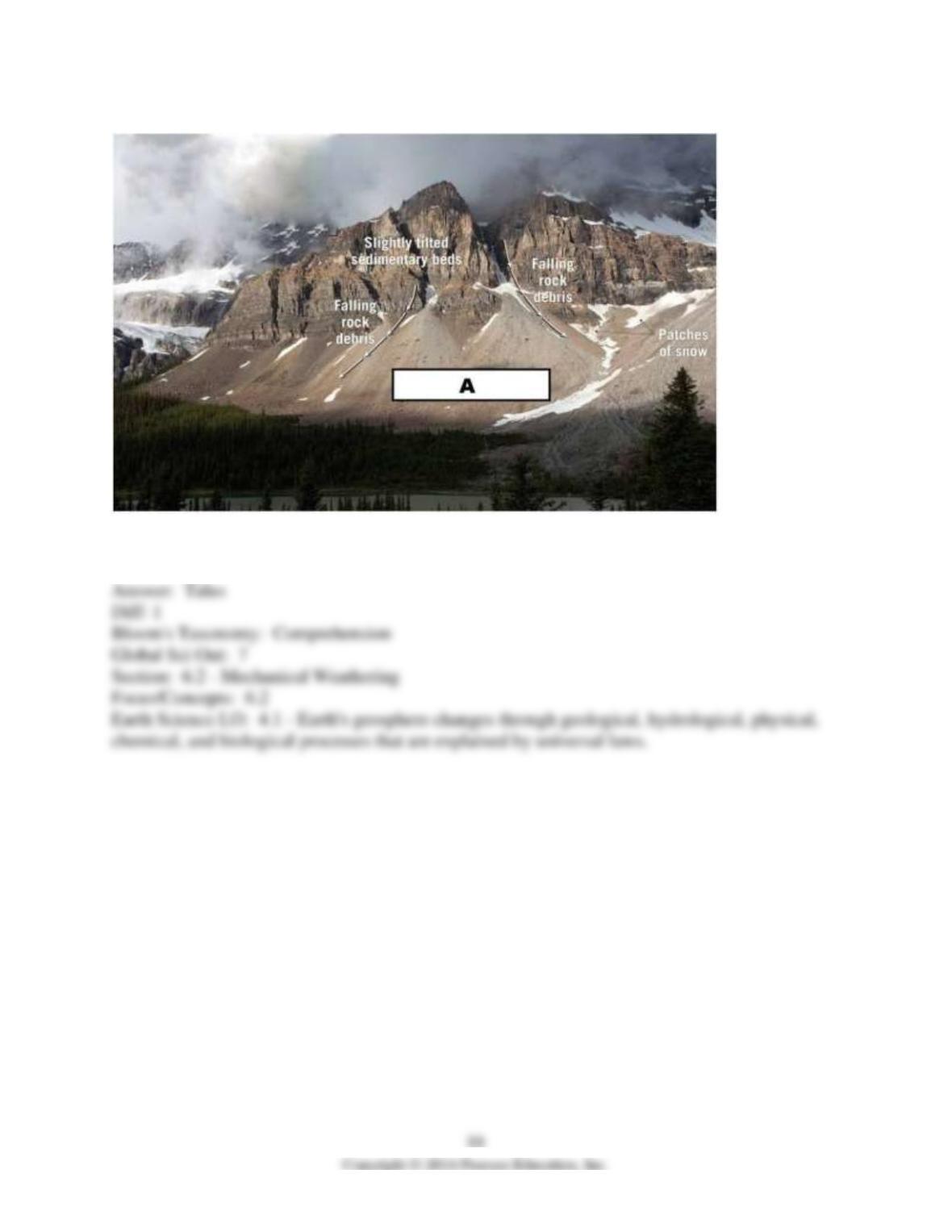
6)
What is the name of the material that has accumulated at the base of the cliff (marked A) in the
above image?
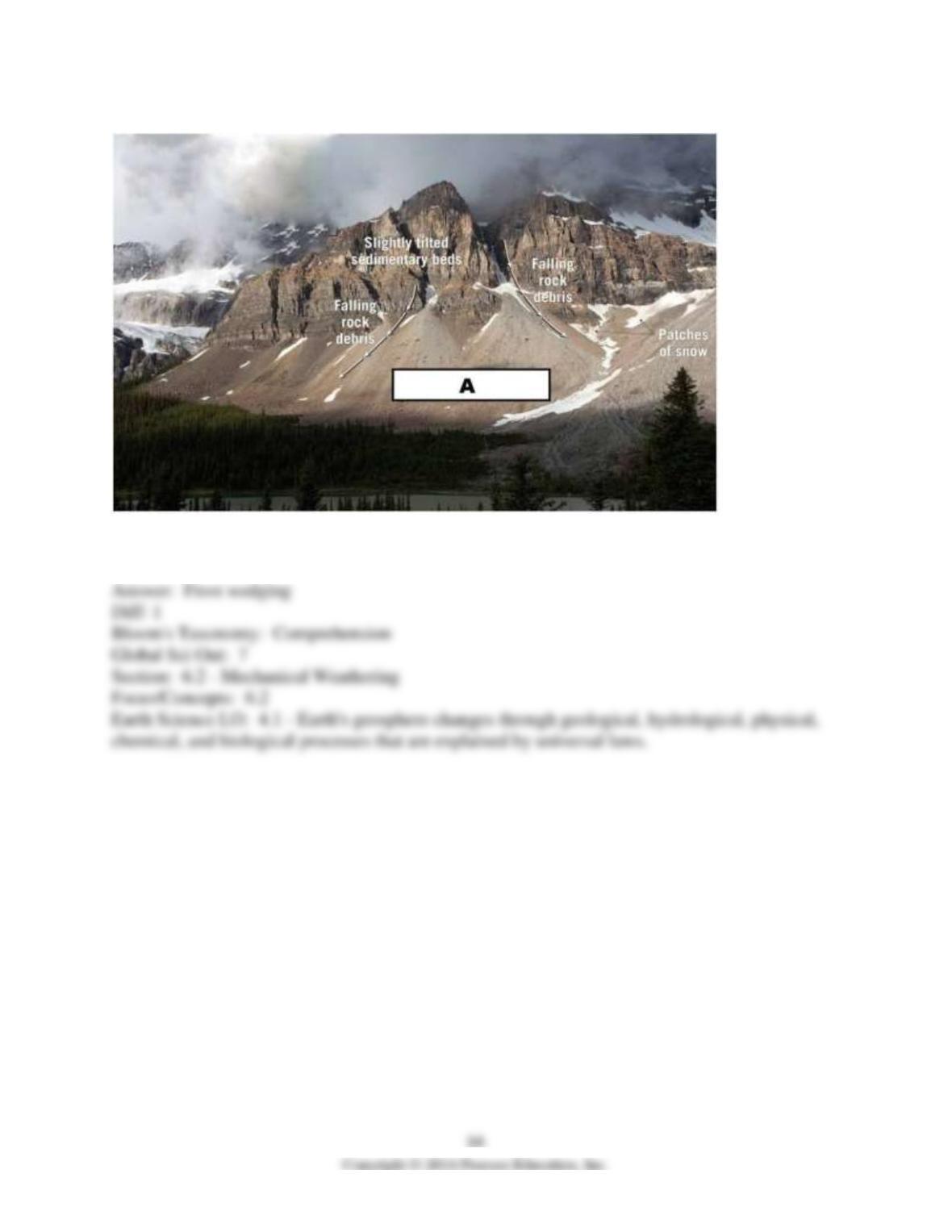
7)
Assume the image above is in western Montana. Which weathering process would you assume is
responsible for material A?
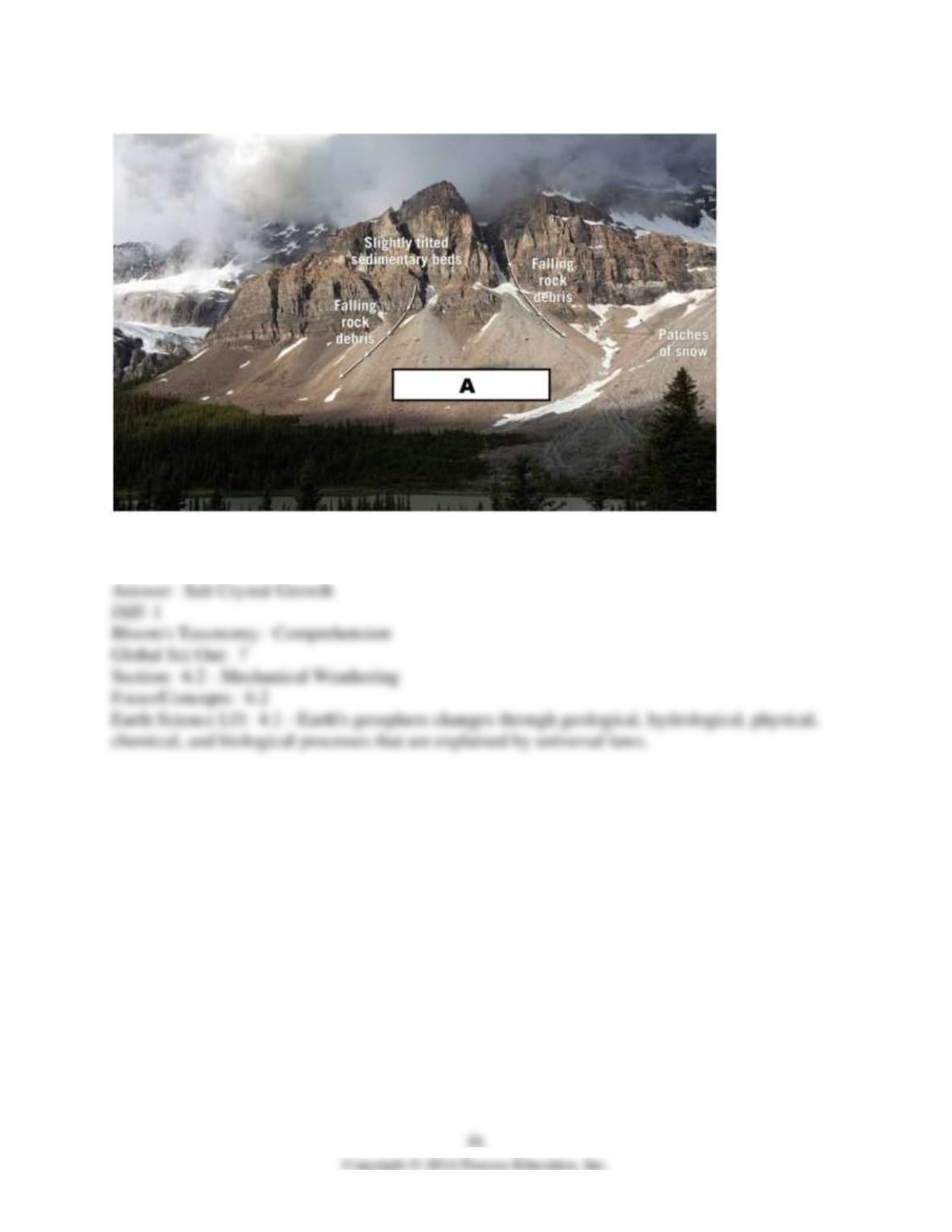
8)
Assume the image above is in southern Arizona. Which weathering process would you assume is
responsible for material A?