8) What are two ways solar energy is collected for electrical consumption?
9) What is the difference between a resource and a reserve?
10) How does a reserve differ from an ore?
11) ________ occurs when weathering concentrates minor amounts of metals scattered through
unweathered rock into economically valuable concentrations.
12) Aluminum laterite is also known as ________.
13) List three minerals that can be extracted from placer deposits.

22
23.4 Matching Questions
Determine whether the following materials are renewable or nonrenewable resources. (Note:
Your choices will be used more than once.)
A) Renewable
B) Nonrenewable
1) Aluminum
Diff: 1
Bloom’s Taxonomy: Knowledge
Global Sci Out: 7
Section: 23.1 – Renewable and Nonrenewable Resources
Focus/Concepts: 23.1
Earth Science LO: 7.3 – Natural resources are limited.
2) Petroleum
Diff: 1
Bloom’s Taxonomy: Knowledge
Global Sci Out: 7
Section: 23.1 – Renewable and Nonrenewable Resources
Focus/Concepts: 23.1
Earth Science LO: 7.3 – Natural resources are limited.
3) Wood
Diff: 1
Bloom’s Taxonomy: Knowledge
Global Sci Out: 7
Section: 23.1 – Renewable and Nonrenewable Resources
Focus/Concepts: 23.1
Earth Science LO: 7.3 – Natural resources are limited.
4) Iron Ore
Diff: 1
Bloom’s Taxonomy: Knowledge
Global Sci Out: 7
Section: 23.1 – Renewable and Nonrenewable Resources
Focus/Concepts: 23.1
Earth Science LO: 7.3 – Natural resources are limited.

5) Cattle
Diff: 1
Bloom’s Taxonomy: Knowledge
Global Sci Out: 7
Section: 23.1 – Renewable and Nonrenewable Resources
Focus/Concepts: 23.1
Earth Science LO: 7.3 – Natural resources are limited.

24
Match the diagram with the appropriate oil trap term.
A) Salt Dome
B) Stratigraphic Trap
C) Anticline
D) Fault Trap
6)
Diff: 1
Bloom’s Taxonomy: Application
Global Sci Out: 3
Section: 23.2 – Energy Resources – Traditional Fossil Fuels
Focus/Concepts: 23.2
Earth Science LO: 7.9 – Fossil fuels and uranium currently provide most of our energy
resources.
7)
Diff: 1
Bloom’s Taxonomy: Application
Global Sci Out: 3
Section: 23.2 – Energy Resources – Traditional Fossil Fuels
Focus/Concepts: 23.2
Earth Science LO: 7.9 – Fossil fuels and uranium currently provide most of our energy
resources.

8)
Diff: 1
Bloom’s Taxonomy: Application
Global Sci Out: 3
Section: 23.2 – Energy Resources – Traditional Fossil Fuels
Focus/Concepts: 23.2
Earth Science LO: 7.9 – Fossil fuels and uranium currently provide most of our energy
resources.
9)
Diff: 1
Bloom’s Taxonomy: Application
Global Sci Out: 3
Section: 23.2 – Energy Resources – Traditional Fossil Fuels
Focus/Concepts: 23.2
Earth Science LO: 7.9 – Fossil fuels and uranium currently provide most of our energy
resources.

Match the type of renewable energy with the source that generates it.
A) Falling water pushes turbines
B) Trapping underground reservoirs of steam and hot water
C) Organic material that can be burned
D) Turbines are driven by rising and falling levels of coastal water
10) Geothermal Energy
Diff: 1
Bloom’s Taxonomy: Knowledge
Global Sci Out: 7
Section: 23.5 – Renewable Energy
Focus/Concepts: 23.5
Earth Science LO: 7.10 – Earth scientists help society move toward greater sustainability.
11) Hydroelectric Energy
Diff: 1
Bloom’s Taxonomy: Knowledge
Global Sci Out: 7
Section: 23.5 – Renewable Energy
Focus/Concepts: 23.5
Earth Science LO: 7.10 – Earth scientists help society move toward greater sustainability.
12) Tidal Energy
Diff: 1
Bloom’s Taxonomy: Knowledge
Global Sci Out: 7
Section: 23.5 – Renewable Energy
Focus/Concepts: 23.5
Earth Science LO: 7.10 – Earth scientists help society move toward greater sustainability.
13) Biofuels
Diff: 1
Bloom’s Taxonomy: Knowledge
Global Sci Out: 7
Section: 23.5 – Renewable Energy
Focus/Concepts: 23.5
Earth Science LO: 7.10 – Earth scientists help society move toward greater sustainability.
23.5 Essay Questions
1) Is water a renewable or nonrenewable resource? Explain.
2) Evaluate the various traps for petroleum and natural gas. Assuming you have a good
geological knowledge for the area, which would be the easiest to locate? Which would be the
most difficult? Would any provide a source for natural resources other than petroleum and
natural gas?
3) One of the hot-button political issues at the beginning of the 21st century involved the
proposal to drill for oil beneath the Arctic National Wildlife Refuge. Proponents of drilling
argued that the oil recovered would reduce American dependence on foreign oil and would
stimulate the economy. Those against drilling argued there would be significant environmental
harm, the reserves would be too small to have a major impact on foreign oil dependence, and that
the time it would take to develop the infrastructure would mean result in to immediate relief.
Which side do you think was right? Support your argument.
4) In March 1979, the Three Mile Island nuclear power plant in Pennsylvania suffered a partial-
meltdown of one of its reactors, resulting in the release of small amounts of radioactive gases
and radioactive iodine. Public confidence in the use of nuclear power dropped and some
locations put moratoriums on the construction of new power plants. Today, with concerns for the
rising cost of petroleum and global temperature rise, nuclear power advocates are stating that the
United States should ease restrictions on nuclear energy. Nuclear opponents cite radiation
concerns and the 2011 nuclear incident at Fukushima, Japan, in the wake of the earthquake and
tsunami. Explain your stance on nuclear energy. Support your argument with advantages and
disadvantages. With this information, should nuclear power plant expansion be allowed and
why?
5) Discuss the advantages and the disadvantages of four renewable energy sources.
6) Consider the various renewable energy resources and decide which would be the best one for
your community. Support your position.
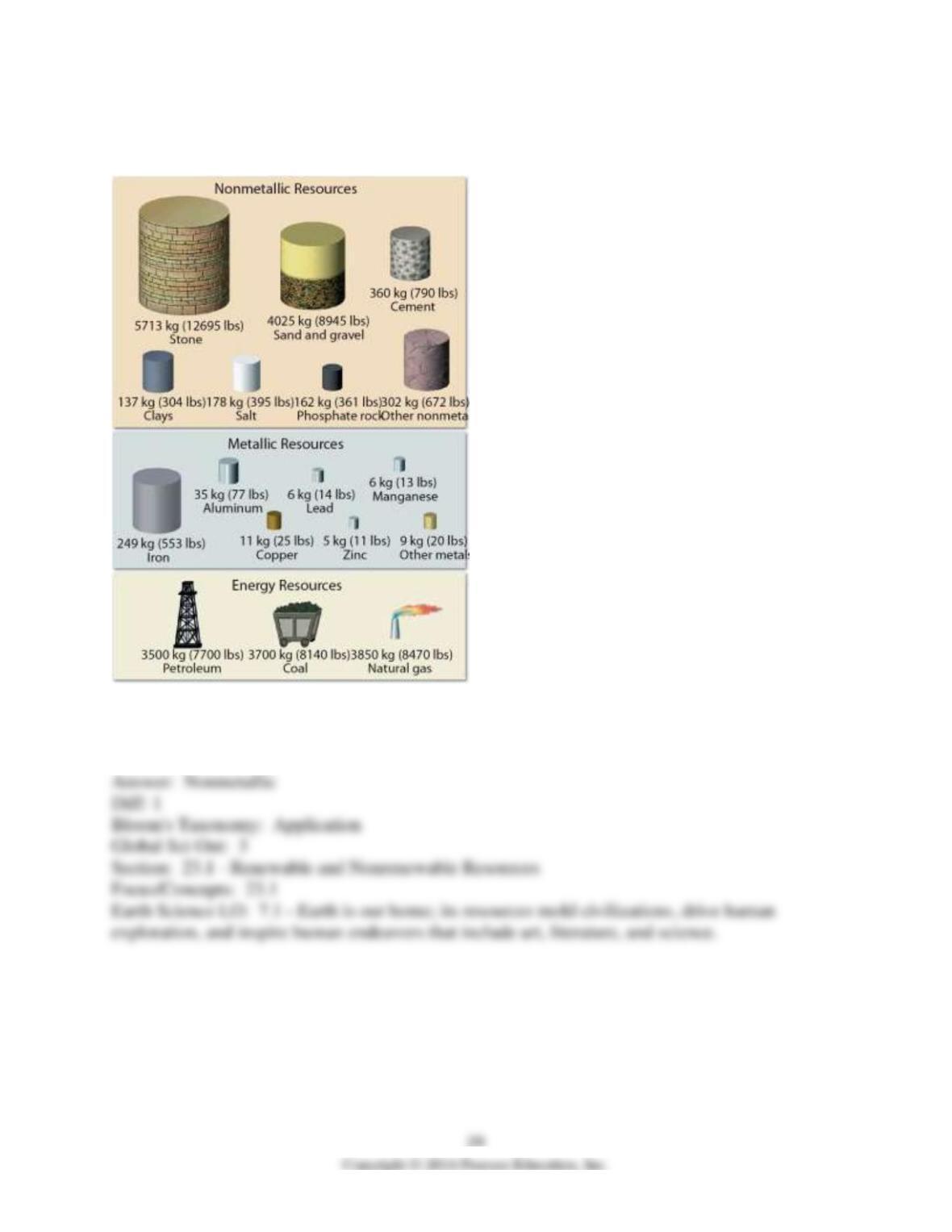
23.6 Visual
1)
This image shows the annual per capita consumption of various economically important
materials. Based on this figure, does the average American use more metallic or nonmetallic
resources?
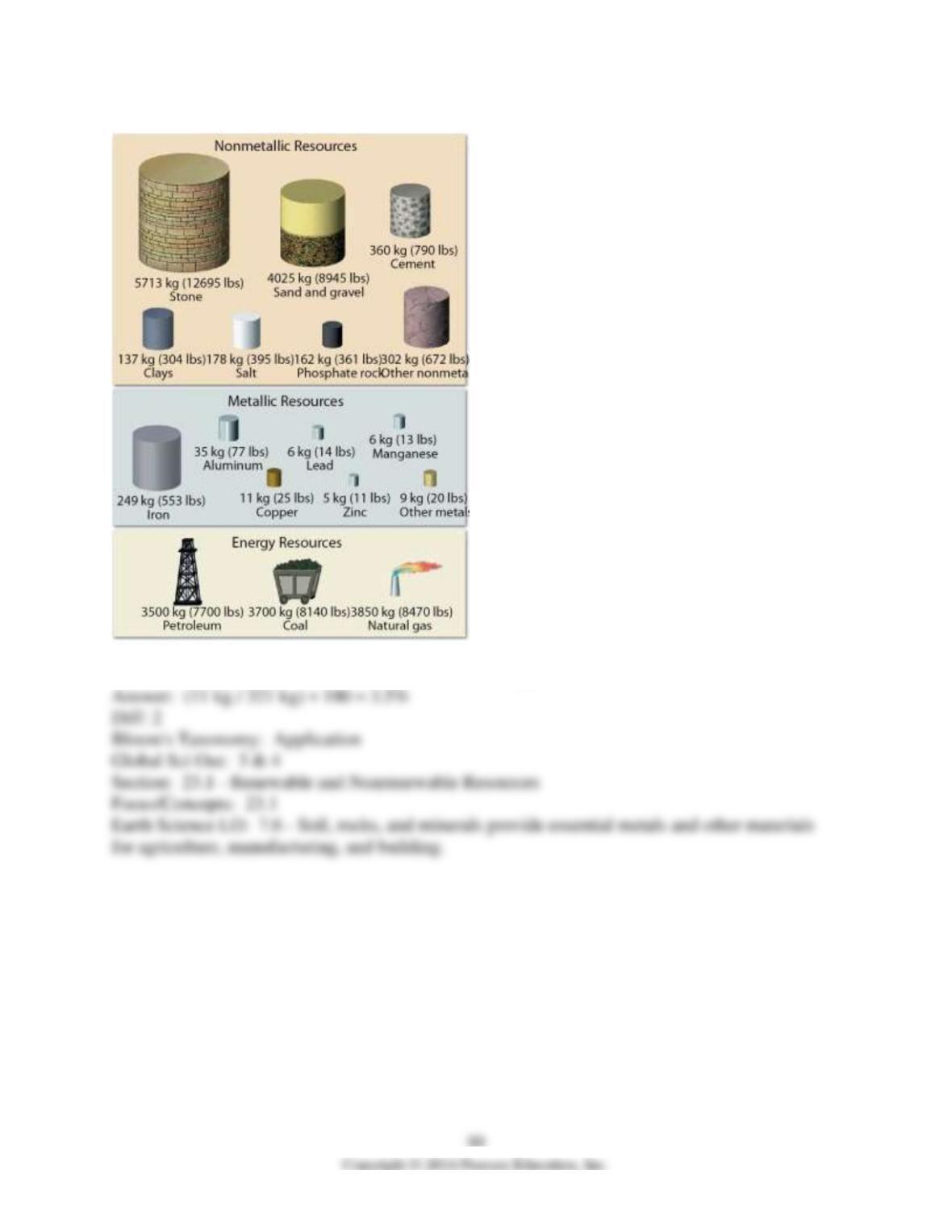
2)
What percentage of metallic resources consumed is copper?
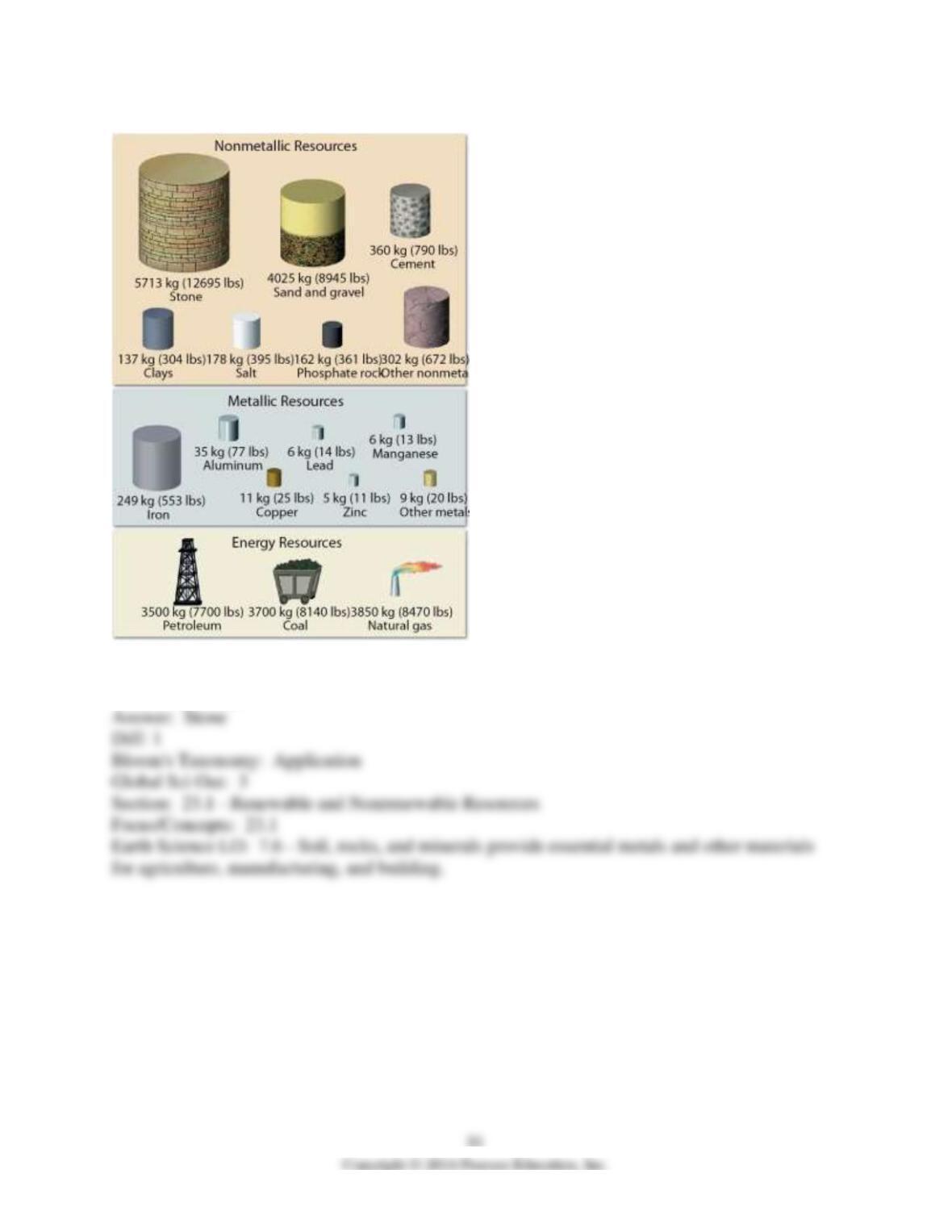
3)
Of all the mineral and energy resources in this figure, which is the most important resource in
terms of quantity consumed?
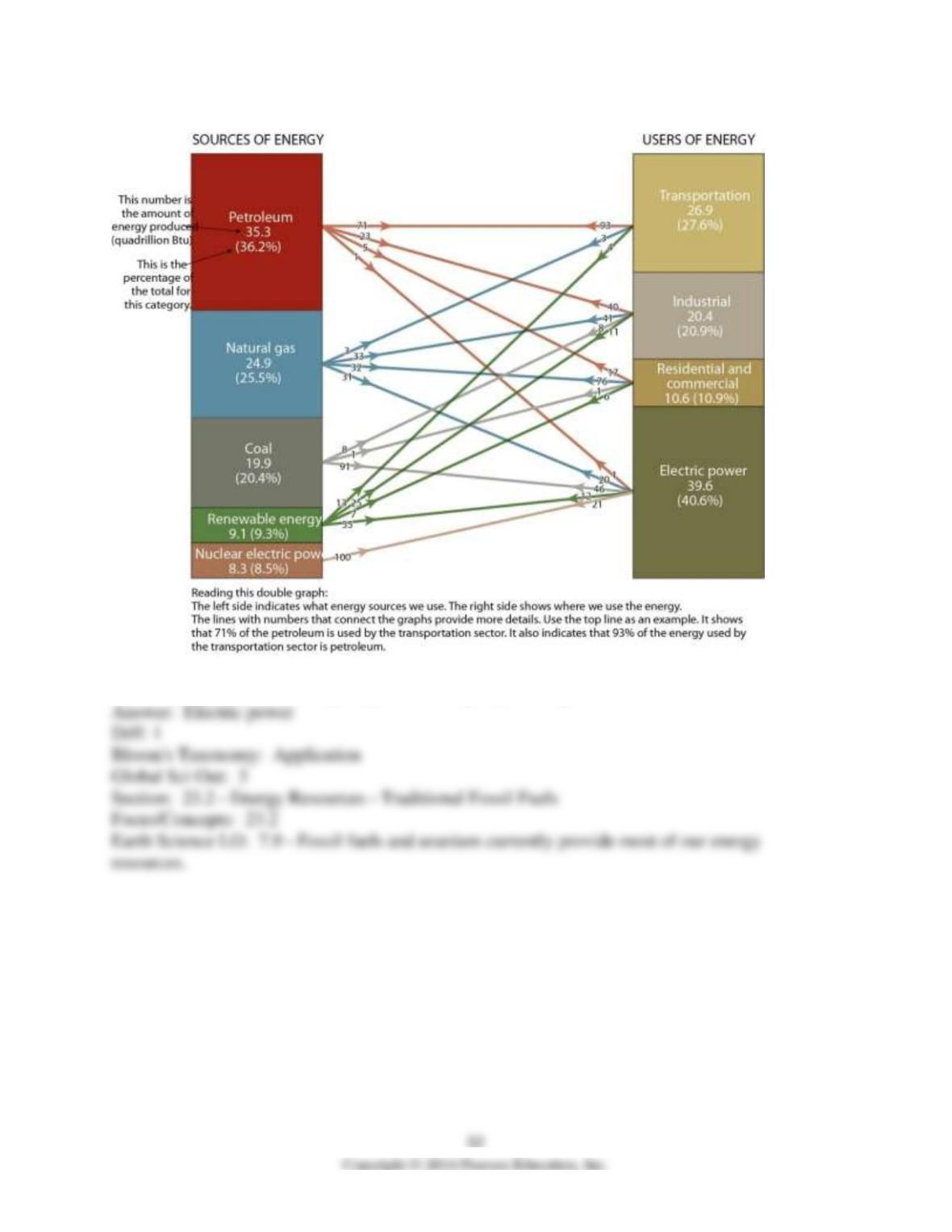
4)
Which energy use in this image requires the largest percentage of coal?
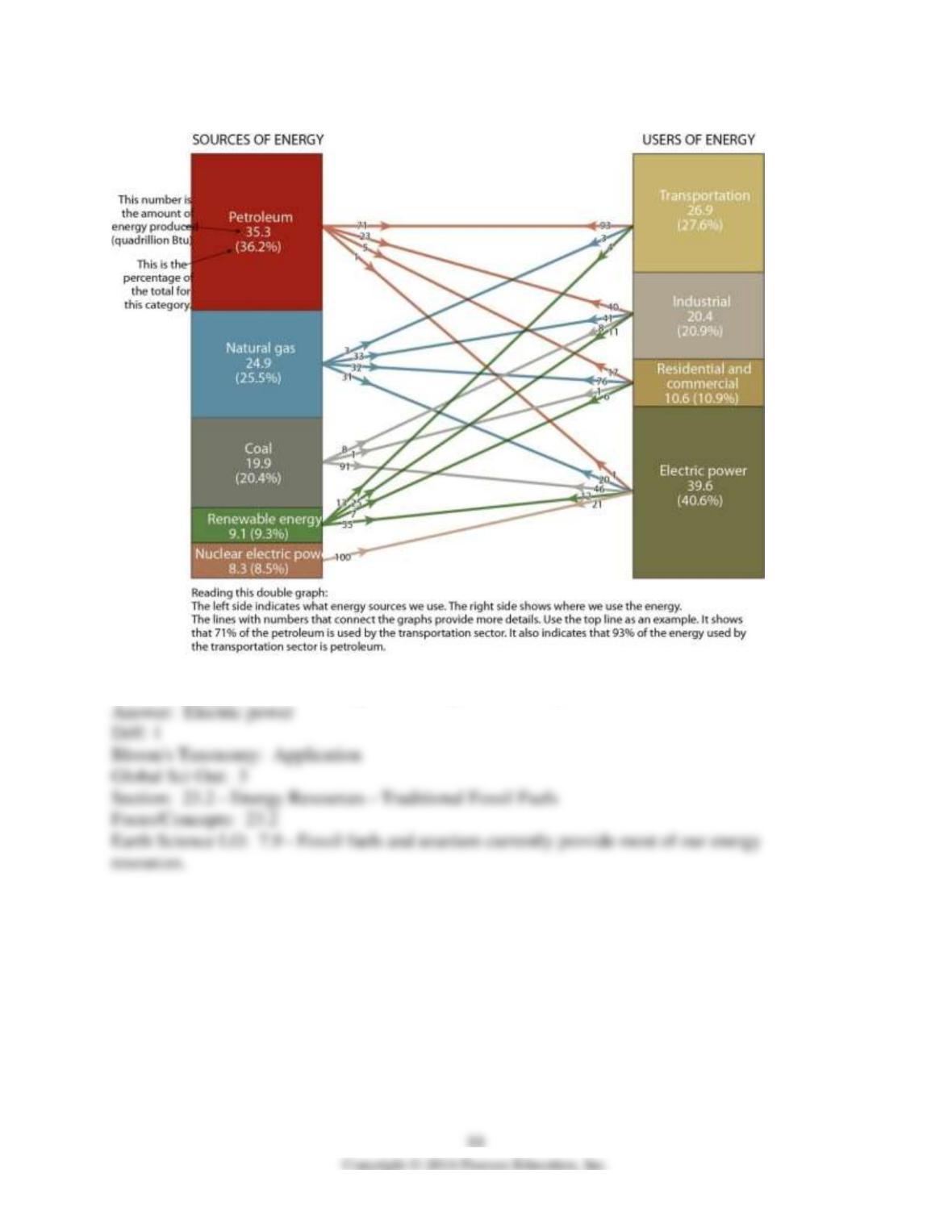
5)
For which applications (according to this image) is nuclear power used?
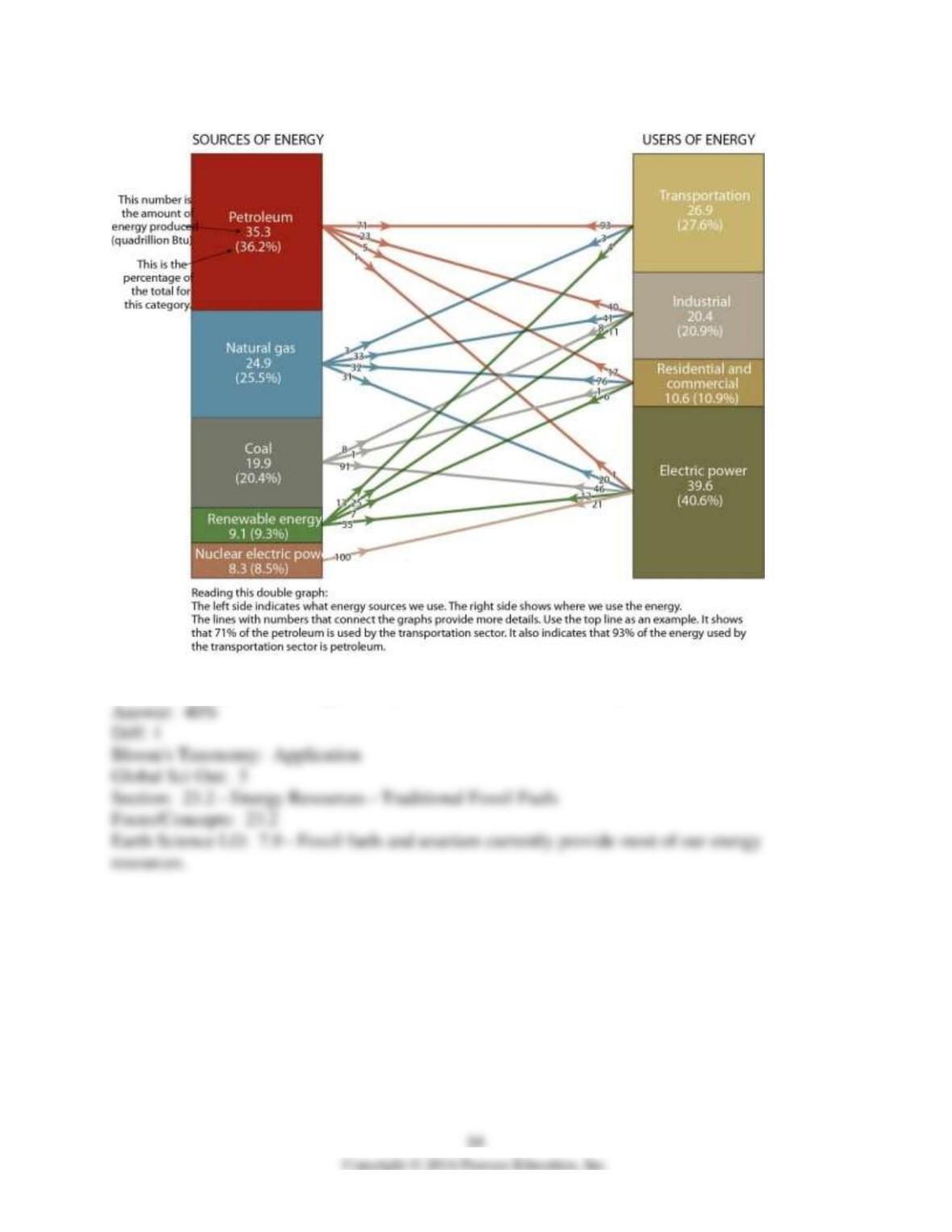
6)
What percentage of the energy used by the industrial sector is from petroleum?
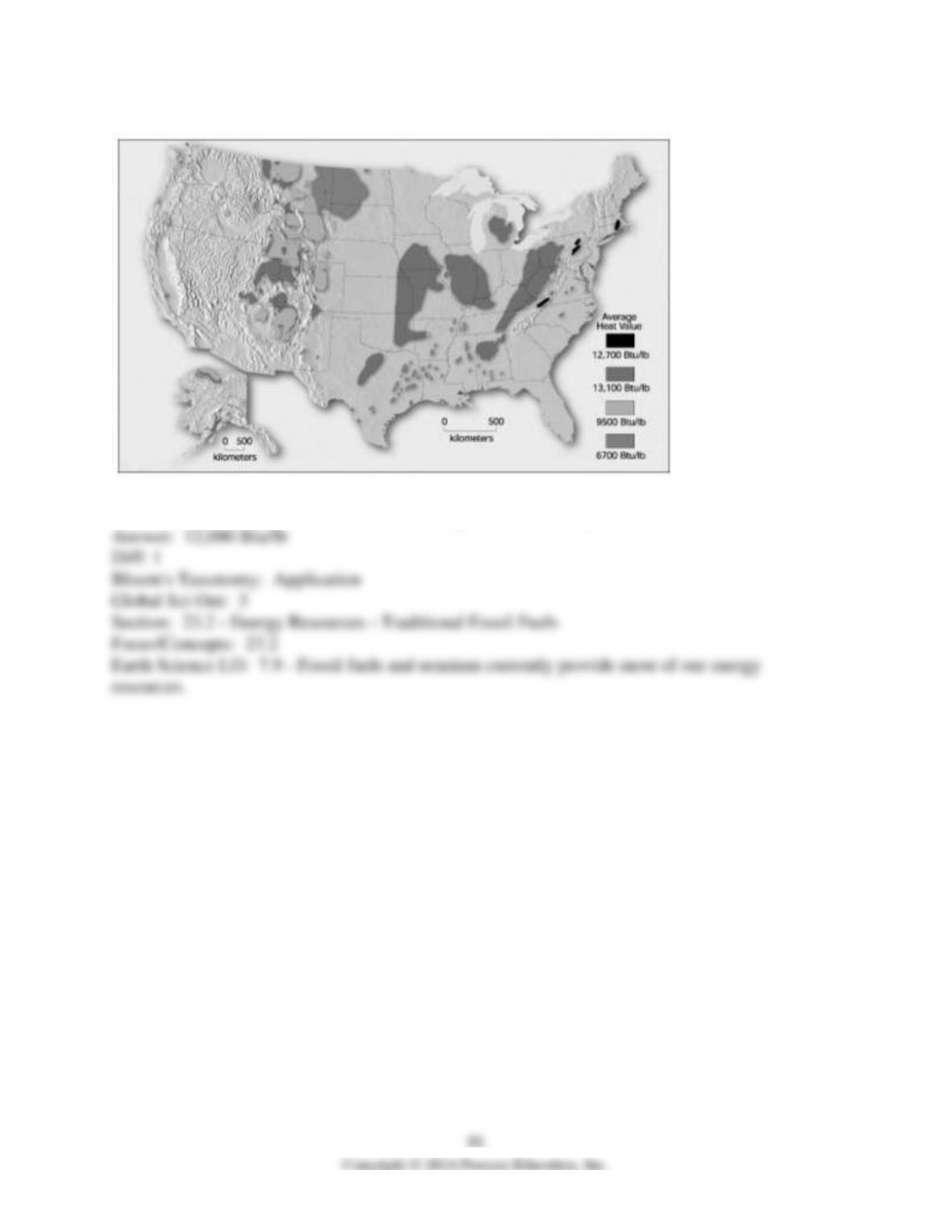
7)
Based on the average heat values shown on Figure 3, which do you think is bituminous coal?
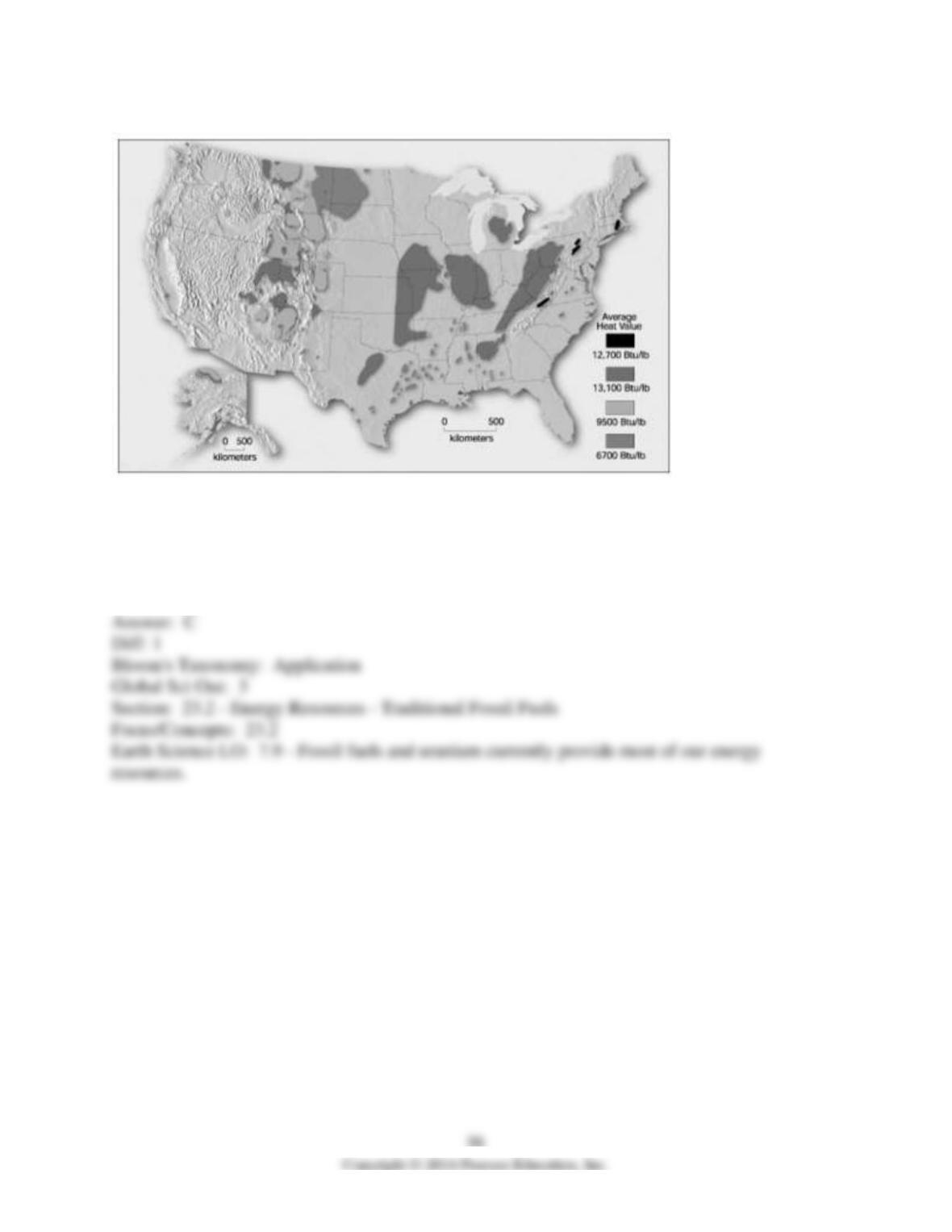
8)
Which state of the following does not have deposits of anthracite coal?
A. Virginia
B. Pennsylvania
C. Illinois
D. Rhode Island
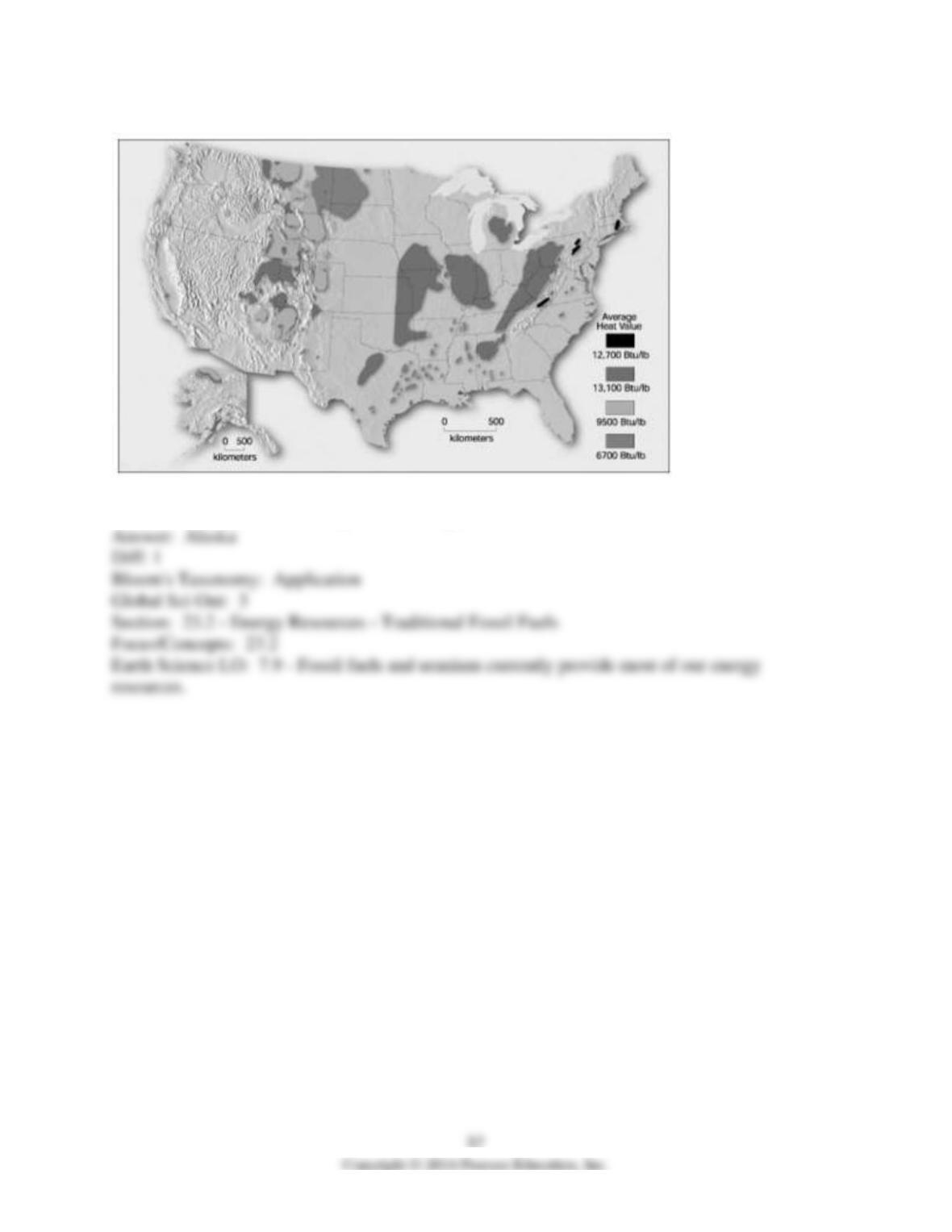
9)
Where are the northernmost deposits of low-grade coal in the United States?