
Match the geologic era to the correct translation.
A) Middle Life
B) New Life
C) Old Life
12) Mesozoic
Diff: 1
Bloom’s Taxonomy: Knowledge
Global Sci Out: 7
Section: 22.5 – Geologic History of the Phanerozoic: The Formation of Earth’s Modern
Continents
Focus/Concepts: 22.5
Earth Science LO: 2.1 – Earth’s rocks and other materials provide a record of its history.
13) Paleozoic
Diff: 1
Bloom’s Taxonomy: Knowledge
Global Sci Out: 7
Section: 22.5 – Geologic History of the Phanerozoic: The Formation of Earth’s Modern
Continents
Focus/Concepts: 22.5
Earth Science LO: 2.1 – Earth’s rocks and other materials provide a record of its history.
14) Cenozoic
Diff: 1
Bloom’s Taxonomy: Knowledge
Global Sci Out: 7
Section: 22.5 – Geologic History of the Phanerozoic: The Formation of Earth’s Modern
Continents
Focus/Concepts: 22.5
Earth Science LO: 2.1 – Earth’s rocks and other materials provide a record of its history.

35
Match the organism to the era it flourished in.
A) Cenozoic
B) Paleozoic
C) Mesozoic
15) Brachopod
Diff: 1
Bloom’s Taxonomy: Knowledge
Global Sci Out: 7
Section: 22.7 – Paleozoic Era: Life Explodes, 22.8 – Mesozoic Era: Age of Dinosaurs, & 22.9 –
Cenozoic Era: Age of Mammals
Focus/Concepts: 22.7, 22.8, & 22.9
Earth Science LO: 2.1 – Earth’s rocks and other materials provide a record of its history, 6.2 –
Evolution, including the origination and extinction of species, is a natural and ongoing process,
& 6.4 – More complex life forms and ecosystems have arisen over the course of Earth’s history.
16) Saber-toothed cats
Diff: 1
Bloom’s Taxonomy: Knowledge
Global Sci Out: 7
Section: 22.7 – Paleozoic Era: Life Explodes, 22.8 – Mesozoic Era: Age of Dinosaurs, & 22.9 –
Cenozoic Era: Age of Mammals
Focus/Concepts: 22.7, 22.8, & 22.9
Earth Science LO: 2.1 – Earth’s rocks and other materials provide a record of its history, 6.2 –
Evolution, including the origination and extinction of species, is a natural and ongoing process,
& 6.4 – More complex life forms and ecosystems have arisen over the course of Earth’s history.
17) Ichthyosaurs
Diff: 1
Bloom’s Taxonomy: Knowledge
Global Sci Out: 7
Section: 22.7 – Paleozoic Era: Life Explodes, 22.8 – Mesozoic Era: Age of Dinosaurs, & 22.9 –
Cenozoic Era: Age of Mammals
Focus/Concepts: 22.7, 22.8, & 22.9
Earth Science LO: 2.1 – Earth’s rocks and other materials provide a record of its history, 6.2 –
Evolution, including the origination and extinction of species, is a natural and ongoing process,
& 6.4 – More complex life forms and ecosystems have arisen over the course of Earth’s history.

18) Archaeopteryx
Diff: 1
Bloom’s Taxonomy: Knowledge
Global Sci Out: 7
Section: 22.7 – Paleozoic Era: Life Explodes, 22.8 – Mesozoic Era: Age of Dinosaurs, & 22.9 –
Cenozoic Era: Age of Mammals
Focus/Concepts: 22.7, 22.8, & 22.9
Earth Science LO: 2.1 – Earth’s rocks and other materials provide a record of its history, 6.2 –
Evolution, including the origination and extinction of species, is a natural and ongoing process,
& 6.4 – More complex life forms and ecosystems have arisen over the course of Earth’s history.
19) Titantothere
Diff: 1
Bloom’s Taxonomy: Knowledge
Global Sci Out: 7
Section: 22.7 – Paleozoic Era: Life Explodes, 22.8 – Mesozoic Era: Age of Dinosaurs, & 22.9 –
Cenozoic Era: Age of Mammals
Focus/Concepts: 22.7, 22.8, & 22.9
Earth Science LO: 2.1 – Earth’s rocks and other materials provide a record of its history, 6.2 –
Evolution, including the origination and extinction of species, is a natural and ongoing process,
& 6.4 – More complex life forms and ecosystems have arisen over the course of Earth’s history.
22.5 Essay Questions
1) Evaluate the validity of the idea that Earth is “The Goldilocks Planet” in the solar system.
Support your position with three points.
2) What is the importance of cyanobacteria for our atmosphere? What did they produce and
how? What happened to the first materials they produced?
3) What role did the creation of the ozone layer have on the distribution of life forms across the
planet and why?
4) How does the formation, break-up, and subsequent formation of supercontinents explain the
origin of cratons?
5) How does the process and rate seafloor spreading affect sea level?
6) Compare and contrast western and eastern North America during the Cenozoic Era.
7) What were the first animals to leave the sea and adapt to a terrestrial environment? When did
they do it? What physiological properties did they have that made them able to do so?
8) Evaluate the following statement: “Reptiles were the first true terrestrial animals.” Support
your position with evidence.
9) Compare and contrast reptiles and mammals. Why were mammals able to occupy more
diverse habitats than reptiles could?
10) What are three possible causes of the Late Pleistocene Extinction of large mammals?
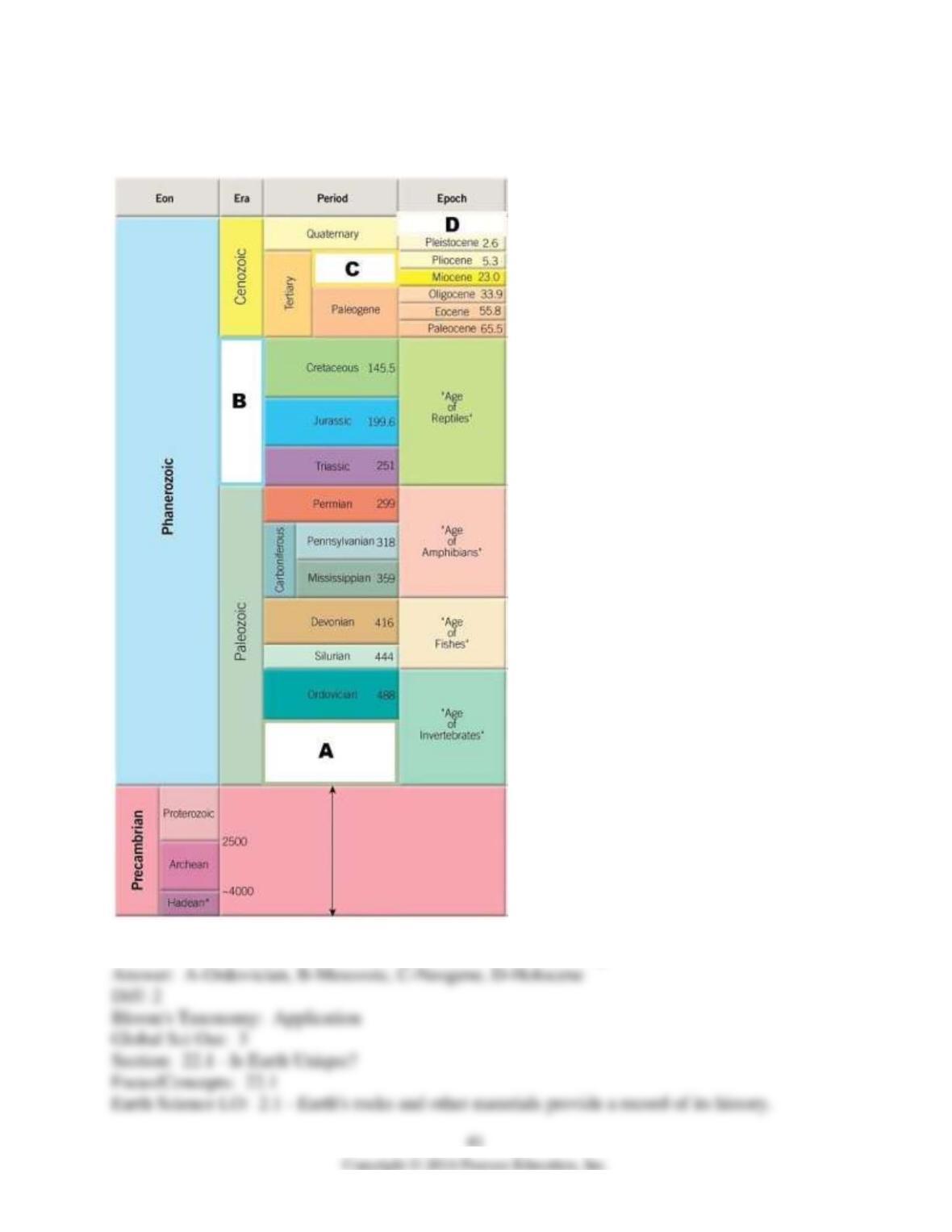
22.6 Visual
1)
Fill in the lettered blanks for the Geologic Time Scale in this image.
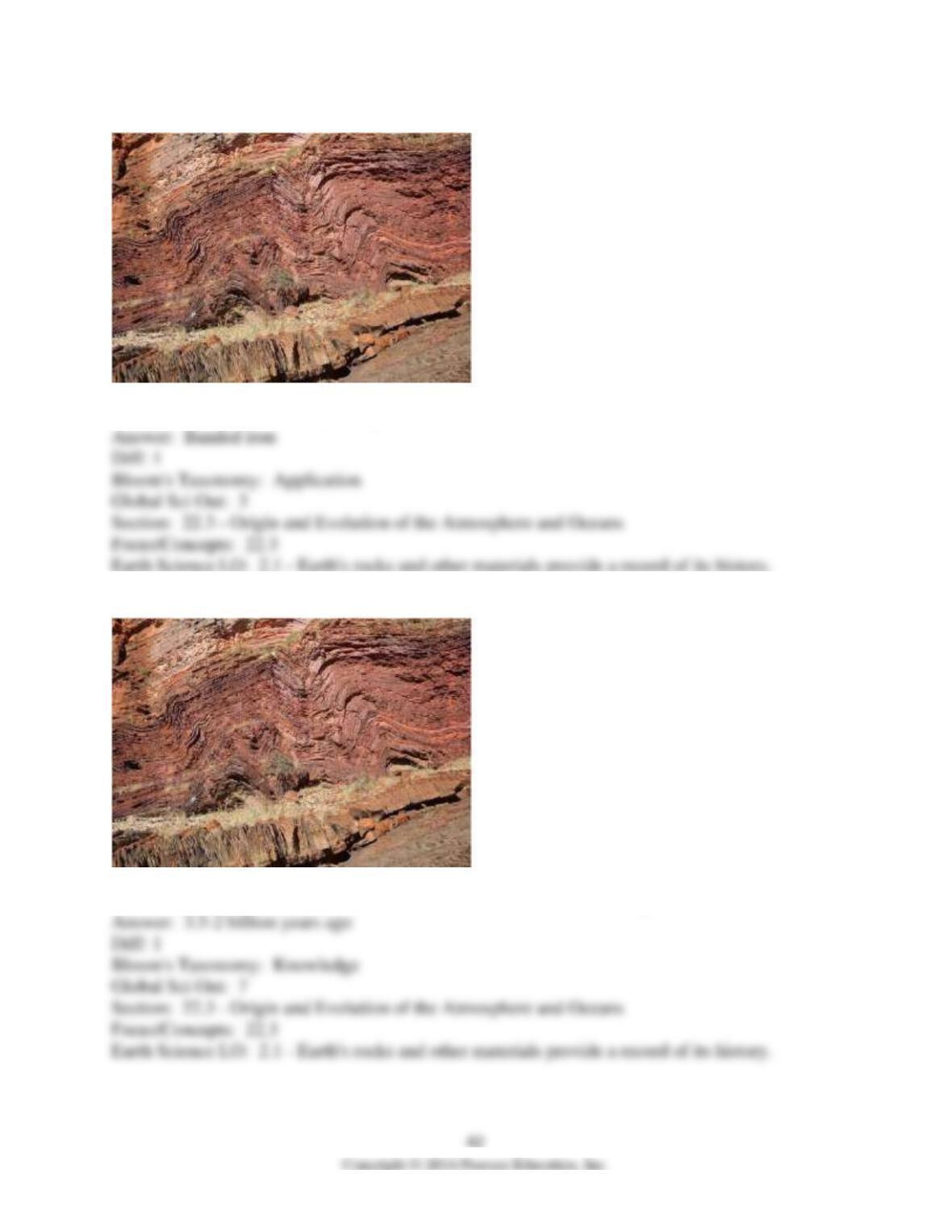
2)
What material is visible in this image?
3)
When was the time of greatest accumulation of the material in this image?
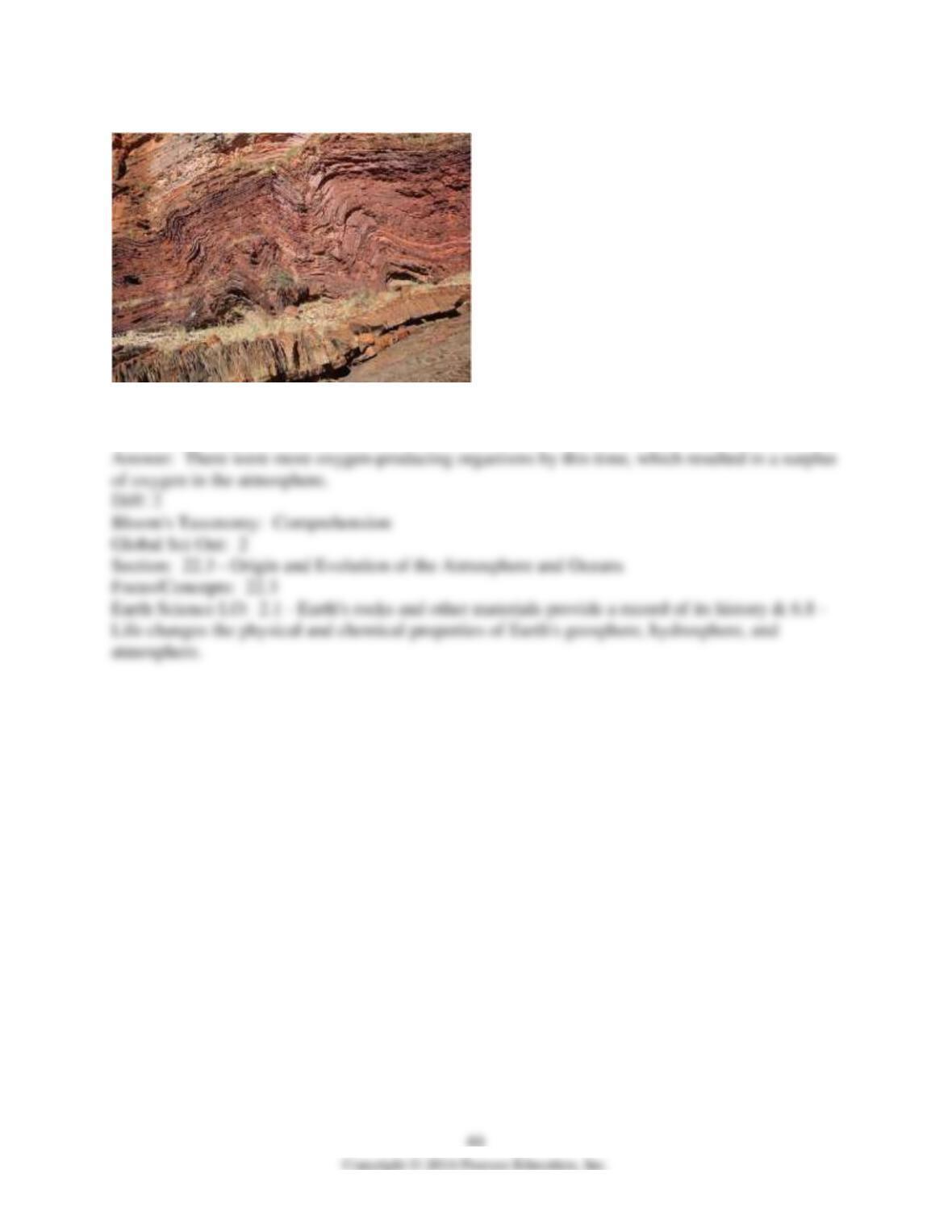
4)
Why did the accumulation of the material in this image largely cease after the time period in
which it had its greatest accumulation?
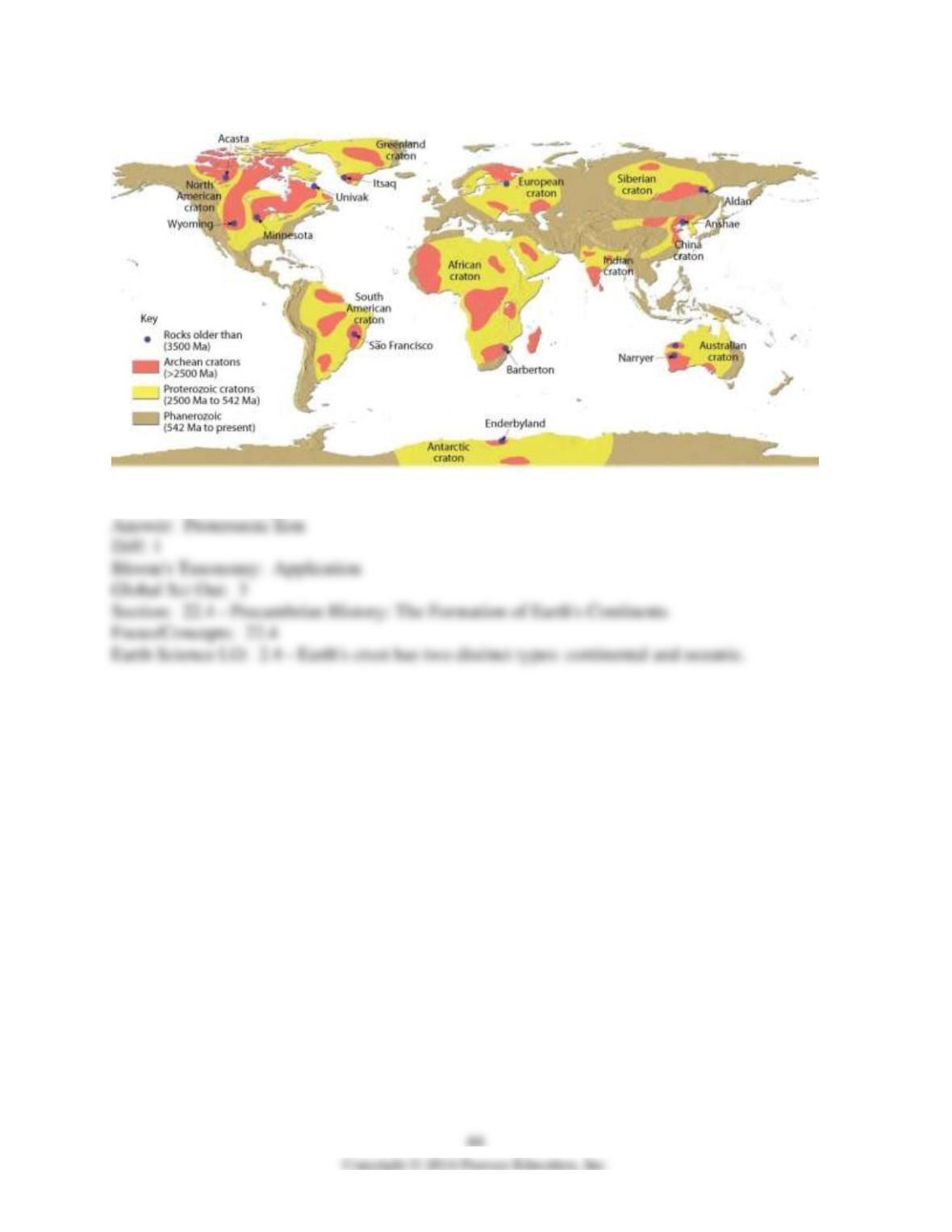
5)
What period had the greatest amount of cratonic formation?
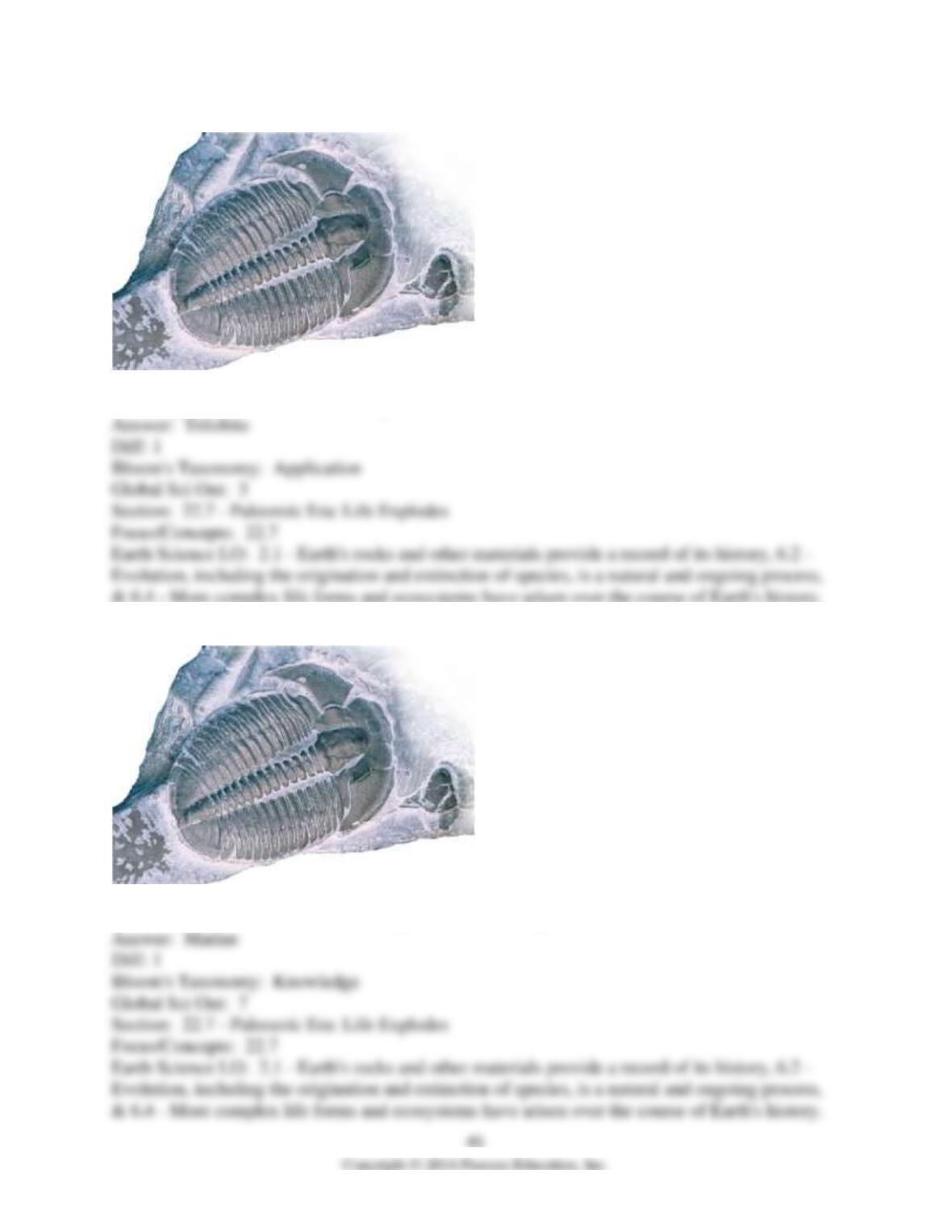
6)
What organism is visible in this image?
7)
In what kind of environment did the organism in this image live?
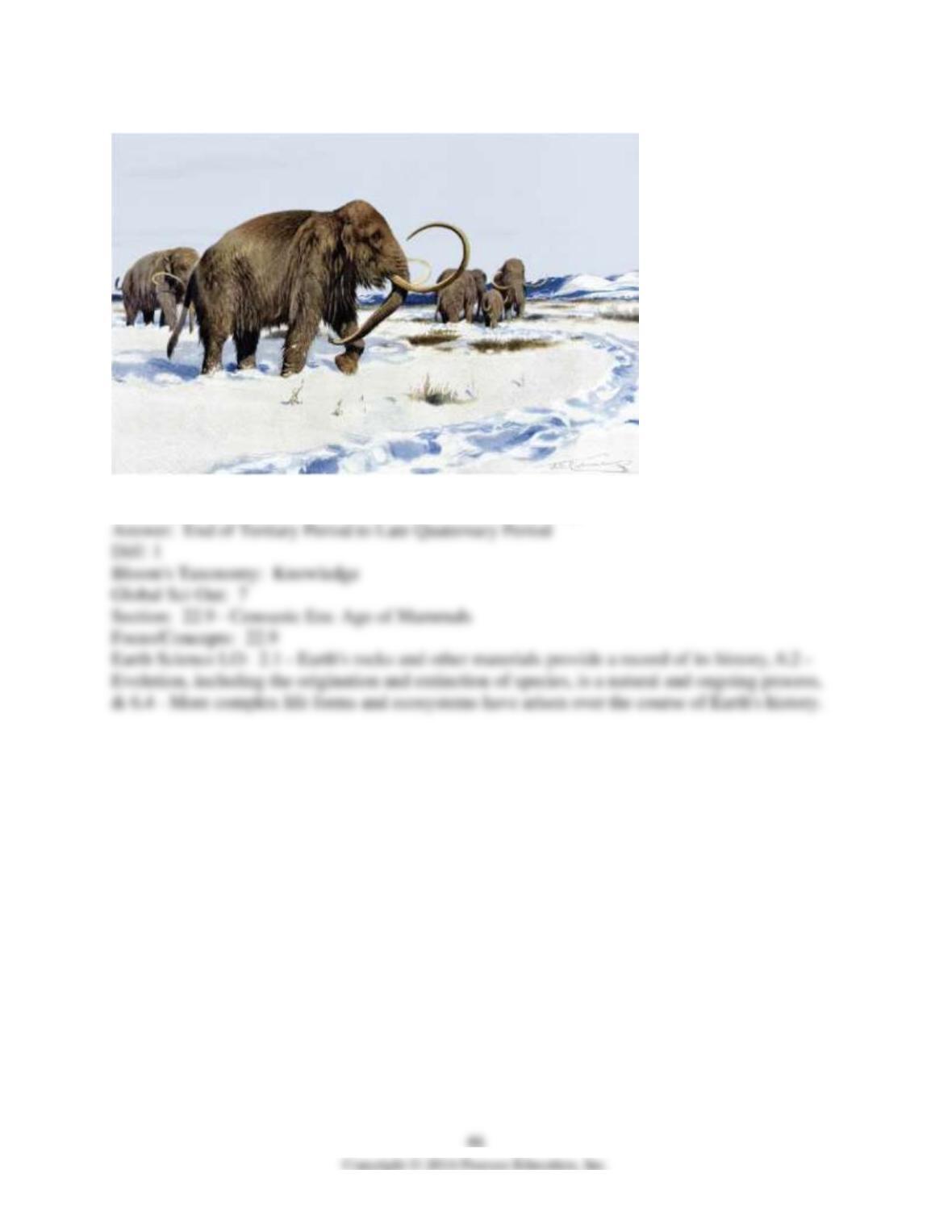
8)
In what geologic time period would the mammoth in this image have existed?