7) Fold-and-thrust belts are the result of ________ stress whereas fault block mountains are the
result of ________ stress.
8) Put the three orogenic events of the Appalachian in order from oldest to youngest.
9) What is the difference between a graben and a half-graben?
10) ________ is where the Earth’s crust is in a state of equilibrium with the mantle beneath.
11) Which material will “float” higher on the mantle: 5 km thick oceanic crust or 40 km thick
continental crust? Why?

14.4 Matching Questions
Match the features of a subduction zone with the manner of formation.
A) Where pyroclastic materials and sediments eroded from landmasses collect between the
island arc and the trench
B) Partial melting of subducting plates create magma, which rises to the surface
C) Where pyroclastic materials and sediments eroded from landmasses collect on the opposite
side of the island arc from the trench
1) Volcanic arc
Diff: 1
Bloom’s Taxonomy: Knowledge
Global Sci Out: 7
Section: 14.2 – Convergence and Subducting Plates
Focus/Concepts: 14.2
Earth Science LO: 4.5 – Many active geologic processes occur at plate boundaries.
2) Deep-ocean trench
Diff: 1
Bloom’s Taxonomy: Knowledge
Global Sci Out: 7
Section: 14.2 – Convergence and Subducting Plates
Focus/Concepts: 14.2
Earth Science LO: 4.5 – Many active geologic processes occur at plate boundaries.
3) Fore-arc region
Diff: 1
Bloom’s Taxonomy: Knowledge
Global Sci Out: 7
Section: 14.2 – Convergence and Subducting Plates
Focus/Concepts: 14.2
Earth Science LO: 4.5 – Many active geologic processes occur at plate boundaries.
4) Back-arc region
Diff: 1
Bloom’s Taxonomy: Knowledge
Global Sci Out: 7
Section: 14.2 – Convergence and Subducting Plates
Focus/Concepts: 14.2
Earth Science LO: 4.5 – Many active geologic processes occur at plate boundaries.

18
Match the geologic location with the type of mountain building. Please note that your choices
may be used more than once.
A) Cordilleran-type mountain building
B) Alpine-type mountain building
C) Fault-block mountain building
D) Andean-type mountain building
5) Cascade Mountains
Diff: 1
Bloom’s Taxonomy: Knowledge
Global Sci Out: 7
Section: 14.3 – Subduction and Mountain Building, 14.4 – Collisional Mountain Belts, & 14.5 –
Fault-Block Mountains
Focus/Concepts: 14.3, 14.4, & 14.5
Earth Science LO: 4.5 – Many active geologic processes occur at plate boundaries.
6) Himalayan Mountains
Diff: 1
Bloom’s Taxonomy: Knowledge
Global Sci Out: 7
Section: 14.3 – Subduction and Mountain Building, 14.4 – Collisional Mountain Belts, & 14.5 –
Fault-Block Mountains
Focus/Concepts: 14.3, 14.4, & 14.5
Earth Science LO: 4.5 – Many active geologic processes occur at plate boundaries.
7) North American Cordillera
Diff: 1
Bloom’s Taxonomy: Knowledge
Global Sci Out: 7
Section: 14.3 – Subduction and Mountain Building, 14.4 – Collisional Mountain Belts, & 14.5 –
Fault-Block Mountains
Focus/Concepts: 14.3, 14.4, & 14.5
Earth Science LO: 4.5 – Many active geologic processes occur at plate boundaries.
8) Basin and Range Province
Diff: 1
Bloom’s Taxonomy: Knowledge
Global Sci Out: 7
Section: 14.3 – Subduction and Mountain Building, 14.4 – Collisional Mountain Belts, & 14.5 –
Fault-Block Mountains
Focus/Concepts: 14.3, 14.4, & 14.5
Earth Science LO: 4.5 – Many active geologic processes occur at plate boundaries.
9) The Alps
Diff: 1
Bloom’s Taxonomy: Knowledge
Global Sci Out: 7
Section: 14.3 – Subduction and Mountain Building, 14.4 – Collisional Mountain Belts, & 14.5 –
Fault-Block Mountains
Focus/Concepts: 14.3, 14.4, & 14.5
Earth Science LO: 4.5 – Many active geologic processes occur at plate boundaries.
10) Teton Range
Diff: 1
Bloom’s Taxonomy: Knowledge
Global Sci Out: 7
Section: 14.3 – Subduction and Mountain Building, 14.4 – Collisional Mountain Belts, & 14.5 –
Fault-Block Mountains
Focus/Concepts: 14.3, 14.4, & 14.5
Earth Science LO: 4.5 – Many active geologic processes occur at plate boundaries.
11) Japanese Archipelago
Diff: 1
Bloom’s Taxonomy: Knowledge
Global Sci Out: 7
Section: 14.3 – Subduction and Mountain Building, 14.4 – Collisional Mountain Belts, & 14.5 –
Fault-Block Mountains
Focus/Concepts: 14.3, 14.4, & 14.5
Earth Science LO: 4.5 – Many active geologic processes occur at plate boundaries.
14.5 Essay Questions
1) Name two reasons why the Cascadia Subduction Zone off the coast of the Pacific Northwest is
not well defined.
2) Compare and contrast the formation of a primary magma to that of a secondary magma. How
does each form?
3) How does an Andean-type mountain building event compare to a Cordilleran-type? Consider
tectonic environments as well as processes of formation. Provide examples of each type.
4) How can plate tectonics help explain the existence of fossil marine organisms in rocks found
on top of compressional mountains?
5) Do you think there was more accretion in the distant past (4 billion years ago) or the more
recent past (50 million years ago)? Explain.
6) Explain the most widely accepted hypothesis behind the formation of the Basin and Range
Province. When was this process supposed to be occurring?
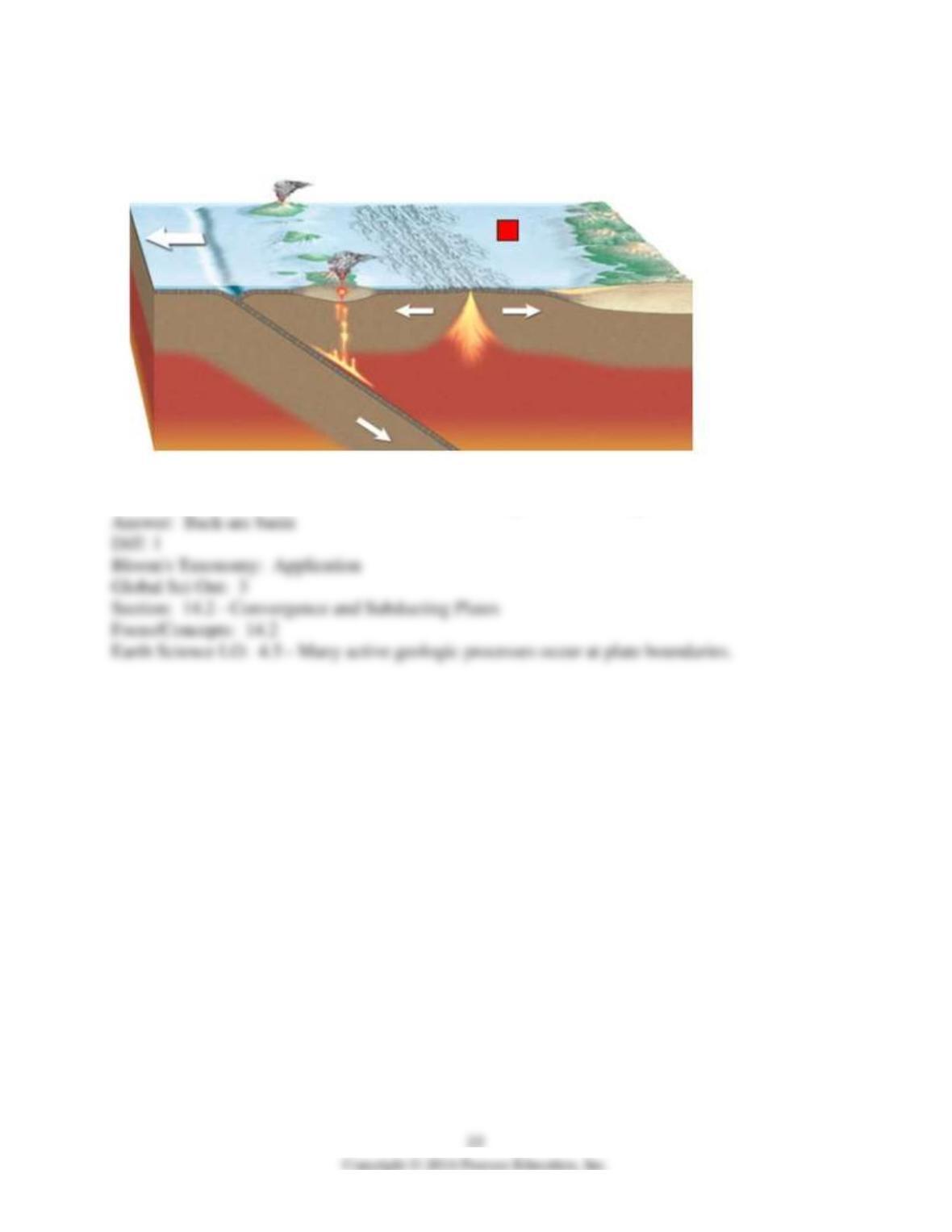
14.6 Visual
1)
Which part of the subduction zone is marked with a square in this image?
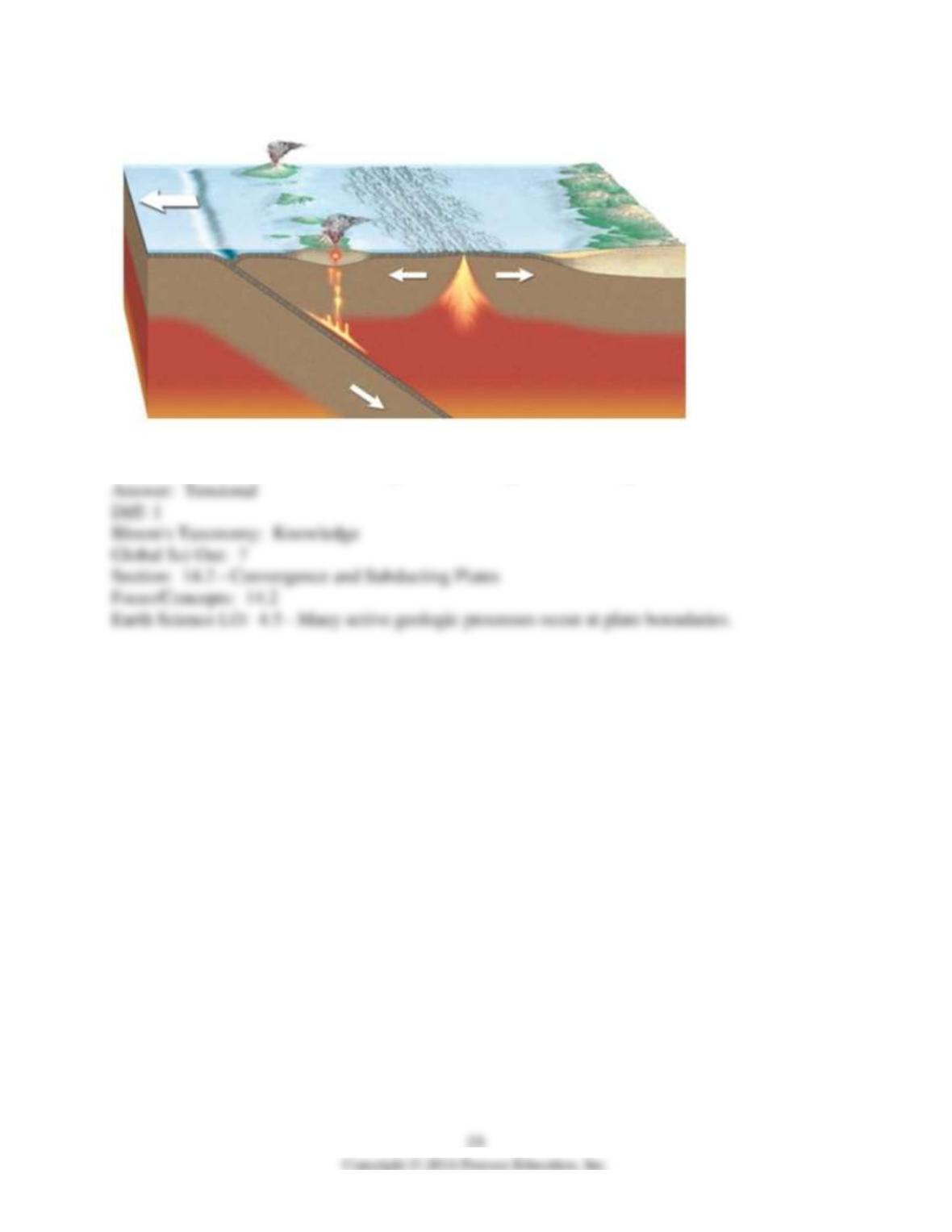
2)
What kind of stress would be affecting the marked region in this image?
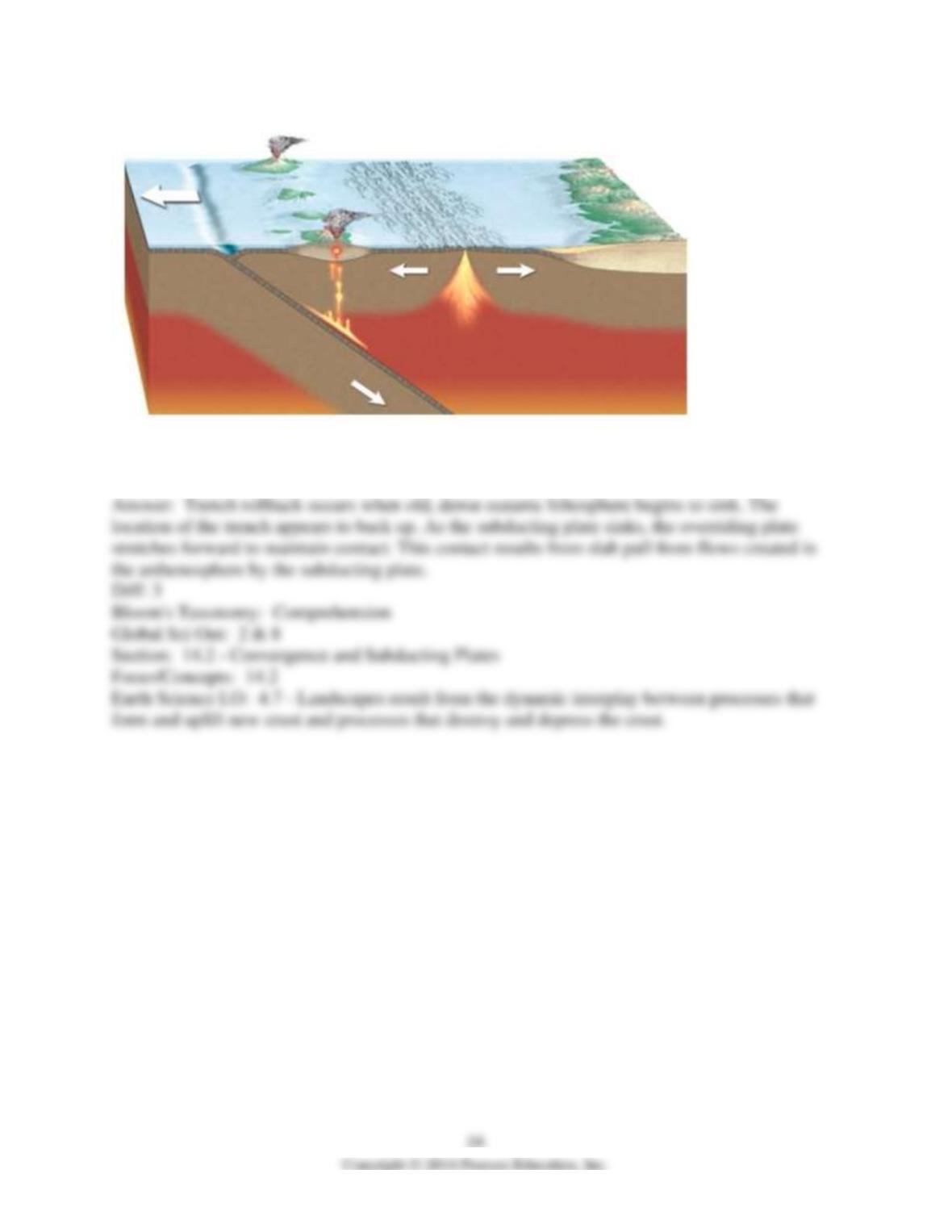
3)
Notice the part of this image labeled “continued trench rollback.” What is happening in “trench
rollback”? How would trench rollback help create the marked region in this image?
4)
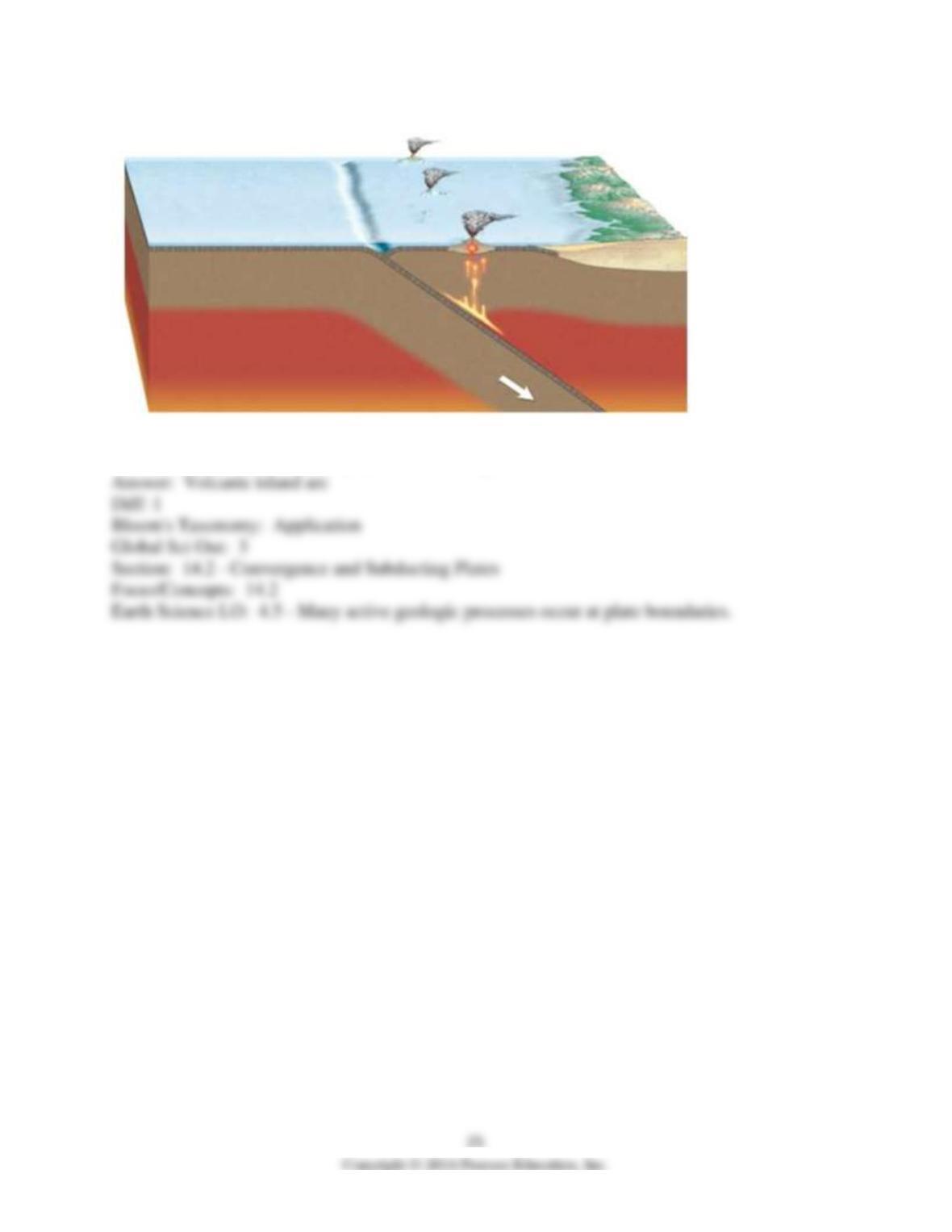
What kind of volcanic chain is present in this image?
5)
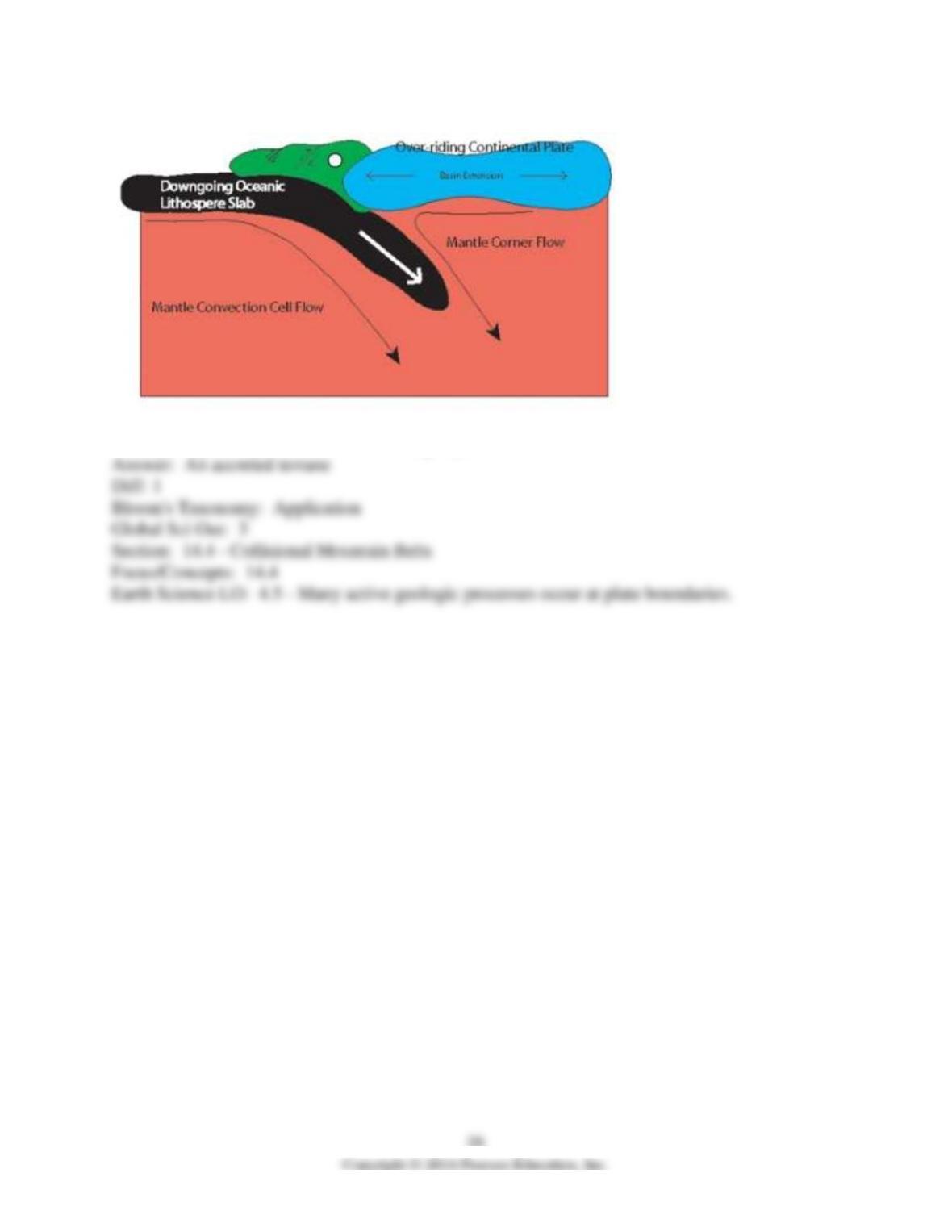
What geologic body is marked in this image by the circle?
6)
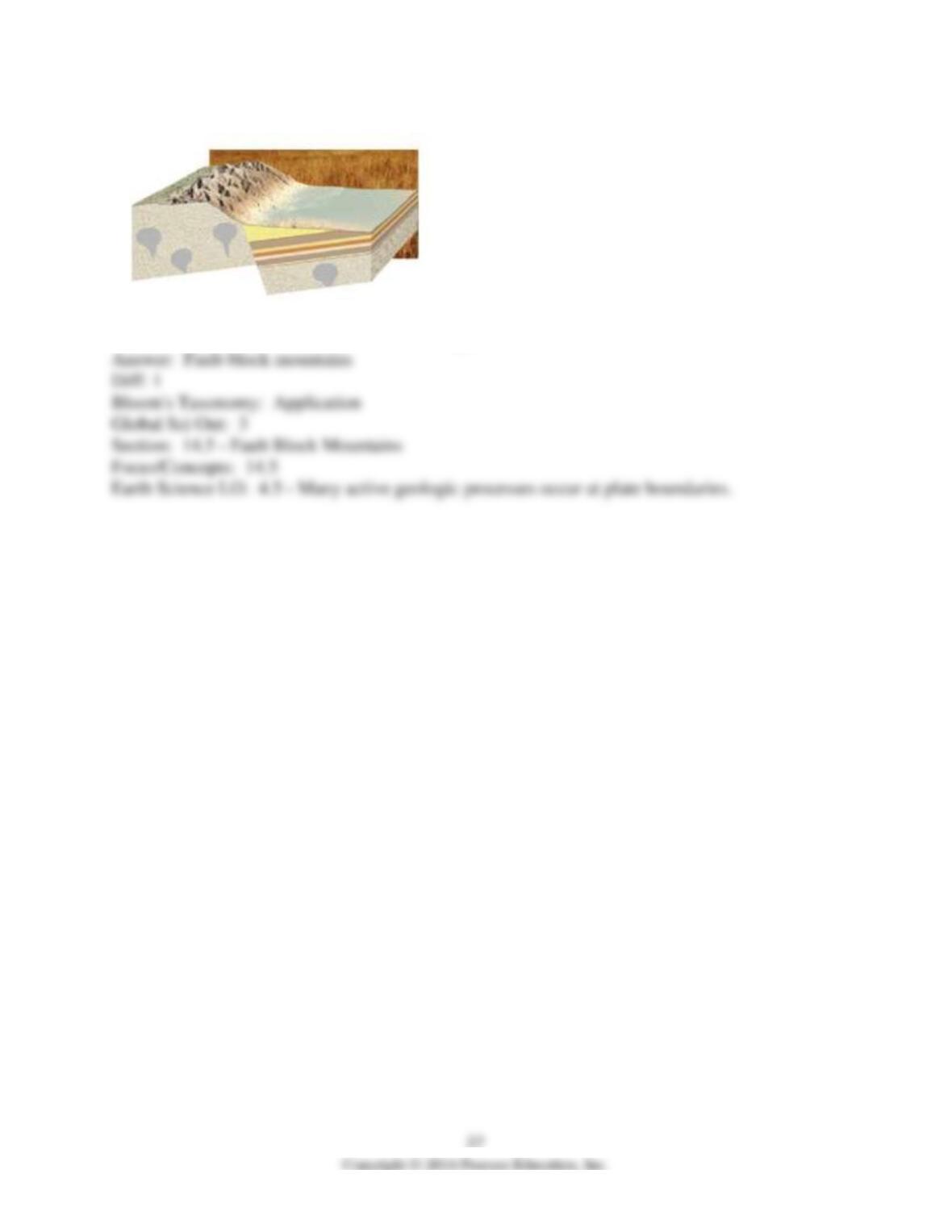
What kind of mountains are visible in this image?