
16
13.4 Matching Questions
Match the seafloor terms to their correct definitions.
A) Gently sloping, submerged extension of the continent
B) Wedge of sediments deposited by turbidity currents that formed at the base of the slope
C) Narrow creases in the seafloor that result from subduction
D) A steep incline that marks the boundary between the continental crust and the oceanic crust
1) Continental Shelf
Diff: 1
Bloom’s Taxonomy: Knowledge
Global Sci Out: 7
Section: 13.2 – Continental Margins
Focus/Concepts: 13.2
Earth Science LO: 2.4 – Earth’s crust has two distinct types: continental and oceanic.
2) Abyssal Plain
Diff: 1
Bloom’s Taxonomy: Knowledge
Global Sci Out: 7
Section: 13.2 – Continental Margins
Focus/Concepts: 13.2
Earth Science LO: 2.4 – Earth’s crust has two distinct types: continental and oceanic.
3) Submarine Trench
Diff: 1
Bloom’s Taxonomy: Knowledge
Global Sci Out: 7
Section: 13.2 – Continental Margins
Focus/Concepts: 13.2
Earth Science LO: 2.4 – Earth’s crust has two distinct types: continental and oceanic.
4) Continental Rise
Diff: 1
Bloom’s Taxonomy: Knowledge
Global Sci Out: 7
Section: 13.2 – Continental Margins
Focus/Concepts: 13.2
Earth Science LO: 2.4 – Earth’s crust has two distinct types: continental and oceanic.

5) Continental Slope
Diff: 1
Bloom’s Taxonomy: Knowledge
Global Sci Out: 7
Section: 13.2 – Continental Margins
Focus/Concepts: 13.2
Earth Science LO: 2.4 – Earth’s crust has two distinct types: continental and oceanic.

Put the layers of an ophiolite complex in order from top to bottom.
A) Deep sea sediments or sedimentary rocks
B) Gabbro
C) Pillow basalts
D) Sheeted dike complex
6) Layer 1 (Uppermost layer)
Diff: 1
Bloom’s Taxonomy: Knowledge
Global Sci Out: 7
Section: 13.6 – The Nature of Oceanic Crust
Focus/Concepts: 13.6
Earth Science LO: 4.4 – Earth’s tectonic plates consist of the rock crust and uppermost mantle,
and move slowly with respect to one another.
7) Layer 2
Diff: 1
Bloom’s Taxonomy: Knowledge
Global Sci Out: 7
Section: 13.6 – The Nature of Oceanic Crust
Focus/Concepts: 13.6
Earth Science LO: 4.4 – Earth’s tectonic plates consist of the rock crust and uppermost mantle,
and move slowly with respect to one another.
8) Layer 3
Diff: 1
Bloom’s Taxonomy: Knowledge
Global Sci Out: 7
Section: 13.6 – The Nature of Oceanic Crust
Focus/Concepts: 13.6
Earth Science LO: 4.4 – Earth’s tectonic plates consist of the rock crust and uppermost mantle,
and move slowly with respect to one another.
9) Layer 4 (Lowermost layer)
Diff: 1
Bloom’s Taxonomy: Knowledge
Global Sci Out: 7
Section: 13.6 – The Nature of Oceanic Crust
Focus/Concepts: 13.6
Earth Science LO: 4.4 – Earth’s tectonic plates consist of the rock crust and uppermost mantle,
and move slowly with respect to one another.
13.5 Essay Questions
1) Explain how sound waves can be used to detail the shape of the seafloor?
2) Satellite imagery from the last decade has shown that the Arctic Ice Cap is getting smaller and
smaller as global climate changes. As this occurs, less and less sea ice forms. This sea ice
protects the northern coastlines of Europe, Asia, and North America from coastal erosion, but
also prevents mineral exploration and shipping. As the sea ice melts, countries such as Norway
and Canada are racing to survey the continental shelf to establish claims. Why would these
countries be so anxious to establish claims to the continental shelf around the Arctic Ocean?
3) Explain the process of accretionary wedge development and provide a location where this is
occurring today.
4) Compare and contrast the formation of accretionary wedges and the process of subduction
erosion.
5) Compare seamounts and guyots. How do the two features differ?
6) Mountain ranges on continents and oceanic ridges can appear to be very similar. What are
some ways they can be similar? What are some ways they are different?
7) Oceanic Ridge A has slow spreading rates of 2-5 cm/yr. Oceanic Ridge B has intermediate
spreading rates of 6-9 cm/yr. Oceanic Ridge C has fast spreading rates of 10-11 cm/yr. Compare
and contrast the topography and structure that would be present at all three spreading centers.
8) Discuss how oceanic crust forms. What process generates the necessary magma? Also, be sure
to discuss ophiolite sequences and discuss how the formation of each layer contributes to the
formation of the crust.
9) Assume the Mid-Continental Rift were to reactivate and divergence were to occur. What
sequence of events would unfold as rifting began? What would eventually happen to the
landmass? What physical features would be left behind as evidence of these processes?
10) What is the average density of oceanic crust vs. that of the asthenosphere? How can mineral
phase changes aid subduction in a situation like this?
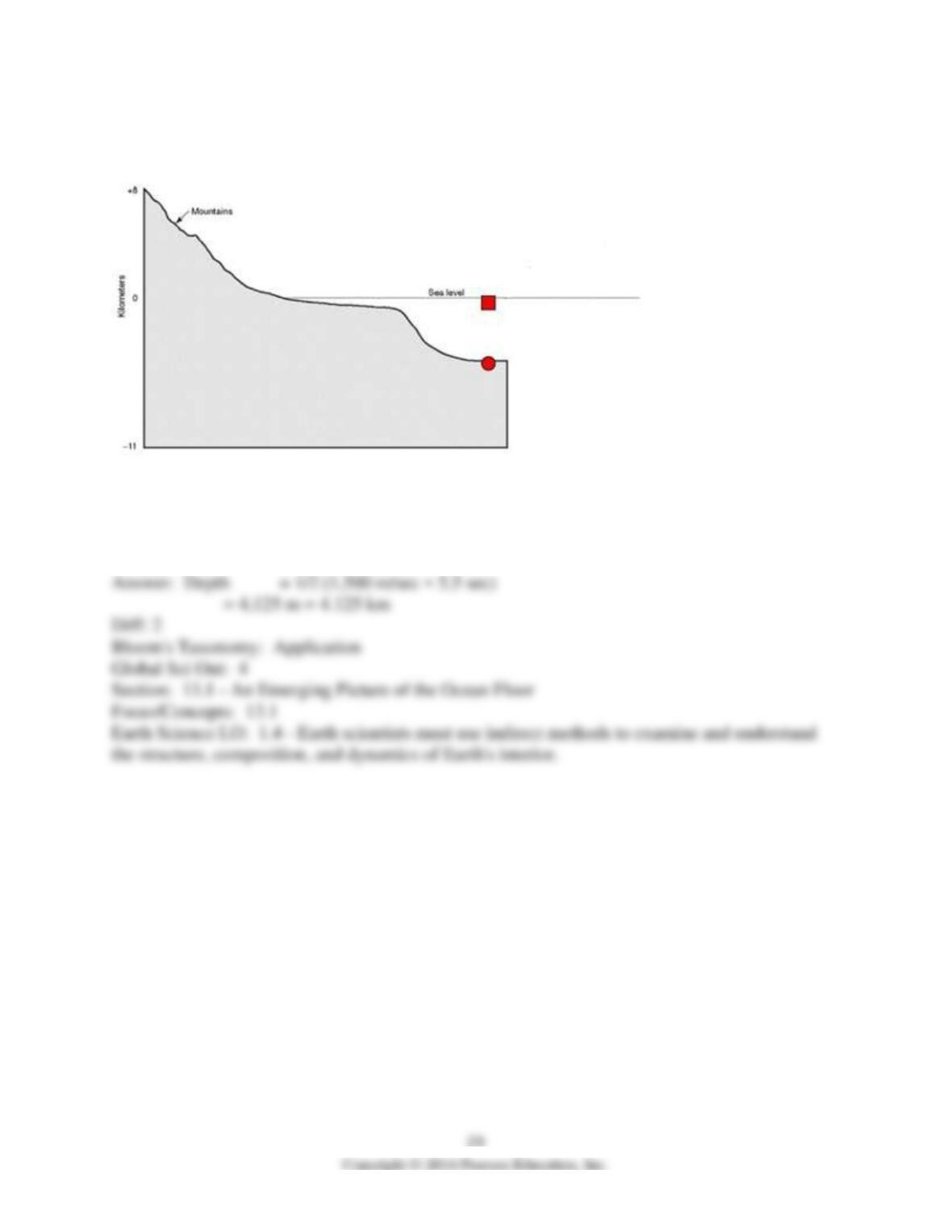
13.6 Visual
1)
Assume you are in a boat (marked with the square) surveying the seafloor in this image. You are
trying to measure the depth to the seafloor (marked with a circle). The velocity of your sonar
ping through the water is 1,500 meters per second. The echo travel time is 5.5 seconds. What is
the depth to the seafloor in kilometers?
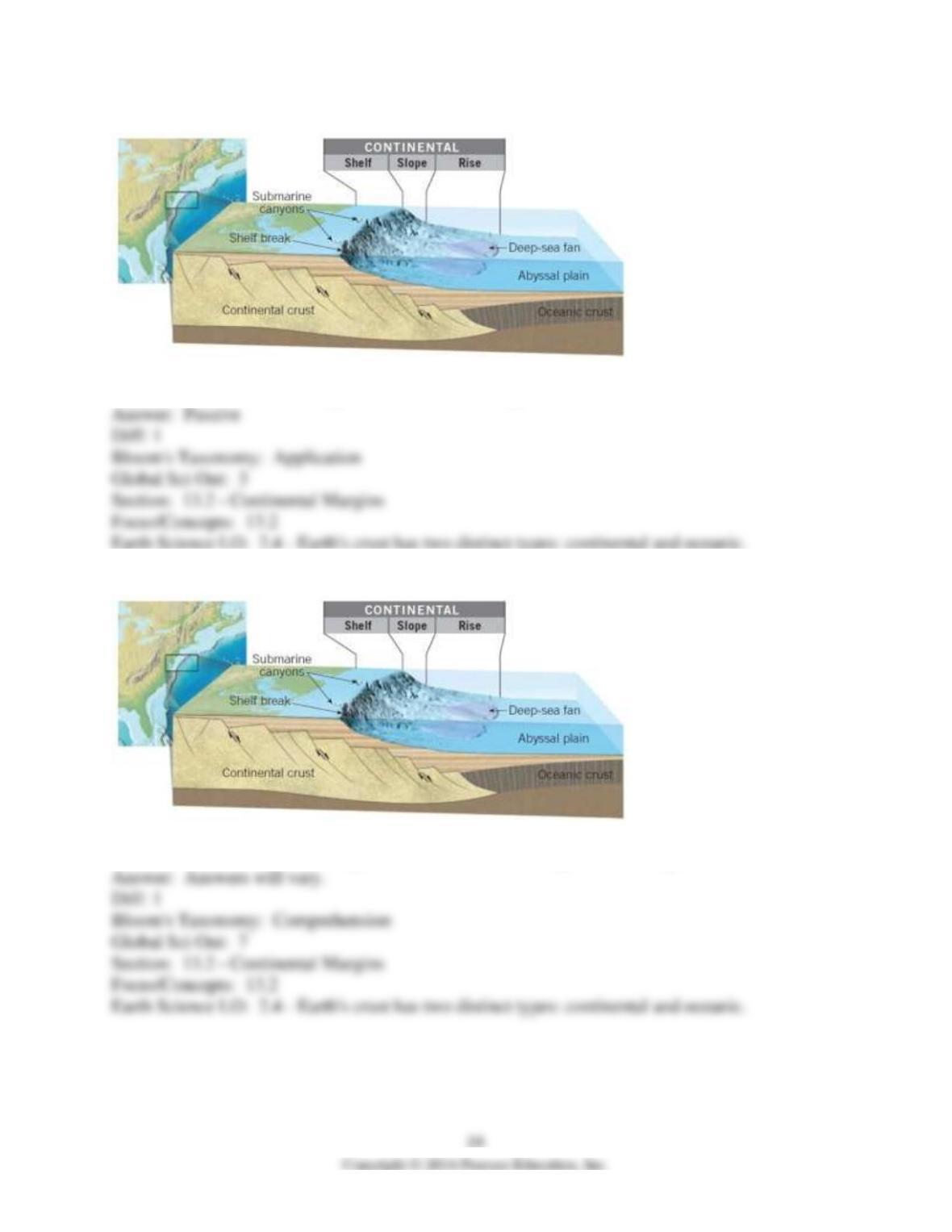
2)
What kind of continental margin is visible in this image?
3)
Give a location of where one might find the continental margin in this image.
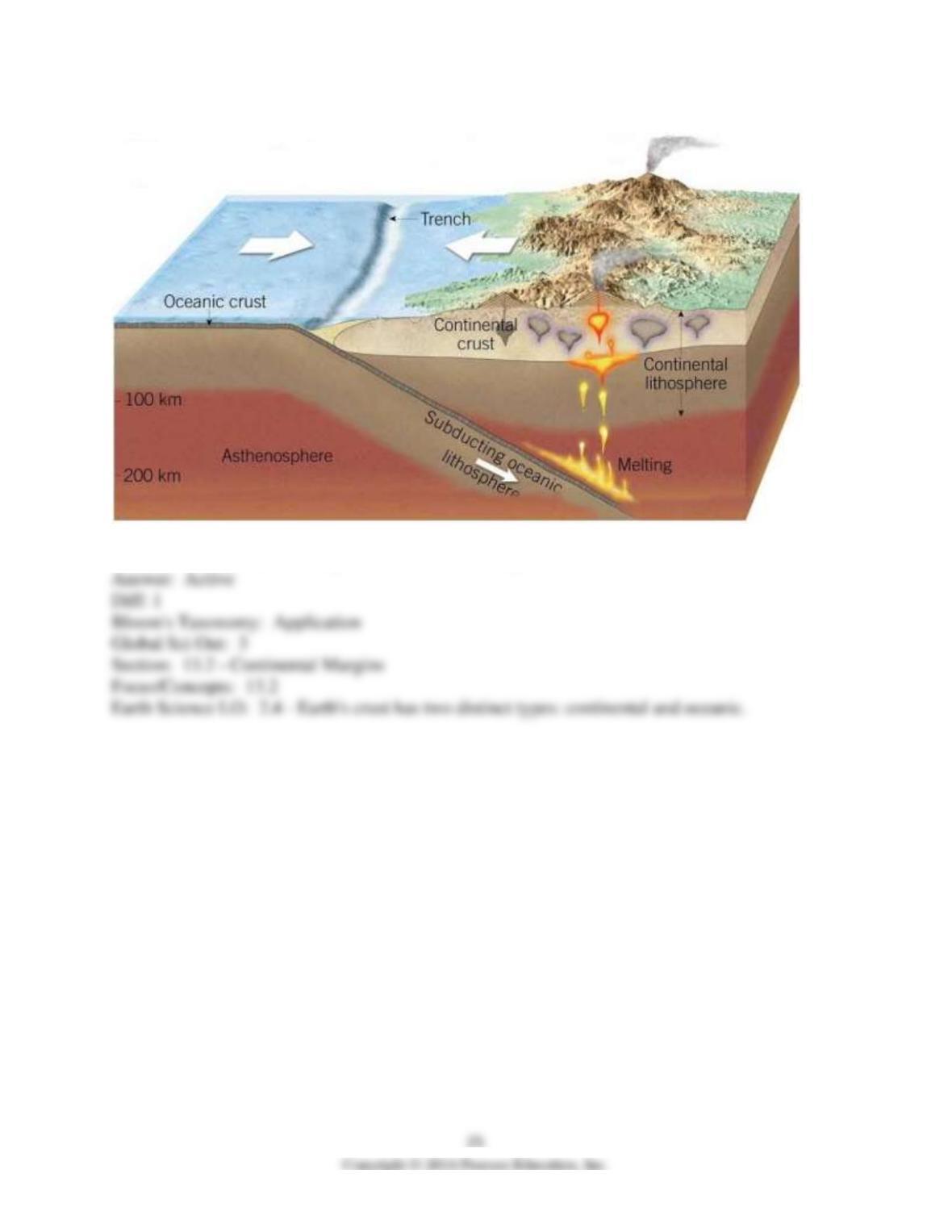
4)
What kind of continental margin is visible in this image?
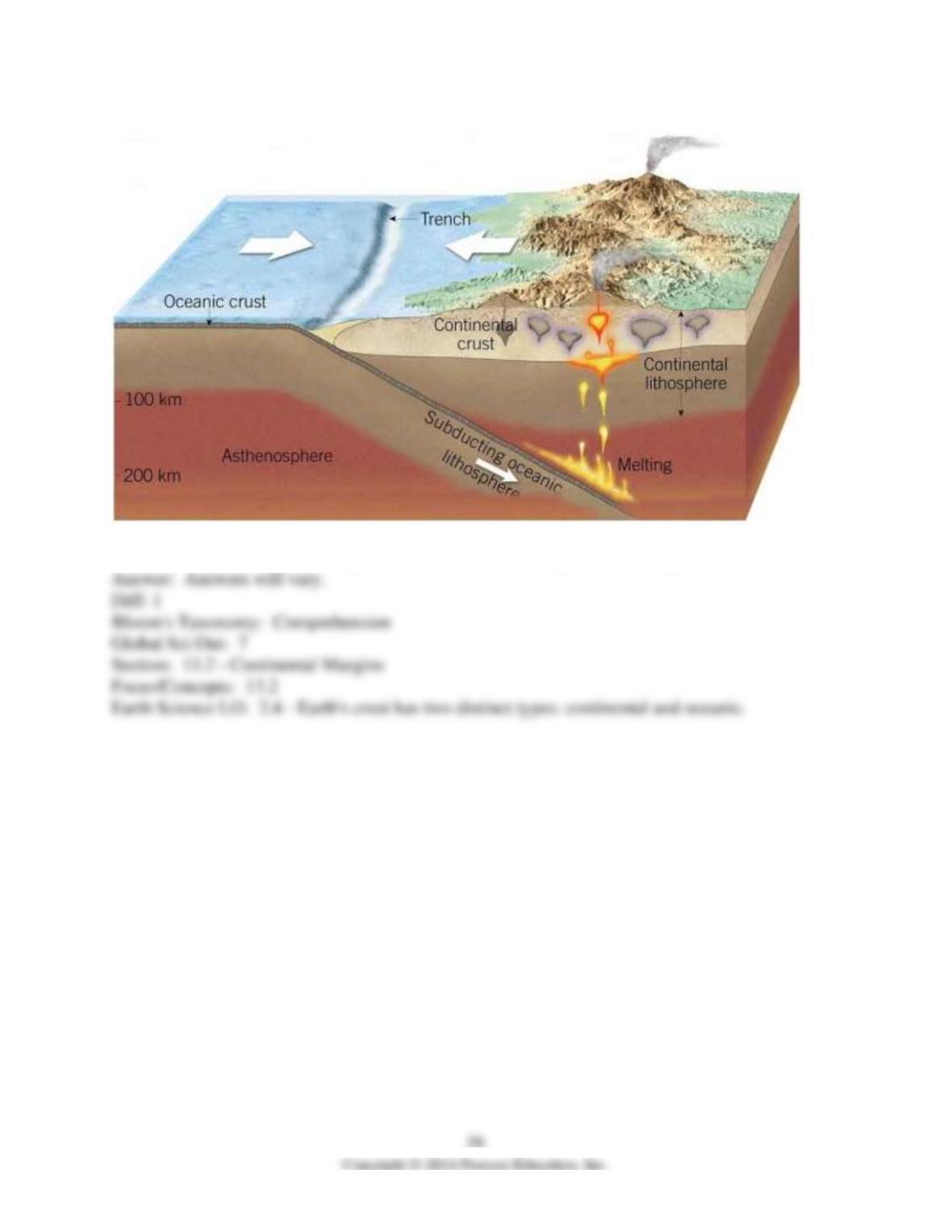
5)
Give a location of where one might find the continental margin in this image.
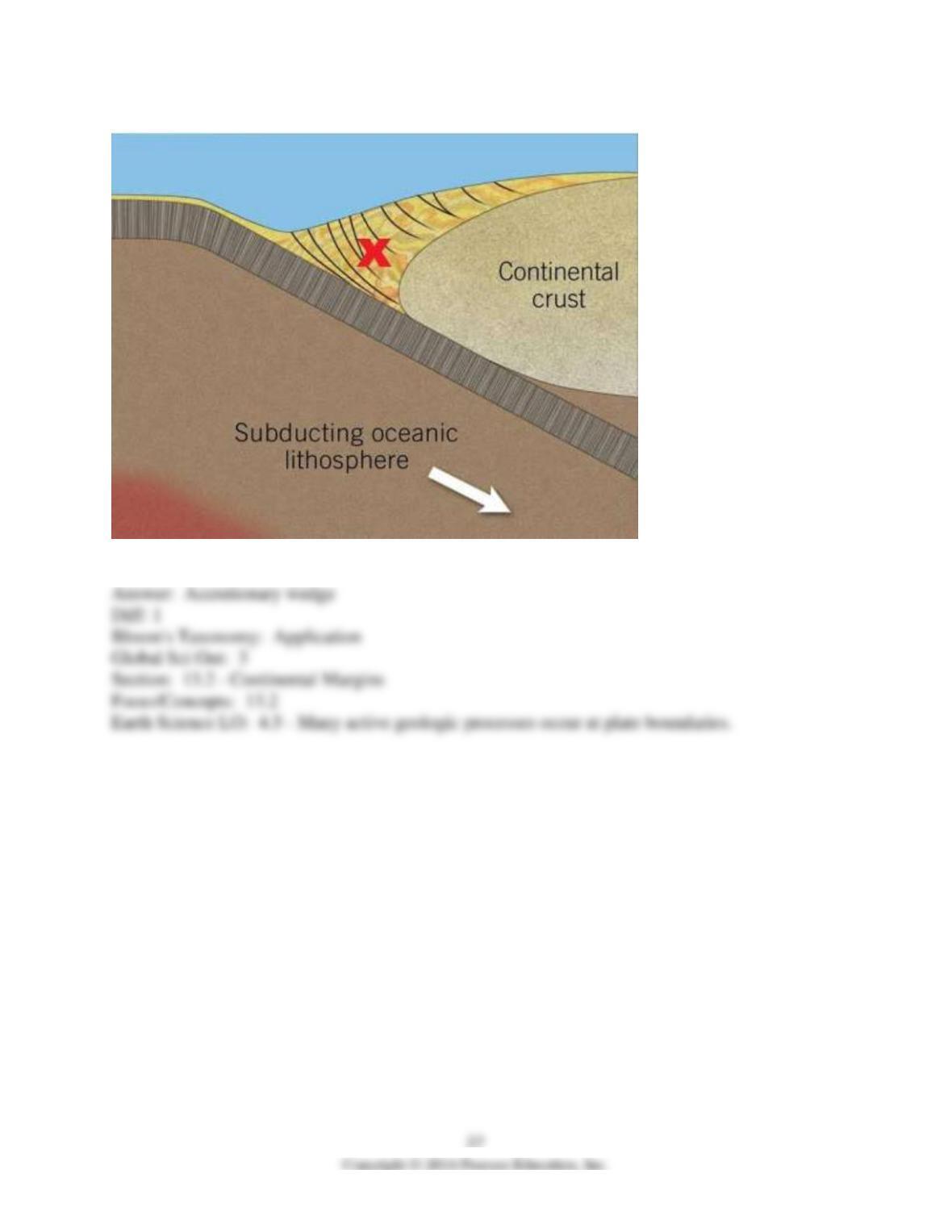
6)
What feature in this image is indicated with arrow X?
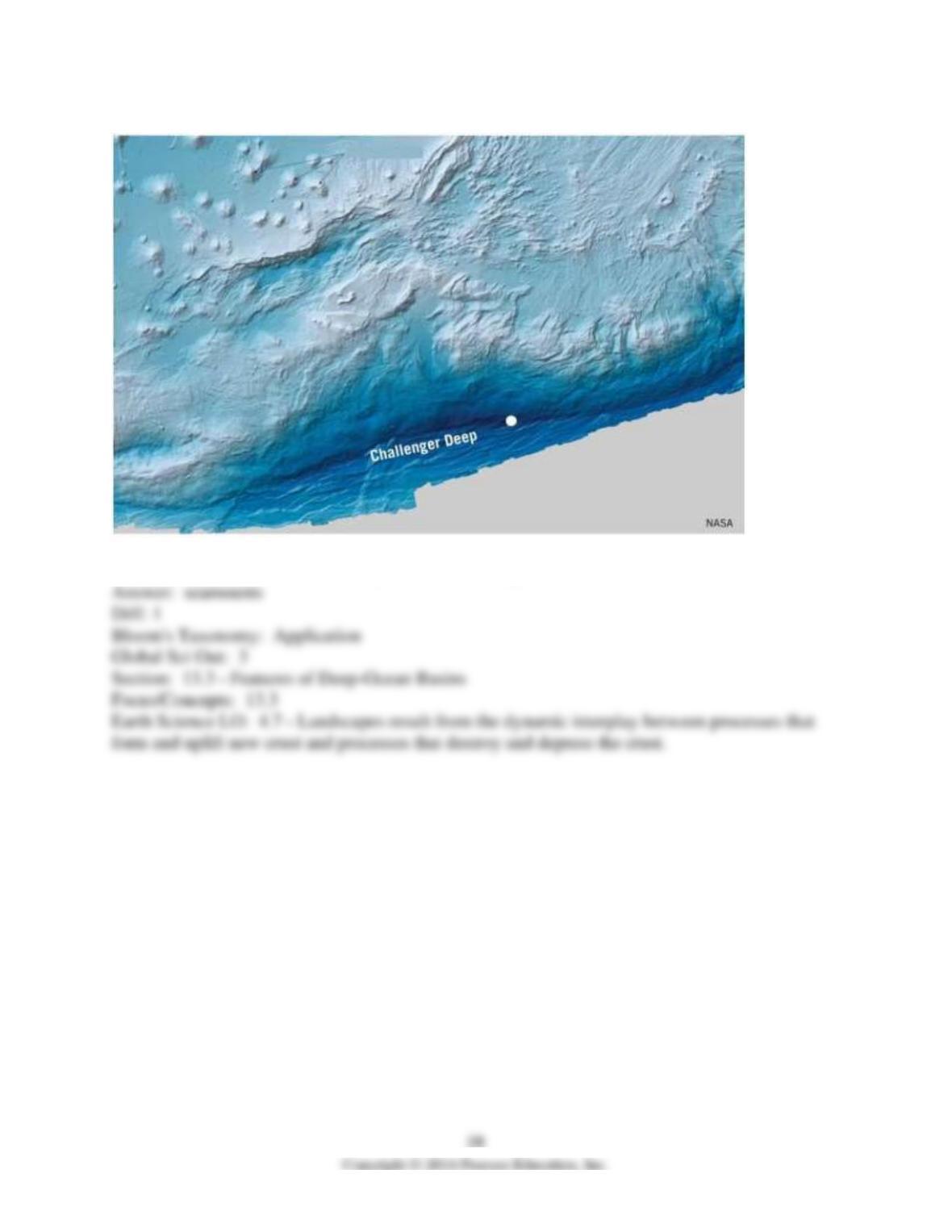
7)
What submarine oceanic feature is present in this image?
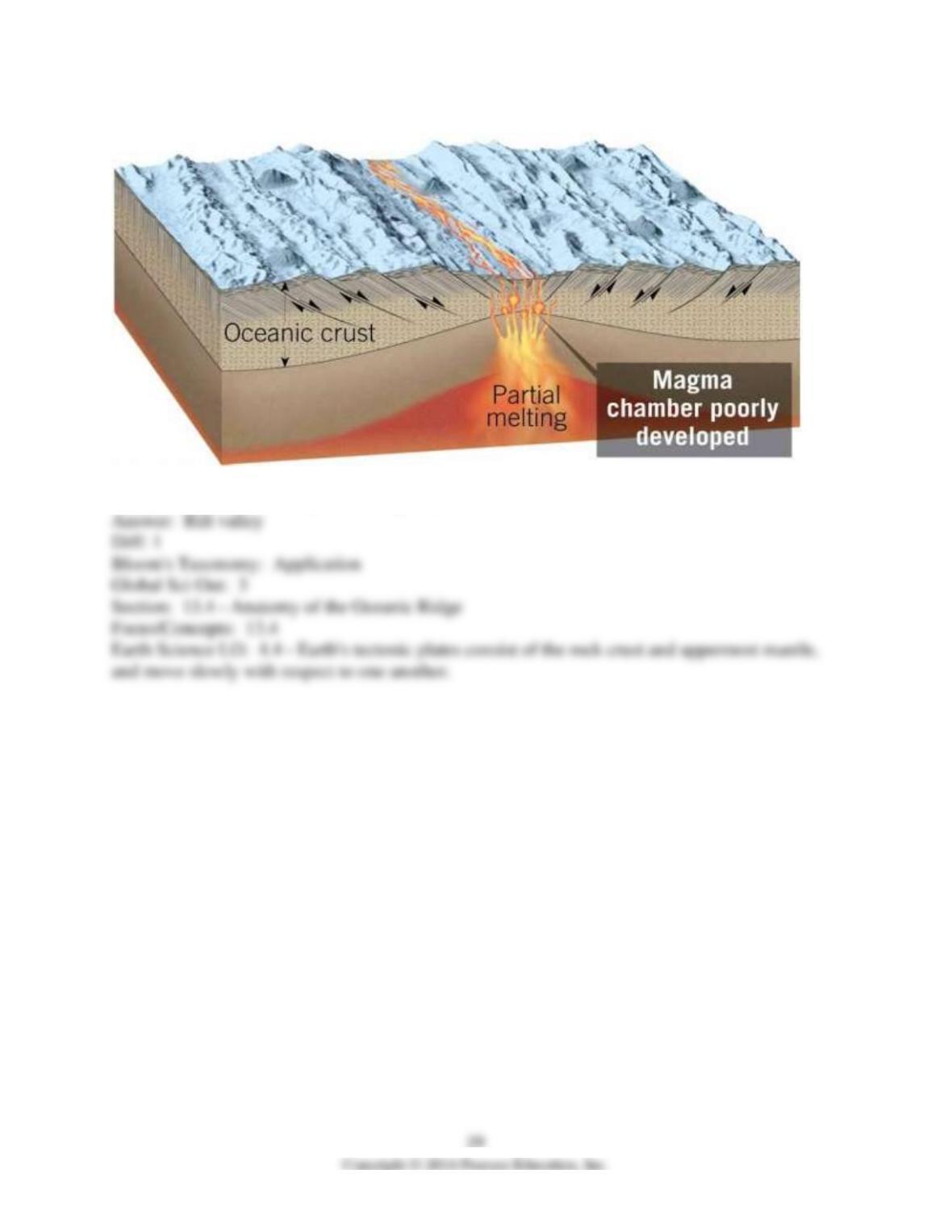
8)
What is the name the valley in this diagram, marked with a box?
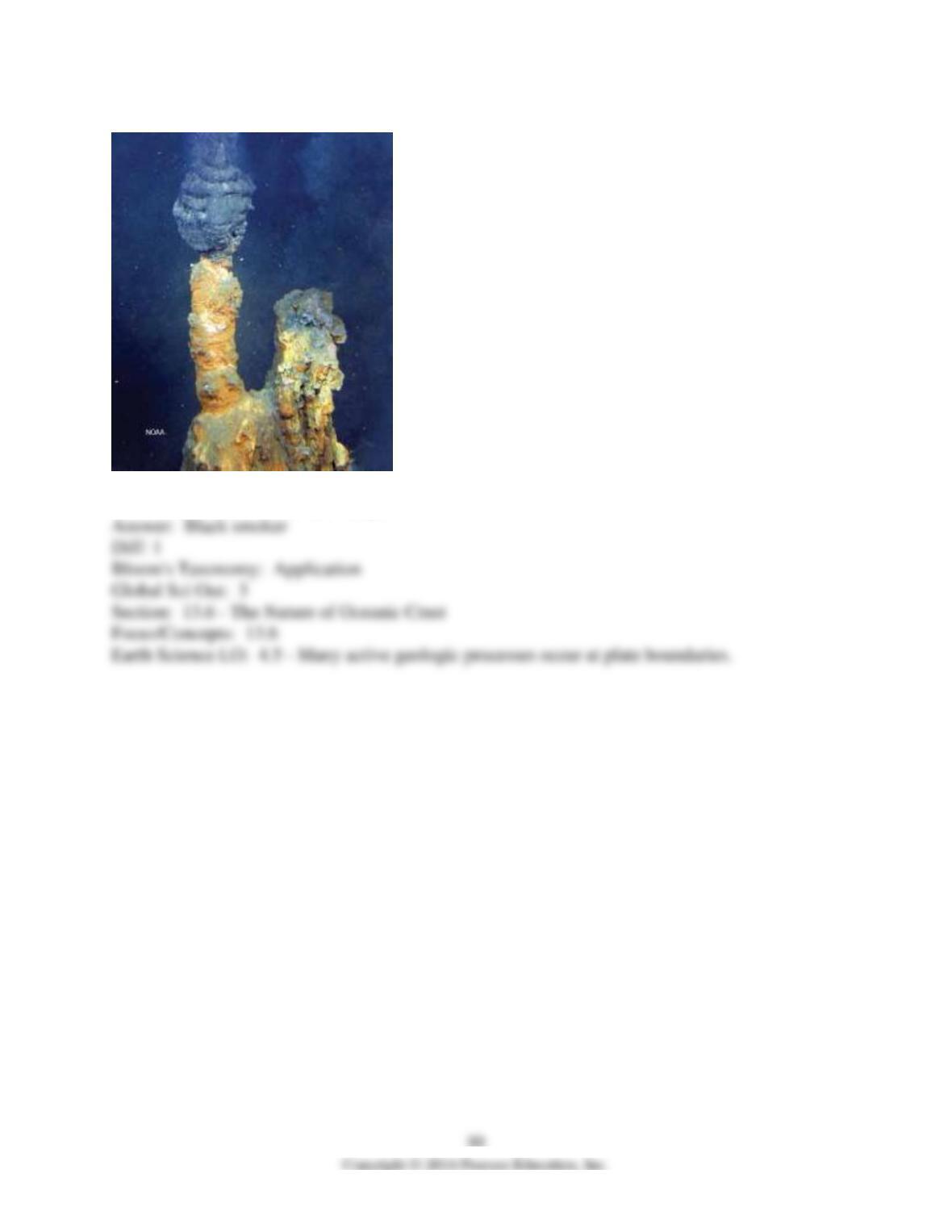
9)
What feature is present in this image?