8) Dakota Hogback
Diff: 1
Bloom’s Taxonomy: Comprehension
Global Sci Out: 2
Section: 10.1 – What Causes Rock to Deform?
Focus/Concepts: 10.1
Earth Science LO: 1.2 – Earth scientists use a large variety of scientific principles to understand
how our planet works.
Match the deformation with the correct definition.
A) Rocks will shatter due to pressure
B) Rocks will change shape due to pressure, but return to their original state when pressure is
released
C) Rocks will change
9) Elastic Deformation
Diff: 1
Bloom’s Taxonomy: Knowledge
Global Sci Out: 7
Section: 10.2 – How Do Rocks Deform?
Focus/Concepts: 10.2
Earth Science LO: 4.1 – Earth’s geosphere changes through geological, hydrological, physical,
chemical, and biological processes that are explained by universal laws.
10) Ductile Deformation
Diff: 1
Bloom’s Taxonomy: Knowledge
Global Sci Out: 7
Section: 10.2 – How Do Rocks Deform?
Focus/Concepts: 10.2
Earth Science LO: 4.1 – Earth’s geosphere changes through geological, hydrological, physical,
chemical, and biological processes that are explained by universal laws.
11) Brittle Deformation
Diff: 1
Bloom’s Taxonomy: Knowledge
Global Sci Out: 7
Section: 10.2 – How Do Rocks Deform?
Focus/Concepts: 10.2
Earth Science LO: 4.1 – Earth’s geosphere changes through geological, hydrological, physical,
chemical, and biological processes that are explained by universal laws.
19
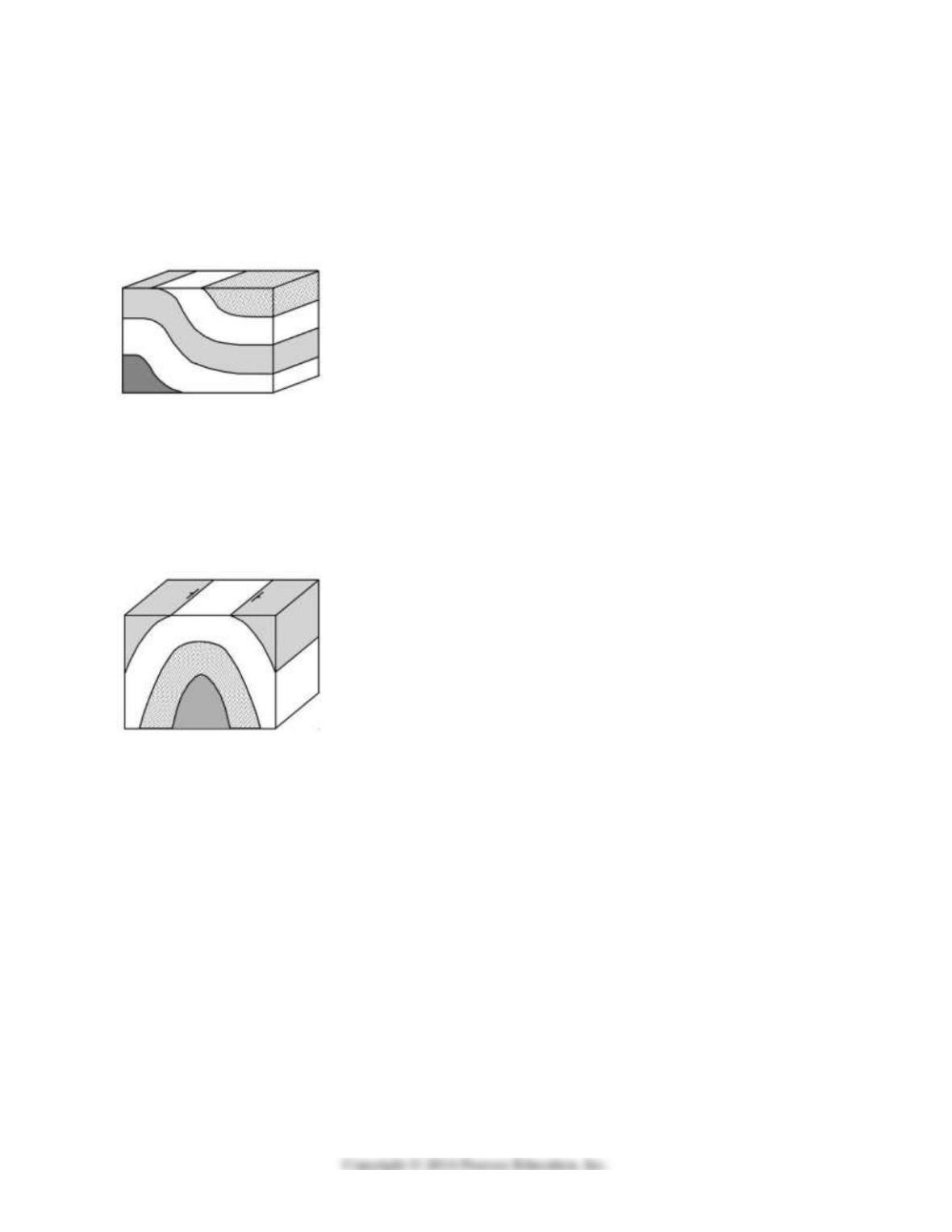
Match the diagram of the fold with the correct name.
A) Monocline
B) Syncline
C) Anticline
12)
Diff: 2
Bloom’s Taxonomy: Knowledge
Global Sci Out: 3
Section: 10.3 – Folds: Rock Structures Formed by Ductile Deformation
Focus/Concepts: 10.3
Earth Science LO: 1.3 – Earth science investigations take many different forms.
13)
Diff: 2
Bloom’s Taxonomy: Knowledge
Global Sci Out: 3
Section: 10.3 – Folds: Rock Structures Formed by Ductile Deformation
Focus/Concepts: 10.3
Earth Science LO: 1.3 – Earth science investigations take many different forms.
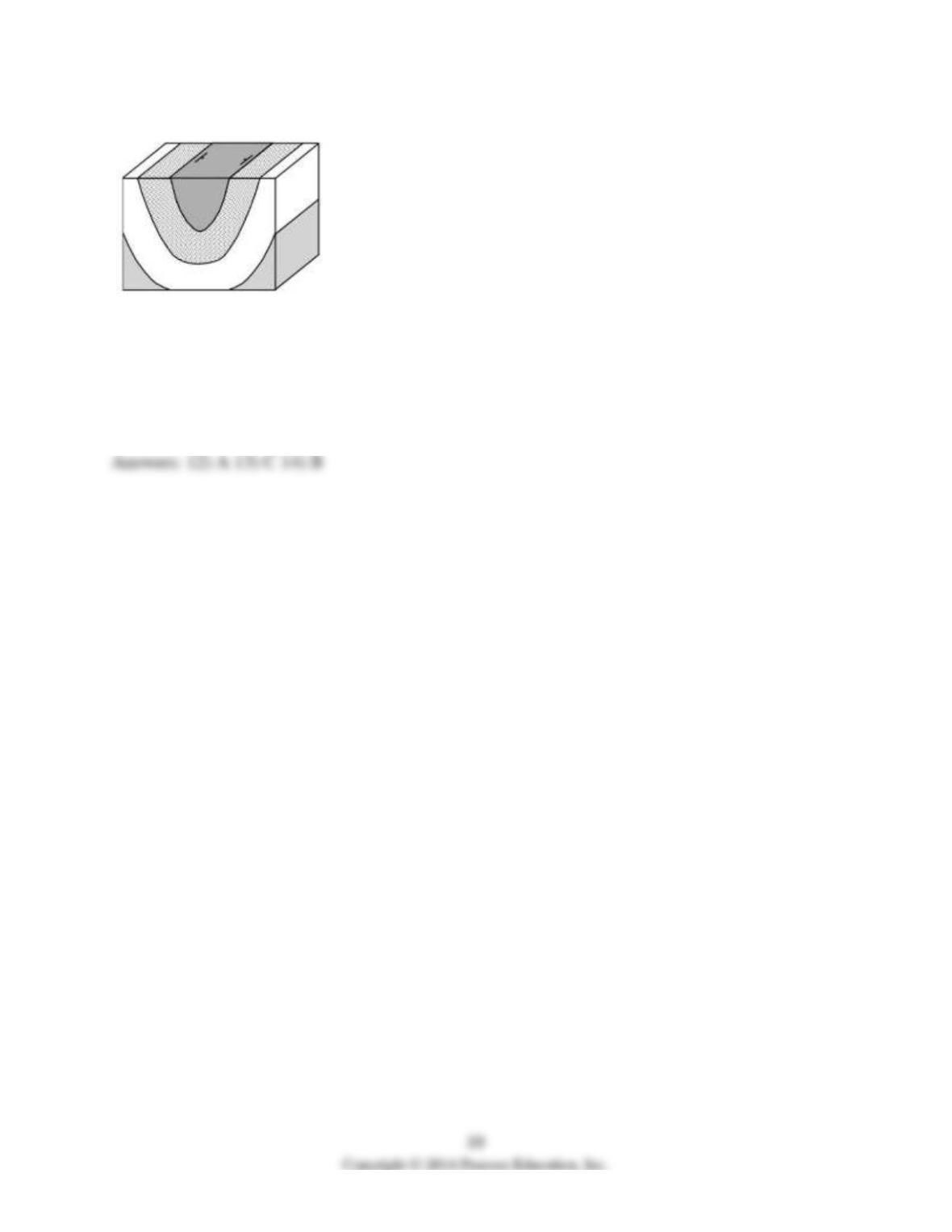
14)
Diff: 2
Bloom’s Taxonomy: Knowledge
Global Sci Out: 3
Section: 10.3 – Folds: Rock Structures Formed by Ductile Deformation
Focus/Concepts: 10.3
Earth Science LO: 1.3 – Earth science investigations take many different forms.
Match the fault with the appropriate stress that caused it.
A) Compression
B) Tension
C) Shear
15) Normal Fault
Diff: 1
Bloom’s Taxonomy: Comprehension
Global Sci Out: 2
Section: 10.4 – Faults and Joints: Rock Structures Formed by Brittle Deformation
Focus/Concepts: 10.4
Earth Science LO: 1.3 – Earth science investigations take many different forms.
16) Reverse Fault
Diff: 1
Bloom’s Taxonomy: Comprehension
Global Sci Out: 2
Section: 10.4 – Faults and Joints: Rock Structures Formed by Brittle Deformation
Focus/Concepts: 10.4
Earth Science LO: 1.3 – Earth science investigations take many different forms.
17) Strike-Slip Fault
Diff: 1
Bloom’s Taxonomy: Comprehension
Global Sci Out: 2
Section: 10.4 – Faults and Joints: Rock Structures Formed by Brittle Deformation
Focus/Concepts: 10.4
Earth Science LO: 1.3 – Earth science investigations take many different forms.
10.5 Essay Questions
1) Explain the role confining pressure will have on rock strength and how the rock will deform
under pressure.
2) What are the four factors that influence rock strength? Describe how they will affect the rock
when it is under stress.
3) The Appalachian Mountains were formed when the North American continent collided with
Africa over 250 million years ago to form the supercontinent Pangaea. What sort of structural
features would you expect to find in this region? Explain your answers.
4) There is a campground at Big Bend National Park in Texas that is called The Basin due to the
fact it is in a structural basin. However, The Basin is a topographic high for the region. How is
this geologically possible? Propose a scenario that might account for this.
5) Despite not seeing the severe tectonic forces of the Rocky Mountains, the interior states of
Illinois and Michigan have basins (the Illinois and Michigan Basins). However, these basins
formed in a different way. Explain how the Illinois and Michigan Basins formed without
significant tectonic influence.
6) Over the course of the last couple of centuries, major businesses all over the world have spent
a great deal of time and money searching for and studying structural geologic features. They
search for these structures in order to extract an economically important resource from them.
Which companies would be most interested in such structural features? How would they use
them? How would these structures trap the substances these companies are interested in?
7) The Basin and Range Province is a geologic region in the American Southwest characterized
by a series of north-south trending faults. Describe the structural development of the Basin and
Range Province, making sure to comment on the forces involved.
8) Compare and contrast thrust faults and reverse faults.
10.6 Visual
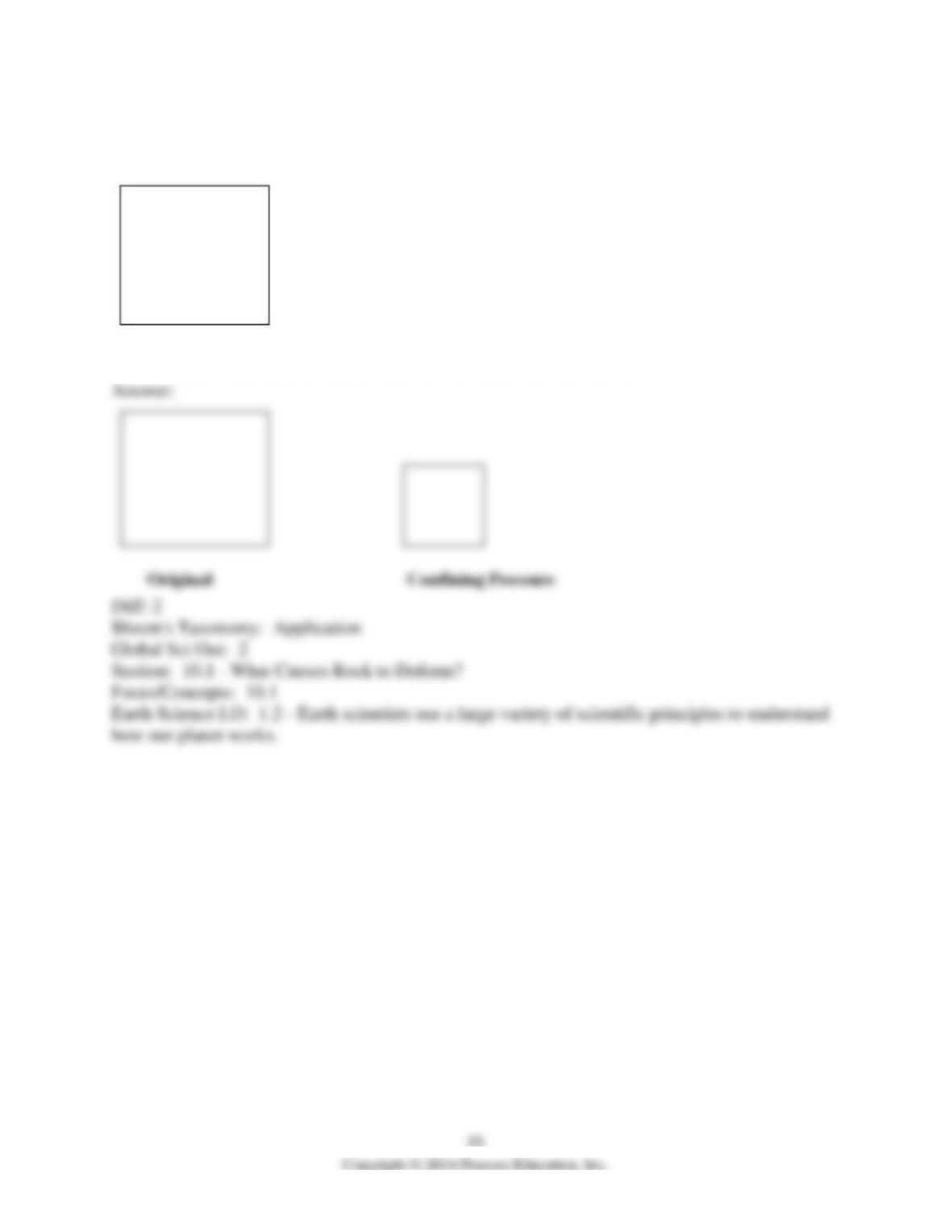
1)
Assume that the accompanying square is being subjected to confining pressure. How will the
size or shape of this square change? (Please draw your answer below.)
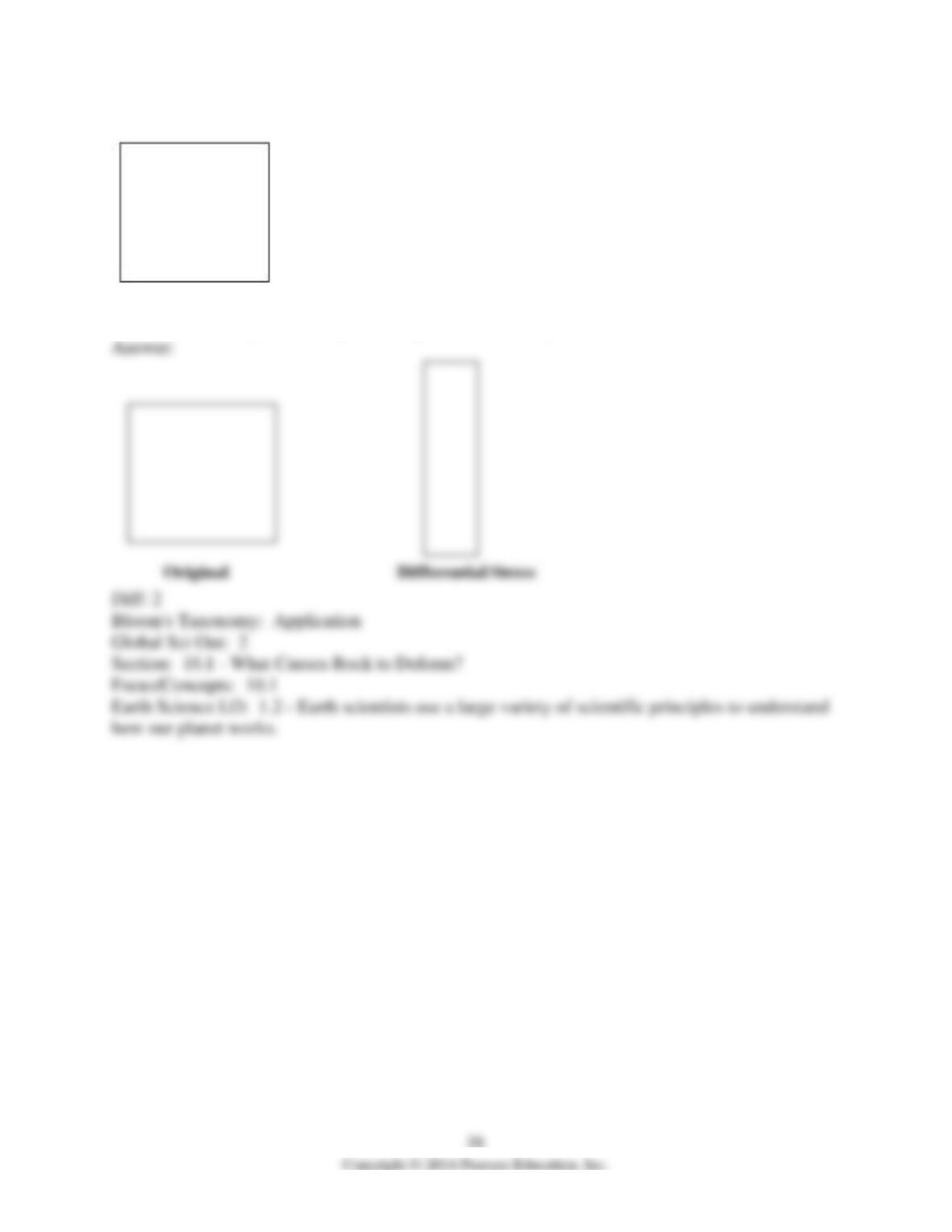
2)
Assume that the square accompanying this question is being subjected to differential stress. How
will the size or shape of this square change? (Please draw your answer below.)
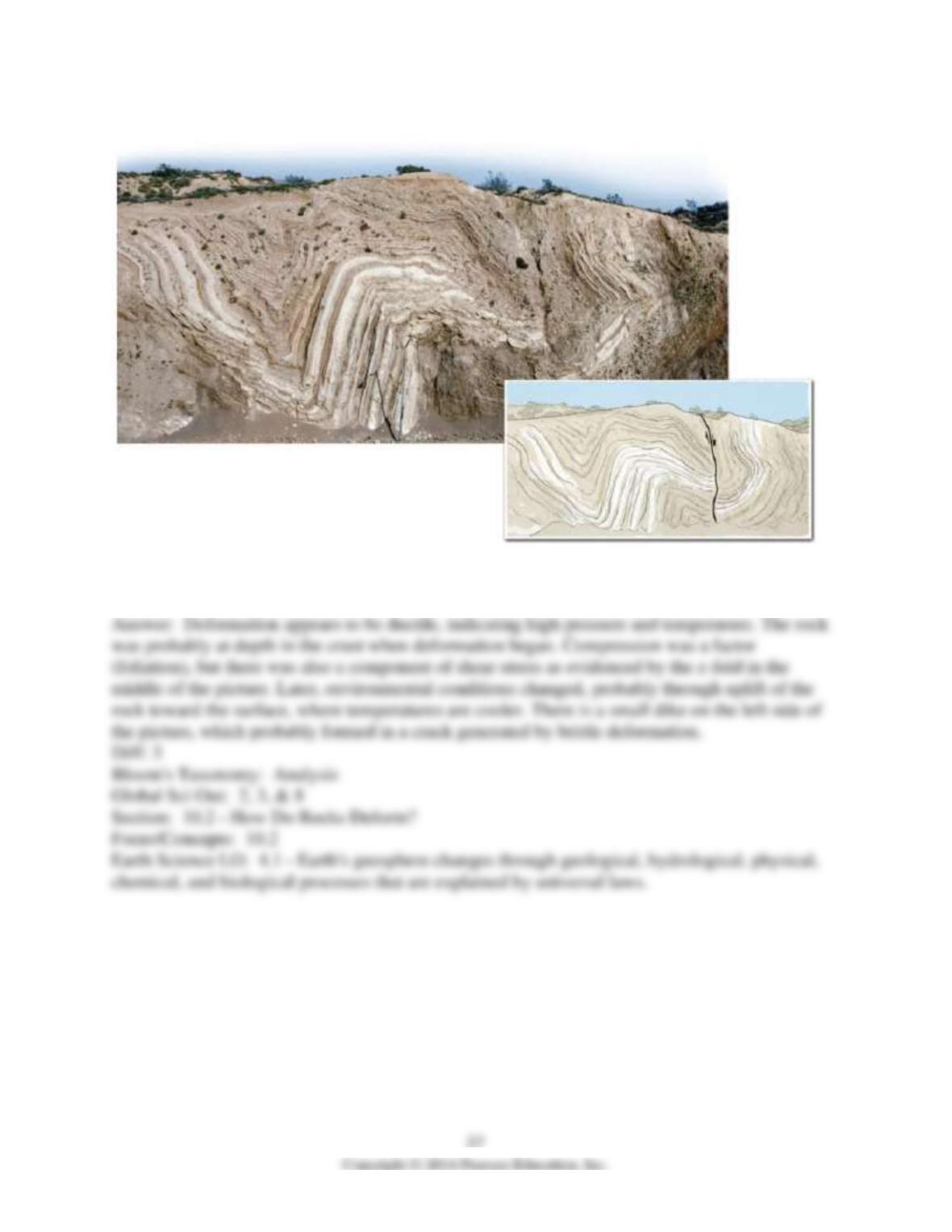
3)
Using the metamorphic rock visible in this image, explain the deformation history of the rock.
Make sure to comment on environmental conditions present.
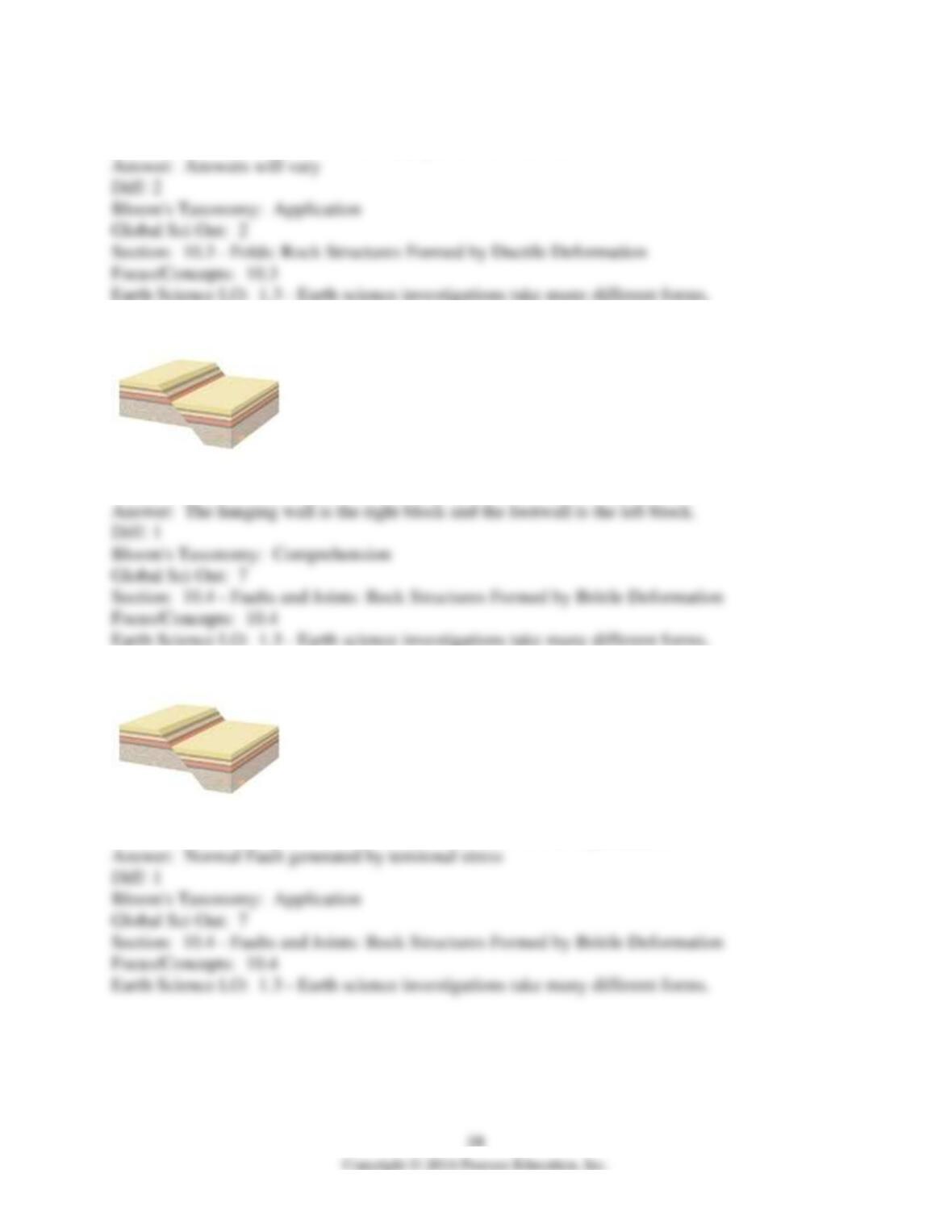
4) Draw a basic symmetrical fold. Label the hinge line and the limbs. Indicate with arrows the
direction(s) compressive force was coming from to create this fold.
5)
Using this image, indicate which is the hanging wall and which is the footwall.
6)
What kind of fault is present in this image? What kind of stress generated it?
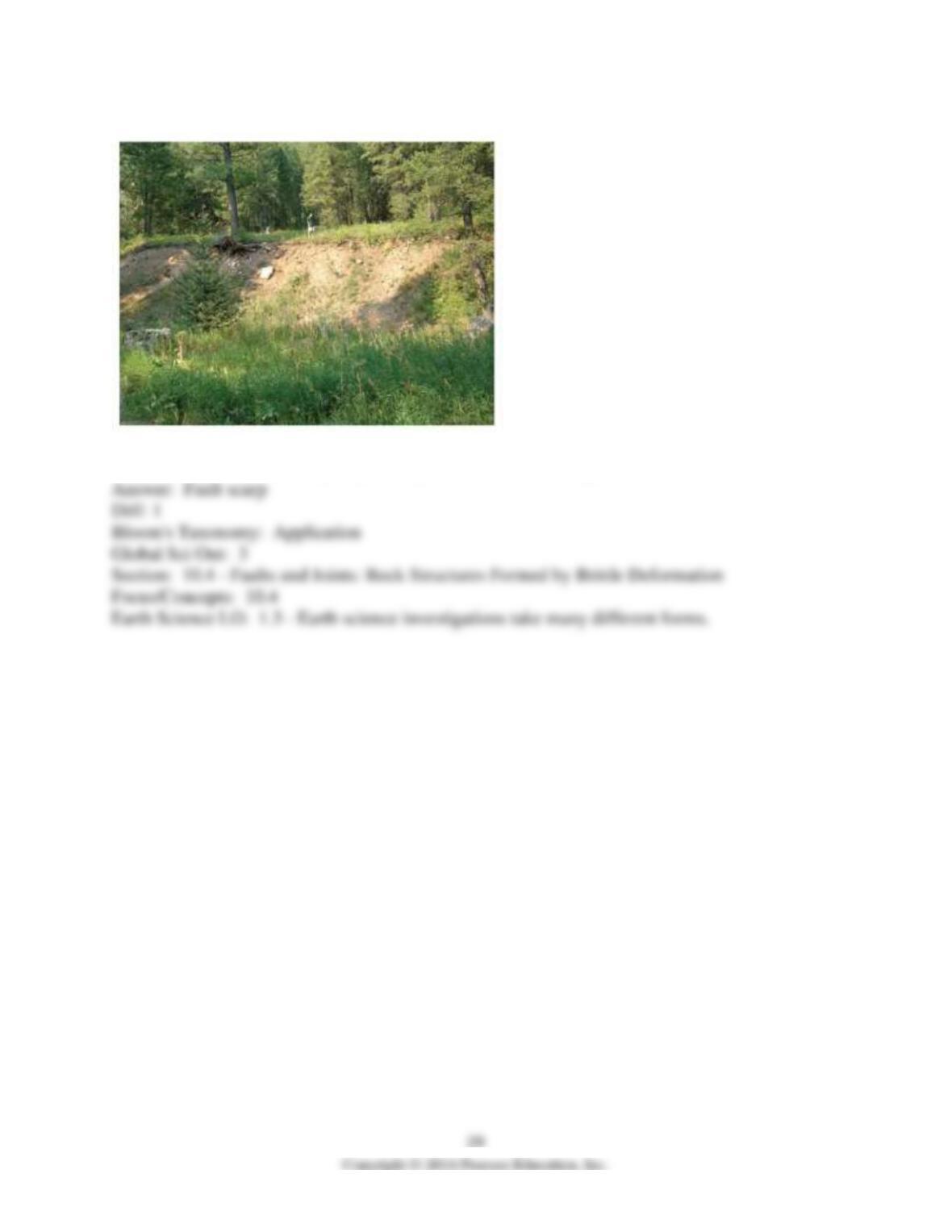
7)
What feature, evidence of dip-slip activity, is shown in this image?
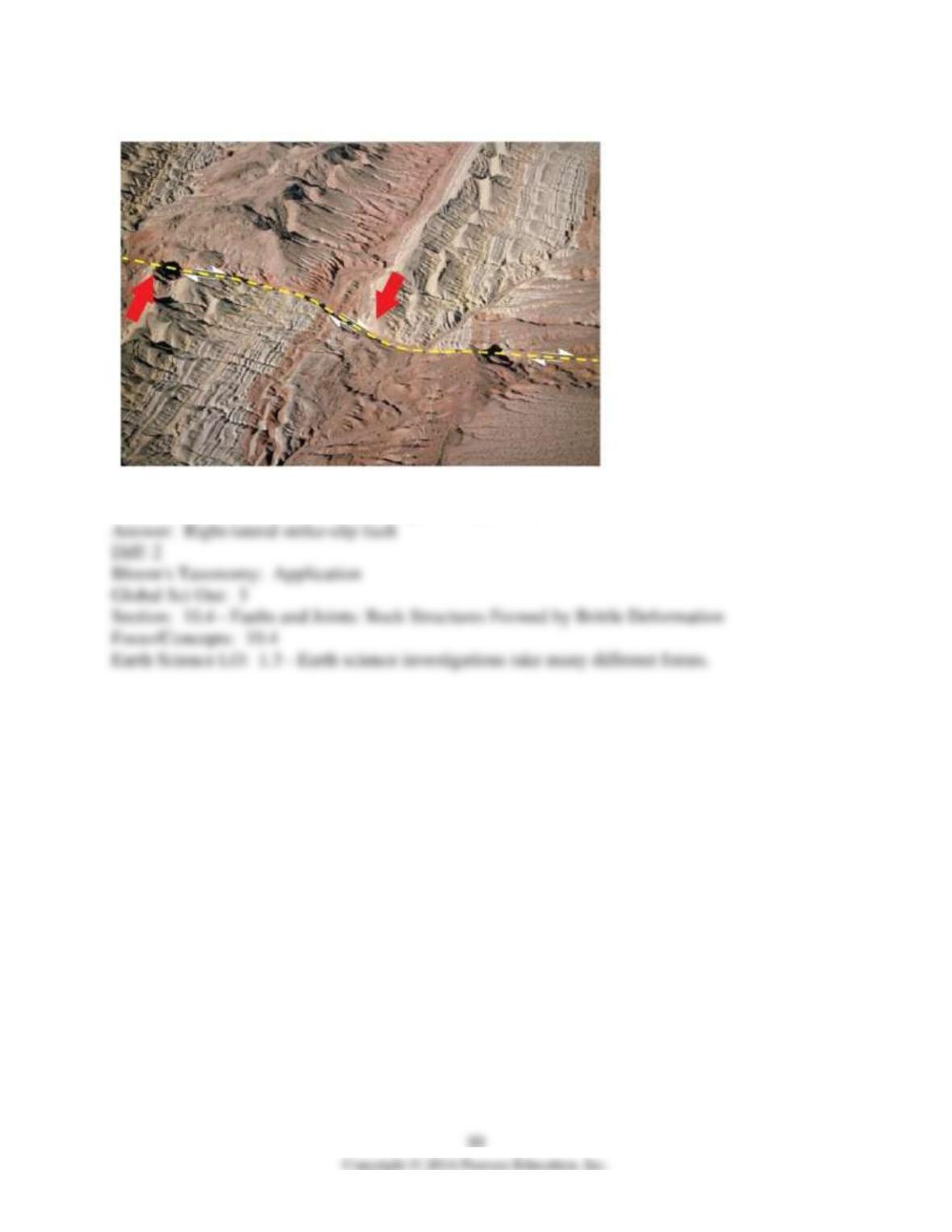
8)
What kind of fault is present in this image? (Be specific.)
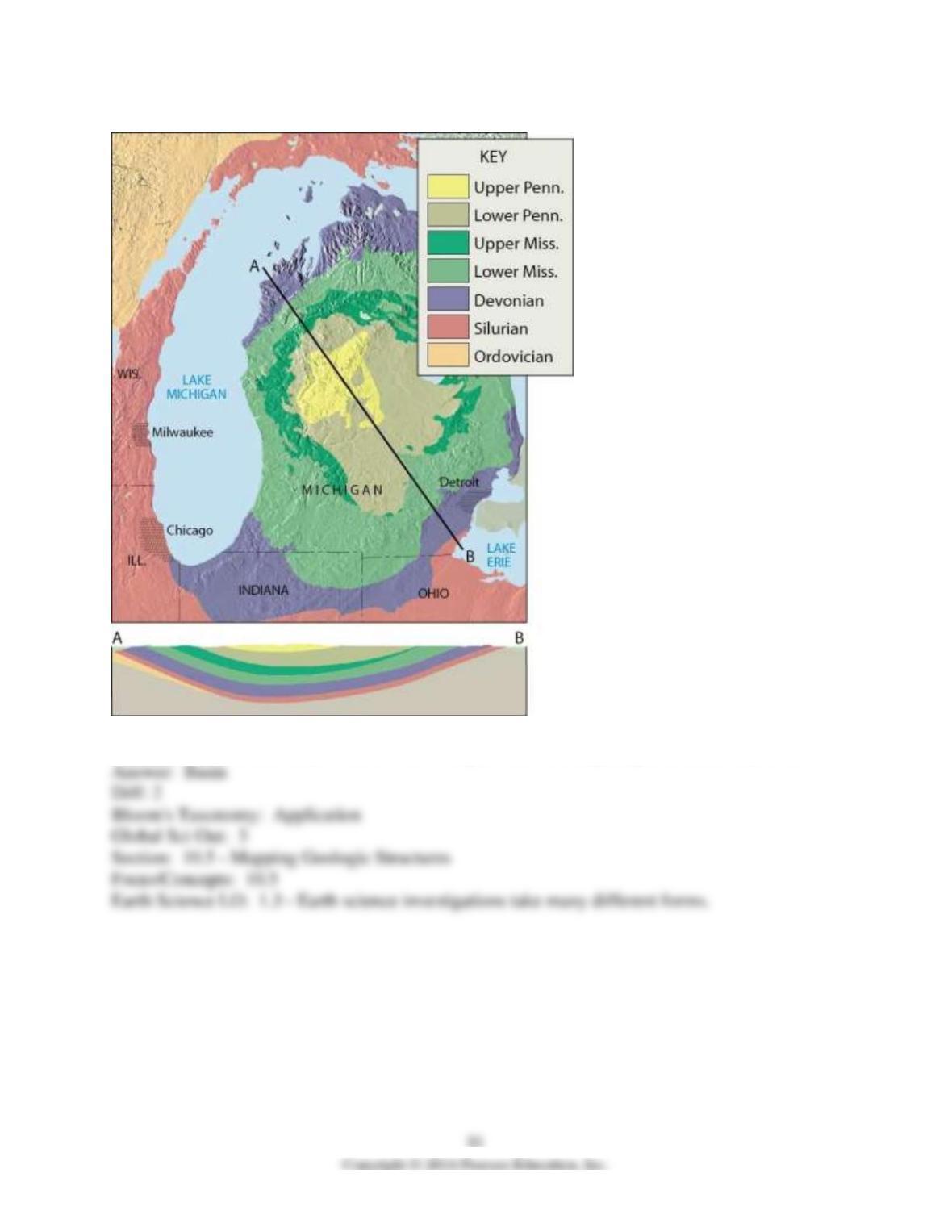
9)
Based on the strikes and dips visible in this image, what kind of geologic structure is present?
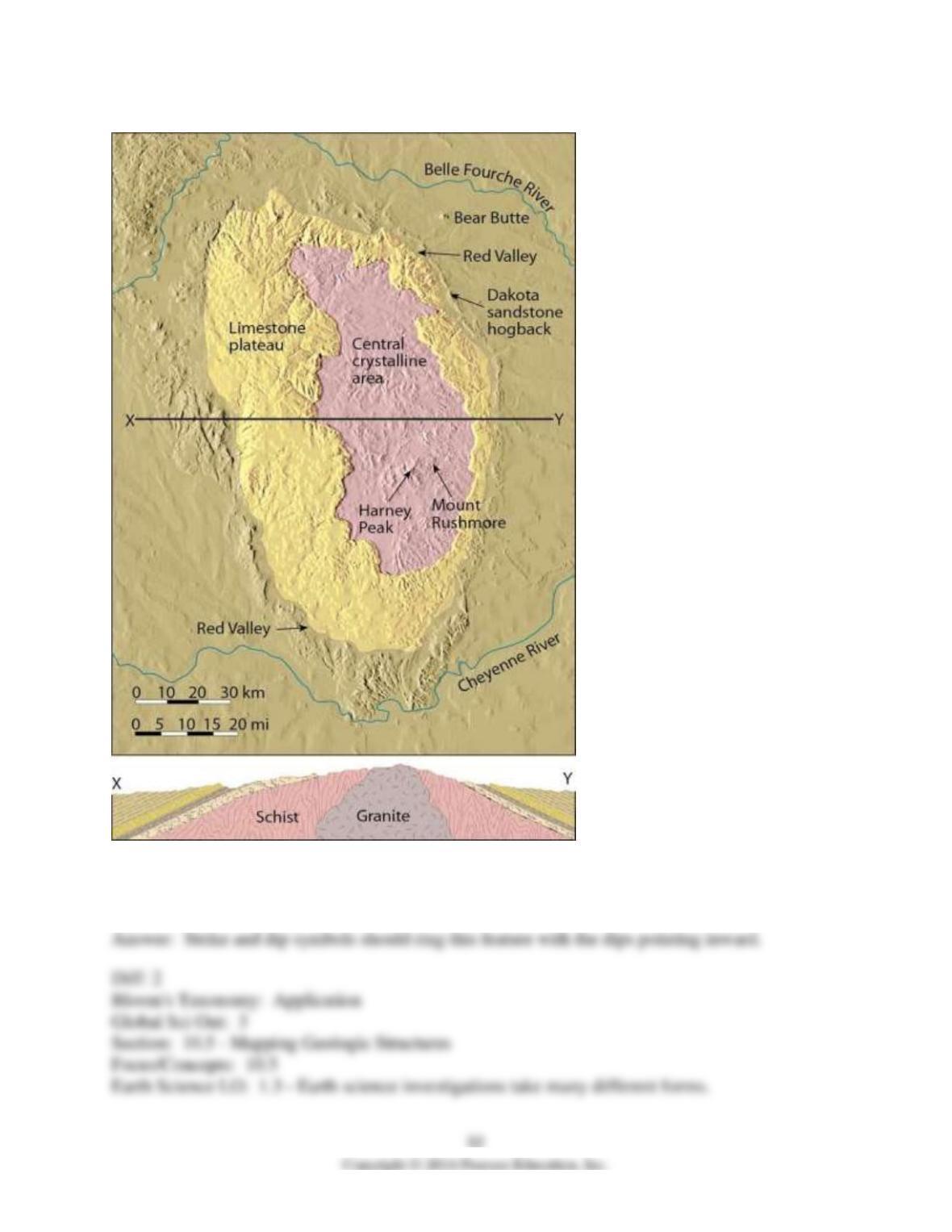
10)
The accompanying image shows the geologic map of the Black Hills Uplift in western South
Dakota. This area represents a structural dome. Indicate the dome on this map by drawing
appropriate strike and dip symbols.