
In looking at yourself in a steamy mirror you wipe just enough moisture away to barely
see a full view of your face. If you move back from the mirror you’ll see
A) a bit more of your face.
B) a bit less of your face.
C) the same amount of your face.
Answer:
For the following acid-base reaction, identify what is formed in the space marked.
HF + KOH ???? + H⇌2O
A) KF
B) H3OF
C) KOH2
D) KOH2F
E) none of the above
Answer:
Many solvents expand to occupy greater volumes with increasing temperature. What
happens to the concentration of a solution made with such a solvent as its temperature is
increased?

A) Since concentration depends on how much mass is dissolved in a given volume, as
the volume increases, the concentration decreases.
B) The concentration of a solution increases as the solute fits into the new spaces
between the molecules.
C) Since it has a greater ability to dissolve more solute at a higher temperature, its
concentration has decreased.
D) Since it has a greater ability to dissolve more solute at a higher temperature, its
concentration has increased.
Answer:
Is the mass of an atomic nucleus greater or less than the sum of the masses of the
nucleons composing it? Why don’t the nucleon masses add up to the total nuclear mass?
A) Greater. We need to add the masses of the surrounding electrons to the masses of the
nucleons.
B) Neither. The mass of the atomic nucleus is exactly the sum of the masses of the
nucleons.
C) Less. The individual nucleons have greater mass when separated from the nucleus.
This additional mass is a result of the energy of separation.
D) Greater. The mass of the atomic nucleus also has mass of the “atomic glue” that
holds the nucleons together in the nucleus.
Answer:

Water that is denser than surrounding water sinks. With respect to the densities of
deeper water, how far does it sink?
A) until it encounters water of the same density
B) until it encounters water that is less dense
C) until it encounters water that is denser
D) None of the above.
Answer:
A terminal moraine marks the
A) farthest a glacier can spread from side-to-side.
B) location where a glacier started to form.
C) farthest point of a glacier’s advance.
D) location where outwash forms.
Answer:
A friend says that the heavyweight champion of the world cannot exert a force of 50 N
on a piece of tissue paper with his best punch. The tissue paper is held in midair, no
tricks. You
A) agree that it can’t be done.

B) have reservations about this assertion.
C) disagree, for a good punch easily delivers this much force.
Answer:
Which element has the atomic number 9?
A) F
B) Ne
C) B
D) Na
E) Be
Answer:
The movement of seismic waves through Earth’s interior provides evidence of internal
layering. The first boundary discovered was between the
A) upper and lower mantle.
B) inner and outer core.
C) outer core and the mantle.
D) mantle and the crust.
Answer:
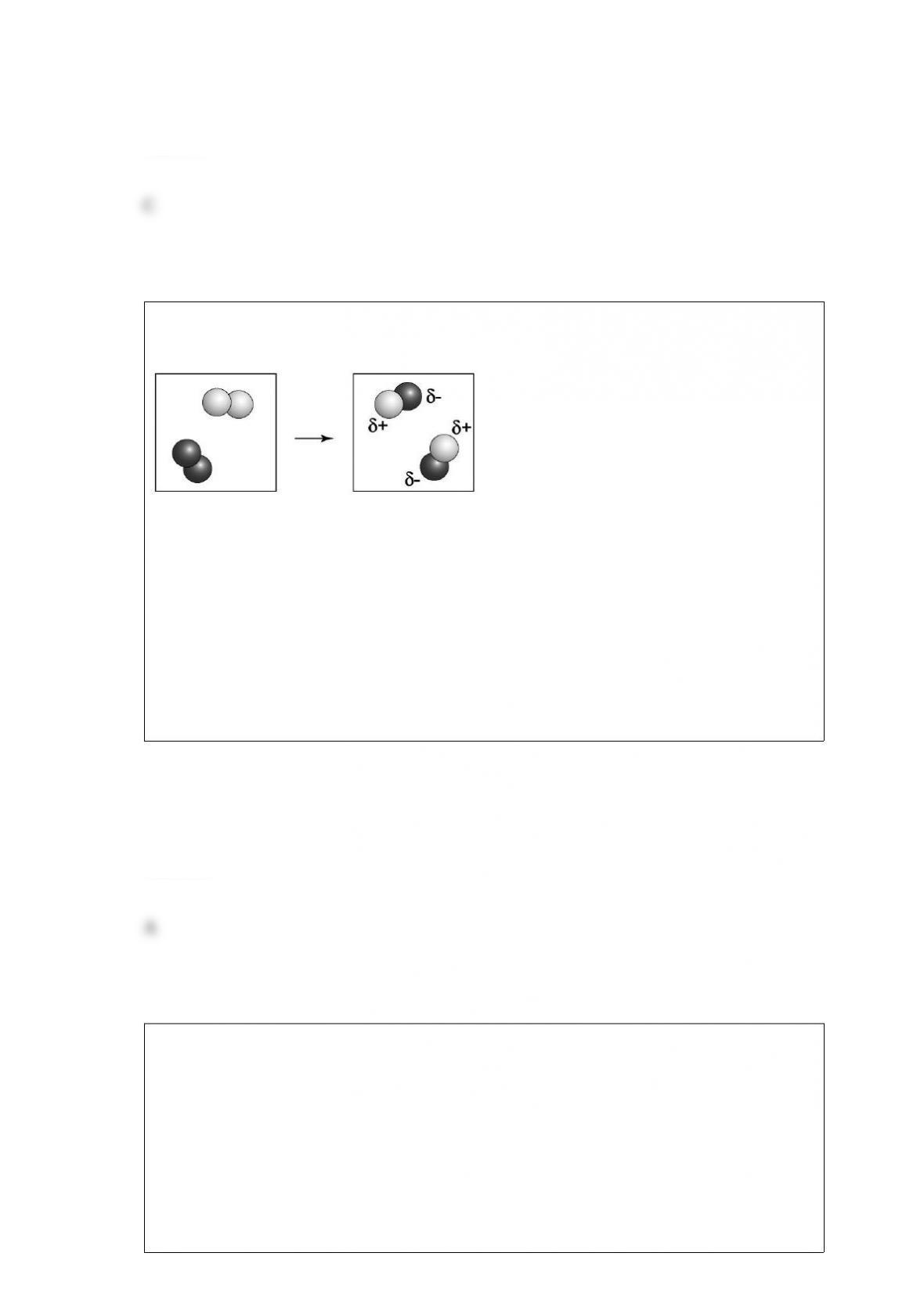
Which element is closer to the upper right corner of the periodic table, the one indicated
by the lighter colored atoms or the darker colored atoms?
A) the element indicated by the darker color
B) the element indicated by the lighter color
C) More information is needed in order to determine which element is closer to the
upper right of the periodic table.
D) Both the lighter and darker colored elements are likely found at the upper right
corner of the periodic table.
Answer:
Rising air expands and cools. The rate of cooling depends on
A) the air’s moisture content.
B) the dry adiabatic lapse rate.
C) the energy of the water-vapor molecules.
D) temperature inversions.

Answer:
The electric charge of all electrons
A) vary from atom to atom.
B) vary from ion to ion.
C) are identical.
Answer:
A heavy truck and a small car roll down a hill at the same speed and need to stop in the
same amount of time. Compared with the force to stop the car, the force needed to stop
the truck is
A) greater.
B) smaller.
C) the same.
Answer:

A rock with very low porosity will most often have a
A) low permeability.
B) high permeability.
C) large proportion of open spaces.
D) very high density.
Answer:
A mixture of light and heavy molecules make up a sample of gas. If the temperature of
the gas is constant, then all the molecules have the same average
A) speed.
B) kinetic energy.
C) both of these
D) none of the above
Answer:
A lobster crawls onto a bathroom scale submerged on the ocean bottom. Compared to
its weight above the surface, its weight under water is
A) greater.
B) less.

C) the same.
Answer:
The laws of physics, chemistry, and geology have operated unchanged through time to
shape Earth as we know it today. This statement can be summed up by the idea of
A) evolution.
B) everlasting change.
C) uniformitarianism.
D) natural history.
Answer:
The gain in speed each second for a freely-falling object is about
A) 0 m/s.
B) 5 m/s.
C) 10 m/s.
D) 20 m/s.
E) depends on the initial speed.

Answer:
Which of the following would have the highest boiling point?
A) Cl2
B) Br2
C) F2
D) I2
E) not enough information given
Answer:
Which are closer together: the two nuclei within potassium fluoride, KF, or the two
nuclei within molecular fluorine, ?
A) KF
B)
C) Both are the same. Any atom bonded to F will have the same inter-nuclear
separation.
D) It makes little sense to compare two molecules which exist in different physical
states. KF is a solid while is a gas.
Answer:
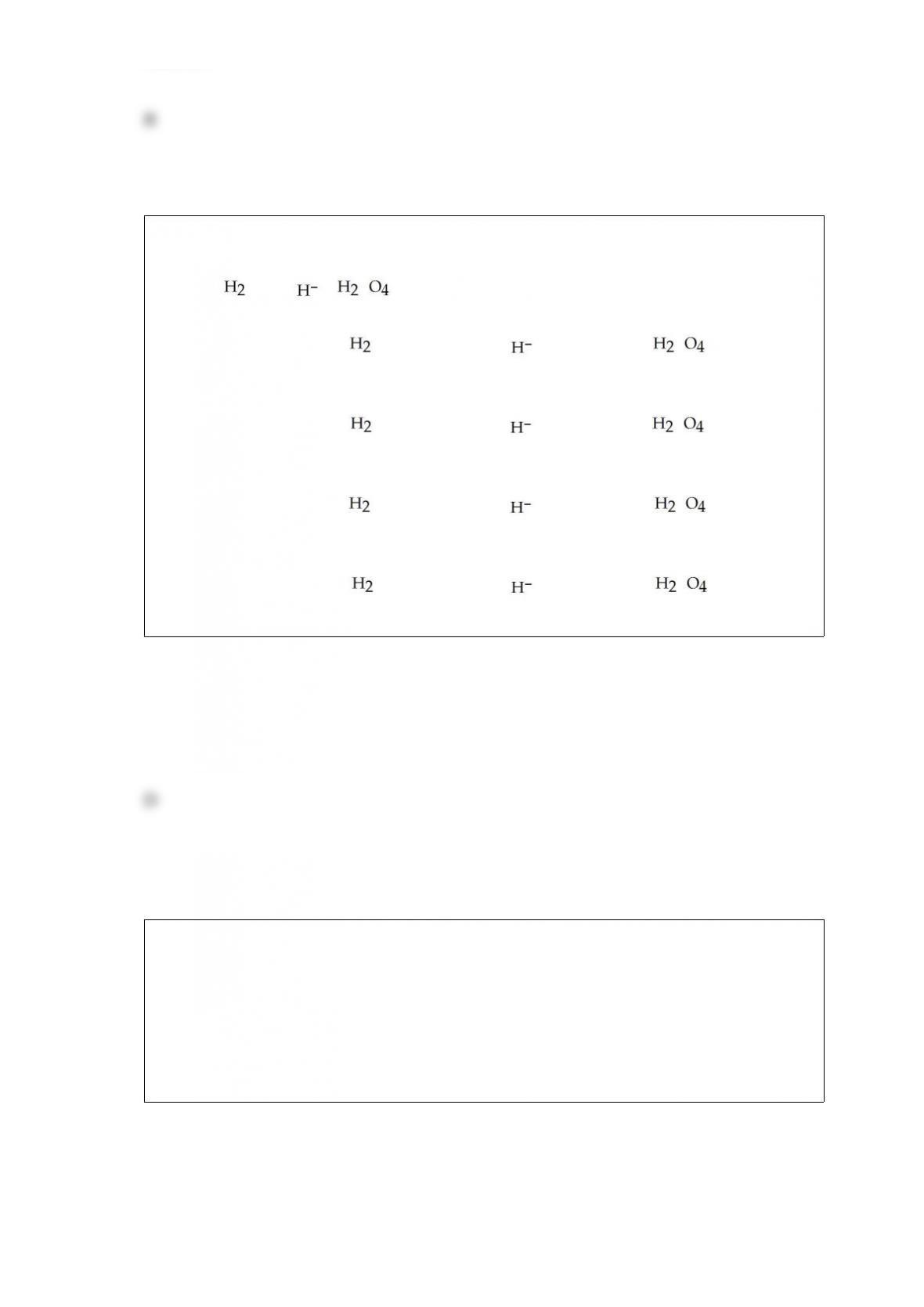
Identify the acid or base behavior of each substance in these reactions:
HSO4
– + O O⇌ + S
A) HSO4
– acts as an acid, O acts as a base, O acts as an acid, S acts as a
base.
B) HSO4
– acts as an base, O acts as a acid, O acts as an acid, S acts as a
base.
C) HSO4
– acts as an acid, O acts as a base, O acts as an base, S acts as a
acid.
D) HSO4
– acts as an base, O acts as a acid, O acts as an base, S acts as a
acid.
Answer:
The frequency of the second hand on a clock is
A) 1 Hz.
B) 1/60 Hz.
C) 60 Hz.
Answer:

Which of the following statements about radiation is true?
A) Your body contains a number of radioactive isotopes.
B) One rem is enough to kill approximately 50 percent of the average population.
C) Radiation damages cells beyond repair.
D) Several small exposures over time has the same negative effect as one large
exposure that totals the same amount.
E) Radiation can make you glow in the dark.
Answer:
In science, facts
A) are absolute.
B) may change.
C) mean very little.
D) are more important than theories.
Answer:

The extent of the continental shelf, an underwater extension of the continental crust,
varies due to fluctuations in sea level. When sea level is higher, the continental shelf
A) is narrow because less of the continental shelf is exposed.
B) is narrow because less of the continental shelf is submerged.
C) wider because some of the continental land would be submerged.
Answer:
A push on a 1-kg brick accelerates the brick. Neglecting friction, to equally accelerate a
10-kg brick requires the force to be
A) just as much.
B) 10 times as much.
C) 100 times as much.
D) one-tenth as much.
E) none of the above
Answer:
When water changes from solid ice to a liquid, it
A) loses energy.
B) gives off energy.

C) gains energy.
D) radiates energy.
Answer:
Helium fusion within a star begins
A) after all the hydrogen within the star has been depleted.
B) when all carbon has been depleted.
C) because of the force of gravity.
D) with the expulsion of practically all hydrogen.
Answer:
Riding down a river in an old canoe, if the discharge of the river does not increase and
the river gets very wide and deep, the speed of the river will
A) decrease.
B) increase.
C) stay the same.
D) become unpredictable.

Answer:
The principal cause of erosion and transportation of sediment in a desert environment is
A) wind.
B) caravans.
C) ice.
D) water.
Answer:
Every spinning electron is
A) electrically charged.
B) a tiny magnet.
C) both of these
D) none of the above
Answer:

R = reactants P = products
Given that the above energy profiles have the same scale, which of the reactions is the
most exothermic?
A) a
B) b
C) c
D) d
E) none of the above
Answer:
The amount of current in a CFL rated 23W-120V is about
A) 0.2A.
B) 5.2A.
C) more than 5.2A.
Answer:

Why is it better to recycle metals than to mine more?
A) It takes far less energy to recycle.
B) Mining is less expensive than recycling but not environmentally friendly.
C) Ores contain toxic elements.
D) all of the above
E) none of the above
Answer: