1) Which of the following is not a characteristic of a good decision?
A) based on logic
B) considers all available data
C) considers all possible alternatives
D) employs appropriate quantitative techniques
E) always results in a favorable outcome
2) In a PERT network, the earliest (activity) start time is the
A) earliest time that an activity can be finished without delaying the entire project.
B) latest time that an activity can be started without delaying the entire project.
C) earliest time that an activity can start without violation of precedence requirements.
D) latest time that an activity can be finished without delaying the entire project.
E) None of the above
3) The expected value of sample information (EVSI) can be used to
A) establish a maximum amount to spend on additional information.
B) calculate conditional probabilities.
C) establish risk avoidance.
D) provide points on a utility curve.
E) None of the above
4) Given three statistically independent events (A,B,C), the joint probability of P(ABC)
= P(A) x P(B) x P(C).
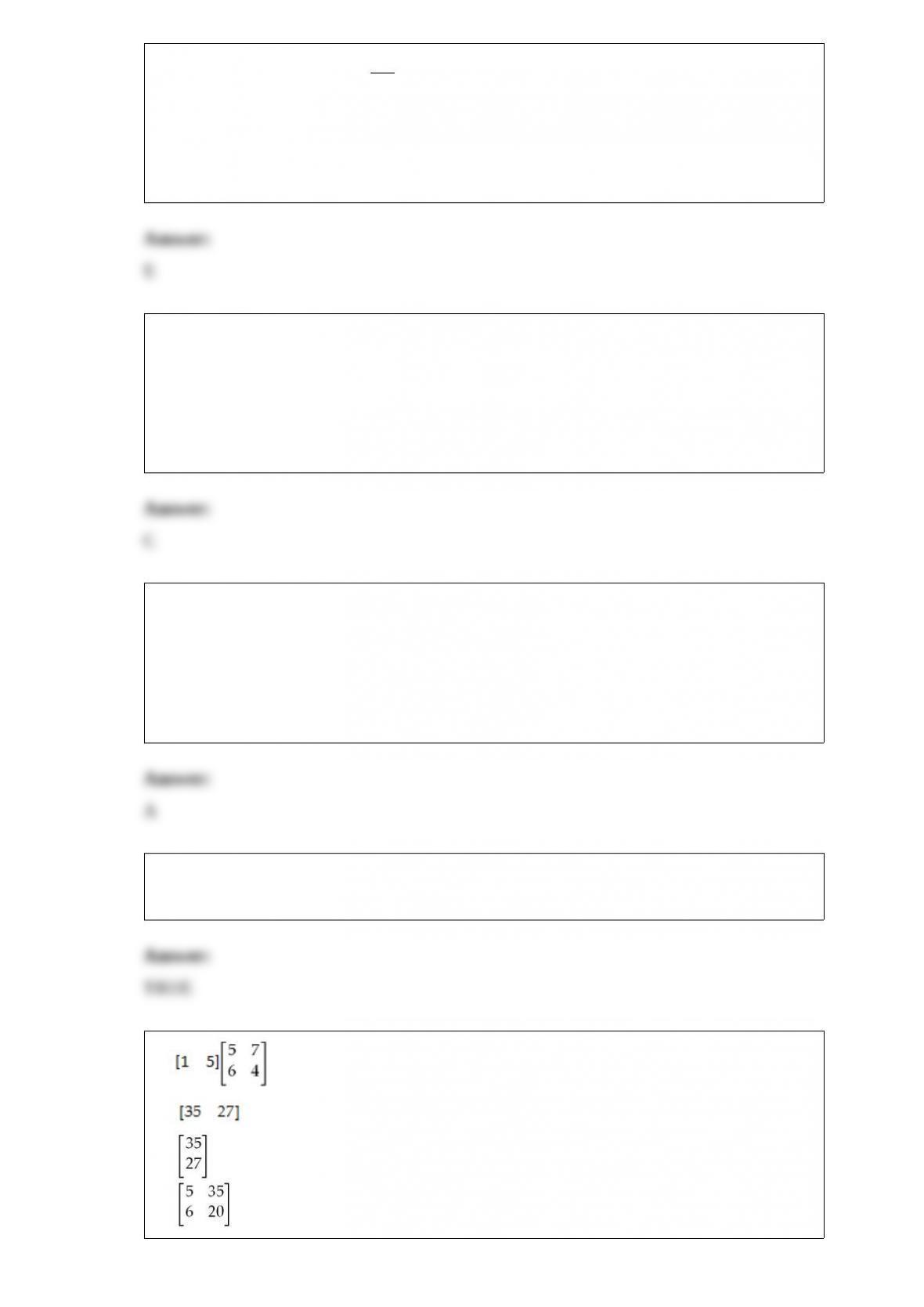
5) =
A)
B)
C)
D)
E) None of the above
6) Mark Achin sells 3,600 electric motors each year. The cost of these is $200 each, and
demand is constant throughout the year. The cost of placing an order is $40, while the
holding cost is $20 per unit per year. There are 360 working days per year and the
lead-time is 5 days. If Mark orders 200 units each time he places an order, what would
his total ordering cost be for the year?
A) $2,000
B) $2,720
C) $200
D) $720
E) None of the above
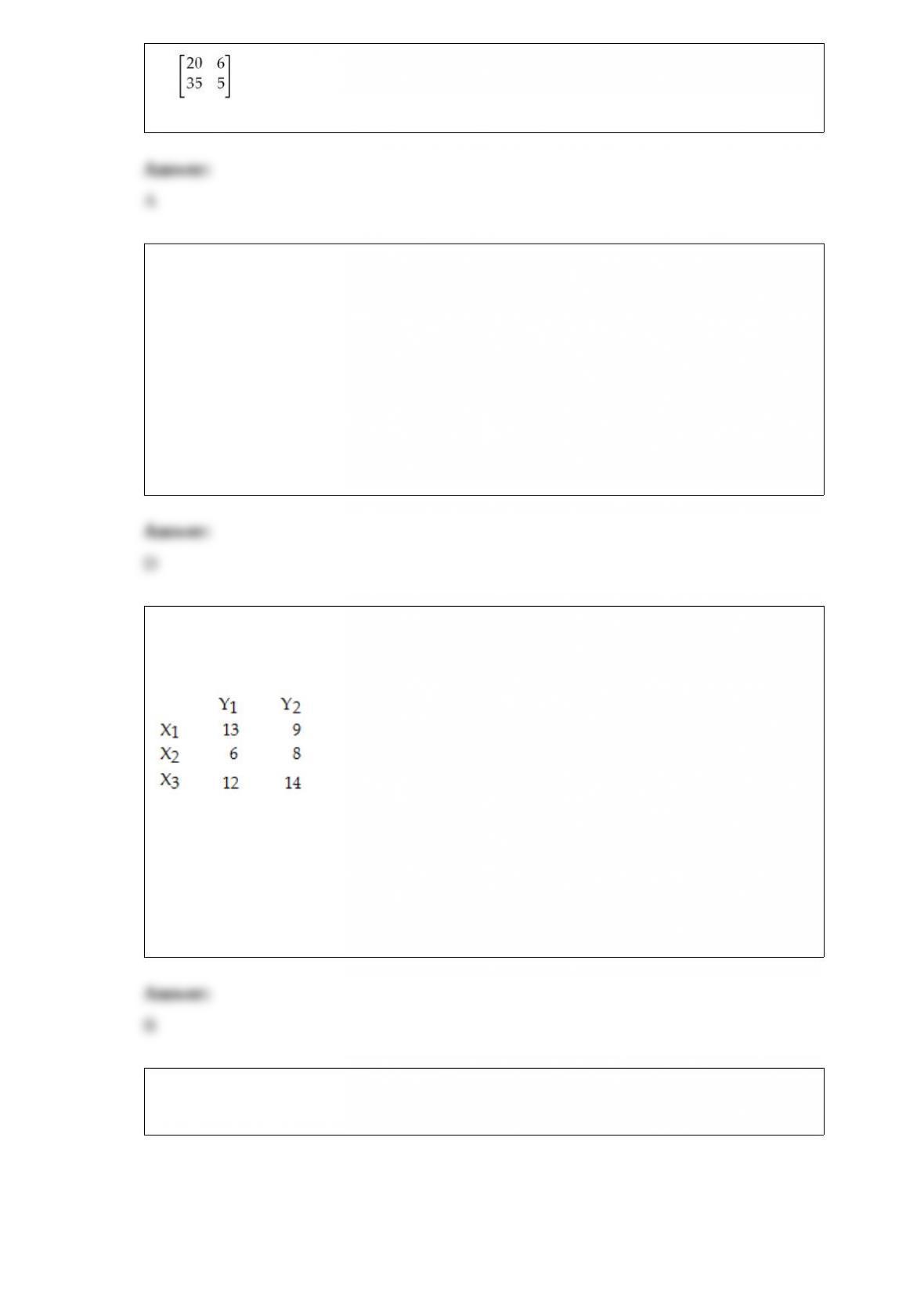
7) Given the following two-person game, which strategy can be eliminated by use of
dominance?
A) X1
B) X2
C) X3
D) Y1
E) Y2
8) Table M8-13
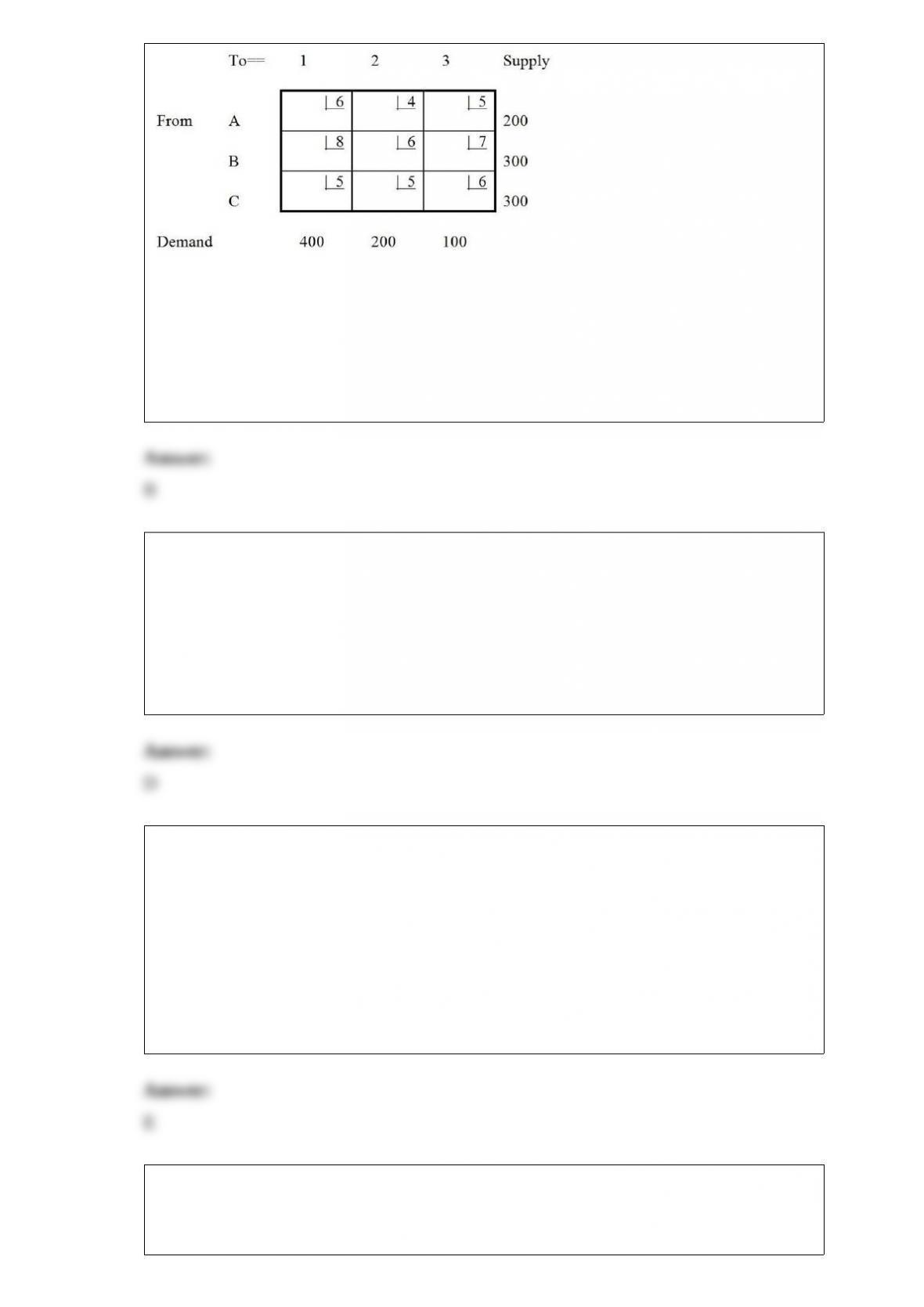
Table M8-13 provides information about a transportation problem. This problem is
A) unbounded.
B) unbalanced.
C) infeasible.
D) All of the above
E) None of the above
9) In PERT, we assume that
A) the times to complete individual activities are known with certainty.
B) all activities are carried out by staff from our own organization.
C) the total cost of a project is independent of the time to complete the project.
D) the total time to complete all activities on the critical path is described by a normal
distribution.
E) None of the above
10) A post office has a single line for customers waiting for the next available postal
clerk. There are two postal clerks who work at the same rate. The arrival rate of
customers follows a Poisson distribution, while the service time follows an normal
distribution. What type of queuing model applies here?
A) M/M/1
B) M/M/2
C) M/D/2
D) M/D/1
E) M/G/2
11) Which of the following problems can be solved as a linear program using binary
decision variables?
A) maximal-flow problem
B) shortest-route problem
C) minimal-spanning tree problem
D) A and B
E) A, B, and C
12) In solving a linear programming minimization problem using the simplex method,
A) every time an artificial variable is added, a surplus variable must also be added.
B) every time an artificial variable is added, a surplus variable must be subtracted.
C) every time a surplus variable is added, an artificial variable must be added.
D) every time a surplus variable is added, an artificial variable must be subtracted.
E) every time a surplus variable is subtracted, an artificial variable must be added.
13) The school of business has 3 fax machines. The toner in each machine needs to be
changed after about 5 hours of use. There is one unit secretary who is responsible for
the fax machine maintenance. It takes him 15 minutes to replace the toner cartridge.
What is the average time spent in the system?
A) .0142 hour
B) .1563 hour
C) .0249 hour
D) .2749 hour
E) None of the above
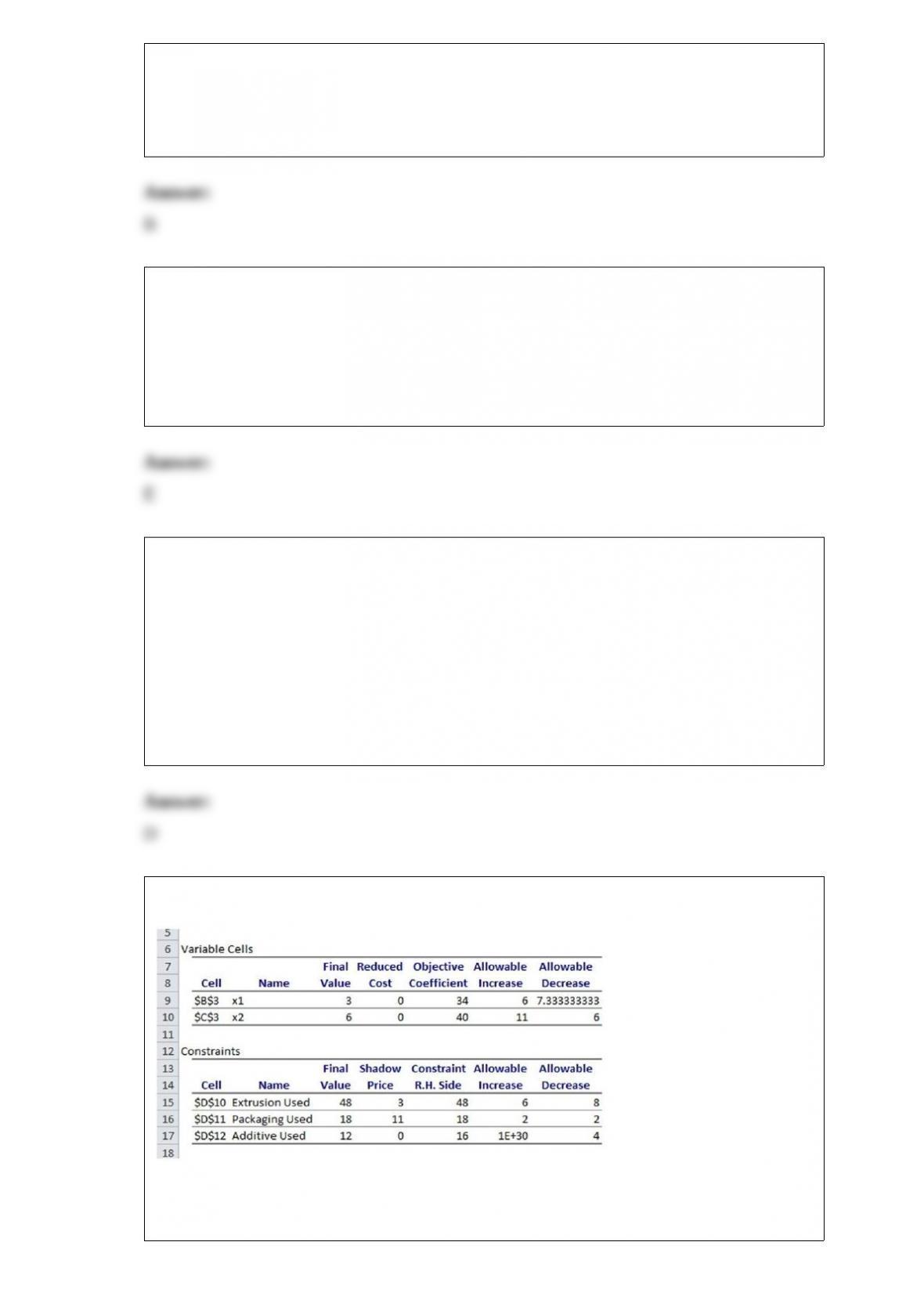
14) Consider the sensitivity report below for the problems which follow.
What is the increase in the objective value if 2 units of packaging are added?
A) 11
B) 18
C) 22
D) 36
E) Not enough information provided
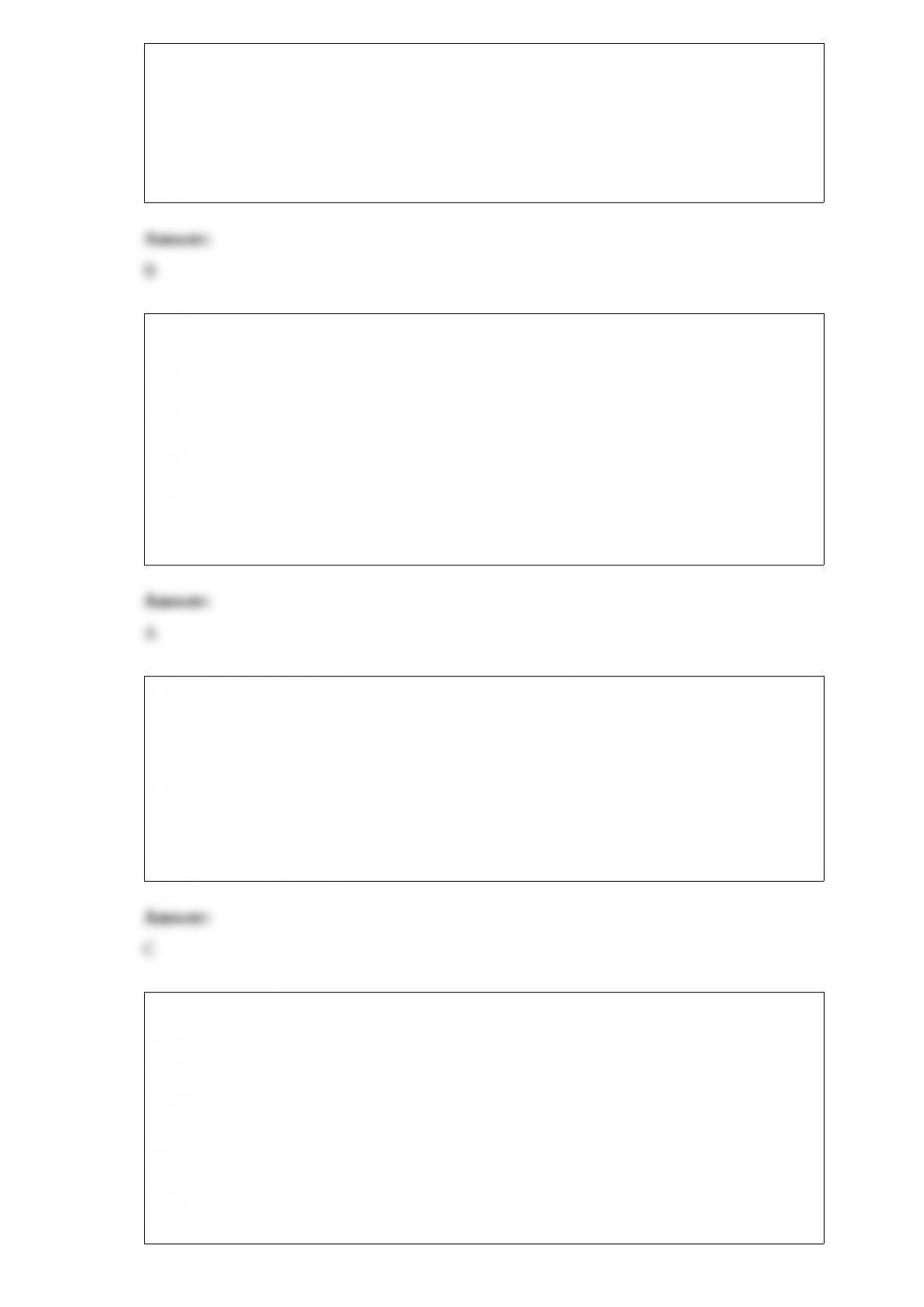
15) Find the shortest route from Node 1 to Node 5.
A) 200
B) 350
C) 250
D) 450
E) None of the above
16) The Truck Toys Company manufactures traditional wooden toy trucks. It has
determined its variable cost/unit to be $1.50/truck. Fixed costs, however, are quite high
because old equipment is used in the manufacturing process and costly packaging is
needed to market the toy trucks. The fixed costs are estimated at $11,000/month. The
company sells their toy trucks at a price of $7.75/each. How many toy trucks must be
sold annually to break even?
A) 1,760 toy trucks
B) 5500 toy trucks
C) 20,000 toy trucks
D) 1,879 toy trucks
E) None of the above
17) R-charts measure changes in
A) central tendency.
B) degree of variation.
C) number of defects per production lot.
D) natural variations.
E) None of the above
18) A goal programming problem had two goals (with no priorities assigned). Goal
number 1 was to achieve a profit of $3,600 and goal number 2 was to have no wasted
material. The optimal solution to this problem resulted in a profit of $3,300 and no
wasted material. What was the value for the objective function for this goal
programming problem?
A) 300
B) -300
C) 3300
D) 0
E) None of the above
19) Goal programming differs from linear programming in which of the following
aspects?
A) It tries to maximize deviations between set goals and what can be achieved within
the constraints.
B) It minimizes instead of maximizing as in LP.
C) It permits multiple goals to be combined into one objective function.
D) All of the above
E) None of the above
20) A company is considering producing two new electronic games designed for the
popular Gameboy toy. Based on market data, management believes that there is a 60
percent chance that a “cops and robbers” game will be successful and a 40 percent
chance that a “let’s play house” game will be successful. As these products are
completely different, it may be assumed that the success of one is totally independent of
the success of the other. If two products are introduced to the market, what is the
probability that both are successful?
A) 0.12
B) 0.60
C) 0.36
D) 0.24
E) None of the above