
CHAPTER 8 – DEVELOPING PROCEDURES FOR SPECIAL CIRCUMSTANCES
TRUE/FALSE
1. The planning team should try to interpret the scientific data on hazardous materials.
2. The EPA gives communities access to information concerning the release of toxic chemicals into the
environment.
3. Toxic chemical release reports are placed into a database called the Toxics Release Inventory (TRI)
which is available on the Internet.
4. Many public and private organizations own valuable art, antiques, and collectible items.
5. Most organizations are completely aware of the value of their art holdings.
6. Trade secrets and proprietary processes are some of the most valuable assets a company can have.
7. The Industrial Espionage Act, which became effective in 1992, authorizes stiff fines and imprisonment
for people and organizations that knowingly steal or misappropriate another company’s trade secrets.
8. Penalties for individual defendants that knowingly steal or misappropriate another company’s trade
secrets include up to a $200,000 fine, 5 years imprisonment, or both.
9. When disaster strikes, procedures must be in place to ensure that trade secrets and proprietary
processes are preserved and kept confidential.
10. Organizations should retain a local veterinarian near each applicable facility to provide emergency
services and to help develop animal care procedures.
MODIFIED TRUE/FALSE
1. Even small amounts of raw materials can cost thousands of dollars, and larger quantities can be
difficult to replace. _________________________
2. Health care facilities face strict safety requirements, and must be prepared to use alternate facilities or
refer clients to other service providers. _________________________
3. The more an organization plans for disasters, and the better that managers and employees understand
the organization’s needs, the better the chances that disaster recovery can proceed smoothly.
_________________________
4. Insurance companies may require specific documentation for special assets before paying to cover
their loss. _________________________
5. Representatives from each department or facility should conduct their own interviews and inform the
planning team whether they require special procedures. _________________________
6. The planning team may need to consult with appropriate insurance agencies to ensure that the
procedures meet current requirements and standards. _________________________
7. Hazardous materials can create disasters at a facility, and they can compound problems caused by an
unrelated disaster. _________________________
8. When items have not been appraised, the documentation can help to place values on items that were
destroyed. _________________________
9. Historic preservation is an eclectic activity that spans public, private, and nonprofit industries.
_________________________

10. During a disaster, an organization must deal with perishable foods and materials in accordance with a
variety of complex food and health laws. _________________________
MULTIPLE CHOICE
1. ____ are items that must be stored at certain temperatures to prevent spoilage.
a.
Life forms
c.
Perishable foods and materials
b.
Rare materials
d.
Controlled substances
2. ____ are drugs or the materials used to manufacture them.
a.
Hazardous materials
c.
Life forms
b.
Controlled substances
d.
Rare materials
3. ____ are substances that can pose a threat to the environment or public health if released or misused.
a.
Controlled substances
b.
Hazardous materials
c.
Rare materials
d.
Trade secrets and proprietary processes
4. ____ are animals, plants, lab specimens, and experimental organisms.
a.
Controlled substances
c.
Hazardous materials
b.
Perishable foods and materials
d.
Life forms
5. ____ are electronics ,test devices, and optical devices.
a.
Precision equipment
c.
Hazardous materials
b.
Rare materials
d.
Controlled substances
6. ____ are ideas, patents, plans, and manufacturing processes on which organizations depend.
a.
Historic documents
b.
Controlled substances
c.
Rare materials
d.
Trade secrets and proprietary processes
7. Which of the following is NOT an example of a historic document?
a.
Letters signed by founders or employees
b.
Maps and navigational aids
c.
Sheet music
d.
Photocopies of meeting minutes
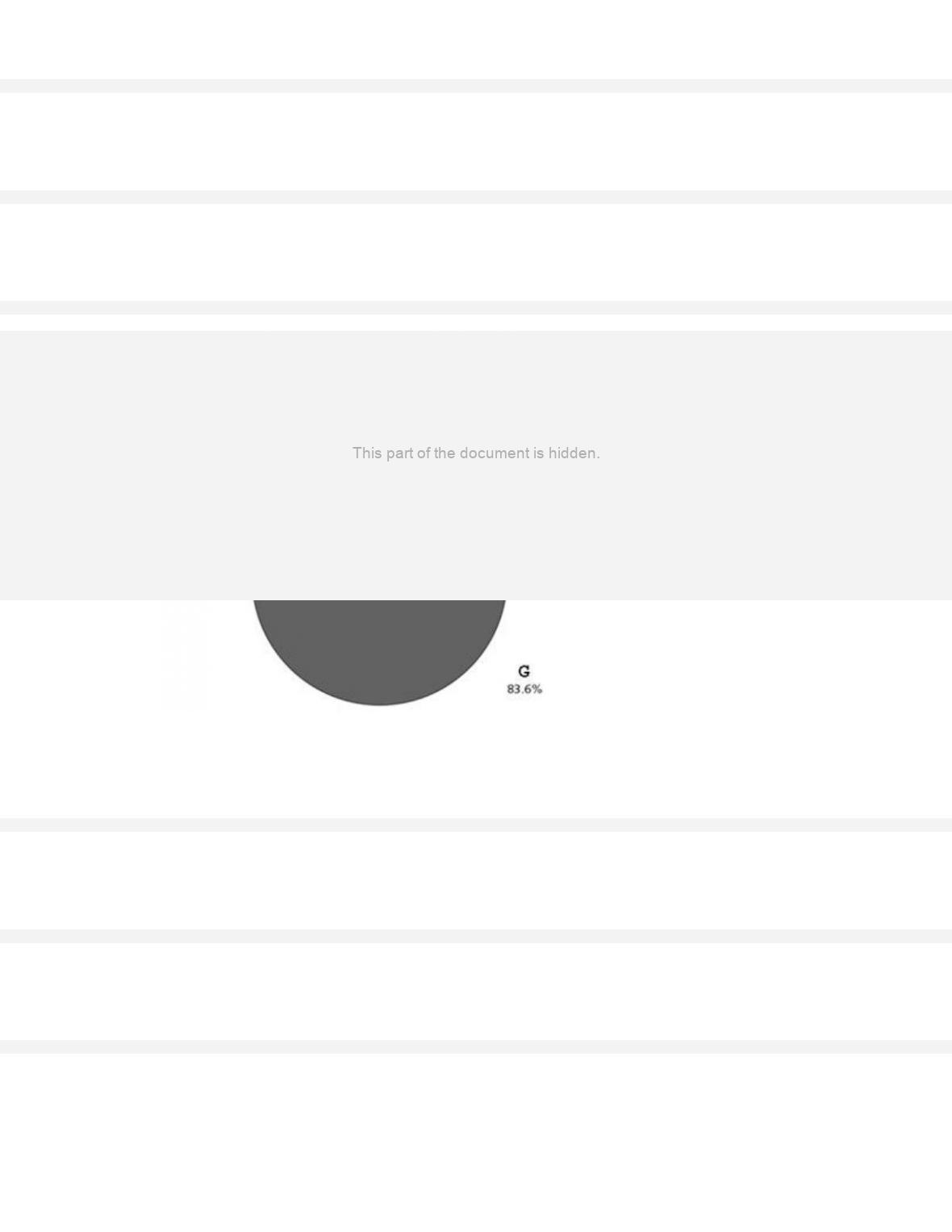
8. Which industry was responsible for the release of the most toxins in 2000?
a.
Coal mining
c.
Manufacturing
b.
Metal mining
d.
Electric utilities
9. Which industry was responsible for the release of the least toxins in 2000?
a.
Chemical wholesale distributors
c.
Hazardous waste
b.
Petroleum terminals
d.
Coal mining
10. In the figure above, what industry is designated by “A”?
a.
Coal mining
c.
Manufacturing industries
b.
Metal mining
d.
Electric utilities
11. In the figure above, what industry is designated by “B”?
a.
Coal mining
c.
Manufacturing industries
b.
Metal mining
d.
Petroleum terminals
12. In the figure above, what industry is designated by “F”?
a.
Hazardous waste
c.
Petroleum terminals
b.
Coal mining
d.
Chemical wholesale distributors
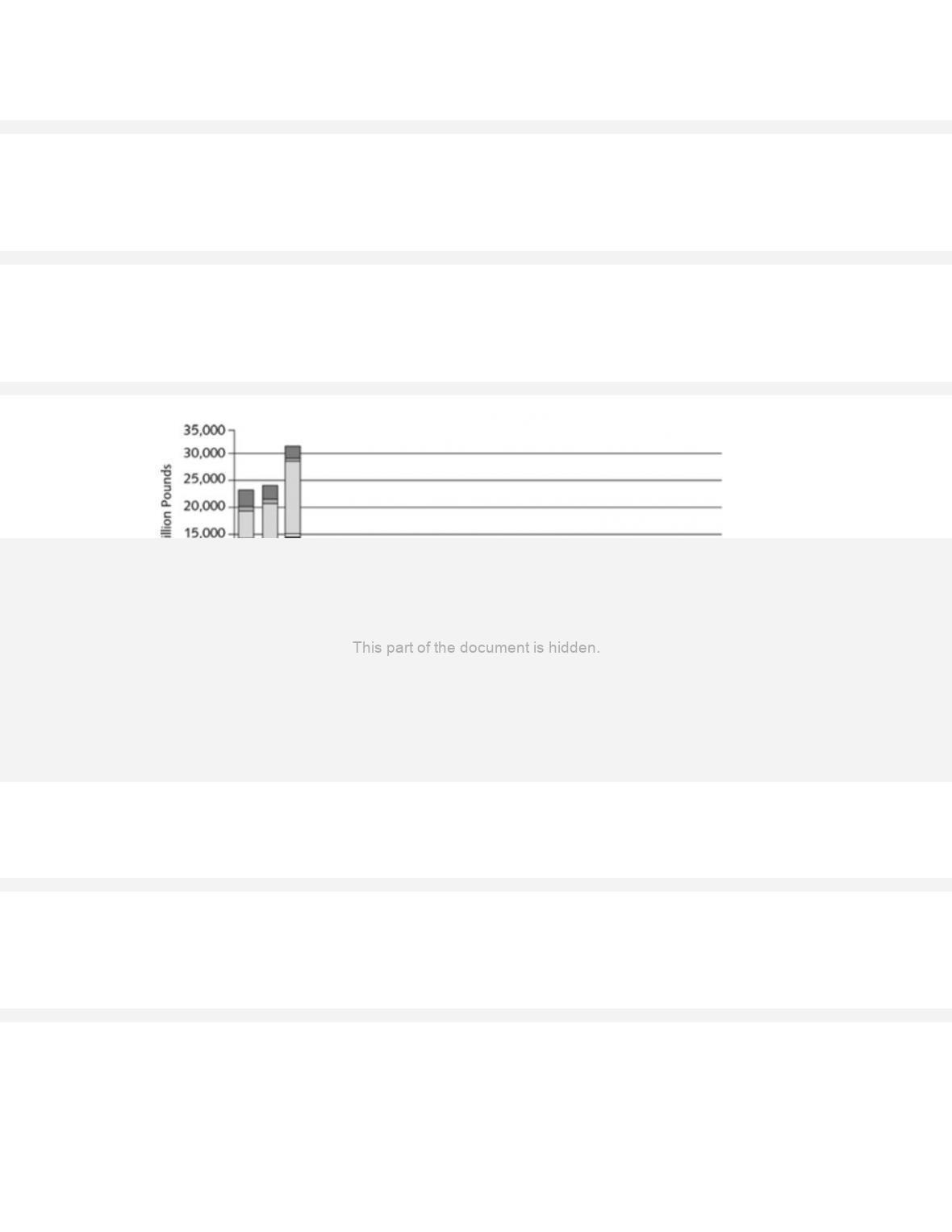
13. Which industry was responsible for the most underground injection of toxic materials between 1998
and 2000?
a.
Manufacturing
c.
Electric utilities
b.
Metal mining
d.
Hazardous waste/solvent recovery
14. Which industry was responsible for the most surface water discharges of toxic materials between 1998
and 2000?
a.
Manufacturing
c.
Electric utilities
b.
Metal mining
d.
Hazardous waste/solvent recovery
15. Which industry was responsible for the most on-site land releases of toxic materials between 1998 and
2000?
a.
Manufacturing
c.
Electric utilities
b.
Metal mining
d.
Coal mining
16. Which industry in the figure above is represented by “G”?
a.
Manufacturing
c.
Electric utilities
b.
Coal mining
d.
Hazardous waste/solvent recovery
17. In November 2002, Sotheby auctioned more than ____ artworks from John Fairfax Publications for
more than $2.5 million.
a.
10
c.
90
b.
150
d.
60
18. ____ has a collection of 2700 works in its buildings in Washington and California.
a.
Progressive Casualty Insurance
c.
SAFECO
b.
Microsoft
d.
Sara Lee

19. In 2000, ____ donated 52 masterpieces from its corporate art collection to 40 museums around the
world, including the Art Institute of Chicago.
a.
Progressive Casualty Insurance
c.
Microsoft
b.
SAFECO
d.
Sara Lee
20. Over the last 30 years, ____ has collected more than 2200 works by contemporary regional artists,
many of them from the Pacific Northwest.
a.
Progressive Casualty Insurance
c.
Sara Lee
b.
Microsoft
d.
SAFECO
21. The disaster recovery planning team should seek expert help from the ____, state agencies, and local
health agencies when developing procedures for dealing with controlled substances.
a.
HRFA
c.
cabinet
b.
FDA
d.
fire departments
22. ____ magazine estimated in 1995 that illegal copying and counterfeiting of medicines in Argentina,
Brazil, India, and Turkey cost U.S.pharmaceutical companies more than $1.5 billion each year.
a.
Time
c.
Forbes
b.
Newsweek
d.
FOCUS
23. For which of the following types of testing do organizations use animals or organisms?
a.
Chemicals
d.
Packing materials
b.
Cosmetics
e.
All of the above
c.
Household cleaners
24. Which organization developed the Disaster Preparedness and Response Guide?
a.
Progressive Casualty Insurance Corporation
b.
U.S. Food and Drug Administration
c.
American Veterinary Medical Association
d.
Environmental Protection Agency
25. What is the cost of rhodium?
a.
$100 per ounce
c.
$500 per gram
b.
Less than $100 per ounce
d.
More than $400 per ounce
26. In 1996 the FBI was most concerned with the theft of trade secrets by foreign corporations from which
of the following?
a.
U.S.telecommunications companies
d.
Both a and b
b.
Automotive manufacturers
e.
All of the above
c.
Biotechnology firms
YES/NO
1. The focus of most disaster recovery planning since the 2001 terrorist attacks has focused on special
circumstances.
2. The most crucial point in lawsuits involving trade secrets is whether an organization can prove that it
owns the information, either through development or purchase.
3. A valuable resource for recovery planners is The American Veterinary Medical Association
Emergency Animal Care Guide.
4. Precision tools and lab equipment are difficult to resell on Internet auction sites.
5. Because expensive equipment could be stolen during the chaos of a disaster, these items must be
quickly secured or removed to a safe location.
6. Many organizations that use rare materials often stockpile them when prices drop during market
fluctuations.
7. A key to successful disaster recovery is understanding an organization’s exposures and associated
risks.
8. An organization must be prepared to work with emergency responders immediately upon their arrival,
and must have the proper information ready.
COMPLETION
1. Having a knowledgeable ____________________ waiting to meet responders, answer questions, and
provide assistance can save valuable time.
2. A complete list of hazardous materials covered under EPCRA is available at
www.____________________.
3. The SAFECO art collection was built on the belief that SAFECO could enrich its
____________________ while recognizing and supporting artists.
4. The disaster recovery planning team should seek expert help from the ____________________, as
well as state and local health agencies, when developing procedures for handling perishable foods and
materials.
5. During a disaster, an organization must deal with ____________________ substances in accordance
with many drug control laws and regulations.
6. ____________________ and ____________________ are some of the most valuable assets a
company can have.
7. The ____________________ Act, which became effective in 1996, authorizes stiff fines and
imprisonment for people and organizations that knowingly steal or misappropriate another company
trade secrets.
8. In many cases, ____________________ material must be quickly secured and even removed from a
facility to maintain security during disaster response and recovery.
9. Many ____________________ groups around the world are concerned about the use of animal testing
in product research and development.
MATCHING
Match the appropriate facility to the challenge that they face.
a.
Health care facilities
d.
Food service providers
b.
Government offices
e.
Automobile repair shop
c.
Banks
1. Provide services at other branches
2. Have their facilities inspected
3. Meet statutory requirements for activity
4. Provide quick insurance payments to customers
5. Deals with patient needs if a facility must be evacuated
Match the following terms to the appropriate definition.
a.
Collectibles
d.
Precision equipment
b.
Hazardous materials
e.
Rare materials
c.
Life forms
6. Special supplies, such as precious metals, gemstones, chemicals, and solvents
7. Animals, plants, lab specimens, and experimental organisms
8. Rare and expensive items that may not be replaceable
9. Electronics, test devices, and optical devices
10. Substances that can threaten the environment or public health if released
SHORT ANSWER
1. Provide three examples of hazardous materials.
ANS:
2. The Emergency Planning and Community Right to Know Act requires facilities that use significant
amounts of toxic chemicals to file annual reports about their releases. What is described in these
reports?
3. When dealing with art, antiques, and collectibles during a disaster, insurance companies may require
complete documentation. What information should be included in this documentation?
ANS:
4. List five examples of historic documents that an organization should keep extensive records of and
have periodically appraised by a certified specialist.
ANS:
5. What three criteria are necessary to qualify something as a trade secret?
ANS:
6. Give four examples of rare materials often used in manufacturing or test environments.
ANS:
7. What does the disaster recovery planning team need to examine at each facility to determine if they are
hazardous or potentially hazardous?
ANS:
8. What organizations can provide information on hazardous materials?
ANS:
9. What types of organizations are responsible for releasing toxins?
ANS:
10. In what ways can corporate archives be valuable tools for organizations?
ANS: