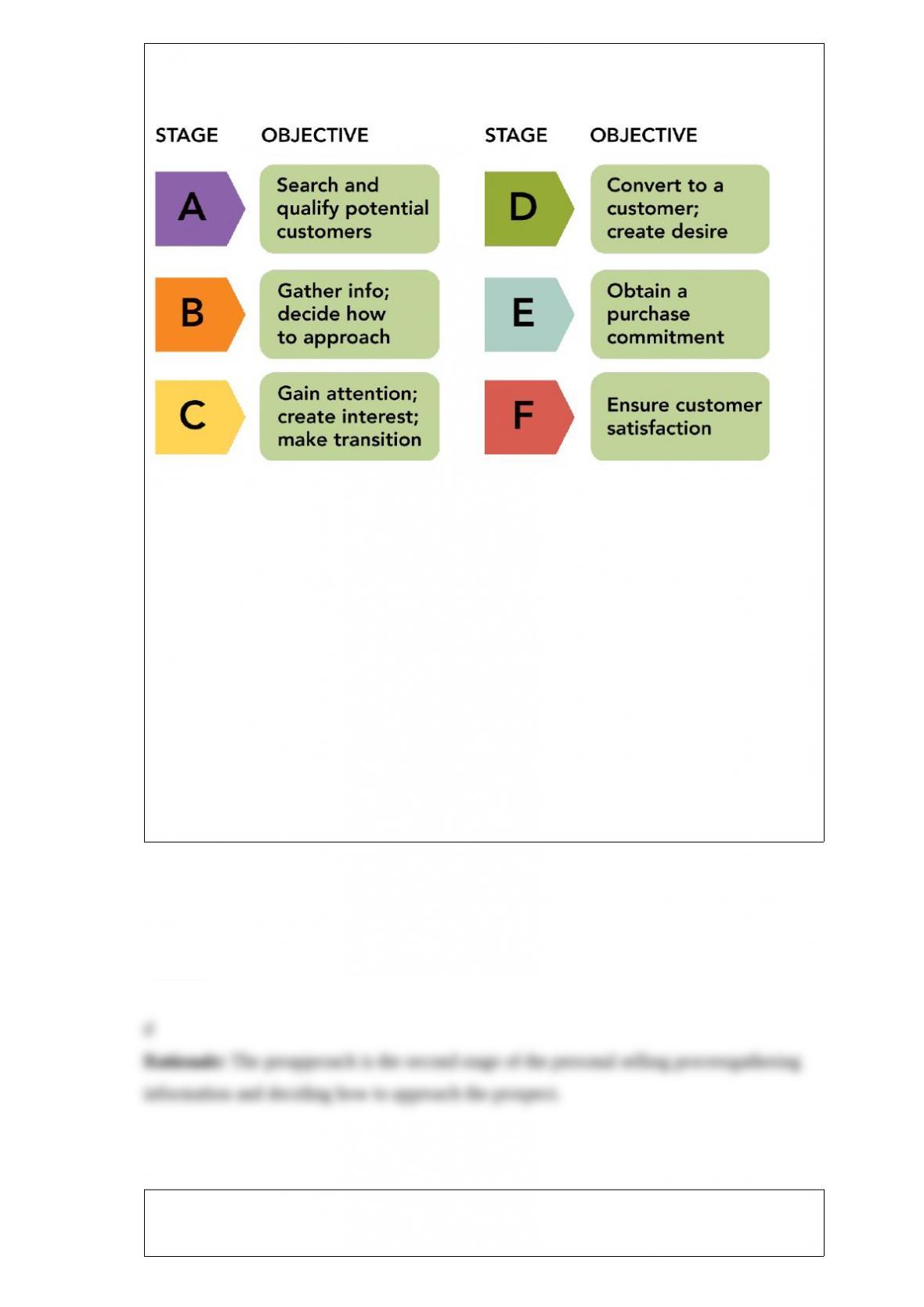
Figure 1.
Figure 1. above shows there are six stages in the personal selling process (“A” through
“F”) along with the objective(s) of each stage. If the salesperson’s objective is to “gather
information and decide how to approach the prospect,” what stage of the personal
selling process is the salesperson engaged in?
a. follow-up
b. prospecting
c. presentation
d. preapproach
e. approach
Answer:
In recent years, many large firms have changed the title of the head of marketing from
vice president of marketing to
a. chief executive officer.
b. corporate marketing official.
c. coordinating marketing officer.
d. chief marketing officer.
e. corporate marketing executive.
Answer:
Countertrade refers to
a. the illegal agreement of one country to buy products exclusively from another.
b. the legal agreement of one country to buy products exclusively with another.
c. the practice of using barter rather than money for making global sales.
d. the sale of industrial goods from a brick and mortar outlet rather than directly from
the manufacturer.
e. the use of legal tender in making global sales.
Answer:
Brainstorming sessions at IDEO can generate as many as __________ ideas in an hour.
a. 10
b. 25
c. 50
d. 75
e. 100
Answer:
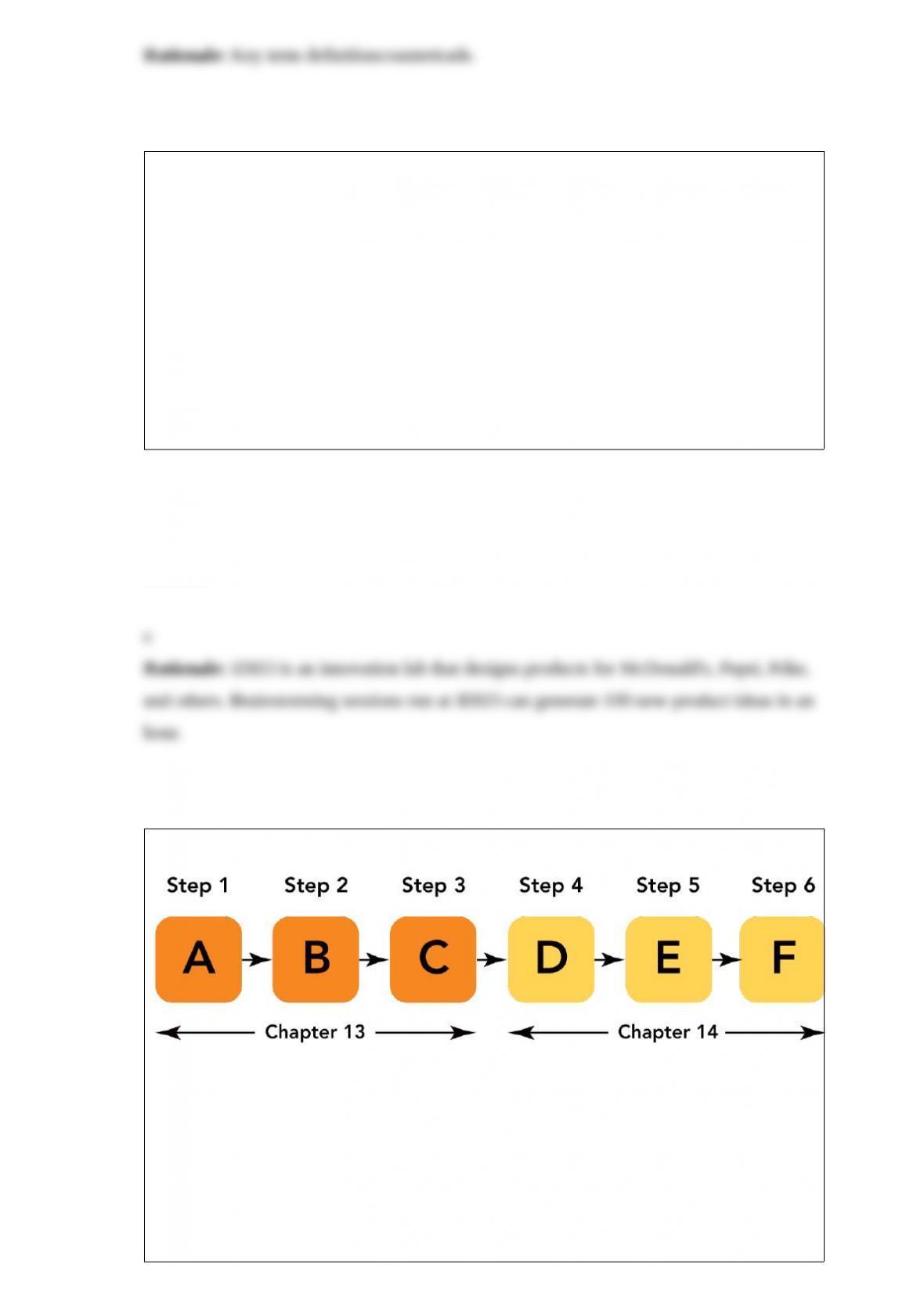
Figure 1.
Figure 1. above represents the six steps in the price-setting process. “A” represents the
step at which a firm would
a. raise initial capital.
b. identify pricing objectives and constraints.
c. scan competitors for prices of similar products or services.
d. select the appropriate pricing formula.
e. establish the price range.
Answer:
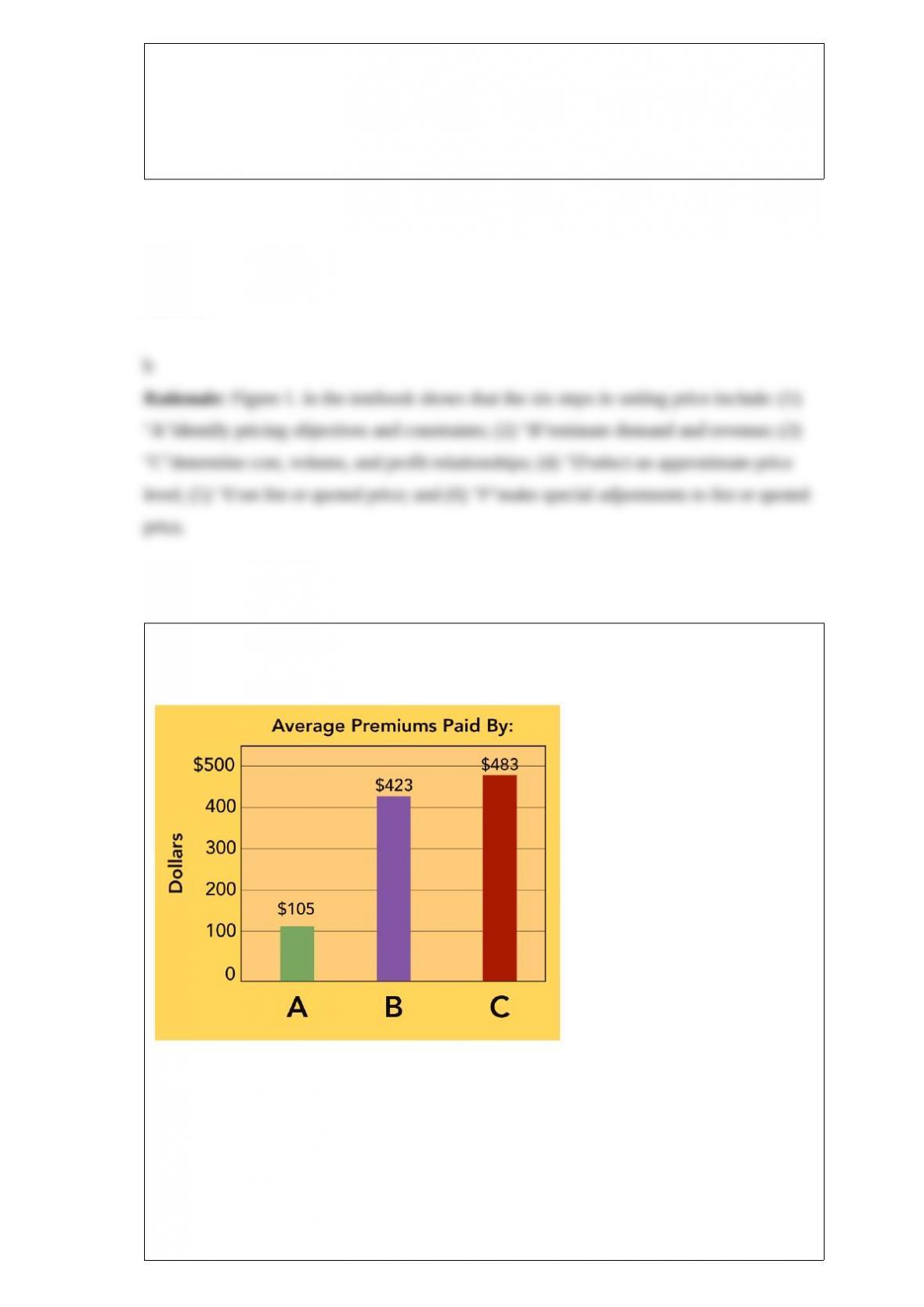
Flexible Pricing Chart
Consider the flexible pricing chart above, which shows the results of a National Bureau
of Economic Research study of 750,000 car purchases. The data indicate that some
groups of car buyers, on average, paid roughly $105, $423, and $483 more,
respectively, for a new car in the $21,000 range than the typical purchaser. Who are the
car buyers in “A?”
a. women
b. the elderly
c. Hispanics
d. AfricanAmericans
e. Asian Anericans
Answer:
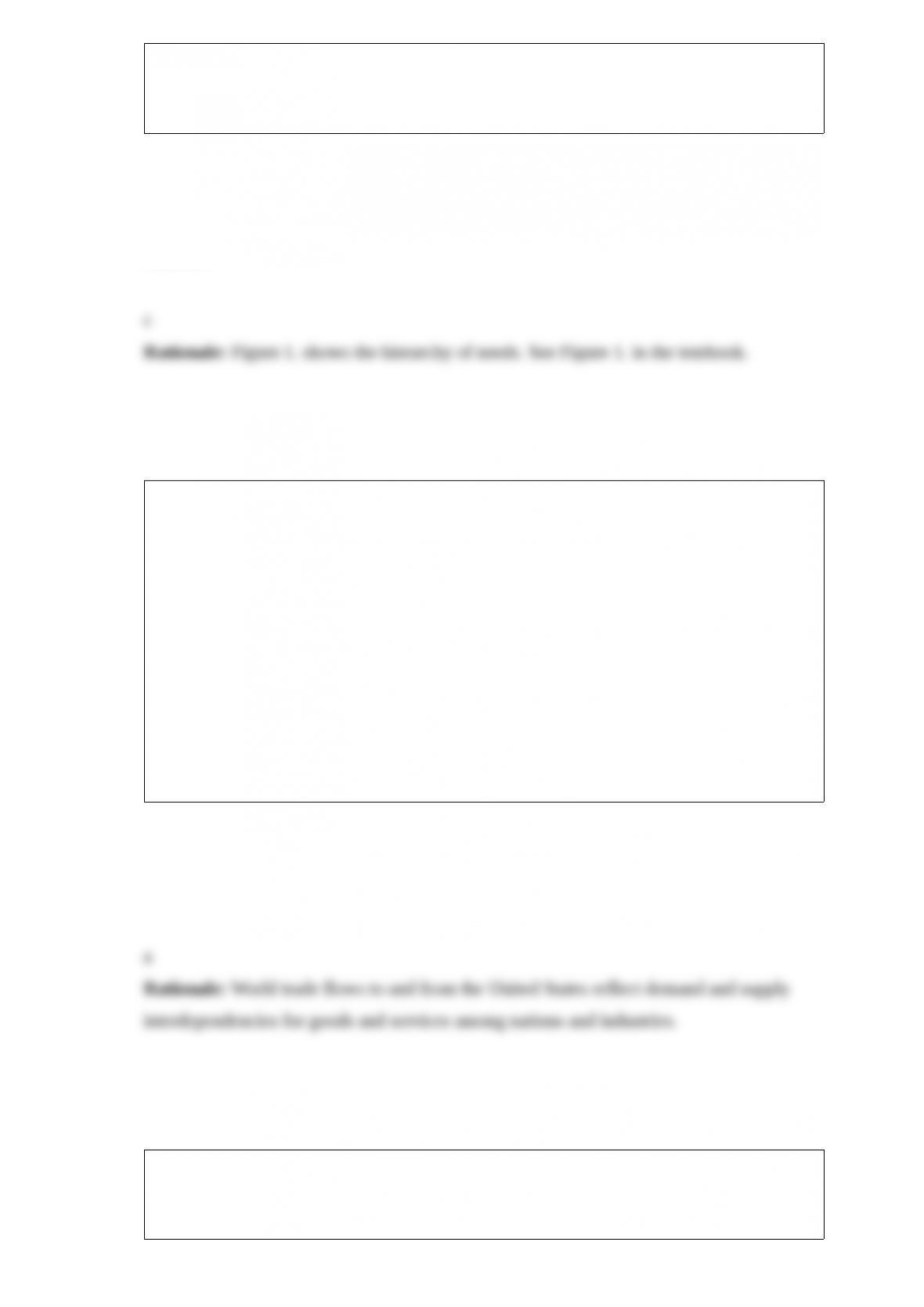
Figure 1.
Figure 1. above depicts the ___________.
a. motivation of needs
b. hierarchy of wants
c. hierarchy of needs
d. ranking of wants
e. psychosocial needs
Answer:
World trade flows to and from the United States reflect __________ for goods and
services among nations and industries.
a. demand and supply interdependencies
b. disparities between supply and demand
c. positive and negative synergistic trade
d. a negative currency exchange
e. an ethnocentric bias
Answer:
A supply partnership refers to
a. an arrangement a manufacturer makes with a reseller to handle only its products and
not those of competitors.
b. the illegal practice of refusing to purchase a seller’s products unless the seller agrees
not to purchase that product or any similar products from any other buyer.
c. when a supplier requires a buyer purchasing some products from it to also buy others.
d. a relationship that exists when a buyer and its supplier adopt mutually beneficial
objectives, policies, and procedures for the purpose of lowering the cost of or increasing
the value of products and services delivered to the ultimate customer.
e. the practice whereby a seller requires the purchaser of one product to also buy
another item in the line.
Answer:
Which of the following is an advantage inherent in the use of licensing?
a. The licensee retains control of its product.
b. The licensee is protected from creating a potential competitor.
c. The licensee gains information about the dynamics of the market.
d. There is an exemption from domestic trade regulations.
e. There is an increase in potential profit gains.
Answer:
Ford and Coca-Cola represent which type of franchise?
a. business-format franchise
b. manufacturing franchise
c. general service franchise
d. product-distribution franchise
e. business franchise venture
Answer:
At the end of her sales presentation, the salesperson asks, “Will you want to make
monthly payments of $75 with a 10 percent down payment or will you be writing a
check for the full amount today?” She has just executed a(n) __________ close.
a. assumptive
b. consultative
c. proactive
d. urgency
e. adaptive
Answer:
Which strategy involves a firm’s using different marketing mix activities to help
consumers perceive the product as being different and better than competing products?
a. points of difference
b. market differentiation
c. product differentiation
d. market penetration
e. product positioning
Answer:
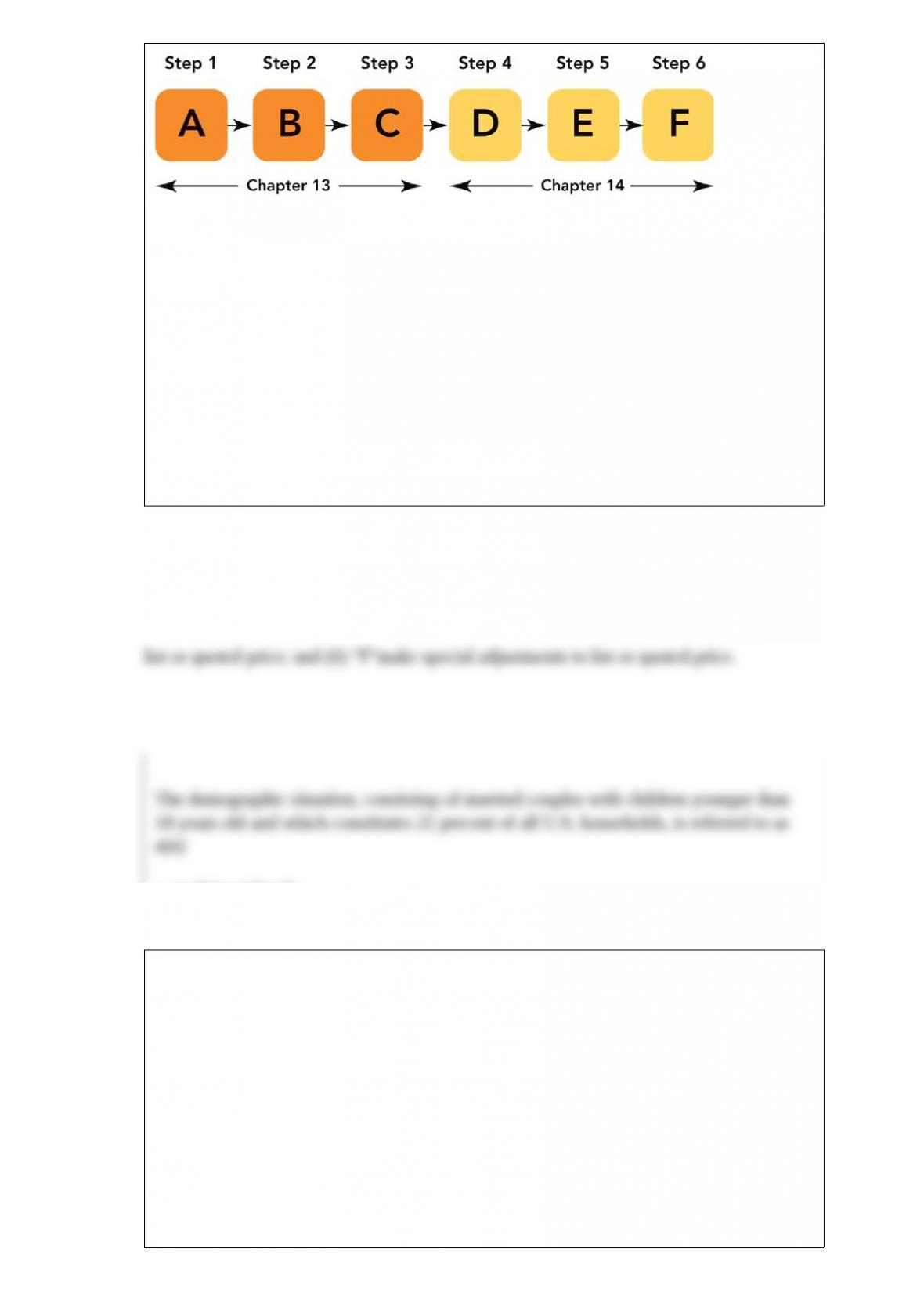
Figure 1.
According to Figure 1. above, “E” represents which step in the price-setting process?
a. set list or quoted price
b. select an approximate price level
c. scan competitors for prices of similar products or services
d. determine cost, volume, and profit relationships
e. identify pricing objectives and constraints
Answer:
The demographic situation, consisting of married couples with children younger than
18 years old and which constitutes 21 percent of all U.S. households, is referred to as
a(n)
a. traditional family.
b. typical household.
c. socialized household.
d. reference group.
e. ideal family unit.
Answer:
Bottom of the pyramid refers to
a. the largest and most powerful socioeconomic group of people in the world whose
combined buying power essentially dominates the world’s economy.
b. the tenth lowest firm, in terms of market share, within any given industry.
c. the last link in the chain between the manufacturer and the ultimate consumer.
d. the department within a firm with the least input into how the organization operates.
e. the largest, but poorest socioeconomic group of people in the world.
Answer:
Which of the following trends identified in an environmental scan is a regulatory trend?
a. Digital TVs, tablet devices, and smartphones will become increasingly connected.
b. Partnerships, collaborations, and co-creation of value will become important
dimensions of business rivalry.
c. The U.S., Japan, China, and the E.U. countries will increase investments in
sustainable living structures.
d. Health consciousness will lead to more public and private smoke-free areas.
e. Global media consumption (online and social) will continue to grow dramatically.
Answer:
BzzAgent researches a product or service before committing to a campaign and rejects
about _________ of the companies that seek its service.
a. 20 percent
b. 40 percent
c. 50 percent
d. 70 percent
e. 80 percent
Answer:

A(n) __________ scale is one in which the respondent indicates the extent to which he
or she agrees or disagrees with a statement.
a. Likert
b. attitudinal
c. dichotomous
d. open-ended
e. semantic differential
Answer:
The Mall of America is an example of which type of setting for a store location?
a. central business district
b. regional shopping center
c. community shopping center
d. strip mall
e. power center
Answer:

One advantage of using newspapers as an advertising medium is
a. the ability to cover national markets.
b. the short lead time for placing an ad.
c. excellent color graphics.
d. minimum distraction from other features.
e. the extended life span.
Answer:
Which of the following statements about penetration pricing is most accurate?
a. Penetration pricing is a profit-oriented approach to pricing.
b. Penetration pricing is a cost-oriented pricing method.
c. Penetration pricing encourages competitors to enter a market.
d. Penetration pricing is more effective in a marketplace with price-sensitive
consumers.
e. Penetration pricing usually precedes a skimming pricing.
Answer:
When consumers consider all types of household cleaners, they are considering the
__________ of household cleaners. When consumers limit their choice of household
cleaners to only those that come in spray bottles, they are considering a __________ of
household cleaners.
a. product class; product brand
b. product group; product brand
c. product line; product mix
d. product mix; product line
e. product class; product form
Answer:
Economists have identified four types of competitive markets: oligopoly, monopolistic
competition, pure competition, and __________.
a. capitalism
b. socialism
c. consumer-dominated
d. government-dominated
e. pure monopoly
Answer:
In the late 1950s, Pierre Martineau described __________ as “the way in which the
store is defined in the shopper’s mind.”
a. size
b. location
c. product mix
d. image
e. anchor store
Answer:

Public opinion surveys show that 58 percent of U.S. adults rate the ethical standards of
business executives as
a. outstanding.
b. above average.
c. similar to other professions.
d. typical of businesspeople around the world.
e. fair or poor.
Answer:
The owners of Old School Brand Authentic Antique Foods researched Civil War
records to come up with recipes for the old-fashioned products they market. Concern
about the __________ element of the marketing mix would make them eager to be
featured in an upcoming edition of Taste of Home magazine.
a. product
b. price
c. production
d. promotion
e. place
Answer:
During the __________ stage of personal selling, a salesperson would learn if her
prospect liked to talk about sports before getting down to business or preferred not to
waste time with idle chatter.
a. prospecting
b. preapproach
c. approach
d. presentation
e. closing
Answer:
To encourage retailers to pay their bills quickly, manufacturers offer them
a. quantity discounts.
b. cash discounts.
c. flexible pricing policies.
d. promotional allowances.
e. manufacturer’s inducements.

Answer:
In classifying social media, self-disclosure is
a. the degree to which a person’s thoughts, feelings, likes, and dislikes are made public.
b. the degree of acoustic, visual, and personal contact between two communication
partners.
c. an undesirable effect of social media, in which too much personal information is
given resulting in identity theft.
d. a growing trend in which telephone and e-mail communications contribute to one’s
online profile.
e. behavior that leads to an unfavorable impression on other online users.
Answer: